Spy in the Wild
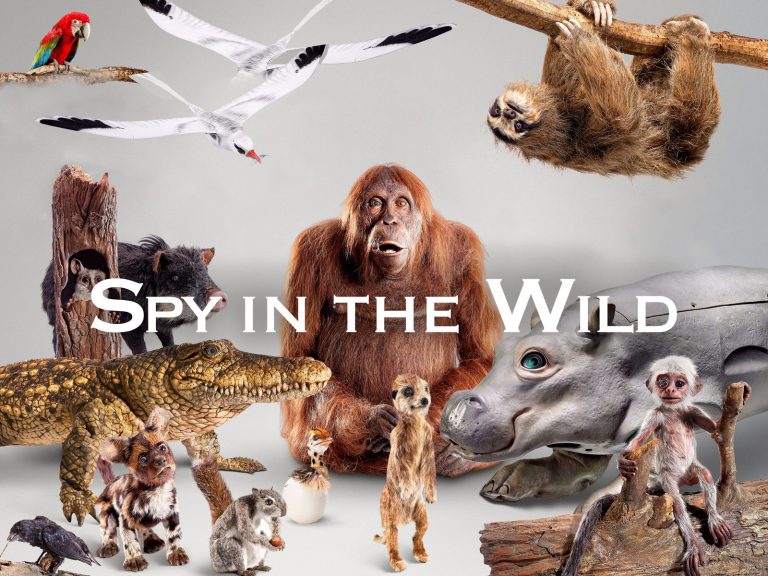
"Spy in the Wild" is a British nature documentary television series produced by BBC Natural History Unit, John Downer Productions, and PBS. The series, directed and produced by John Downer, first premiered in 2017 with a second series released in 2020. It uses more than 30 ultra-realistic animatronic "spy creatures" that are often shaped like the offspring of various animal species. These robotic creatures are equipped with cameras that allow filmmakers to capture rare and intimate animal behaviors that would not be revealed in the presence of humans or traditional hidden cameras.
The series explores complex animal emotions and behaviors such as love, intelligence, friendship, mischief, and survival. The use of spy creatures enables close interaction with animals in their natural habitats worldwide, from deserts to rainforests to polar regions. Narration is by David Tennant in the original UK version and by Brian Unger in the American PBS version.
The spy creatures infiltrate the animal world to explore complex emotions like love and devotion. Examples include spies being accepted into a wild dog pack, witnessing elephant affection, and observing a troop of monkeys mourning.
The spy creatures infiltrate the world of animal intelligence, ingenuity, and creativity. The episode shows spies disguised as animals observing various intelligent behaviors such as a gray squirrel stealing a food item called Spy Nut, a sea otter cracking open a meal, and an orangutan washing with soap.
The spy creatures go undercover to discover how friendship is a vital part of animal life. The episode shows interactions such as a Spy Meerkat babysitting meerkat pups, a Spy Cobra pretending to attack a mob as a distraction, and Spy Crocodiles witnessing a partnership between real crocodiles and birds. It explores how animals rely on each other for protection and support in the wild.
The Spy Creatures infiltrate the animal world to witness how mischief and bad behavior manifest among various species. The episode showcases mischievous acts such as monkeys fighting over beach bar alcohol, elephants throwing mud at waterholes, and other examples of animal rule-breaking and playful yet naughty behavior.
This episode provides a behind-the-scenes look at how the Spy Creatures were developed by John Downer Productions. It traces the evolution from the original Bouldercam and Penguincams to the advanced animatronic "spycams" used throughout the series.
The spy creatures investigate wildlife thriving in the tropics. They infiltrate a hippo pod, a nursery of red flying foxes, a gorilla sanctuary, and the secret world of pygmy forest elephants. The episode captures unique and intimate animal behaviors, including gorillas singing when enjoying their meals, a jaguar cub exploring gatherings of water birds, and Spy Caiman filming a feeding frenzy. Other scenes include spy turtles and vultures witnessing the spectacular turtle arribada, and spy hippos filming dramatic fights within the pod.
The spy creatures travel to the Northern Hemisphere's temperate lands, where life is governed by the rhythm of the seasons. Highlights include:
Spy Macaque filming snow monkeys bathing and socializing at steaming hot thermal pools in the snow-covered mountains of Japan.
Spy Hummingbird visiting the spectacular natural gathering of billions of overwintering monarch butterflies in Mexico.
Spy Squirrel getting involved in a battle among rival stags fighting over females.
Spy Beaver observing other beavers building dams.
The spy creatures explore islands of the South Pacific. Highlights include:
Spy Koala capturing breeding behavior in Australia.
Spy Crab joining the mass migration of red crabs as they march to the sea to deposit their eggs.
Diverse species of chameleons in Madagascar featured by the cameras.
The spy creatures infiltrate the animals living at the Arctic and Antarctic poles. They observe some of the hardiest and most charismatic animals in extreme and freezing climates, including king penguins, walruses, polar bears, puffins, elephant seals, Arctic foxes, Arctic wolves, and muskoxen.