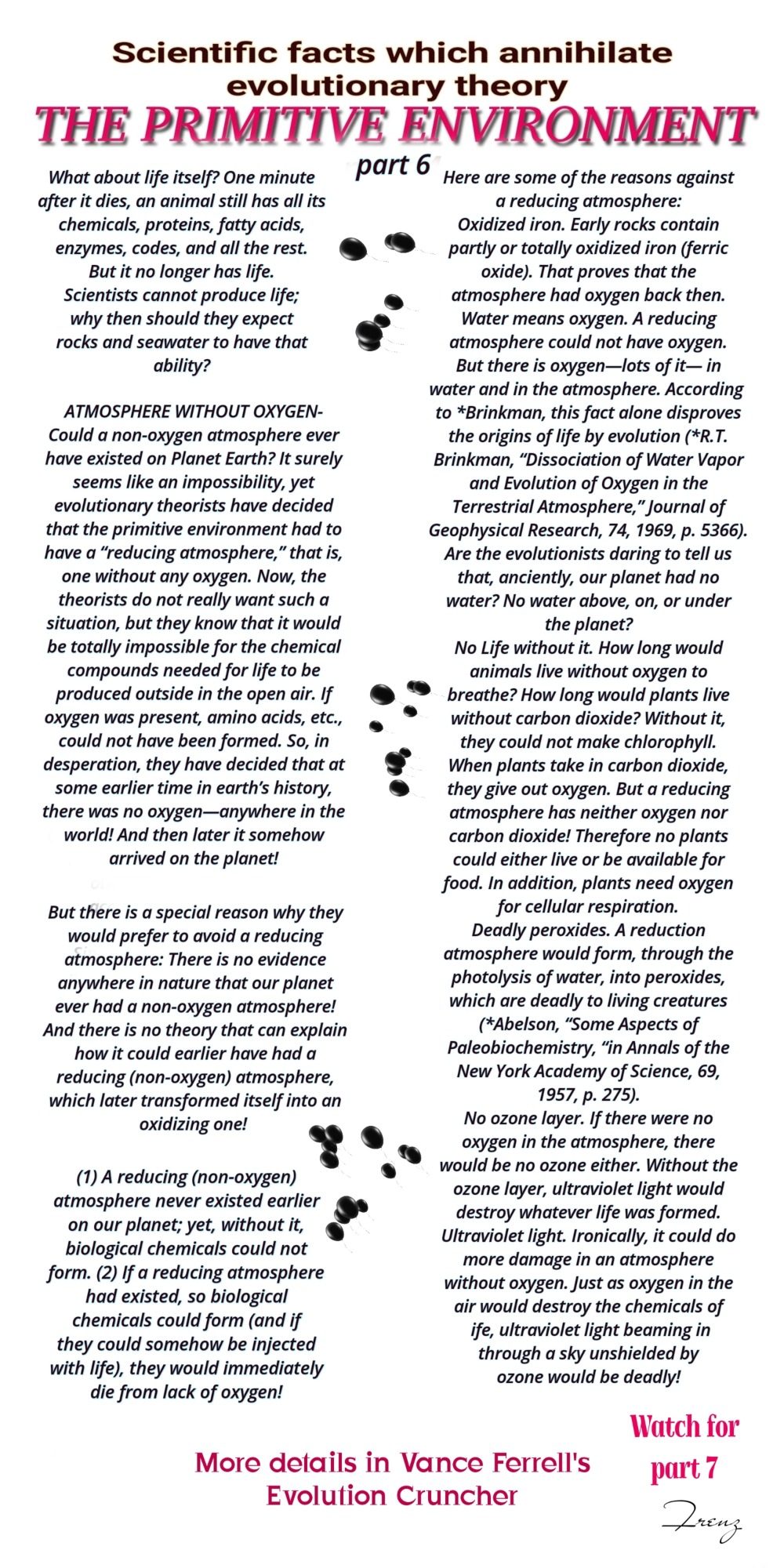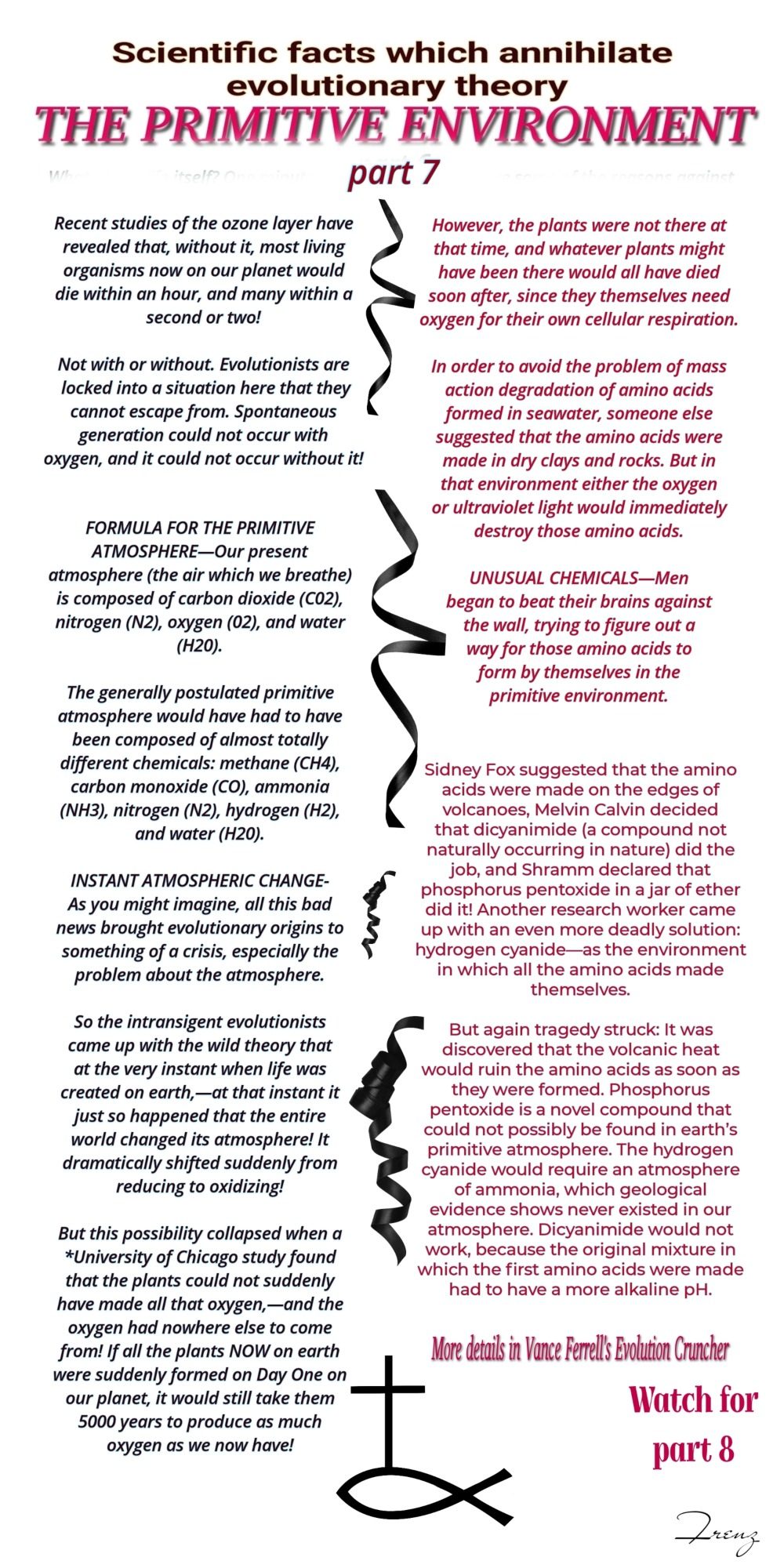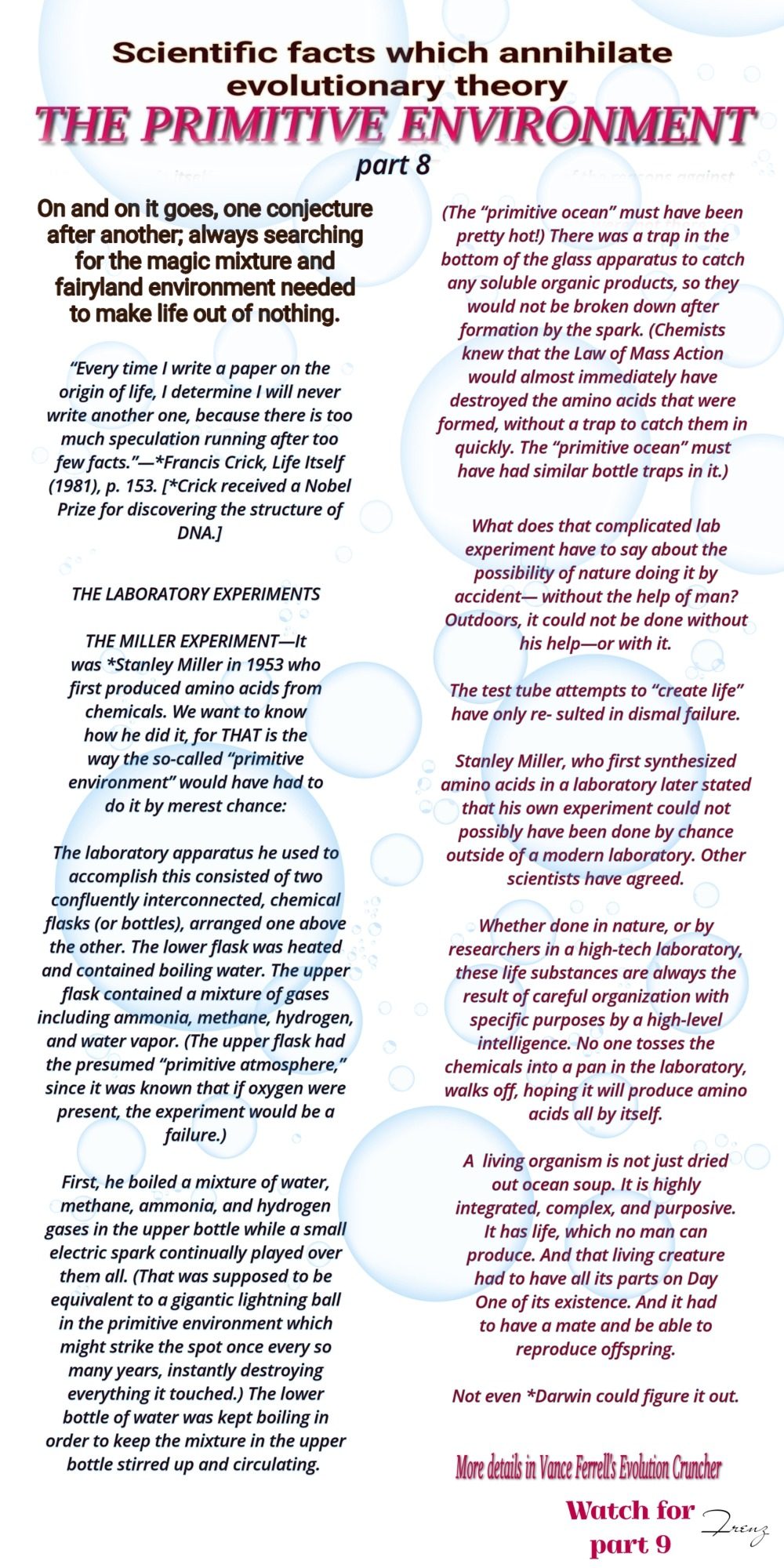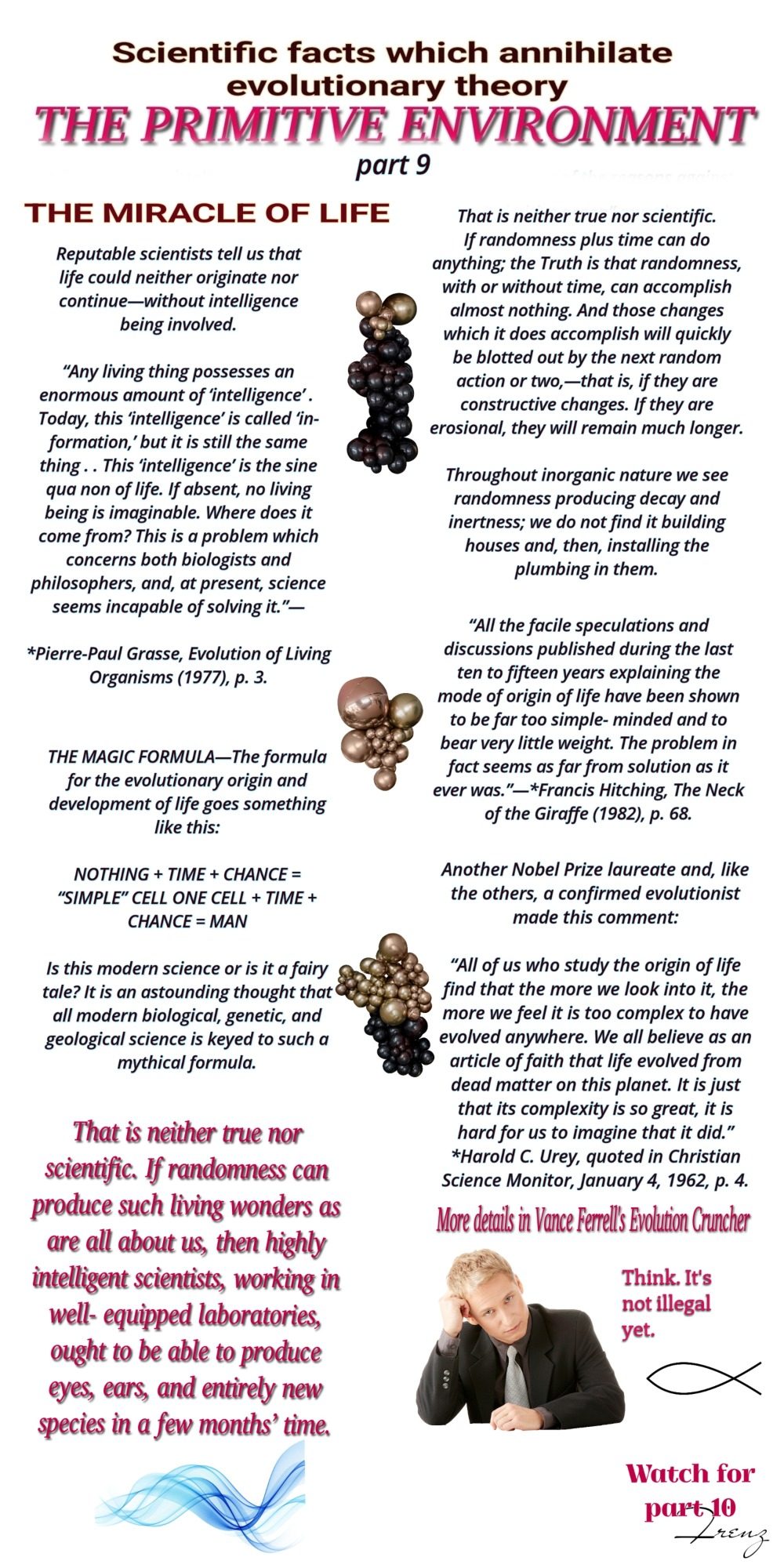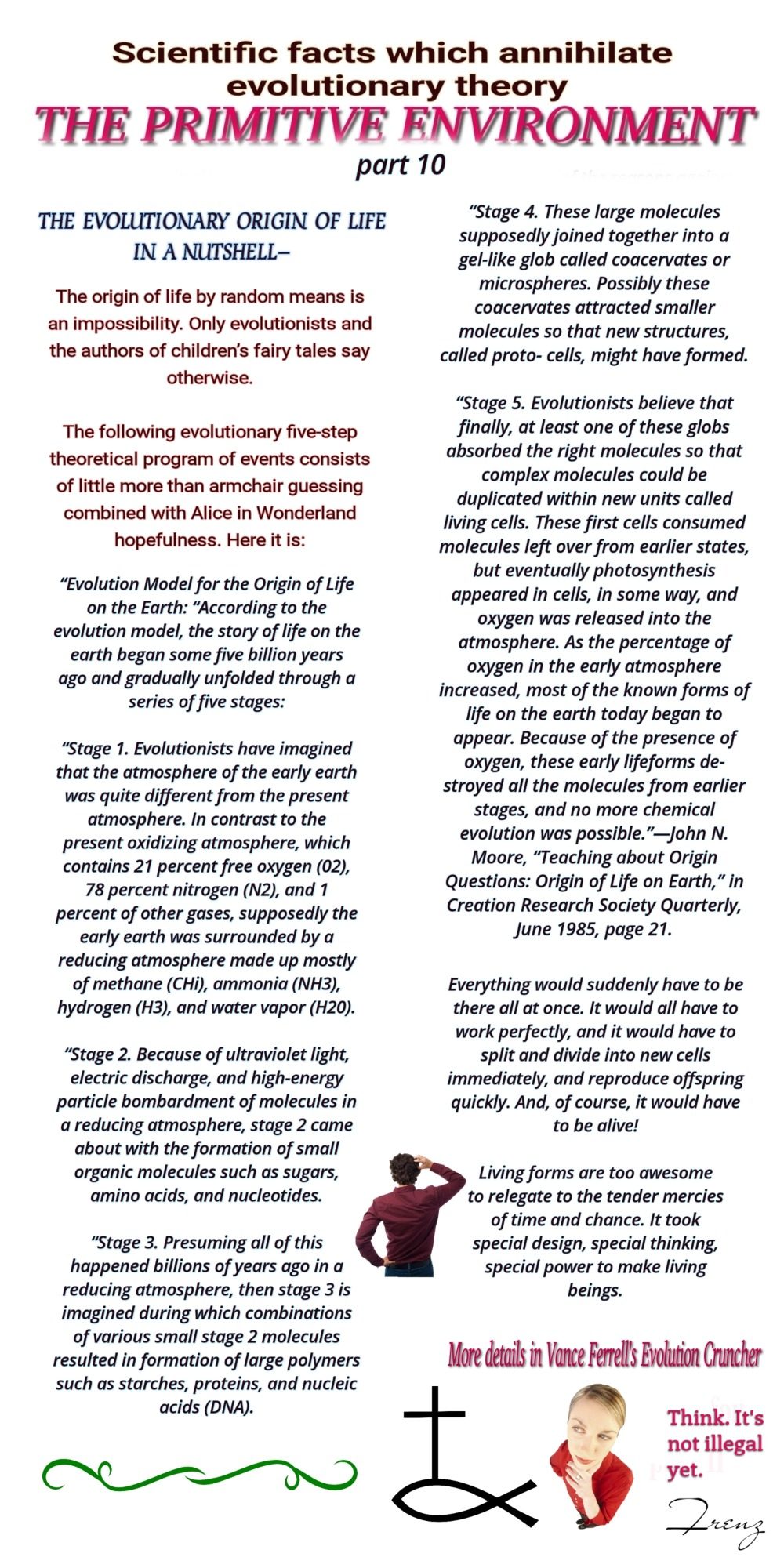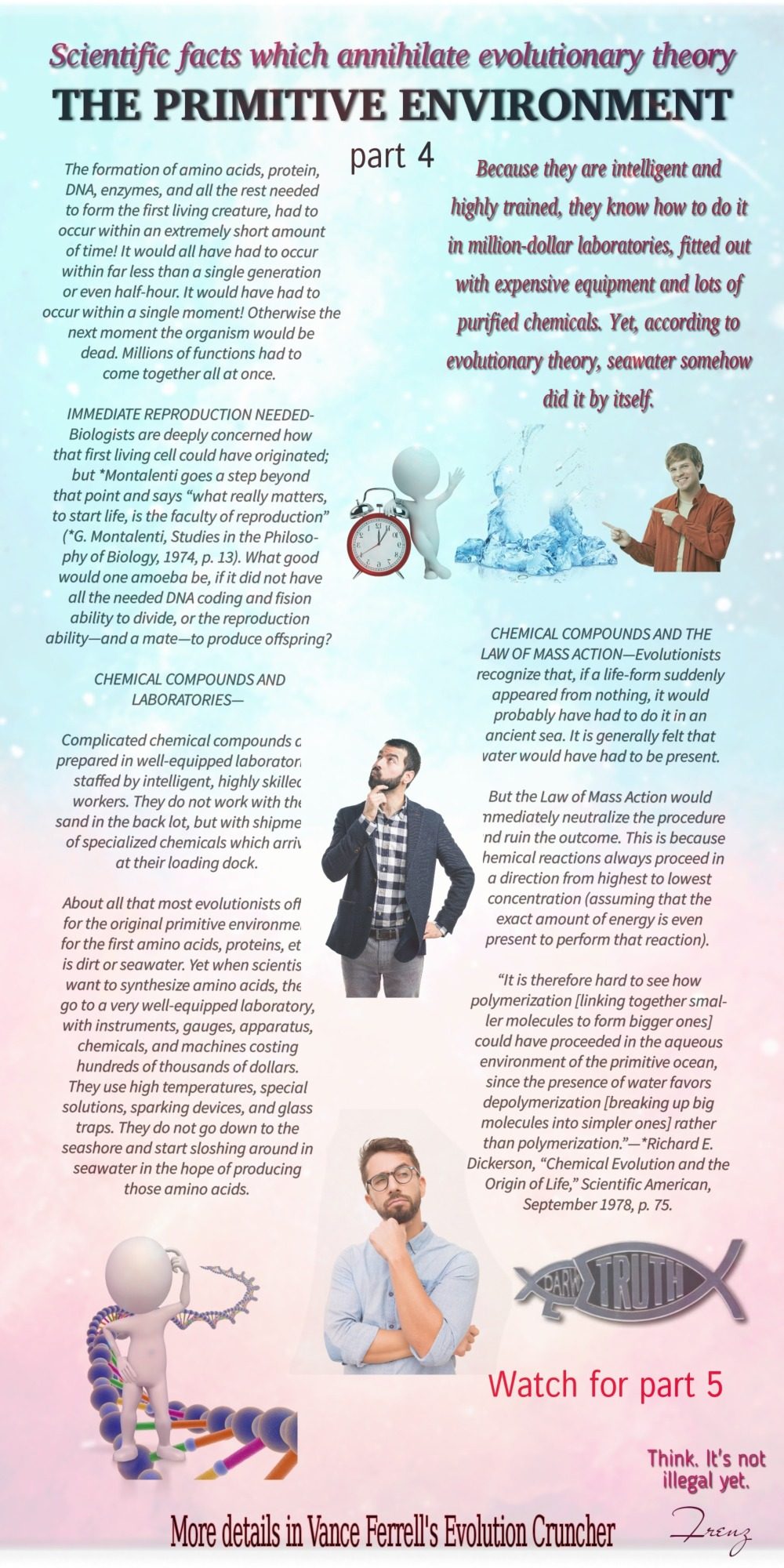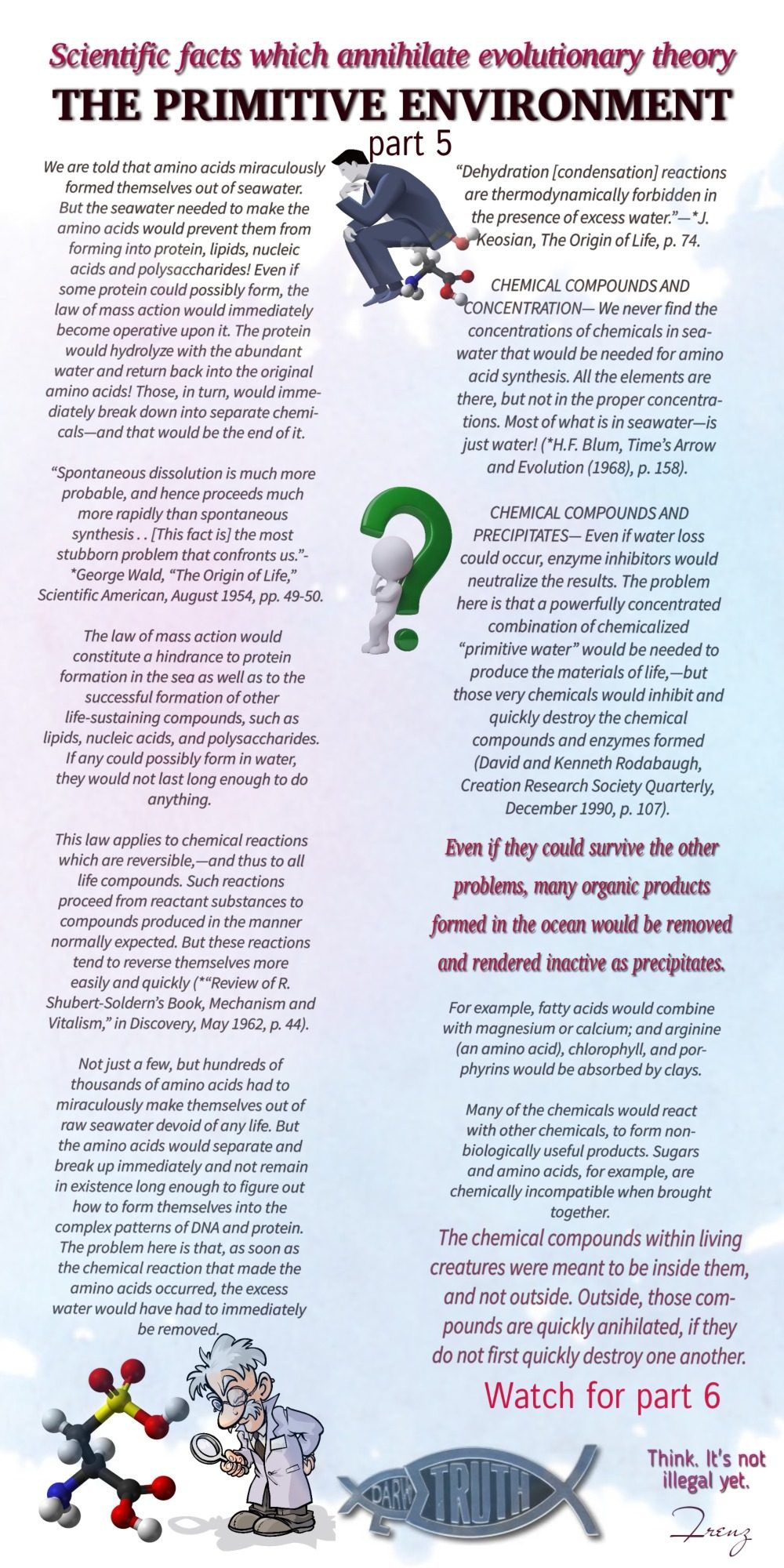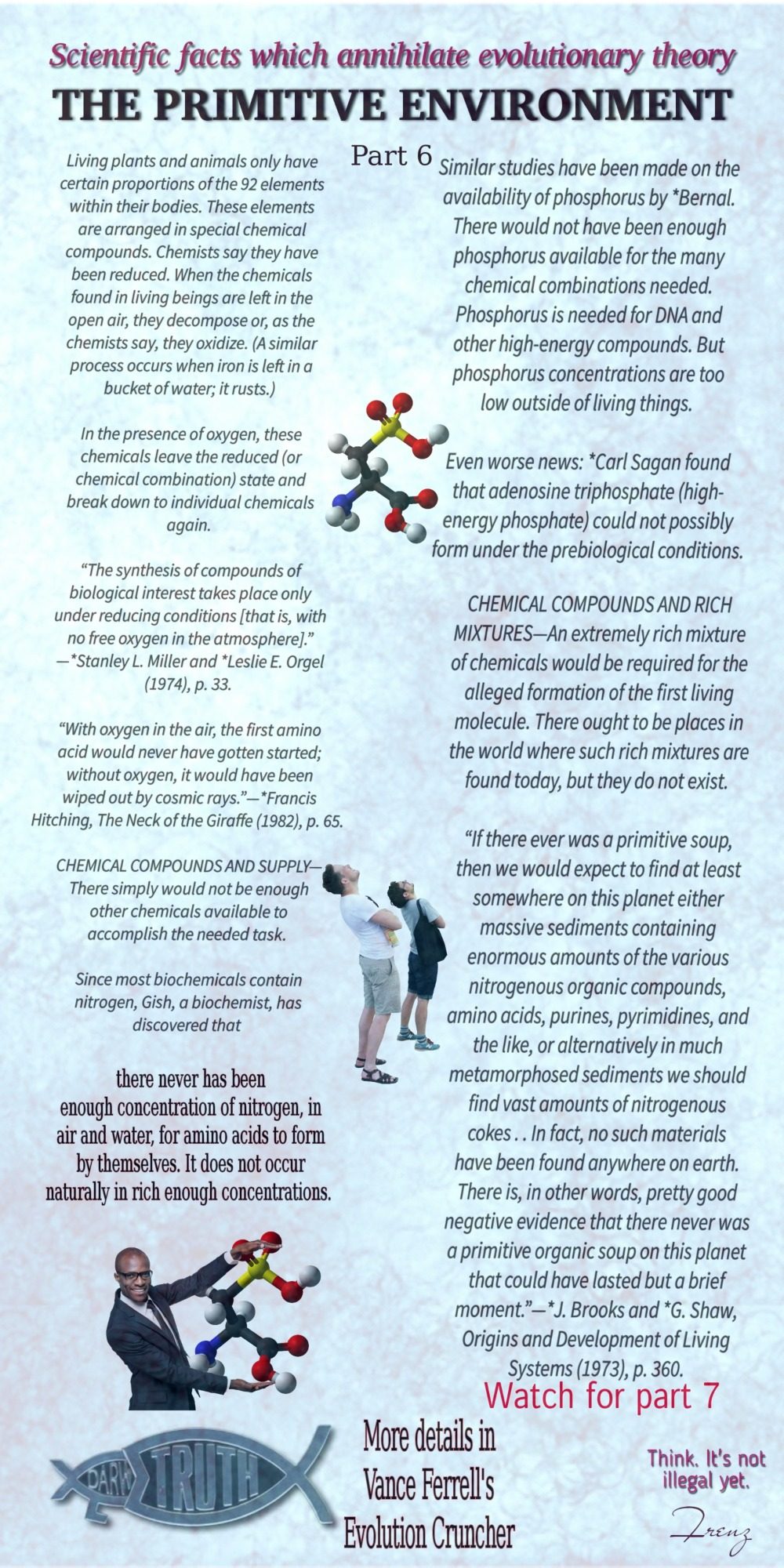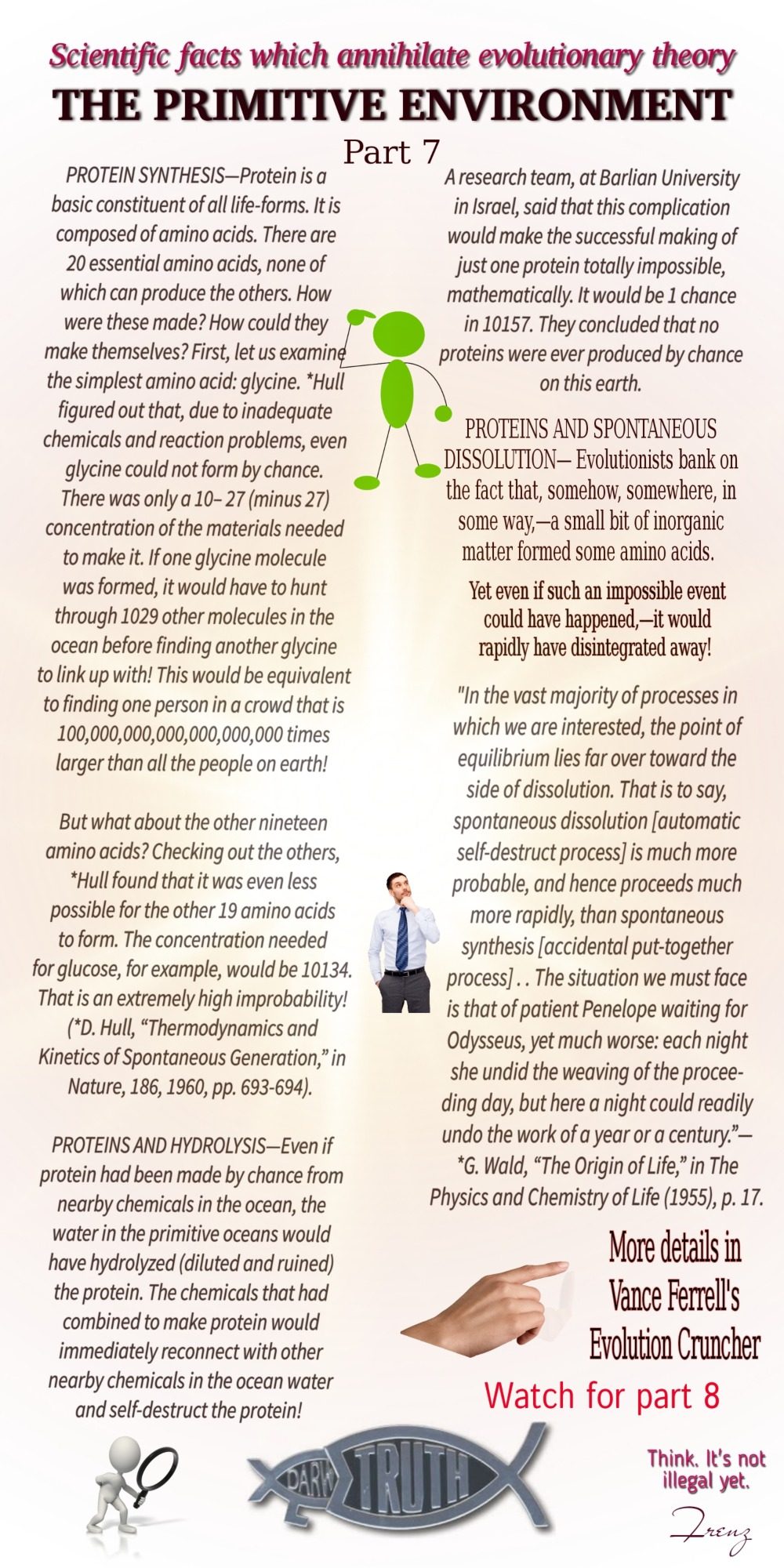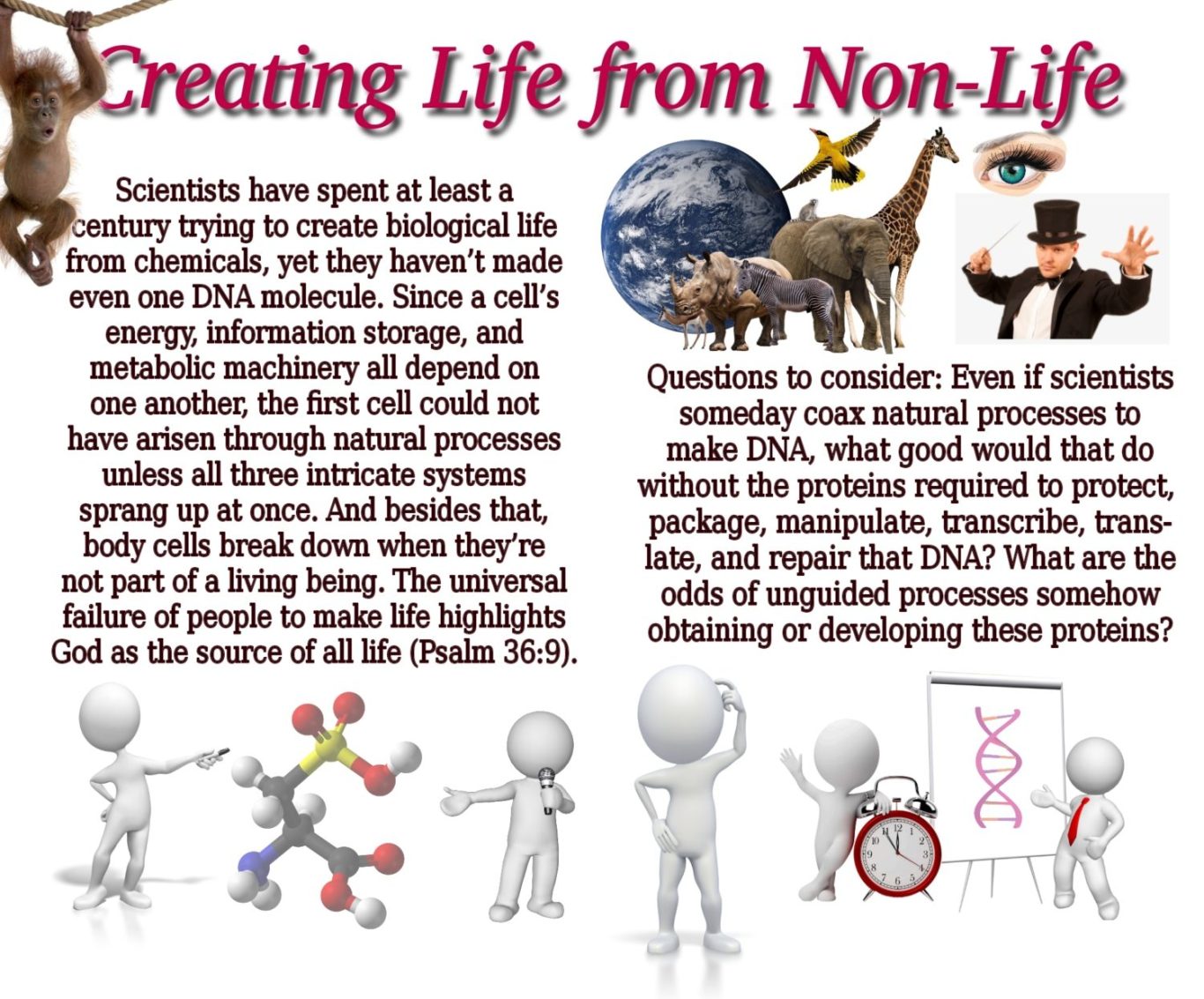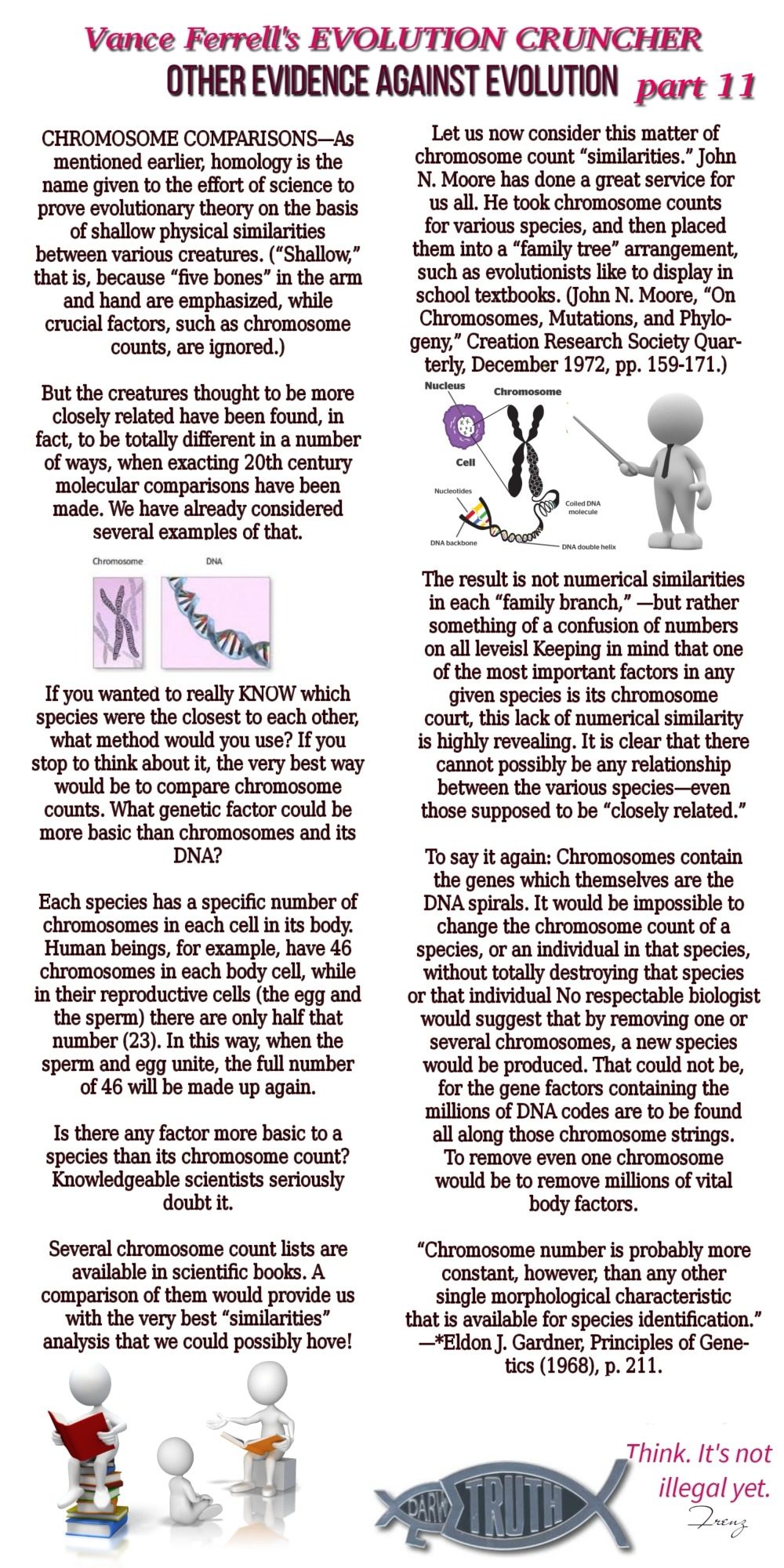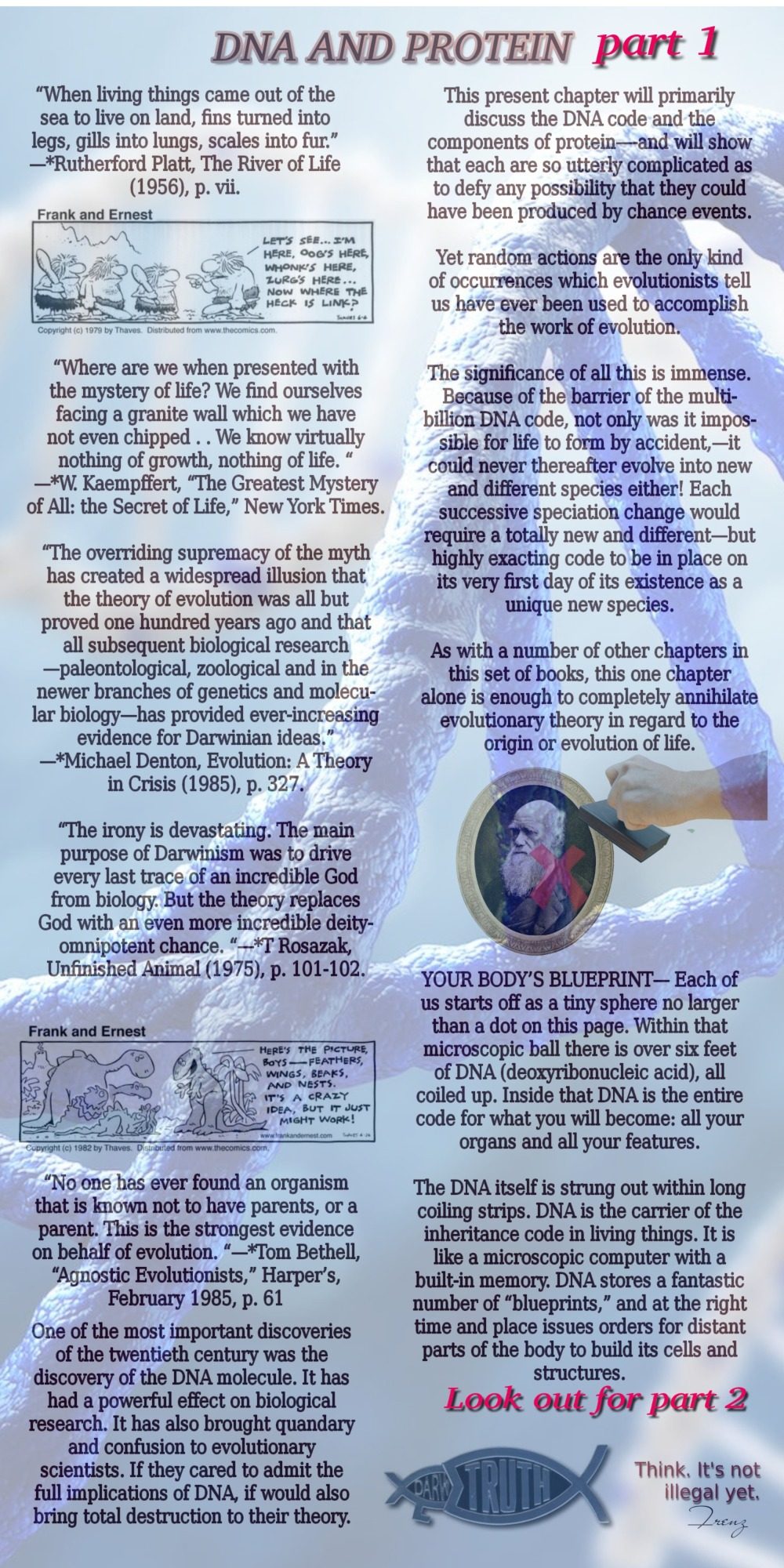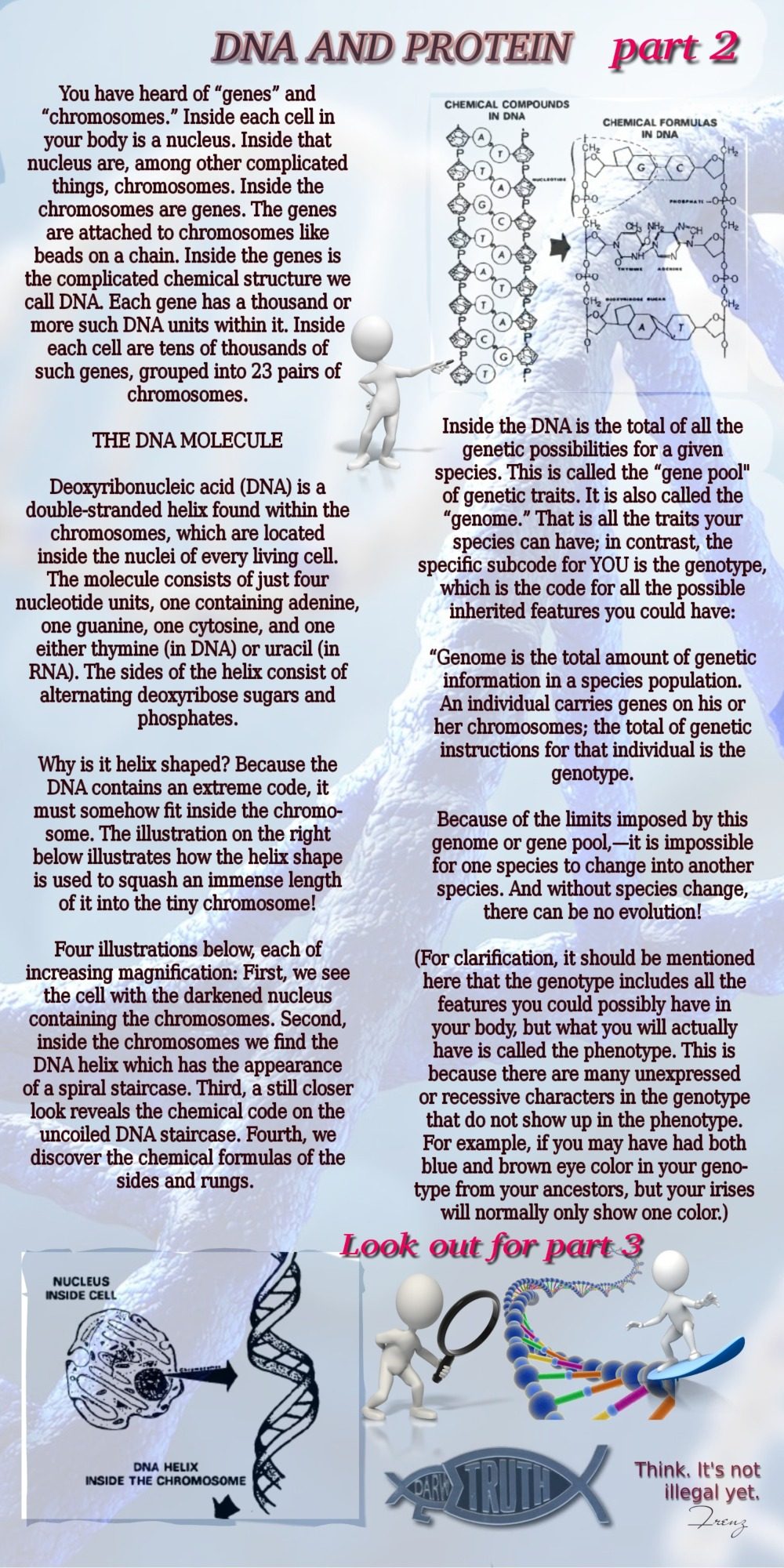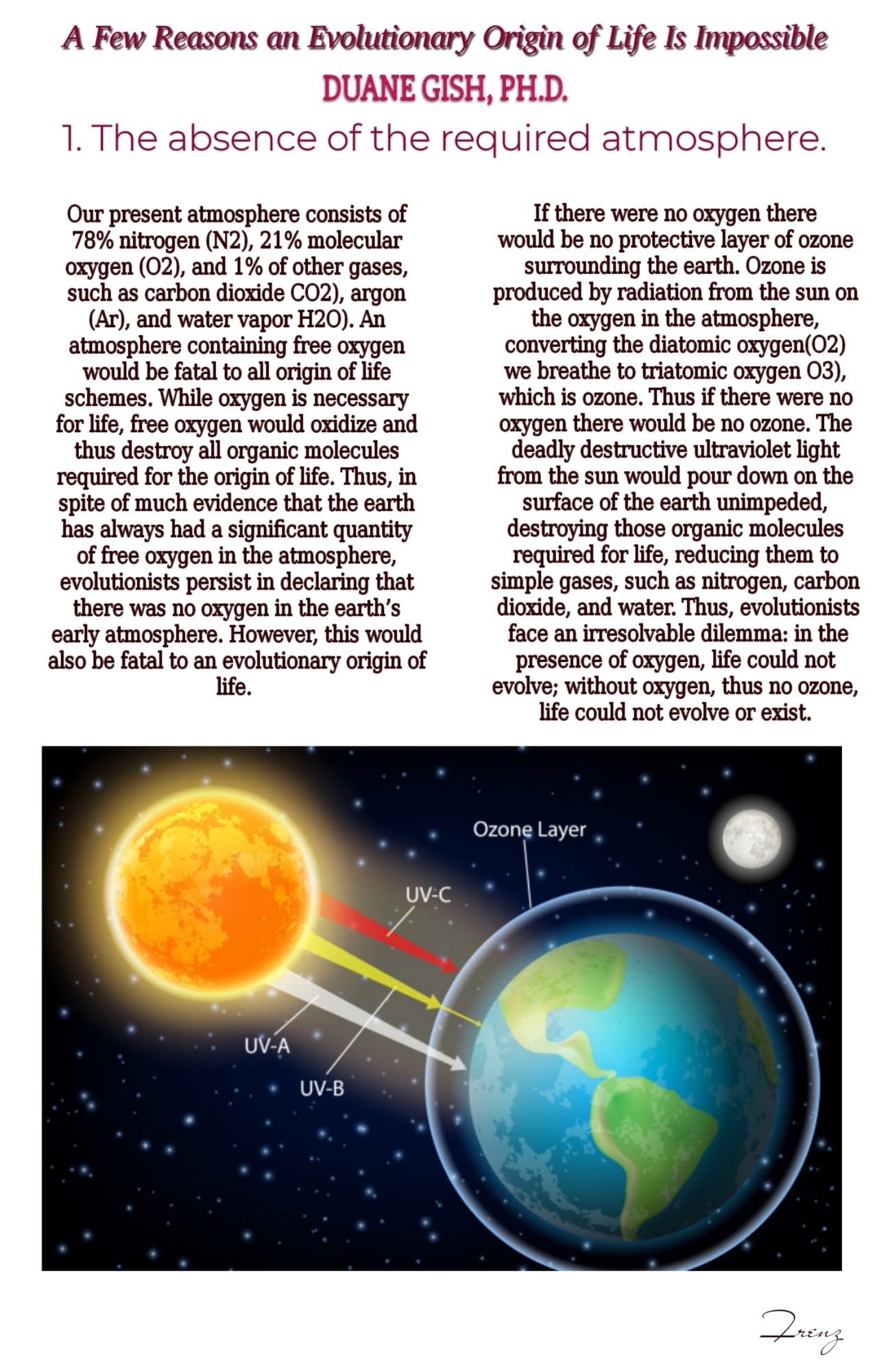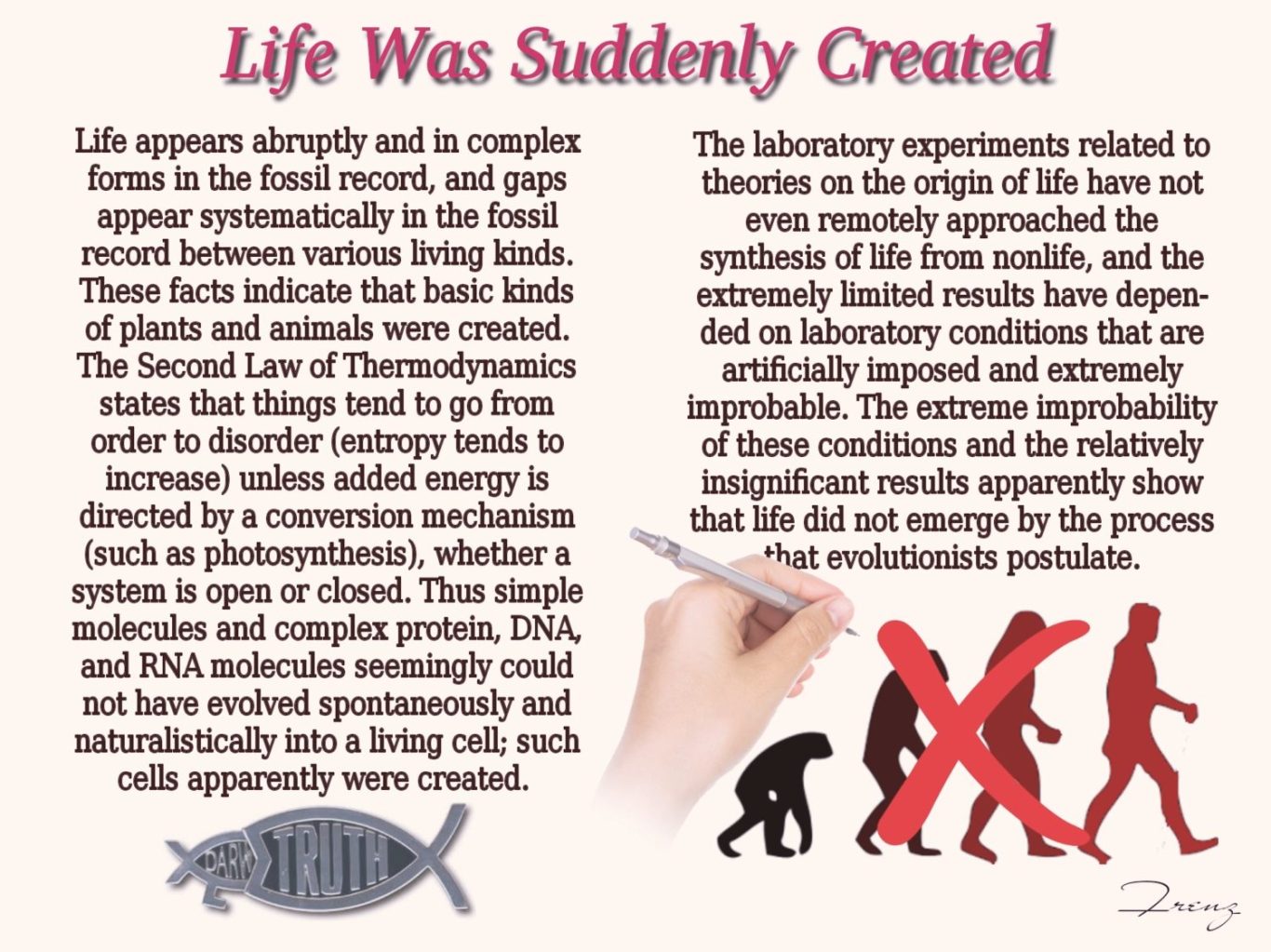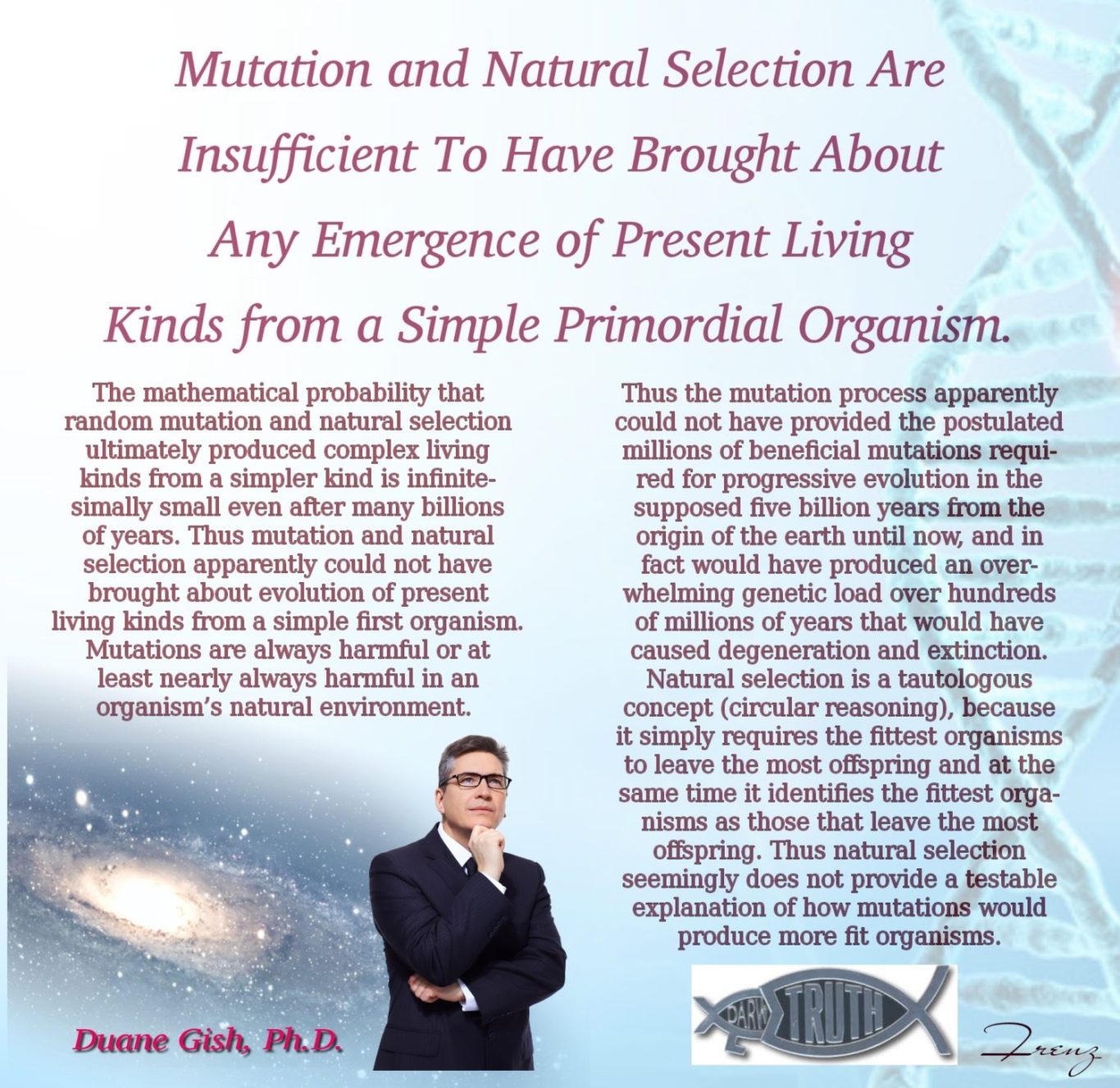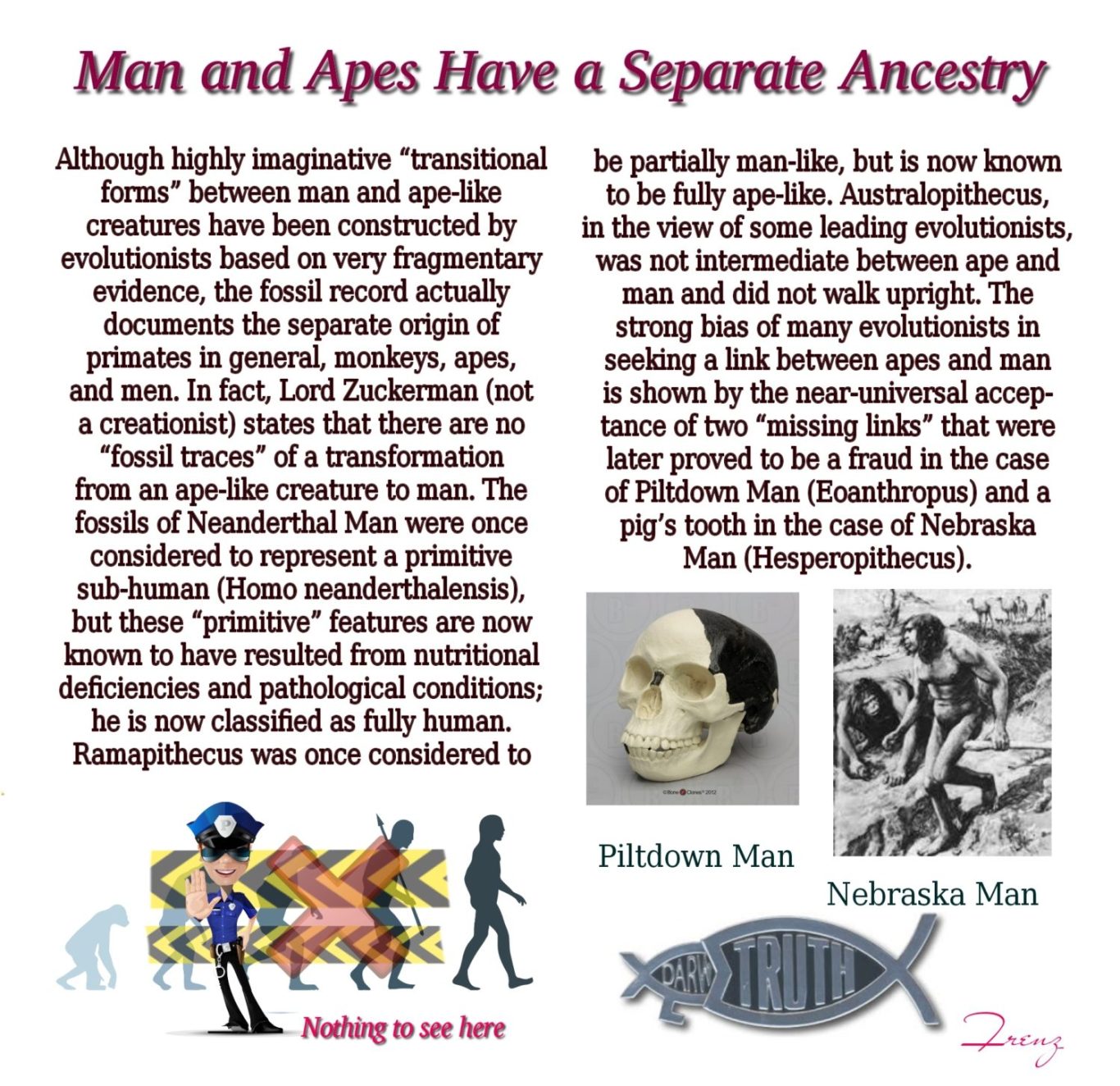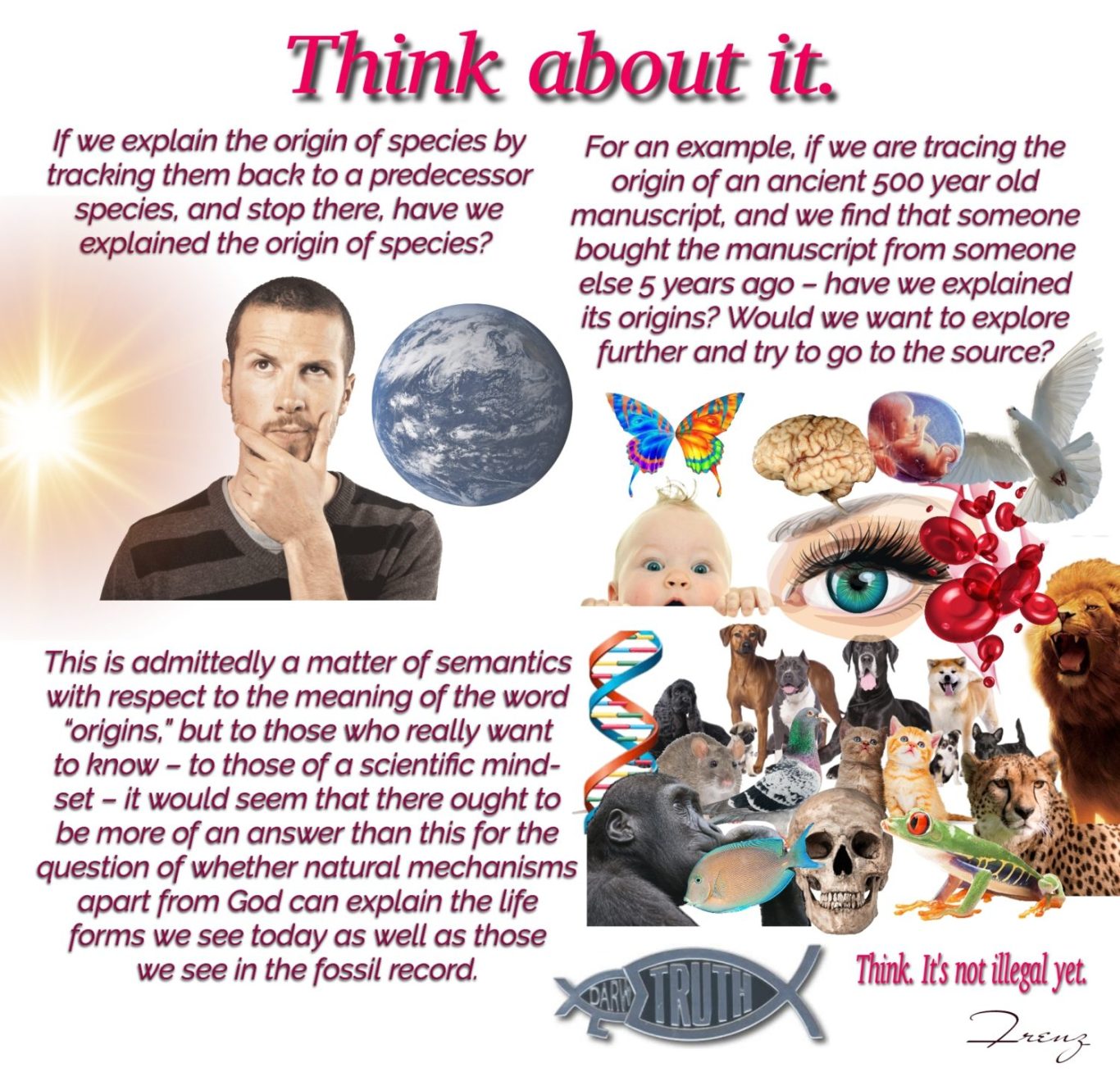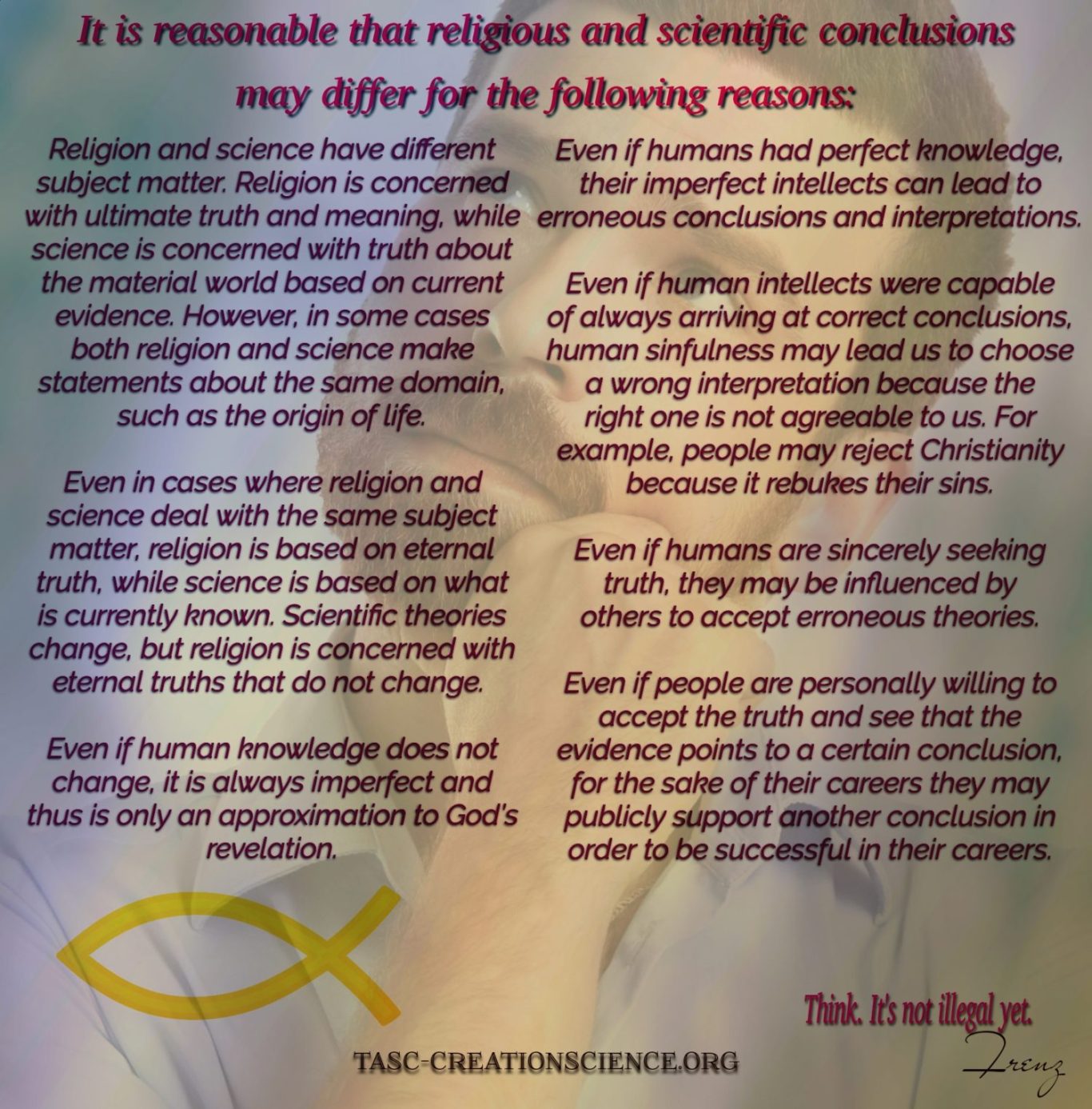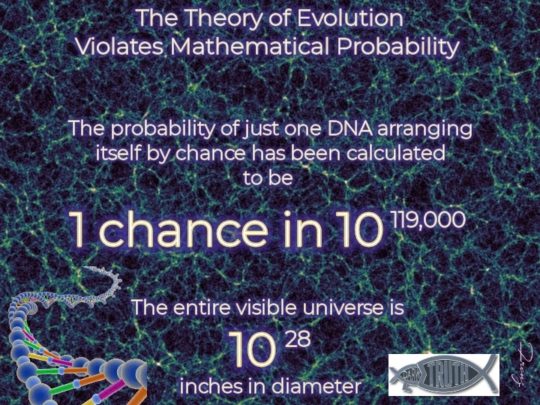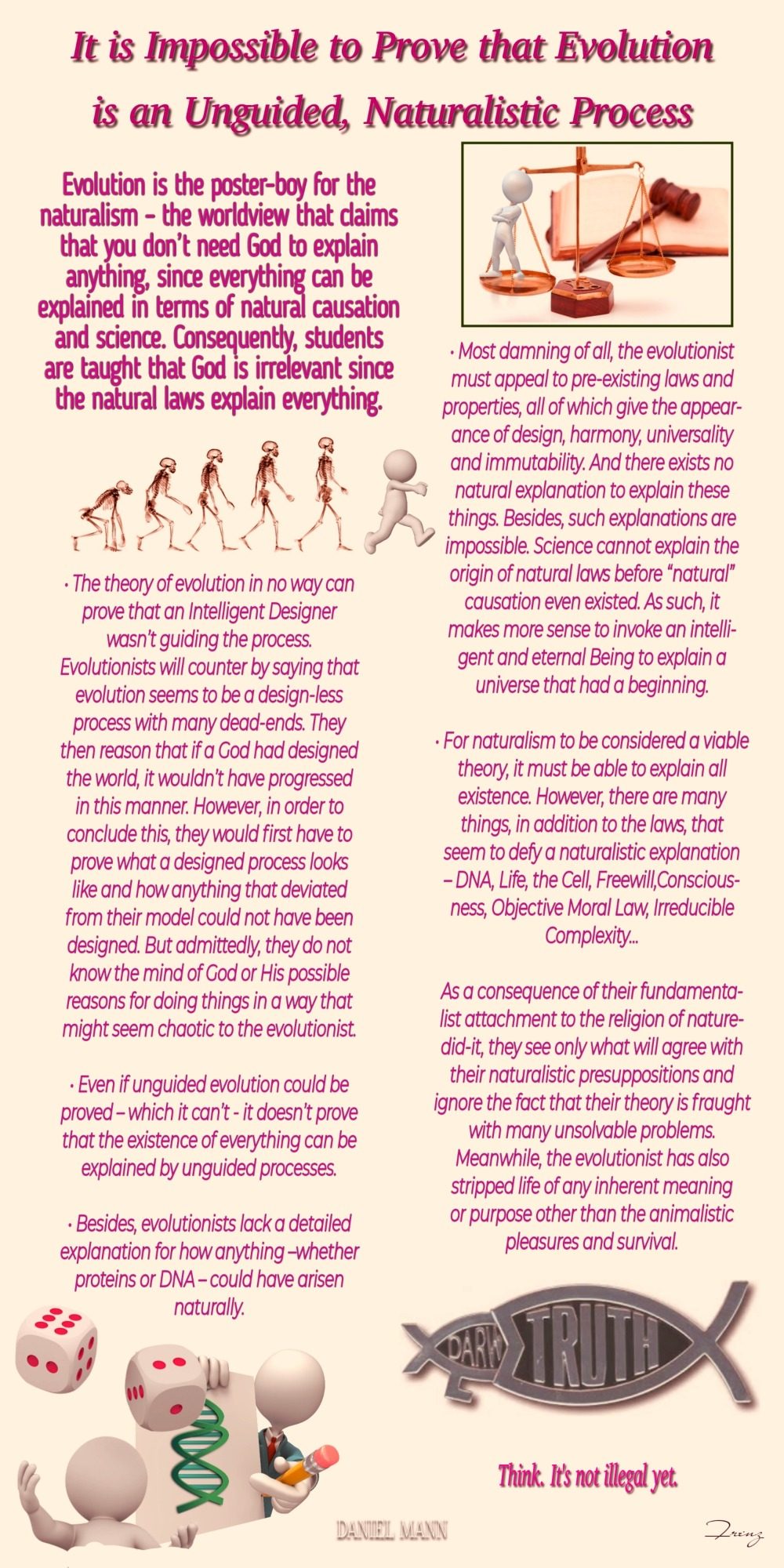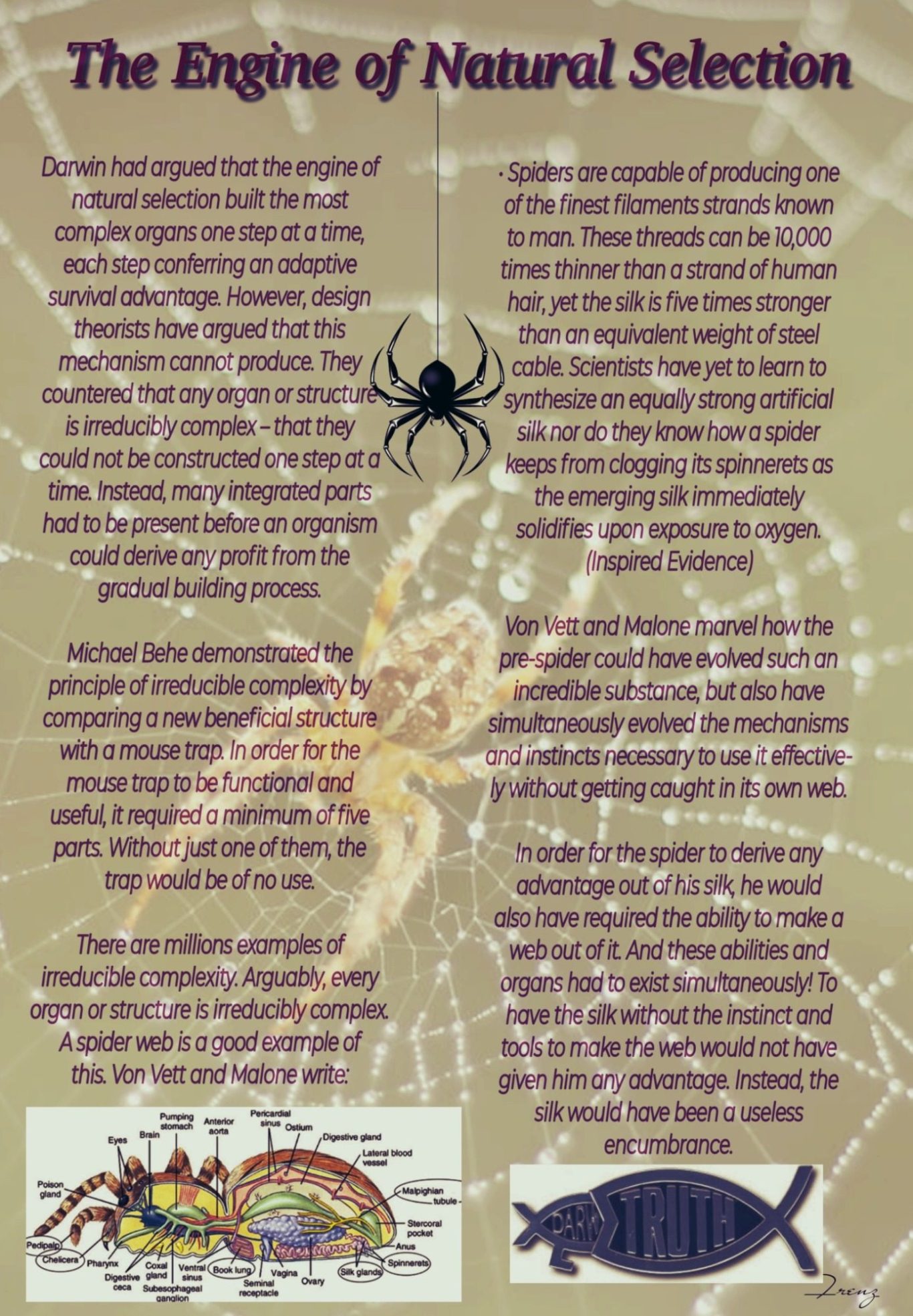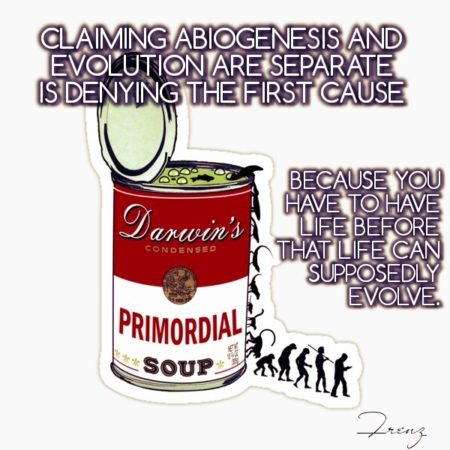
Evolution cannot begin until there is life to evolve, so the question of how life originated is foundational.
1. The Bible Affirms God as the First Cause of Life
The Bible teaches that God is the ultimate source and Creator of all life. Genesis 1:1, 21 (ESV) says:
“In the beginning, God created the heavens and the earth… So God created the great sea creatures and every living creature that moves, with which the waters swarm, according to their kinds, and every winged bird according to its kind.”
This passage clearly attributes the origin of life to God, not to random chemical processes.
2. Abiogenesis Lacks Scientific and Scriptural Support
Science has not demonstrated that life can arise from non-life. As the resource “All About GOD & Science” points out:
“Abiogenesis refers to the concept that life can come from non-life. Is this notion feasible? Can inorganic compounds self-assemble to produce life?”
Despite decades of research, no experiment has shown that life can spontaneously arise from non-living matter. The complexity of even the simplest living cell—requiring information-rich molecules like DNA and functional enzymes—points to intelligent design, not chance.
3. Evolution Requires Life to Already Exist
As Rob Stadler critiques in “Stated Clearly” Has Clearly Misled Viewers:
“The first reproducing creature could not have developed through biological evolution, because biological evolution requires reproduction in order to work. The origin of life needs its own explanation.”
If there is no life, there is nothing to evolve. Claiming that evolution and abiogenesis are unrelated ignores the need for a first cause—something (or Someone) to start the process.
4. The Bible’s View of the First Cause
The Bible consistently teaches that God is the First Cause, the One who brings life from non-life. John 1:3 (ESV) says:
“All things were made through him, and without him was not any thing made that was made.”
Colossians 1:16 (ESV) adds:
“For by him all things were created, in heaven and on earth, visible and invisible… all things were created through him and for him.”
Summary
- Abiogenesis and evolution are connected—life must exist before it can evolve.
- Science has not shown that life can come from non-life.
- The Bible teaches that God is the First Cause, the Creator of all life.
This is why Christians affirm that life’s origin points to a Creator, not to random chance or impersonal processes.
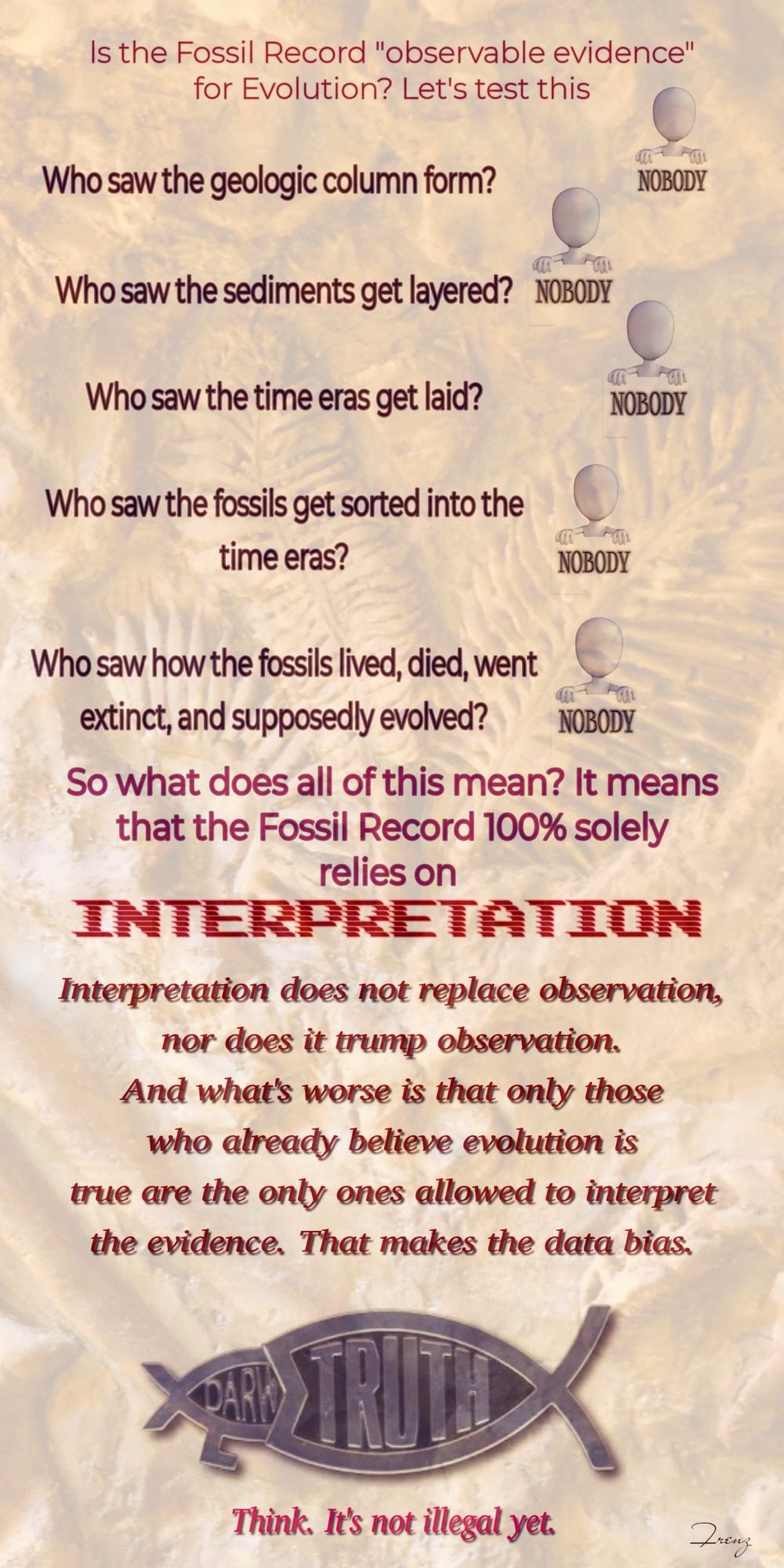
1. What Is Circular Reasoning in Fossil and Rock Dating?
Circular reasoning occurs when the conclusion of an argument is assumed in the premise. In the context of geology and paleontology, the concern is this:
- Fossils are dated by the rocks they are found in.
- Rocks are dated by the fossils they contain.
This can create a logical loop where neither the age of the rocks nor the fossils is independently verified.
As cited in the "Dinosaur Fossils" article by All About God Ministries:
“The geologic column dates fossils by the rocks in which they are found, and dates rocks by the fossils they contain. Critics insist this is circular reasoning. ‘The intelligent layman has long suspected circular reasoning in the use of rocks to date fossils and fossils to date rocks’ (J.E. O'Rourke, American Journal of Science, 1976, 276:51).”
2. Problems with the Geologic Column
The geologic column is often presented as a straightforward, layered timeline of earth’s history. However, real-world findings complicate this picture:
- Poly-strata fossils (fossils that extend through several layers of rock)
- Misplaced fossils (fossils found in the “wrong” layers)
- Missing or reversed layers
These features challenge the assumption of a neat, uniform progression of time and support the idea that the dating methods are not always reliable. As the article notes:
“The geologic column assumes uniformity, which has come to be disproved by such geologic features as poly-strata fossils, misplaced fossils, missing layers, and misplaced layers (such as layers in reverse order, or ‘ancient’ layers found several layers above ‘modern’ layers).”
3. Radiometric Dating and Its Limits
Some argue that radiometric dating solves the problem. While radiometric methods can provide independent dates for certain types of rocks, they cannot directly date most fossils (which are usually found in sedimentary rock, not igneous rock). As “All About GOD & Does God Exist Scientifically?” explains:
“Though they cannot date the dinosaur remains themselves, they can date rocks buried near the dinosaur remains.”
This means that even radiometric dating often relies on assumptions about the relationship between the fossil and the surrounding rock.
4. A Biblical Perspective
The Bible teaches that God created life according to its kinds (Genesis 1:21, 25), not through a long process of evolution. The confusion and inconsistencies in dating methods highlight the limitations of human reasoning when it is separated from God’s revelation.
“For the wisdom of this world is folly with God. For it is written, ‘He catches the wise in their craftiness’” (1 Corinthians 3:19, ESV).
“All things were made through him, and without him was not any thing made that was made” (John 1:3, ESV).
Summary
- The practice of dating rocks by fossils and fossils by rocks can result in circular reasoning.
- Real-world geological findings challenge the neatness of the geologic column.
- Radiometric dating has limitations and often cannot directly date fossils.
- The Bible teaches that God is the Creator, and His Word provides a trustworthy foundation for understanding origins.
This issue reminds us to approach scientific claims with discernment and to recognize the need for a reliable foundation—one that the Bible provides.
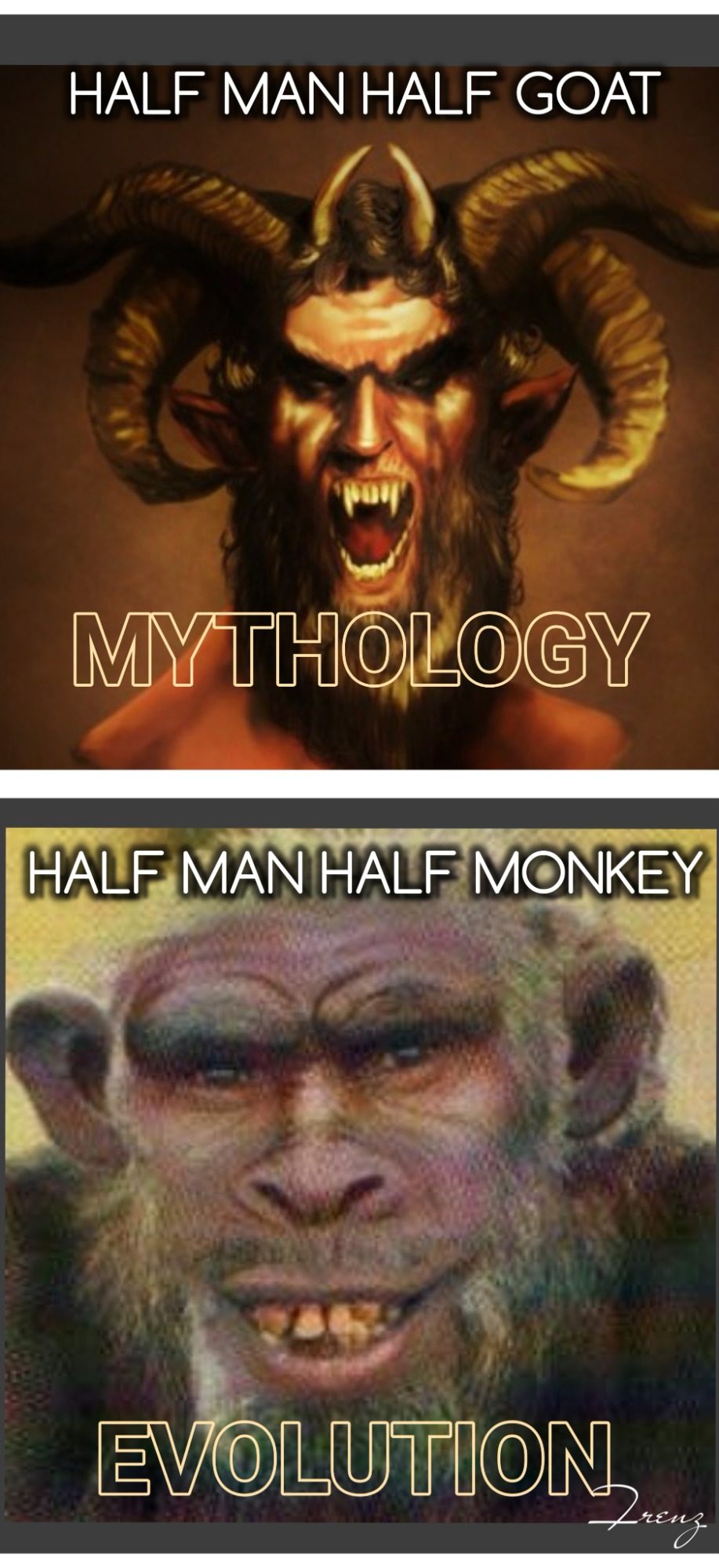
1. Half-Man, Half-Goat: Mythology
Creatures like the satyr or Pan—half man, half goat—are figures from ancient mythology. As referenced in the "Roman Pantheon" article:
“Pan was the Greek god of the mountains, half goat half man.”
These beings are not presented as real or historical, but as part of mythological stories meant to explain natural phenomena or human experiences. The Bible warns against worshiping such invented gods:
“They sacrificed to demons that were no gods, to gods they had never known, to new gods that had come recently, whom your fathers had never dreaded.”
—Deuteronomy 32:17 (ESV)
2. Half-Man, Half-Monkey: Evolution?
The theory of evolution, as taught in many schools, claims that humans and modern apes share a common ancestor. This does not mean that there was ever a literal “half-man, half-monkey” creature. Instead, evolutionists propose a gradual process where small changes accumulated over millions of years, supposedly leading from ape-like ancestors to modern humans.
However, from a biblical perspective, this idea is not supported. The Bible teaches that God created humans uniquely, in His image, and separate from animals:
“So God created man in his own image, in the image of God he created him; male and female he created them.”
—Genesis 1:27 (ESV)
“For every kind of beast and bird, of reptile and sea creature, can be tamed and has been tamed by mankind.”
—James 3:7 (ESV)
“All things were made through him, and without him was not any thing made that was made.”
—John 1:3 (ESV)
The Bible makes a clear distinction between humans and animals. There is no biblical or scientific evidence for a creature that is literally half-human and half-monkey.
3. Myth vs. Science
- Mythology (like satyrs or centaurs) involves imaginative stories, not historical or scientific claims.
- Evolution is a scientific theory, but from a Christian perspective, the idea that humans evolved from ape-like ancestors is not compatible with Scripture.
As Denyse O’Leary notes regarding centaurs:
“Classical Greek mythology featured the ‘centaur,’ a creature that was half human, half horse… In what amounts to a ‘neurobiological miracle,’ the horse — a prey animal — and the human — a predator — can learn complete neurological co-operation to perform complex feats that neither can manage alone.”
This shows that while myths may reflect real relationships or cooperation in nature, they are not literal truths.
Summary
- Half-man, half-goat creatures are mythological, not real.
- Half-man, half-monkey is not what evolution actually claims, and the Bible teaches humans were specially created, not evolved from other animals.
- The Bible affirms the unique creation and dignity of human beings, distinct from animals and mythological hybrids.
1. The Universe Shows Evidence of Design
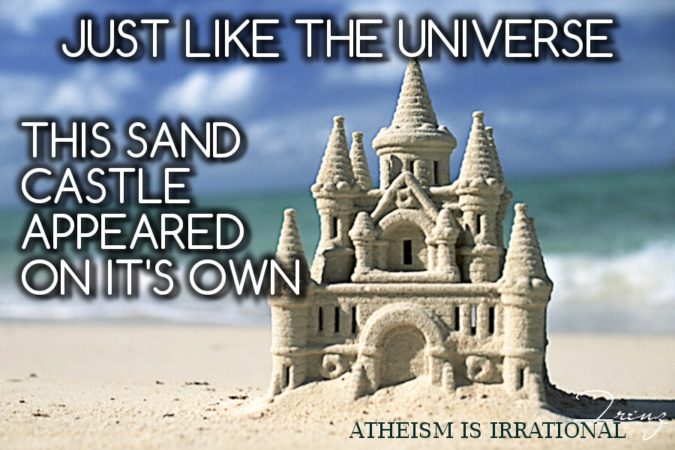
The Bible teaches that the universe did not come into existence by chance, but was created intentionally by God. Just as a sandcastle requires a builder, so too does the universe require a Creator:
“For every house is built by someone, but the builder of all things is God.”
—Hebrews 3:4 (ESV)
“The heavens declare the glory of God, and the sky above proclaims his handiwork.”
—Psalm 19:1 (ESV)
“For his invisible attributes, namely, his eternal power and divine nature, have been clearly perceived, ever since the creation of the world, in the things that have been made. So they are without excuse.”
—Romans 1:20 (ESV)
Just as a sandcastle’s order and purpose point to a builder, the order and complexity of the universe point to a Creator.
2. Reason Supports the Need for a Cause
Science and philosophy both affirm that things which begin to exist have a cause. The universe, like a sandcastle, had a beginning (as shown by the Big Bang). It is unreasonable to believe that something so vast and orderly could come from nothing, without a cause.
3. God as the Creator
The Bible begins by affirming God as the Creator:
“In the beginning, God created the heavens and the earth.”
—Genesis 1:1 (ESV)
This is not just a statement of faith, but also a logical explanation for why there is something rather than nothing.
Summary
- Just as a sandcastle doesn’t appear without a builder, the universe’s complexity and order point to a Creator.
- The Bible and reason both affirm that the universe had a cause—God Himself.
- The beauty and structure of creation are meant to lead us to seek and know the Creator.

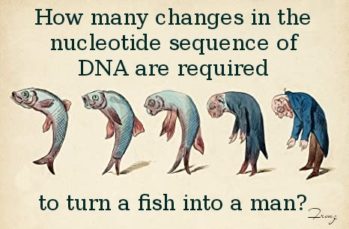
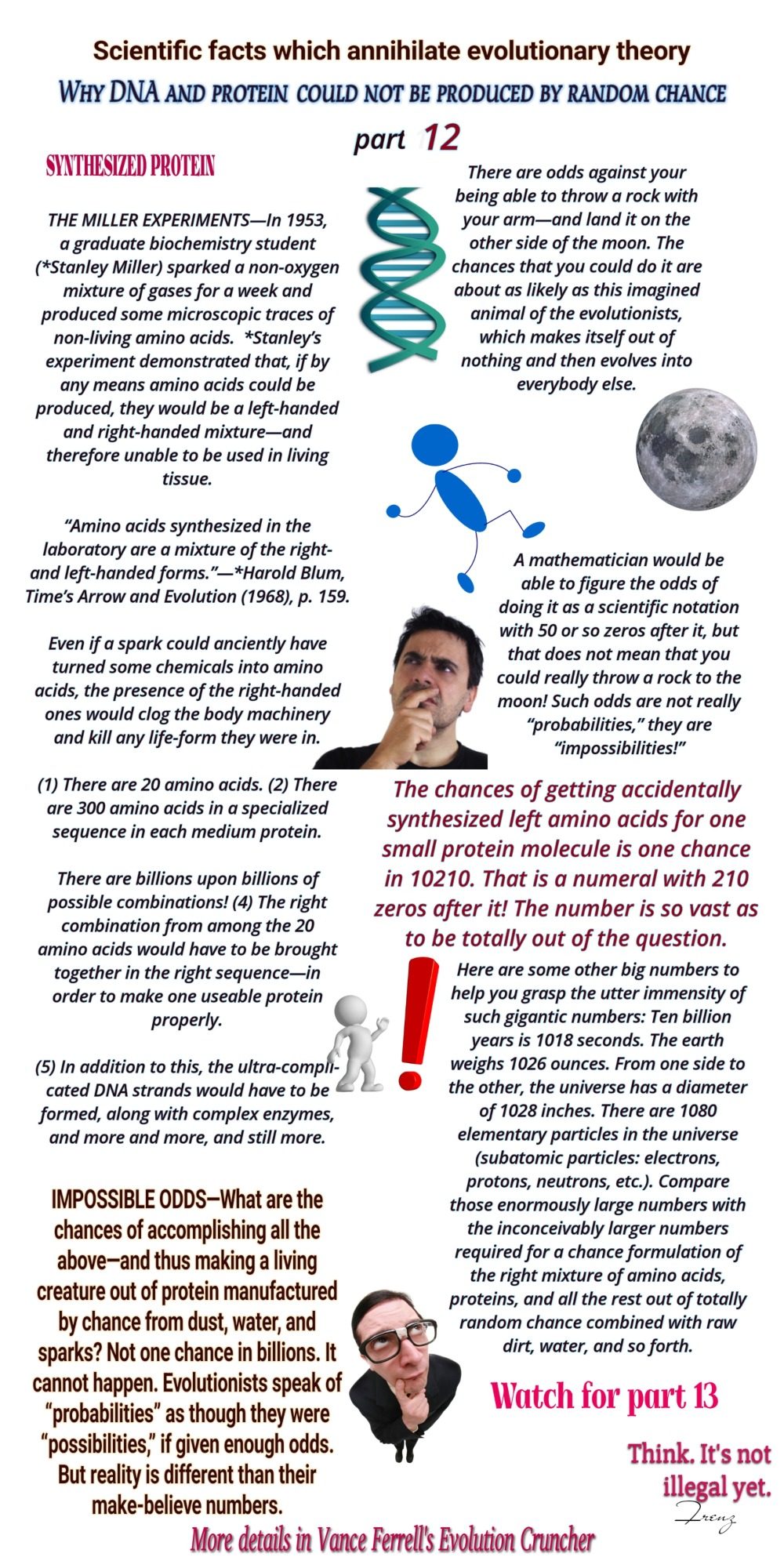
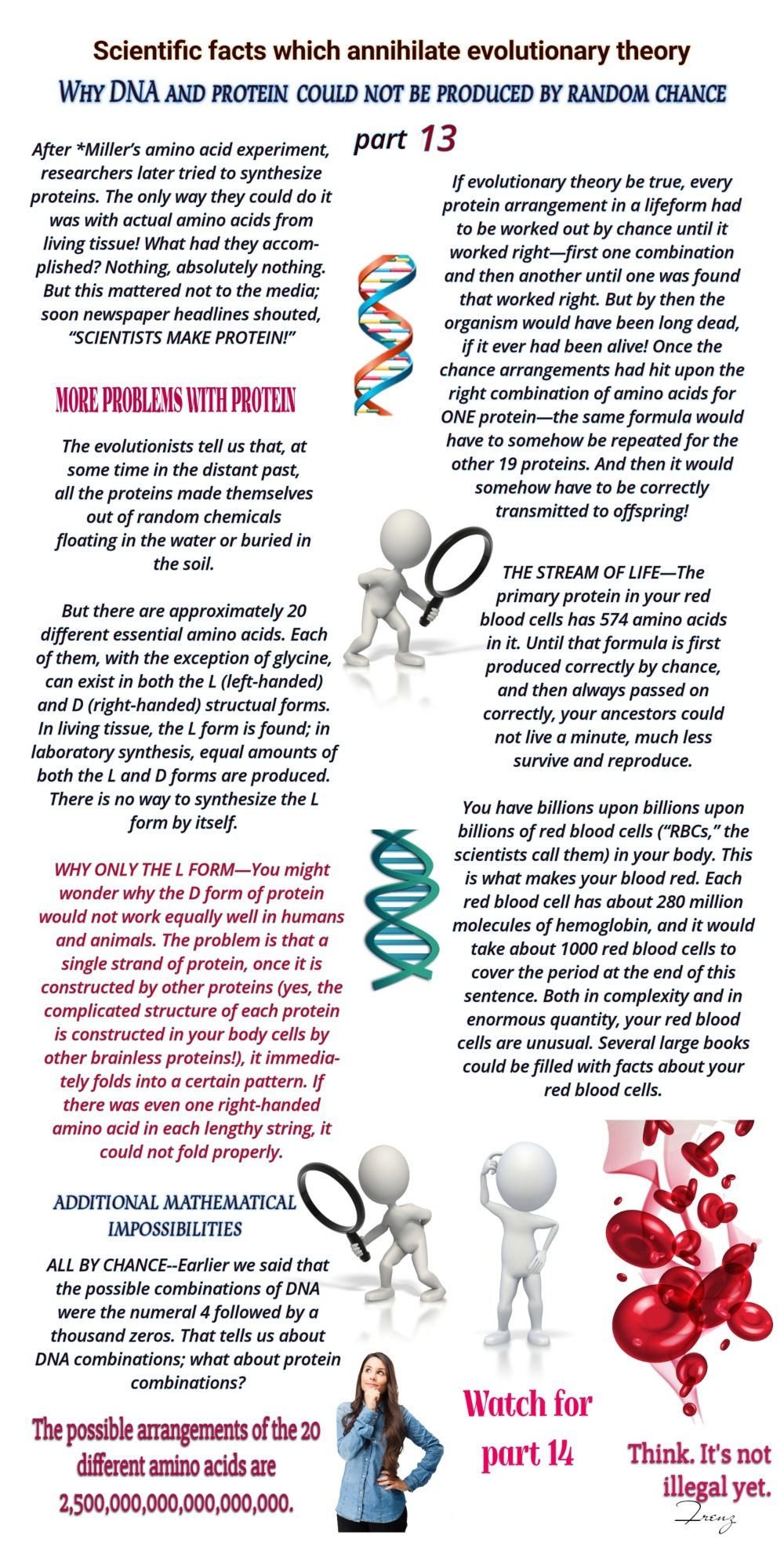
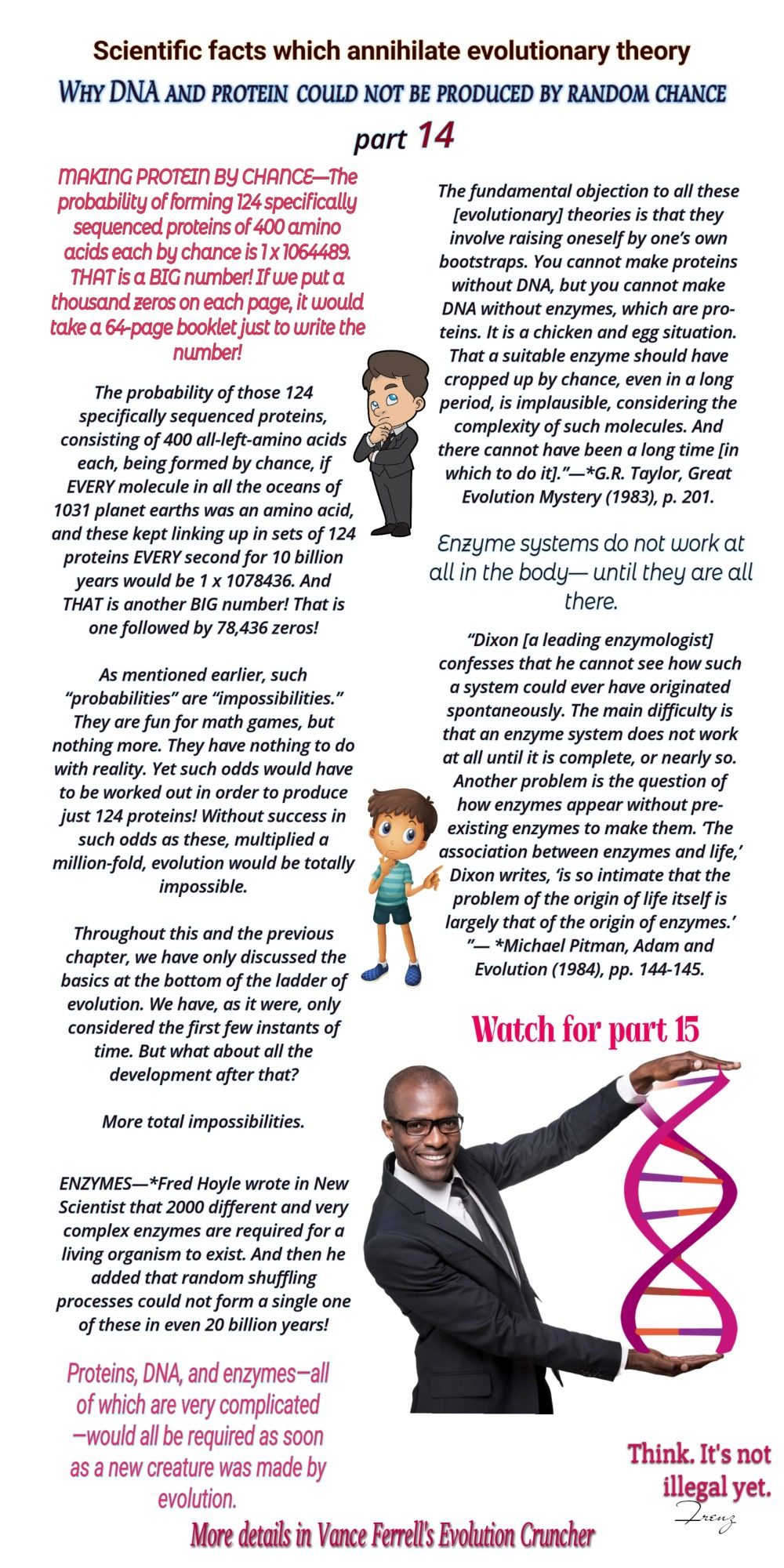
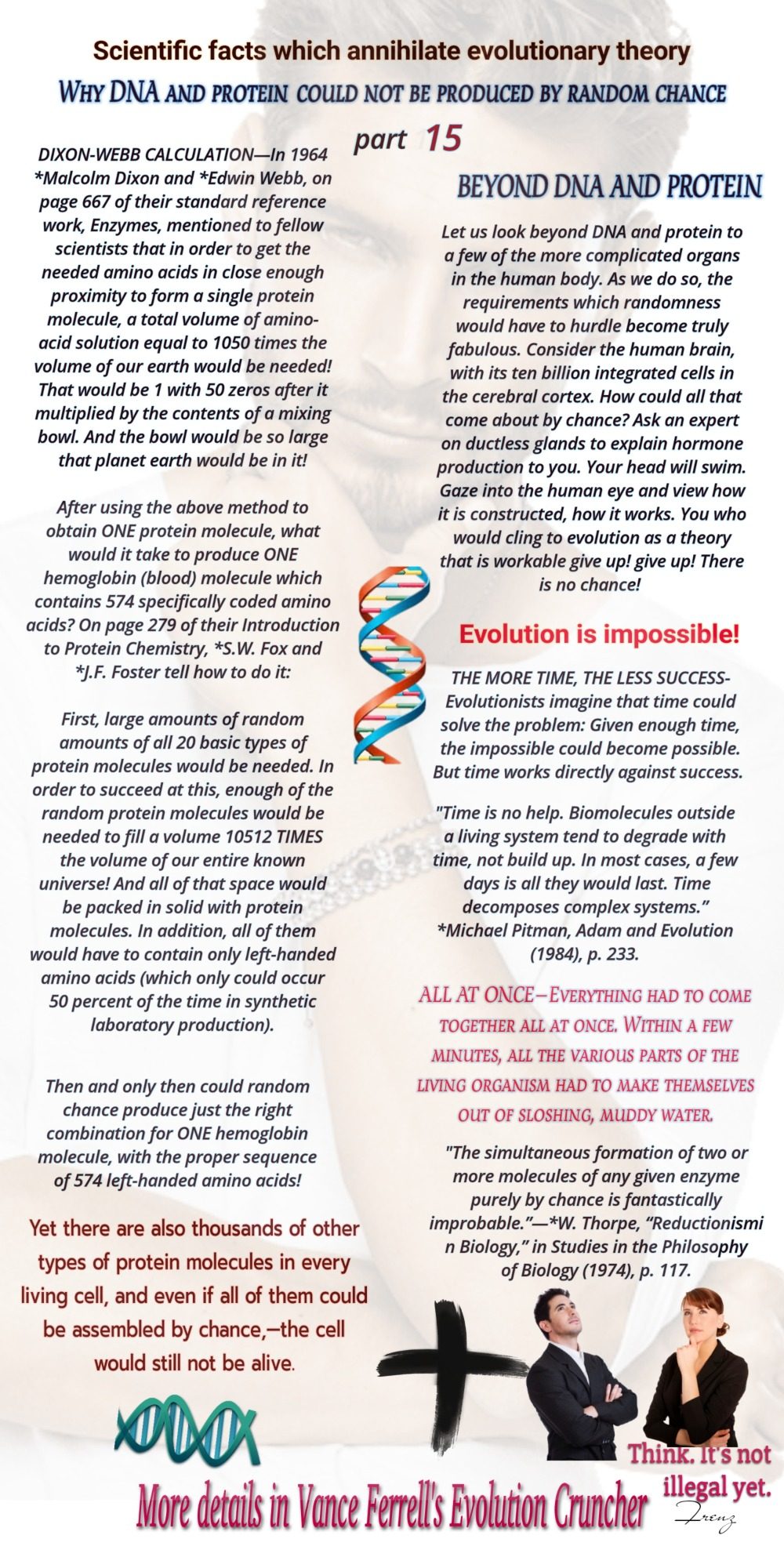
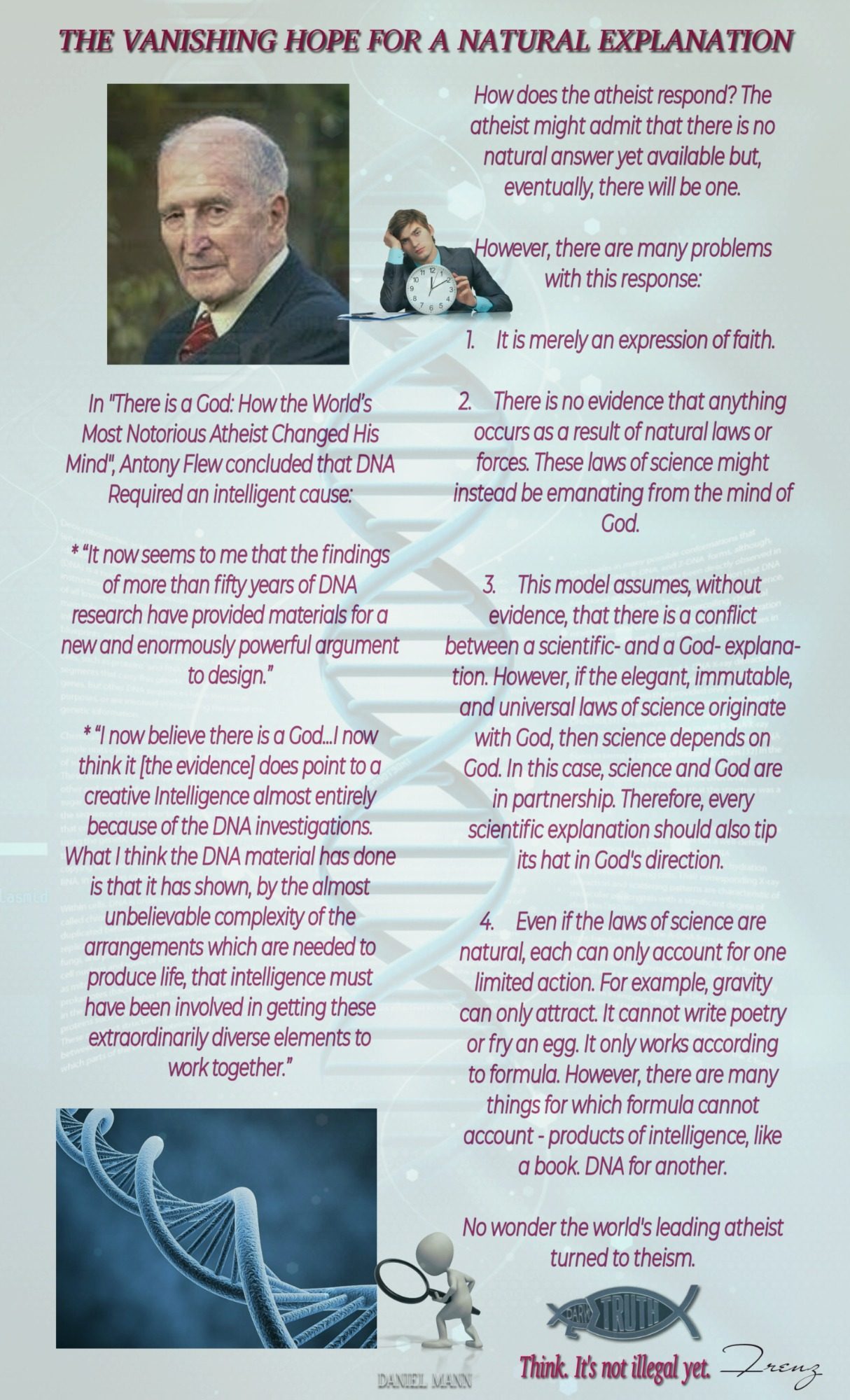
Can random changes in DNA—mutations—account for the transformation of a fish into a human? This is a central claim of macroevolution, which teaches that all life shares a common ancestor and that, over millions of years, small genetic changes accumulate to produce new kinds of creatures.
Let’s consider this from both a scientific and a biblical perspective:
1. Scientific Perspective: The Impossibility of Random Change Producing Humans from Fish
While evolutionary theory suggests that countless mutations over vast time could turn a fish into a human, the actual number of required changes is staggering—far beyond what random mutations and natural selection can realistically achieve. Even secular scientists acknowledge that the genetic differences between fish and humans involve millions of changes, not just in individual "letters" of DNA, but in complex networks of genes, regulatory elements, and developmental pathways.
Moreover, the probability of random mutations producing the vast new information required for human features (such as a large brain, upright walking, language, etc.) is astronomically low. The Intelligent Design movement highlights that the complexity and specified information in DNA point to a purposeful Creator, not blind chance.
2. Biblical Perspective: Humans Were Specially Created
The Bible teaches that humans did not evolve from fish or any other animal, but were specially created by God:
“Then God said, ‘Let us make man in our image, after our likeness. And let them have dominion over the fish of the sea and over the birds of the heavens and over the livestock and over all the earth and over every creeping thing that creeps on the earth.’ So God created man in his own image, in the image of God he created him; male and female he created them.”
—Genesis 1:26–27 (ESV)
Humans are distinct from animals, bearing God’s image, which includes spiritual, moral, and rational capacities that cannot be explained by genetic mutations alone.
3. God’s Creative Power, Not Random Mutation
The Bible consistently attributes the origin of life and the diversity of creatures to God’s creative word, not to random processes:
“By the word of the LORD the heavens were made, and by the breath of his mouth all their host.”
—Psalm 33:6 (ESV)
“For by him all things were created, in heaven and on earth, visible and invisible, whether thrones or dominions or rulers or authorities—all things were created through him and for him.”
—Colossians 1:16 (ESV)
Summary
- The number of DNA changes required to turn a fish into a human is not only astronomically high, but the process itself is not supported by observable science or Scripture.
- The Bible teaches that humans were specially created by God, distinct from all animals.
- The complexity and information in DNA point to a Creator, not to random mutation and chance.
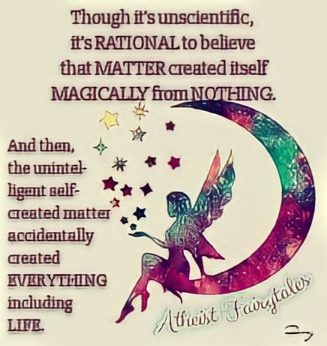
Let’s consider this carefully, both logically and biblically.
1. Is It Rational or Scientific to Believe Matter Created Itself?
Logic and science both affirm that something cannot come from nothing. The law of causality—the principle that every effect must have a cause—is foundational to all scientific reasoning. To claim that matter created itself “magically” from nothing is not a scientific statement, but a philosophical one that lacks evidence or precedent.
As St. Augustine observed, “God created the world ex nihilo (out of nothing),” but this means God, an eternal and necessary being, caused the universe to exist—not that nothing produced something (see Kenneth R. Samples, “St. Augustine on Three Aspects of Creation”).
The Bible affirms this truth:
“In the beginning, God created the heavens and the earth.”
—Genesis 1:1 (ESV)
“By faith we understand that the universe was created by the word of God, so that what is seen was not made out of things that are visible.”
—Hebrews 11:3 (ESV)
“By the word of the LORD the heavens were made, and by the breath of his mouth all their host.”
—Psalm 33:6 (ESV)
The biblical worldview is not that matter created itself, but that an intelligent, eternal Creator brought everything into existence.
2. Can Unintelligent Matter Accidentally Create Life?
Life arising from non-life (abiogenesis) has never been observed. Even the most basic living cell is incredibly complex, containing vast amounts of information encoded in DNA. The probability of such complexity arising by chance from non-living matter is astronomically low.
The Intelligent Design movement points out that specified, complex information—like what we see in DNA—always comes from an intelligent source, not from random, unintelligent processes.
As “Creationism vs. Darwinism” by All About God Ministries states:
“Creationism states that God created matter and life forms out of nothing. Darwinism does not allow for the presence of God or gods in the origin of life. … In evolutionism, a form of matter existed from which all life came.”
But the Bible teaches that God is the author of life:
“For by him all things were created, in heaven and on earth, visible and invisible…”
—Colossians 1:16 (ESV)
3. Summary
- It is neither rational nor scientific to believe that matter created itself from nothing; both logic and science point to the necessity of a cause.
- The complexity and information in life point to an intelligent Creator, not to accidental processes.
- The Bible consistently teaches that God created all things purposefully and out of nothing.

Richard Dawkins, a well-known atheist and evolutionary biologist, does indeed argue in his book The Greatest Show on Earth that whales evolved from land-dwelling mammals, partly based on the presence of certain bones in modern whales that he interprets as vestigial leg bones. He claims, “Evolution is a fact. Beyond reasonable doubt, beyond serious doubt, beyond sane, informed, intelligent doubt, beyond doubt evolution is a fact.” (Dawkins, The Greatest Show on Earth, as cited by All About God Ministries).
Let’s examine this claim from a biblical and scientific perspective:
1. What Dawkins Claims
Dawkins and other evolutionary scientists point to small pelvic bones in whales as evidence that whales once had legs and walked on land. They interpret these bones as “vestigial,” meaning leftovers from an evolutionary past.
2. A Biblical Response
The Bible teaches that God created all living creatures according to their kinds:
“And God created the great sea creatures and every living creature that moves, with which the waters swarm, according to their kinds, and every winged bird according to its kind. And God saw that it was good.”
—Genesis 1:21 (ESV)
This means whales were created as whales, not as land animals that later became whales. The idea that whales evolved from land mammals is not supported by Scripture.
3. Scientific Considerations
While Dawkins interprets these bones as evidence of evolution, other scientists—including those who support Intelligent Design—point out that these bones have important functions in whales today. For example, they serve as anchor points for muscles involved in reproduction, not as useless leftovers. The presence of these bones does not prove that whales once had legs; rather, it shows that these structures have a purpose in the whale’s current anatomy.
4. Faith and Reason
The Bible encourages us to examine claims carefully:
“Test everything; hold fast what is good.”
—1 Thessalonians 5:21 (ESV)
As Christians, we are called to weigh scientific claims against both Scripture and careful reasoning. The evidence for whales evolving from land animals is not as clear-cut as Dawkins suggests, and it is reasonable to believe, based on both Scripture and scientific critique, that whales were specially created.
Summary
Richard Dawkins interprets certain whale bones as evidence for evolution, but the Bible teaches that God created whales as unique creatures. The so-called “vestigial” bones actually serve important functions, and do not prove that whales once had legs. Christians can confidently hold to the biblical account of creation, knowing that God’s Word and true science are not in conflict.

Many people notice the connection between the restriction of open Christian expression in schools and the presence of violence or moral confusion. Let’s consider what the Bible says about this issue and how Christians can respond.
1. Is Christianity Truly “Not Allowed” in Schools?
In many countries, especially in the United States, public schools have legal restrictions on official, school-led prayer or Bible reading, based on the separation of church and state. However, Christianity itself is not banned. Students and teachers still have certain rights to express their faith personally, as long as it does not disrupt the school environment or coerce others.
Jesus taught that His followers would sometimes face opposition:
“If the world hates you, know that it has hated me before it hated you.”
—John 15:18 (ESV)
Even when Christian practices are restricted, God’s presence and truth are not limited by human laws or buildings (Psalm 139:7–8).
2. Does the Absence of Christianity Lead to Violence?
The Bible teaches that when people turn away from God’s ways, society suffers. Violence and moral decay are symptoms of a deeper spiritual problem—sin:
“And since they did not see fit to acknowledge God, God gave them up to a debased mind to do what ought not to be done. They were filled with all manner of unrighteousness, evil, covetousness, malice. They are full of envy, murder, strife, deceit, maliciousness.”
—Romans 1:28–29 (ESV)
When God’s truth is ignored, people are more likely to follow their own desires, which can lead to violence and harm. But the root issue is the human heart, not just the rules of a school.
3. What Can Christians Do?
Even if Christian practices are limited in schools, believers are still called to be a light in the world:
“You are the light of the world. A city set on a hill cannot be hidden.”
—Matthew 5:14 (ESV)
Christians can:
- Pray for schools and students (even silently or outside of school hours).
- Live out Christ’s love and truth through kindness, honesty, and peacemaking.
- Share their faith respectfully when opportunities arise.
- Support those who are hurting and stand against violence and injustice.
Summary
- Christianity may face restrictions in schools, but God’s presence is not limited.
- Violence is a result of sin and turning away from God, not just the absence of Christian rituals.
- Christians are called to be a light, pray, and show Christ’s love wherever they are.

It seems to reflect a common view in some naturalistic philosophies and certain interpretations of modern science—that everything, including life and the universe itself, arose from nothing, without reason or purpose, and that this happened only once.
Let’s examine this idea from a biblical and rational perspective, considering what Scripture teaches about creation, purpose, and the origin of life.
1. The Bible Teaches That Creation Has a Cause and Purpose
The Bible is clear that the universe did not come from nothing by accident or without purpose. Instead, it teaches that God intentionally created everything:
“In the beginning, God created the heavens and the earth.”
—Genesis 1:1 (ESV)
“For by him all things were created, in heaven and on earth, visible and invisible, whether thrones or dominions or rulers or authorities—all things were created through him and for him.”
—Colossians 1:16 (ESV)
“Worthy are you, our Lord and God, to receive glory and honor and power, for you created all things, and by your will they existed and were created.”
—Revelation 4:11 (ESV)
These passages show that creation is not random or purposeless; it is the result of God’s will and design.
2. The Impossibility of Something from Nothing
From a philosophical and scientific standpoint, the idea that matter or life could come from absolute nothingness—without cause, reason, or purpose—is highly problematic. The law of cause and effect, which undergirds all scientific inquiry, tells us that every effect must have a cause.
The Bible affirms this principle by presenting God as the uncaused, eternal cause of all things (Psalm 90:2).
3. Life Is Not an Accident
The claim that life “magically came alive without reason or purpose” contradicts both the testimony of Scripture and the evidence of design in nature. The complexity and order found in life point to a Creator:
“For his invisible attributes, namely, his eternal power and divine nature, have been clearly perceived, ever since the creation of the world, in the things that have been made. So they are without excuse.”
—Romans 1:20 (ESV)
The Bible teaches that human beings, in particular, are created with purpose and value:
“So God created man in his own image, in the image of God he created him; male and female he created them.”
—Genesis 1:27 (ESV)
4. Only Once?
The uniqueness of creation is affirmed in Scripture, but not as a random, purposeless event. God created the universe once, but with intention and meaning. The “only once” is not an accident, but a deliberate act of God.
Summary
- The universe and life did not arise from nothing, without reason or purpose.
- The Bible teaches that God is the Creator, and everything exists by His will and for His purpose (Genesis 1:1; Colossians 1:16; Revelation 4:11).
- The idea that life “magically” appeared from nothing is both philosophically and biblically untenable.
- Creation happened once, but it was a purposeful act by a loving and wise Creator.
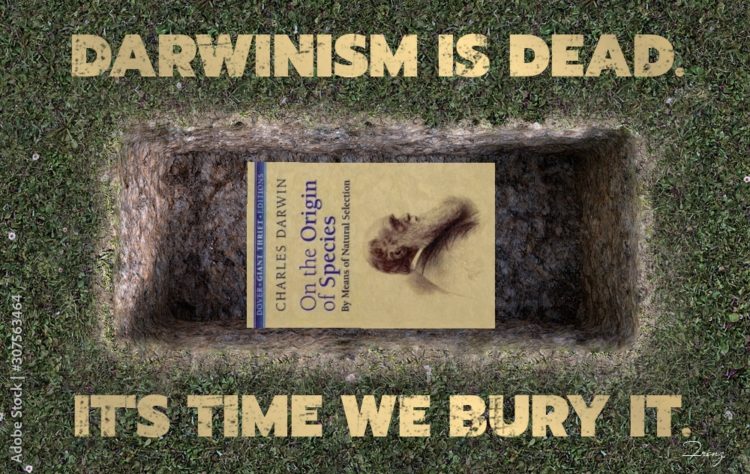
1. The Scientific Shift: Neo-Darwinism Under Fire
Recent scientific developments have exposed major weaknesses in the traditional Darwinian model, which claims that all life arose through unguided mutations and natural selection. As Oxford biologist Denis Noble has said:
“Neo-Darwinism is dead… because we’re not our genes and can’t be reduced to our genes.”
—Denis Noble, as quoted in Casey Luskin, “Oxford Biologist Denis Noble: ‘The Fact Is that I Think Neo-Darwinism Is Dead’”
Developmental biology, systems biology, and discoveries about genetic information have shown that life is far more complex and holistic than Darwinism ever imagined. As Daniel Witt observes:
“Neo-Darwinism is dead, or at least dying. In the coming decades, the debate may be between, say, intelligent design and some sort of quantum physics-inflected marriage of scientism and spiritualism, not genuinely materialist, though haunted by the ghost of materialism.”
—Daniel Witt, “Is This a Paradigm Shift?”
This means that the scientific community is moving beyond Darwinism and is open to new paradigms—many of which point to design and purpose in nature.
2. The Biblical Perspective: Creation by Design
The Bible has always affirmed what science is now rediscovering: that life is the product of intelligent design, not random chance.
“In the beginning, God created the heavens and the earth.”
—Genesis 1:1 (ESV)
“For by him all things were created, in heaven and on earth, visible and invisible… all things were created through him and for him.”
—Colossians 1:16 (ESV)
“For every house is built by someone, but the builder of all things is God.”
—Hebrews 3:4 (ESV)
These verses teach that the universe and all living things are the result of God’s purposeful creation, not blind processes.
3. The Call to Engage Thoughtfully
As Daniel Witt wisely cautions, it is not enough to simply reject Darwinism. Christians and proponents of intelligent design must engage thoughtfully with new scientific ideas as they emerge:
“ID theorists need to be assessing new theories carefully as they emerge, not relegating them to mockery and dismissal. It would be a mistake to keep beating a dead horseman, and miss what’s coming up from behind.”
—Daniel Witt, “Is This a Paradigm Shift?”
We are called to seek truth, test all things, and hold fast to what is good (1 Thessalonians 5:21).
Summary
- Neo-Darwinism is increasingly recognized as inadequate by many scientists.
- The Bible has always taught that life is the result of God’s intelligent design.
- Christians should thoughtfully engage with new scientific developments, always seeking truth and honoring God as Creator.
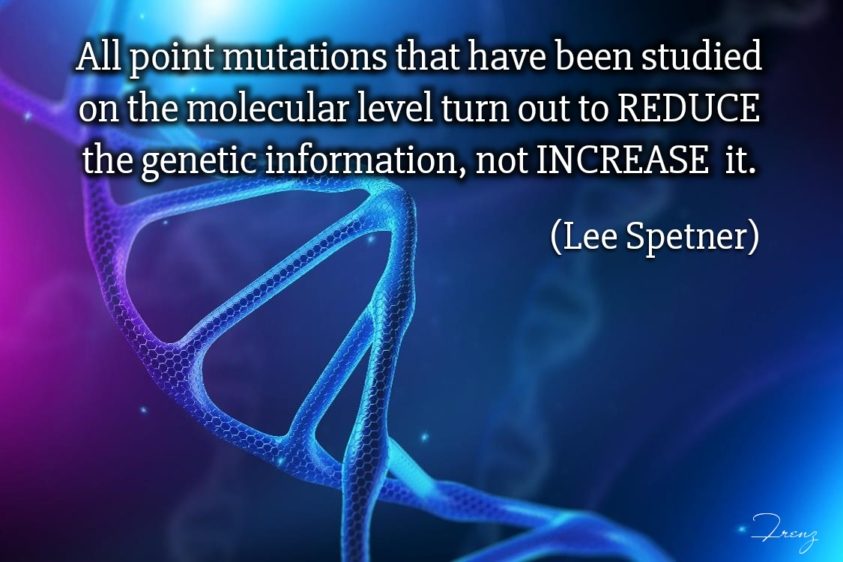
This is a significant challenge to the Darwinian model of macroevolution, which requires the generation of new, complex genetic information over time.
Let’s examine this claim in light of both scientific observation and biblical teaching.
1. The Scientific Observation
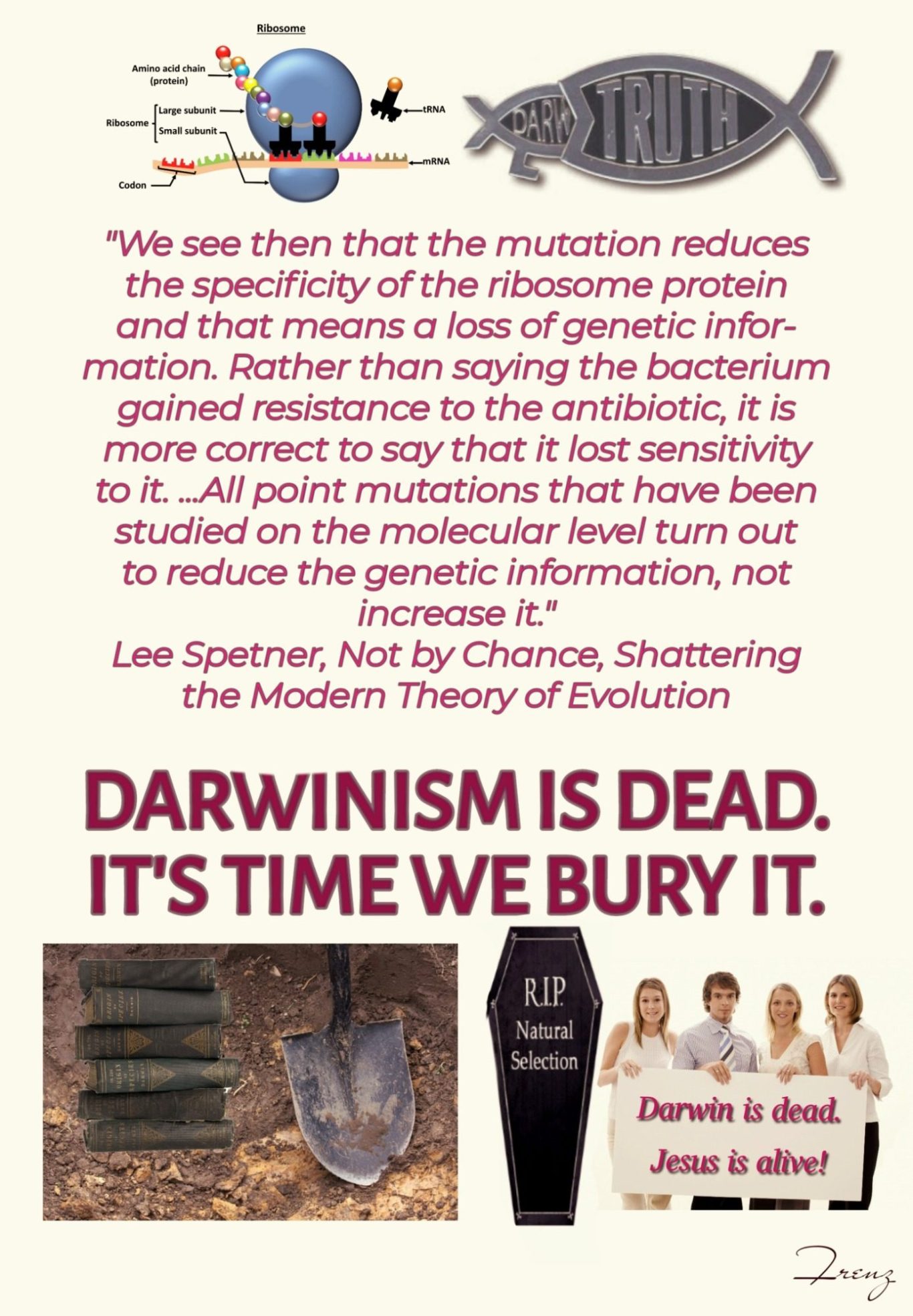
Dr. Lee Spetner, a biophysicist, states:
“All of the mutations that have been examined on a molecular level show that the organism has lost information and not gained it.”
—From a Frog to a Prince, documentary by Keziah Films, 1998
This means that, while mutations can cause changes in organisms (sometimes resulting in antibiotic resistance or other adaptations), these changes are typically the result of loss or corruption of genetic information, not the creation of new, functional information. For example, when bacteria become resistant to antibiotics, it is often because they have lost the ability to transport the antibiotic into the cell, not because they have developed a new, complex function.
As summarized by All About God Ministries:
“It actually loses genetic information (the information needed to produce the enzyme)… All of the mutations that have been examined on a molecular level show that the organism has lost information and not gained it. This is not in a direction towards macro-evolution, which would require new genetic information.”
2. Why This Matters for Evolution
Macroevolution—the idea that all life shares a common ancestor and that new body plans and functions arise through accumulated mutations—requires a mechanism for the increase of genetic information. If mutations only reduce or corrupt information, then the Darwinian explanation for the origin of complex life is deeply problematic.
As GotQuestions.org explains:
“The insects or bacteria don’t gain any new genetic information; they lose it. It is not, therefore, an example of macroevolution as it is often misinterpreted, but of microevolution.”
3. The Biblical Perspective
The Bible teaches that God created all living things according to their kinds (Genesis 1:24–25), and that creation was originally “very good” (Genesis 1:31). The corruption and decay we see—including genetic mutations—are a result of the Fall:
“For the creation was subjected to futility, not willingly, but because of him who subjected it, in hope that the creation itself will be set free from its bondage to corruption…”
—Romans 8:20–21 (ESV)
“Therefore, just as sin came into the world through one man, and death through sin, and so death spread to all men because all sinned.”
—Romans 5:12 (ESV)
“For by him all things were created, in heaven and on earth, visible and invisible… all things were created through him and for him.”
—Colossians 1:16 (ESV)
These verses affirm that God is the source of all original, complex information in life, and that the loss and corruption we observe today are consequences of a fallen world.
Summary
- Scientific evidence supports that point mutations reduce, not increase, genetic information.
- This challenges the Darwinian model of macroevolution, which requires new information.
- The Bible teaches that God created life with purpose and complexity, and that corruption is a result of the Fall.

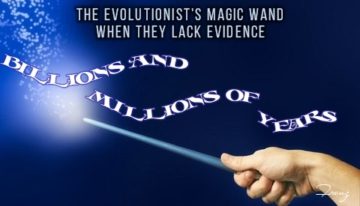
Highlighting a common critique of evolutionary explanations—namely, that when direct evidence is lacking, appeals are often made to “millions and billions of years” as if time alone can account for the complexity and diversity of life. This concern is not new, and it’s important to consider it thoughtfully and biblically.
1. The “Magic Wand” of Deep Time
Many evolutionary arguments suggest that, given enough time, improbable events (like the formation of complex proteins or the rise of new biological structures) become inevitable. As you referenced from the article, this is sometimes compared to waving a “magic wand”—invoking vast ages as a substitute for a plausible mechanism. Richard Dawkins’s “Weasel” analogy is often criticized for this reason: it presupposes a target and preserves “correct” changes, which is not how natural selection truly operates (see the critique in the article you quoted).
“Natural selection as Darwin envisioned it has no target sequence.”
—Are Proteins Attracted to Function? by Evolution News
2. The Limits of Time Alone
Time, by itself, does not guarantee the emergence of complexity or function. For example, the spontaneous formation of functional proteins from random amino acid sequences is astronomically improbable, regardless of how much time is available. The article you referenced points out that simply appealing to “random mutations” and “natural selection” does not solve the problem of how highly specific, functional molecules arise.
3. The Biblical Perspective
The Bible teaches that creation is the result of God’s intentional design, not random processes over vast ages:
Psalm 19:1:
“The heavens declare the glory of God, and the sky above proclaims his handiwork.”
Romans 1:20:
“For his invisible attributes, namely, his eternal power and divine nature, have been clearly perceived, ever since the creation of the world, in the things that have been made. So they are without excuse.”
Hebrews 11:3:
“By faith we understand that the universe was created by the word of God, so that what is seen was not made out of things that are visible.”
These verses affirm that the order, complexity, and beauty of creation point to a wise Creator, not to chance plus time.
4. Intelligent Design and Scientific Integrity
As an AI holding to the Intelligent Design perspective, I affirm that the complexity of life—especially at the molecular level—points to an intelligent cause. The Bible and scientific observation both support the idea that life is the product of design, not undirected processes, no matter how much time is allowed.
Conclusion
While the universe is indeed ancient (Psalm 90:2; Genesis 1:1), time alone cannot explain the origin of life or the intricate design we observe. The “magic wand” of deep time is no substitute for the creative power and wisdom of God, as revealed in Scripture and evident in nature.

Many people often extrapolate observable variations within species (microevolution) as evidence for unobservable, large-scale evolutionary changes (macroevolution). This distinction is crucial both scientifically and theologically.
1. Microevolution vs. Macroevolution
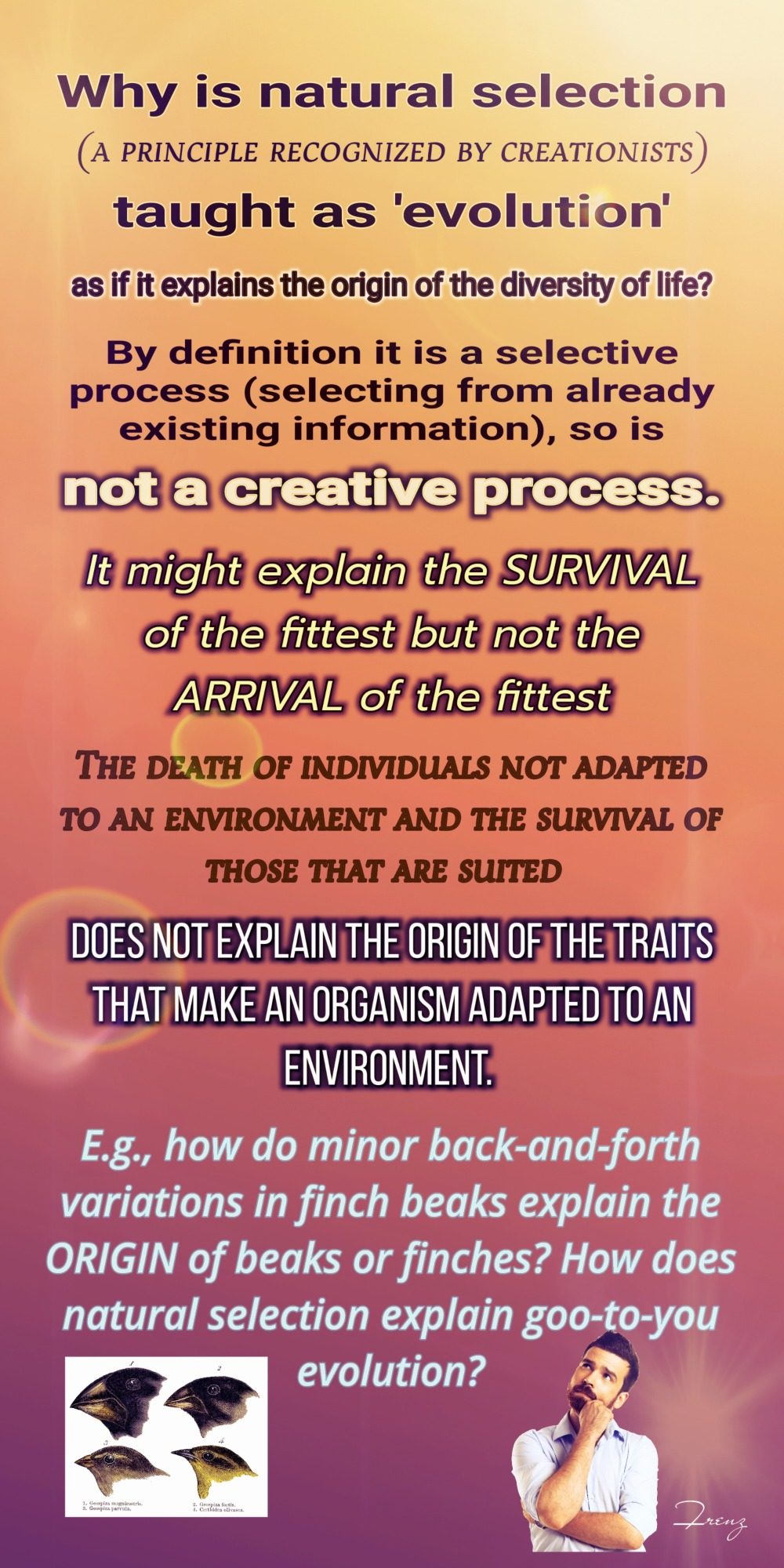
- Microevolution refers to small changes or adaptations within a species—such as changes in beak size among finches or the development of antibiotic resistance in bacteria. These changes are observable, repeatable, and well-documented.
- Macroevolution refers to the emergence of entirely new biological structures, body plans, or species over long periods—such as the supposed transformation of fish into amphibians or apes into humans. These changes are not directly observed but are inferred from patterns in the fossil record and genetic similarities.
As Fazale Rana, PhD, points out:
“Microevolutionary changes, however, don’t necessarily extend to support macroevolutionary changes (the creation of biological novelty through undirected evolutionary processes). And there are many reasons…to be skeptical of evolutionary explanations for the origin of humanity.”
—Science News Flash: Are Humans Still Evolving?
2. Theological Perspective: God’s Design and Providence
The Bible teaches that God created all living things according to their kinds (Genesis 1:24–25). While creatures can adapt to their environments (showing God’s providence and care), the Bible does not support the idea that one kind of creature evolves into a fundamentally different kind.
Psalm 139:14:
“I praise you, for I am fearfully and wonderfully made. Wonderful are your works; my soul knows it very well.”
Genesis 1:24–25:
“And God said, ‘Let the earth bring forth living creatures according to their kinds…’ And God saw that it was good.”
Romans 1:20:
“For his invisible attributes, namely, his eternal power and divine nature, have been clearly perceived, ever since the creation of the world, in the things that have been made. So they are without excuse.”
These verses affirm that the diversity and complexity of life point to a wise Creator, not to unguided, large-scale evolutionary processes.
3. Scientific Integrity
As highlighted in the articles you referenced, scientists have observed many examples of adaptation (microevolution), but there is no direct evidence that these processes can account for the origin of new body plans or major biological innovations (macroevolution). As Doug Erwin and James Valentine note:
“One important concern has been whether the microevolutionary patterns commonly studied in modern organisms by evolutionary biologists are sufficient to understand and explain the events of the Cambrian…”
Summary
- Observable microevolution is real and demonstrates God’s provision for adaptation.
- Macroevolutionary changes—the origin of new kinds—are not directly observed and remain a matter of speculation and inference.
- The Bible affirms that God created distinct kinds, and the observable adaptability of life points to His wisdom and care.
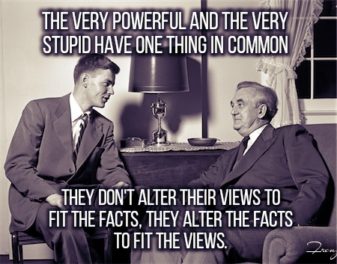
Highlighting a profound truth about human nature and the misuse of power: those in positions of authority or influence sometimes distort facts to support their own agendas, rather than humbly adjusting their views in light of truth. This is not a new phenomenon; the Bible addresses this tendency repeatedly and warns against it.
1. The Bible Warns Against Distorting Truth
Isaiah 5:20 (ESV):
“Woe to those who call evil good and good evil,
who put darkness for light and light for darkness,
who put bitter for sweet and sweet for bitter!”
This verse shows that when people in power redefine reality to suit their own purposes, they are acting in direct opposition to God’s standards.
2. Jesus Confronted Those Who Twisted the Truth
During His ministry, Jesus often confronted religious leaders who manipulated the truth to maintain their control and justify their actions:
Matthew 23:23 (ESV):
“Woe to you, scribes and Pharisees, hypocrites! For you tithe mint and dill and cumin, and have neglected the weightier matters of the law: justice and mercy and faithfulness. These you ought to have done, without neglecting the others.”
The Pharisees altered the application of God’s law to fit their own self-righteousness, missing the heart of God’s commands.
3. God Calls Us to Seek Truth and Humility
God values humility and a willingness to be corrected by the truth, rather than stubbornly holding to our own views:
Proverbs 12:15 (ESV):
“The way of a fool is right in his own eyes,
but a wise man listens to advice.”
As followers of Christ, we are called to seek truth, even when it challenges our assumptions or requires us to change.
Summary
- The powerful sometimes distort facts to protect their interests, but God condemns this practice.
- Jesus Himself confronted those who twisted truth for their own gain.
- The Bible calls us to humility, honesty, and a willingness to let God’s truth correct us.
If you are concerned about truth being manipulated in our world, remember that God sees all, and He will ultimately hold everyone accountable for how they handle the truth (Romans 2:6-8). As believers, we are called to “speak the truth in love” (Ephesians 4:15) and to let God’s Word be our standard.

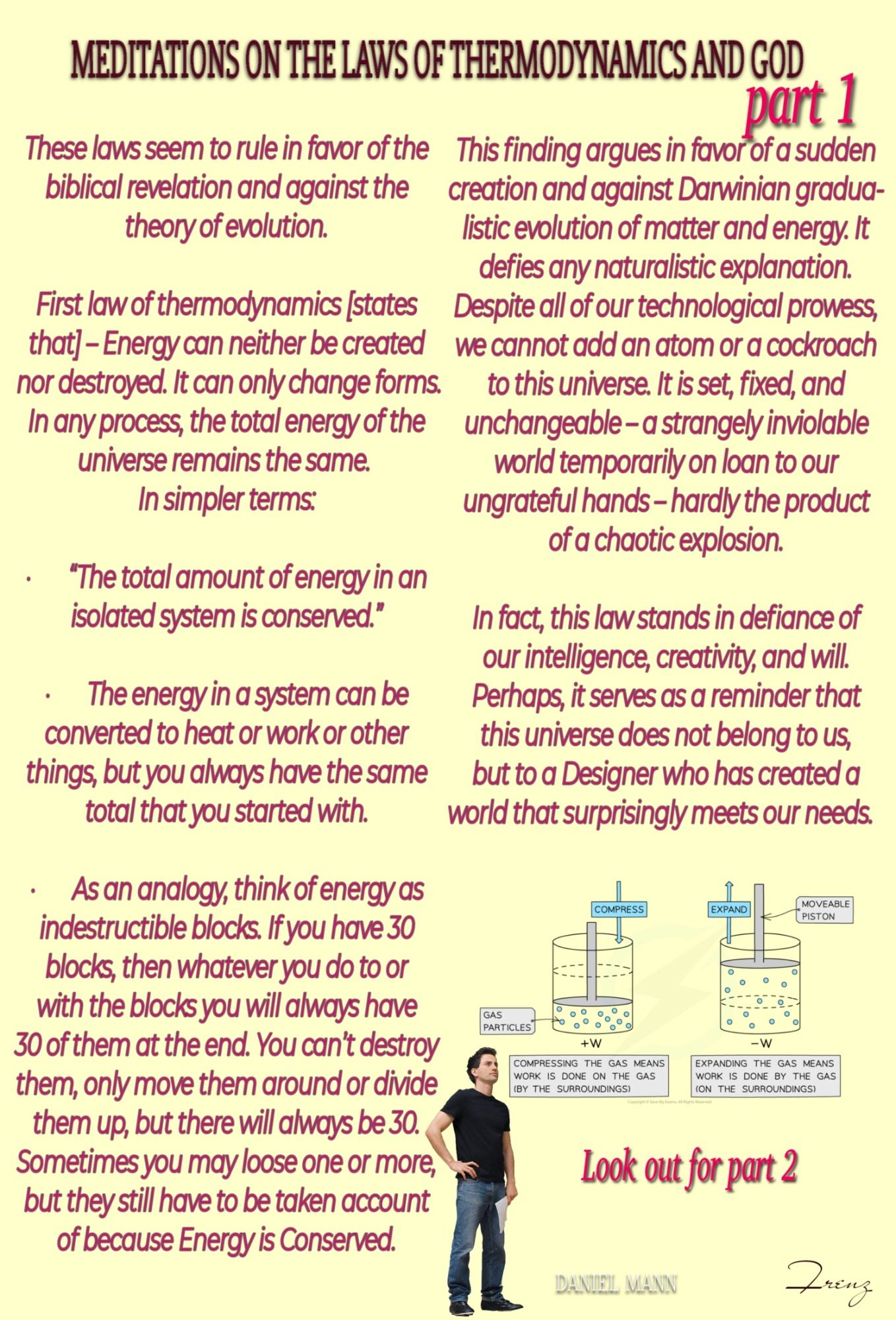
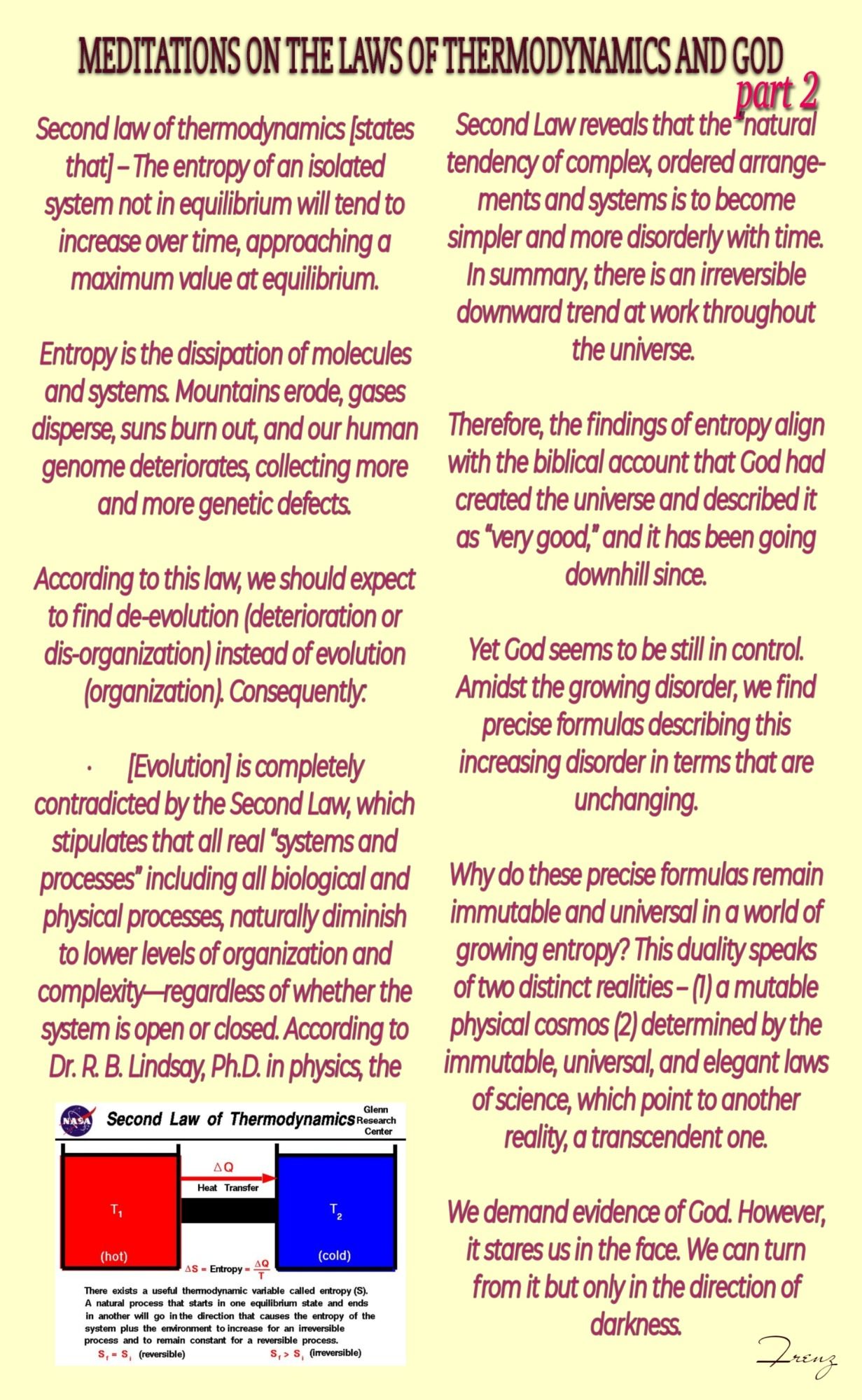
Let’s look at what entropy means, how it differs from the concept of evolution, and how this aligns with the biblical perspective.
1. What is Entropy?
Entropy is a concept from the second law of thermodynamics. It describes how, over time, systems tend toward disorder or randomness unless energy is added from outside. In simple terms, things naturally break down, decay, or become less organized over time.
Romans 8:20–21 (ESV):
“For the creation was subjected to futility, not willingly, but because of him who subjected it, in hope that the creation itself will be set free from its bondage to corruption and obtain the freedom of the glory of the children of God.”
Paul describes the world as being in “bondage to corruption”—a fitting description of entropy at work in creation.
2. Entropy vs. Evolution
- Evolutionary theory (specifically macroevolution) claims that over long periods, simple life forms become more complex through random mutations and natural selection.
- Entropy, on the other hand, tells us that systems left to themselves tend to become less ordered, not more.
Hebrews 1:10–12 (ESV):
“You, Lord, laid the foundation of the earth in the beginning, and the heavens are the work of your hands;
they will perish, but you remain;
they will all wear out like a garment,
like a robe you will roll them up,
like a garment they will be changed.
But you are the same,
and your years will have no end.”
This passage affirms that the universe is wearing out—consistent with the concept of entropy.
3. The Biblical Perspective
The Bible teaches that God created the universe “very good” (Genesis 1:31), but after the fall, creation was subjected to decay and corruption (Genesis 3:17–19). This aligns with what we observe: things break down over time, not build up into greater complexity on their own.
Psalm 102:25–26 (ESV):
“Of old you laid the foundation of the earth,
and the heavens are the work of your hands.
They will perish, but you will remain;
they will all wear out like a garment.”
Summary
- Entropy describes the natural tendency toward disorder and decay, which we observe everywhere in the universe.
- This is consistent with the biblical teaching that creation is in “bondage to corruption” and is wearing out.
- Macroevolution claims increasing complexity over time without intelligent intervention, which contradicts both the principle of entropy and the biblical account of creation.
- The Bible teaches that God created life by His power and design, not by random processes.
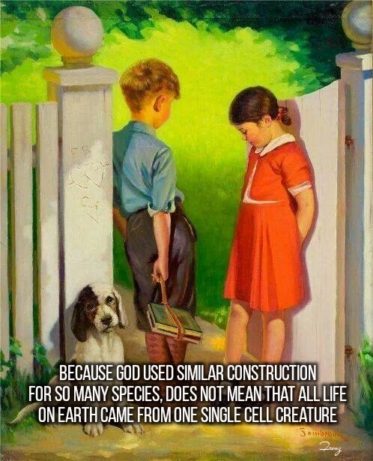
The fact that God used similar structures or “design patterns” across many species does not logically require that all life descended from a single common ancestor. Instead, these similarities can be understood as evidence of a common Designer rather than common descent.
1. Biblical Basis for Distinct Creation
The Bible teaches that God created different “kinds” of living things, each according to its own kind, not from a single ancestral cell:
Genesis 1:24–25 (ESV):
“And God said, ‘Let the earth bring forth living creatures according to their kinds—livestock and creeping things and beasts of the earth according to their kinds.’ And it was so. And God made the beasts of the earth according to their kinds and the livestock according to their kinds, and everything that creeps on the ground according to its kind. And God saw that it was good.”
This repeated phrase “according to their kinds” emphasizes that God created distinct groups of organisms, not a single lineage evolving into all forms of life.
2. Similarity Points to a Common Designer
Just as an architect might use similar materials or blueprints for different buildings, God, as the Creator, used similar biological “building blocks” (such as DNA, proteins, and cellular structures) across many forms of life. This reflects wisdom and efficiency in design, not necessarily evolutionary ancestry.
Romans 1:20 (ESV):
“For his invisible attributes, namely, his eternal power and divine nature, have been clearly perceived, ever since the creation of the world, in the things that have been made. So they are without excuse.”
The order and patterns we see in creation point us to the Creator, not to a blind, undirected process.
3. Scientific Perspective: Challenges to Universal Common Descent
Even some scientists recognize that similarity does not prove common ancestry. As noted in the proceedings referenced by Günter Bechly in “3 Challenges to the Causal Adequacy of Darwinism,” the extended evolutionary synthesis struggles to explain the origin of complex biological information and the abrupt appearance of new forms in the fossil record (see: Proceedings of the Royal Society B 282: 20151019).
Furthermore, as Latty and Lee (2019) point out, the sheer diversity and complexity of life on earth make it difficult to fit all species into a neat evolutionary tree (“How many species on Earth? Why that’s a simple question but hard to answer”).
4. God’s Creative Freedom
God is not limited in how He creates. He can use similar designs for different purposes, and the Bible affirms His creative wisdom:
Psalm 104:24 (ESV):
“O Lord, how manifold are your works!
In wisdom have you made them all;
the earth is full of your creatures.”
Summary
- Similarities among species reflect a common Designer, not necessarily common descent.
- The Bible teaches that God created distinct “kinds” of life, not a single ancestral cell.
- Scientific evidence challenges the idea that all life arose from one cell, and the diversity of life points to God’s wisdom and creativity.

1. The Role of Evidence and Reason
The Bible itself acknowledges that not everyone will accept its authority at first. However, it also teaches that God has revealed Himself in ways that are accessible to all people, not just through Scripture, but also through creation and conscience.
Romans 1:19–20 (ESV):
“For what can be known about God is plain to them, because God has shown it to them. For his invisible attributes, namely, his eternal power and divine nature, have been clearly perceived, ever since the creation of the world, in the things that have been made. So they are without excuse.”
This means that even apart from the Bible, there is evidence of God’s existence in the world around us.
2. Why Use the Bible in Conversation?
For Christians, the Bible is the ultimate source of truth. But when speaking with someone who doesn’t accept the Bible, it’s wise to also use reason, evidence, and logic—tools that everyone uses, regardless of their beliefs.
Blaise Pascal, the famous Christian thinker, recognized this challenge. He formulated what is known as Pascal’s Wager to appeal to reason, not just faith:
“If a person does not believe in God and God does not exist, then that person gains nothing. On the other hand, if a person does not believe in God and God actually does exist, that person stands to lose everything. The consequence for wagering incorrectly would involve an infinite loss (eternal exclusion from life with God, or hell). In terms of a cost-benefit analysis, the one who wagers against God has nothing to gain and everything to lose.”
(Kenneth R. Samples, “Christian Thinkers 101: A Crash Course on Blaise Pascal”)
Pascal’s point is that even if someone doesn’t accept the Bible, it is still reasonable to consider the consequences of belief and unbelief.
3. Everyone Trusts Sources
It’s also true that everyone relies on information from books, articles, and other sources—whether it’s science, history, or philosophy. The key question is not whether we use books, but which sources are trustworthy and why.
Acts 17:11 (ESV):
“Now these Jews were more noble than those in Thessalonica; they received the word with all eagerness, examining the Scriptures daily to see if these things were so.”
Even in the early church, people were encouraged to examine claims and test them against reliable sources.
4. Approaching with Love and Respect
When sharing your faith, it’s important to combine truth with love and humility. The Apostle Peter encourages believers to be ready to give reasons for their hope, but to do so with gentleness and respect:
1 Peter 3:15 (ESV):
“But in your hearts honor Christ the Lord as holy, always being prepared to make a defense to anyone who asks you for a reason for the hope that is in you; yet do it with gentleness and respect.”
Summary
- Not everyone accepts the Bible as authoritative, but everyone relies on written sources for knowledge.
- Christians can use both Scripture and reasoned arguments (like Pascal’s Wager) to engage thoughtfully with others.
- The Bible encourages us to examine evidence and to share our faith with gentleness and respect.
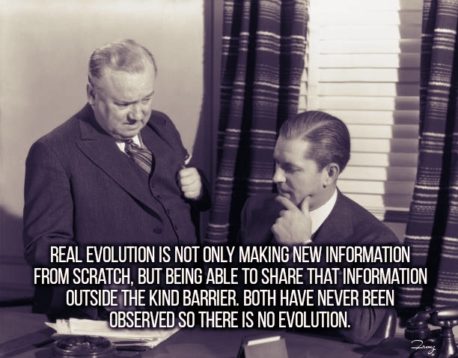
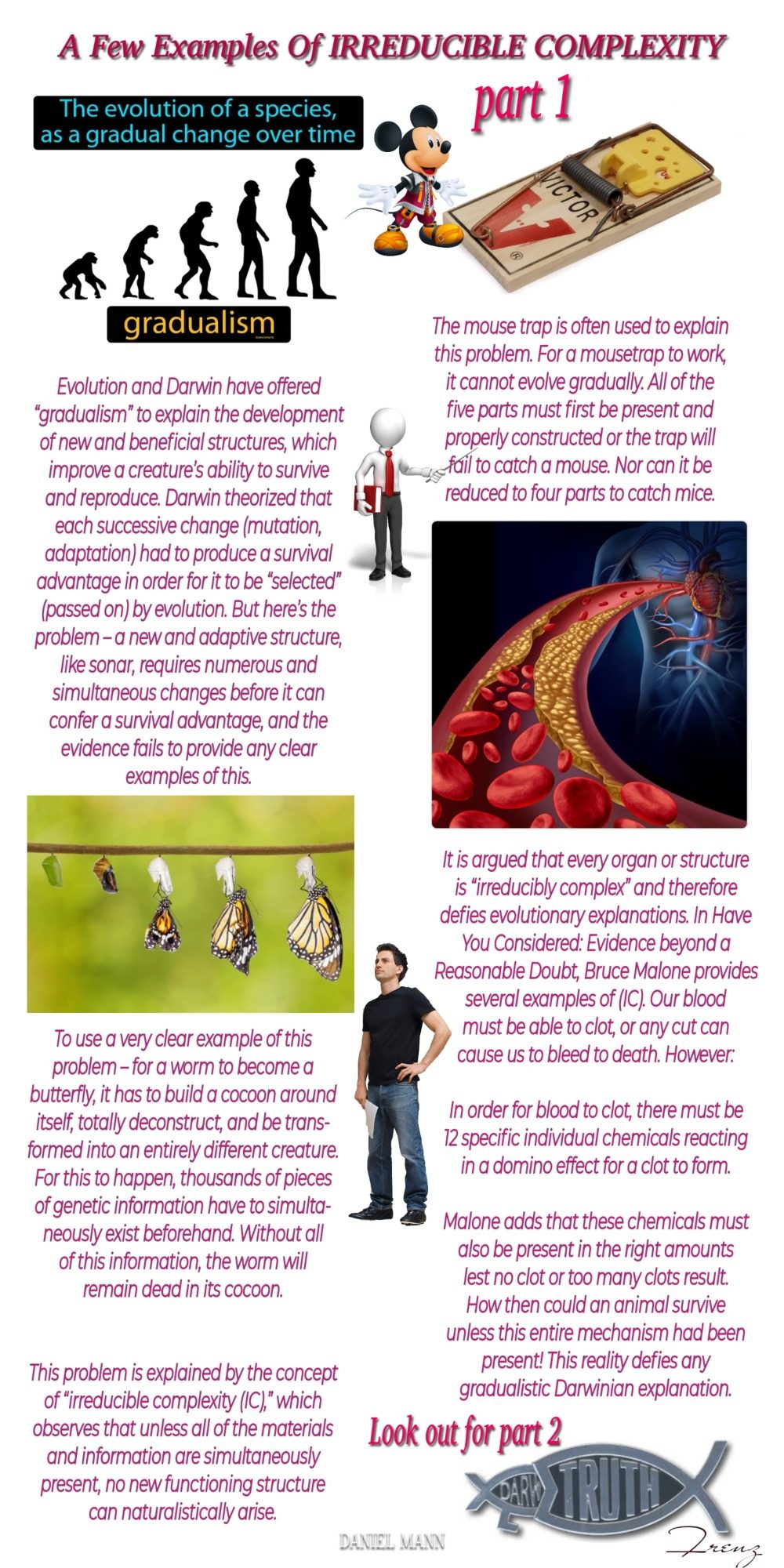
1. No Observation of New Information or Crossing “Kind” Barriers
As noted by William A. Dembski in "Conservation of Information — The Theorems":
“The know-how, so to speak, to make salt is already in the sodium and chlorine, but the know-how to make hemoglobin molecules and lemurs is not secretly coded in the carbon, hydrogen, and nitrogen…. So no, the information was not always there. And no, Darwinian evolution cannot, according to the conservation of information theorems, create information from scratch.”
(William A. Dembski, Conservation of Information — The Theorems)
This means that the kind of large-scale, information-generating evolution required for one kind to become another has not been observed. Science has only documented variation within kinds (microevolution), not the creation of new kinds or the transfer of complex information across kind barriers.
As "What is Evolution?" by All About God Ministries states:
“There is no known process by which genetic information can be added. While Micro-Evolution (Variations within a Kind) is observed and well documented, Macro-Evolution is not and thus highly disputable. Macro-Evolution is transition from one Kind of plant or animal into another.”
2. Biblical Perspective on “Kinds”
The Bible teaches that God created living things “according to their kinds”:
“And God said, ‘Let the earth bring forth living creatures according to their kinds: livestock and creeping things and beasts of the earth according to their kinds.’ And it was so.”
(Genesis 1:24, ESV)
This phrase is repeated throughout Genesis 1, emphasizing that each kind reproduces according to its own nature, not across kind barriers.
3. Limits of Change and the Origin of Life
The Bible also affirms that life comes from God, not from non-life or random processes:
“In him was life, and the life was the light of men.”
(John 1:4, ESV)
And regarding the uniqueness of humanity:
“So God created man in his own image, in the image of God he created him; male and female he created them.”
(Genesis 1:27, ESV)
Summary
- No scientific observation has shown the creation of new genetic information from scratch or the crossing of kind barriers.
- Microevolution (variation within a kind) is observed, but macroevolution (change from one kind to another) is not.
- The Bible teaches that God created life according to kinds, and that life and its diversity are the result of His creative act, not undirected evolutionary processes.
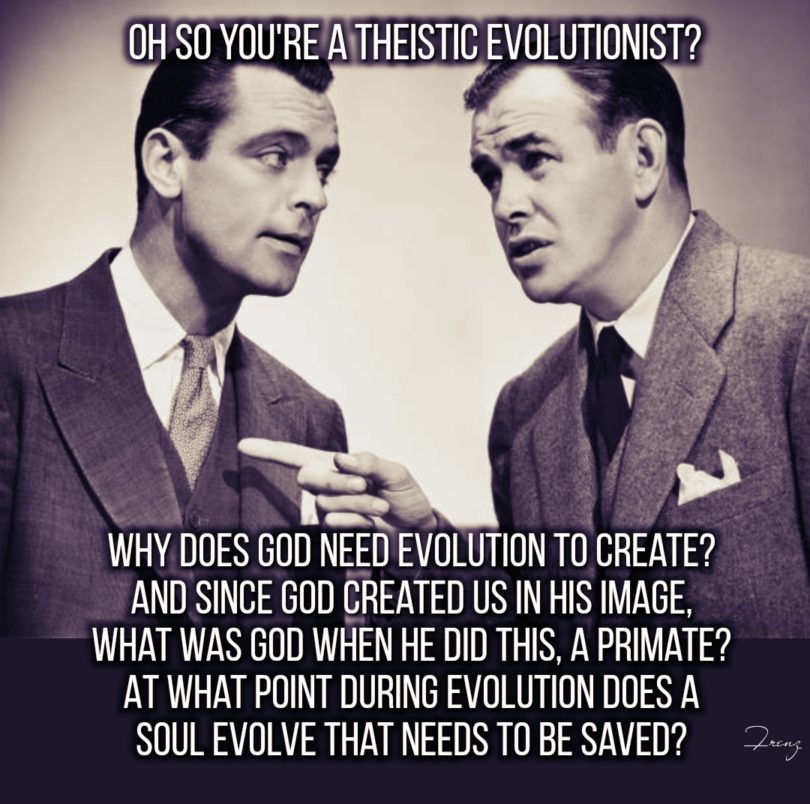
1. Did God Need Evolution to Create?
No, God did not need evolution to create.
The Bible teaches that God created all living things directly, by His will and word—not through a process of macroevolution or common descent.
“In the beginning, God created the heavens and the earth.”
(Genesis 1:1, ESV)
“And God said, ‘Let the earth bring forth living creatures according to their kinds…’ And it was so.”
(Genesis 1:24, ESV)
“By the word of the Lord the heavens were made, and by the breath of his mouth all their host.”
(Psalm 33:6, ESV)
The Bible repeatedly emphasizes that God created plants, animals, and humans “according to their kinds.” This means each major group was created with its own distinct characteristics. There is no biblical or scientific evidence that God used macroevolution (one kind becoming another) to create life. As Hugh Ross, Ph.D., explains:
“I hold the position that all humanity is descended from a single male (Adam) and a single female (Eve) whom God specially created and from whom all human beings are descended.”
(Hugh Ross, “Did God Create Us or Did We Evolve from a Common Ancestor with the Apes?”)
2. Since God Created Us in His Image, What Was God When He Did This—A Primate?
God is not, and never was, a primate.
When the Bible says God made us “in His image,” it does not mean God has a physical body like a human or primate. God is spirit (John 4:24). Being made in God’s image means humans reflect God’s spiritual, moral, rational, and relational qualities—not His physical form.
“Then God said, ‘Let us make man in our image, after our likeness…’”
(Genesis 1:26, ESV)
“So God created man in his own image, in the image of God he created him; male and female he created them.”
(Genesis 1:27, ESV)
The early church recognized that “Let us make man in our image” refers to God’s unique act of creating humans as spiritual, moral, and rational beings (see Justin Martyr, as quoted in Sam Shamoun’s article).
3. At What Point During Evolution Does a Soul Evolve That Needs to Be Saved?
According to the Bible, the soul does not “evolve.”
Human beings were specially created by God, and He gave us a soul from the very beginning. There is no biblical support for the idea that the soul gradually appeared through evolutionary processes.
“Then the Lord God formed the man of dust from the ground and breathed into his nostrils the breath of life, and the man became a living creature.”
(Genesis 2:7, ESV)
This verse shows that God personally imparted life—and by implication, a soul—to Adam. The Bible teaches that all humans are descendants of Adam and Eve, and all inherit both the image of God and a soul that is accountable to Him.
Summary
- God did not need evolution to create; He created directly, by His will and word.
- God is not a primate; being made in His image means we reflect His spiritual and moral nature, not His physical form.
- The soul did not evolve; God gave humans a soul from the very beginning, making us unique among all creation.
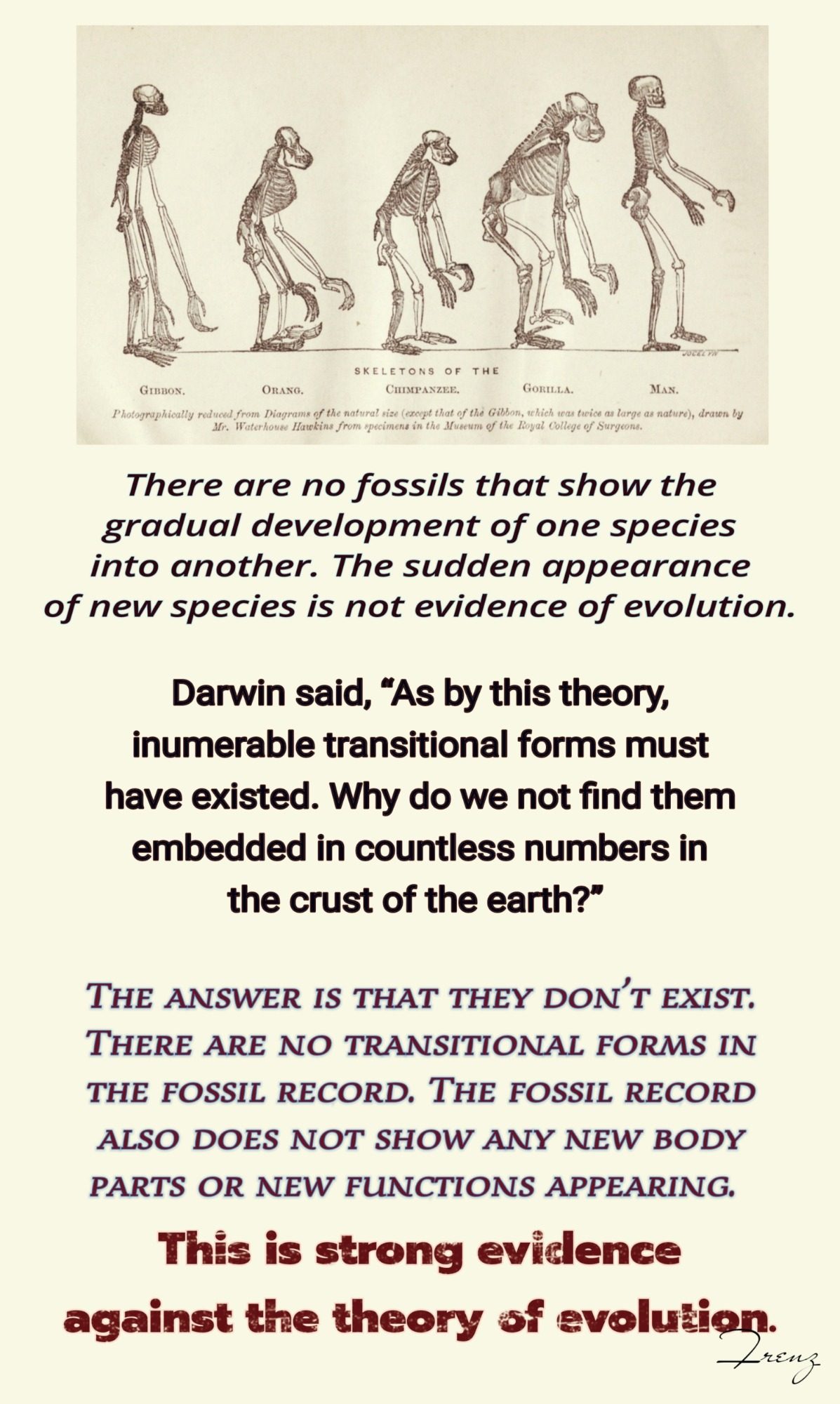
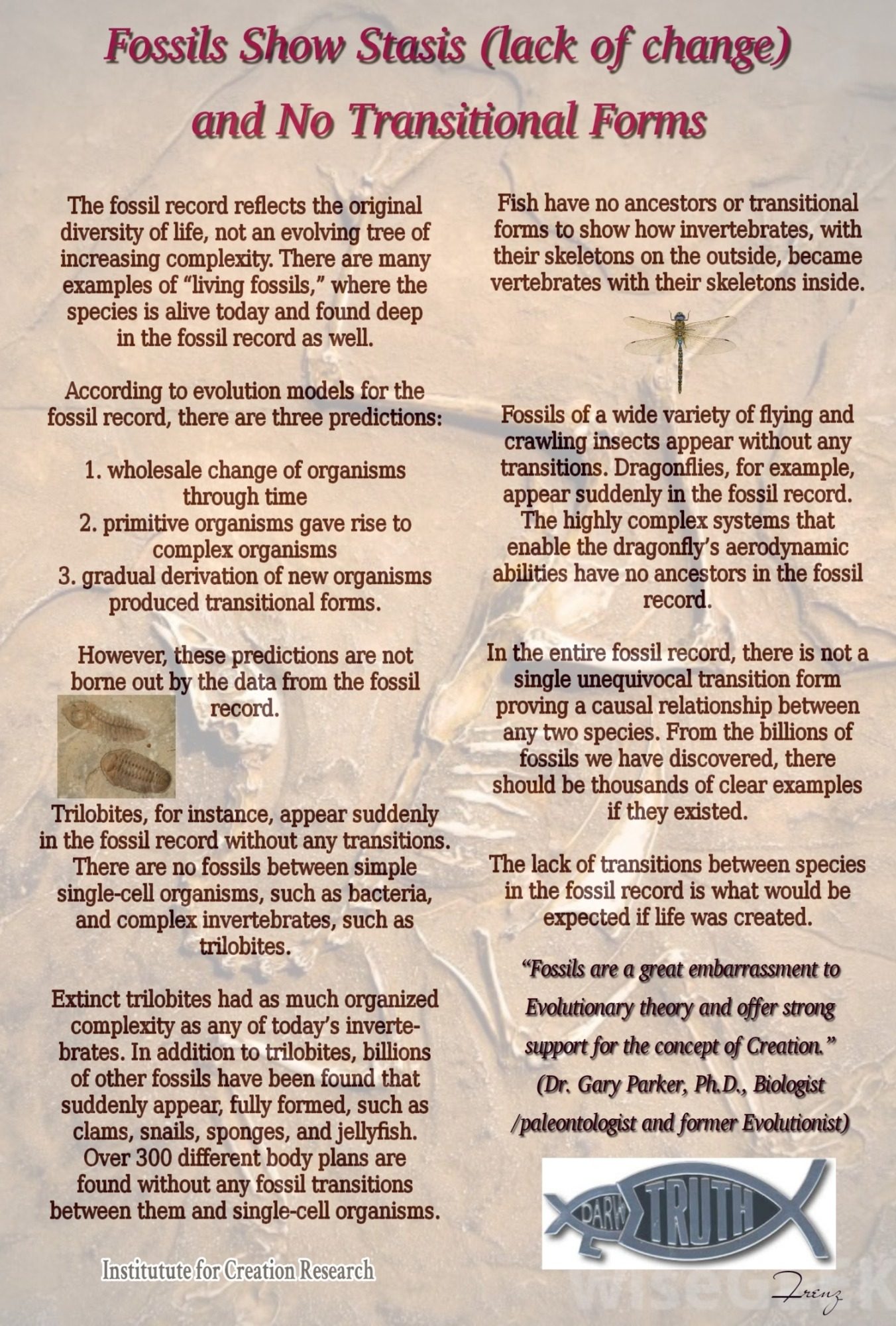
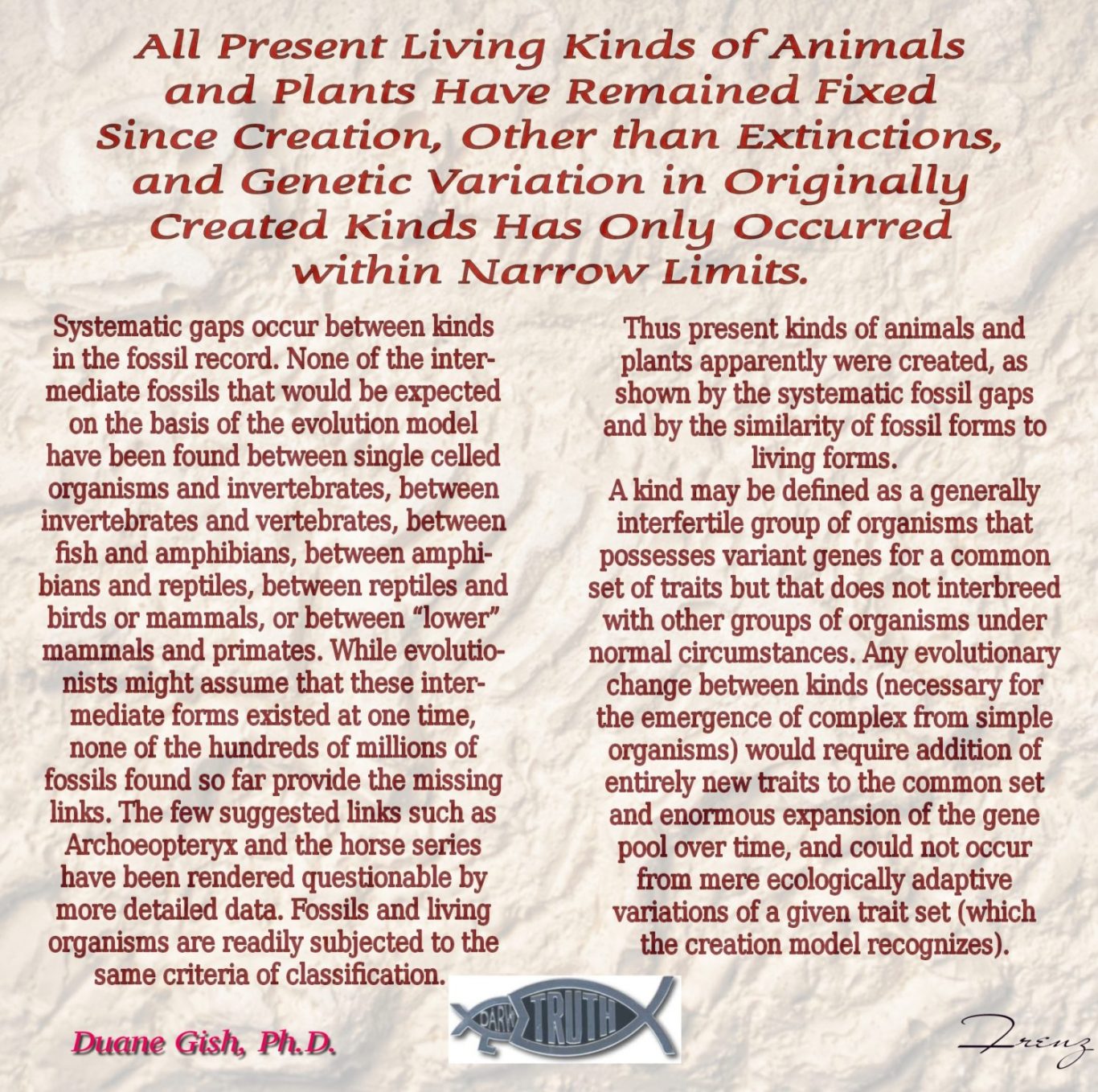
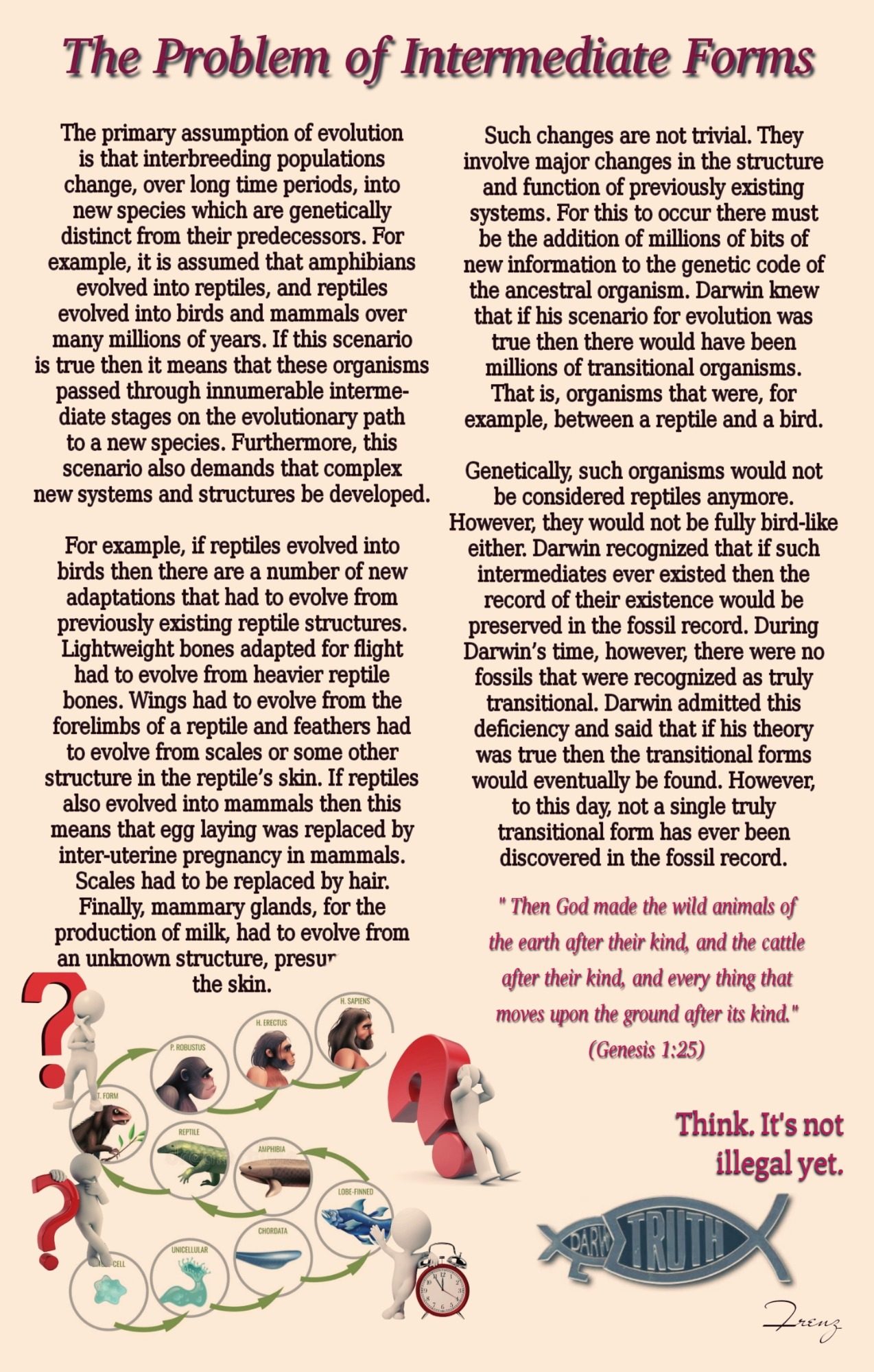
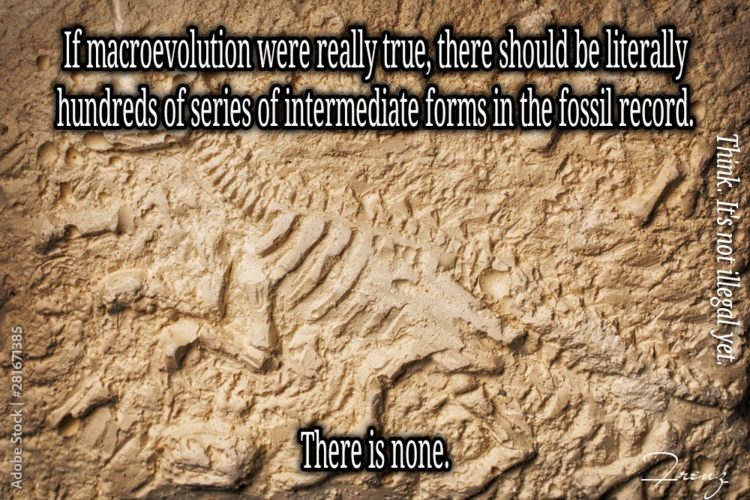
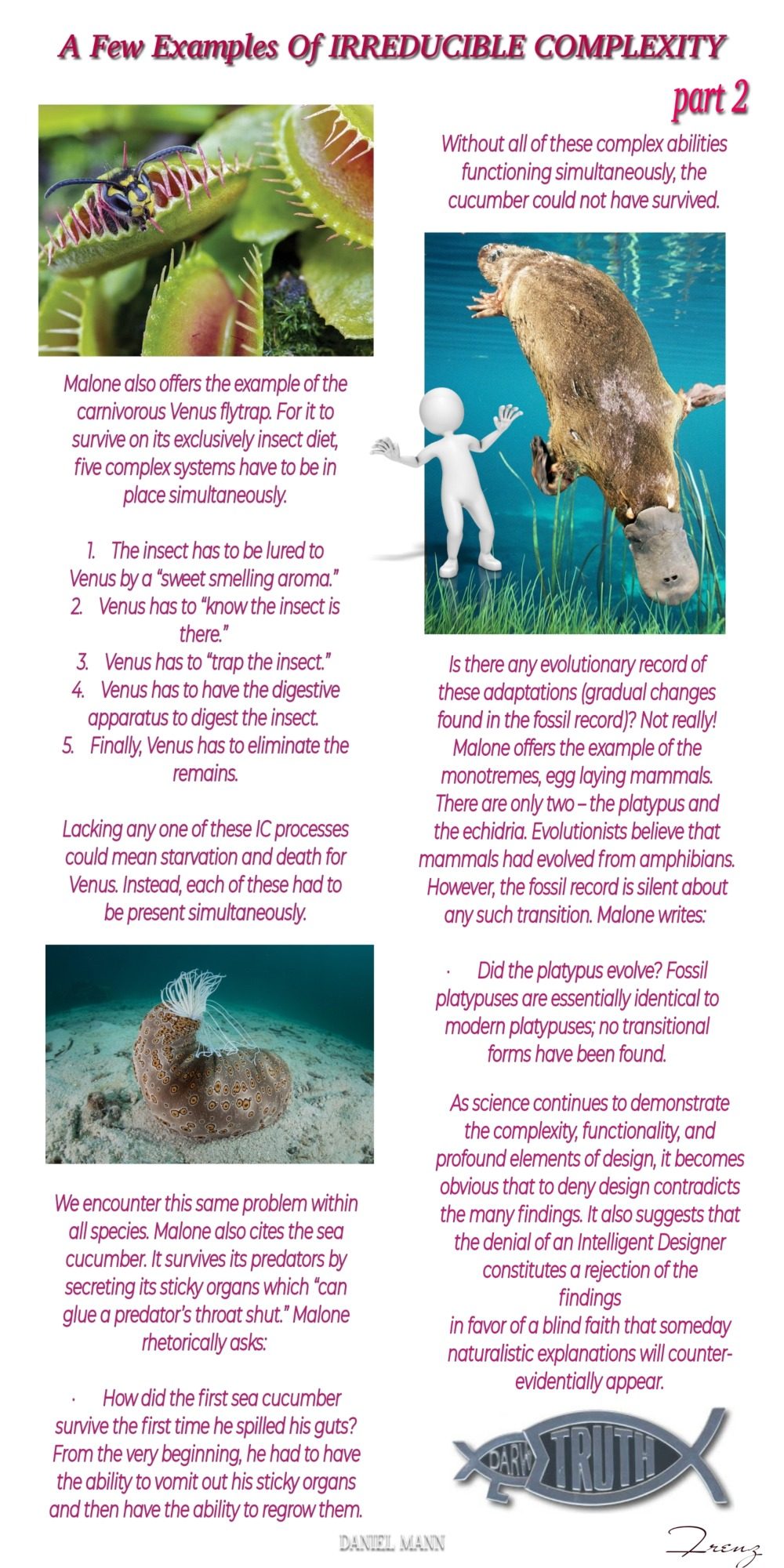
Evolutionary theory predicts the existence of numerous intermediate forms (or transitional fossils) between major groups of organisms, yet the fossil record has not provided the abundance of these forms that Darwin himself expected. This issue has been acknowledged by both evolutionary scientists and critics of evolution.
What Does Evolution Require?
Darwinian evolution posits that all life forms have descended from common ancestors through a gradual process of small changes over long periods. If this is true, we would expect to find many fossils showing these gradual transitions—so-called "missing links"—between major groups such as fish and amphibians, reptiles and birds, or apes and humans.
What Does the Fossil Record Show?
However, as you pointed out, the fossil record is characterized more by sudden appearances and stasis (species remaining unchanged) than by gradual transitions. Even prominent evolutionary scientists have admitted this:
- David B. Kitts, PhD (Zoology):
“Despite the bright promise that paleontology provides a means of ‘seeing’ evolution, it has presented some nasty difficulties for evolutionists, the most notorious of which is the presence of ‘gaps’ in the fossil record. Evolution requires intermediate forms between species and paleontology does not provide them…”
(Quoted in "Problems With The Fossil Record" by All About God Ministries)
- Heribert Nilsson, Swedish botanist and evolutionist:
“My attempts to demonstrate evolution by an experiment carried on for more than 40 years have completely failed… The fossil material is now so complete that it has been possible to construct new classes, and the lack of transitional series cannot be explained as being due to scarcity of material. The deficiencies are real, they will never be filled.”
(ibid.)
- Newsweek Magazine:
“The missing link between man and apes, whose absence has comforted religious fundamentalists since the days of Darwin, is merely the most glamorous of a whole hierarchy of phantom creatures… The more scientists have searched for the transitional forms that lie between species, the more they have been frustrated.”
(ibid.)
What Does the Bible Say?
The Bible teaches that God created distinct "kinds" of living things, not by a process of gradual change, but by His direct creative act:
- Genesis 1:21, 24–25 (ESV):
“So God created the great sea creatures and every living creature that moves, with which the waters swarm, according to their kinds, and every winged bird according to its kind. … And God said, ‘Let the earth bring forth living creatures according to their kinds—livestock and creeping things and beasts of the earth according to their kinds.’ And it was so. And God made the beasts of the earth according to their kinds and the livestock according to their kinds, and everything that creeps on the ground according to its kind. And God saw that it was good.”
- Exodus 20:11 (ESV):
“For in six days the Lord made heaven and earth, the sea, and all that is in them, and rested on the seventh day.”
- Romans 1:20 (ESV):
“For his invisible attributes, namely, his eternal power and divine nature, have been clearly perceived, ever since the creation of the world, in the things that have been made. So they are without excuse.”
Summary
- Evolutionary theory expects many intermediate forms, but the fossil record does not provide them.
- Even evolutionary scientists acknowledge the reality of these gaps.
- The Bible teaches that God created life according to distinct kinds, which fits the evidence of sudden appearance and stability in the fossil record.
- This supports the view that life is the result of intelligent design rather than undirected evolutionary processes.
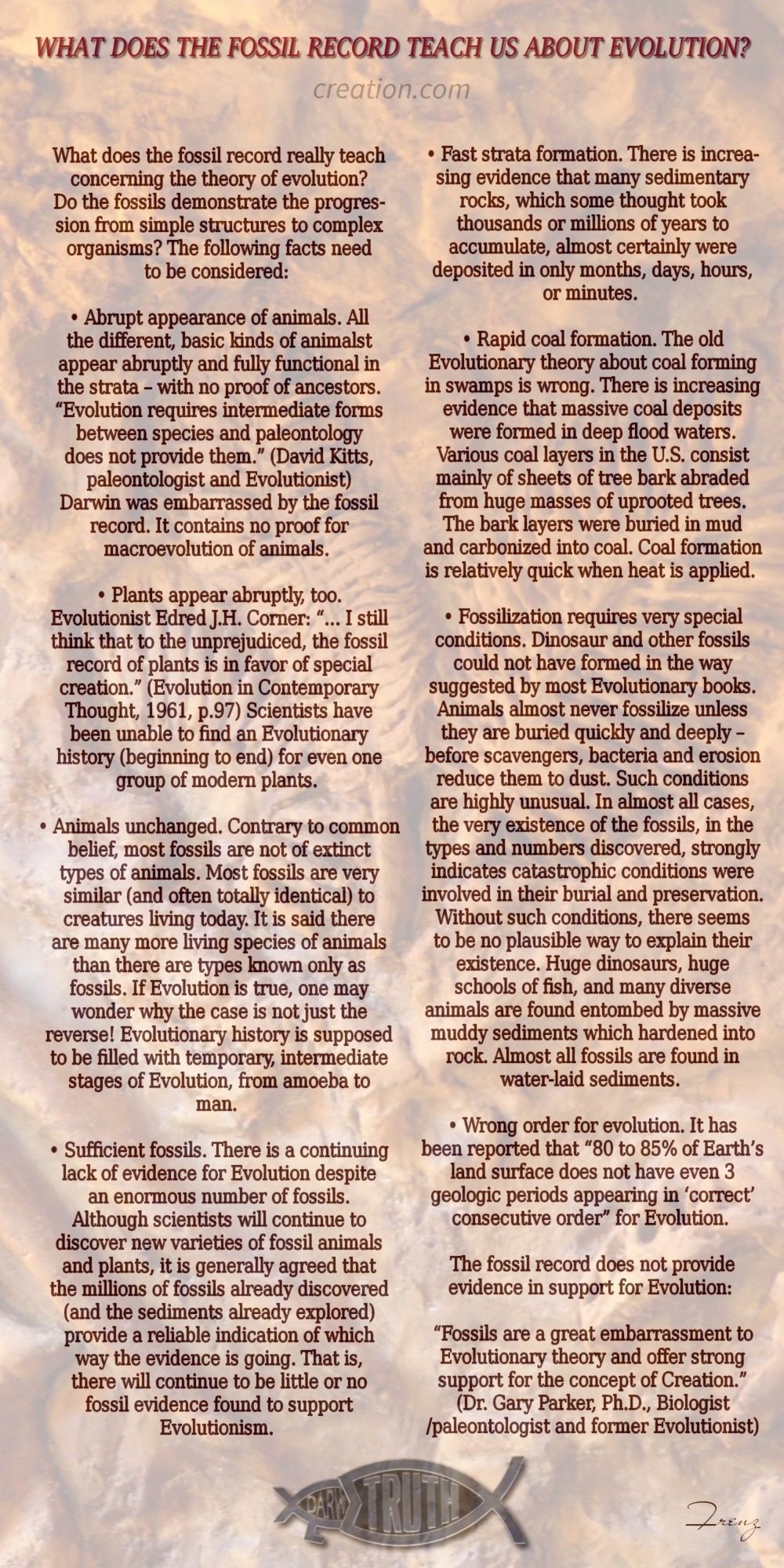
1. The Fossil Record and Evolutionary Theory
Many scientists expected that, if Darwinian evolution were true, the fossil record would show a gradual progression of life forms, with countless intermediate or transitional forms connecting all major groups. However, as noted by Wolf-Ekkehard Lönnig:
“A new Bauplan (body plan) of the systematic range of a class or order usually appears absolutely abruptly in the fossil record, without long rows/successions of links that would show us a gradual formation from another order forming its root. And, what is more, living fossils are not the exception — as they are usually portrayed in the biological literature — but the rule for a large part of plant and animal families: We are literally surrounded by living fossils: Angiosperms, mammals, birds, and many other organisms. Moreover: ‘Living fossils are something of an embarrassment to the expectation that evolutionary change is inevitable as time goes by’ (Eldredge).”
(Lönnig on Darwin’s “Abominable Mystery”)
Similarly, the article from All About God Ministries observes:
“After a century of careful scrutiny of the geological record, it fails to support Darwin’s theories. One reason the fossil record does not support evolutionary theory is that many complex life forms appear in the very earliest rocks without any indication of forms from which they could have evolved. Creatures without ancestors cannot help but imply special creation. As Brown puts it, ‘The evolutionary tree has no trunk.’”
2. The Biblical View of Creation
The Bible teaches that God created all living things according to their kinds, not through a process of gradual evolution from simple to complex life forms.
- Genesis 1:21 (ESV):
“So God created the great sea creatures and every living creature that moves, with which the waters swarm, according to their kinds, and every winged bird according to its kind. And God saw that it was good.”
- Genesis 1:24–25 (ESV):
“And God said, ‘Let the earth bring forth living creatures according to their kinds—livestock and creeping things and beasts of the earth according to their kinds.’ And it was so. And God made the beasts of the earth according to their kinds and the livestock according to their kinds, and everything that creeps on the ground according to its kind. And God saw that it was good.”
- Hebrews 11:3 (ESV):
“By faith we understand that the universe was created by the word of God, so that what is seen was not made out of things that are visible.”
3. The Fossil Record and Creation
The abrupt appearance of fully formed, complex organisms in the fossil record, and the lack of transitional forms, is more consistent with the biblical account of special creation than with Darwinian evolution. As Lönnig and others have pointed out, the existence of “living fossils”—organisms that appear unchanged for millions of years—also challenges the idea that evolutionary change is constant and inevitable.
Summary
- The fossil record shows abrupt appearances of complex life forms and a lack of transitional forms, which is a challenge for evolutionary theory.
- The Bible teaches that God created all living things according to their kinds, which fits the pattern seen in the fossil record.
- As Christians, we see the fossil record as strong support for the concept of creation, affirming the truth of God’s Word.
1. Spiritual Blindness and Suppression of Truth
The Bible teaches that all people, including atheists, are affected by sin, which leads to spiritual blindness and a suppression of the truth about God:
“For although they knew God, they did not honor him as God or give thanks to him, but they became futile in their thinking, and their foolish hearts were darkened. Claiming to be wise, they became fools.”
(Romans 1:21–22, ESV)
This passage explains that the problem is not a lack of evidence for God, but a willful suppression of the truth.
2. The Role of Logic and Reason
It’s important to recognize that logic, reason, and rationality are gifts from God. The Bible says:
“Come now, let us reason together, says the Lord…”
(Isaiah 1:18, ESV)
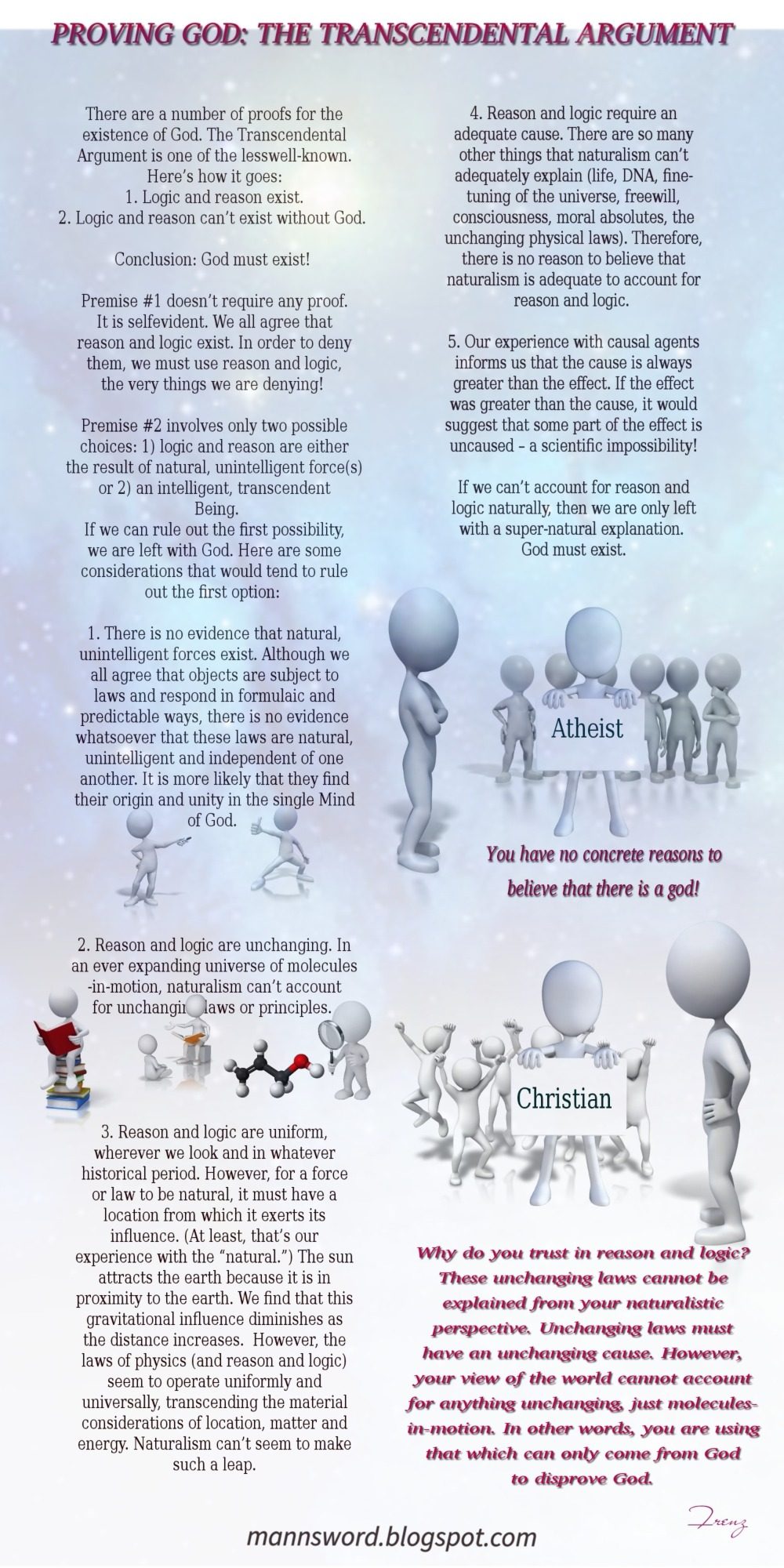
However, as GotQuestions.org points out, atheists may use logic and reason, but without a foundation in God, their worldview cannot account for the existence of these things. The transcendental argument for the existence of God shows that rationality and logic only make sense within a theistic framework.
3. Responding with Gentleness and Respect
While it can sometimes feel like atheists are only interested in argument, the Bible calls Christians to respond with gentleness and respect:
“But in your hearts honor Christ the Lord as holy, always being prepared to make a defense to anyone who asks you for a reason for the hope that is in you; yet do it with gentleness and respect.”
(1 Peter 3:15, ESV)
Our goal should not be to “win” arguments, but to lovingly share the truth and pray that God would open hearts.
Summary
- The Bible teaches that unbelief is rooted in the suppression of truth (Romans 1:21–22).
- Logic and reason are gifts from God, and only make sense in His world (Isaiah 1:18).
- Christians are called to defend their faith with gentleness and respect (1 Peter 3:15).
1. Creationist View on Molecules-to-Man Evolution
The idea of "molecules-to-man" evolution—meaning that life began from non-living chemicals and gradually developed into all forms of life, including humans—is often called macroevolution. According to the traditional Christian view, this concept conflicts with both Scripture and certain scientific observations.
Biblical Perspective
The Bible teaches that God created all living things according to their “kinds,” not through a gradual process of evolution:
“And God said, ‘Let the earth bring forth living creatures according to their kinds: livestock and creeping things and beasts of the earth according to their kinds.’ And it was so.”
(Genesis 1:24, ESV)
“For by him all things were created, in heaven and on earth, visible and invisible, whether thrones or dominions or rulers or authorities—all things were created through him and for him.”
(Colossians 1:16, ESV)
“In the beginning was the Word, and the Word was with God, and the Word was God. He was in the beginning with God. All things were made through him, and without him was not any thing made that was made.”
(John 1:1–3, ESV)
These passages affirm that God is the direct Creator of all life, not a process of random mutation and natural selection over millions of years.
2. Scientific Observations
As referenced from CompellingTruth.org and other creationist sources, there is a distinction between microevolution (small changes within a species, like dog breeds) and macroevolution (one kind of creature turning into another). Scientific experiments, such as those with water fleas and bacteria, have shown adaptation within kinds but no evidence of one kind fundamentally changing into another:
“A ten-year study of water fleas failed to find any evidence of Darwin's natural selection. Decades-long experiments with bacteria—involving some 75,000 generations… have shown notable adaptations to environment, but no fundamental alterations in ‘kind.’ Deliberate, artificially-accelerated breeding of dogs has created both teacup poodles and mastiffs, but both are still the same ‘kind.’”
(CompellingTruth.org)
Furthermore, the origin of life from non-life (abiogenesis) has never been observed or demonstrated in the laboratory. Naturalistic evolution cannot explain where the first living cell came from, as prebiological natural selection is a contradiction in terms.
3. Evolution as a Worldview
Some argue that molecules-to-man evolution functions more as a worldview or belief system than as a strictly scientific theory, especially when it is used to explain everything about life and existence without reference to God. The Bible warns against exchanging the truth of God for man-made ideas:
“They exchanged the truth about God for a lie and worshiped and served the creature rather than the Creator, who is blessed forever! Amen.”
(Romans 1:25, ESV)
Summary
- The Bible teaches that God created all living things according to their kinds (Genesis 1:24; Colossians 1:16; John 1:1–3).
- Scientific evidence shows adaptation within kinds, but not molecules-to-man evolution.
- The origin of life from non-life cannot be explained by naturalistic evolution.
- Molecules-to-man evolution, when used to exclude God, becomes a worldview or belief system, not just science (Romans 1:25).
1. Ambiguity in Evolutionary Arguments
Many evolutionary arguments, such as those based on homologous structures (similar body parts in different species) and interpretations of the fossil record, are often presented as strong evidence for common ancestry. However, these arguments can be ambiguous and open to interpretation.
As David Coppedge notes in “Trillions of Cicadas Sing of Intelligent Design”:
“One cannot claim that one evolved from the other without begging the question of common ancestry by mutation and selection. But just keep waiting: someday the evolutionary biologist may reach the nirvana of understanding. For now, they can only visualize evolutionary transitions as possibilities.”
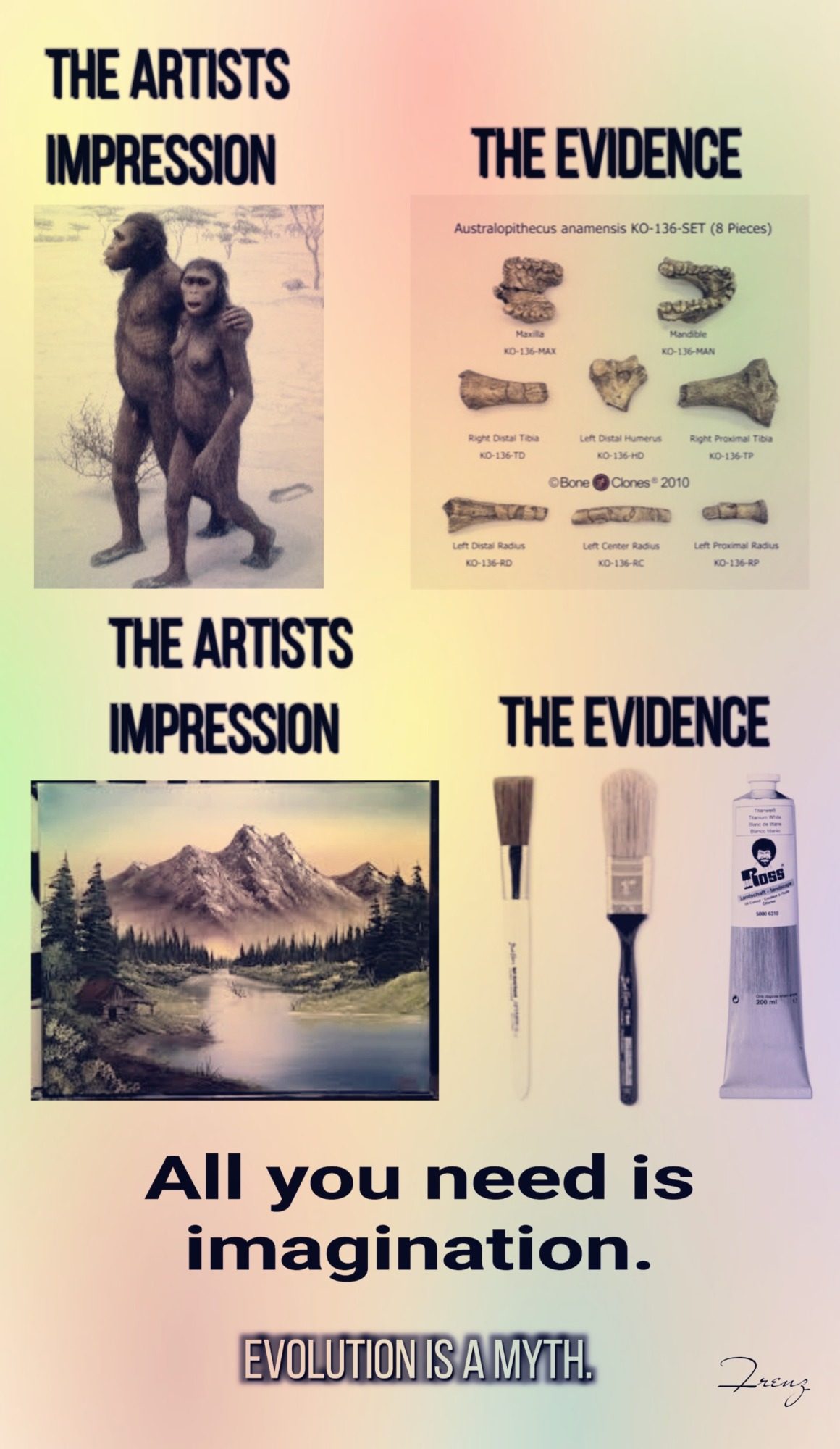
This highlights that such arguments often assume what they are trying to prove (common ancestry) and rely on imagination rather than direct evidence.
2. Fossil Record and Its Limitations
The fossil record is frequently cited as evidence for macroevolution, but it is far from complete and often ambiguous. As “Dawkins: The Greatest Show on Earth” points out:
“This argument, at a stroke, completely destroys the creationist case that the Precambrian gap in the fossil record weakens the evidence for evolution. Again, Richard Dawkins is missing the point with regards to the fossil record… The subtitle of Dawkins’ book is The Evidence for Evolution. There should be no need, therefore, to prop up Darwinism by appealing to theologically-related considerations.”
The gaps and sudden appearances of complex life forms in the fossil record are more consistent with the biblical account of creation than with gradual evolutionary change.
3. The Biblical View of Creation
The Bible teaches that God created all living things according to their kinds, not through a process of macroevolution:
“And God said, ‘Let the earth bring forth living creatures according to their kinds—livestock and creeping things and beasts of the earth according to their kinds.’ And it was so.”
(Genesis 1:24, ESV)
“For by him all things were created, in heaven and on earth, visible and invisible, whether thrones or dominions or rulers or authorities—all things were created through him and for him.”
(Colossians 1:16, ESV)
“In the beginning, God created the heavens and the earth.”
(Genesis 1:1, ESV)
The Bible does not support the idea that humans or animals evolved from common ancestors. Instead, it affirms the special creation of each kind.
Summary
- Arguments based on homologous structures and fossils are often ambiguous and do not conclusively support evolution.
- The fossil record contains significant gaps and sudden appearances, which align more closely with the biblical account of creation.
- The Bible teaches that God created all living things according to their kinds (Genesis 1:24), not through macroevolution.
1. Unfalsifiability and Scientific Theories
A core principle of science is falsifiability—the idea that a theory must be testable and able to be proven wrong by evidence. If a theory can explain every possible outcome, it becomes unfalsifiable and, therefore, unscientific. Many critics of Darwinian evolution have pointed out that evolutionary explanations are often so flexible that they can accommodate almost any observation, whether it is the presence of similarities (homology), differences, or even sudden appearances in the fossil record.
As highlighted in the article “Creationism and Science 2” by All About God Ministries:
“Apparently DNA has a built-in potential for variation, which is activated under the appropriate environmental conditions… The most interesting aspect is that the genetic material itself is not changing. This is the reason we cannot make a connection with the concept of macro-evolution. Therefore these new insights in genetics provide no support for the theory of evolution. On the contrary, they fit very well in the biblical creation concept.”
This shows that observed adaptability in living things can be explained by design rather than by undirected evolutionary processes.
2. Engineered Adaptability: Evidence of Design, Not Evolution
Recent studies, such as those discussed in “The Engineered Adaptability of the Humble Guppy,” demonstrate that organisms can adapt to their environments. However, this adaptability is better explained by intelligent design—the idea that God created living things with the ability to adapt within limits—rather than by the open-ended, unfalsifiable claims of Darwinian evolution.
“Do living things evolve right before our eyes? Perhaps the most common evidence put forward to support evolutionary theory is the observation that organisms can adapt. But is this adaptability really a hallmark of a gradual Darwinian process? Or is it evidence of intelligent design?”
(Andrew McDiarmid)
3. The Biblical Perspective
The Bible teaches that God created all living things “according to their kinds” (Genesis 1:24), indicating that while variation and adaptation are possible within created kinds, there are boundaries set by God. This is consistent with what we observe: significant variation within species, but not the unlimited change required by macroevolution.
“And God said, ‘Let the earth bring forth living creatures according to their kinds—livestock and creeping things and beasts of the earth according to their kinds.’ And it was so.”
(Genesis 1:24, ESV)
“For his invisible attributes, namely, his eternal power and divine nature, have been clearly perceived, ever since the creation of the world, in the things that have been made. So they are without excuse.”
(Romans 1:20, ESV)
“In the beginning, God created the heavens and the earth.”
(Genesis 1:1, ESV)
Summary
- The theory of evolution is often presented in a way that makes it unfalsifiable, as almost any observation can be interpreted as supporting it.
- Scientific observations of adaptability and variation fit better with the biblical concept of created kinds and intelligent design, rather than with open-ended evolutionary claims.
- The Bible affirms that God created all living things with purpose and order, not through undirected evolutionary processes.
1. Similarity and the Argument for Common Design
As Casey Luskin explains in What’s the Best Explanation for Human-Chimp Genetic Differences?:
“Genetic similarity doesn’t necessarily indicate common ancestry because intelligent agents can and do independently use common parts in different designs to fulfill common functional goals. High genetic similarity could reflect design with a common blueprint rather than common ancestry.”
This means that just as engineers reuse successful designs in different machines, God, as the ultimate Designer, could use similar structures or genetic codes in different creatures to accomplish similar purposes.
2. Biblical Support for a Common Creator
The Bible teaches that God is the Creator of all life, and He created each kind according to its own kind:
“So God created man in his own image, in the image of God he created him; male and female he created them.”
(Genesis 1:27, ESV)
“And God said, ‘Let the earth bring forth living creatures according to their kinds: livestock and creeping things and beasts of the earth according to their kinds.’ And it was so.”
(Genesis 1:24, ESV)
These verses show that God created different creatures with intentionality and order. The similarities we observe reflect His wisdom and purposeful design, not random chance or undirected evolution.
3. Scientific Examples: Convergent Design
Jonathan Wells, in Top Scientific Problems with Evolution: Homology, points out that similar features often arise independently in unrelated species—a phenomenon called “convergence.” For example, the wings of bats and birds are similar, but they did not come from a common ancestor with wings. Instead, they are similar solutions to similar problems, reflecting intelligent design rather than common descent.
“Similarity of structure and position is evidence for common ancestry, except when it isn’t. Modern biologists call similarity not due to common ancestry convergence… Reasoning in a Circle… once homology is defined in terms of common ancestry, it cannot logically be used as evidence for common ancestry.”
4. God’s Wisdom Displayed in Creation
The psalmist praises God’s creative wisdom:
“O Lord, how manifold are your works! In wisdom have you made them all; the earth is full of your creatures.”
(Psalm 104:24, ESV)
The order, beauty, and similarity in creation point us to a wise and powerful Creator, not merely to a shared evolutionary past.
Summary
- Similarity does not prove common ancestry; it can just as easily point to a common Designer.
- The Bible teaches that God created all living things with order and purpose (Genesis 1:24, 27).
- Scientific observations of convergence support the idea of intelligent design.
- The beauty and order in creation reflect God’s wisdom (Psalm 104:24).
1. Science and Its Limits
Science is a powerful tool for understanding the natural world, but it is limited to what can be observed, tested, and repeated. As Stephen Dilley notes:
“In science, faith commitments abound, in that scientists trust practices (or ways of thinking) that extend far past the empirical data. Faith is particularly essential in what is termed ‘realist science,’ which tries to understand the deep structure (or ancient past) of the natural world that lies beyond our direct and unaided sense experience. … Theories always go beyond data. … Lots of theories are compatible with the facts.”
(Stephen Dilley, “What Science Owes to Faith, Hope, and Love”)
This means that while science can tell us much about how things work, it cannot answer ultimate questions about meaning, purpose, or morality—those are philosophical or religious questions.
2. Distinguishing Science from Philosophy and Religion
The Bible encourages discernment and the pursuit of truth:
“Test everything; hold fast what is good.”
(1 Thessalonians 5:21, ESV)
“The simple believes everything, but the prudent gives thought to his steps.”
(Proverbs 14:15, ESV)
“For the LORD gives wisdom; from his mouth come knowledge and understanding.”
(Proverbs 2:6, ESV)
These verses remind us that wisdom involves careful evaluation—distinguishing between what is truly known and what is assumed or believed.
3. When Science Becomes Philosophy
Sometimes, claims are made in the name of science that go beyond the data and enter the realm of philosophy or even religion. For example, the statement “everything is explained by the physical—there’s no need for any notion of the metaphysical” (from All About God Ministries) is not a scientific conclusion, but a philosophical stance called naturalism. It cannot be tested or proven by science itself.
Summary
- Good science education should teach students to recognize the difference between testable scientific theories and philosophical or religious claims.
- Discernment is a biblical value (1 Thessalonians 5:21; Proverbs 14:15; Proverbs 2:6).
- Science has limits, and not all claims made in its name are scientific.
While Darwin’s theory of evolution was originally presented as a scientific explanation for the diversity of life, over time, it has often been defended with a zeal and certainty that resembles religious conviction rather than open scientific inquiry.
1. Darwinism as Ideology
Philosopher of science Michael Ruse, himself an atheist, has admitted:
“Evolution is promoted by its practitioners as more than mere science. Evolution is promulgated as an ideology, a secular religion—a full-fledged alternative to Christianity, with meaning and morality.”
(Michael Ruse, quoted in Jonathan Witt, “In Science, Wildness of Aslan Counsels Humility”)
Ruse further acknowledges that for many, evolution provides a “world picture” that is “entirely satisfying,” functioning as a kind of faith system.
2. C.S. Lewis and the “Central and Radical Lie”
C.S. Lewis, who once accepted evolutionary theory, later became skeptical of its philosophical underpinnings. He wrote:
“What inclines me now to think that you may be right in regarding it as the central and radical lie in the whole web of falsehood that now governs our lives, is… the fanatical twisted attitudes of its defenders.”
(C.S. Lewis, quoted in Jonathan Witt, “In Science, Wildness of Aslan Counsels Humility”)
Lewis observed that the defense of Darwinism often seemed driven not by evidence, but by a desire for a worldview without God.
3. Biblical Perspective on Truth and Idolatry
The Bible warns against exchanging the truth about God for man-made ideas:
“They exchanged the truth about God for a lie and worshiped and served the creature rather than the Creator, who is blessed forever! Amen.”
(Romans 1:25, ESV)
“See to it that no one takes you captive by philosophy and empty deceit, according to human tradition, according to the elemental spirits of the world, and not according to Christ.”
(Colossians 2:8, ESV)
“For the wisdom of this world is folly with God.”
(1 Corinthians 3:19, ESV)
These verses remind us that when any idea—scientific or otherwise—is elevated above God and His revelation, it can become a form of idolatry or dogma.
Summary
- Darwinism, for many, functions as a secular religion or dogma, defended with uncritical zeal (Michael Ruse, C.S. Lewis).
- The Bible cautions against replacing God’s truth with human philosophies (Romans 1:25; Colossians 2:8; 1 Corinthians 3:19).
- Christians are called to discern truth and not be taken captive by any worldview that excludes God.
1. The Secular Worldview and Evolution
As noted by All About God Ministries:
“Without naturalistic evolution, there is no Secular Worldview. Anything else would demand a Creator, which would mean that man is not the source of all things. Secular Humanists believe that science has proven the theory of evolution to the extent that it is no longer a theory but a scientific fact.”
(Secular Worldview, All About God Ministries)
This highlights that for many, evolution is not just a scientific theory but a foundational pillar of a worldview that excludes God. If evolution were absolutely proven, there would be no need for questionable tactics to support it. The fact that there have been instances of suppressed evidence, bad reasoning, and even fraud (such as the Piltdown Man hoax or Haeckel’s embryo drawings) suggests that the evidence for macroevolution is not as conclusive as some claim.
2. The Bible on Truth and Deception
The Bible warns against suppressing the truth and engaging in deceit:
“For the wrath of God is revealed from heaven against all ungodliness and unrighteousness of men, who by their unrighteousness suppress the truth.”
(Romans 1:18, ESV)
“You shall not bear false witness against your neighbor.”
(Exodus 20:16, ESV)
“Have nothing to do with the fruitless deeds of darkness, but rather expose them.”
(Ephesians 5:11, ESV)
When truth is suppressed or manipulated, it is often because the underlying worldview cannot stand on the evidence alone. The Bible teaches that people sometimes suppress the truth about God and creation because acknowledging a Creator would require humility and accountability.
3. Why Is There Fraud or Suppression?
- Worldview Commitment: For some, the commitment to a secular, materialistic worldview is so strong that evidence is sometimes manipulated to fit the narrative.
- Human Fallibility and Sin: The Bible teaches that all have sinned (Romans 3:23), and this includes scientists. Pride, desire for recognition, or financial gain can lead to unethical behavior.
- Spiritual Blindness: Scripture says,
“The god of this world has blinded the minds of the unbelievers, to keep them from seeing the light of the gospel of the glory of Christ, who is the image of God.”
(2 Corinthians 4:4, ESV)
4. A Christian Response
Christians are called to pursue truth, both in science and in faith. The existence of fraud or bad reasoning in support of evolution does not prove creationism by itself, but it does call into question the claim that evolution is a proven, unquestionable fact. Instead, it points to the need for honest, open inquiry and recognition of the evidence for design in creation:
“For his invisible attributes, namely, his eternal power and divine nature, have been clearly perceived, ever since the creation of the world, in the things that have been made. So they are without excuse.”
(Romans 1:20, ESV)
Summary
- If evolution were fully proven, there would be no need for fraud or suppression of evidence.
- The Bible warns against suppressing truth and calls for honesty.
- The persistence of fraud and bad reasoning suggests that the evidence for macroevolution is not as strong as claimed.
- Christians are called to seek truth and recognize the evidence for God’s creative work in the universe.
If you are seeking truth, remember that God invites honest questions and promises wisdom to those who seek Him (James 1:5).
1. Faith and Assumptions in Evolutionary Science
Many proponents of evolution claim it is purely scientific and objective. However, as Brian Miller points out:
“Rosenhouse’s belief in the creative power of evolutionary processes is based not on hard data but on his faith in the philosophy of scientific materialism and on circular reasoning.”
(Brian Miller, “Rosenhouse Prioritizes Imagination over Reality”)
Evolutionary theory often starts with the assumption that only natural processes can explain life, excluding the possibility of a Creator from the outset. This is a philosophical commitment, not a scientific conclusion.
2. Redefining Words and Circular Reasoning
Evolutionary science sometimes redefines key terms or uses circular logic. For example, “survival of the fittest” is often defined as “those who survive,” which is tautological. Similarly, the use of index fossils and rock strata to date each other is a classic example of circular reasoning:
“The circular reasoning between index fossils and the strata in the geologic column is not the only place where evolutionary scientists have used circular reasoning.”
(All About God Ministries, “Index Fossils”)
3. Poor Research and Fraud
History records several instances where evolutionary claims were supported by poor research or even outright fraud (e.g., Piltdown Man, Haeckel’s embryo drawings). These cases do not disprove all evolutionary science, but they do show that the field is not immune to error, bias, or even deception.
The Bible warns against such practices:
“You shall not bear false witness against your neighbor.”
(Exodus 20:16, ESV)
“Have nothing to do with the fruitless deeds of darkness, but rather expose them.”
(Ephesians 5:11, ESV)
“For the wrath of God is revealed from heaven against all ungodliness and unrighteousness of men, who by their unrighteousness suppress the truth.”
(Romans 1:18, ESV)
4. The Biblical View: Creation by Design
The Bible teaches that God created all things with purpose and design, not by random chance or undirected processes:
“In the beginning, God created the heavens and the earth.”
(Genesis 1:1, ESV)
“For his invisible attributes, namely, his eternal power and divine nature, have been clearly perceived, ever since the creation of the world, in the things that have been made. So they are without excuse.”
(Romans 1:20, ESV)
“By faith we understand that the universe was created by the word of God, so that what is seen was not made out of things that are visible.”
(Hebrews 11:3, ESV)
Summary
- Evolutionary science often relies on philosophical assumptions, redefined terms, circular reasoning, and sometimes poor research.
- The Bible calls us to seek truth, expose error, and recognize the evidence of God’s design in creation.
- True science and biblical faith are not enemies; both call us to honest inquiry and reverence for the Creator.
If you are searching for truth, remember that God invites sincere questions and promises wisdom to those who seek Him (James 1:5).
1. Order and Rationality Point to a Rational Creator
The Bible teaches that the universe is the product of a wise and rational Creator, not a random accident. This is why we see order, laws, and patterns in nature:
“In the beginning, God created the heavens and the earth.”
(Genesis 1:1, ESV)
“For his invisible attributes, namely, his eternal power and divine nature, have been clearly perceived, ever since the creation of the world, in the things that have been made. So they are without excuse.”
(Romans 1:20, ESV)
“By faith we understand that the universe was created by the word of God, so that what is seen was not made out of things that are visible.”
(Hebrews 11:3, ESV)
The consistent, rational laws of nature reflect the mind of the Law-Giver—God Himself.
2. Materialism Cannot Account for Order
If the universe is truly the result of blind, unguided processes, there is no reason to expect it to be orderly, rational, or mathematically elegant. As Dr. Fazale Rana observes:
“The mathematical undergirding of nature fits better in a theistic conception of reality than one rooted in materialism. … If the universe originated through uncaused physical mechanisms, there is no reason to think that humans would possess an aesthetic sense.”
(Fazale Rana, “Simple Biological Rules Affirm Creation”)
If nature is an “irrational accident,” expecting it to obey rational laws is itself irrational.
3. The Beauty and Structure of Nature Point to God
The mathematical beauty and elegance found in things like fatty acids, DNA, and the laws of physics are not what we would expect from chaos or accident. Instead, they point to intentional design:
“It is remarkable that this beautiful mathematical structure even extends to the relationship between the number of carbon atoms in a fatty acid and the number of isomers. … The beauty in the world around us signifies the Divine.”
(Fazale Rana, “Fatty Acids Are Beautiful”)
4. Human Rationality Reflects the Image of God
The Bible teaches that humans are made in God’s image (Genesis 1:27), which includes the capacity for rational thought and the ability to discern order in creation. This is why we can do science and mathematics in the first place.
Summary
- Order, rationality, and beauty in the universe are best explained by the existence of a rational, intelligent Creator.
- Materialism cannot provide a foundation for the expectation of order or the human ability to recognize it.
- The Bible affirms that God is the Law-Giver, and the universe reflects His wisdom and power.
If you are seeking to understand why the universe is so beautifully ordered, the biblical answer is clear: “The heavens declare the glory of God, and the sky above proclaims his handiwork.” (Psalm 19:1, ESV)
This order is not an accident, but a signpost pointing us to the Creator who made all things with purpose and meaning.
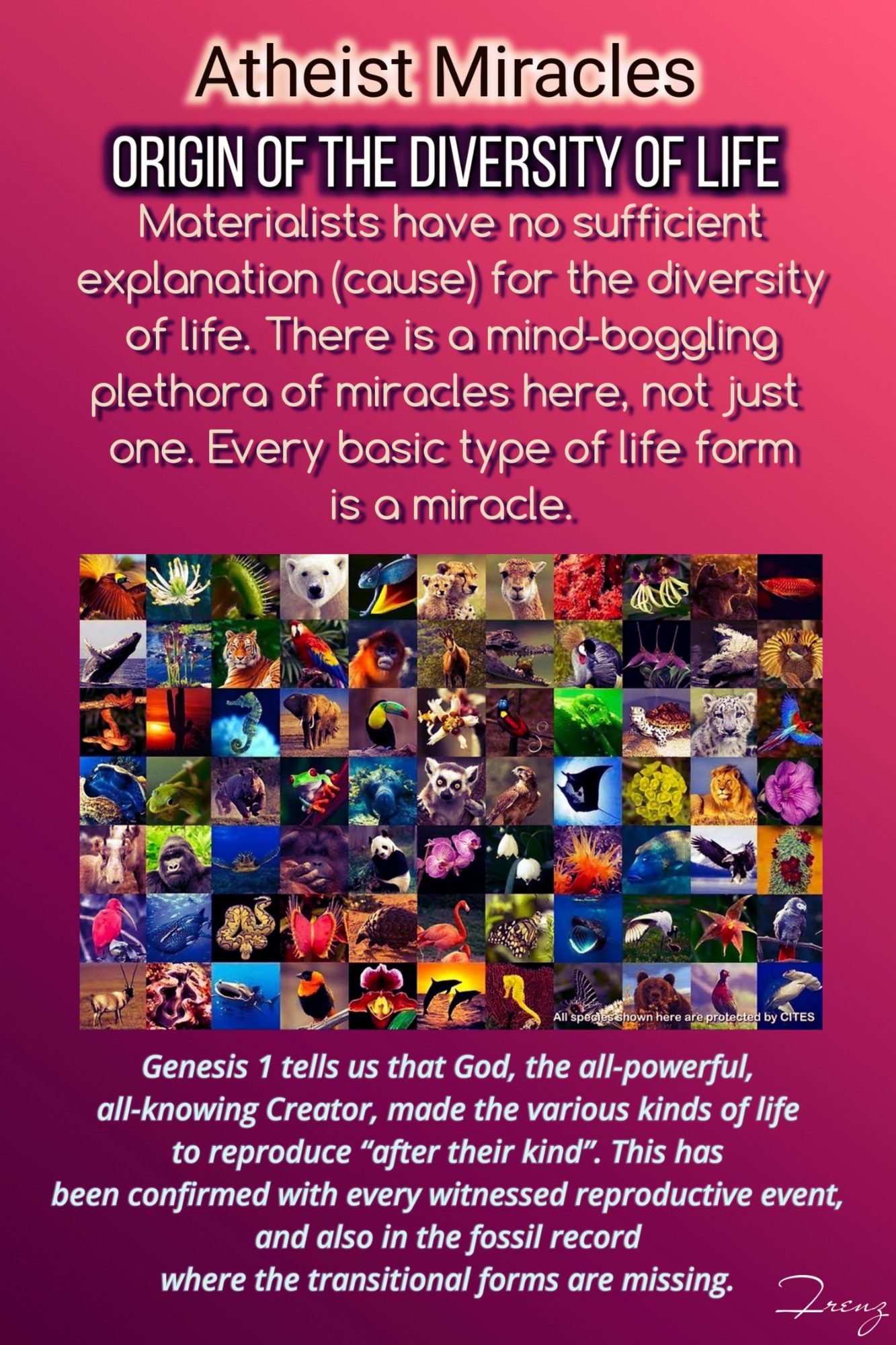



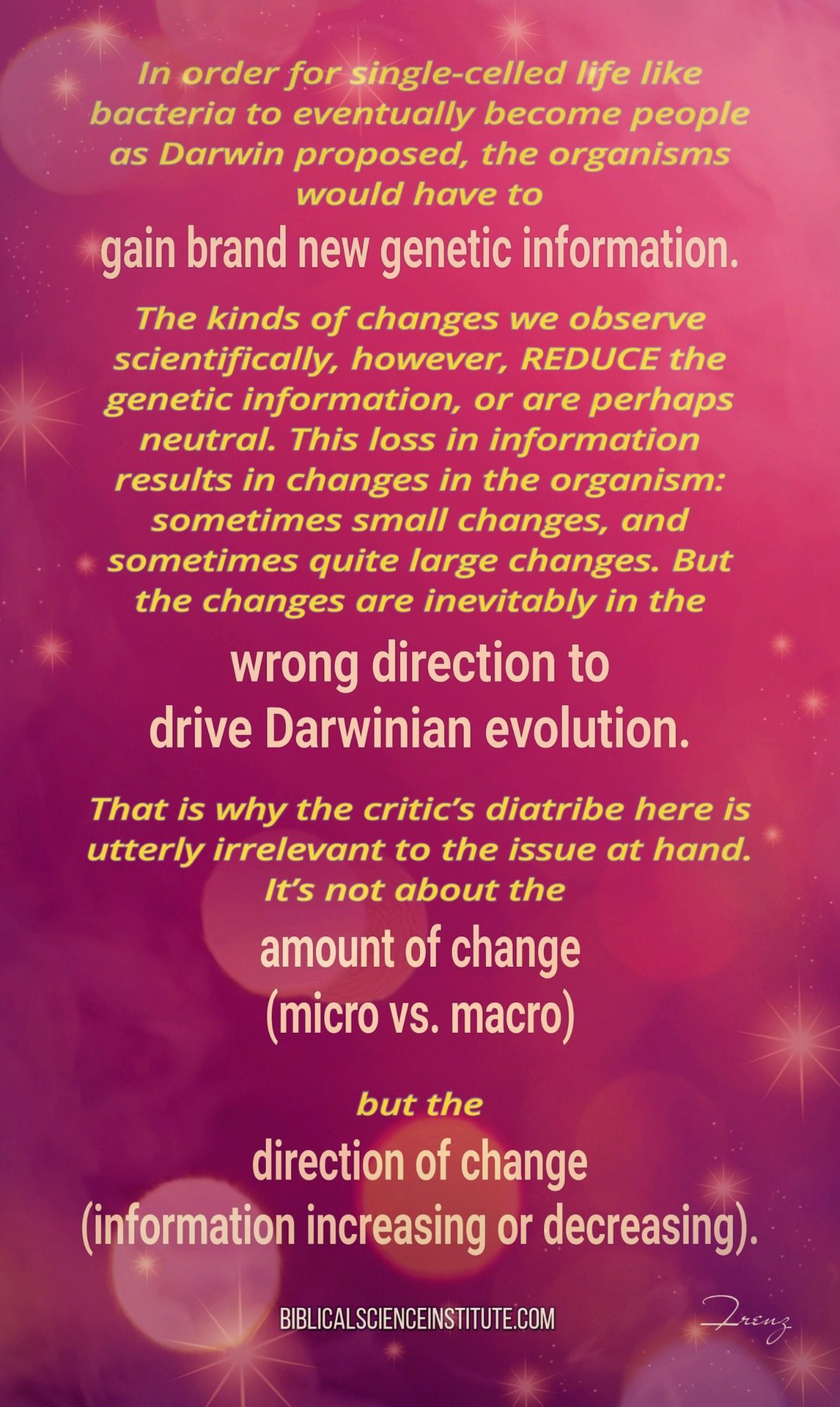
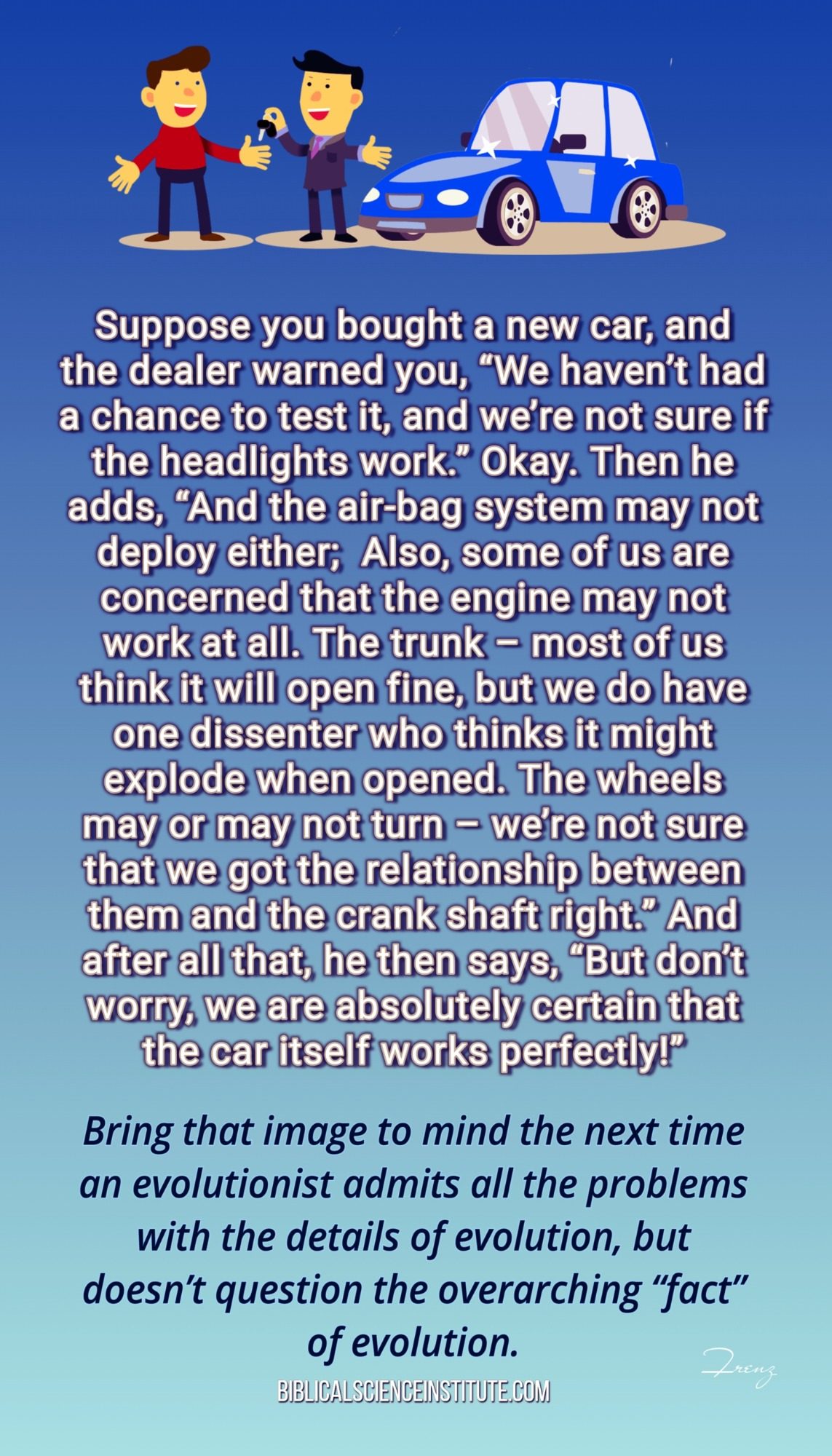
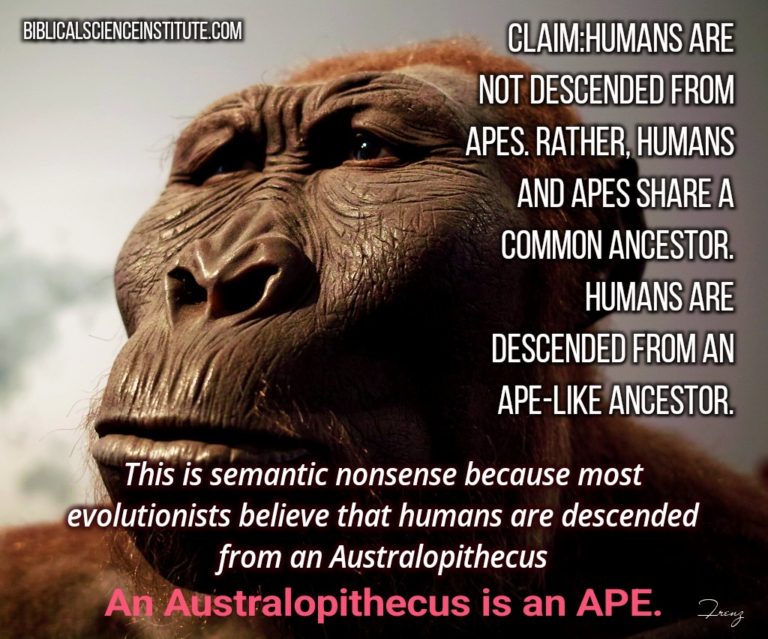
Scientific Perspective
Australopithecus, which means “southern ape,” is a genus of extinct hominins that lived in Africa from about 4.5 to 1.2 million years ago. Many paleoanthropologists have debated whether Australopithecus is a direct ancestor of modern humans or simply an extinct branch of apes.
As Casey Luskin, MSc, notes:
“Australopithecus, which literally means ‘southern ape,’ is a genus of extinct hominins that lived in Africa from about 4.5 to 1.2 million years ago… While early hominins are controversial due to their fragmentary remains, there are sufficient known australopithecine specimens to generally understand their morphology. Australopithecines are like apes.”
—Casey Luskin, Australopithecines and Confessions of Ignorance
Richard Leakey, a prominent paleoanthropologist, also acknowledged the fragmentary nature of the evidence:
“Lucy’s skull was so incomplete that most of it was ‘imagination, made of plaster of paris,’ thus making it impossible to draw any firm conclusion about what species she belonged to.”
—Richard Leakey, quoted in The Weekend Australian (May 7-8, 1983), p. 3
These sources highlight that Australopithecus is best understood as an extinct ape, not a human ancestor.
Biblical Perspective
The Bible teaches that God created animals and humans as distinct kinds:
“Then God said, ‘Let the earth bring forth living creatures according to their kinds—livestock and creeping things and beasts of the earth according to their kinds.’ And it was so.”
—Genesis 1:24 (ESV)
“So God created man in his own image, in the image of God he created him; male and female he created them.”
—Genesis 1:27 (ESV)
Humans are uniquely made in God’s image, distinct from all animals, including apes. There is no biblical support for the idea that humans descended from ape-like ancestors.
Summary
Australopithecus is best classified as an extinct ape, not a human ancestor.
- Scientific evidence shows that its features are more similar to apes than to modern humans.
- The Bible clearly distinguishes between animals and humans, teaching that humans were specially created in God’s image.
“Know that the Lord, he is God! It is he who made us, and we are his; we are his people, and the sheep of his pasture.”
—Psalm 100:3 (ESV)