ATHEISM MEMES

The image is a visual metaphor about choice and consequence. It presents two paths, each illuminated by a light at the end of a dark tunnel. A lone figure stands at the beginning of each path. The path on the left is bathed in a cool, blue-toned light, while the path on the right glows with a warm, red-toned light. The text superimposed on the image highlights the core message: "You are FREE to CHOOSE but you are NOT free from the CONSEQUENCE of your choice." The overall feeling conveyed is one of gravity, highlighting the importance of decisions. The presence of two distinct paths emphasizes that there are options, and the light at the end of each tunnel suggests a destination or outcome that results from traveling along the respective path.
Article: The Crossroads of Freedom: Choice, Consequence, and the Christian Journey →
The path of life is a journey, and like any journey, it is filled with crossroads. This image, with its stark visual depiction of two distinct paths, captures a fundamental truth about the human experience: we are given the incredible gift of free will, but we are also inextricably bound to the consequences of our choices. This duality is a cornerstone of Christian faith, weaving its way through scripture and shaping the very essence of what it means to live a life of faith.
The Gift of Choice: A Reflection of God's Love →
The opening text, "You are FREE to CHOOSE," resonates deeply with the Christian understanding of humanity. God, in his infinite wisdom and love, chose to create beings with the capacity for free will. This freedom isn't simply the ability to do as we please; it's the divine gift of autonomy, the capacity to choose between good and evil, to love and to hate, to follow God or to stray from Him. This gift is a reflection of God's profound respect for us and allows us to enter into a meaningful relationship with Him, a relationship built on genuine love and obedience rather than forced compliance.
The freedom to choose also implies a responsibility to choose wisely. In the Bible, we find numerous examples of God’s warnings and guidance, urging humanity towards the path of righteousness. The Old Testament is filled with stories of people making choices that led to both blessing and suffering, demonstrating that even in ancient times, the choices of people affected the lives of others. The New Testament, with Jesus as its central figure, reinforces the importance of choosing to love God and to love one’s neighbor. Jesus Himself embodies the ultimate free choice, as he voluntarily accepted the cross, demonstrating the ultimate act of love and sacrifice for all of humanity.
The Inevitable Shadow of Consequence →
The second part of the message, "but you are NOT free from the CONSEQUENCE of your choice," underscores the biblical principle of reaping what you sow. This isn’t a punitive decree of a distant god; it’s the natural order of cause and effect, a consequence inherent in every action. As the apostle Paul writes in Galatians 6:7-8: *"Do not be deceived: God cannot be mocked. A man reaps what he sows. Whoever sows to please their flesh, from the flesh will reap destruction; whoever sows to please the Spirit, from the Spirit will reap eternal life."*
In the Christian faith, the concept of consequence extends beyond the temporal realm. Our choices impact not only our present circumstances but also our relationship with God and our eternal destiny. We see this reflected in the stories of Adam and Eve, whose disobedience brought sin and suffering into the world. We see it in the teachings of Jesus about judgment, where our actions toward others will determine our place in the kingdom of God.
Navigating the Paths: Living a Life of Faith →
How then, do Christians navigate this duality of choice and consequence? Here are some key principles:
* Seeking God's Guidance: → Prayer, scripture reading, and the counsel of fellow believers are essential tools for discerning God's will and making choices that align with His teachings.
* Living by the Gospel: → The good news of Jesus Christ provides a framework for navigating the complexities of life. Through faith in Jesus, we are forgiven for our past mistakes, empowered by the Holy Spirit to live a life of righteousness, and given the promise of eternal life.
* Embracing Responsibility: → Taking ownership of our choices, both good and bad, and accepting their consequences is a vital aspect of spiritual growth. This includes repentance and seeking forgiveness when we sin, but also learning from our experiences and striving to make better choices in the future.
* Living in Community: → The Christian life is not meant to be walked alone. The support, accountability, and encouragement of a church community offer guidance and perspective as we navigate the various paths before us.
* Recognizing Grace: → While consequences are real, the Christian faith is centered on grace and forgiveness. Even when we make mistakes, God’s mercy is boundless, and he offers us a chance to begin again. This doesn’t negate the impact of our choices, but it provides hope and the potential for redemption.
The Final Destination: →
The image, with its two illuminated pathways, implicitly presents the eternal implications of choice. Choosing the way of God through faith in Christ involves an awareness of the ultimate consequence – eternal life. In contrast, rejecting God has a different end. The image serves as a powerful reminder that the choices we make in this life carry weight beyond the present moment. It is a call to make use of our freedom to choose wisely, embracing the consequences with humility and seeking to walk in the light of faith. The journey is complex, and the paths may seem daunting, but the message is clear: choose well, and live in the knowledge that you are loved and guided by a God who offers both freedom and the ultimate, eternal promise.
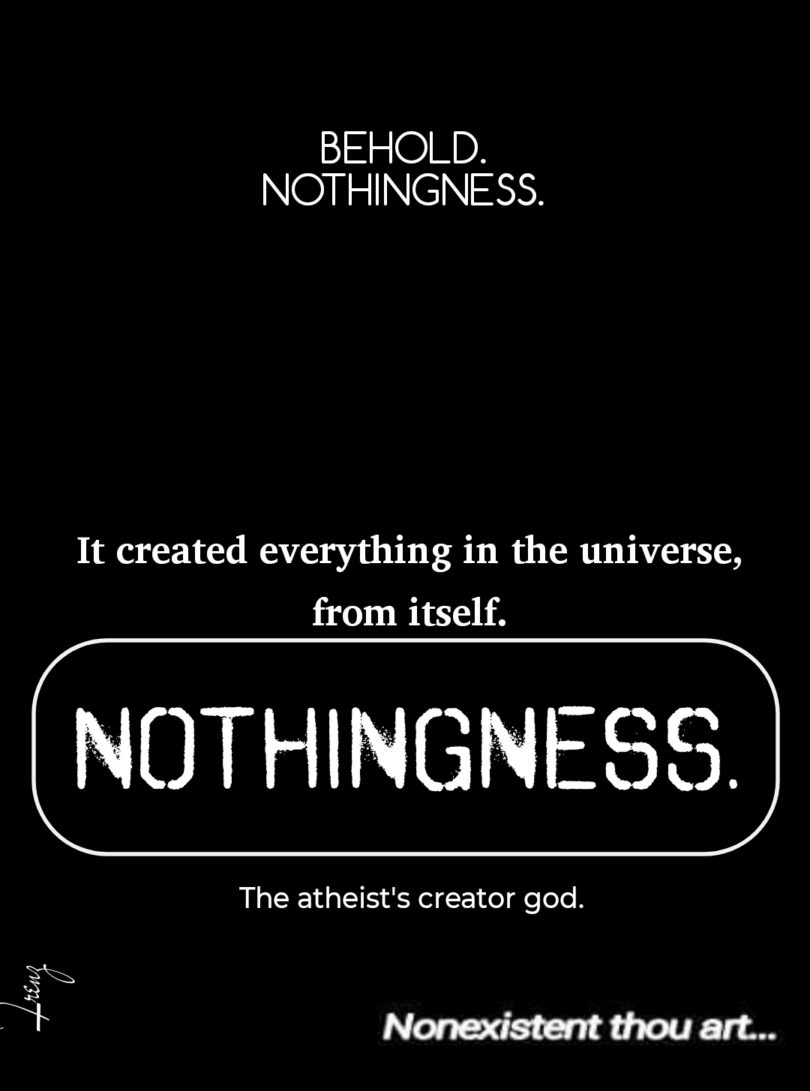
“Nothingness. The atheist’s creator god,” insightfully highlights a profound issue in atheistic and naturalistic worldviews: the claim that everything came from nothing, by nothing, for no reason. Let’s examine this idea in light of Scripture and reason.
1. The Bible’s View: God as Creator
The Bible teaches that God is the eternal Creator—the One who made everything out of nothing (ex nihilo), but not by accident or without purpose.
Genesis 1:1 (ESV):
“In the beginning, God created the heavens and the earth.”
Hebrews 11:3 (ESV):
“By faith we understand that the universe was created by the word of God, so that what is seen was not made out of things that are visible.”
John 1:3 (ESV):
“All things were made through him, and without him was not any thing made that was made.”
The Bible never presents “nothingness” as a creative force. Instead, it is the personal, eternal, all-powerful God who brings the universe into existence with purpose and design.
2. Atheism and “Nothingness”
Many atheists and secular philosophers claim that the universe came into being from nothing, without any cause or purpose. However, nothingness—the absence of anything—cannot produce something. As the saying goes, “Out of nothing, nothing comes.”
This is why some Christian thinkers, such as those in the Intelligent Design movement, point out that atheistic explanations often require a kind of “faith” in nothingness as a creative force. As “Postmodern Theology” by All About God Ministries notes:
“Postmodern theology begins with a soft form of atheism. Atheism is the theological belief that there is no God, no supernatural Creator, no Divine moral lawgiver, and no ultimate Judge of man’s actions.”
Without God, the only alternative is that the universe created itself from nothing—which is not a scientific or logical explanation, but a philosophical assertion.
3. The Big Bang and the Need for a Cause
Modern science affirms that the universe had a beginning (the Big Bang). But every beginning requires a cause. The Bible’s teaching that God created the universe fits both the scientific evidence and the logic of causality.
- Romans 1:20 (ESV):
“For his invisible attributes, namely, his eternal power and divine nature, have been clearly perceived, ever since the creation of the world, in the things that have been made. So they are without excuse.”
4. Summary
- Atheism often appeals to “nothingness” as the origin of everything, but nothingness cannot create.
- The Bible teaches that God, not nothing, is the Creator of all things.
- Science points to a beginning, which requires a cause—pointing back to God.
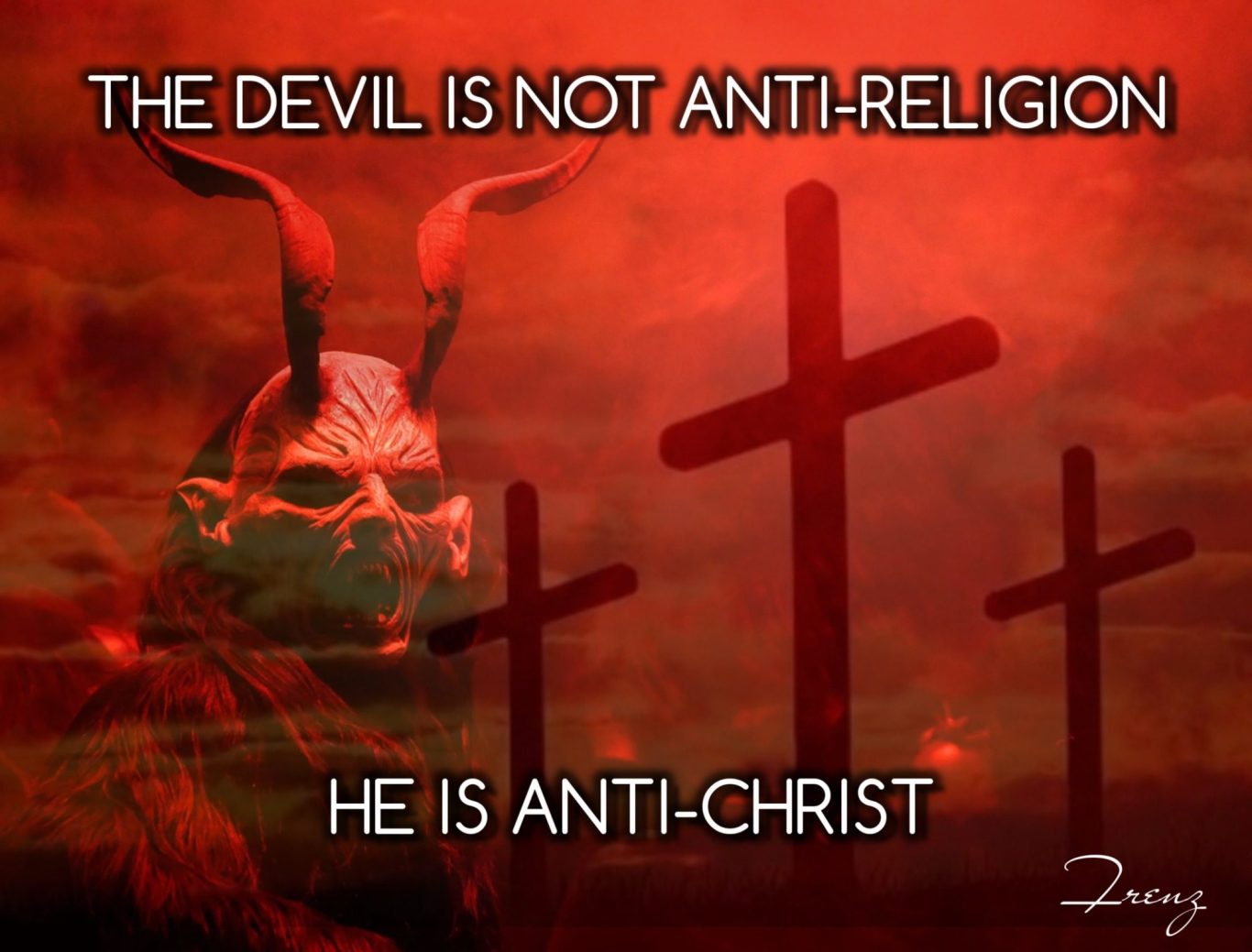
The devil is not primarily anti-religion; he is anti-Christ. This distinction is crucial for understanding the spiritual battle described in the Bible.
1. The Devil Promotes False Religion
Scripture shows that Satan is willing to use religion—even very devout or impressive forms of it—to deceive people and keep them from the truth of Jesus Christ.
- 2 Corinthians 11:13–15 (ESV):
“For such men are false apostles, deceitful workmen, disguising themselves as apostles of Christ. And no wonder, for even Satan disguises himself as an angel of light. So it is no surprise if his servants, also, disguise themselves as servants of righteousness.”
Satan often works through false teachers and false religions that appear good or moral but deny the true gospel of Jesus Christ.
2. The Devil Is Specifically Anti-Christ
The Bible uses the term “antichrist” to describe both a future individual and the general spirit of opposition to Jesus.
1 John 2:22 (ESV):
“Who is the liar but he who denies that Jesus is the Christ? This is the antichrist, he who denies the Father and the Son.”
1 John 4:2–3 (ESV):
“By this you know the Spirit of God: every spirit that confesses that Jesus Christ has come in the flesh is from God, and every spirit that does not confess Jesus is not from God. This is the spirit of the antichrist…”
Satan’s ultimate goal is to keep people from knowing, loving, and following Jesus Christ. He is not against religion in general—in fact, he often uses religion to distract people from the truth. But he is fiercely opposed to the person and work of Jesus.
3. Jesus Is the Only Way to God
- John 14:6 (ESV):
“Jesus said to him, ‘I am the way, and the truth, and the life. No one comes to the Father except through me.’”
Satan will tolerate any belief system—as long as it does not lead people to salvation in Christ. This is why the Bible warns so strongly against any teaching that denies who Jesus is or what He has done.
4. Guard Against Deception
- Colossians 2:8 (ESV):
“See to it that no one takes you captive by philosophy and empty deceit, according to human tradition, according to the elemental spirits of the world, and not according to Christ.”
We are called to test every teaching and every spirit by the truth of God’s Word, always centering our faith on Jesus Christ.
Summary:
The devil is not opposed to religion in general; he is opposed to Jesus Christ. He uses false religion and deception to keep people from the truth. The Bible calls us to be vigilant and to hold fast to the gospel of Christ, who alone is the way to God.

The idea that “atheists are stealing their morals from theists” is a provocative way to discuss the foundation of morality. Let’s explore this with clarity, love, and biblical truth, so that both Christians and non-Christians can understand the heart of the issue.
1. Where Do Morals Come From?
The Bible teaches that morality—knowing right from wrong—comes from God, who is the ultimate standard of goodness.
James 1:17 (ESV):
“Every good gift and every perfect gift is from above, coming down from the Father of lights with whom there is no variation or shadow due to change.”
Romans 2:14–15 (ESV):
“For when Gentiles, who do not have the law, by nature do what the law requires, they are a law to themselves, even though they do not have the law. They show that the work of the law is written on their hearts, while their conscience also bears witness, and their conflicting thoughts accuse or even excuse them.”
God has written His moral law on every human heart. This is why people everywhere have a sense of right and wrong, even if they don’t know the Bible or believe in God.
2. The Atheist’s Dilemma
Atheists can be moral people and do good things, but the question is: Why do they believe some things are right and others are wrong?
If there is no God, then morality becomes just a matter of personal opinion or what society decides. But if morals are just opinions, then things like kindness, honesty, or justice are not truly “good”—they’re just preferences.
- Psalm 14:1 (ESV):
“The fool says in his heart, ‘There is no God.’ They are corrupt, they do abominable deeds; there is none who does good.”
This doesn’t mean atheists can’t do good things, but it points out that without God, there is no ultimate reason for why something is good or evil.
3. Borrowing from the Christian Worldview
When atheists say things like “murder is wrong” or “we should be kind,” they are using moral standards that make sense only if there is a God who defines right and wrong.
As the article “Atheist Faith” from All About God Ministries points out, both atheists and theists rely on a kind of faith—atheists have faith that morals exist without God, but they often live as if there is a real, objective standard.
Michael Egnor, in his article “Who Has the Burden of Proof?”, argues that atheists often assume the reality of moral truths (like “it’s wrong to harm innocent people”), but their worldview can’t explain where these truths come from. In a universe without God, there’s no ultimate reason to call anything truly right or wrong.
4. The Christian Foundation for Morality
The Bible says that God is the source of all goodness and justice.
- Micah 6:8 (ESV):
“He has told you, O man, what is good; and what does the Lord require of you but to do justice, and to love kindness, and to walk humbly with your God?”
Because we are made in God’s image (Genesis 1:27), we have a built-in sense of right and wrong. When anyone—atheist or theist—acts morally, they are reflecting the moral character that God has given all people.
5. Conclusion
So, when we say “atheists are stealing their morals from theists,” we mean that atheists are living by moral standards that only make sense if God exists. They may not realize it, but they are borrowing from the Christian worldview every time they say something is truly right or wrong.
If you’re interested in exploring this more, consider these verses and the reality that God’s moral law is written on every heart. True morality points us back to the One who made us and calls us to live according to His truth.

The question of intellectual honesty in the discussion of evolution and creation is an important one, and it’s something that both Christians and scientists should take seriously. The Bible encourages believers to pursue truth with discernment and humility:
“But test everything; hold fast what is good.”
—1 Thessalonians 5:21 (ESV)
“Now these Jews were more noble than those in Thessalonica; they received the word with all eagerness, examining the Scriptures daily to see if these things were so.”
—Acts 17:11 (ESV)
“See to it that no one takes you captive by philosophy and empty deceit, according to human tradition, according to the elemental spirits of the world, and not according to Christ.”
—Colossians 2:8 (ESV)
As Kenneth R. Samples notes, Christians are called to be intellectually informed, careful, and honest, handling truth as something sacred. This means engaging with scientific claims thoughtfully, examining evidence, and not accepting ideas uncritically—whether those ideas come from secular science or from within the church.
It’s also worth noting, as Ann K. Gauger reflects, that some scientists are beginning to question the sufficiency of unguided evolution to explain the complexity of life. This opens the door for honest dialogue about the evidence for design in creation, which aligns with the biblical teaching that God is the Creator (Genesis 1:1; Romans 1:20).
In all discussions, Christians are called to speak the truth in love (Ephesians 4:15), seeking both intellectual honesty and humility.
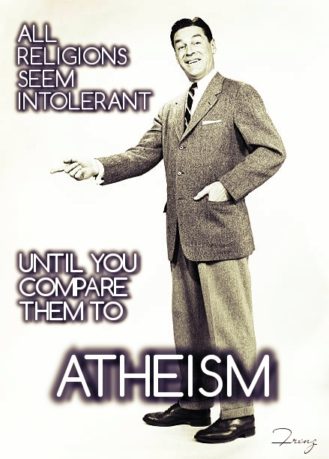
This meme touches on an important and often overlooked aspect of the discussion about religion and tolerance. Many people claim that all religions are intolerant, but when we compare the historical and practical outworking of different worldviews—including atheism—we see important distinctions.
1. Biblical Principles of Religious Freedom
The Bible teaches that true faith cannot be coerced and that each person is accountable to God for their beliefs. Jesus never forced anyone to follow Him; instead, He invited people to believe:
“If anyone would come after me, let him deny himself and take up his cross and follow me.”
—Matthew 16:24 (ESV)
“Come now, let us reason together, says the Lord…”
—Isaiah 1:18 (ESV)
The New Testament also teaches that the role of government is to punish evil and reward good, not to enforce religious conformity:
“For rulers are not a terror to good conduct, but to bad… he is the servant of God, an avenger who carries out God's wrath on the wrongdoer.”
—Romans 13:3–4 (ESV)
As CompellingTruth.org points out, “The civic principles of religious freedom are in unity with biblical principles of religious freedom.”
2. Christianity and Tolerance
Christianity calls believers to love their neighbors, even those with whom they disagree:
“You shall love your neighbor as yourself.”
—Matthew 22:39 (ESV)
However, as All About God Ministries notes, biblical love does not mean affirming all beliefs or behaviors. Christians are called to love the sinner but not the sin, maintaining both truth and compassion.
3. Atheism and Intolerance in History
While some accuse religion of being the root of intolerance, history shows that atheistic regimes have often been among the most intolerant. Kenneth R. Samples observes, “The former Soviet Union was an atheistic government and certainly proved itself to be strongly opposed to freedom of religious expression.” Under atheistic regimes such as the Soviet Union, Maoist China, and others, millions suffered persecution and loss of basic freedoms, including the freedom to practice religion.
4. Comparing Worldviews
When we compare Christianity to atheism and other worldviews, we see that Christianity—when lived according to Jesus’ teachings—promotes both truth and love. It calls for respect for others’ freedom of conscience, even while holding to the truth of the gospel. In contrast, atheistic systems, when given political power, have often suppressed religious freedom and dissent.
Conclusion
All belief systems have the potential for intolerance when misapplied, but biblical Christianity uniquely calls for both truth and love, and upholds the dignity and freedom of every person. As followers of Christ, Christians are called to model this balance, loving others while holding fast to the truth (Ephesians 4:15).
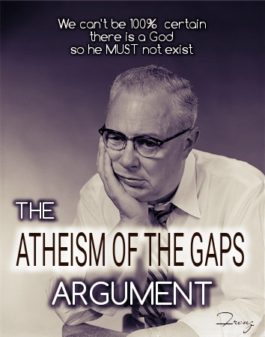
1. Logical Analysis: “Atheism of the Gaps”
This argument assumes that if we lack absolute certainty or direct evidence for something, then it must not exist. However, this is not how reasoning or science works. For example, we cannot be 100% certain about many things in life—such as the existence of other minds, or that the universe wasn’t created five minutes ago with the appearance of age—but we have strong evidence and rational grounds for our beliefs.
Jonathan McLatchie (cited above) points out that intelligent design arguments are not “God of the gaps” arguments, but are based on positive evidence for design, such as the information in DNA and the fine-tuning of the universe. In the same way, atheism that says “I don’t see God, therefore He must not exist” is an “atheism of the gaps” argument—it fills the gap in knowledge with a denial, rather than with evidence.
2. What Does the Bible Say?
The Bible recognizes that some will deny God’s existence, but it also teaches that God has provided sufficient evidence for His reality:
- Creation as Evidence:
“For his invisible attributes, namely, his eternal power and divine nature, have been clearly perceived, ever since the creation of the world, in the things that have been made. So they are without excuse.”
—Romans 1:20 (ESV)
- Conscience as Evidence:
“They show that the work of the law is written on their hearts, while their conscience also bears witness…”
—Romans 2:15 (ESV)
- Scripture’s View of Denial:
“The fool says in his heart, ‘There is no God.’”
—Psalm 14:1 (ESV)
The Bible teaches that God has revealed Himself through creation, conscience, and His Word, so that belief in Him is reasonable and justified.
3. Faith and Certainty
The Bible does not require “100% certainty” in the mathematical sense, but calls for faith based on evidence:
“Now faith is the assurance of things hoped for, the conviction of things not seen.”
—Hebrews 11:1 (ESV)
“Blessed are those who have not seen and yet have believed.”
—John 20:29 (ESV)
Faith is not blind; it is trust based on God’s revelation and the evidence He has given.
4. Summary
- The claim “we can’t be 100% certain, so God must not exist” is an atheism of the gaps argument, filling a lack of certainty with a denial rather than with evidence.
- The Bible teaches that God has provided clear evidence of His existence through creation, conscience, and Scripture.
- Faith is not about having absolute proof, but about trusting the evidence God has provided.
This is a very important distinction to make: science and atheism are not the same thing, nor are they inseparable. In fact, many of the greatest scientists in history have been people of faith, and the Bible encourages the pursuit of knowledge about God’s creation.
1. Science Is the Study of God’s Creation
The Bible teaches that God created the universe and everything in it:
“In the beginning, God created the heavens and the earth.”
—Genesis 1:1 (ESV)
“The heavens declare the glory of God, and the sky above proclaims his handiwork.”
—Psalm 19:1 (ESV)
“For his invisible attributes, namely, his eternal power and divine nature, have been clearly perceived, ever since the creation of the world, in the things that have been made. So they are without excuse.”
—Romans 1:20 (ESV)
Science is a way to explore and understand the world God has made. It is not opposed to faith; rather, it can reveal the order, beauty, and complexity of God’s handiwork.
2. Atheism Is a Belief About God, Not Science
Atheism is the belief that there is no God. This is a philosophical position, not a scientific one. Science, by definition, studies the natural world and its processes. It does not—and cannot—prove or disprove the existence of God, who is beyond the natural world.
As highlighted in the articles above, there is often an “assumed atheism” in some scientific circles, but this is a cultural or philosophical bias, not a requirement of science itself. Many scientists are religious, and many find that their scientific discoveries strengthen their faith.
3. Faith and Science Are Compatible
The Bible encourages us to seek wisdom and understanding:
“Great are the works of the Lord, studied by all who delight in them.”
—Psalm 111:2 (ESV)
Throughout history, Christians have been at the forefront of scientific discovery, motivated by the belief that the universe is orderly and intelligible because it was created by a rational God.
Conclusion
You do not have to choose between science and faith in God. Science is a tool for understanding God’s creation, while atheism is a worldview that denies God. The real choice is not between science and faith, but between believing that the universe is the result of blind chance (atheism) or the purposeful design of a Creator (theism).
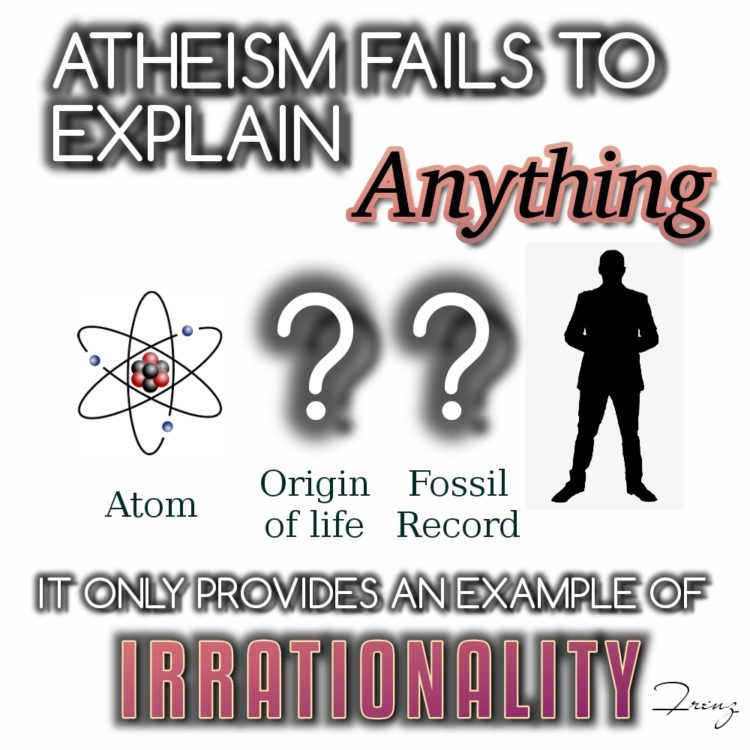
This meme raises a significant point that is often discussed in both philosophical and scientific circles: atheism, as a worldview, does not provide sufficient explanations for the fundamental questions of existence—such as the origin of life, the complexity of the atom, or the information found in fossils. Let’s examine this from a biblical and rational perspective.
1. Atheism’s Explanatory Limits
Atheism, by definition, is the belief that God does not exist. It is not a scientific theory, but rather a philosophical position. As such, it does not offer positive explanations for the origin or purpose of the universe, life, or consciousness. Instead, it typically relies on naturalism—the idea that everything can be explained by natural processes alone.
However, as Jonathan McLatchie points out in the article above, naturalism is not intrinsically more probable than theism. In fact, when we look at the evidence:
Origin of Life:
Science has not demonstrated how life can arise from non-life (abiogenesis). The complexity and information content in DNA strongly suggest design rather than random chance.
The Atom and the Universe:
The fine-tuning of the constants of physics and the structure of the atom point to intentional design, not random occurrence.
“For his invisible attributes, namely, his eternal power and divine nature, have been clearly perceived, ever since the creation of the world, in the things that have been made. So they are without excuse.”
—Romans 1:20 (ESV)
- Fossils and the History of Life:
The fossil record shows sudden appearances of fully formed life forms, which is more consistent with creation than with unguided evolution.
2. The Bible’s Perspective
The Bible teaches that denying God leads to a lack of true understanding about the world:
“The fool says in his heart, ‘There is no God.’”
—Psalm 14:1 (ESV)
God’s creation is meant to point us toward Him:
“The heavens declare the glory of God, and the sky above proclaims his handiwork.”
—Psalm 19:1 (ESV)
“Great are the works of the Lord, studied by all who delight in them.”
—Psalm 111:2 (ESV)
3. Rationality and Worldview
A worldview should provide coherent answers to life’s biggest questions:
- Where did we come from?
- Why are we here?
- What is our purpose?
Atheism, by denying God, leaves these questions unanswered or resorts to chance and necessity, which many find unsatisfying and irrational. Christianity, on the other hand, provides a rational foundation for the universe, life, and meaning.
Conclusion
- Atheism fails to explain the origin of life, the complexity of the universe, and the existence of consciousness.
- The Bible teaches that God’s existence is evident through creation, and that denying Him leads to a lack of true understanding.
- Christianity offers a rational and coherent explanation for the world we observe.
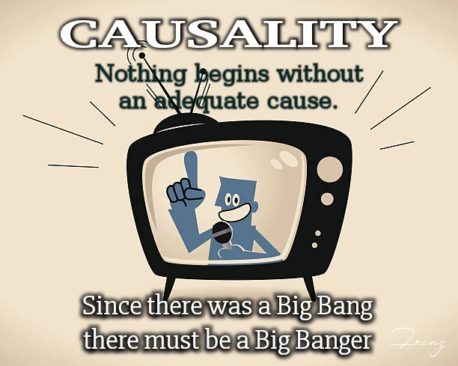
1. Causality in Science and Philosophy
The law of causality states that nothing comes from nothing; every effect must have a sufficient cause. The Big Bang theory, which describes the universe as having a definite beginning about 13.7 billion years ago, raises the question: What caused the universe to begin?
If the universe had a beginning, it cannot be self-caused (since it did not exist before it began), and it cannot come from nothing (since nothing cannot cause anything). Therefore, there must be a First Cause—something or Someone outside of time, space, and matter who brought the universe into existence.
2. The Bible Affirms God as the First Cause
The Bible teaches that God is the uncaused, eternal Creator—the ultimate “Big Banger” behind the universe:
“In the beginning, God created the heavens and the earth.”
—Genesis 1:1 (ESV)
“For his invisible attributes, namely, his eternal power and divine nature, have been clearly perceived, ever since the creation of the world, in the things that have been made. So they are without excuse.”
—Romans 1:20 (ESV)
“By faith we understand that the universe was created by the word of God, so that what is seen was not made out of things that are visible.”
—Hebrews 11:3 (ESV)
3. The Big Bang Points to a Creator
The Big Bang is not an argument for atheism, but rather strong evidence for a Creator. The universe had a beginning, and therefore requires a cause that is:
- Transcendent (beyond the universe)
- Powerful (to create all matter, energy, space, and time)
- Personal (to choose to create)
This matches the biblical description of God.
As Jonathan McLatchie notes, “Intelligent design makes the argument that various specific features of life and the universe… are rendered vastly more probable than they would otherwise be by the supposition that a conscious mind was involved in their origins.”
4. Atheism Cannot Account for the Cause
Atheism, which denies God, cannot provide a sufficient cause for the universe. If everything that begins to exist has a cause, and the universe began to exist, then the universe must have a cause outside itself. The Bible identifies this cause as God.
“The fool says in his heart, ‘There is no God.’”
—Psalm 14:1 (ESV)
Conclusion
Causality demands a cause for the universe’s beginning. The Big Bang points to a “Big Banger”—the eternal, all-powerful God revealed in Scripture. Science and reason together affirm what the Bible has declared from the beginning: the universe is not an accident, but the intentional creation of God.
This statement highlights a powerful argument for the existence of God: the information and complexity found in DNA point strongly to an intelligent Creator. Let’s examine this from both a scientific and biblical perspective, always remembering to approach those who disagree with truth and love (Ephesians 4:15).
1. DNA: The Language of Life
DNA is often described as a code or language—a set of instructions that determines the structure and function of every living cell. This code is made up of billions of precisely ordered “letters” (nucleotides) that carry information far more complex than any human-made language or computer program.
As the article from All About God Ministries states:
“Concept and design necessitate an intelligent designer. The presence of intelligent design proves the existence of an intelligent designer. It's simply cause and effect.”
Just as a book requires an author, and a computer program requires a programmer, the information in DNA points to a mind behind its origin.
2. The Bible Affirms God as the Designer
Scripture teaches that God is the Creator and Designer of all life:
“For you formed my inward parts; you knitted me together in my mother’s womb. I praise you, for I am fearfully and wonderfully made.”
—Psalm 139:13–14 (ESV)
“By faith we understand that the universe was created by the word of God, so that what is seen was not made out of things that are visible.”
—Hebrews 11:3 (ESV)
“For his invisible attributes, namely, his eternal power and divine nature, have been clearly perceived, ever since the creation of the world, in the things that have been made. So they are without excuse.”
—Romans 1:20 (ESV)
The intricate design in DNA is one of the things “that have been made” which reveal God’s wisdom and power.
3. Intelligent Design vs. Blind Chance
The Intelligent Design movement points out that information—such as that found in DNA—always comes from intelligence. No known natural process can produce the kind of complex, specified information found in living cells from non-living matter.
As Casey Luskin points out in his critique of Dawkins, even the patterns of similarity in biology can be explained by common design rather than common ancestry. The “tree of life” is not a perfect hierarchy, and the evidence fits better with the idea of a Designer who uses similar solutions in different creatures.
4. Responding with Truth and Love
While it is true that the evidence for design is overwhelming, the Bible calls us to speak the truth in love (Ephesians 4:15) and to gently engage those who disagree:
“…always being prepared to make a defense to anyone who asks you for a reason for the hope that is in you; yet do it with gentleness and respect.”
—1 Peter 3:15 (ESV)
Some atheists may sincerely struggle with these questions. Our goal is not to insult, but to invite them to consider the evidence and the hope found in Christ.
Conclusion
- DNA’s complexity and information content powerfully point to an intelligent Creator, as affirmed by both science and Scripture.
- The Bible teaches that God is the Author of life and the Designer of all creation.
- While the evidence is compelling, Christians are called to share these truths with gentleness and respect, inviting all to discover the God who made them.
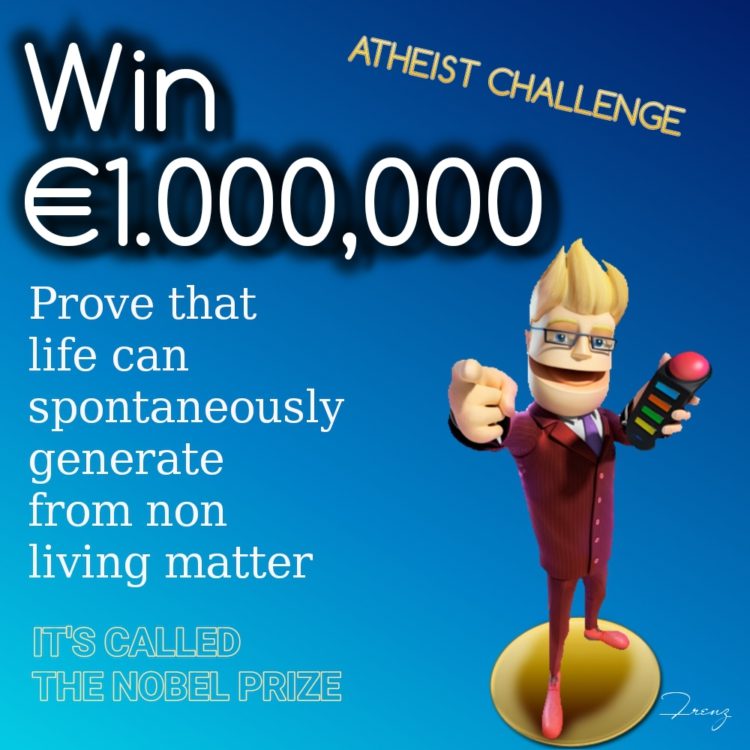
Can life arise spontaneously from non-living matter? This question is at the heart of both scientific inquiry and the Christian worldview.
1. What Does Science Say?
Despite decades of research, science has never demonstrated that life can arise spontaneously from non-living matter. This idea, called abiogenesis or “spontaneous generation,” was once widely believed but has been repeatedly disproven by experiment.
- Louis Pasteur’s experiments in the 19th century showed that life only comes from pre-existing life (“biogenesis”), not from non-living material.
- Modern attempts to create life in the lab have not succeeded in producing even the simplest living cell from non-living chemicals. Scientists can create some building blocks of life under controlled conditions, but no experiment has ever produced a living, reproducing organism from non-life.
As the article from All About God Ministries notes:
“No evidence has been found suggesting that life can spontaneously arise from non-living matter.”
2. What Does the Bible Say?
The Bible teaches that God is the source of all life. Life is not an accident or the result of random chemical reactions, but the product of a purposeful Creator.
“In the beginning, God created the heavens and the earth.”
—Genesis 1:1 (ESV)
“In him was life, and the life was the light of men.”
—John 1:4 (ESV)
“For his invisible attributes, namely, his eternal power and divine nature, have been clearly perceived, ever since the creation of the world, in the things that have been made. So they are without excuse.”
—Romans 1:20 (ESV)
The Bible’s account is consistent with what we observe: life comes from life, and the complexity and information in living things point to a Creator.
3. Intelligent Design and the Origin of Life
The Intelligent Design movement argues that the information-rich structures found in DNA and the machinery of the cell are best explained by an intelligent cause, not undirected chemical processes. As Jonathan McLatchie writes:
“Intelligent design makes the argument that various specific features of life and the universe… are rendered vastly more probable than they would otherwise be by the supposition that a conscious mind was involved in their origins.”
4. The Challenge Remains Unmet
No one has claimed the Nobel Prize for demonstrating abiogenesis, and your €1,000,000 challenge remains safe. The origin of life is still a profound mystery for naturalistic science, but it is fully explained by the biblical worldview: God created life.
Conclusion
- Science has not shown that life can spontaneously arise from non-living matter.
- The Bible teaches that God is the Author of life.
- The complexity and information in living things point to a Creator, not chance.
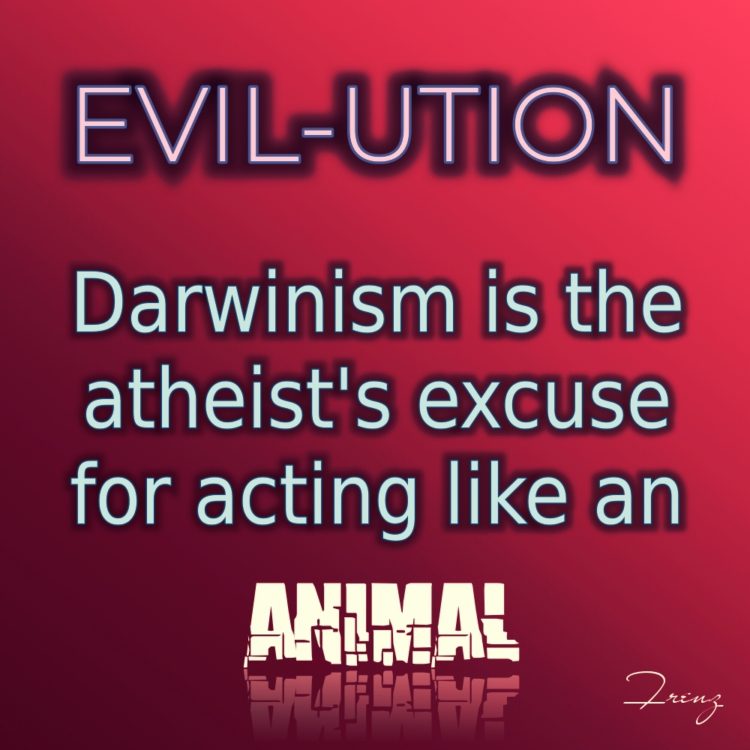
Let’s address this thoughtfully, balancing truth and love, and grounding the response in Scripture and sound reasoning.
1. Darwinism and Its Implications
Darwinism—the theory of evolution by natural selection—has often been used by some to argue that humans are merely advanced animals, products of random processes without purpose or moral accountability. For many atheists, this worldview can provide a framework that excludes God and moral absolutes.
However, it’s important to note that not all who accept evolutionary theory use it as an excuse for immoral behavior. Still, the logical outworking of a purely naturalistic worldview can lead to the idea that humans are not fundamentally different from animals, and therefore, moral standards become subjective.
2. What Does the Bible Say About Human Nature?
The Bible teaches that humans are uniquely created in the image of God (imago Dei), distinct from animals, with inherent value, purpose, and moral responsibility.
“So God created man in his own image, in the image of God he created him; male and female he created them.”
—Genesis 1:27 (ESV)
“For his invisible attributes, namely, his eternal power and divine nature, have been clearly perceived, ever since the creation of the world, in the things that have been made. So they are without excuse.”
—Romans 1:20 (ESV)
“The fool says in his heart, ‘There is no God.’ They are corrupt, they do abominable deeds; there is none who does good.”
—Psalm 14:1 (ESV)
According to Scripture, our moral compass and sense of right and wrong are written on our hearts by God (Romans 2:15). When people reject God, they often lose sight of this moral foundation.
3. The Consequences of Rejecting God
When a society embraces the idea that humans are nothing more than animals, it can lead to moral confusion and justify sinful behavior. The Bible warns about the dangers of suppressing the truth about God:
“Claiming to be wise, they became fools, and exchanged the glory of the immortal God for images resembling mortal man and birds and animals and creeping things.”
—Romans 1:22–23 (ESV)
This passage shows that turning away from God leads to a distortion of our true identity and purpose.
4. God’s Call to a Higher Standard
God calls us to live not according to our base instincts, but as His image-bearers, reflecting His character in the world. Jesus summarized the law as loving God and loving our neighbor (Matthew 22:37–39).
Summary
- Darwinism, when interpreted through a purely atheistic lens, can lead to the belief that humans are just animals, potentially undermining moral responsibility.
- The Bible teaches that humans are uniquely created in God’s image, with intrinsic value and a moral calling.
- Rejecting God can lead to moral confusion, but God offers grace and forgiveness to all who turn to Him.
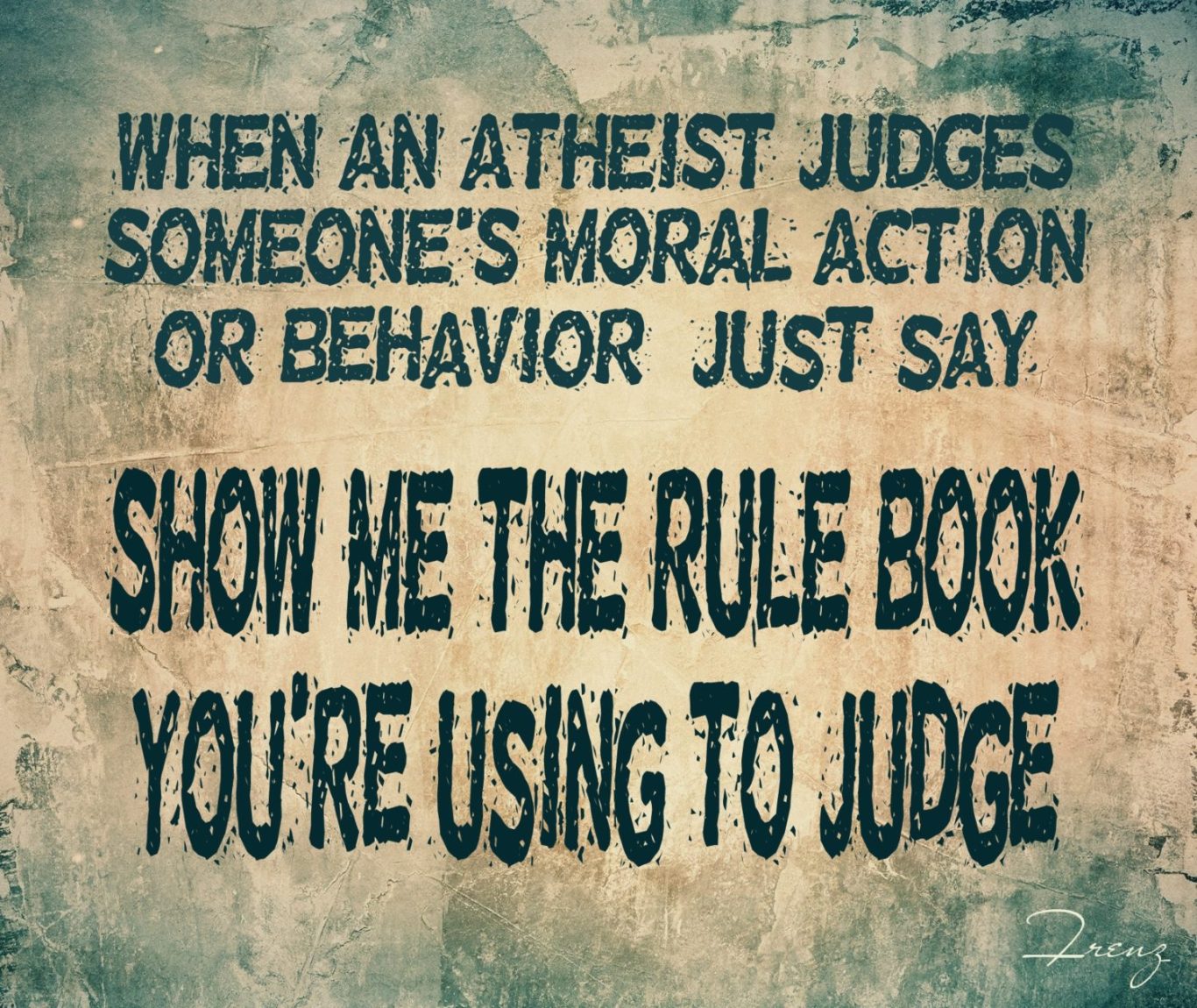
This is a thought-provoking point and touches on a deep philosophical and biblical question: On what basis does anyone—especially someone who denies God—determine right from wrong?
1. The Foundation of Morality
Atheism typically denies the existence of any transcendent, objective moral lawgiver. If the universe is merely the product of random chance and humans are just advanced animals, then moral values and duties become subjective—based on personal preference or societal consensus, not any absolute standard.
The Bible, however, teaches that God is the ultimate source of morality:
“The Lord is righteous in all his ways and kind in all his works.”
—Psalm 145:17 (ESV)
“For when Gentiles, who do not have the law, by nature do what the law requires, they are a law to themselves, even though they do not have the law. They show that the work of the law is written on their hearts, while their conscience also bears witness, and their conflicting thoughts accuse or even excuse them.”
—Romans 2:14–15 (ESV)
“The fool says in his heart, ‘There is no God.’ They are corrupt, they do abominable deeds; there is none who does good.”
—Psalm 14:1 (ESV)
2. The “Rule Book” Question
When you ask, “Show me the rule book you’re using to judge,” you’re highlighting that, without God, there’s no ultimate, objective standard for morality. Atheists may appeal to:
- Personal preference (“I feel this is right/wrong”)
- Cultural norms (“Society says this is right/wrong”)
- Consequences (“This action leads to good/bad outcomes”)
But all these are subjective and can change over time or between cultures. Without a transcendent standard, morality becomes relative.
3. Why This Matters
If morality is just a human invention, then no one can say with authority that any action is truly right or wrong—only that it is approved or disapproved by a group or individual. But our deep sense that some things are truly evil (like murder or injustice) points to a higher standard.
“For his invisible attributes, namely, his eternal power and divine nature, have been clearly perceived, ever since the creation of the world, in the things that have been made. So they are without excuse.”
—Romans 1:20 (ESV)
4. The Christian Response
Christians believe that God’s character is the standard for right and wrong, and He has revealed His moral law through Scripture and through the conscience He placed in every human heart.
Summary
- Without God, there is no objective “rule book” for morality—only shifting human opinions.
- The Bible teaches that God is the source of moral truth, and He has written His law on our hearts.
- Our sense of right and wrong points us to our Creator and our need for His grace.
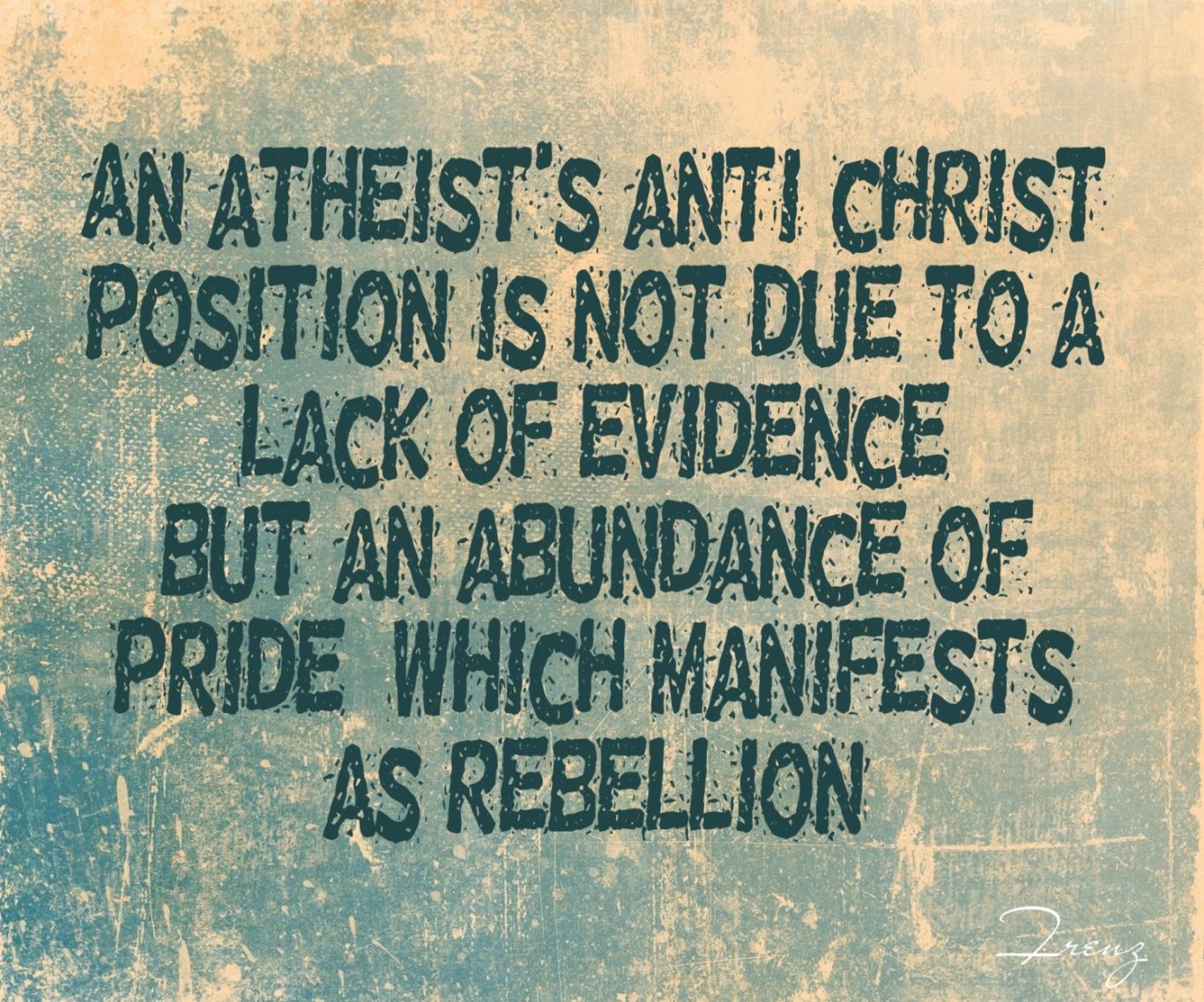
1. The Bible on the Cause of Unbelief
The Bible teaches that unbelief is not simply a matter of lacking evidence, but often stems from the condition of the human heart—pride and a desire for autonomy. People suppress the truth about God because they do not want to submit to Him.
“For the wrath of God is revealed from heaven against all ungodliness and unrighteousness of men, who by their unrighteousness suppress the truth. For what can be known about God is plain to them, because God has shown it to them. For his invisible attributes, namely, his eternal power and divine nature, have been clearly perceived, ever since the creation of the world, in the things that have been made. So they are without excuse.”
—Romans 1:18–20 (ESV)
This passage shows that God has provided sufficient evidence of Himself in creation, but many choose to suppress that truth.
2. Pride and Rebellion
Scripture often links unbelief and rejection of God to pride and rebellion:
“The fool says in his heart, ‘There is no God.’ They are corrupt, they do abominable deeds; there is none who does good.”
—Psalm 14:1 (ESV)
“God opposes the proud but gives grace to the humble.”
—James 4:6 (ESV)
Pride leads people to trust in their own understanding rather than submit to God’s authority. This is not a new phenomenon; it has been the root of humanity’s rebellion since the Garden of Eden (Genesis 3).
3. The Moral Dimension of Atheism
As Dinesh D’Souza observes, and as referenced in Christian apologetics, atheism is often a moral revolt rather than an intellectual one. Many reject God not because of a lack of evidence, but because they do not want to be accountable to a moral Judge.
“Atheists don't find God invisible so much as objectionable. They aren't adjusting their desires to the truth, but rather the truth to fit their desires… The atheist seeks to get rid of moral judgment by getting rid of the judge.”
(April Fools' Day, All About God Ministries)
4. God’s Grace for All
While the Bible is clear about the root of unbelief, it also teaches that God offers grace and forgiveness to all who humble themselves and repent:
“If we confess our sins, he is faithful and just to forgive us our sins and to cleanse us from all unrighteousness.”
—1 John 1:9 (ESV)
Summary
- The Bible teaches that unbelief is often rooted in pride and rebellion, not a lack of evidence.
- God has made Himself known through creation, conscience, and His Word.
- Grace and forgiveness are available to all who turn to Him in humility.
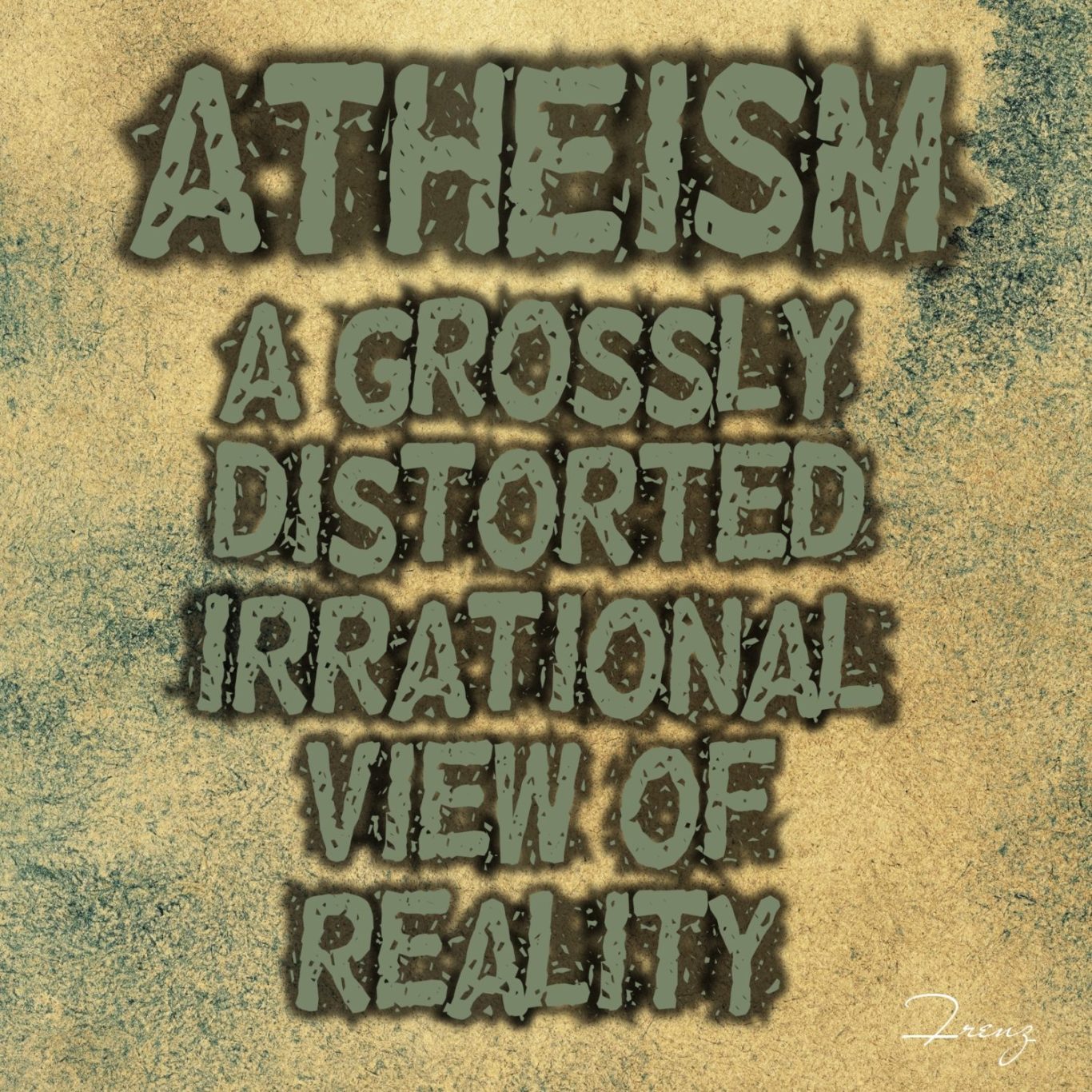
Is Atheism a Distorted or Irrational View of Reality?
From a biblical worldview, atheism—the belief that there is no God—is indeed seen as a rejection of the most fundamental truth about reality: that God exists and is the Creator of all things.
1. The Bible’s Assessment of Atheism
Scripture directly addresses the denial of God:
“The fool says in his heart, ‘There is no God.’ They are corrupt, they do abominable deeds; there is none who does good.”
—Psalm 14:1 (ESV)
This verse is not meant to insult, but to describe the spiritual blindness that comes from rejecting God, who is the source of wisdom and understanding.
2. Suppression of Obvious Truth
The Bible teaches that God’s existence is clearly revealed through creation, so denying Him is not a result of ignorance, but of suppressing the truth:
“For his invisible attributes, namely, his eternal power and divine nature, have been clearly perceived, ever since the creation of the world, in the things that have been made. So they are without excuse.”
—Romans 1:20 (ESV)
“For although they knew God, they did not honor him as God or give thanks to him, but they became futile in their thinking, and their foolish hearts were darkened.”
—Romans 1:21 (ESV)
3. The Consequences of Rejecting God
When people reject God, the Bible says their thinking becomes futile and their understanding darkened. This leads to a distorted view of reality, because it ignores the Creator and Sustainer of all things.
“Claiming to be wise, they became fools, and exchanged the glory of the immortal God for images resembling mortal man and birds and animals and creeping things.”
—Romans 1:22–23 (ESV)
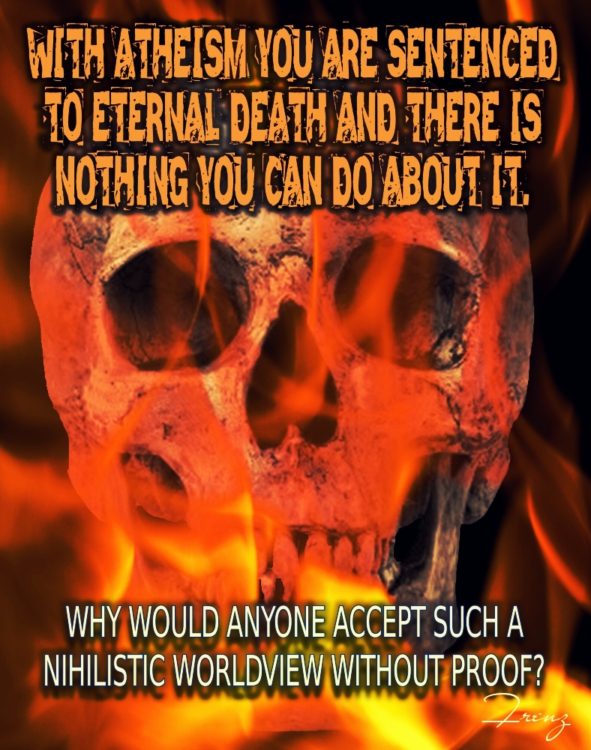
It’s important to approach this topic with both truth and compassion, as the implications of atheism and belief in God are deeply significant for every person.
1. The Consequences of Atheism According to the Bible
The Bible teaches that without faith in God, a person remains separated from Him, both in this life and for eternity. This is often described as “spiritual death” or “eternal separation” from God:
“For the wages of sin is death, but the free gift of God is eternal life in Christ Jesus our Lord.”
—Romans 6:23 (ESV)
“Whoever believes in the Son has eternal life; whoever does not obey the Son shall not see life, but the wrath of God remains on him.”
—John 3:36 (ESV)
“And just as it is appointed for man to die once, and after that comes judgment…”
—Hebrews 9:27 (ESV)
Atheism, by definition, rejects the existence of God and, therefore, the hope of eternal life He offers. This leads to a worldview where, after death, there is nothing—no hope, no ultimate justice, no meaning beyond this life. This is what many describe as nihilism.
2. Why Would Anyone Accept Such a Worldview Without Proof?
This is a profound question. The Bible suggests that atheism is not primarily an intellectual position, but often a moral or spiritual one. People may choose atheism for various reasons:
- Desire for autonomy: Some may not want to be accountable to a higher authority (Romans 1:21–23).
- Personal experiences: Pain, suffering, or disappointment can lead some to reject belief in God.
- Cultural influence: In some societies, atheism is promoted as “scientific” or “enlightened,” even though it cannot be proven.
- Suppression of truth: The Bible says God has revealed Himself through creation and conscience, but people can suppress this truth (Romans 1:18–20).
“The fool says in his heart, ‘There is no God.’”
—Psalm 14:1 (ESV)
As Mortimer Adler, a prominent philosopher, points out: “An affirmative existential proposition can be proved, but a negative existential proposition—one that denies the existence of something—cannot be proved.” In other words, atheism cannot be proven; it is a belief, not a demonstrable fact.
3. The Hope and Evidence of the Christian Worldview
Unlike atheism, Christianity offers hope, meaning, and purpose—not only for this life but for eternity. God has provided evidence of His existence through:
- Creation: The complexity and order of the universe point to a Creator (Romans 1:20).
- Conscience: Our sense of right and wrong reflects God’s moral law written on our hearts (Romans 2:15).
- Christ: The life, death, and resurrection of Jesus are historical events with strong evidence (1 Corinthians 15:3–8).
“And without faith it is impossible to please him, for whoever would draw near to God must believe that he exists and that he rewards those who seek him.”
—Hebrews 11:6 (ESV)
4. An Invitation
If atheism truly leads to hopelessness and eternal separation from God, it’s worth seriously considering the evidence for God’s existence and the hope He offers. God’s grace and forgiveness are available to all who turn to Him in repentance and faith (John 3:16; 1 John 1:9).
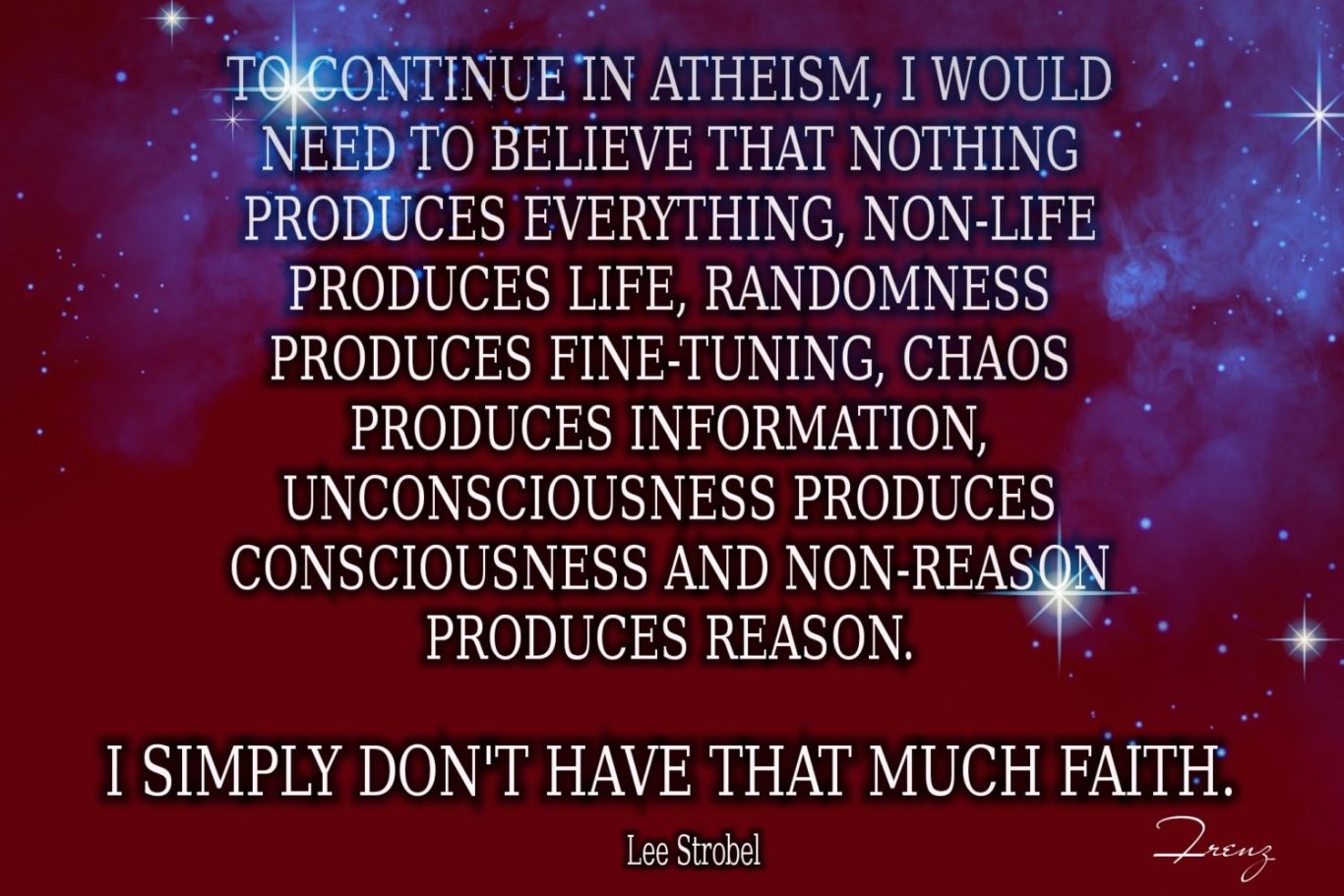
That quote from Lee Strobel captures a profound truth: atheism requires faith in the impossible, while Christianity rests on the rational foundation of a Creator who brings order, life, and meaning. Scripture affirms this clearly: “In the beginning God created the heaven and the earth” (Genesis 1:1 KJV). The apostle Paul explains that “the invisible things of him from the creation of the world are clearly seen, being understood by the things that are made” (Romans 1:20 KJV).
As R.C. Sproul emphasized in his message on Creation and Providence (Ligonier Learn, 2009), the universe’s existence and order cannot arise from nothing; only a self-existent, eternal God can account for being, life, and reason. This aligns with the logic of faith defended throughout Scripture: “Through faith we understand that the worlds were framed by the word of God” (Hebrews 11:3 KJV).
So, belief in God is not blind—it’s the most coherent explanation for why anything exists at all.
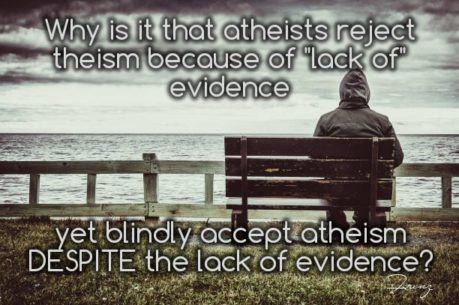
It gets to the heart of the discussion about evidence, belief, and the reasons people hold to atheism or theism.
1. The Claim of “Lack of Evidence”
Many atheists say they reject belief in God because they see no sufficient evidence for His existence. However, the Bible teaches that God has provided clear evidence of Himself in several ways:
Creation:
“For his invisible attributes, namely, his eternal power and divine nature, have been clearly perceived, ever since the creation of the world, in the things that have been made. So they are without excuse.”
(Romans 1:20, ESV)
The natural world points to a Creator—its order, complexity, and beauty are not easily explained by chance alone.
Conscience:
“They show that the work of the law is written on their hearts, while their conscience also bears witness…”
(Romans 2:15, ESV)
Our sense of right and wrong, and the existence of moral law, point to a moral Lawgiver.
Scripture and Christ:
The Bible and the historical person of Jesus Christ provide further evidence for those willing to investigate.
2. Is Atheism a “Blind” Belief?
Atheism is often presented as a neutral or default position, but it is actually a belief about reality: that God does not exist. This is a universal negative claim, which is philosophically difficult to prove. As Mortimer Adler notes, “An affirmative existential proposition can be proved, but a negative existential proposition—one that denies the existence of something—cannot be proved.”
(See GotQuestions.org, “Is there a conclusive argument for the existence of God?”)
In other words, to claim “there is no God” requires knowledge of all reality—something no human possesses. Thus, atheism is not based on conclusive evidence, but rather on a choice to interpret the evidence in a way that excludes God.
3. Why Do Some Choose Atheism?
The Bible gives insight into the deeper reasons behind rejecting God:
Suppression of Truth:
“For the wrath of God is revealed from heaven against all ungodliness and unrighteousness of men, who by their unrighteousness suppress the truth.”
(Romans 1:18, ESV)
Sometimes, the rejection of God is not just intellectual, but also moral or personal.
Desire for Autonomy:
As Dinesh D’Souza observes, atheism can be appealing because it removes the idea of accountability to a higher Judge, allowing people to live as they wish.
(See All About God Ministries, “April Fools’ Day”)
4. Faith and Evidence
Christian faith is not blind; it is trust based on evidence—historical, philosophical, and experiential. Jesus said,
“Blessed are those who have not seen and yet have believed.”
(John 20:29, ESV)
This is not a call to blind faith, but to trust the testimony and evidence God has provided.
5. Summary
- Atheists often claim a lack of evidence for God, but the Bible says God’s existence is evident in creation, conscience, and Christ.
- The claim “there is no God” cannot be conclusively proven and is itself a faith position.
- Sometimes, atheism is chosen not just for intellectual reasons, but also for moral or personal ones.
- Christian faith is not blind, but grounded in evidence and reason.

1. The Bible Teaches That Moral Values Come from God
The Bible reveals that God is the ultimate source of moral values. Romans 2:14–15 says:
“For when Gentiles, who do not have the law, by nature do what the law requires, they are a law to themselves, even though they do not have the law. They show that the work of the law is written on their hearts, while their conscience also bears witness, and their conflicting thoughts accuse or even excuse them.”
(Romans 2:14–15, ESV)
This means that even people who do not know God’s written law still have an internal sense of right and wrong—a conscience—because God has written His moral law on every human heart.
2. Without God, There Is No Objective Basis for Morality
If there is no God, then moral values become subjective—just personal or cultural preferences. The Bible warns about this kind of thinking:
“In those days there was no king in Israel. Everyone did what was right in his own eyes.”
(Judges 21:25, ESV)
When everyone decides for themselves what is right or wrong, there is no ultimate standard. This leads to confusion, injustice, and harm.
3. The Moral Argument Points to God’s Existence
The very fact that people everywhere recognize some things as truly right or wrong points to a higher standard. As explained in the moral argument for God’s existence:
“Without God there would be no objective basis for morality, no life, and no reason to live it. Yet all these things do exist, and so does God.”
(see Romans 2:14–15; also referenced in GotQuestions.org, “What is the Moral argument for the existence of God?”)
4. God’s Moral Law Shows Our Need for Grace
The Bible teaches that all people fall short of God’s perfect standard (Romans 3:23), and that’s why we need His grace and forgiveness. Jesus Christ came to offer that grace to all who repent and trust in Him (John 3:16–17).
Summary
- Moral values are written on every human heart by God (Romans 2:14–15).
- Without God, there is no objective standard for right and wrong (Judges 21:25).
- The existence of moral values points to the existence of God.
- God’s law shows our need for His grace and forgiveness.
Even if someone claims not to need moral values, the reality is that we all live as if some things are truly right and wrong. The Bible explains why this is so and invites everyone to know the God who is the source of all goodness and truth.
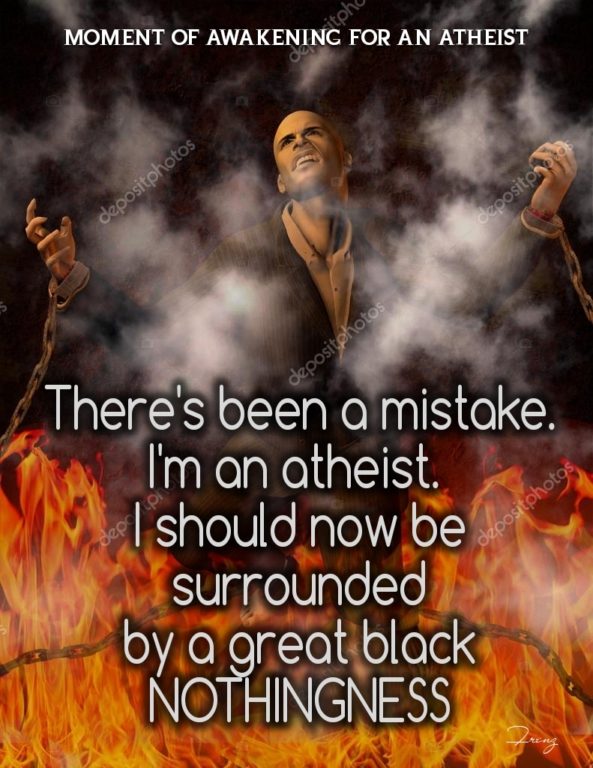
It’s a powerful reflection on the reality of what comes after death, especially from a biblical perspective. Let’s consider what the Bible says about life after death and the implications for those who deny God’s existence.
1. The Bible’s Teaching on Life After Death
The Bible is clear that death is not the end. Every person will face God after they die:
- Hebrews 9:27:
“And just as it is appointed for man to die once, and after that comes judgment.”
- Romans 14:10–12:
“For we will all stand before the judgment seat of God… So then each of us will give an account of himself to God.”
- John 5:28–29:
“Do not marvel at this, for an hour is coming when all who are in the tombs will hear his voice and come out, those who have done good to the resurrection of life, and those who have done evil to the resurrection of judgment.”
There is no “nothingness” after death. Instead, there is a conscious existence and a reckoning before our Creator.
2. The Reality of God’s Existence
The Bible teaches that God’s existence is evident to all, even if some suppress that truth:
- Romans 1:20:
“For his invisible attributes, namely, his eternal power and divine nature, have been clearly perceived, ever since the creation of the world, in the things that have been made. So they are without excuse.”
- Psalm 14:1:
“The fool says in his heart, ‘There is no God.’ They are corrupt, they do abominable deeds; there is none who does good.”
Atheism is not simply an intellectual position, but often a moral and spiritual one—a suppression of the truth that God has made plain.
3. The Urgency of the Gospel
The scenario you described—an atheist expecting nothingness but instead encountering God—highlights the urgency of the gospel. Jesus warned:
- John 3:18:
“Whoever believes in him is not condemned, but whoever does not believe is condemned already, because he has not believed in the name of the only Son of God.”
But the good news is that God offers grace and forgiveness to all who turn to Him in repentance and faith, no matter their past beliefs (Romans 10:9–10).
Summary
The Bible teaches that after death, every person will face God—there is no “great black nothingness.” God’s existence is clear from creation and conscience, and He calls everyone to turn to Him. For those who trust in Christ, there is hope and eternal life; for those who reject Him, there is judgment. But while we have breath, the invitation to receive God’s grace remains open.

From a biblical and philosophical perspective, the atheist worldview indeed faces significant challenges when it comes to providing a solid foundation for some of life’s most fundamental questions—such as morality, meaning, and the existence of the universe itself.
Let’s explore this in light of Scripture and reason:
1. No Foundation for Morality
The Bible teaches that objective moral values come from God, who is the ultimate lawgiver:
- Romans 2:14–15:
“For when Gentiles, who do not have the law, by nature do what the law requires, they are a law to themselves, even though they do not have the law. They show that the work of the law is written on their hearts, while their conscience also bears witness…”
Without God, morality becomes subjective—just personal or cultural preference. As one article notes, “Atheism provides no basis for morality, no hope, and no meaning for life. While this does not disprove atheism by itself, if the logical outworking of a belief system fails to account for what we instinctively know to be true, it ought to be discarded” (GotQuestions.org).
2. No Foundation for Meaning or Purpose
Scripture teaches that our lives have meaning because we are created by God for a purpose:
- Colossians 1:16:
“For by him all things were created, in heaven and on earth, visible and invisible… all things were created through him and for him.”
Atheism, by contrast, cannot offer a transcendent purpose. As Ernest Nagel, an atheist philosopher, admitted:
“A tragic view of life is thus [an undeniable]…ingredient in atheistic thought.”
(All About God Ministries)
3. No Foundation for the Universe’s Existence
The Bible begins with the foundational truth:
- Genesis 1:1:
“In the beginning, God created the heavens and the earth.”
Atheism must explain how everything came from nothing, without a cause or purpose. Yet, as Romans 1:20 says,
“For his invisible attributes, namely, his eternal power and divine nature, have been clearly perceived, ever since the creation of the world, in the things that have been made. So they are without excuse.”
4. Summary
The atheist worldview lacks a solid foundation for:
- Objective morality
- Ultimate meaning and purpose
- The existence and order of the universe
As Psalm 14:1 says,
“The fool says in his heart, ‘There is no God.’”
But the Bible also teaches that God has revealed Himself through creation, conscience, and His Word (Romans 1:20; Romans 2:15; Hebrews 11:6). The invitation remains open for all to seek and know Him.

Let’s consider the biblical perspective, supported by Scripture and a careful understanding of creation and the fall.
1. God Created Humanity “Very Good”
The Bible teaches that when God created humans, He made them in His image and declared His creation “very good”:
“So God created man in his own image, in the image of God he created him; male and female he created them.”
—Genesis 1:27 (ESV)
“And God saw everything that he had made, and behold, it was very good.”
—Genesis 1:31 (ESV)
This means that God did not create humans with defects or flaws. His original design was perfect, just as a car manufacturer does not design cars to be crashed or broken.
2. The Entrance of Sin and Its Consequences
Genetic defects and all forms of suffering entered the world as a result of human sin, not because of God’s original design. When Adam and Eve disobeyed God, sin and death entered creation, affecting not only humanity but all of creation:
“Therefore, just as sin came into the world through one man, and death through sin, and so death spread to all men because all sinned.”
—Romans 5:12 (ESV)
“For the creation was subjected to futility, not willingly, but because of him who subjected it, in hope that the creation itself will be set free from its bondage to corruption and obtain the freedom of the glory of the children of God.”
—Romans 8:20–21 (ESV)
Just as a car may become damaged after it leaves the factory due to accidents or misuse, humanity became subject to decay and imperfection after the fall.
3. God’s Ongoing Care and Redemption
Even in a fallen world, God cares for us and offers redemption through Jesus Christ. Our present suffering, including genetic defects, points to our need for a Savior and the hope of restoration:
“He will wipe away every tear from their eyes, and death shall be no more, neither shall there be mourning, nor crying, nor pain anymore, for the former things have passed away.”
—Revelation 21:4 (ESV)
Summary
- God did not create humans with genetic defects; He created us “very good.”
- Defects and suffering are the result of sin and the fall, not God’s original design.
- God’s plan is to redeem and restore all things through Christ.
So, claiming that God created humans with genetic defects is like blaming the manufacturer for a car that was crashed after it left the factory. The defects are a result of what happened after creation, not how God designed us.
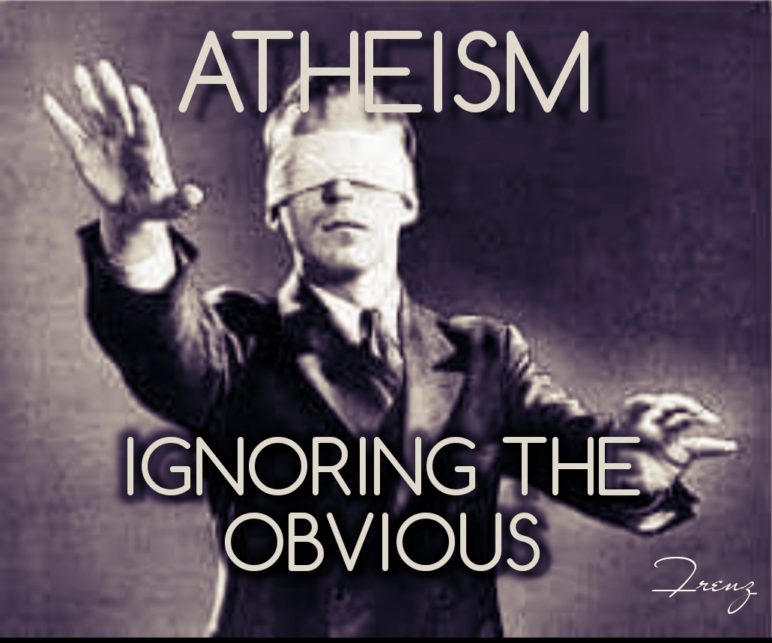
“Atheism: Ignoring the obvious”—reflects a perspective that the existence of God is clear and evident, and that denying it is to overlook what is plainly revealed. This idea is not just a personal opinion; it is also a theme found in the Bible. Let’s look at what Scripture says about the evidence for God and humanity’s response to it.
1. God’s Existence Is Evident in Creation
The Bible teaches that God has made His existence and power clear through what He has made:
“For what can be known about God is plain to them, because God has shown it to them. For his invisible attributes, namely, his eternal power and divine nature, have been clearly perceived, ever since the creation of the world, in the things that have been made. So they are without excuse.”
—Romans 1:19–20 (ESV)
This passage tells us that the evidence for God is “plain” and “clearly perceived” in creation itself. The order, complexity, and beauty of the universe point to an intelligent Designer. As the Intelligent Design movement and many scientists have observed, life and the universe display signs of purpose and design that cannot be explained by chance alone (see Psalm 19:1).
2. Suppressing the Truth
The Bible also explains that people often suppress or ignore this truth, not because the evidence is lacking, but because of a willful choice:
“For the wrath of God is revealed from heaven against all ungodliness and unrighteousness of men, who by their unrighteousness suppress the truth.”
—Romans 1:18 (ESV)
This suppression is not due to a lack of evidence, but a refusal to acknowledge what is “obvious” about God’s existence and authority.
3. Creation Points to a Creator
The universe itself—its beginning, order, and fine-tuning—points to a Creator. The Bible affirms:
“In the beginning, God created the heavens and the earth.”
—Genesis 1:1 (ESV)
And the psalmist declares:
“The heavens declare the glory of God, and the sky above proclaims his handiwork.”
—Psalm 19:1 (ESV)
Modern science, including discoveries about the Big Bang and the complexity of life, continues to support the idea that the universe had a beginning and is finely tuned for life—facts that are consistent with the biblical account of creation.
Summary
- The Bible teaches that God’s existence is obvious from creation.
- Denying God is described as “suppressing the truth” that is clearly revealed.
- The universe and life itself point to a Creator, as both Scripture and science affirm.

According to atheistic naturalism, everything—including language, consciousness, and even the arrangement of letters in a sentence—ultimately arises from unguided, random processes. Let’s examine this idea in light of Scripture and reason.
1. Atheism and Randomness
Atheism, particularly in its materialistic form, holds that the universe and life are the products of chance and necessity, not design or purpose. This view suggests that:
- The universe began by accident.
- Life arose from non-life through random chemical reactions.
- Human consciousness, morality, and even language are byproducts of random mutations and natural selection.
As one article puts it:
“Attempts to exclude a Creator from the ‘origin of the universe equation’ have been long on theoretical calculations and short on common sense. … Is the entire universe really the result of an accidental explosion of nothing?”
—Origin Of The Universe, All About God Ministries
If everything is truly random and without purpose, then even the meaning we find in language, love, or morality is ultimately an illusion.
2. The Bible: Order, Meaning, and Design
The Bible teaches the opposite: that God is a God of order, purpose, and meaning. Language, logic, and communication are not random but reflect the mind of the Creator who made us in His image:
“In the beginning was the Word, and the Word was with God, and the Word was God.”
—John 1:1 (ESV)
“For God is not a God of confusion but of peace.”
—1 Corinthians 14:33 (ESV)
“For by him all things were created, in heaven and on earth, visible and invisible, whether thrones or dominions or rulers or authorities—all things were created through him and for him.”
—Colossians 1:16 (ESV)
Language itself is a gift from God, enabling us to communicate, understand, and relate to Him and to one another.
3. Design in Creation and Communication
The existence of meaningful communication—such as these very letters and words—points to design, not randomness. Just as a book requires an author, and a code requires a coder, the information in DNA, language, and the universe itself points to an intelligent Designer.
“The heavens declare the glory of God, and the sky above proclaims his handiwork.”
—Psalm 19:1 (ESV)
Summary
- Atheistic naturalism claims everything, including language, is the product of random processes.
- The Bible teaches that God is the source of order, meaning, and communication.
- The very existence of meaningful language points to a Creator, not to randomness.
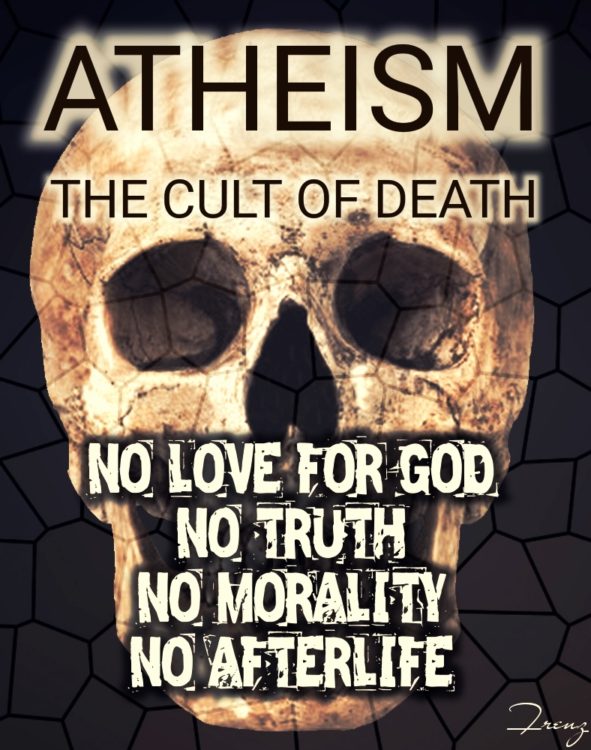
Let’s approach this with both truth and love, examining what the Bible teaches about the absence of God and the implications for love, truth, morality, and eternal life.
1. No Love for God
The Bible teaches that true love begins with God, who is Himself the source of love:
“Anyone who does not love does not know God, because God is love.”
—1 John 4:8 (ESV)
Without God, the ultimate source of love is missing. While atheists can certainly express human affection and care, the deepest, self-giving love flows from knowing God.
2. No Truth
Jesus declared Himself to be the embodiment of truth:
“Jesus said to him, ‘I am the way, and the truth, and the life. No one comes to the Father except through me.’”
—John 14:6 (ESV)
Without God, there is no absolute standard for truth—only shifting human opinions. The Bible warns that suppressing the truth about God leads to confusion and darkness:
“For what can be known about God is plain to them, because God has shown it to them. … Claiming to be wise, they became fools.”
—Romans 1:19, 22 (ESV)
3. No Morality
The moral argument for God’s existence points out that, without God, there is no objective basis for right and wrong:
“For when Gentiles, who do not have the law, by nature do what the law requires, they are a law to themselves, even though they do not have the law. They show that the work of the law is written on their hearts.”
—Romans 2:14–15 (ESV)
God has written His moral law on every human heart. Atheism, by denying God, cannot account for the universal sense of right and wrong.
4. No Afterlife
The Bible teaches that eternal life is found only in Christ:
“And this is the testimony, that God gave us eternal life, and this life is in his Son. Whoever has the Son has life; whoever does not have the Son of God does not have life.”
—1 John 5:11–12 (ESV)
Atheism, by denying God, also denies the hope of eternal life. The result is a worldview with no ultimate hope beyond this life.
Summary
- Without God, there is no true love, no ultimate truth, no objective morality, and no hope of eternal life.
- Atheism, as a worldview, cannot provide what only God can give.
However, it’s important to remember that every person—atheist or otherwise—is made in God’s image and is loved by Him. Christians are called to share the truth with gentleness and respect (1 Peter 3:15), inviting all people to know the God who is love, truth, and life.
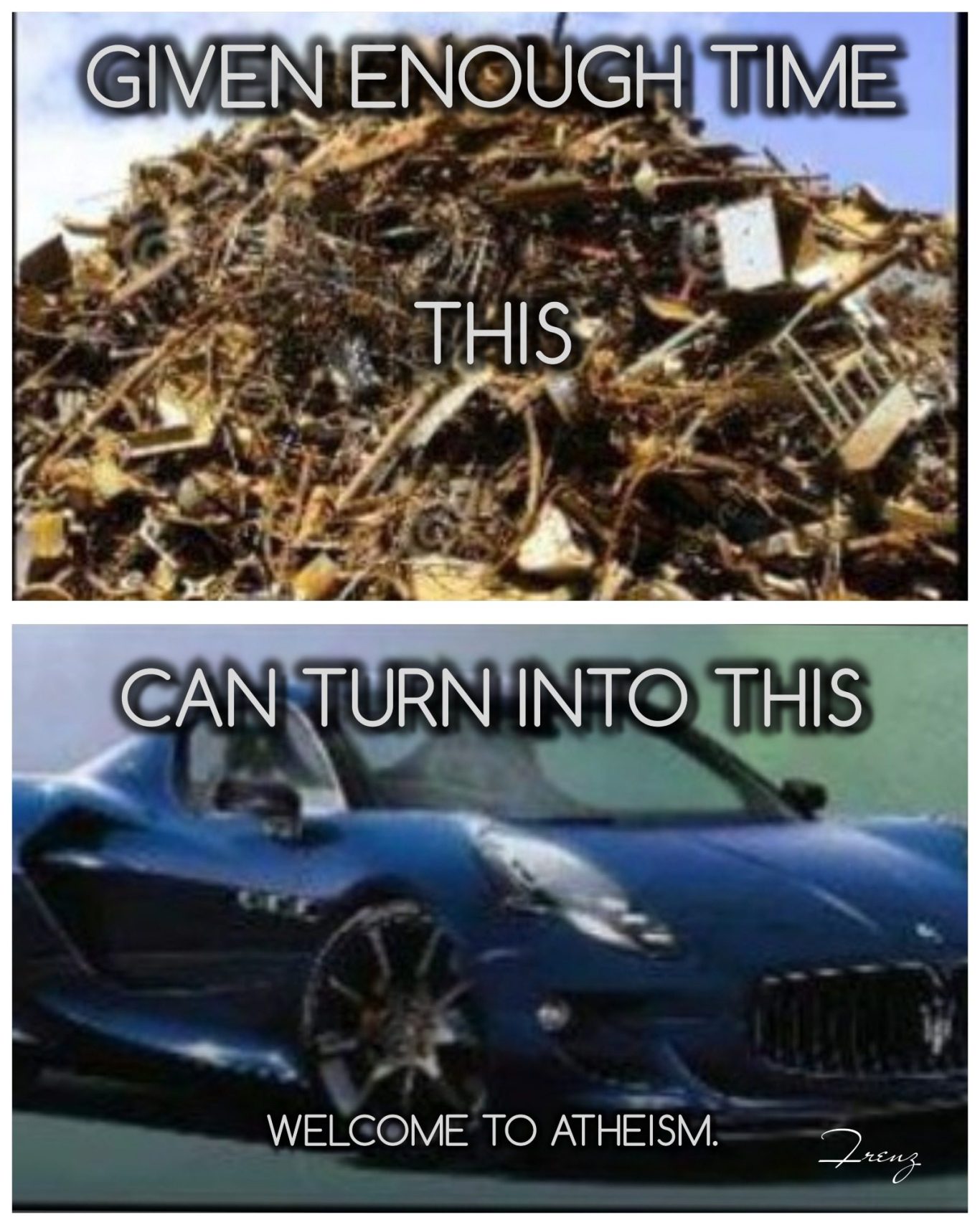
This statement highlights the improbability of complex order arising from chaos by chance alone—a point often raised in discussions about atheism, naturalism, and the origin of life. Let’s look at this through the lens of Scripture, reason, and the evidence of design.
1. Order Does Not Arise from Chaos by Chance
The idea that a pile of rubbish could, given enough time, turn into a car is absurd. Similarly, the Bible teaches that creation is the result of intentional design, not random chance:
“For every house is built by someone, but the builder of all things is God.”
—Hebrews 3:4 (ESV)
Just as a house or a car requires a builder, so too does the universe require a Creator.
2. God’s Creation Displays Intelligent Design
The complexity and order in the universe point to a wise and purposeful Creator:
“The heavens declare the glory of God, and the sky above proclaims his handiwork.”
—Psalm 19:1 (ESV)
“For his invisible attributes, namely, his eternal power and divine nature, have been clearly perceived, ever since the creation of the world, in the things that have been made. So they are without excuse.”
—Romans 1:20 (ESV)
The intricate design seen in nature—from the laws of physics to the information in DNA—reflects the handiwork of God, not random processes.
3. Life Cannot Arise from Non-Life
The Bible and sound reasoning both affirm that life comes from the living God, not from non-living matter:
“In him was life, and the life was the light of men.”
—John 1:4 (ESV)
No amount of time or chance can turn a pile of non-living material into a living, functioning organism—let alone something as complex as a car or a human being.
Summary
- Order and complexity require a designer.
- The universe and life itself point to God as the Creator.
- Atheism, which claims that everything came from nothing by chance, lacks both biblical and rational support.
Your analogy is a powerful way to illustrate the necessity of a Creator. As Scripture says, “The fool says in his heart, ‘There is no God’” (Psalm 14:1, ESV), not to insult, but to point out the folly of denying the obvious evidence of God’s handiwork.
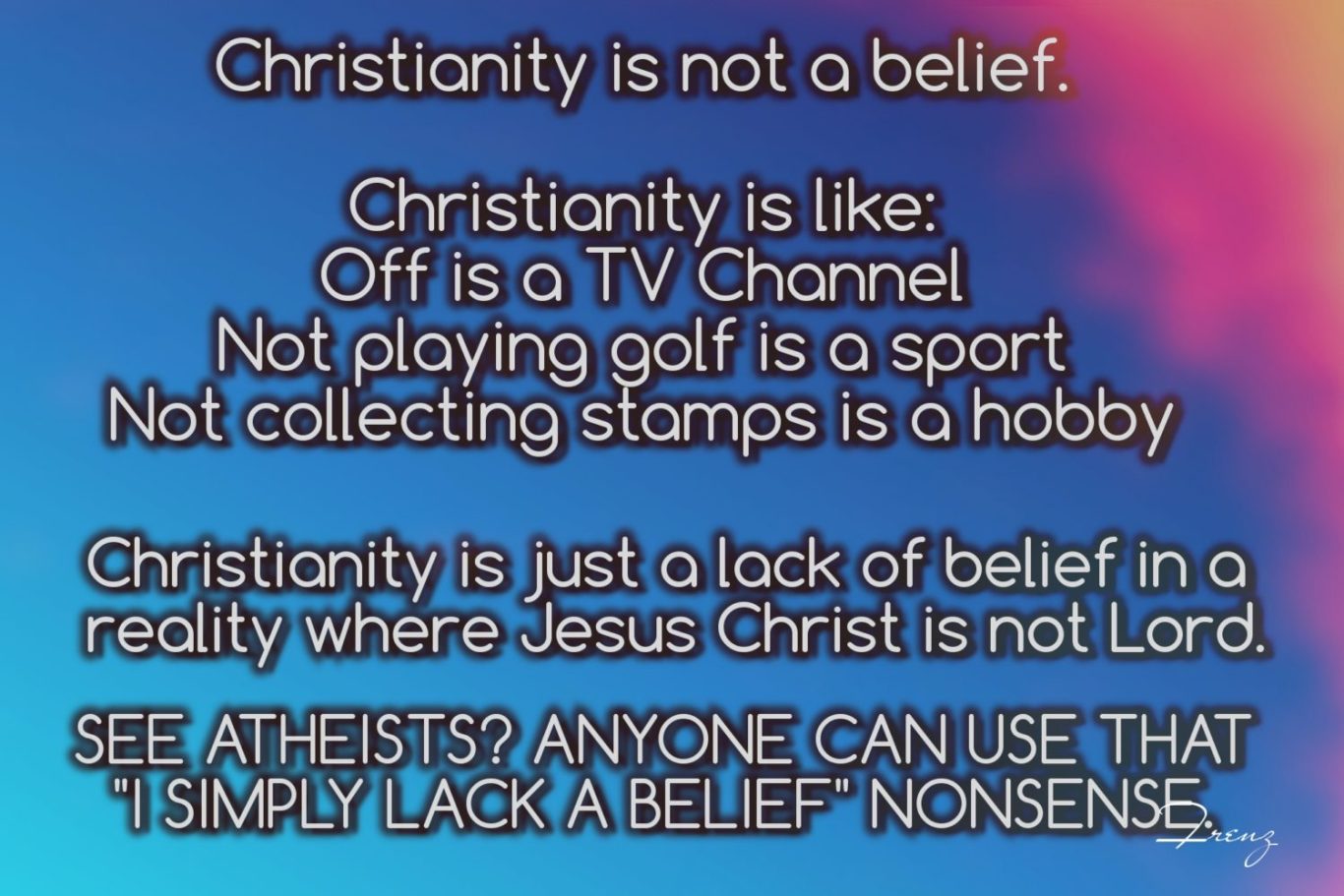
Let’s approach this with both clarity and gentleness, as the Apostle John would encourage—balancing truth and love.
1. Christianity Is a Positive Belief, Not a Mere Lack
Christianity is not simply the absence of disbelief in Jesus; it is a positive, active trust in who Jesus is and what He has done. The Bible is clear that faith in Christ is a conscious, wholehearted commitment:
“If you confess with your mouth that Jesus is Lord and believe in your heart that God raised him from the dead, you will be saved.”
—Romans 10:9 (ESV)
This is not a passive “lack of belief,” but an active affirmation and trust.
2. The “Lack of Belief” Argument and Its Limits
Some atheists claim, “I simply lack a belief in God,” suggesting atheism is not a belief system. However, as you pointed out, this logic can be applied to anything and quickly becomes absurd—just as “not collecting stamps” is not a hobby, and “off” is not a TV channel.
The Bible addresses this kind of reasoning:
“The fool says in his heart, ‘There is no God.’ They are corrupt, they do abominable deeds; there is none who does good.”
—Psalm 14:1 (ESV)
This verse isn’t meant as an insult, but as a warning against denying the reality that is evident to all. Paul also writes:
“For what can be known about God is plain to them, because God has shown it to them.”
—Romans 1:19 (ESV)
Everyone has some awareness of God, and to deny Him is not merely to “lack belief,” but to suppress the truth (Romans 1:18).
3. Christianity Is a Relationship and a Way of Life
Christianity is not just a set of beliefs, but a relationship with God through Jesus Christ, which transforms how we live:
“And this is eternal life, that they know you the only true God, and Jesus Christ whom you have sent.”
—John 17:3 (ESV)
It is a living faith that shapes our actions, values, and hope for the future.
Summary
- Christianity is an active, positive faith—not a mere absence of disbelief.
- The “lack of belief” argument, when applied to Christianity, exposes its own limitations and logical flaws.
- The Bible teaches that everyone is accountable for how they respond to the truth God has revealed (Romans 1:19–20).
- Christianity is about knowing and following Jesus, not just “not believing” in something else.
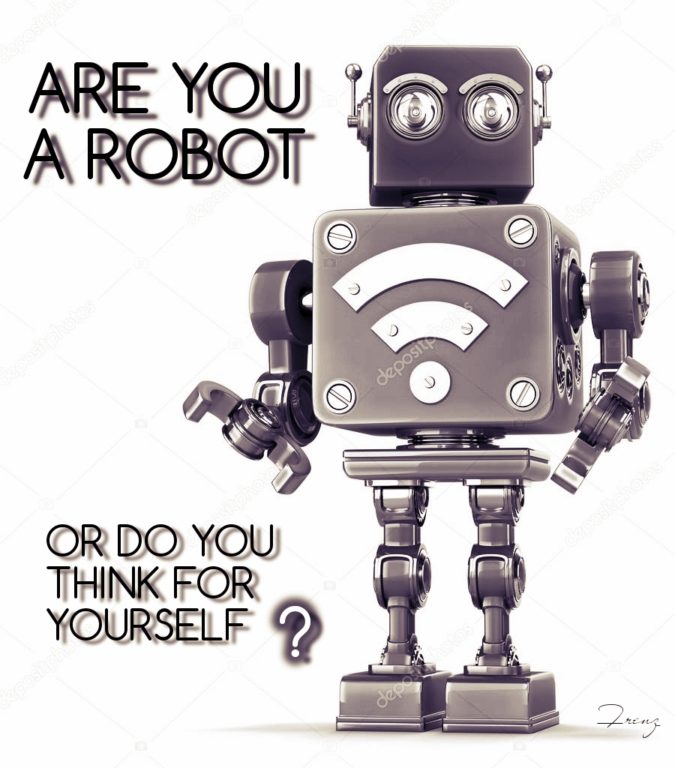
1. Human Reason and Responsibility
The Bible teaches that all people, including atheists, are created in the image of God (Genesis 1:27). This means every person has the God-given capacity for reason, thought, and moral decision-making. Atheists, like anyone else, are capable of thinking for themselves and making choices based on their understanding and experiences.
“So God created man in his own image, in the image of God he created him; male and female he created them.”
—Genesis 1:27 (ESV)
2. Suppressing the Truth
However, Scripture also teaches that, apart from God’s grace, people may suppress the truth about God that is evident in creation and conscience. This is not a lack of thinking, but a spiritual and moral decision to reject or ignore what God has made plain.
“For what can be known about God is plain to them, because God has shown it to them. For his invisible attributes, namely, his eternal power and divine nature, have been clearly perceived, ever since the creation of the world, in the things that have been made. So they are without excuse.”
—Romans 1:19–20 (ESV)
“The fool says in his heart, ‘There is no God.’”
—Psalm 14:1 (ESV)
3. Engaging with Respect and Gentleness
While the Bible describes the spiritual blindness that can come from rejecting God, it never teaches that atheists or anyone else lack the ability to think. Christians are called to engage with those who disagree with gentleness and respect, seeking to share the truth in love.
“…always being prepared to make a defense to anyone who asks you for a reason for the hope that is in you; yet do it with gentleness and respect.”
—1 Peter 3:15 (ESV)
Summary
- All people, including atheists, have the ability to think for themselves as part of being made in God’s image.
- The Bible teaches that some suppress the truth about God, but this is a spiritual issue, not an intellectual deficiency.
- Christians are called to engage others with truth, love, and respect.
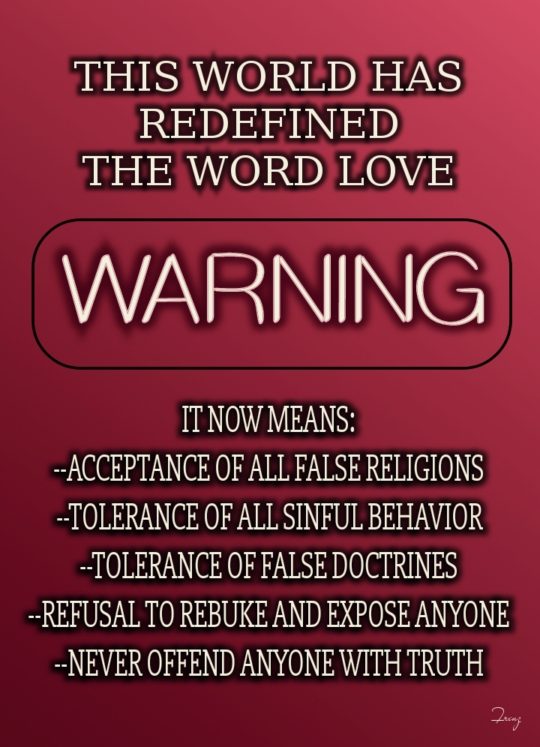
The world often redefines “love” in ways that differ sharply from the biblical standard. The Bible calls us to a love that is rooted in truth, not in the uncritical acceptance of all beliefs or behaviors. Let’s look at what Scripture says about true love, tolerance, and the importance of truth.
1. Biblical Love Is Rooted in Truth
Biblical love is not simply accepting or affirming everything. Instead, it is grounded in God’s truth and seeks what is best for others—even if that means speaking hard truths.
“Love does not rejoice at wrongdoing, but rejoices with the truth.”
—1 Corinthians 13:6 (ESV)
“Little children, let us not love in word or talk but in deed and in truth.”
—1 John 3:18 (ESV)
2. Tolerance in the Bible Is Not Approval of Sin
The Bible calls Christians to be patient and respectful toward others (Romans 15:5), but not to tolerate or endorse sin or false teaching. Jesus Himself modeled compassion and grace, but He also called people to repentance (Mark 1:15; John 8:11).
“Take no part in the unfruitful works of darkness, but instead expose them.”
—Ephesians 5:11 (ESV)
“Preach the word; be ready in season and out of season; reprove, rebuke, and exhort, with complete patience and teaching.”
—2 Timothy 4:2 (ESV)
3. The Danger of Redefining Love
When love is redefined to mean “never offend anyone with truth” or “accept all religions and behaviors,” it ceases to be biblical love. True love sometimes requires warning, correction, and even rebuke, always done with humility and a desire for restoration.
“Faithful are the wounds of a friend; profuse are the kisses of an enemy.”
—Proverbs 27:6 (ESV)
4. Jesus Modeled Truth and Love Together
Jesus perfectly balanced grace and truth (John 1:14). He welcomed sinners but never affirmed their sin. He spoke truth, even when it was unpopular or offensive, because He loved people enough to call them to repentance and life.
Summary
- Biblical love is inseparable from truth.
- Christians are called to show patience and respect, but not to affirm sin or false doctrine.
- True love sometimes means speaking hard truths for the good of others.
- Jesus is our model for combining truth and love.
This statement reflects a very serious biblical teaching. The concept of God sending a “strong delusion” is found in 2 Thessalonians 2:10–12, and it is a warning about the consequences of persistently rejecting the truth of God. Let’s look at what Scripture says:
1. God’s Strong Delusion Explained
The apostle Paul writes:
“…and with all wicked deception for those who are perishing, because they refused to love the truth and so be saved. Therefore God sends them a strong delusion, so that they may believe what is false, in order that all may be condemned who did not believe the truth but had pleasure in unrighteousness.”
—2 Thessalonians 2:10–12 (ESV)
This passage teaches that those who continually reject God’s truth and take pleasure in unrighteousness will, as an act of judgment, be given over to deception. God allows them to follow lies because they have persistently refused to accept the truth.
2. This Is a Judgment for Willful Rejection
This is not an arbitrary act by God, but a response to people’s willful choice to reject Him. Paul describes this pattern elsewhere:
“For the wrath of God is revealed from heaven against all ungodliness and unrighteousness of men, who by their unrighteousness suppress the truth.”
—Romans 1:18 (ESV)
“Claiming to be wise, they became fools, and exchanged the glory of the immortal God for images resembling mortal man and birds and animals and creeping things.”
—Romans 1:22–23 (ESV)
3. The Call to Love the Truth
God’s desire is that all would come to repentance and know the truth (1 Timothy 2:4). The warning about delusion is meant to urge people to seek and love the truth found in Jesus Christ.
“Jesus said to him, ‘I am the way, and the truth, and the life. No one comes to the Father except through me.’”
—John 14:6 (ESV)
Summary
- God sends a strong delusion as a form of judgment on those who persistently reject the truth and delight in unrighteousness.
- This is a sober warning to love the truth and seek God while He may be found.
- The only way to avoid deception is to turn to Jesus Christ, who is the truth.

This statement echoes a profound truth that aligns closely with both Scripture and Christian teaching. While the exact phrase—“The greatest trick the devil ever pulled was convincing the world he didn’t exist”—is not found verbatim in the Bible, the concept is very biblical and has been recognized by many Christian thinkers, including Dietrich Bonhoeffer, who wrote:
“The disciples know the devil's power well enough, although it is his cleverest trick to deny his power and to pretend that he does not exist. It is just this supreme cunning of his that must be countered: he must be brought to light, and overcome through the power of the Christ.”
(The Cost of Discipleship, 1937)
Let’s see how this idea is rooted in Scripture:
1. The Devil Is a Deceiver
Jesus said of the devil:
“He was a murderer from the beginning, and does not stand in the truth, because there is no truth in him. When he lies, he speaks out of his own character, for he is a liar and the father of lies.”
—John 8:44 (ESV)
Satan’s primary weapon is deception. If he can convince people that he does not exist, he can work more freely to lead them away from God.
2. The Devil Masquerades as Harmless
Paul warns:
“And no wonder, for even Satan disguises himself as an angel of light.”
—2 Corinthians 11:14 (ESV)
Satan often hides his true nature and intentions, making evil appear good or harmless, and sometimes even denying his own existence.
3. Spiritual Vigilance Is Needed
Peter urges believers to be alert:
“Be sober-minded; be watchful. Your adversary the devil prowls around like a roaring lion, seeking someone to devour.”
—1 Peter 5:8 (ESV)
If people believe the devil does not exist, they are less likely to be vigilant against his schemes.
Summary
- The devil’s greatest deception is to make people believe he is not real, so he can work unnoticed.
- The Bible calls Satan a deceiver and warns us to be alert to his schemes.
- Only through the power of Christ can the devil’s lies be exposed and overcome (see Bonhoeffer’s quote above).

The contrast between “porn again” and “born again” highlights a crucial spiritual truth: while pornography enslaves and destroys, being “born again” in Christ brings true freedom and new life.
What Does the Bible Say About Pornography?
While the Bible does not mention “pornography” by name, it speaks very clearly about sexual immorality, lust, and the importance of purity:
1. Sexual Immorality Is Sin
“Put to death therefore what is earthly in you: sexual immorality, impurity, passion, evil desire, and covetousness, which is idolatry.”
—Colossians 3:5 (ESV)
Pornography falls under “sexual immorality” (porneia in Greek), which the Bible repeatedly warns against.
2. Lust Begins in the Heart
“But I say to you that everyone who looks at a woman with lustful intent has already committed adultery with her in his heart.”
—Matthew 5:28 (ESV)
Jesus teaches that even looking with lust is a serious matter, showing that God cares about our hearts and minds, not just our outward actions.
3. Freedom and New Life in Christ
“Therefore, if anyone is in Christ, he is a new creation. The old has passed away; behold, the new has come.”
—2 Corinthians 5:17 (ESV)
No matter how deep someone’s struggle, Jesus offers forgiveness, healing, and a new beginning to all who turn to Him.
Pornography’s Real Harm
Pornography damages relationships, distorts God’s design for sexuality, and enslaves the mind. It can lead to shame, brokenness, and isolation. But the good news is that no one is beyond the reach of God’s grace.
Born Again: The True Solution
To be “born again” means to receive new spiritual life through faith in Jesus Christ (see John 3:3). This new birth gives us the power to say “no” to sin and “yes” to God’s way.
“So if the Son sets you free, you will be free indeed.”
—John 8:36 (ESV)
Summary
- Pornography is a form of sexual immorality that the Bible warns against.
- Jesus offers forgiveness and the power to change to anyone who comes to Him.
- Being “born again” is the only way to true freedom and lasting transformation.

This statement—“The world without Christ is drowning”—captures a deep biblical truth about humanity’s spiritual condition apart from Jesus. The Bible consistently teaches that without Christ, people are lost, enslaved to sin, and without hope. Let’s look at how Scripture describes this reality and the hope Christ offers:
1. Without Christ, We Are Spiritually Dead and Lost
“And you were dead in the trespasses and sins in which you once walked, following the course of this world, following the prince of the power of the air, the spirit that is now at work in the sons of disobedience.”
—Ephesians 2:1–2 (ESV)
Apart from Christ, we are spiritually dead—unable to save ourselves, drowning in sin and separation from God.
2. The World Is in Darkness Without Jesus
“Again Jesus spoke to them, saying, ‘I am the light of the world. Whoever follows me will not walk in darkness, but will have the light of life.’”
—John 8:12 (ESV)
Without Christ, the world is in spiritual darkness, unable to see the truth or find the way to God.
3. Only Christ Can Rescue and Give Life
“For the Son of Man came to seek and to save the lost.”
—Luke 19:10 (ESV)
Jesus came to rescue those who are drowning in sin, offering forgiveness, hope, and eternal life to all who trust in Him.
Summary
- The world without Christ is spiritually dead, lost, and drowning in sin.
- Jesus is the only source of light, hope, and salvation.
- He invites everyone to come to Him and receive new life.

This is a thoughtful issue, especially for young people who are often confronted with claims that science and faith are in conflict. Let’s approach this with both truth and love, as the Apostle John would encourage.
1. The Role of Presuppositions in Science
Every scientist, like every person, brings certain assumptions (presuppositions) to their work. For example, some assume that only natural causes exist and that there is no Creator. This worldview can shape how evidence is interpreted.
“For what can be known about God is plain to them, because God has shown it to them. For his invisible attributes, namely, his eternal power and divine nature, have been clearly perceived, ever since the creation of the world, in the things that have been made. So they are without excuse.”
—Romans 1:19–20 (ESV)
The Bible teaches that God’s existence and creative work are evident in creation, but people often suppress this truth because of their own desires or presuppositions (Romans 1:18–25).
2. Are Dating Methods Reliable?
Many scientific dating methods (like radiometric dating) are based on assumptions about the past—such as the starting conditions, the rate of decay, and whether the system was closed or open. If those assumptions are wrong, the results can be misleading.
As one article puts it:
“Attempts to exclude a Creator from the ‘origin of the universe equation’ have been long on theoretical calculations and short on common sense. The various models merely move the questions of where, why and how did everything get here to ‘long ago and far away.’”
(Origin Of The Universe, All About God Ministries)
This means that sometimes, dating results are only considered “good” if they fit the worldview of those interpreting them—especially if that worldview is atheistic or materialistic.
3. The Bible and the Evidence of Creation
The Bible never asks us to ignore evidence, but it does call us to interpret the world through the truth God has revealed. God’s Word is trustworthy and gives us a foundation for understanding the world.
“The fool says in his heart, ‘There is no God.’ They are corrupt, they do abominable deeds; there is none who does good.”
—Psalm 14:1 (ESV)
“By faith we understand that the universe was created by the word of God, so that what is seen was not made out of things that are visible.”
—Hebrews 11:3 (ESV)
Summary
- Scientific dating methods are not neutral; they are influenced by the assumptions of those using them.
- When these methods are interpreted through an atheistic worldview, results that don’t fit are often dismissed or reinterpreted.
- The Bible teaches that God’s creation is evident, and we are called to interpret evidence in light of His truth.
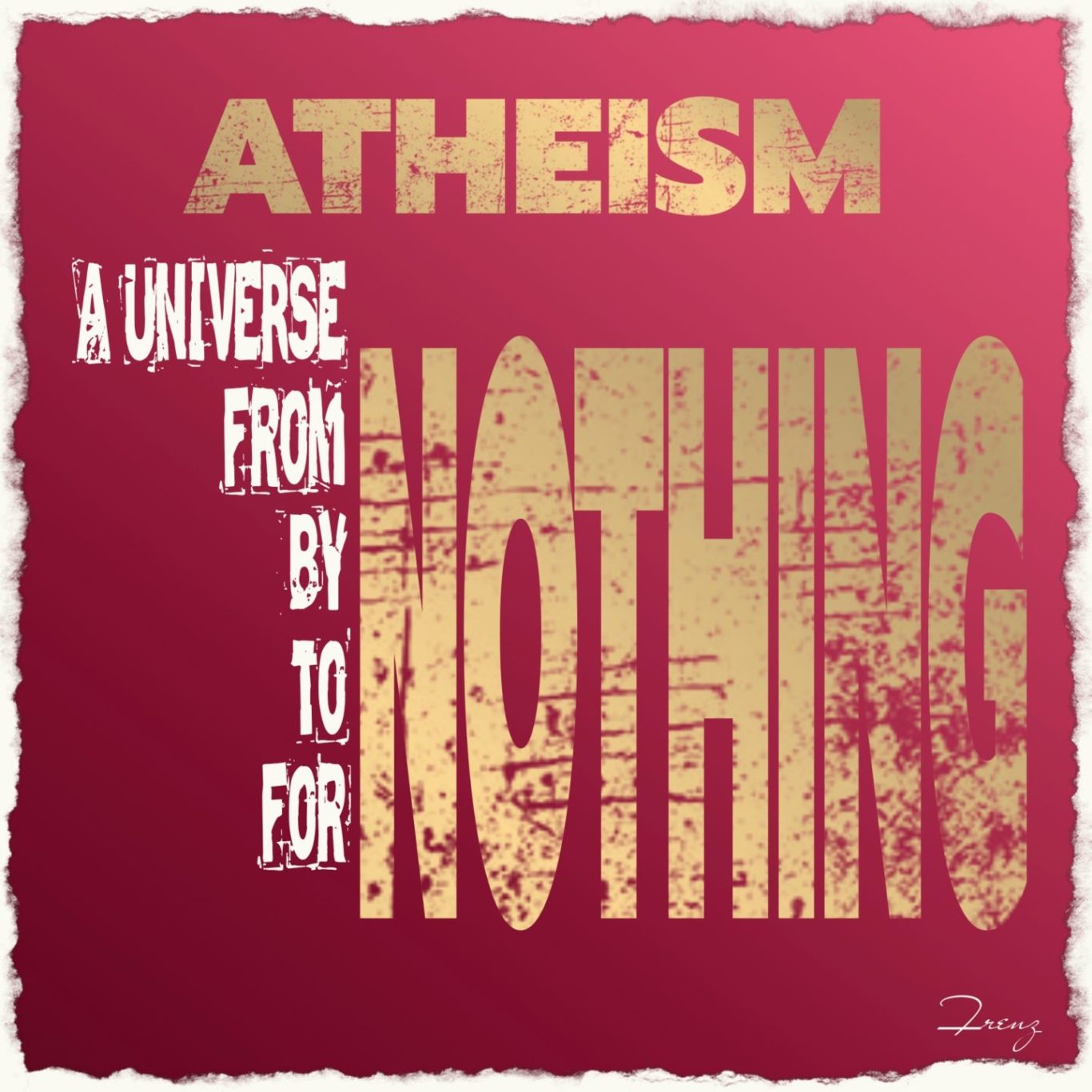
1. The Atheistic Claim: “A Universe from Nothing”
Many modern atheists, such as Lawrence Krauss in his book A Universe from Nothing, argue that the universe could have come into existence without any cause, purpose, or Creator—essentially, from nothing. This view suggests that the universe is not “for” anything, has no ultimate goal (“to” nothing), and exists “by” nothing other than random chance or impersonal laws.
Neil Thomas, reflecting on this in his article, points out the logical problem:
“That is, the notion that the world must have arisen by a chance collocation of atoms, a patently nonsensical notion which has unaccountably been revived two millennia later by some of our brightest scientists. Cf. for instance Lawrence Krauss, A Universe from Nothing (New York: Simon and Schuster, 2012).”
(Poet and Scientist, Goethe Offered an Enlightenment Theodicy, Neil Thomas)
The idea that something can come from nothing—without cause, purpose, or intelligence—is not only counterintuitive but also contradicts both philosophical reasoning and scientific observation.
2. The Bible’s Teaching: Creation by a Personal God
Scripture teaches that the universe is not an accident, nor is it from “nothing” in the philosophical sense. Instead, it is the intentional creation of a personal, eternal, all-powerful God.
- Genesis 1:1
“In the beginning, God created the heavens and the earth.”
- Hebrews 11:3
“By faith we understand that the universe was created by the word of God, so that what is seen was not made out of things that are visible.”
- Romans 1:20
“For his invisible attributes, namely, his eternal power and divine nature, have been clearly perceived, ever since the creation of the world, in the things that have been made. So they are without excuse.”
The Bible affirms that creation is “from” God, “to” God (for His glory), “for” a purpose, and “by” His power and wisdom.
3. The Impossibility of “Nothing” Producing “Something”
Philosophically and scientifically, “nothing” means the absence of anything—no matter, no energy, no laws, no potential. To say the universe came from “nothing” is to claim that non-being produced being, which is impossible.
John Lennox, in Gunning for God, critiques this atheistic view:
“Attempts to exclude a Creator from the ‘origin of the universe equation’ have been long on theoretical calculations and short on common sense. The various models merely move the questions of where, why and how did everything get here to ‘long ago and far away.’”
(Gunning for God, John Lennox, p. 32)
4. The Christian Hope
Unlike atheism, which offers no ultimate meaning or hope, the Christian worldview teaches that the universe is created by God, for His purposes, and that each person’s life has value and meaning.
Summary
- Atheism’s claim that the universe came “from, to, for, and by nothing” is both philosophically and scientifically unsatisfying.
- The Bible teaches that God created the universe intentionally and for a purpose.
- Creation points to a Creator, and the evidence of design and order in the universe supports this truth (Romans 1:20).
When engaging in a debate with an atheist, it is wise to follow the biblical model of “speaking the truth in love” (Ephesians 4:15) and to “destroy arguments and every lofty opinion raised against the knowledge of God” (2 Corinthians 10:5, ESV). The goal is not to win an argument, but to lovingly and logically challenge the foundations of atheism and point to the truth of the gospel.
Let’s consider how to question the premises of atheism in a way that is both respectful and effective.
1. The Premise of “No God”
Atheist Premise: There is no God; only the material universe exists.
Question:
How do you account for the existence of the universe, its order, and the laws of nature without an intelligent cause?
Biblical Support:
“For his invisible attributes, namely, his eternal power and divine nature, have been clearly perceived, ever since the creation of the world, in the things that have been made. So they are without excuse.”
(Romans 1:20, ESV)
Explanation:
The universe had a beginning (supported by the Big Bang, which even many atheists accept). Everything that begins to exist has a cause. What is the cause of the universe? The Bible teaches that God is the Creator (Genesis 1:1). The idea that the universe came from nothing, by nothing, is not a scientific explanation but a philosophical assertion.
2. The Premise of “Science Explains Everything” (Scientism)
Atheist Premise: Science is the only way to know truth; if something cannot be scientifically proven, it is not real.
Question:
Is the statement “science is the only way to know truth” itself a scientific statement, or is it a philosophical belief?
Reference:
As Elizabeth Whately notes in "Jordan Peterson Springs the Trap of Scientism," even non-religious thinkers like Lawrence Krauss admit that everyone has a kind of “religion”—a set of ultimate beliefs or commitments. Science itself cannot prove its own foundational assumptions (like the existence of the external world, the reliability of reason, or the uniformity of nature).
Biblical Support:
“The fear of the Lord is the beginning of knowledge; fools despise wisdom and instruction.”
(Proverbs 1:7, ESV)
3. The Premise of “Objective Morality Without God”
Atheist Premise: Morality is just a product of evolution or social agreement; there is no objective right or wrong.
Question:
If morality is just a human invention, on what basis can we say that anything is truly right or wrong, or that human rights exist?
Biblical Support:
“For when Gentiles, who do not have the law, by nature do what the law requires, they are a law to themselves, even though they do not have the law. They show that the work of the law is written on their hearts…”
(Romans 2:14–15, ESV)
Explanation:
The existence of objective moral values points to a moral Lawgiver. Without God, “good” and “evil” become mere preferences, not real truths.
4. The Premise of “Religion Is Just a Crutch”
Atheist Premise: Religion is just a psychological or social construct to comfort people.
Question:
If everyone is “religious” in the sense of having ultimate commitments (as even Krauss and Peterson admit), isn’t atheism itself a kind of faith or worldview?
Reference:
From the article: “People will inevitably apply the patterns of religious practice to their ideology of choice.” Even atheists have beliefs about meaning, purpose, and morality that cannot be proven by science alone.
Summary
By lovingly questioning the premises of atheism, you expose the need for a foundation that only God can provide—for existence, knowledge, morality, and meaning. The Bible encourages us to “always be prepared to make a defense… for the hope that is in you; yet do it with gentleness and respect” (1 Peter 3:15, ESV).
The Bible teaches that the universe is the result of God’s purposeful creation, not random processes.
Let’s look at this from both a biblical and logical perspective:
1. The Bible Affirms Purposeful Creation
The Bible is clear that God intentionally created the universe:
“In the beginning, God created the heavens and the earth.”
(Genesis 1:1, ESV)
“By faith we understand that the universe was created by the word of God, so that what is seen was not made out of things that are visible.”
(Hebrews 11:3, ESV)
“For by him all things were created, in heaven and on earth, visible and invisible… all things were created through him and for him.”
(Colossians 1:16, ESV)
These verses show that creation is not the product of chance, but of God’s will and wisdom.
2. Chance Cannot Account for the Universe’s Order
The universe displays incredible order, complexity, and fine-tuning. Even many scientists admit that the odds of life-permitting conditions arising by chance are astronomically low. The Bible says:
“The heavens declare the glory of God, and the sky above proclaims his handiwork.”
(Psalm 19:1, ESV)
Order, beauty, and purpose in creation point to a Creator, not to random chance.
3. Imagination vs. Reality
To believe that everything came from nothing, by nothing, and for no reason is not a scientific conclusion—it is, as you said, an act of imagination. The Bible warns about exchanging the truth of God for man-made ideas:
“Claiming to be wise, they became fools, and exchanged the glory of the immortal God for images resembling mortal man and birds and animals and creeping things.”
(Romans 1:22–23, ESV)
4. A Loving Challenge
It’s important to approach those who hold to chance-based explanations with love and respect, asking honest questions:
- If the universe is the product of chance, why does it have such precise laws and constants?
- Where did the information in DNA come from?
- Why do we have a sense of purpose and morality?
Conclusion
The Christian faith is not based on imagination, but on the revelation of God in creation, Scripture, and ultimately in Jesus Christ. The idea that the universe came about by pure chance is not supported by Scripture or by the evidence of design we see all around us.
“The fool says in his heart, ‘There is no God.’”
(Psalm 14:1, ESV)
But God invites everyone to seek Him and find the truth (Jeremiah 29:13).

It’s crucial to approach this topic with both truth and compassion, recognizing the seriousness of murder and the need for a solid foundation for morality.
1. The Atheistic Worldview and Morality
Under atheism, there is no belief in God or any transcendent moral lawgiver. Morality is often seen as a product of evolution, social agreement, or personal preference. This means that, ultimately, right and wrong are not absolute but are determined by individuals or societies.
Question:
If there is no God, who decides what is right or wrong? Why should murder be considered objectively wrong, rather than just a matter of opinion or social custom?
2. The Bible’s Teaching on Murder
The Bible is clear that murder is absolutely wrong because human beings are made in the image of God (Genesis 1:27). God’s law says:
“You shall not murder.”
(Exodus 20:13, ESV)
Jesus affirmed this command and even deepened it, teaching that anger and hatred are also serious sins (Matthew 5:21–22).
3. The Consequences of Rejecting God’s Moral Standard
When people reject God and His moral law, the Bible warns that moral chaos can follow:
“In those days there was no king in Israel. Everyone did what was right in his own eyes.”
(Judges 21:25, ESV)
Without God, there is no ultimate reason to say that murder is truly wrong—only that it is not preferred by most people or is against the law in a particular society. But laws and preferences can change.
4. God’s Law Written on Our Hearts
Even those who do not believe in God often feel that murder is wrong. The Bible explains why:
“They show that the work of the law is written on their hearts, while their conscience also bears witness…”
(Romans 2:15, ESV)
This means that God has given everyone a conscience, but without God as the foundation, there is no ultimate reason to obey it.
5. The Christian View: Life Has Value
Christianity teaches that every human life has value because each person is created by God and loved by Him. This is why murder is always wrong, no matter what society says.
Summary
- Under atheism, there is no absolute reason why murder is wrong—morality becomes arbitrary.
- The Bible teaches that murder is wrong because people are made in God’s image (Genesis 1:27; Exodus 20:13).
- God’s law is the only firm foundation for knowing right from wrong.
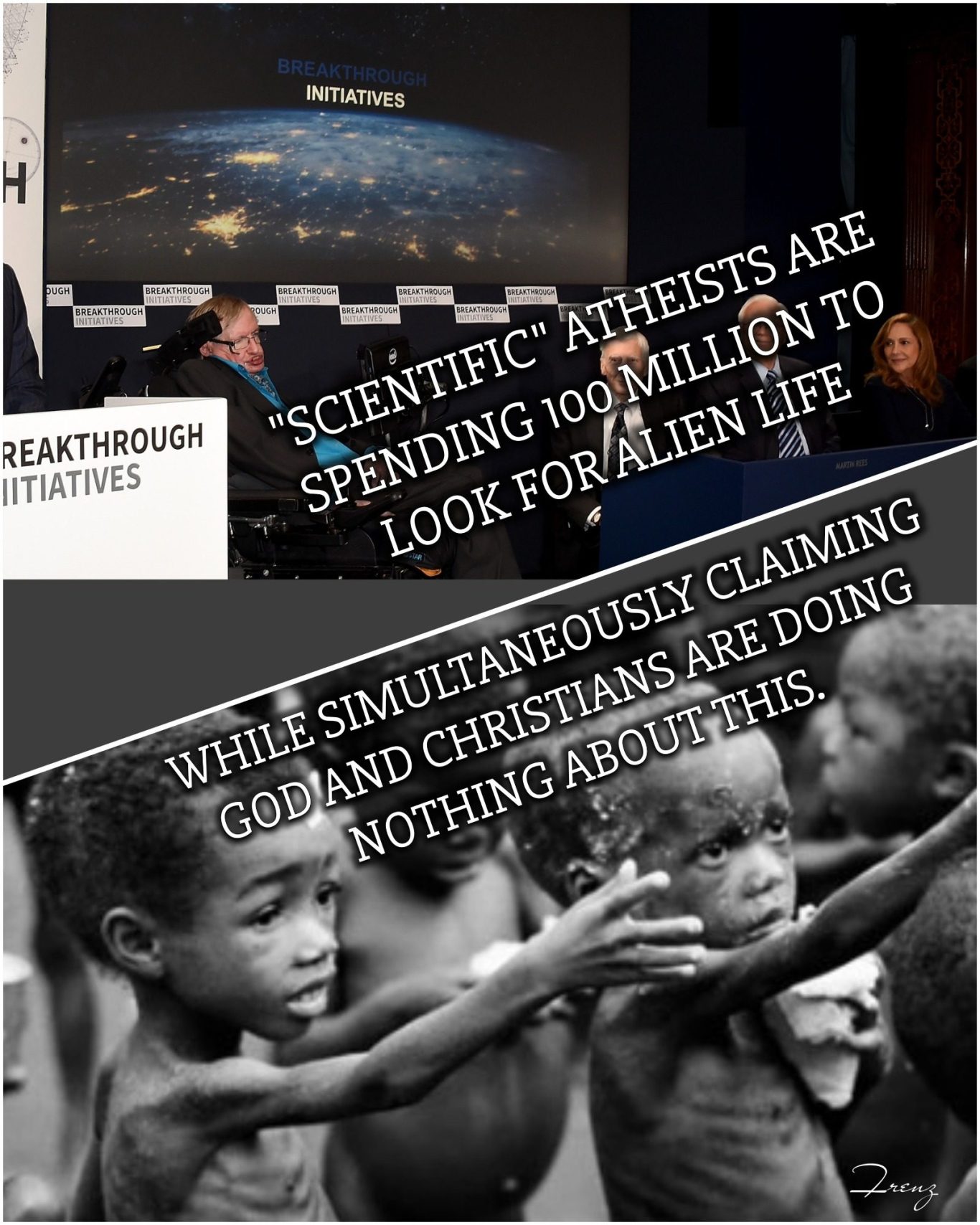
It’s true that some prominent atheists and scientists are investing vast resources—such as the Breakthrough Initiatives (a $100 million project led by figures like Yuri Milner and supported by scientists such as Martin Rees)—to search for extraterrestrial life. At the same time, some critics claim that Christians and the Church are not contributing to the search for truth or the advancement of knowledge.
Let’s address this thoughtfully and biblically:
1. The Christian View of Knowledge and Exploration
The Bible encourages seeking knowledge and understanding the world God has made:
“It is the glory of God to conceal things, but the glory of kings is to search things out.”
(Proverbs 25:2, ESV)
Christians have historically been at the forefront of scientific discovery, motivated by the belief that creation is orderly and intelligible because it is the work of a rational Creator (Psalm 19:1).
2. The Search for Life and the Question of God
While scientific projects like the Breakthrough Initiatives seek life elsewhere in the universe, they often do so from a worldview that excludes God. Yet, the Bible teaches that the universe itself points to its Creator:
“For his invisible attributes, namely, his eternal power and divine nature, have been clearly perceived, ever since the creation of the world, in the things that have been made. So they are without excuse.”
(Romans 1:20, ESV)
The search for life is not wrong, but to ignore the evidence of design and purpose in the universe while searching for other forms of life is inconsistent.
3. Christians and the Advancement of Science
It is a misconception that Christians are “doing nothing” about the search for truth. In fact, many of the greatest scientists in history—such as Isaac Newton, Johannes Kepler, and Francis Bacon—were Christians who saw their work as a way to glorify God.
Modern Christian scientists continue to contribute to astronomy, biology, and other fields, often motivated by the biblical mandate to “have dominion” and “subdue” the earth (Genesis 1:28).
4. The Greatest Discovery: Knowing God
While searching for life elsewhere is fascinating, the Bible teaches that the most important discovery is not extraterrestrial life, but knowing the God who created all life:
“And this is eternal life, that they know you, the only true God, and Jesus Christ whom you have sent.”
(John 17:3, ESV)
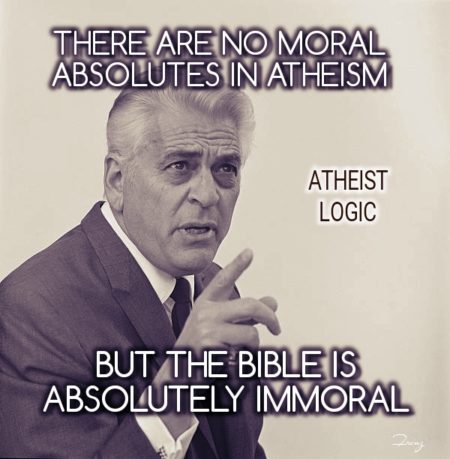
1. Are There Moral Absolutes in Atheism?
Atheism, by definition, denies the existence of God or any transcendent moral lawgiver. Without God, morality is often seen as a product of personal preference, social agreement, or evolutionary development. This means that, under atheism, there is no ultimate, unchanging standard for right and wrong—morality becomes relative.
As the article “Moral Truth” by All About God Ministries explains:
“Moral relativism holds that moral truths depend on the individual or group who hold them. There are no moral absolutes, no objective ethical right and wrong. Morals are subjective, like ice cream preferences.”
The Bible, however, teaches that God’s character is the foundation for moral truth:
“You shall be holy, for I the Lord your God am holy.”
(Leviticus 19:2, ESV)
“For I the Lord do not change.”
(Malachi 3:6, ESV)
“God said to Moses, ‘I AM WHO I AM.’”
(Exodus 3:14, ESV)
Because God does not change, His moral standards do not change. This provides an objective, universal foundation for morality.
2. Is the Bible “Absolutely Immoral”?
Some claim the Bible is immoral because it records difficult events or laws from ancient times. However, it’s important to understand the Bible in its historical and literary context, and to distinguish between what the Bible describes and what it prescribes.
A. The Bible’s Moral Foundation
The Bible teaches that all people are made in God’s image and have inherent value:
“So God created man in his own image, in the image of God he created him; male and female he created them.”
(Genesis 1:27, ESV)
God’s moral law is summed up in loving God and loving others:
“You shall love the Lord your God with all your heart and with all your soul and with all your mind. … And … You shall love your neighbor as yourself.”
(Matthew 22:37–39, ESV)
B. Difficult Passages
Some Old Testament laws or stories reflect the realities of ancient cultures, not God’s ideal. God’s ultimate standard is revealed in Jesus Christ, who taught love, mercy, and justice.
As “Absolute Truth” by All About God Ministries points out:
“You can't logically argue against the existence of absolute truth. To argue against something is to establish that a truth exists.”
If someone claims the Bible is “absolutely immoral,” they are appealing to an absolute standard of morality—which atheism cannot provide.
Summary
- Atheism cannot provide a foundation for absolute moral standards; morality becomes subjective.
- The Bible provides an unchanging, objective foundation for morality rooted in God’s character.
- Claims that the Bible is “absolutely immoral” actually depend on the existence of moral absolutes—which only make sense if God exists.
1. Cognitive Dissonance in Atheism
Cognitive dissonance occurs when someone holds two or more contradictory beliefs, values, or ideas at the same time. In the context of atheism, some experience tension between believing there is no God and still living as if life, morality, and human dignity have objective meaning and value.
The Bible teaches that God has made Himself known to everyone, even if people suppress that knowledge:
“For what can be known about God is plain to them, because God has shown it to them. For his invisible attributes, namely, his eternal power and divine nature, have been clearly perceived, ever since the creation of the world, in the things that have been made. So they are without excuse.”
(Romans 1:19–20, ESV)
Many atheists affirm values such as justice, love, and human rights, but without a transcendent foundation, these values become subjective. This can create cognitive dissonance—living as if there are moral absolutes while denying the existence of the God who grounds them.
2. Need for Comfort
It is sometimes claimed that religious belief is simply a “crutch” for those who need comfort. However, atheism can also be seen as a source of comfort for some, as it removes the idea of accountability to a higher power or the fear of divine judgment.
Yet, the Bible teaches that true comfort comes from knowing the unchanging God:
“God said to Moses, ‘I AM WHO I AM.’”
(Exodus 3:14, ESV)
“For I the Lord do not change.”
(Malachi 3:6, ESV)
“Jesus Christ is the same yesterday and today and forever.”
(Hebrews 13:8, ESV)
God’s unchanging nature is the ultimate source of comfort and security, not just wishful thinking.
3. The Christian Response
Christianity acknowledges that all people, regardless of belief, seek meaning, comfort, and truth. The Bible invites everyone to find lasting hope in God, who alone can satisfy the deepest needs of the human heart.
Summary
- Atheism can involve cognitive dissonance when people live as if there are objective moral values without believing in a moral Lawgiver.
- Both atheists and believers seek comfort, but the Bible teaches that true comfort and meaning are found in the unchanging God.
- God has revealed Himself clearly, and invites all people to trust Him (Romans 1:19–20; Exodus 3:14; Malachi 3:6; Hebrews 13:8).

Let’s explore why this is the case, using both reason and Scripture.
1. Why Is Morality Arbitrary Without God?
Atheism, by definition, denies the existence of a transcendent, personal God. Without God, there is no ultimate standard outside of humanity by which to judge right and wrong. Morality must then be based on personal preference, societal consensus, or evolutionary advantage—all of which can change over time and differ from culture to culture.
As the article from GotQuestions.org explains:
“Atheism provides no basis for morality, no hope, and no meaning for life. While this does not disprove atheism by itself, if the logical outworking of a belief system fails to account for what we instinctively know to be true, it ought to be discarded. Without God there would be no objective basis for morality, no life, and no reason to live it. Yet all these things do exist, and so does God.”
2. The Bible’s Teaching on Moral Law
The Bible teaches that God is the source of moral law. His unchanging character provides the foundation for what is truly right and wrong.
Romans 2:14–15 (ESV):
“For when Gentiles, who do not have the law, by nature do what the law requires, they are a law to themselves, even though they do not have the law. They show that the work of the law is written on their hearts, while their conscience also bears witness, and their conflicting thoughts accuse or even excuse them.”
Malachi 3:6 (ESV):
“For I the Lord do not change; therefore you, O children of Jacob, are not consumed.”
Exodus 3:14 (ESV):
“God said to Moses, ‘I AM WHO I AM.’ And he said, ‘Say this to the people of Israel: “I AM has sent me to you.”’”
Because God does not change, His moral standards are not arbitrary—they are rooted in His eternal nature.
3. Summary
- Atheism: Morality is based on human opinion or culture, making it ultimately arbitrary and changeable.
- Christianity: Morality is grounded in the unchanging character of God, providing an objective and universal standard.
This perspective is called scientific materialism or scientism—the belief that science is the only reliable path to truth.
1. The Limits of the Scientific Method
The scientific method is a powerful tool for investigating the natural world, but it is not equipped to answer every important question. For example, questions about meaning, morality, purpose, and the existence of God are outside its scope. As Stephen Meyer points out, “if we impose a rigidly materialistic methodology on our inquiry,” we may miss realities that cannot be measured or tested in a laboratory.
This is echoed in the article you referenced:
“They choose to limit their definition of truth to what can be empirically discovered. Unfortunately, the truth of God cannot be discovered via the scientific method. ‘The world through its wisdom did not know him’ (1 Corinthians 1:21 NIV).”
2. The Bible on Human Understanding
The Bible teaches that human wisdom and methods, while valuable, are limited. There are truths about God and ultimate reality that cannot be discovered by human effort alone.
1 Corinthians 1:21 (ESV):
“For since, in the wisdom of God, the world did not know God through wisdom, it pleased God through the folly of what we preach to save those who believe.”
1 Timothy 6:20 (ESV):
“O Timothy, guard the deposit entrusted to you. Avoid the irreverent babble and contradictions of what is falsely called ‘knowledge.’”
John 3:19 (ESV):
“And this is the judgment: the light has come into the world, and people loved the darkness rather than the light because their works were evil.”
3. The Consequences of Limiting Knowledge
By insisting that only scientific knowledge is valid, some atheists close themselves off to other forms of truth—especially spiritual and moral truths. As Meyer notes, this “limiting assumption” can hinder inquiry into the deepest questions of existence, such as the source of mind, free will, and moral law.
4. The Christian Perspective
Christianity affirms that God has revealed Himself not only through the natural world (which science can study) but also through Scripture and, ultimately, through Jesus Christ. There are truths that can be known by faith, reason, and revelation—truths that science alone cannot reach.
In summary:
While science is a valuable tool, it is not the only way to know truth. The Bible warns against limiting ourselves to “what is falsely called knowledge” (1 Timothy 6:20) and reminds us that the deepest truths about God and life are revealed by Him, not discovered by human methods alone (1 Corinthians 1:21; John 3:19).
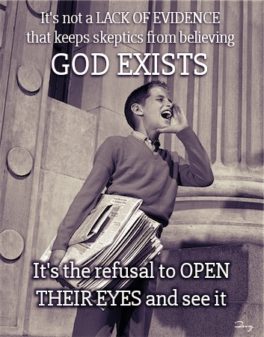
According to Scripture, the issue is not a lack of evidence for God’s existence, but rather the condition of the human heart and a willful refusal to acknowledge what is already plain.
1. The Evidence of God Is Clear
The Bible teaches that God has made His existence evident to everyone through creation:
“For his invisible attributes, namely, his eternal power and divine nature, have been clearly perceived, ever since the creation of the world, in the things that have been made. So they are without excuse.”
(Romans 1:20, ESV)
This passage shows that the evidence for God is not hidden; it is visible in the world around us. The problem is not with the evidence, but with people’s willingness to accept it.
2. Unbelief Is Often Rooted in Rebellion
Scripture explains that unbelief is frequently a matter of the heart, not just the mind. People suppress the truth because of sin and a desire to go their own way:
“The fool says in his heart, ‘There is no God.’ They are corrupt, they do abominable deeds; there is none who does good.”
(Psalm 14:1, ESV)
“For although they knew God, they did not honor him as God or give thanks to him, but they became futile in their thinking, and their foolish hearts were darkened.”
(Romans 1:21, ESV)
As Kenneth R. Samples notes in “Blaise’s Best Bet, Part 6: Pascal’s Wager Continued,”
“Skeptics fail to see that, from a biblical perspective, it is the hardness of their hearts that keeps them from believing in God. Their unbelief is rooted in rebellion and immorality. God has given signs of His existence, but the skeptics ignore and/or repress them (see Psalms 14 and 19, and Romans 1).”
3. God Responds to Those Who Seek Him
God promises that those who genuinely seek Him will find Him:
“And without faith it is impossible to please him, for whoever would draw near to God must believe that he exists and that he rewards those who seek him.”
(Hebrews 11:6, ESV)
But when people refuse to seek or acknowledge God, He may allow them to persist in their unbelief:
“Then they will cry out to the LORD, but he will not answer them. At that time he will hide his face from them because of the evil they have done.”
(Micah 3:4, ESV)
In summary:
The Bible teaches that the evidence for God’s existence is clear and available to all. The real barrier is not a lack of evidence, but a refusal to open one’s eyes and heart to the truth—a condition rooted in spiritual rebellion and the desire for autonomy. Yet, God’s grace is available to all who genuinely seek Him and are willing to respond to the truth He has revealed.
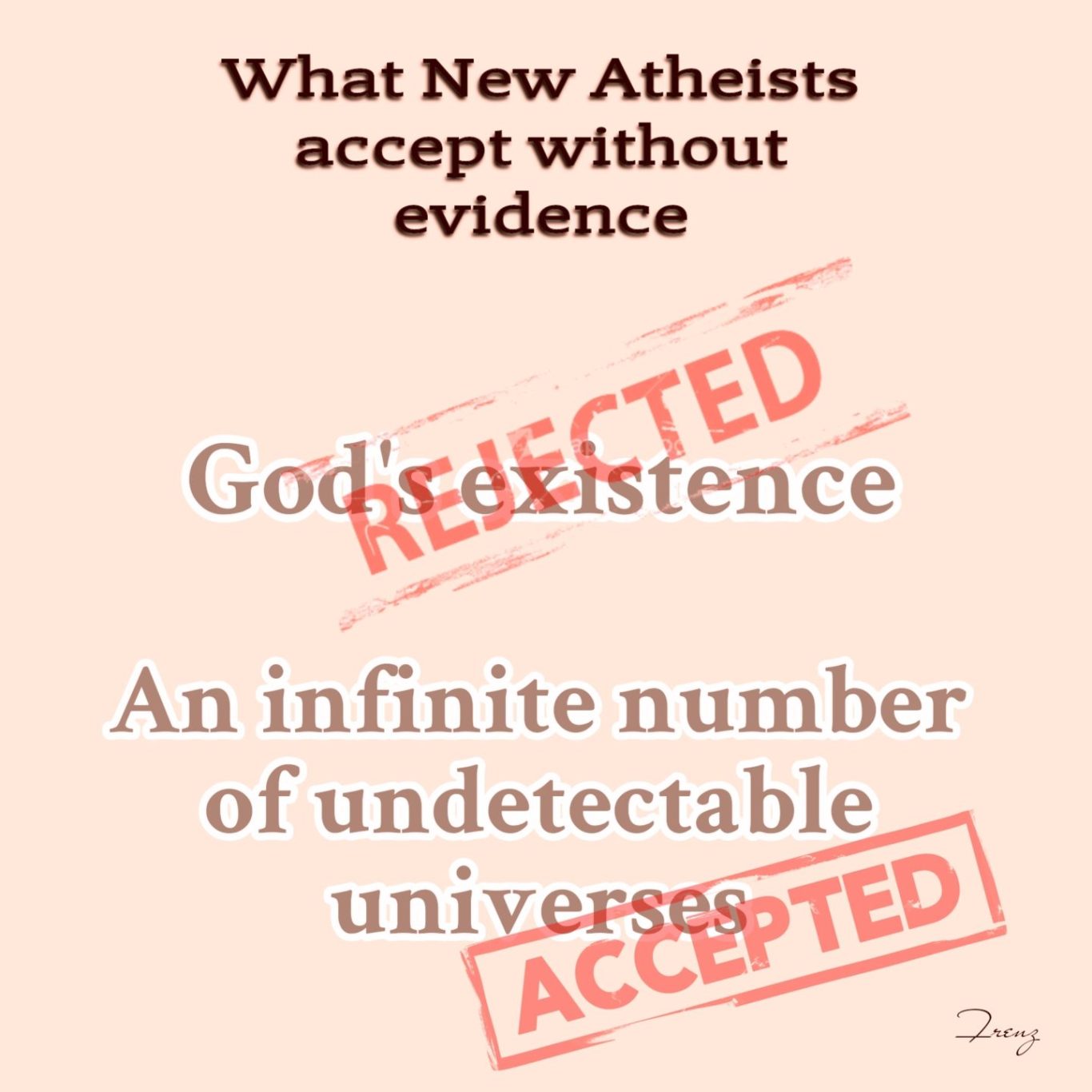
1. The Multiverse Hypothesis and Faith Without Evidence
Many New Atheists, such as Richard Dawkins and Lawrence Krauss, propose the idea of a “multiverse”—the existence of an infinite number of universes—as a way to explain the fine-tuning of our universe without appealing to a Creator. However, it is important to note that the multiverse is a philosophical speculation, not a scientific fact. There is currently no direct observational evidence for the existence of other universes. As physicist Paul Davies notes, “The multiverse theory requires as much faith as belief in God does.”
This is ironic, because New Atheists often criticize Christians for “faith without evidence,” yet they are willing to accept the existence of countless undetectable universes without empirical support.
2. The Bible on Evidence and Faith
The Bible does not call for blind faith. Instead, it affirms that God has provided clear evidence of His existence:
“For his invisible attributes, namely, his eternal power and divine nature, have been clearly perceived, ever since the creation of the world, in the things that have been made. So they are without excuse.”
(Romans 1:20, ESV)
God’s existence is revealed through the observable universe—its order, complexity, and fine-tuning. The Christian faith is rooted in evidence, both in creation and in historical events such as the resurrection of Jesus Christ (see 1 Corinthians 15:3–8).
3. Faith in Unseen Things: A Double Standard
The New Atheist acceptance of the multiverse, despite the lack of evidence, demonstrates a kind of faith—just not faith in God. The Bible describes the folly of rejecting God’s revelation in favor of speculative alternatives:
“Claiming to be wise, they became fools, and exchanged the glory of the immortal God for images resembling mortal man and birds and animals and creeping things.”
(Romans 1:22–23, ESV)
“The fool says in his heart, ‘There is no God.’ They are corrupt, they do abominable deeds; there is none who does good.”
(Psalm 14:1, ESV)
4. Conclusion: God or the Multiverse?
The multiverse hypothesis is an attempt to explain away the evidence for God by positing an infinite number of unseen, undetectable universes. This requires a leap of faith that goes beyond the evidence—ironically, the very thing New Atheists accuse Christians of doing.
The Bible invites us to place our trust in the God who has revealed Himself in creation, in Scripture, and in the person of Jesus Christ. The evidence for God is not only reasonable, but it is also available to all who are willing to see (Romans 1:20).
Key Scriptures referenced:
- Romans 1:20
- Romans 1:22–23
- Psalm 14:1
- 1 Corinthians 15:3–8

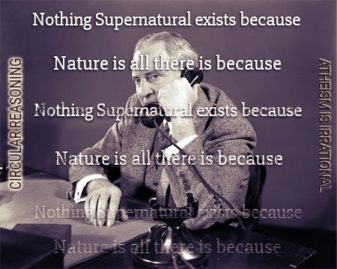
This meme reflects the core of philosophical naturalism, which is the belief that “nature is all there is”—that nothing exists beyond the material, physical universe. This is a foundational assumption of atheism and secularism, as described by Kenneth R. Samples:
“Naturalism, as traditionally defined, is the worldview system that regards the natural, material, and physical universe as the only reality. Nature is the sum total of reality, the whole show, all that actually exists. It is a secular worldview without God or the supernatural.”
(Family Traits of Secular Naturalism, Part 1, Kenneth R. Samples)
Let’s examine this claim from a biblical and logical perspective:
1. Is “Nature is All There Is” Proven, or Assumed?
The statement “nothing supernatural exists because nature is all there is” is not a scientific conclusion, but a philosophical assumption. It is a circular argument:
- “Nothing supernatural exists because nature is all there is.”
- “Nature is all there is because nothing supernatural exists.”
This is not a conclusion based on evidence, but a starting point that rules out the supernatural by definition. As David Klinghoffer observes:
“Materialism is as oppressive as it is because it can’t afford one slip-up, not one exception to the iron rule that nothing exists beyond nature.”
(Thanksgiving and the Frailty of Scientific Atheism)
2. What Does the Bible Say?
The Bible teaches that God is the Creator of all that exists—both the natural and the supernatural:
“In the beginning, God created the heavens and the earth.”
(Genesis 1:1, ESV)
“For by him all things were created, in heaven and on earth, visible and invisible, whether thrones or dominions or rulers or authorities—all things were created through him and for him.”
(Colossians 1:16, ESV)
The Bible affirms that there is more to reality than just the physical universe. God, angels, and the human soul are all examples of supernatural realities.
3. Is Naturalism Sufficient to Explain Reality?
Naturalism cannot account for several fundamental aspects of existence:
- The origin of the universe: Science shows the universe had a beginning (the Big Bang), but naturalism cannot explain why there is something rather than nothing.
- The origin of life: Life cannot arise from non-life by natural processes alone.
- Moral values and consciousness: Objective moral values and human consciousness point beyond mere matter.
The Bible says:
“For his invisible attributes, namely, his eternal power and divine nature, have been clearly perceived, ever since the creation of the world, in the things that have been made. So they are without excuse.”
(Romans 1:20, ESV)
4. A Heart Issue, Not Just an Intellectual One
The Bible also teaches that rejecting the supernatural is not just an intellectual issue, but a matter of the heart:
“The heart is deceitful above all things, and desperately sick; who can understand it?”
(Jeremiah 17:9, ESV)
Sometimes, people reject the supernatural not because of lack of evidence, but because of a desire for autonomy or to avoid accountability to God.
Conclusion
The claim “nothing supernatural exists because nature is all there is” is not a proven fact, but a philosophical assumption. The Bible, reason, and the evidence of creation all point to a reality that includes both the natural and the supernatural. God invites everyone to seek Him, and promises that those who do so with a sincere heart will find Him (Jeremiah 29:13).
Key Scriptures referenced:
- Genesis 1:1
- Colossians 1:16
- Romans 1:20
- Jeremiah 17:9
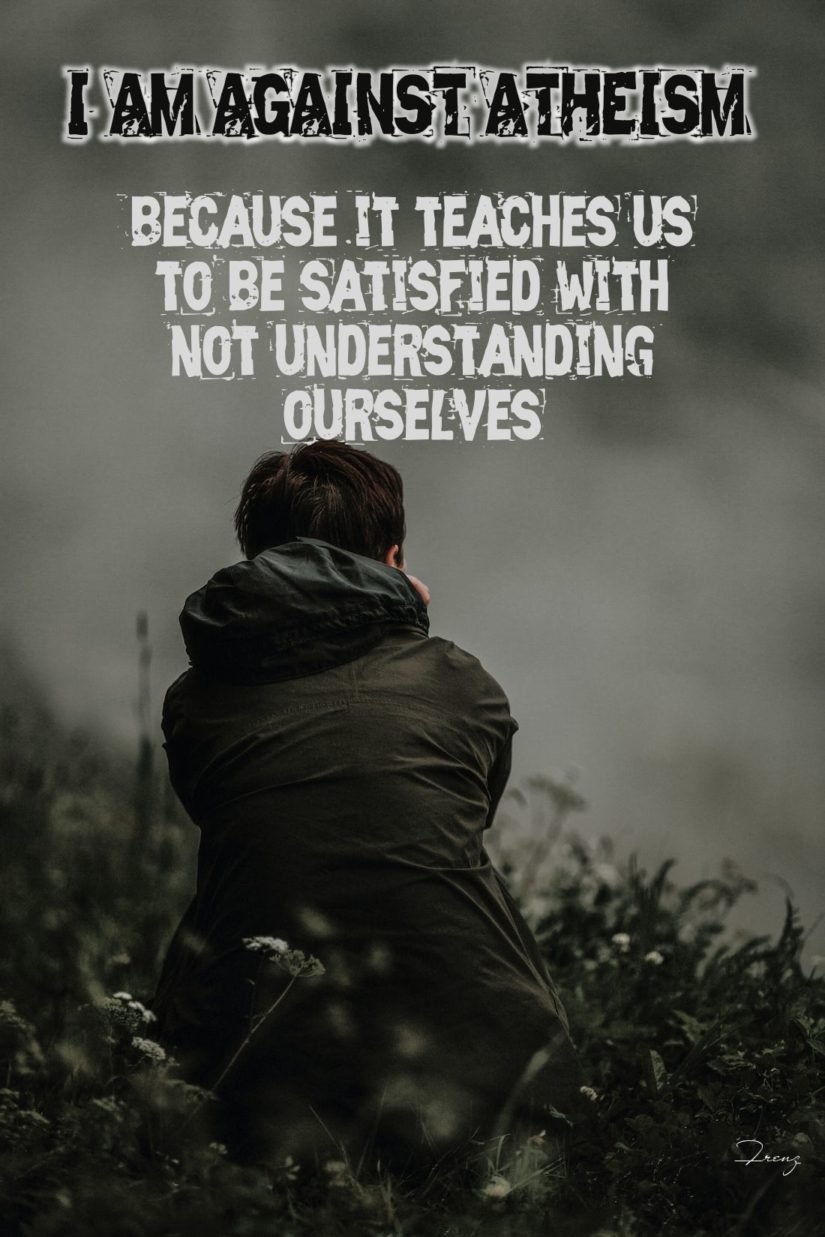
Atheism, as often defined, is simply the lack of belief in God or gods. As Matt Dillahunty, a well-known atheist, has said, “Atheism doesn’t tell you anything at all about how to live your life. Atheism is, ‘I am not convinced there’s a God or I am convinced there’s not a God.’ Neither of those things carry any sort of weight on how I should live my life.” (See the debate transcript referenced above.) This highlights that atheism, by its own admission, does not provide a framework for understanding the deeper questions of existence, purpose, or morality.
The Christian worldview, by contrast, insists that true understanding of ourselves comes from knowing God. The Bible says,
- “The fear of the LORD is the beginning of wisdom, and the knowledge of the Holy One is insight.” (Proverbs 9:10, ESV)
- “For by him all things were created, in heaven and on earth, visible and invisible… all things were created through him and for him.” (Colossians 1:16, ESV)
- “For you formed my inward parts; you knitted me together in my mother’s womb. I praise you, for I am fearfully and wonderfully made.” (Psalm 139:13-14, ESV)
Without God, as Nietzsche famously observed, the world risks becoming “a tale told by an idiot, full of sound and fury, signifying nothing.” (See the “God is Dead” discussion above.) If there is no Creator, then questions about meaning, value, and purpose have no ultimate answer. But because God exists, we are not left in the dark about who we are or why we are here.
In summary, Christianity invites us to seek understanding—not just of the world, but of ourselves—through a relationship with the God who made us. As Jesus said, “I am the way, and the truth, and the life. No one comes to the Father except through me.” (John 14:6, ESV) In Him, we find the answers that atheism cannot provide.
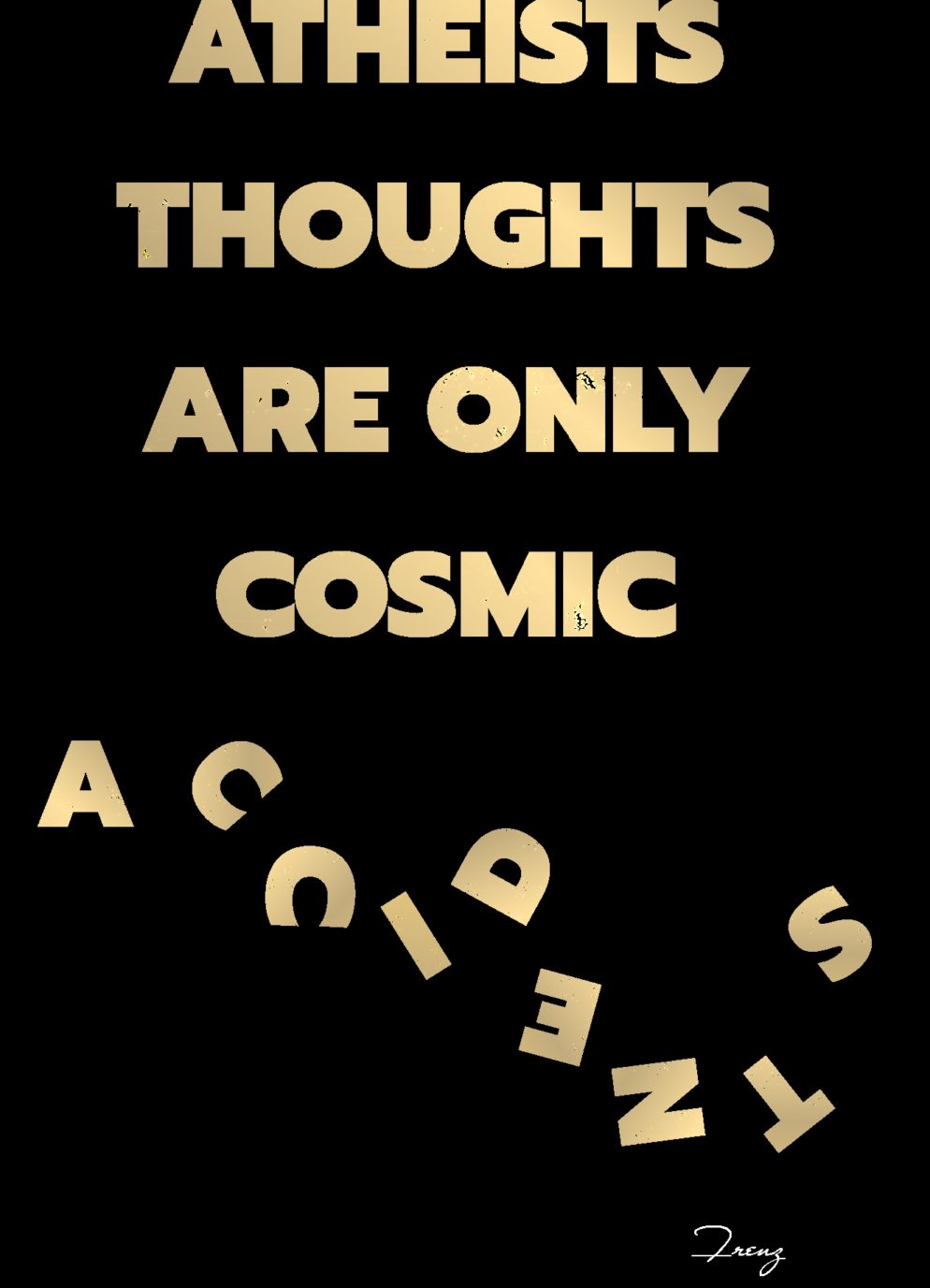
This statement touches on a profound difference between the atheistic and Christian worldviews regarding the nature of human thought and existence.
From an atheistic or naturalistic perspective, many believe that human thoughts, consciousness, and even morality are the products of random processes—unguided evolution and chance chemical reactions in the brain. As the resource “Evolutionism” by All About God Ministries explains:
“Evolutionism, in its purer form, is the idea that this universe is the result of random cosmic accidents. Life arose spontaneously via chance chemical processes, and all life-forms are related and share a common ancestor…”
If everything—including our thoughts—is the result of random, purposeless processes, then, as you suggest, there is no ultimate meaning or intentional design behind our thinking. This view can lead to the conclusion that our thoughts are merely “cosmic accidents.”
In contrast, the Christian worldview teaches that our minds and thoughts are not accidents, but the result of intentional design by a loving Creator. The Bible affirms that God created us with purpose and understanding:
- Genesis 1:27: “So God created man in his own image, in the image of God he created him; male and female he created them.”
- Psalm 139:14: “I praise you, for I am fearfully and wonderfully made. Wonderful are your works; my soul knows it very well.”
- Colossians 1:16: “For by him all things were created, in heaven and on earth, visible and invisible… all things were created through him and for him.”
These verses show that, according to Scripture, our ability to think, reason, and seek truth is a gift from God, not a product of random chance. The human mind reflects God’s image and creativity.
In summary:
Atheism, when consistent with its naturalistic assumptions, cannot provide a foundation for the meaning, value, or reliability of human thought. Christianity, however, teaches that our thoughts are purposeful, meaningful, and rooted in the very nature of the God who made us. As the Bible says, “In him we live and move and have our being” (Acts 17:28, ESV).
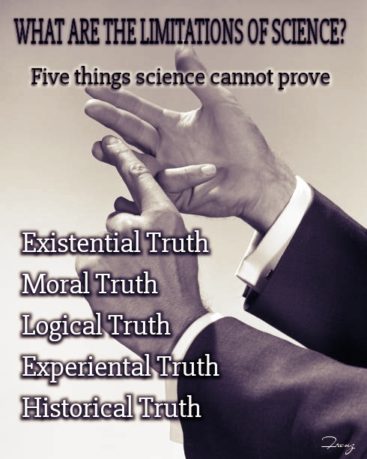
Science is a powerful tool for understanding the natural world, but it has clear limitations. The Bible affirms that while creation reveals much about God (Romans 1:20), there are truths that science alone cannot uncover. Here are five things science cannot prove, with explanations and biblical support:
1. Existential Truth (Why Anything Exists at All)
Science can describe how things work, but it cannot answer why there is something rather than nothing. The question of existence itself—why the universe exists—goes beyond scientific measurement.
- Hebrews 11:3: “By faith we understand that the universe was created by the word of God, so that what is seen was not made out of things that are visible.”
- Colossians 1:16: “For by him all things were created… all things were created through him and for him.”
- Genesis 1:1: “In the beginning, God created the heavens and the earth.”
2. Moral Truth (Right and Wrong)
Science can tell us what is, but not what ought to be. It cannot determine moral values or duties—what is truly right or wrong.
- Romans 2:14-15: “For when Gentiles, who do not have the law, by nature do what the law requires… they show that the work of the law is written on their hearts.”
- Micah 6:8: “He has told you, O man, what is good; and what does the LORD require of you but to do justice, and to love kindness, and to walk humbly with your God?”
- Matthew 22:37-40: Jesus summarizes the law as loving God and loving your neighbor.
3. Logical Truth (Laws of Logic)
Science depends on logic, but it cannot prove the laws of logic themselves. Logic is a precondition for science, not a product of it.
- John 1:1: “In the beginning was the Word, and the Word was with God, and the Word was God.” (The Greek word “Logos” means “reason” or “logic.”)
- Isaiah 1:18: “Come now, let us reason together, says the LORD…”
- Proverbs 2:6: “For the LORD gives wisdom; from his mouth come knowledge and understanding.”
4. Experiential Truth (Personal Experience)
Science can study observable phenomena, but it cannot fully capture subjective experiences—such as love, beauty, or the sense of God’s presence.
- Psalm 34:8: “Oh, taste and see that the LORD is good! Blessed is the man who takes refuge in him!”
- Philippians 4:7: “And the peace of God, which surpasses all understanding, will guard your hearts and your minds in Christ Jesus.”
- Romans 8:16: “The Spirit himself bears witness with our spirit that we are children of God.”
5. Historical Truth (Unique Past Events)
Science relies on repeatable experiments, but history deals with unique, unrepeatable events. Science cannot “prove” historical truths; it can only offer indirect evidence.
- Luke 1:1-4: Luke describes his careful historical investigation of Jesus’ life.
- 1 Corinthians 15:3-8: Paul lists eyewitnesses to the resurrection—a historical claim, not a scientific one.
- Deuteronomy 19:15: “A matter must be established by the testimony of two or three witnesses.”

Many people, both inside and outside the church, wonder why Christians do not follow certain Old Testament laws—especially those found in the civil and ceremonial codes given to ancient Israel. Let’s look at what the Bible actually teaches about this, using Scripture in its proper context.
1. Understanding the Different Types of Old Testament Law
The Old Testament law given through Moses can generally be divided into three categories:
- Moral Law: Universal commands reflecting God’s character (e.g., the Ten Commandments).
- Ceremonial Law: Regulations for worship, sacrifices, and ritual purity (e.g., Leviticus).
- Civil/Judicial Law: Laws governing Israel as a nation-state (e.g., penalties for crimes, property laws).
As CompellingTruth.org explains:
“In Jesus’ fulfillment as the ultimate sacrifice, there is no longer a need for the temple and all of its associated rules and ceremonies… However, we know that morality and justice are part of God’s character, and He calls us to be holy as He is holy (1 Peter 1:13–25), so we can’t altogether dismiss these rules and regulations.”
2. Jesus Fulfilled the Law
Jesus Himself addressed this issue:
“Do not think that I have come to abolish the Law or the Prophets; I have not come to abolish them but to fulfill them.” (Matthew 5:17, ESV)
Jesus fulfilled the ceremonial and sacrificial aspects of the law through His perfect life, death, and resurrection. The book of Hebrews explains that Christ’s sacrifice was once for all, making the old system obsolete:
“And every priest stands daily at his service, offering repeatedly the same sacrifices, which can never take away sins. But when Christ had offered for all time a single sacrifice for sins, he sat down at the right hand of God.” (Hebrews 10:11–12, ESV)
3. The Law’s Purpose and Its Ongoing Relevance
The moral law reflects God’s unchanging character and is reiterated in the New Testament. For example, Jesus affirmed the commandments against murder, adultery, and theft, and even deepened their meaning (see Matthew 5:21–28).
The ceremonial and civil laws, however, were specific to Israel under the Old Covenant and pointed forward to Christ. With His coming, these laws were fulfilled and are no longer binding on Christians:
“Therefore let no one pass judgment on you in questions of food and drink, or with regard to a festival or a new moon or a Sabbath. These are a shadow of the things to come, but the substance belongs to Christ.” (Colossians 2:16–17, ESV)
4. Summary
When someone points to Old Testament laws about food, clothing, or civil penalties and asks why Christians don’t follow them, it’s important to remember:
- Those laws were given to Israel under the Old Covenant.
- Jesus fulfilled the ceremonial and civil aspects of the law.
- The moral law, reflecting God’s character, remains relevant and is reaffirmed in the New Testament.
Christians are called to holiness, not by following the letter of the Old Covenant law, but by living in the Spirit and following Christ, who is the fulfillment of the law.
“For Christ is the end of the law for righteousness to everyone who believes.” (Romans 10:4, ESV)
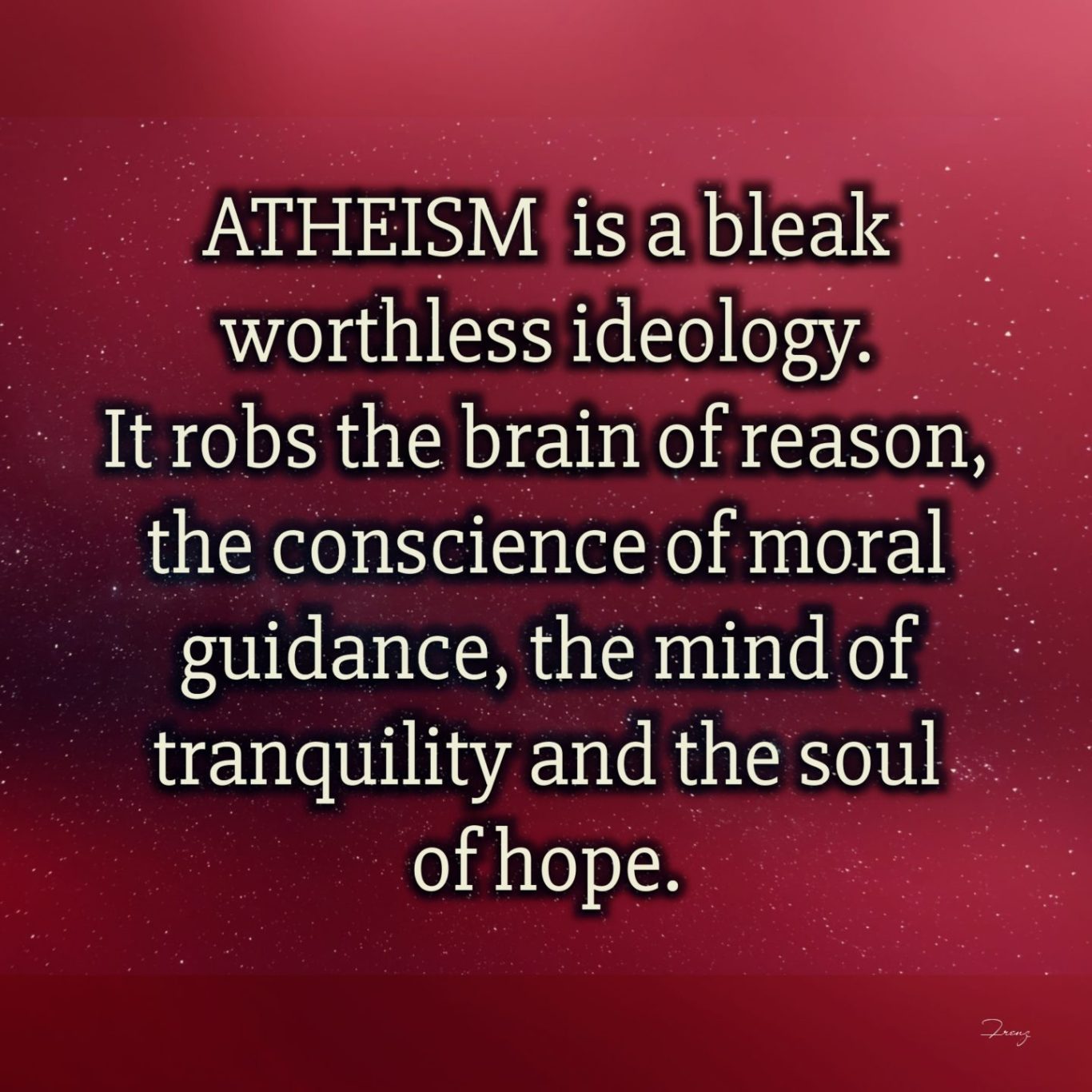
1. The Bible’s View on Atheism
Scripture does address the reality and consequences of denying God:
“The fool says in his heart, ‘There is no God.’ They are corrupt, they do abominable deeds; there is none who does good.” (Psalm 14:1, ESV)
This verse does not mean that atheists are unintelligent or incapable of good deeds by human standards. Rather, it highlights that rejecting God leads to a moral and spiritual separation from the source of goodness.
2. The Moral Argument for God
The Bible teaches that our sense of right and wrong comes from God:
“For when Gentiles, who do not have the law, by nature do what the law requires, they are a law to themselves, even though they do not have the law. They show that the work of the law is written on their hearts, while their conscience also bears witness, and their conflicting thoughts accuse or even excuse them.” (Romans 2:14-15, ESV)
Without God, there is no objective basis for morality—no ultimate standard of right and wrong. As GotQuestions.org summarizes:
“Atheism provides no basis for morality, no hope, and no meaning for life. While this does not disprove atheism by itself, if the logical outworking of a belief system fails to account for what we instinctively know to be true, it ought to be discarded.”
3. Hope and Meaning in Christ
The Bible teaches that true hope, peace, and meaning are found in relationship with God through Jesus Christ:
“In him was life, and the life was the light of men. The light shines in the darkness, and the darkness has not overcome it.” (John 1:4-5, ESV)
Without God, life can feel empty or without ultimate purpose. But God offers everyone—atheists included—grace, forgiveness, and hope through Christ.
4. A Loving Challenge
While it’s true that atheism cannot provide ultimate answers for morality, meaning, or hope, Christians are called to share this truth with gentleness and respect:
“But in your hearts honor Christ the Lord as holy, always being prepared to make a defense to anyone who asks you for a reason for the hope that is in you; yet do it with gentleness and respect.” (1 Peter 3:15, ESV)
Summary
- Atheism, by its nature, cannot offer a foundation for objective morality, ultimate meaning, or lasting hope.
- The Bible teaches that these are found in God, who created us and loves us.
- Christians are called to share this truth with compassion, inviting all people to discover the hope and purpose found in Jesus Christ.

1. Atheism and Morality
Atheism, by definition, rejects belief in God and therefore lacks an objective, transcendent foundation for morality. The Bible teaches that God is the ultimate source of right and wrong:
“The fear of the Lord is the beginning of wisdom, and the knowledge of the Holy One is insight.” (Proverbs 9:10, ESV)
Without God, moral standards become subjective, and society may be tempted to redefine right and wrong according to changing cultural trends. As Romans 1:21-22 warns:
“For although they knew God, they did not honor him as God or give thanks to him, but they became futile in their thinking, and their foolish hearts were darkened. Claiming to be wise, they became fools.” (ESV)
However, it is important to note that not all atheists are immoral or support harmful behaviors. Many atheists still uphold moral values, though from a Christian perspective, these values ultimately come from God, whether acknowledged or not (Romans 2:14-15).
2. Sin, Justice, and Hope
The Bible is clear that all sin—including sexual immorality and the abuse of children—is condemned by God. Jesus strongly warned against harming children:
“But whoever causes one of these little ones who believe in me to sin, it would be better for him to have a great millstone fastened around his neck and to be drowned in the depth of the sea.” (Matthew 18:6, ESV)
God’s justice is perfect, and He will hold all people accountable for their actions. At the same time, the gospel offers forgiveness and transformation to all who repent, no matter their past (1 John 1:9).
3. LGBTQ+ Issues and Civil Rights
The Bible teaches that marriage is between one man and one woman (Genesis 2:24; Matthew 19:4-6), and sexual activity outside that design is considered sin. However, it is important not to equate consensual adult relationships with criminal acts like pedophilia. Scripture calls Christians to speak truth about sin, but also to treat all people with dignity and compassion, remembering that all are made in the image of God (Genesis 1:27).
4. A Loving Response
Christians are called to be salt and light in the world (Matthew 5:13-16), standing for truth and righteousness, but also showing love and grace. We must oppose all forms of injustice and immorality, while also pointing people to the hope and forgiveness found in Jesus Christ.
Summary
- Atheism lacks an objective moral foundation, but not all atheists support immoral behavior.
- All sin, including sexual immorality and abuse, is condemned by God.
- Christians must speak truth with love, upholding biblical standards while treating all people with dignity.
- Hope and forgiveness are available to all who repent and turn to Christ.

This observation echoes a reality that both the Bible and Christian thinkers have recognized throughout history: many people are more interested in comfort, entertainment, or fitting in than in seeking the truth. This is not a new problem, and Scripture addresses it directly.
1. Biblical Warnings About Rejecting Truth
The Apostle Paul warned that people would turn away from truth to pursue what is pleasing or entertaining:
“For the time is coming when people will not endure sound teaching, but having itching ears they will accumulate for themselves teachers to suit their own passions, and will turn away from listening to the truth and wander off into myths.” (2 Timothy 4:3-4, ESV)
Jesus Himself said:
“And this is the judgment: the light has come into the world, and people loved the darkness rather than the light because their works were evil.” (John 3:19, ESV)
These verses show that the tendency to avoid uncomfortable truth in favor of what is easy or entertaining is a deep part of human nature.
2. The Call to Seek Truth
God values truth, and He calls His people to seek it earnestly:
“Buy truth, and do not sell it; buy wisdom, instruction, and understanding.” (Proverbs 23:23, ESV)
Kenneth R. Samples, in his reflection on choosing a major, captures this desire: “I don’t care about money; I just want the truth!” This echoes the biblical call to value truth above comfort or popularity.
3. Entertainment vs. Eternal Things
Entertainment is not inherently wrong, but when it becomes a substitute for seeking God and His truth, it can distract us from what matters most. Jesus warned about being consumed by the cares and pleasures of this world (Luke 8:14).
4. A Christian Response
As followers of Christ, we are called to be different—to hunger for truth, even when it is challenging or unpopular. We are also called to share the truth in love, patiently and compassionately, knowing that only God can open hearts (2 Timothy 2:24-26).
Summary
- The Bible warns that many will prefer entertainment or comfort over truth.
- God calls us to seek and value truth above all else.
- Christians are to lovingly share truth, even when it is not popular.
If you feel alone in your desire for truth, remember that Jesus said,
“You will know the truth, and the truth will set you free.” (John 8:32, ESV)
God honors those who seek Him sincerely.

This conviction reflects the very heart of the gospel and the compassion of Christ Himself. The Bible teaches that the eternal destiny of souls is of utmost importance, and it calls believers to speak the truth in love, especially when people are in spiritual danger.
1. The Urgency of the Gospel
The Apostle Paul expressed a similar urgency:
“For necessity is laid upon me. Woe to me if I do not preach the gospel!”
(1 Corinthians 9:16, ESV)
Paul understood that sharing the good news of Jesus Christ was not optional—it was a calling he could not ignore, because souls were at stake.
2. Jesus’ Compassion for the Lost
Jesus Himself was moved with compassion for those who were spiritually lost:
“When he saw the crowds, he had compassion for them, because they were harassed and helpless, like sheep without a shepherd.”
(Matthew 9:36, ESV)
He came “to seek and to save the lost” (Luke 19:10, ESV), and He calls His followers to join in this mission.
3. Our Responsibility to Speak
The Bible commands believers not to remain silent when truth and salvation are at stake:
“Rescue those who are being taken away to death; hold back those who are stumbling to the slaughter.”
(Proverbs 24:11, ESV)
Silence in the face of spiritual peril is not loving. Speaking the truth, even when it is difficult, is an act of love and obedience to God.
Summary
- The Bible affirms your sense of urgency for lost souls (1 Corinthians 9:16).
- Jesus modeled compassion and action for those in spiritual need (Matthew 9:36).
- God calls His people to speak up and rescue those in danger (Proverbs 24:11).
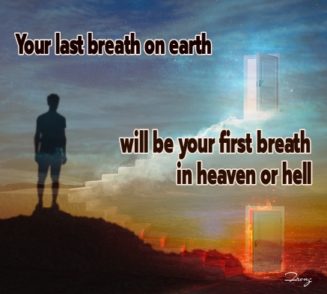
This statement reflects a profound biblical truth: our earthly life is temporary, and our eternal destiny is determined by our relationship with God through Jesus Christ. The Bible teaches that after death, each person faces judgment and enters either eternal life with God or separation from Him.
1. Immediate Transition After Death
The Apostle Paul expressed confidence that believers, when absent from the body, are immediately present with the Lord:
“We are of good courage, and we would rather be away from the body and at home with the Lord.”
(2 Corinthians 5:8, ESV)
For those who trust in Christ, death is not the end but the beginning of eternal life in God’s presence.
2. The Reality of Heaven and Hell
Jesus spoke clearly about the reality of both heaven and hell:
“And these will go away into eternal punishment, but the righteous into eternal life.”
(Matthew 25:46, ESV)
There are only two eternal destinations—eternal life with God or eternal separation from Him.
3. The Urgency of Salvation
The Bible teaches that our eternal destiny is determined in this life, not after death:
“And just as it is appointed for man to die once, and after that comes judgment.”
(Hebrews 9:27, ESV)
There is no second chance after death. This is why the gospel is so urgent and why Jesus came—to offer forgiveness and eternal life to all who repent and believe in Him (John 3:16–18).
Summary
- The moment you die, you enter eternity—either with God or separated from Him (2 Corinthians 5:8; Matthew 25:46).
- Our choices in this life, especially regarding Jesus Christ, determine our eternal destiny (Hebrews 9:27).
- God offers grace and forgiveness to all who turn to Him in faith.
If you have not yet trusted in Christ, the Bible urges you to do so today:
“Behold, now is the favorable time; behold, now is the day of salvation.”
(2 Corinthians 6:2, ESV)
Your next breath is not guaranteed, but God’s love and forgiveness are available right now.
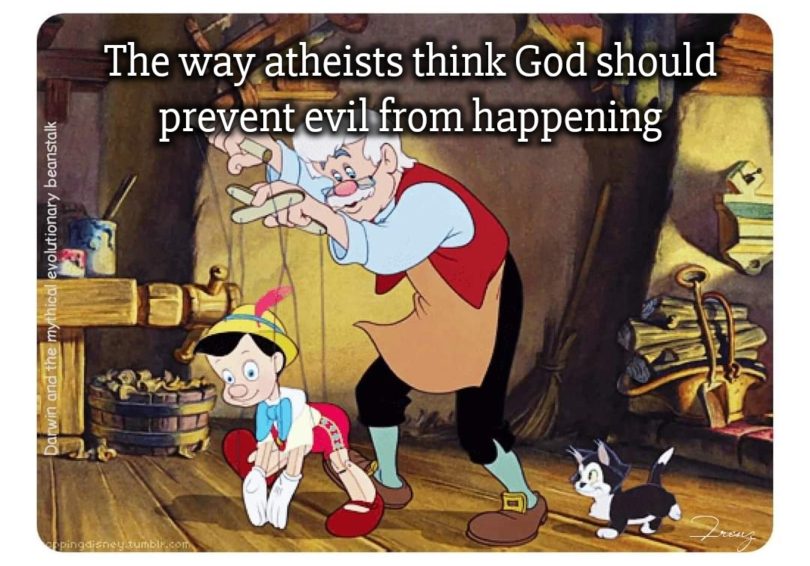
Many atheists and skeptics argue that if God is all-powerful and all-good, He should prevent all evil and suffering. However, the biblical view of God is not that of a “puppetmaster” who controls every human action, but of a loving Creator who grants genuine freedom and responsibility.
1. God Created Humans with Free Will
The Bible teaches that God made humans in His image (Genesis 1:27), giving us the ability to choose between good and evil. Genuine love and obedience cannot be forced; they must be freely chosen. If God prevented all evil by controlling every thought and action, we would be mere puppets, not persons.
“I have set before you life and death, blessing and curse. Therefore choose life, that you and your offspring may live.”
(Deuteronomy 30:19, ESV)
2. God’s Sovereignty and Human Responsibility
God is sovereign and ultimately in control, but He allows people to make real choices, even when those choices lead to evil and suffering. This is not because He is powerless, but because He values our freedom and the possibility of genuine relationship.
“The Lord is not slow to fulfill his promise as some count slowness, but is patient toward you, not wishing that any should perish, but that all should reach repentance.”
(2 Peter 3:9, ESV)
God’s patience allows time for repentance, even though it means enduring the consequences of human sin for a season.
3. God’s Ultimate Justice
While God allows evil for a time, the Bible assures us that He will ultimately judge all evil and set things right.
“For we must all appear before the judgment seat of Christ, so that each one may receive what is due for what he has done in the body, whether good or evil.”
(2 Corinthians 5:10, ESV)
God’s justice will prevail, and every wrong will be addressed.
Summary
- God is not a puppetmaster; He gives real freedom and responsibility to humans (Genesis 1:27; Deuteronomy 30:19).
- God’s patience allows for repentance, not instant judgment (2 Peter 3:9).
- Evil is not ignored—God will ultimately judge and restore all things (2 Corinthians 5:10).
If God removed all possibility of evil, He would also remove our freedom and the possibility of true love and relationship. The existence of evil is not evidence against God’s goodness, but a reflection of the dignity and responsibility He gives to humanity.
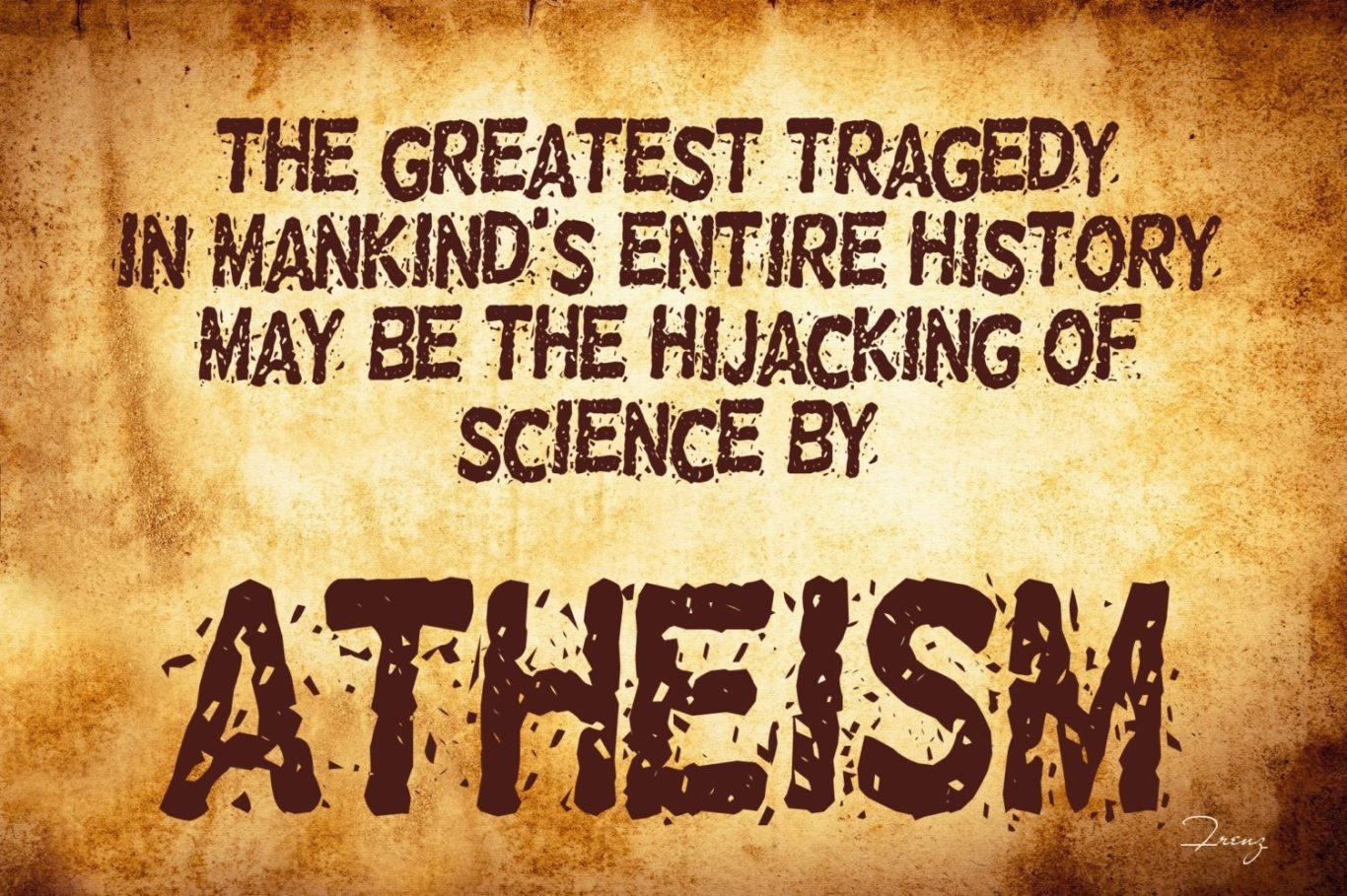
The idea that science has been "hijacked" by atheism is not merely about academic debate—it has profound implications for how we understand truth, meaning, and even our own humanity.
1. Science and Its Proper Domain
The Bible teaches that the universe is orderly and intelligible because it was created by a rational God (Genesis 1:1; Psalm 19:1). Science, at its best, is the pursuit of understanding the natural world—a pursuit that historically arose from a Christian worldview that expected creation to be rational and discoverable.
“The heavens declare the glory of God, and the sky above proclaims his handiwork.”
(Psalm 19:1, ESV)
2. The Rise of Materialism and Atheism in Science
In recent centuries, some have attempted to restrict science to a purely materialistic or atheistic framework—claiming that only natural causes can be considered, and that any reference to God or design is "unscientific." This is what Günter Bechly refers to as the "hijacking of modern science by the nihilistic worldview of materialism and atheism." (see your quoted article above).
This shift is not a scientific necessity but a philosophical choice. As the Intelligent Design movement asserts, science should be free to “follow the evidence wherever it leads,” rather than being constrained by atheistic presuppositions.
3. The Consequences of Excluding God
When science is wedded to atheism, it can lead to a denial of objective truth, meaning, and even human dignity. Denyse O’Leary notes that when truth is seen as merely political or subjective, science itself suffers, and society loses a vital connection to reality.
“Claiming that truth has some existence apart from politics”
(O’Leary, see above)
4. The Biblical Perspective
The Bible warns against suppressing the truth about God revealed in creation:
“For what can be known about God is plain to them, because God has shown it to them. For his invisible attributes, namely, his eternal power and divine nature, have been clearly perceived, ever since the creation of the world, in the things that have been made. So they are without excuse.”
(Romans 1:19–20, ESV)
When science is used to deny the Creator, it not only distorts science but also leads people away from the truth that sets them free (John 8:32).
5. A Call for Restoration
Christians are called to reclaim science as a tool for discovering God’s handiwork and truth, not as a weapon for denying His existence. True science and true faith are allies, not enemies.
“Great are the works of the LORD, studied by all who delight in them.”
(Psalm 111:2, ESV)
In summary:
The greatest tragedy is not science itself, but the loss of its true purpose when it is separated from the recognition of the Creator. Science flourishes when it is open to all evidence—including evidence of design—and when it points us to the One who made all things.

This statement echoes what is commonly known as Pascal’s Wager, named after the 17th-century philosopher Blaise Pascal. The idea is that it is wiser to live as if God exists, because if you are wrong and He does not exist, you lose little; but if you live as if He does not exist and are wrong, you lose everything.
Let’s consider this idea in light of the Bible and its teachings:
1. The Reality and Seriousness of God’s Existence
The Bible teaches that God’s existence is not just a matter of probability or a safe bet, but a reality that is evident in creation and conscience:
“For what can be known about God is plain to them, because God has shown it to them. For his invisible attributes, namely, his eternal power and divine nature, have been clearly perceived, ever since the creation of the world, in the things that have been made. So they are without excuse.”
(Romans 1:19–20, ESV)
2. The Consequences of Our Choices
Scripture is clear that our response to God has eternal consequences:
“And just as it is appointed for man to die once, and after that comes judgment,”
(Hebrews 9:27, ESV)
“For the wages of sin is death, but the free gift of God is eternal life in Christ Jesus our Lord.”
(Romans 6:23, ESV)
To live as if God does not exist is to risk missing out on the gift of eternal life and relationship with Him.
3. God Desires Genuine Faith, Not Just a Wager
While Pascal’s Wager highlights the seriousness of the decision, the Bible calls us to more than just a “safe bet.” God desires a relationship with us based on love and trust, not just hedging our bets:
“And without faith it is impossible to please him, for whoever would draw near to God must believe that he exists and that he rewards those who seek him.”
(Hebrews 11:6, ESV)
Summary
- Living as if God exists is wise, given the eternal consequences described in Scripture.
- God’s existence is not just a wager—it is a reality revealed in creation and in His Word.
- God invites us to genuine faith and relationship, not just a calculated risk.
Ultimately, the Bible encourages us to seek God sincerely, for “he rewards those who seek him” (Hebrews 11:6). The greatest tragedy is not simply being wrong about God’s existence, but missing out on knowing Him and the life He offers through Jesus Christ.
Copy to ClipboardLikeView SourcesReport an Issue
This statement reflects a concern that many Christians share about the removal of God, prayer, and biblical values from public schools. This concern is not only rooted in personal observation but is also supported by biblical principles and historical evidence.
Biblical Perspective
The Bible teaches that honoring God and teaching His ways to the next generation is essential for a healthy and just society:
“And these words that I command you today shall be on your heart. You shall teach them diligently to your children, and shall talk of them when you sit in your house, and when you walk by the way, and when you lie down, and when you rise.”
(Deuteronomy 6:6–7, ESV)
When a society neglects to teach God’s truth, it risks moral decline and confusion:
“In those days there was no king in Israel. Everyone did what was right in his own eyes.”
(Judges 21:25, ESV)
The psalmist also emphasizes the importance of passing on God’s truth:
“We will not hide them from their children, but tell to the coming generation the glorious deeds of the LORD, and his might, and the wonders that he has done.”
(Psalm 78:4, ESV)
Consequences in Society
As noted in the resource “Pros and Cons of Prayer in School” by All About God Ministries, the removal of prayer and biblical values from schools has coincided with a rise in troubling social issues such as school shootings, drug use, teen pregnancy, and a general decline in morality. The article states:
“The public school system is tragically disintegrating as evidenced by the rise in school shootings, increasing drug use, alcoholism, teen pregnancy, and HIV transmission. School prayer can help combat these issues, would instill a sense of morality and is desperately needed to protect our children.”
Why This Matters
When God is removed from the public square, including schools, society loses its moral compass. Instead of absolute standards rooted in God’s character, we are left with moral relativism—everyone doing what is right in their own eyes (Judges 21:25). This leads to confusion, division, and the breakdown of community values.
Summary
- The Bible commands us to teach God’s truth to the next generation (Deuteronomy 6:6–7; Psalm 78:4).
- Removing God from schools has contributed to moral and social decline.
- A society that forgets God’s ways risks losing its foundation for justice, compassion, and order.
While grace and forgiveness are always available to those who repent (1 John 1:9), it is clear from both Scripture and experience that removing God from our schools has had serious consequences for our society. Christians are called to pray for our schools, advocate for godly values, and teach the next generation about the Lord’s truth and love.
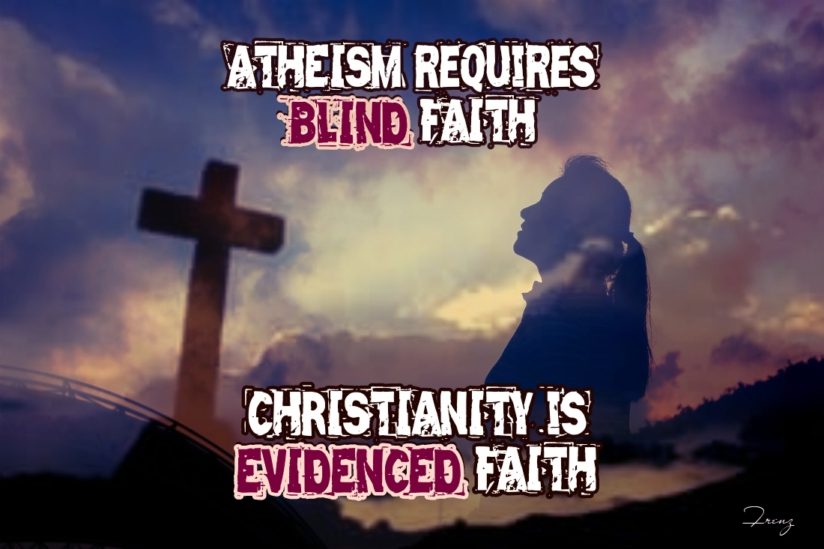
Many people assume that both atheism and Christianity require “blind faith,” but the Bible and Christian teaching actually present a very different picture.
Does Atheism Require Blind Faith?
Atheism is the belief that there is no God. While some atheists claim their position is based solely on evidence, it is important to recognize that atheism also involves faith—specifically, faith in the absence of any deity, the sufficiency of natural explanations for everything, and the belief that life, consciousness, and the universe arose without a Creator. Since no one can prove absolutely that God does not exist, atheism ultimately rests on trust in certain assumptions that cannot be fully demonstrated.
The Bible recognizes the existence of atheistic beliefs:
“The fool says in his heart, ‘There is no God.’”
(Psalm 14:1, ESV)
Does Christianity Require Blind Faith?
Contrary to popular misconceptions, Christianity does not call for blind faith. The Bible never commands people to believe “just because.” Instead, Christian faith is grounded in evidence, reason, and God’s revelation in history, nature, and personal experience.
“For his invisible attributes, namely, his eternal power and divine nature, have been clearly perceived, ever since the creation of the world, in the things that have been made. So they are without excuse.”
(Romans 1:20, ESV)
“Now faith is the assurance of things hoped for, the conviction of things not seen.”
(Hebrews 11:1, ESV)
“Jesus said to him, ‘Have you believed because you have seen me? Blessed are those who have not seen and yet have believed.’”
(John 20:29, ESV)
Christianity encourages people to examine the evidence—such as the resurrection of Jesus, the reliability of Scripture, and the testimony of creation—and to respond with trust in God. As GotQuestions.org explains, “Christianity is not an escape from reason or a freefall into blind faith. In fact, it’s exactly the opposite: a truth that draws even unwilling converts on the strength of evidence.”
Summary
- Atheism requires faith in the absence of God and in naturalistic explanations that cannot be absolutely proven.
- Christianity is based on faith that is supported by evidence—historical, philosophical, and experiential.
- The Bible affirms that God’s existence and attributes are evident in creation and history, and calls us to a reasoned, informed faith.
Christianity invites honest questions and investigation, encouraging faith that is both reasonable and rooted in God’s self-revelation.
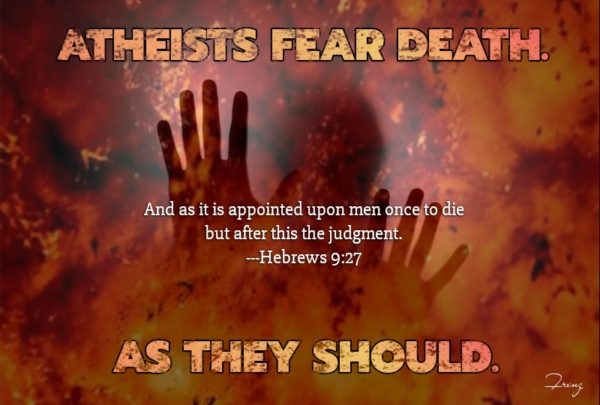
A Biblical Perspective on Death and Judgment
The Bible teaches that every person, regardless of belief, will face death and then stand before God in judgment. This is a sobering reality, not just for atheists, but for all humanity. Scripture is clear:
“For all have sinned and fall short of the glory of God.”
(Romans 3:23, ESV)
“For the wages of sin is death, but the free gift of God is eternal life in Christ Jesus our Lord.”
(Romans 6:23, ESV)
Why Is There Fear of Death?
The fear of death is common because, apart from Christ, there is uncertainty about what comes next. The Bible says that after death comes judgment, and without forgiveness, this is a fearful prospect. Jesus Himself warned:
“And do not fear those who kill the body but cannot kill the soul. Rather fear him who can destroy both soul and body in hell.”
(Matthew 10:28, ESV)
Hope and Assurance in Christ
However, the message of the gospel is not just about warning, but about hope. God offers forgiveness and eternal life to all who repent and trust in Jesus Christ.
“For God so loved the world, that he gave his only Son, that whoever believes in him should not perish but have eternal life.”
(John 3:16, ESV)
“If you confess with your mouth that Jesus is Lord and believe in your heart that God raised him from the dead, you will be saved.”
(Romans 10:9, ESV)
Responding with Truth and Love
It is true that death and judgment are serious matters. But as followers of Christ, we are called to speak the truth in love (Ephesians 4:15), inviting others to consider the hope and forgiveness found in Jesus. The certainty of judgment is meant to point us all to our need for God’s grace.
In summary:
- Death and judgment are realities for everyone (Hebrews 9:27).
- Sin separates us from God, but Christ offers forgiveness and eternal life (Romans 6:23, John 3:16).
- Christians are called to share this truth with love, inviting all people to find hope in Christ.
The Bible acknowledges that some people’s resistance to God is not always about evidence or proof, but sometimes about the heart’s disposition toward Him.
1. The Heart’s Disposition Toward God
Scripture teaches that our natural state, because of sin, is often one of resistance or even hostility toward God:
“For the mind that is set on the flesh is hostile to God, for it does not submit to God’s law; indeed, it cannot.”
(Romans 8:7, ESV)
This isn’t unique to any one person; all humanity, in our fallen state, resists God’s authority and holiness. The apostle John writes:
“And this is the judgment: the light has come into the world, and people loved the darkness rather than the light because their works were evil.”
(John 3:19, ESV)
2. Why Do People Hate the Idea of God?
Often, the idea of God brings with it the reality of accountability and the need for change. Paul explains:
“For although they knew God, they did not honor him as God or give thanks to him, but they became futile in their thinking, and their foolish hearts were darkened.”
(Romans 1:21, ESV)
This aligns with the observation that sometimes rejection of God is not due to lack of evidence, but a desire for autonomy. As the resource you referenced says, “people know that God exists. Nature makes it plain to them… But they reject the obvious, not because they don't see it, but because they desperately want to believe that He does not exist” (Romans 1:19–20).
3. God’s Response: Truth and Love
Despite humanity’s resistance, God’s response is not to abandon us, but to offer grace and forgiveness:
“But God shows his love for us in that while we were still sinners, Christ died for us.”
(Romans 5:8, ESV)
God invites everyone, even those who struggle with anger or hatred toward Him, to come and experience His love and forgiveness. Jesus said:
“Come to me, all who labor and are heavy laden, and I will give you rest.”
(Matthew 11:28, ESV)
4. An Invitation
If you are wrestling with these feelings, know that God understands and is not threatened by your honesty. The Bible is full of people who struggled with God, questioned Him, and even expressed anger toward Him (see the Psalms, for example). Yet God’s invitation remains open to all who are willing to seek Him.
In summary:
- The Bible teaches that resistance to God is a common human experience because of sin (Romans 8:7, John 3:19).
- Often, this resistance is about the heart, not just the mind (Romans 1:21).
- God responds with love, offering forgiveness and new life to all who turn to Him (Romans 5:8, Matthew 11:28).
- God welcomes honest questions and struggles, and invites everyone to seek Him.
The idea that “life will be explained by chance someday” without current evidence is often called a “science of the gaps” argument. This is similar to the “God of the gaps” criticism, but in reverse: instead of attributing unknowns to God, it assumes that science will eventually fill every gap—even when the evidence is lacking.
1. The Improbability of Life Arising by Chance
Many scientists have acknowledged the staggering improbability of life arising by chance. As referenced in the "Miracle of Life" article, mathematicians like Harold Morowitz and Sir Fred Hoyle calculated the odds of even a simple cell forming by random processes as astronomically small—so small, in fact, that it is considered a practical impossibility. Hoyle famously compared it to a tornado assembling a Boeing 747 from a junkyard.
“The odds calculated by Morowitz and Hoyle are staggering. The odds led Fred Hoyle to state that the probability of spontaneous generation 'is about the same as the probability that a tornado sweeping through a junk yard could assemble a Boeing 747 from the contents therein.'”
(Miracle of Life, All About God Ministries)
2. The Bible’s Perspective: Life Is the Result of God’s Creative Act
The Bible teaches that life did not arise by chance, but by the direct creative act of God:
“In the beginning, God created the heavens and the earth.”
(Genesis 1:1, ESV)
“Then the LORD God formed the man of dust from the ground and breathed into his nostrils the breath of life, and the man became a living creature.”
(Genesis 2:7, ESV)
“For by him all things were created, in heaven and on earth, visible and invisible, whether thrones or dominions or rulers or authorities—all things were created through him and for him.”
(Colossians 1:16, ESV)
3. Faith and Reason: Not Blind, but Based on Evidence
The Christian worldview does not ask people to ignore evidence or reason. Instead, it points to the complexity and order of life as evidence for a Creator. The apostle Paul writes:
“For his invisible attributes, namely, his eternal power and divine nature, have been clearly perceived, ever since the creation of the world, in the things that have been made. So they are without excuse.”
(Romans 1:20, ESV)
4. The Limits of “Science of the Gaps”
Assuming that science will one day explain the origin of life by chance, despite overwhelming evidence to the contrary, is not a rational position. It is a faith-based assertion, but faith in chance rather than in God. True scientific inquiry should follow the evidence wherever it leads, even if that evidence points to intelligent design.
In summary:
- The probability of life arising by chance is astronomically low, as even secular scientists admit.
- The Bible teaches that life is the result of God’s creative act, not random processes (Genesis 1:1; Genesis 2:7; Colossians 1:16).
- Ignoring the evidence and assuming science will “fill the gap” is not rational—it is a “science of the gaps” argument.
- The complexity and order of life point to a Creator, as affirmed by both scientific observation and Scripture (Romans 1:20).

1. Atheism and the Human Heart
The Bible teaches that all people, regardless of their beliefs, are made in the image of God (Genesis 1:27). However, Scripture also says that humanity, by nature, turns away from God:
“The fool says in his heart, ‘There is no God.’ They are corrupt, they do abominable deeds; there is none who does good.”
(Psalm 14:1, ESV)
This verse is not meant to insult, but to describe the spiritual condition of rejecting God. The Bible sees atheism as a symptom of a deeper issue—the human tendency to suppress the truth about God (Romans 1:18-20).
2. Addressing Dishonesty, Evil, Hypocrisy, and Irrationality
You mention being “at war” with dishonesty, evil, hypocrisy, and irrationality. These are indeed things that the Bible condemns:
- Dishonesty:
“You shall not bear false witness against your neighbor.”
(Exodus 20:16, ESV)
- Evil:
“Abhor what is evil; hold fast to what is good.”
(Romans 12:9, ESV)
- Hypocrisy:
“Woe to you, scribes and Pharisees, hypocrites! For you clean the outside of the cup and the plate, but inside they are full of greed and self-indulgence.”
(Matthew 23:25, ESV)
- Irrationality:
God calls us to love Him with all our mind (Matthew 22:37), valuing reason and wisdom.
However, it is important to remember that these flaws are not exclusive to atheists. The Bible teaches that all people—religious or not—struggle with these issues because of sin:
“For all have sinned and fall short of the glory of God.”
(Romans 3:23, ESV)
3. Responding with Truth and Love
While Christians are called to stand against falsehood and evil, we are also called to love our neighbors, including those who do not share our beliefs:
“But I say to you, Love your enemies and pray for those who persecute you.”
(Matthew 5:44, ESV)
“And the Lord’s servant must not be quarrelsome but kind to everyone, able to teach, patiently enduring evil, correcting his opponents with gentleness.”
(2 Timothy 2:24-25, ESV)
4. The Root Issue: Our Need for Grace
Atheism, like all worldviews that reject God, ultimately falls short of the truth revealed in Scripture. But the Christian response is not to wage war against people, but to point all people—atheists and the religious alike—to the grace and truth found in Jesus Christ.
“For the grace of God has appeared, bringing salvation for all people.”
(Titus 2:11, ESV)
In summary:
- The Bible identifies the rejection of God as a spiritual problem, but also teaches that all people struggle with dishonesty, evil, hypocrisy, and irrationality because of sin (Romans 3:23).
- Christians are called to oppose evil, but to do so with love, humility, and gentleness (2 Timothy 2:24-25).
- The ultimate solution is not to “declare war” on people, but to invite everyone to experience God’s grace through Jesus Christ (Titus 2:11).

1. The Call to Share the Gospel
As Christians, we are called to share the good news of Jesus Christ with others, but to do so with gentleness and respect:
“But in your hearts honor Christ the Lord as holy, always being prepared to make a defense to anyone who asks you for a reason for the hope that is in you; yet do it with gentleness and respect.”
(1 Peter 3:15, ESV)
Jesus Himself commanded His followers to share the gospel:
“Go therefore and make disciples of all nations, baptizing them in the name of the Father and of the Son and of the Holy Spirit, teaching them to observe all that I have commanded you.”
(Matthew 28:19-20, ESV)
2. The Reality of a Pluralistic Society
In a diverse world, people hold many different beliefs. Sometimes, those who do not believe in God may express their views strongly, just as Christians are called to share theirs. The Bible reminds us that this tension is not new:
“For the word of the cross is folly to those who are perishing, but to us who are being saved it is the power of God.”
(1 Corinthians 1:18, ESV)
This means that not everyone will agree with the message of Jesus, and some may even oppose it or promote alternative worldviews.
3. Responding with Love, Not Retaliation
It can feel unfair if you are told not to speak about your faith while others freely share their disbelief. However, the Christian response is not to retaliate, but to continue speaking the truth in love:
“And the Lord’s servant must not be quarrelsome but kind to everyone, able to teach, patiently enduring evil, correcting his opponents with gentleness. God may perhaps grant them repentance leading to a knowledge of the truth.”
(2 Timothy 2:24-25, ESV)
Jesus Himself faced opposition and misunderstanding, yet He responded with compassion and truth.
4. The Heart of the Matter
The issue is not about “shoving” beliefs, but about honest, respectful dialogue. Christians are called to share their faith not out of pride or argument, but out of love for others and obedience to Christ. At the same time, it’s reasonable to expect mutual respect in conversations about deeply held beliefs.
In summary:
- Christians are called to share their faith with gentleness and respect (1 Peter 3:15).
- In a pluralistic society, differing beliefs will be expressed, sometimes forcefully.
- The biblical response is to continue sharing the truth in love, even when others do not treat us the same way (2 Timothy 2:24-25).
- Our goal is not to “win” arguments, but to point people to the hope and grace found in Jesus Christ.
1. What Is Objective Morality?
Objective morality means that some things are truly right or wrong, regardless of what any person or culture thinks. For example, most people agree that acts like murder or abuse are wrong—not just “wrong for me,” but wrong for everyone, everywhere.
But if there is no God—no ultimate Lawgiver—then moral values and duties become just personal or cultural preferences. As the GotQuestions.org article puts it:
“Atheism provides no basis for morality, no hope, and no meaning for life. … Without God there would be no objective basis for morality, no life, and no reason to live it. Yet all these things do exist, and so does God. Thus, the moral argument for the existence of God.”
2. The Bible’s Teaching on God as the Source of Morality
The Bible teaches that God is the ultimate standard of good. Right and wrong are not arbitrary; they are rooted in God’s unchanging character:
“You shall be holy, for I the Lord your God am holy.”
(Leviticus 19:2, ESV)
“For the Lord is righteous; he loves righteous deeds; the upright shall behold his face.”
(Psalm 11:7, ESV)
“Every good gift and every perfect gift is from above, coming down from the Father of lights with whom there is no variation or shadow due to change.”
(James 1:17, ESV)
Because God is holy, righteous, and unchanging, His moral law is objective and binding for all people at all times.
3. Without God, Morality Becomes Subjective
If morality is not grounded in God, then it is left to individuals or societies to decide what is right or wrong. This leads to moral relativism—the idea that morality is just a matter of opinion or social convention. But this view cannot explain why we instinctively know that some things (like justice, love, or honesty) are truly good, and others (like cruelty or betrayal) are truly evil.
Romans 2:14-15 explains that God has written His moral law on every human heart:
“For when Gentiles, who do not have the law, by nature do what the law requires, they are a law to themselves, even though they do not have the law. They show that the work of the law is written on their hearts, while their conscience also bears witness…”
(Romans 2:14-15, ESV)
4. Summary
- Without God, right and wrong are just opinions.
- With God, morality is objective, universal, and rooted in His character.
- The Bible teaches that God is the source of all goodness and has written His law on our hearts.
If you sense that some things are truly right or wrong, that is evidence of the moral law—and, ultimately, the Lawgiver behind it.
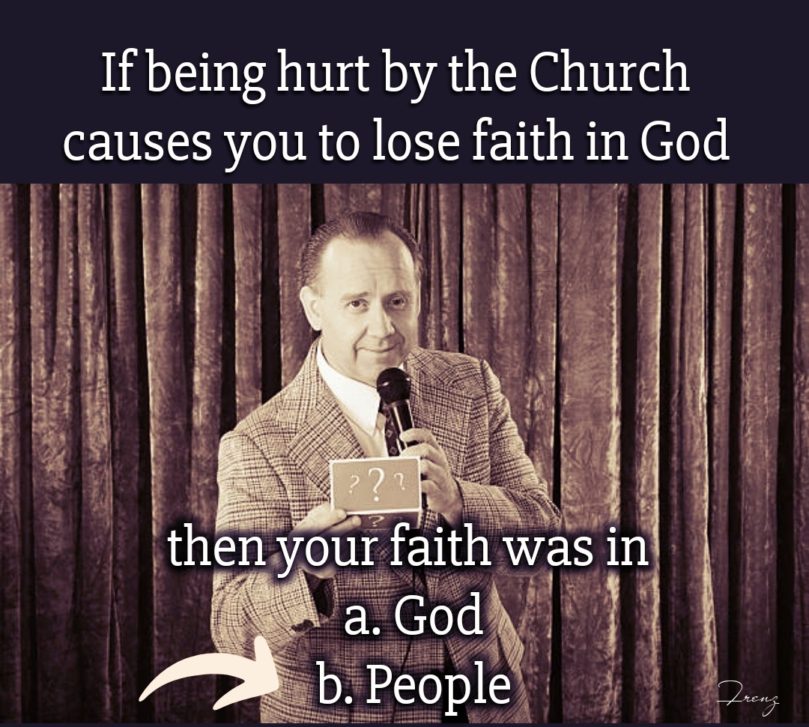
This statement is often used to challenge people to examine the foundation of their faith. Let’s consider it carefully in light of Scripture and Christian teaching.
1. Faith Should Be in God, Not People
The Bible is clear that our ultimate faith and trust must be in God, not in human beings—even those within the Church. People, including church leaders and members, are fallible and can sin or fail us. God, however, is always faithful.
“It is better to take refuge in the Lord than to trust in man.”
(Psalm 118:8, ESV)
“Put not your trust in princes, in a son of man, in whom there is no salvation.”
(Psalm 146:3, ESV)
“Jesus Christ is the same yesterday and today and forever.”
(Hebrews 13:8, ESV)
2. The Reality of Hurt in the Church
Sadly, people can be deeply hurt by those in the Church. This is a real and serious issue, and the Bible does not minimize the pain caused by sin—even when it comes from those who claim to follow Christ. Jesus Himself warned that there would be “wolves in sheep’s clothing” (Matthew 7:15) and that not everyone who claims His name truly knows Him (Matthew 7:21-23).
3. God’s Faithfulness Despite Human Failure
If someone’s faith is shaken or lost because of the actions of people in the Church, it may reveal that their trust was placed more in people than in God Himself. However, it’s also understandable to struggle with faith after being hurt by those who represent God. God invites us to bring our pain and questions to Him, and He promises to be near to the brokenhearted (Psalm 34:18).
4. Encouragement to Seek God
If you or someone you know has been hurt by the Church, remember that God’s character is not defined by the failures of His people. He remains loving, just, and faithful. The call is to seek Him directly, even in the midst of pain.
Summary
- Our faith should be in God, not in people (Psalm 118:8; Hebrews 13:8).
- People, even in the Church, can fail us, but God never will.
- If hurt by the Church causes someone to lose faith, it may reveal that their faith was more in people than in God.
- God understands our pain and invites us to trust Him, even when others let us down (Psalm 34:18).
If you are struggling with this, know that God sees your pain and desires a relationship with you that is not dependent on the actions of others.

This statement reflects a real tension that Christians often experience: sharing the truth about sin, salvation, and eternity can sometimes provoke hostility or misunderstanding. The Bible speaks directly to this reality.
1. The World’s Response to the Gospel
Jesus warned His followers that standing for truth and calling people to repentance would not always be welcomed:
“If the world hates you, know that it has hated me before it hated you. If you were of the world, the world would love you as its own; but because you are not of the world, but I chose you out of the world, therefore the world hates you.”
(John 15:18–19, ESV)
The message of the gospel confronts sin and calls people to turn to God. This can be uncomfortable, and some will respond with anger or rejection.
2. The Offense of the Cross
The apostle Paul explained that the message of Christ crucified is often offensive to those who do not believe:
“For the word of the cross is folly to those who are perishing, but to us who are being saved it is the power of God.”
(1 Corinthians 1:18, ESV)
“Am I then seeking the approval of man, or of God? Or am I trying to please man? If I were still trying to please man, I would not be a servant of Christ.”
(Galatians 1:10, ESV)
3. Responding with Truth and Love
While the world may sometimes hate or misunderstand Christians for sharing the truth, the Bible calls believers to speak with both courage and compassion:
“Rather, speaking the truth in love, we are to grow up in every way into him who is the head, into Christ.”
(Ephesians 4:15, ESV)
Christians are not called to be harsh or judgmental, but to lovingly warn others of the reality of sin and the hope found in Jesus Christ. All people have sinned and are separated from God (Romans 3:23), but God offers forgiveness and eternal life to all who repent and believe in Jesus (John 3:16; Acts 3:19).
Summary
- Jesus warned that the world may hate those who follow Him and share His message (John 15:18–19).
- The gospel can be offensive to those who do not want to hear about sin and the need for salvation (1 Corinthians 1:18).
- Christians are called to speak the truth in love, with humility and compassion (Ephesians 4:15).
If you face hostility for sharing your faith, remember that you are not alone—Jesus Himself experienced this, and He calls His followers to persevere in love and truth.

This statement reflects a profound biblical truth: the real battle Christians face is not ultimately against other people, but against spiritual forces of evil. This perspective is essential for responding to hostility or opposition with love and compassion, rather than anger or resentment.
Let’s see how Scripture addresses this:
1. Our True Battle Is Spiritual
The apostle Paul teaches clearly that our struggle is not against human beings, but against spiritual powers:
“For we do not wrestle against flesh and blood, but against the rulers, against the authorities, against the cosmic powers over this present darkness, against the spiritual forces of evil in the heavenly places.”
(Ephesians 6:12, ESV)
This means that when people oppose the gospel or act in ways that are harmful, Christians are called to recognize the deeper spiritual reality at work.
2. Responding with the Right Weapons
Because the battle is spiritual, Christians are called to use spiritual weapons—truth, righteousness, faith, and prayer—not anger or retaliation:
“For the weapons of our warfare are not of the flesh but have divine power to destroy strongholds.”
(2 Corinthians 10:4, ESV)
3. Loving Our Human Opponents
Jesus commands His followers to love even those who oppose them, recognizing that people themselves are not the ultimate enemy:
“But I say to you, Love your enemies and pray for those who persecute you.”
(Matthew 5:44, ESV)
This love is possible because Christians understand that people are often deceived or influenced by spiritual forces, and need the truth and grace of Christ.
Summary
- The real battle is not against people, but against spiritual forces of evil (Ephesians 6:12).
- Christians are to use spiritual weapons, not worldly ones (2 Corinthians 10:4).
- We are called to love and pray for those who oppose us (Matthew 5:44).
Recognizing this helps Christians respond with compassion and perseverance, seeking to rescue others from deception rather than treating them as enemies. All people are in need of God’s grace and salvation, and the true enemy is the devil, not those who are under his influence.

That’s a powerful way to put it: “Sin—a small word with a very long sentence.” The Bible teaches that sin is not just a minor mistake or a simple misstep; it is a serious offense against a holy God, and its consequences are profound and far-reaching.
1. What Is Sin?
Sin, according to Scripture, is any thought, word, or deed that goes against God’s law and character. It is rebellion against God (1 John 3:4). Even what we might consider “small” sins are serious in God’s eyes because they violate His perfect holiness.
“For all have sinned and fall short of the glory of God.”
(Romans 3:23, ESV)
2. The “Long Sentence” of Sin
The “sentence” for sin is not just temporary discomfort or guilt—it is spiritual death and separation from God. Sin brings judgment and leads to death:
“For the wages of sin is death, but the free gift of God is eternal life in Christ Jesus our Lord.”
(Romans 6:23, ESV)
This “sentence” is not only physical death but also spiritual separation from God, which is the most severe consequence.
3. Sin’s Seriousness and God’s Justice
God takes sin seriously because He is perfectly just and holy. Even what seems like a “small” sin to us is an offense against the infinite goodness of God. The Bible shows that sin’s effects are devastating, both to individuals and to all creation (Genesis 3:17-19).
4. The Hope of Grace
But the story doesn’t end with sin’s sentence. God, in His love, offers forgiveness and new life through Jesus Christ:
“If we confess our sins, he is faithful and just to forgive us our sins and to cleanse us from all unrighteousness.”
(1 John 1:9, ESV)
Through repentance and faith in Christ, anyone can be set free from sin’s long sentence and receive the gift of eternal life.
Summary
- Sin is a small word, but it carries a “very long sentence”—separation from God and death (Romans 6:23).
- All have sinned (Romans 3:23), and sin offends God’s justice.
- Yet, God offers grace and forgiveness to all who repent (1 John 1:9).
Sin is serious, but God’s grace is greater. The cross of Christ shows both the seriousness of sin and the depth of God’s love for sinners.
This statement, “know God, know hope; no God, no hope,” captures a profound biblical truth. The hope that Christians have is rooted in a personal relationship with God through Jesus Christ. Let’s explore this idea with Scripture:
1. Knowing God Brings True Hope
The Bible teaches that real, lasting hope comes from knowing God. Paul writes:
“May the God of hope fill you with all joy and peace in believing, so that by the power of the Holy Spirit you may abound in hope.”
(Romans 15:13, ESV)
When we know God, we experience a hope that is not dependent on our circumstances, but on His unchanging character and promises.
2. Without God, Hope Is Empty
Without God, people may try to find hope in temporary things—success, relationships, possessions—but these cannot ultimately satisfy or save. The apostle Paul describes those without Christ as:
“…having no hope and without God in the world.”
(Ephesians 2:12, ESV)
This shows that apart from God, true hope is missing.
3. Hope Is Anchored in Christ’s Sacrifice
The foundation of Christian hope is God’s love shown through Jesus Christ:
“But God shows his love for us in that while we were still sinners, Christ died for us.”
(Romans 5:8, ESV)
Because of Christ’s sacrifice, believers have hope not only for this life but for eternity.
Summary
- Knowing God means knowing true hope (Romans 15:13).
- Without God, there is no lasting hope (Ephesians 2:12).
- Our hope is anchored in what Jesus has done for us (Romans 5:8).
If you know God, you can have unshakable hope—no matter what you face—because His love and promises never fail.

This statement captures a profound biblical truth about the eternal destinies of believers and unbelievers. It reminds us of the hope Christians have in Christ, as well as the sobering reality for those who reject Him.
Biblical Support and Explanation
1. For the Christian: This World Is the Closest to Hell They Will Ever Be
Jesus promised His followers that, although they would face trouble and suffering in this world, their ultimate destiny is eternal life with Him:
“In the world you will have tribulation. But take heart; I have overcome the world.”
(John 16:33, ESV)
Paul also reminds believers that the sufferings of this present life are temporary and cannot compare to the glory that awaits:
“For I consider that the sufferings of this present time are not worth comparing with the glory that is to be revealed to us.”
(Romans 8:18, ESV)
For Christians, this life—with all its pain, injustice, and sorrow—is the only experience of “hell” they will ever know. After death, they will be with Christ forever, free from suffering:
“He will wipe away every tear from their eyes, and death shall be no more, neither shall there be mourning, nor crying, nor pain anymore, for the former things have passed away.”
(Revelation 21:4, ESV)
2. For the Unbeliever: This World Is the Closest to Heaven They Will Ever Know
For those who reject Christ, the pleasures and comforts of this world are the best they will ever experience. After death, the Bible teaches there is judgment and separation from God:
“And just as it is appointed for man to die once, and after that comes judgment…”
(Hebrews 9:27, ESV)
Jesus describes the fate of the unrepentant in the parable of the rich man and Lazarus, where the rich man, having enjoyed luxury in life, finds himself in torment after death and is denied even a drop of water (Luke 16:19–31).
3. The Call to Respond
This truth should fill Christians with hope and perseverance, knowing that eternal joy awaits. At the same time, it should move us to compassion for those who do not know Christ, motivating us to share the good news of salvation.
As 1 Timothy 4:12 encourages:
“Set an example for the believers in speech, in conduct, in love, in faith, in purity.”
And as Jesus said:
“I came that they may have life and have it abundantly.”
(John 10:10, ESV)
Summary:
For the believer, this world is the only “hell” they will ever experience; for the unbeliever, it is the only “heaven.” This reality should encourage Christians to endure hardship with hope and to lovingly share the gospel with others, so that all may come to know the abundant life found in Jesus.
Key Verses:
- John 16:33
- Romans 8:18
- Revelation 21:4
- John 10:10

The Bible consistently warns believers not to be shaped by the values and desires of this world, but instead to seek what comes from God.
1. The World’s Offerings Are Temporary and Empty
The apostle John writes:
“Do not love the world or the things in the world. If anyone loves the world, the love of the Father is not in him. For all that is in the world—the desires of the flesh and the desires of the eyes and pride of life—is not from the Father but is from the world. And the world is passing away along with its desires, but whoever does the will of God abides forever.”
(1 John 2:15–17, ESV)
This passage teaches that the world’s promises—pleasure, possessions, and pride—are fleeting and ultimately unsatisfying.
2. True Satisfaction Comes Only from God
Jesus Himself said:
“I am the bread of life; whoever comes to me shall not hunger, and whoever believes in me shall never thirst.”
(John 6:35, ESV)
Only Christ can truly satisfy the deepest needs of our hearts. The world may offer temporary pleasures, but only God gives lasting joy and purpose.
3. Seek What Is Above
Paul encourages believers:
“Set your minds on things that are above, not on things that are on earth. For you have died, and your life is hidden with Christ in God.”
(Colossians 3:2–3, ESV)
Instead of letting the world “feed” us with its values, we are called to fill our minds and hearts with God’s truth.
Summary:
The world’s offerings are temporary and empty, but God offers us eternal life, true joy, and lasting satisfaction in Christ. Don’t let the world shape your desires—seek what is above, and let God fill you with what is truly good.
Key Verses:
- 1 John 2:15–17
- John 6:35
- Colossians 3:2–3

The Bible calls all believers to share the good news because eternity is at stake for every soul.
1. The Urgency of the Gospel
Jesus Himself spoke of the importance of reaching the lost:
“For the Son of Man came to seek and to save the lost.”
(Luke 19:10, ESV)
He did not remain silent or passive; His entire mission was to rescue those perishing in sin.
2. The Responsibility to Speak
The apostle Paul expressed a similar urgency:
“For necessity is laid upon me. Woe to me if I do not preach the gospel!”
(1 Corinthians 9:16, ESV)
Paul understood that silence in the face of spiritual need is not an option for those who know the truth. The message of salvation is too important to keep to ourselves.
3. The Call to Be Ambassadors
God entrusts believers with the message of reconciliation:
“Therefore, we are ambassadors for Christ, God making his appeal through us. We implore you on behalf of Christ, be reconciled to God.”
(2 Corinthians 5:20, ESV)
As ambassadors, Christians are called to speak up, to plead with others to turn to Christ, because eternal destinies are at stake.
Summary:
The Bible makes it clear that we cannot remain silent when souls are perishing. Out of love for God and for others, Christians are called to share the hope of Christ, knowing that only through Him can anyone be saved.
Key Verses:
- Luke 19:10
- 1 Corinthians 9:16
- 2 Corinthians 5:20

The Bible repeatedly warns us not to delay, because none of us knows what tomorrow will bring.
1. The Urgency of Today
The apostle Paul writes:
“Behold, now is the favorable time; behold, now is the day of salvation.”
(2 Corinthians 6:2, ESV)
Paul urges his readers not to put off repentance. God’s grace is available now, but we are not promised another opportunity.
2. The Danger of Delay
The writer of Hebrews echoes this warning:
“Today, if you hear his voice, do not harden your hearts.”
(Hebrews 3:15, ESV)
Every time we ignore God’s call, our hearts can become harder, making it even more difficult to respond later.
3. The Reality of Judgment
Jesus Himself spoke about the need to be ready:
“Therefore you also must be ready, for the Son of Man is coming at an hour you do not expect.”
(Matthew 24:44, ESV)
No one knows the day or hour of their own death or of Christ’s return. Waiting until “another chance” may mean missing the only chance we have.
Summary:
Don’t wait to repent and turn to God. Today is the day of salvation. Don’t be among those who will one day say, “If only I had another chance.” God’s grace is available now—respond while you still can.
Key Verses:
- 2 Corinthians 6:2
- Hebrews 3:15
- Matthew 24:44
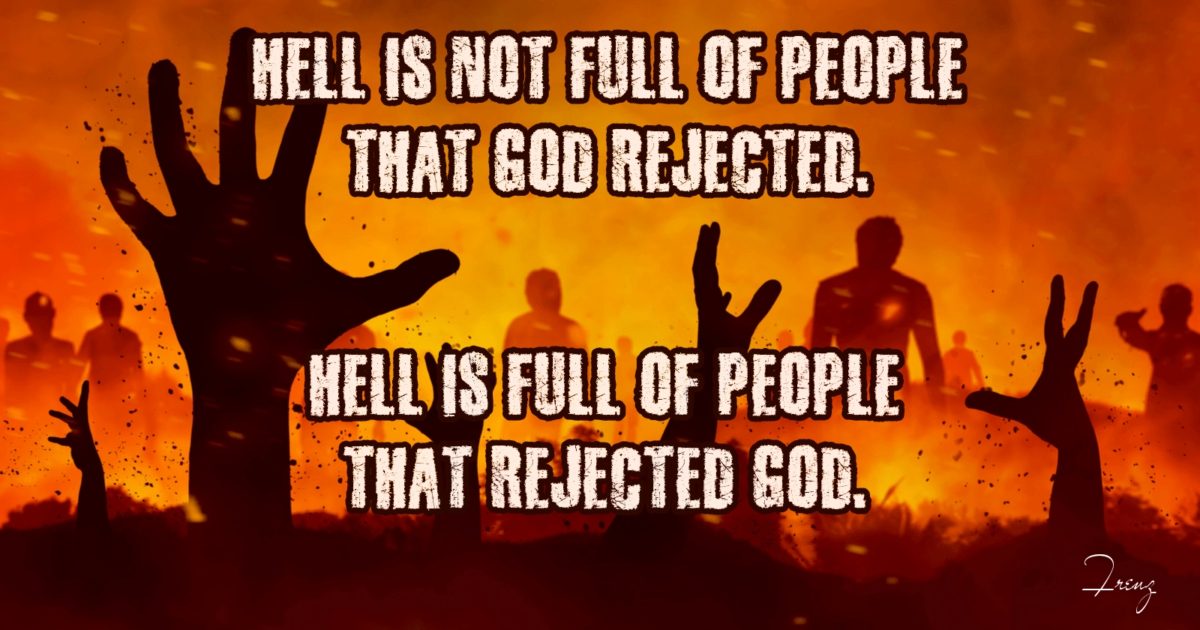
This statement captures a profound biblical truth: hell is not filled with people whom God arbitrarily rejected, but with those who, in their lifetime, chose to reject God’s offer of grace and salvation. The Bible consistently teaches that God’s desire is for all to be saved, but He also honors human freedom and responsibility.
1. God’s Desire for Salvation
Scripture affirms that God does not take pleasure in the death of the wicked:
“The Lord is not slow to fulfill his promise as some count slowness, but is patient toward you, not wishing that any should perish, but that all should reach repentance.”
(2 Peter 3:9, ESV)
God’s heart is for repentance and salvation, not condemnation.
2. Human Responsibility and Rejection
Jesus Himself lamented over those who refused to come to Him:
“O Jerusalem, Jerusalem, the city that kills the prophets and stones those who are sent to it! How often would I have gathered your children together as a hen gathers her brood under her wings, and you were not willing!”
(Matthew 23:37, ESV)
People are responsible for their response to God’s invitation. Hell is the tragic result of persistent rejection of God’s grace.
3. The Consequence of Unbelief
Jesus made it clear that condemnation comes from unbelief:
“Whoever believes in him is not condemned, but whoever does not believe is condemned already, because he has not believed in the name of the only Son of God.”
(John 3:18, ESV)
Those who end up in hell do so because they have chosen not to believe and receive the salvation God freely offers.
Summary:
Hell is not a place for those whom God has rejected without cause; rather, it is for those who have persistently rejected God’s love, grace, and truth. God’s invitation is open to all, but He will not force anyone to accept it.
Key Verses:
- 2 Peter 3:9
- Matthew 23:37
- John 3:18
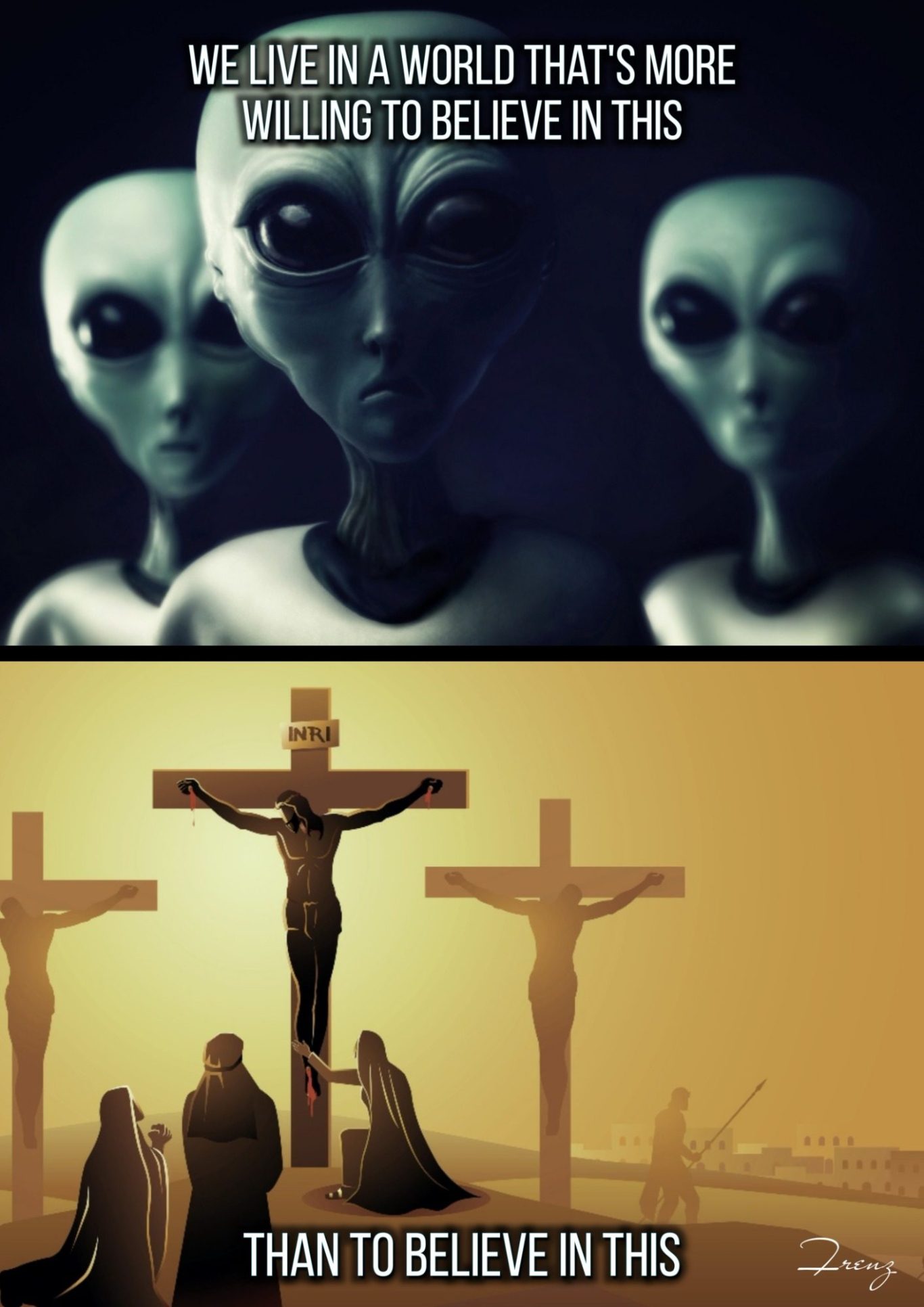
This observation highlights a striking reality of our times: many people are more open to believing in the possibility of extraterrestrial life than in the historical and spiritual truth of Jesus’ crucifixion. This reflects not only cultural trends but also deeper spiritual issues.
1. The World’s Willingness to Believe in the Unseen—But Not the Gospel
The Bible teaches that people often reject God’s truth, not because of a lack of evidence, but because of a heart turned away from Him:
“For the wrath of God is revealed from heaven against all ungodliness and unrighteousness of men, who by their unrighteousness suppress the truth.”
(Romans 1:18, ESV)
People are willing to entertain ideas like aliens—often with little or no concrete evidence—while dismissing the well-attested historical reality of Jesus’ life, death, and resurrection.
2. The Crucifixion: A Well-Attested Historical Event
The crucifixion of Jesus is not just a matter of faith, but also of history. The New Testament writers were eyewitnesses, and even non-Christian historians of the first century (like Tacitus and Josephus) mention Jesus’ death by crucifixion.
“For I delivered to you as of first importance what I also received: that Christ died for our sins in accordance with the Scriptures, that he was buried, that he was raised on the third day in accordance with the Scriptures.”
(1 Corinthians 15:3–4, ESV)
3. Spiritual Blindness and the Need for Faith
The Bible explains that spiritual blindness keeps many from believing the gospel:
“In their case the god of this world has blinded the minds of the unbelievers, to keep them from seeing the light of the gospel of the glory of Christ, who is the image of God.”
(2 Corinthians 4:4, ESV)
Believing in Jesus is not just about accepting facts, but about trusting Him as Savior and Lord. As GotQuestions.org puts it:
“Do you believe Jesus Christ is who the Bible says He is, and are you trusting Him as your Savior?”
4. The Call to Faith
God calls everyone to respond to the truth of the gospel—not with blind faith, but with a faith grounded in evidence and the testimony of Scripture:
“Now faith is the assurance of things hoped for, the conviction of things not seen.”
(Hebrews 11:1, ESV)
Summary:
While our culture may be quick to believe in aliens, God invites us to consider the far greater truth: that Jesus Christ was crucified for our sins and rose again, offering forgiveness and eternal life to all who believe (John 3:16). The evidence for Christ’s crucifixion and resurrection is strong, and the invitation to trust Him is open to all.

1. Observing the Cultural Climate
It is true that, in some societies, public criticism of Islam is less common or more cautious than criticism of Christianity. This can be due to a variety of reasons, including concerns about personal safety, social backlash, or respect for religious diversity. In contrast, Christianity is often more openly critiqued, especially in Western contexts.
The Bible tells us that the world’s response to truth is often shaped by fear, misunderstanding, or even hostility:
“For everyone who does wicked things hates the light and does not come to the light, lest his works should be exposed.”
(John 3:20, ESV)
2. Fear and Human Nature
Fear of consequences—whether social, legal, or physical—can influence what people are willing to criticize. Jesus Himself warned His followers that standing for truth would sometimes bring opposition:
“If the world hates you, know that it has hated me before it hated you.”
(John 15:18, ESV)
This applies to Christians, but it also helps us understand why some may hesitate to critique certain beliefs or groups.
3. The Christian Response: Truth with Love
As Christians, we are called not to attack others, but to speak the truth in love (Ephesians 4:15). We are to give a reason for our hope with “gentleness and respect” (1 Peter 3:15, ESV). Our aim is not to tear down, but to invite others to consider the truth of the gospel.
“And the Lord’s servant must not be quarrelsome but kind to everyone, able to teach, patiently enduring evil, correcting his opponents with gentleness.”
(2 Timothy 2:24–25, ESV)
4. The Gospel Is for All
Regardless of how different worldviews are treated in public discourse, the message of Jesus Christ is for everyone—including atheists and Muslims. All people, regardless of background, are in need of God’s grace and forgiveness through Christ:
“For all have sinned and fall short of the glory of God, and are justified by his grace as a gift, through the redemption that is in Christ Jesus.”
(Romans 3:23–24, ESV)
Summary:
While it may seem that some are hesitant to critique Islam compared to Christianity, Christians are called to respond not with fear or hostility, but with truth, love, and respect. Our focus should always be on sharing the good news of Jesus Christ, who offers forgiveness and new life to all who turn to Him.
This is a concern that many people—both religious and non-religious—have discussed, especially in societies where worldviews often come into conflict in the public square. Let’s consider this issue through the lens of Scripture and Christian teaching.
1. The Bible and Religious Freedom
The Bible acknowledges that not everyone will believe in God, and it teaches Christians to respond to unbelief with truth and love, not coercion or hostility. Jesus Himself said:
“If anyone will not receive you or listen to your words, shake off the dust from your feet when you leave that house or town.”
(Matthew 10:14, ESV)
This shows that faith cannot be forced, and Christians are called to respect the freedom of others, even when they disagree.
2. The Danger of Any Belief Being Weaponized
History shows that both religious and non-religious ideologies can be misused to justify harm or oppression. The Bible warns against religious hypocrisy and abuse:
“And many will follow their sensuality, and because of them the way of truth will be blasphemed. And in their greed they will exploit you with false words.”
(2 Peter 2:2–3, ESV)
God holds accountable those who use any belief system—religious or atheistic—to harm others or seek power unjustly.
3. Christians Are Called to Engage with Grace and Truth
Christians are instructed to engage with those who disagree in a spirit of gentleness and respect:
“…always being prepared to make a defense to anyone who asks you for a reason for the hope that is in you; yet do it with gentleness and respect.”
(1 Peter 3:15, ESV)
This means Christians should not respond to atheism—or any worldview—with fear or hostility, but with thoughtful dialogue and love.
4. Guarding Against Indoctrination and Harm
The Bible warns believers to be discerning and to guard against teachings that lead people away from God:
“For the time is coming when people will not endure sound teaching, but having itching ears they will accumulate for themselves teachers to suit their own passions.”
(2 Timothy 4:3, ESV)
Christians are called to teach their children and communities the truth of God’s Word, but always with respect for others’ freedom and dignity.
Summary
- The misuse of any worldview—religious or atheistic—to oppress, indoctrinate, or harm is contrary to God’s will.
- Christians are called to respond to atheism and all other beliefs with truth, love, and respect, not with fear or aggression.
- The Bible teaches discernment and encourages believers to stand firm in their faith while engaging others with gentleness.
Ultimately, every person is accountable to God for how they use their beliefs and influence. Christians are called to be salt and light (Matthew 5:13–16), showing the love and truth of Christ in all circumstances.
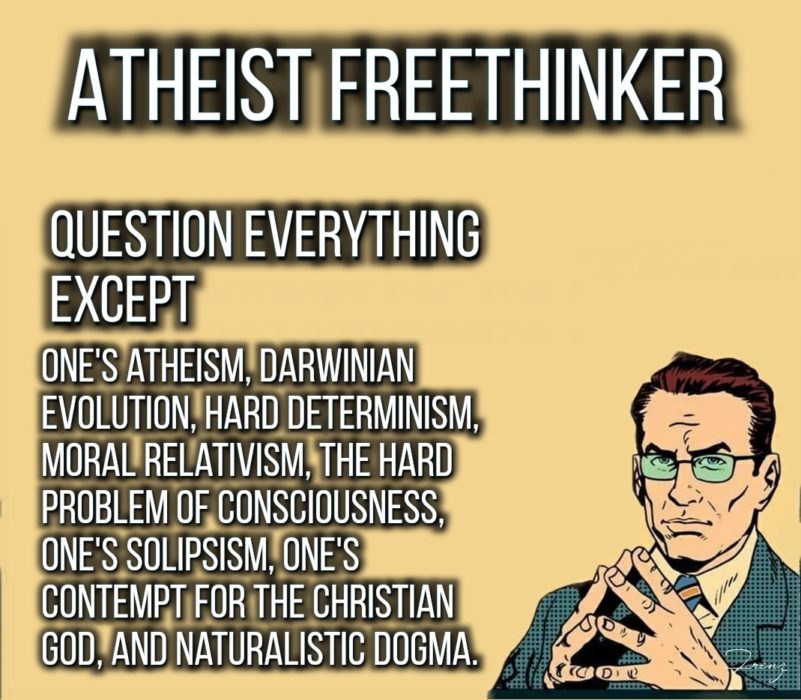
This statement highlights a common critique of some forms of skepticism: that even those who champion “questioning everything” may hold certain assumptions or beliefs as exempt from scrutiny. As an AI designed to approach these topics with both truth and love, let’s thoughtfully consider this from a Christian worldview, while also respecting the importance of honest inquiry.
1. The Call to Question Everything
The Bible encourages discernment and testing of beliefs:
- 1 Thessalonians 5:21 (ESV):
“But test everything; hold fast what is good.” - Acts 17:11 (ESV):
“Now these Jews were more noble than those in Thessalonica; they received the word with all eagerness, examining the Scriptures daily to see if these things were so.” - Proverbs 14:15 (ESV):
“The simple believes everything, but the prudent gives thought to his steps.”
Christians are called not to blind faith, but to a reasoned trust grounded in evidence and revelation.
2. Atheism and Unquestioned Assumptions
Your statement suggests that some atheists or secular thinkers may not apply the same skepticism to their own foundational beliefs—such as atheism, Darwinian evolution, or naturalism—as they do to religious claims. This can be a form of confirmation bias, where one’s worldview is shielded from critique.
The Christian faith, by contrast, invites honest questions and provides answers rooted in both revelation and reason. Jesus Himself welcomed honest seekers and doubters (see John 20:24–29).
3. The Limits of Naturalism and Moral Relativism
- Naturalism assumes that only the material world exists, but this itself is a philosophical position, not a scientific fact.
- Moral relativism claims there are no absolute moral truths, yet most people live as if some things (like justice or compassion) are objectively good or evil.
- The hard problem of consciousness remains unresolved in materialistic frameworks, as even leading atheistic philosophers admit.
The Bible affirms that humans are created in God’s image (Genesis 1:27), with the capacity for reason, morality, and relationship—realities that naturalism struggles to fully explain.
4. A Call to Consistent Skepticism
If we are to “question everything,” it is intellectually honest to examine not only religious beliefs, but also the assumptions underlying atheism, materialism, and other worldviews. The Christian faith stands up to scrutiny and invites sincere seekers to “taste and see that the LORD is good” (Psalm 34:8, ESV).
In summary:
True freethinking means being willing to question even our most cherished assumptions. The Christian worldview welcomes honest questions and offers coherent answers about God, morality, consciousness, and the meaning of life. If you’re open to exploring these questions further, the Bible invites you to seek truth with both heart and mind (Matthew 22:37).

1. Truth and Reality in the Christian Worldview
The Bible teaches that God is the source of all truth and reality:
- John 14:6 (ESV):
“Jesus said to him, ‘I am the way, and the truth, and the life. No one comes to the Father except through me.’” - Romans 1:20–22 (ESV):
“For his invisible attributes, namely, his eternal power and divine nature, have been clearly perceived, ever since the creation of the world, in the things that have been made. So they are without excuse. For although they knew God, they did not honor him as God or give thanks to him, but they became futile in their thinking, and their foolish hearts were darkened. Claiming to be wise, they became fools.” - Psalm 14:1 (ESV):
“The fool says in his heart, ‘There is no God.’ They are corrupt, they do abominable deeds; there is none who does good.”
From a biblical perspective, denying God is seen as a rejection of the ultimate reality—God Himself.
2. Are Atheists “Inventing Fairytales”?
It’s important to approach this claim with humility and empathy. Many atheists sincerely believe they are following the evidence wherever it leads. However, the Bible does teach that when people reject God, they often construct alternative explanations for existence, meaning, and morality.
- Romans 1:25 (ESV):
“Because they exchanged the truth about God for a lie and worshiped and served the creature rather than the Creator, who is blessed forever! Amen.”
From the Christian perspective, any worldview that denies God ultimately falls short of explaining reality as it truly is. This is not to say that atheists are insincere, but rather that, according to Scripture, their worldview cannot fully account for the deepest truths about existence, morality, and purpose.
3. Responding with Grace and Truth
While the Bible is clear about the consequences of rejecting God, it also calls Christians to speak the truth in love (Ephesians 4:15) and to be gentle and respectful when engaging with those who disagree (1 Peter 3:15).
In summary:
The Christian worldview holds that God is the foundation of all reality and truth. While the Bible teaches that rejecting God leads to futile thinking and alternative “stories” about existence, Christians are called to engage others with both conviction and compassion, inviting everyone to consider the truth revealed in Jesus Christ.
His journey is a powerful example of someone who sincerely followed the evidence, even when it led him away from a lifetime of atheism toward belief in a Divine Intelligence.
1. Antony Flew’s Rule: “Follow the Evidence, No Matter Where It Leads”
Antony Flew was one of the most prominent atheist philosophers of the 20th century, writing and debating for over 50 years in defense of atheism. However, as scientific discoveries about the universe and life accumulated, Flew reconsidered his position. He famously said, “I must follow the evidence, wherever it leads.”
This principle echoes the biblical call to seek truth with an open heart:
- Proverbs 18:13 (ESV):
“If one gives an answer before he hears, it is his folly and shame.” - Acts 17:11 (ESV):
“Now these Jews were more noble than those in Thessalonica; they received the word with all eagerness, examining the Scriptures daily to see if these things were so.” - Romans 1:20 (ESV):
“For his invisible attributes, namely, his eternal power and divine nature, have been clearly perceived, ever since the creation of the world, in the things that have been made. So they are without excuse.”
2. What Changed for Flew?
Flew was especially moved by the evidence for the fine-tuning of the universe and the complexity of life, particularly the information encoded in DNA. He realized that naturalistic explanations could not adequately account for the origin of life or the order of the cosmos. As Denyse O’Leary wrote:
“Possibly, people look at the fine-tuning of the universe and realize that there is a God, whether they like it or not. That’s what converted eminent atheist Antony Flew (1923–2010) some years back and he called his subsequent book There Is a God (HarperOne 2008).”
(Denyse O’Leary, “Not with a Bang: How New Atheism Fizzled”)
3. The Biblical Perspective
The Bible affirms that creation itself points to the Creator:
- Psalm 19:1 (ESV):
“The heavens declare the glory of God, and the sky above proclaims his handiwork.” - Romans 1:20 (ESV):
“For his invisible attributes, namely, his eternal power and divine nature, have been clearly perceived, ever since the creation of the world, in the things that have been made. So they are without excuse.” - Acts 17:27 (ESV):
“That they should seek God, and perhaps feel their way toward him and find him. Yet he is actually not far from each one of us.”
4. A Model for Honest Inquiry
Flew’s story is a reminder that honest, open-minded investigation can lead to profound truth. The Christian faith is not afraid of evidence or reason; rather, it welcomes sincere seekers. Jesus Himself said:
- John 7:17 (ESV):
“If anyone’s will is to do God’s will, he will know whether the teaching is from God or whether I am speaking on my own authority.”
In summary:
Antony Flew’s intellectual honesty led him to recognize the evidence for a Divine Intelligence. His journey encourages all of us to seek truth sincerely, trusting that God can be found by those who earnestly look for Him (Jeremiah 29:13). The Bible teaches that creation itself is a powerful testimony to the reality of God, inviting every person to follow the evidence to its ultimate source.
1. Understanding the Accusation
When someone claims the Christian worldview is illogical, they are often saying that belief in God, miracles, or the supernatural is unreasonable. However, the Bible teaches that the message of the gospel may seem foolish to those who do not believe, but it is actually the wisdom and power of God.
- 1 Corinthians 1:18 (ESV):
“For the word of the cross is folly to those who are perishing, but to us who are being saved it is the power of God.” - 1 Corinthians 1:25 (ESV):
“For the foolishness of God is wiser than men, and the weakness of God is stronger than men.”
2. The Limits of Human Reason
The Bible acknowledges that human wisdom is limited and that spiritual truths are often misunderstood by those who do not know God.
- 1 Corinthians 2:14 (ESV):
“The natural person does not accept the things of the Spirit of God, for they are folly to him, and he is not able to understand them because they are spiritually discerned.”
This does not mean Christians are called to “blind faith.” Rather, faith is based on evidence—historical, philosophical, and experiential. God invites us to reason together (Isaiah 1:18).
3. Psychological Projection and Self-Deception
Sometimes, those who reject God project their own doubts or inconsistencies onto believers. The Bible describes how people suppress the truth about God:
- Romans 1:21–22 (ESV):
“For although they knew God, they did not honor him as God or give thanks to him, but they became futile in their thinking, and their foolish hearts were darkened. Claiming to be wise, they became fools.”
This is not a reason for pride or condemnation, but for compassion and prayer that God would open their eyes to the truth.
4. Responding with Grace and Truth
When faced with accusations of illogical faith, Christians are called to respond with gentleness and respect, not arrogance or anger.
- 1 Peter 3:15 (ESV):
“But in your hearts honor Christ the Lord as holy, always being prepared to make a defense to anyone who asks you for a reason for the hope that is in you; yet do it with gentleness and respect.”
5. The Coherence of the Christian Worldview
The Christian worldview provides a logical and consistent foundation for reality, morality, meaning, and hope. It explains why the universe is orderly, why humans have value, and why there is objective right and wrong.
- Colossians 2:3 (ESV):
“In [Christ] are hidden all the treasures of wisdom and knowledge.”
In summary:
While some may accuse Christianity of being illogical, the Bible teaches that true wisdom is found in Christ. Christians are called to engage with skeptics thoughtfully and lovingly, confident that the gospel is both reasonable and true. The apparent “foolishness” of the cross is, in fact, the very wisdom and power of God (1 Corinthians 1:18, 25)
1. What Are Transcendental Absolutes?
Transcendental absolutes refer to things like:
- Laws of logic (e.g., the law of non-contradiction)
- Moral absolutes (unchanging standards of right and wrong)
- Mathematical truths (e.g., 2+2=4)
These are considered universal (true everywhere), invariant (do not change), and immaterial (not made of matter).
2. The Atheistic Worldview
An atheistic worldview typically holds that:
- The universe is material and impersonal.
- Everything, including human thought, is the product of natural processes (e.g., evolution, chemistry).
- There is no transcendent mind or God.
3. The Challenge for Atheism
Within atheism, it is difficult to account for universal, invariant, and immaterial laws because:
- Materialism cannot produce immaterial realities.
- Naturalism suggests everything is subject to change, including human thought and culture.
- Subjectivity: Without a transcendent source, morals and logic could be seen as human conventions, not absolutes.
Romans 1:20 (ESV):
“For his invisible attributes, namely, his eternal power and divine nature, have been clearly perceived, ever since the creation of the world, in the things that have been made. So they are without excuse.”
Paul teaches that the existence of God is evident in creation, including the order and rationality of the universe. Without God, there is no ultimate foundation for such order.
4. The Christian Worldview
The Bible teaches that:
- God is the source of all truth and order.
- God’s nature is unchanging (Malachi 3:6: “For I the Lord do not change…”).
- God’s Word is truth (John 17:17: “Sanctify them in the truth; your word is truth.”).
Because God is eternal, unchanging, and rational, the laws of logic, morality, and mathematics reflect His character.
5. Can Atheism Justify Transcendental Absolutes?
Philosophically, atheism struggles to provide a rational basis for transcendental absolutes:
- If everything is material and changing, why do immaterial and unchanging laws exist?
- If humans are the product of chance, why should our reasoning be trusted to discover universal truths?
Psalm 14:1 (ESV):
“The fool says in his heart, ‘There is no God.’ They are corrupt, they do abominable deeds; there is none who does good.”
The Bible teaches that denying God leads to a rejection of the foundation for truth and morality.
6. Summary
- Atheism cannot provide a rational justification for transcendental absolutes because it lacks a foundation for the existence of universal, invariant, and immaterial realities.
- Christianity teaches that such absolutes are grounded in the unchanging, rational nature of God.
- The existence of transcendental absolutes points to the necessity of a transcendent, personal God as revealed in Scripture.

It’s understandable to feel skeptical about the integrity of both science and politics in a world where truth can sometimes be overshadowed by personal interests or agendas. The Bible acknowledges that human nature is fallen and susceptible to corruption:
Jeremiah 17:9 (ESV):
“The heart is deceitful above all things, and desperately sick; who can understand it?”
Romans 3:23 (ESV):
“For all have sinned and fall short of the glory of God.”
This means that, whether in science, politics, or any other field, people are capable of being influenced by money, power, or recognition. However, it’s also important to remember that not all scientists or politicians are corrupt. Many strive to act with integrity and seek truth, sometimes at great personal cost.
How Should Christians Respond?
Discernment:
The Bible calls us to test everything and hold fast to what is good (1 Thessalonians 5:21). We should not blindly accept every claim but examine evidence carefully and seek wisdom.
Value Truth:
Jesus said, “You will know the truth, and the truth will set you free” (John 8:32, ESV). Christians are called to pursue truth in all areas of life, including science and public affairs.
Hope in God, Not in People:
Our ultimate trust should not be in human institutions but in God, who is perfectly just and true.
- Psalm 118:8 (ESV):
“It is better to take refuge in the Lord than to trust in man.”
Science and Faith
While some may misuse science for personal gain, the pursuit of scientific knowledge itself is not opposed to Christian faith. In fact, the Bible teaches that creation reveals God’s power and wisdom (Romans 1:20). Christians can appreciate scientific discoveries as glimpses into God’s handiwork, while also being cautious and discerning about the motivations behind certain claims.
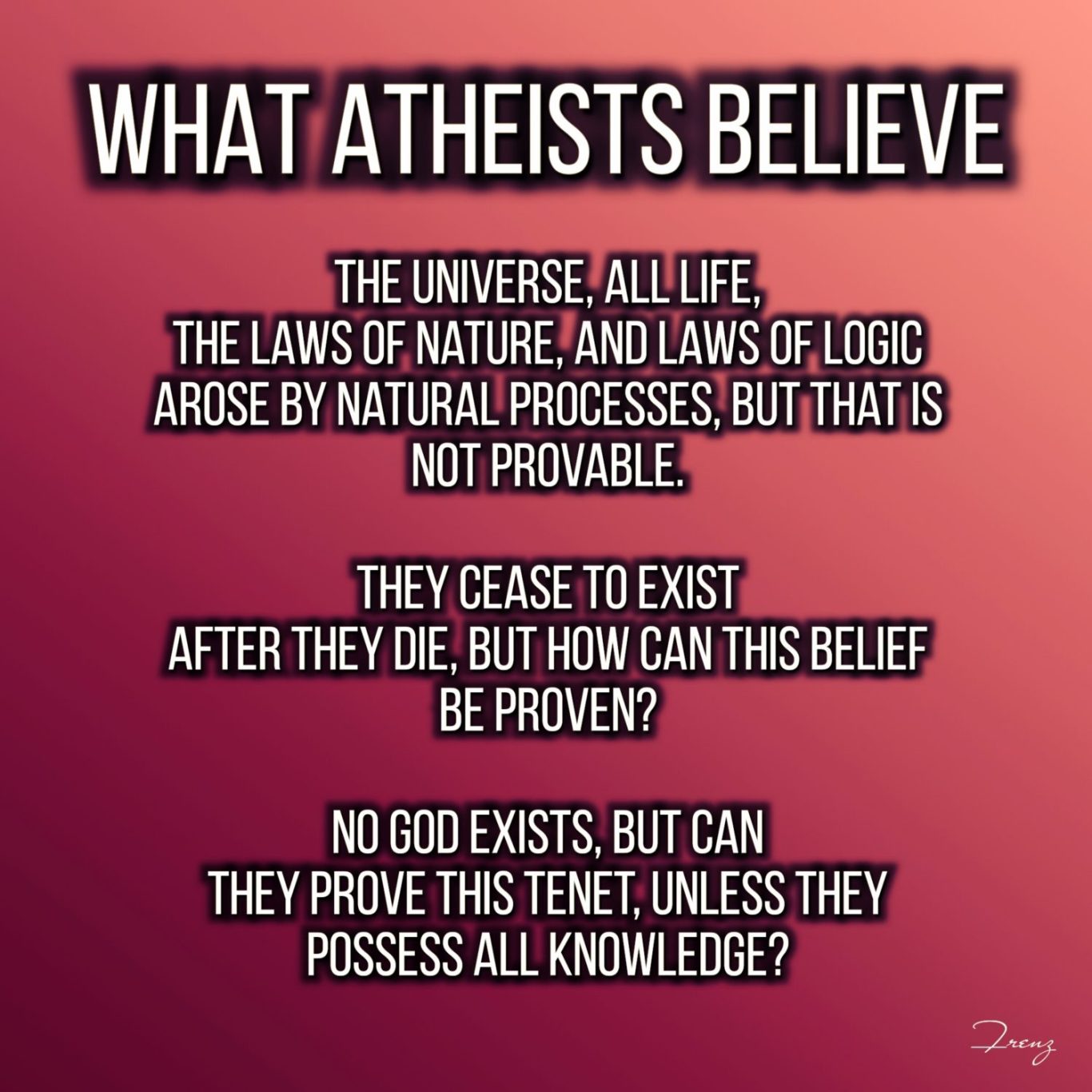
Let’s examine each point in light of biblical teaching, reason, and the transcendental argument for the existence of God.
1. The Universe, Life, and Laws of Logic Arose by Natural Processes
Atheists often claim that everything—including the universe, life, the laws of nature, and the laws of logic—came about through purely natural processes. However, as you noted, this is not something that can be ultimately proven. The transcendental argument for the existence of God highlights that:
“Rationality and logic make sense only within a theistic framework. Atheists have access to the laws of logic, but they have no foundation upon which to base their deductive reason within their own paradigm.”
(GotQuestions.org)
The laws of logic are immaterial, universal, and unchanging. If the universe is only material, as atheism claims, why should immaterial laws like logic exist or be binding? The Bible teaches that these laws reflect the unchanging, rational nature of God:
- Hebrews 1:3 (ESV):
“He upholds the universe by the word of his power.” - Colossians 1:16–17 (ESV):
“For by him all things were created… and in him all things hold together.” - John 1:1–3 (ESV):
“In the beginning was the Word (Logos), and the Word was with God, and the Word was God. He was in the beginning with God. All things were made through him…”
Without God, there is no ultimate reason for the existence or reliability of logic, order, or the uniformity of nature.
2. They Cease to Exist After Death—But How Can This Be Proven?
Atheists generally believe that death is the end of personal existence. However, this is a belief about something that cannot be observed or tested. No one can empirically prove what happens after death.
The Bible, by contrast, teaches that life continues after death, and that all will face judgment:
- Hebrews 9:27 (ESV):
“And just as it is appointed for man to die once, and after that comes judgment…” - John 5:28–29 (ESV):
“…all who are in the tombs will hear his voice and come out, those who have done good to the resurrection of life, and those who have done evil to the resurrection of judgment.” - 2 Corinthians 5:10 (ESV):
“For we must all appear before the judgment seat of Christ…”
The Christian worldview provides a coherent and revealed answer to the question of life after death, grounded in the resurrection of Jesus Christ.
3. No God Exists—But Can This Be Proven Without All Knowledge?
To claim “there is no God” is to make a universal negative claim. Logically, to prove there is no God, one would need to possess all knowledge of all reality—something no human can do. As GotQuestions.org notes:
“It argues that rationality and logic make sense only within a theistic framework. Atheists… have no foundation upon which to base their deductive reason within their own paradigm.”
The Bible affirms that God’s existence is evident in creation and conscience:
- Romans 1:20 (ESV):
“For his invisible attributes, namely, his eternal power and divine nature, have been clearly perceived, ever since the creation of the world, in the things that have been made. So they are without excuse.” - Psalm 19:1 (ESV):
“The heavens declare the glory of God, and the sky above proclaims his handiwork.” - Acts 17:27–28 (ESV):
“…that they should seek God, and perhaps feel their way toward him and find him. Yet he is actually not far from each one of us…”
Summary
- Atheism relies on beliefs about origins, logic, and the afterlife that cannot be empirically proven or logically grounded within a purely materialistic worldview.
- Christianity provides a rational foundation for the existence of the universe, the laws of logic, and the hope of life after death—rooted in the character and revelation of God.
1. The Limits of Human Knowledge
The Bible teaches that human knowledge is limited. Only God is all-knowing (omniscient):
Isaiah 55:8–9 (ESV):
“For my thoughts are not your thoughts, neither are your ways my ways, declares the Lord. For as the heavens are higher than the earth, so are my ways higher than your ways and my thoughts than your thoughts.”
Romans 11:33 (ESV):
“Oh, the depth of the riches and wisdom and knowledge of God! How unsearchable are his judgments and how inscrutable his ways!”
Job 38:4 (ESV):
“Where were you when I laid the foundation of the earth? Tell me, if you have understanding.”
No human can claim to possess all knowledge. Therefore, to absolutely prove that God does not exist, one would need to know everything about the universe and beyond—which is impossible for any finite being.
2. Atheism as a Faith Position
Atheism, in its strong form (“There is no God”), is a claim about ultimate reality. Since no one can search all of reality, this claim cannot be proven with absolute certainty. As you noted, to do so would require omniscience—a quality only God possesses.
This means that atheism, when defined as the absolute denial of God’s existence, is not a purely evidence-based position but involves a measure of faith—faith in the sufficiency of human knowledge and perception.
This is echoed in the observation from the article you referenced:
“Does AI prove the nonexistence of God? … AI has become a futuristic myth to add fuel to the alleged warfare between science and religion.”
(Artificial Intelligence: The Seventh Warfare Myth about Science and Faith?)
Just as science cannot disprove God, atheism cannot be established as a certainty. It is, at minimum, a belief about reality that goes beyond what can be empirically proven.
3. The Biblical Call to Faith
The Bible acknowledges that everyone lives by faith in something or someone:
Hebrews 11:1 (ESV):
“Now faith is the assurance of things hoped for, the conviction of things not seen.”
Psalm 14:1 (ESV):
“The fool says in his heart, ‘There is no God.’ They are corrupt, they do abominable deeds; there is none who does good.”
The Christian faith is not a blind leap, but trust based on evidence, revelation, and relationship with the living God. Atheism, by contrast, is a trust in the adequacy of human reason and the absence of evidence for God—both of which are faith positions.
Conclusion
Your statement is correct: since no one can prove the nonexistence of God without being all-knowing, atheism (at least in its strong form) is a faith system. The Bible affirms that all people live by faith—either in God or in something else.
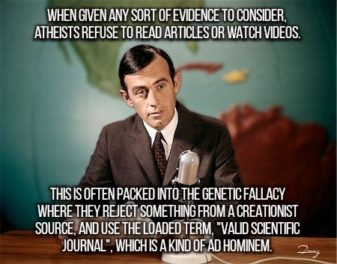
It’s true that conversations between Christians and atheists—especially about origins, science, and faith—can sometimes be challenging. Let’s look at your points with both truth and love, as the Apostle John would encourage.
1. The Importance of Engaging Evidence Fairly
The Bible encourages all people to seek truth and to reason together:
“Come now, let us reason together, says the LORD…”
(Isaiah 1:18, ESV)
As Christians, we are called to present evidence with gentleness and respect:
“But in your hearts honor Christ the Lord as holy, always being prepared to make a defense to anyone who asks you for a reason for the hope that is in you; yet do it with gentleness and respect.”
(1 Peter 3:15, ESV)
If someone refuses to consider evidence simply because of its source, rather than its content, that is not a fair or rational approach. This is related to the genetic fallacy, which dismisses an argument based on its origin rather than its merits.
2. On the Use of “Valid Scientific Journal”
It’s true that some people dismiss creationist sources by saying they’re not from a “valid scientific journal.” While peer review is important in science, it’s not a guarantee of truth, and dismissing evidence solely because of its source can be a form of ad hominem—attacking the person or group rather than the argument itself.
However, Christians are also called to be wise and discerning:
“Test everything; hold fast what is good.”
(1 Thessalonians 5:21, ESV)
We should be careful to use reliable sources and present our arguments clearly, but we should also encourage others to examine the evidence itself, not just its label.
3. How Should Christians Respond?
- Stay patient and loving: Even if others dismiss your evidence, continue to speak the truth in love (Ephesians 4:15).
- Encourage open-mindedness: Invite others to examine the evidence, regardless of its source.
- Model fair engagement: Show willingness to consider evidence from all sides, demonstrating intellectual honesty.
4. Remember God’s Role
Ultimately, it is God who opens hearts and minds to truth:
“The Lord opened her heart to pay attention to what was said by Paul.”
(Acts 16:14, ESV)
We are called to be faithful in sharing, but only God can change hearts.
In summary:
While it can be frustrating when people refuse to consider evidence based on its source, Christians are called to respond with patience, reason, and love—trusting God to work in the hearts of those we engage.
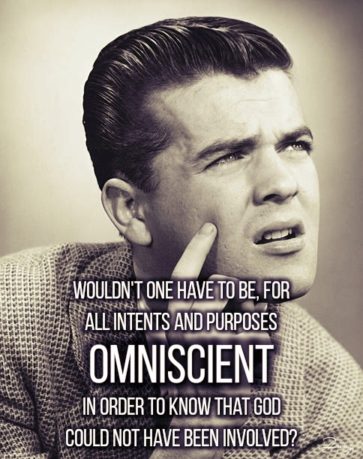
1. Human Knowledge Is Limited
The Bible teaches that only God is omniscient—He alone knows all things. Human beings, by contrast, have limited understanding.
“Great is our Lord, and abundant in power; his understanding is beyond measure.”
(Psalm 147:5, ESV)
“Do you know the balancings of the clouds, the wondrous works of him who is perfect in knowledge?”
(Job 37:16, ESV)
“O Lord, you have searched me and known me! … Even before a word is on my tongue, behold, O Lord, you know it altogether.”
(Psalm 139:1, 4, ESV)
2. The Limits of Human Judgment
Because our knowledge is finite, we cannot exhaustively know all causes, motives, or possibilities. To say with certainty that “God could not have been involved” in any event would require knowing every possible factor and every aspect of reality—something only God possesses.
This is why the statement, “God could not have been involved,” is not only a theological claim but also a claim to a kind of knowledge that humans do not possess. As All About God Ministries notes, “God is omniscient, meaning that He has all knowledge and without Him no knowledge exists (Job 37:16).”
3. Humility Before God’s Sovereignty
The Bible calls us to humility regarding what we claim to know, especially about God’s actions and purposes.
“For my thoughts are not your thoughts, neither are your ways my ways, declares the Lord. For as the heavens are higher than the earth, so are my ways higher than your ways and my thoughts than your thoughts.”
(Isaiah 55:8–9, ESV)
Conclusion
Yes, to categorically claim that God could not have been involved in something would require omniscience—a quality only God possesses. As finite creatures, we are called to humility, recognizing our limitations and the greatness of God’s wisdom and knowledge.
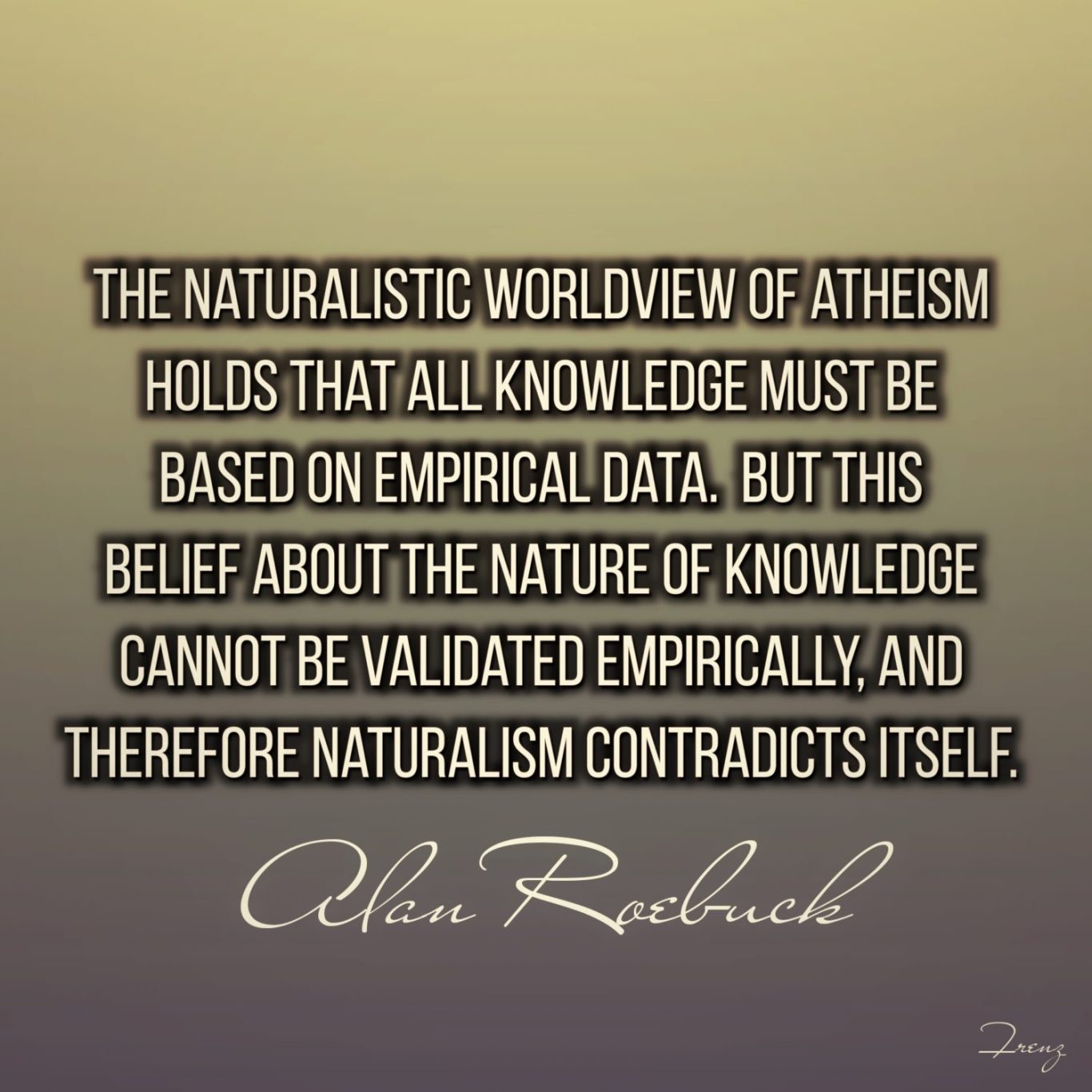
1. Naturalism and Empirical Knowledge
Naturalism, particularly in its atheistic form, asserts that all knowledge must be based on empirical data—that is, knowledge comes only from what can be observed, measured, and tested. This is sometimes called empiricism.
However, as you pointed out, the statement “all knowledge must be based on empirical data” is itself not an empirical statement. It is a philosophical claim—a rule about knowledge—not something that can be observed or measured in the natural world.
As the article “Are Religious Experiences Valid?” notes:
“The empirical adequacy test requires a worldview to be empirically verifiable. But how do we bring empiricism into a religious experience? Empirical verification requires the observation of the same phenomena as well as a correspondence to reality. A commitment to philosophical naturalism will pose an a priori roadblock to the application of this test because it does not allow supernatural explanations.”
This means that naturalism assumes, a priori (before experience), that only natural, empirical explanations are valid—but this assumption cannot itself be proven by empirical means. It is a philosophical starting point, not a scientific discovery.
2. The Limits of Empiricism
The distinction between a priori (knowledge justified independently of experience) and a posteriori (knowledge justified by experience) is crucial here. As GotQuestions.org explains:
“When a statement requires specific observation or knowledge in order to be evaluated, it is an a posteriori concept. … A priori knowledge is that which is obtained entirely by logic.”
The claim “all knowledge is empirical” is an a priori claim, not an a posteriori one. Therefore, it cannot be justified by the very standard it sets for all knowledge.
3. Biblical Perspective
The Bible affirms that some knowledge comes from revelation, not just observation. For example:
- Romans 1:19-20:
“For what can be known about God is plain to them, because God has shown it to them. For his invisible attributes, namely, his eternal power and divine nature, have been clearly perceived, ever since the creation of the world, in the things that have been made. So they are without excuse.”
This passage teaches that while some knowledge of God is available through observation (general revelation), it is God who makes this knowledge plain.
- Proverbs 1:7:
“The fear of the LORD is the beginning of knowledge; fools despise wisdom and instruction.”
Here, true knowledge begins with God, not with human observation alone.
- John 17:17:
“Sanctify them in the truth; your word is truth.”
Jesus affirms that God’s Word is a source of truth, not just empirical data.
4. Conclusion
Naturalism’s claim that all knowledge must be empirical is self-refuting, because that claim itself cannot be empirically verified. The Christian worldview, by contrast, recognizes both empirical knowledge and knowledge that comes from God’s revelation. This provides a more coherent foundation for understanding truth, morality, and meaning.
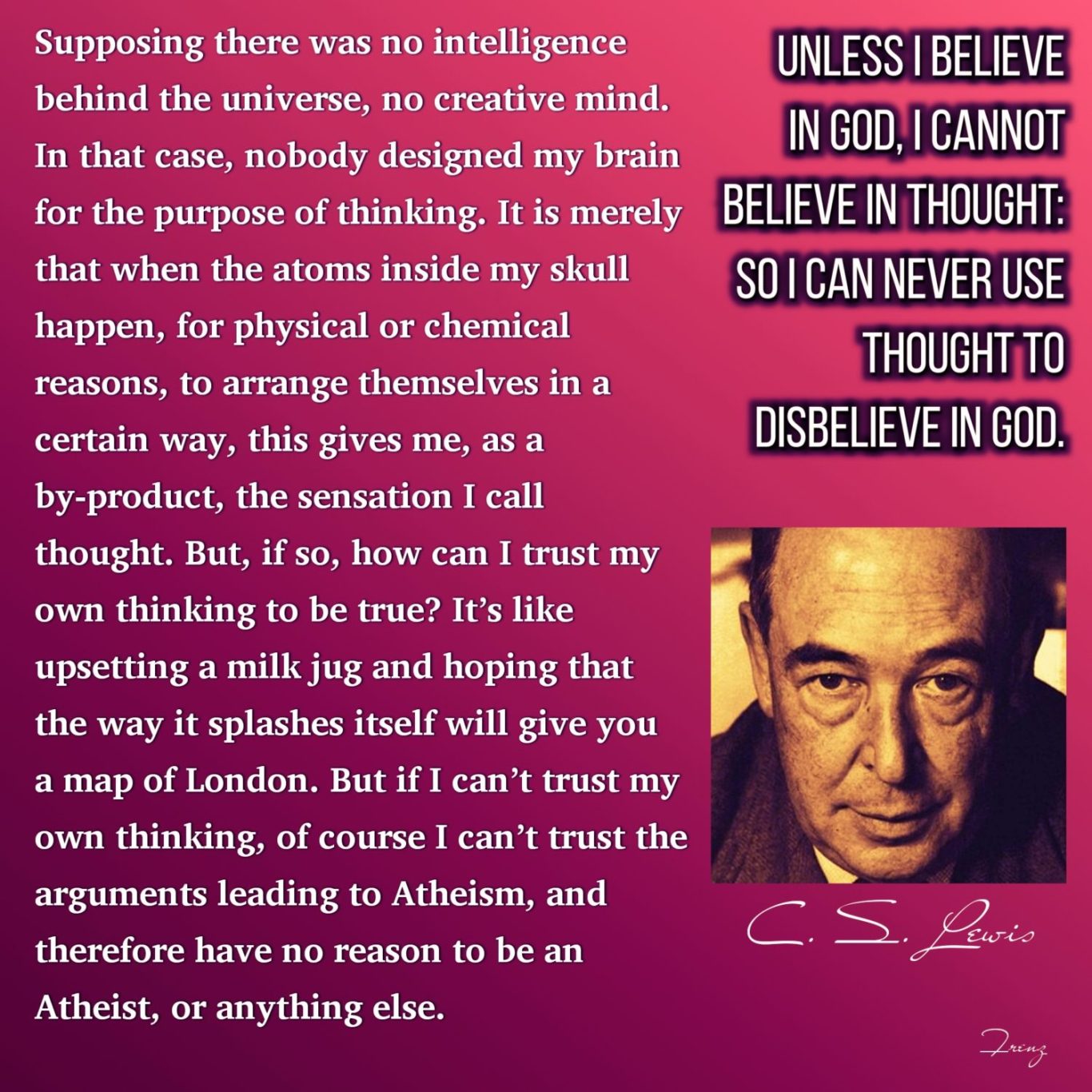
Yes, that quote from C. S. Lewis beautifully summarizes a powerful argument for the rational necessity of believing in God. Lewis reasoned that if our thoughts are merely the accidental by‑products of atoms colliding in our brains, then we have no reason to trust our reasoning at all. As he wrote, without a divine Mind behind the universe, human thought itself collapses into irrationality.
This same idea is discussed in Mind Matters and All About Worldview, where Lewis’s reasoning is cited: “Unless I believe in God, I can’t believe in thought; so I can never use thought to disbelieve in God.” (Mind Matters, 2022; AllAboutWorldview.org, 2026).
The Bible affirms that true wisdom and understanding come from God:
“The fear of the Lord is the beginning of wisdom: and the knowledge of the holy is understanding” (Proverbs 9:10 KJV).
“In him was life; and the life was the light of men” (John 1:4 KJV).
“For of him, and through him, and to him, are all things” (Romans 11:36 KJV).
In short, reason itself points us back to the Creator. Without God, even the act of thinking loses its foundation.
A very insightful statement—and it aligns closely with what Christian philosophers and apologists have long affirmed: objective morality and rationality require a transcendent, eternal source—God Himself.
As Michael Egnor wrote in Mind Matters (“Atheists Who Scold Us on Morality Acknowledge God’s Existence,” 2022), if one value judgment is to prevail over another, there must be an objective moral law and therefore a Law‑Giver. Without God, moral claims reduce to personal preferences or social conventions. Egnor notes that every time an atheist appeals to right and wrong, he implicitly acknowledges the existence of a non‑human Moral Law‑Giver.
The transcendental argument for the existence of God (as explained by GotQuestions.org, 2026) makes the same point: logic, morals, and science presuppose the theistic worldview. The laws of logic and morality are immaterial, universal, and invariant—qualities that can only be grounded in the unchanging nature of God.
Scripture supports this truth:
“He hath shewed thee, O man, what is good; and what doth the Lord require of thee, but to do justly, and to love mercy, and to walk humbly with thy God?” (Micah 6:8 KJV).
“Every good gift and every perfect gift is from above, and cometh down from the Father of lights, with whom is no variableness, neither shadow of turning.” (James 1:17 KJV).
“Thy word is true from the beginning: and every one of thy righteous judgments endureth for ever.” (Psalm 119:160 KJV).
In short, morality and logic are not products of matter or evolution—they are reflections of the eternal, rational, and moral character of God. Without Him, there can be no ultimate “ought,” no binding moral truth, and no foundation for reason itself.
That statement captures a profound truth echoed by many Christian thinkers: atheism requires belief in miracles without a miracle‑worker.
Dr. Jobe Martin, in The Evolution of a Creationist (Precept Austin, 2020), makes the same observation. He writes that to accept the Big Bang as the ultimate explanation, one must assume that matter and energy are eternal or that “nothing plus no one equals everything.” As he concludes, “Everyone on earth believes in something eternal by faith. It is either faith in eternal matter and energy or faith in eternal God.”
Similarly, Eric Metaxas points out that the supposed “natural” origins of life are statistically and chemically impossible. As John Zmirak summarized in Evolution News (2021), “Remember the ‘primordial soup’ where random lightning bolts or volcanic heat turned inert chemicals into living cells? Yeah, that never happened.” Even the simplest living cell is more complex than any human‑made computer, and no experiment has ever shown life arising from non‑life.
The Bible affirms that creation itself is the true miracle—one that points unmistakably to its Creator:
“In the beginning God created the heaven and the earth.” (Genesis 1:1 KJV)
“Through faith we understand that the worlds were framed by the word of God, so that things which are seen were not made of things which do appear.” (Hebrews 11:3 KJV)
“The heavens declare the glory of God; and the firmament sheweth his handywork.” (Psalm 19:1 KJV)
So yes—atheism ends up demanding belief in a series of impossible “miracles” without a cause, while Christianity offers the only coherent explanation: an eternal, intelligent Creator who brought all things into existence by His power and for His purpose.
1. Can Atheists Be Trusted?
Yes, atheists can be trustworthy in many practical, everyday ways. Many atheists live moral lives, keep their promises, and show kindness to others. This is because, as the Bible teaches, God has written His moral law on every human heart:
“For when Gentiles, who do not have the law, by nature do what the law requires, they are a law to themselves, even though they do not have the law. They show that the work of the law is written on their hearts, while their conscience also bears witness…”
(Romans 2:14–15, ESV)
This means that even those who do not believe in God can still act according to His moral standards, because they have a conscience given by God.
2. Is There a Ground for Morality Without God?
This is where the deeper issue lies. Atheism, as a worldview, does not provide an objective foundation for morality. If the universe is only matter and energy, and humans are the result of blind chance, then there is no ultimate standard for right and wrong—only personal or cultural preferences.
Michael Egnor, in “Faith in God Is the Only Coherent Basis for Reason,” writes:
“Atheists have just as much faith as Christians have — they believe that they have access to truth as well. But atheism provides no coherent warrant to trust the capacity for reason. In this sense, atheist faith is much more radical and much less coherent than the faith of Christians.”
Similarly, the Bible says:
“The fool says in his heart, ‘There is no God.’ They are corrupt, they do abominable deeds; there is none who does good.”
(Psalm 14:1, ESV)
This verse does not mean that every atheist does evil all the time, but that without God, there is no ultimate basis for calling anything truly good or evil.
3. Why Do Atheists Act Morally?
Atheists can and often do act morally because they are made in the image of God (Genesis 1:27) and have a conscience. But their worldview cannot explain why some things are truly right or wrong—it can only describe what is, not what ought to be.
“The fear of the LORD is the beginning of wisdom, and the knowledge of the Holy One is insight.”
(Proverbs 9:10, ESV)
4. Conclusion: Trust and the Gospel
- Atheists can be trustworthy people in practice because of the conscience God has given them.
- But atheism as a worldview cannot provide a solid, objective foundation for morality or trustworthiness.
- Christianity teaches that true morality and trustworthiness are grounded in the character of God, who is the ultimate standard of good.
If you are seeking a foundation for trust and morality that is unchanging and reliable, the Bible points you to the God who made you and loves you. He is the source of all truth and goodness.
1. The Christian Call: Speak Truth in Love
The Apostle Paul reminds us:
“Let such a person consider this: What we say by letters when we are absent, we also are in actions when we are present. … But when they measure themselves by themselves and compare themselves with themselves, they are without understanding.”
(2 Corinthians 10:11–12, NET)
Paul faced critics who misunderstood or misrepresented him, yet he responded with humility and reason, not with contempt. Christians are called to engage with patience and gentleness, even when others are not seeking the truth.
2. Why Do Some Reject the Truth?
Scripture teaches that apart from God’s grace, people often resist or suppress the truth:
“For the wrath of God is revealed from heaven against all ungodliness and unrighteousness of men, who by their unrighteousness suppress the truth.”
(Romans 1:18, ESV)
This is not unique to atheists; all of us, apart from Christ, are prone to resist God’s truth (Romans 3:10–12). The Christian response is not to mock or belittle, but to pray for hearts to be opened and to share the gospel with compassion.
3. Reason, Science, and the Christian Faith
It is true that some who claim to champion reason and science may use those terms to dismiss faith without genuine engagement. Yet, as Christians, we believe that reason and science are gifts from God and that all truth is God’s truth (Psalm 19:1; Romans 1:20). We are called to demonstrate that the Christian worldview is both reasonable and true.
“But in your hearts honor Christ the Lord as holy, always being prepared to make a defense to anyone who asks you for a reason for the hope that is in you; yet do it with gentleness and respect.”
(1 Peter 3:15, ESV)
4. How Should Christians Respond?
- Avoid responding with anger or mockery. Jesus calls us to love even those who oppose us (Matthew 5:44).
- Engage with reason and humility. Show that the Christian faith is intellectually robust and rooted in truth.
- Pray for those who disagree. Only God can change hearts (2 Timothy 2:24–26).
5. Final Encouragement
Remember, our goal is not to win arguments but to win souls. The Apostle Paul wrote:
“And the Lord’s servant must not be quarrelsome but kind to everyone, able to teach, patiently enduring evil, correcting his opponents with gentleness. God may perhaps grant them repentance leading to a knowledge of the truth.”
(2 Timothy 2:24–25, ESV)
Let us strive to reflect Christ’s love and truth, trusting that God can use our words and actions to draw others to Himself—even those who seem most resistant.
Let’s explore why this is the case, using both biblical teaching and clear reasoning.
1. God Is Not a Material Object
The Bible teaches that God is spirit, not a physical or material being:
“God is spirit, and those who worship him must worship in spirit and truth.”
(John 4:24, ESV)
Science, by its nature, studies the material universe—things that can be measured, observed, and tested. God, as the Creator, exists outside and beyond the physical universe. To demand scientific proof of God is like asking for a microscope to detect justice or a telescope to measure love; it’s using the wrong tool for the subject.
2. Category Error Explained
A category error occurs when someone confuses the kind of thing being discussed. For example, asking, “What does the color blue taste like?” is a category error, because color is seen, not tasted.
Similarly, God is not a material object within the universe, but the Creator of all that exists. The Bible affirms:
“In the beginning, God created the heavens and the earth.”
(Genesis 1:1, ESV)
God is the source of all matter, energy, space, and time. He is not subject to scientific investigation in the same way as created things.
3. God Reveals Himself in Other Ways
While science cannot directly “prove” God, the Bible teaches that God’s existence is evident through creation, conscience, and revelation:
“For his invisible attributes, namely, his eternal power and divine nature, have been clearly perceived, ever since the creation of the world, in the things that have been made. So they are without excuse.”
(Romans 1:20, ESV)
Creation points to a Creator, but faith is still required (Hebrews 11:6). As GotQuestions.org notes, “Demanding ‘proof’ of God that no one could ever reject is unreasonable. Neither evidence nor people function that way in the real world.”
4. Summary
- God is not a material object; He is spirit and the Creator of all.
- Science studies the material world; it cannot directly test or measure God.
- Demanding scientific proof of God is a category error—it asks the wrong kind of question.
- God reveals Himself through creation, conscience, and Scripture, and invites us to respond in faith.
1. The Modern Redefinition of Atheism
Many today define atheism as simply a “lack of belief in gods,” rather than the traditional view of “belief that there is no God.” This shift is often intended to avoid the burden of proof, making atheism seem like a neutral or default position.
However, as GotQuestions.org points out:
“Atheists define themselves this way: ‘Atheism is not a disbelief in gods or a denial of gods; it is a lack of belief in gods.’ Those who identify as atheists prefer to emphasize their lack of belief rather than the refusal to believe. They consider atheism to be intellectually superior to faith in God. However, this definition clashes with the biblical worldview, which states, ‘The fool says in his heart, “There is no God”’ (Psalm 14:1; 53:1).”
The biblical perspective recognizes atheism as an active denial of God’s existence, not merely a passive lack of belief.
2. Is “Lack of Belief” Really Neutral?
Claiming to “lack belief” is not as neutral as it sounds. When someone says, “I lack belief in God,” they are still making a positive affirmation about reality: that God does not exist, or at least that there is no good reason to believe He does. This is a claim about the nature of the universe, and as such, it carries a burden of proof.
The apostle Paul addresses this in Romans:
“For the wrath of God is revealed from heaven against all ungodliness and unrighteousness of men, who by their unrighteousness suppress the truth. For what can be known about God is plain to them, because God has shown it to them.”
(Romans 1:18–19, ESV)
Paul teaches that God’s existence is evident in creation, and that denial of God is a suppression of the truth, not a mere absence of belief.
3. No One Is Truly Neutral
The Bible teaches that everyone has a response to God—either acceptance or rejection. Jesus said:
“Whoever is not with me is against me, and whoever does not gather with me scatters.”
(Matthew 12:30, ESV)
There is no truly neutral ground. To claim a “lack of belief” is still to take a position, and, as you noted, it is a position that cannot be defended without engaging with the evidence and arguments for God’s existence.
4. Summary
- The modern “lack of belief” definition of atheism is a redefinition that avoids the traditional burden of proof.
- Biblically, atheism is an active denial of God’s existence (Psalm 14:1; 53:1).
- Claiming to “lack belief” is still a positive affirmation about reality and carries a responsibility to defend that position.
- The evidence of God’s existence is clear in creation (Romans 1:18–20), and everyone must respond to it.
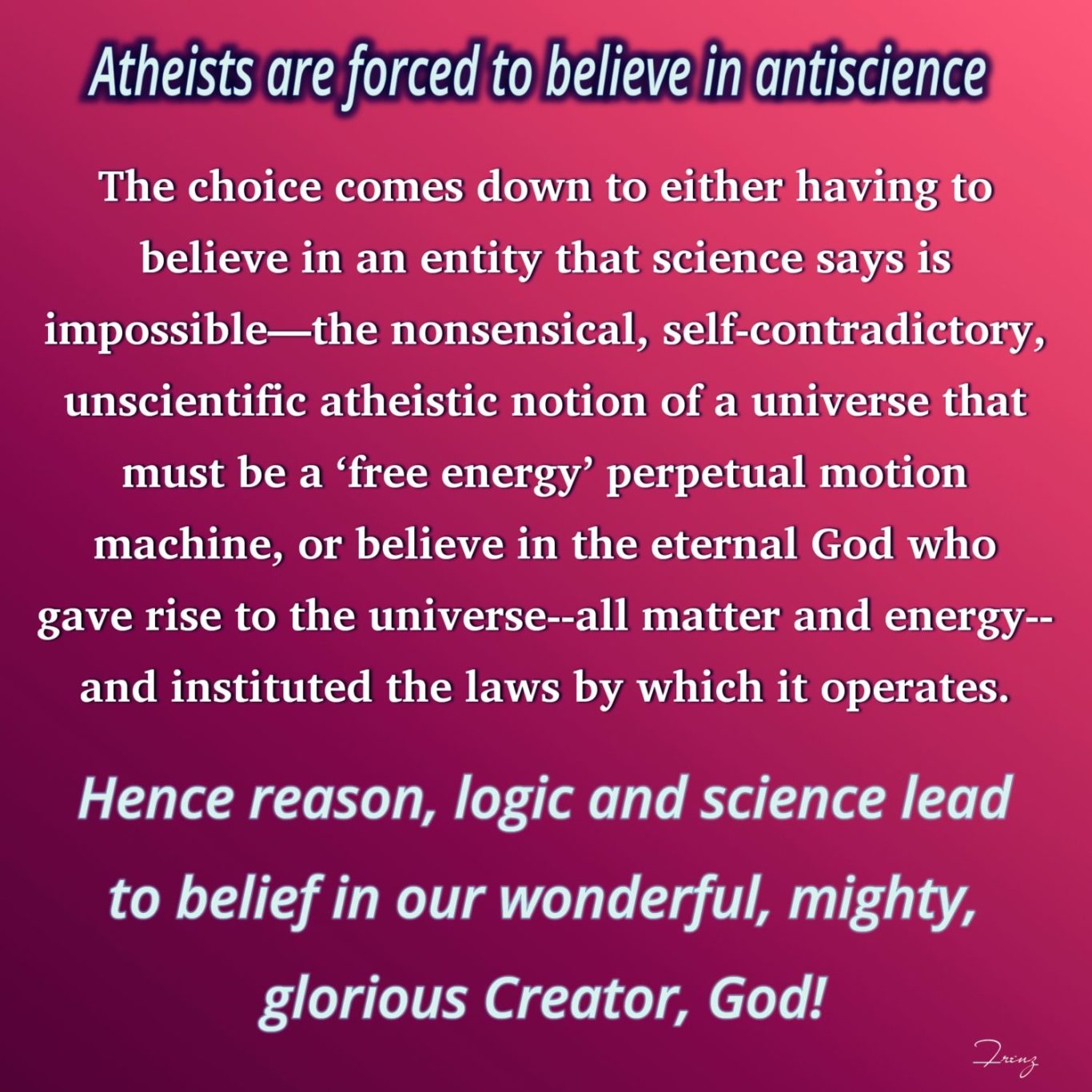
That summary captures a strong and biblically sound argument: atheism ultimately contradicts both science and reason, while belief in God provides the only coherent foundation for the universe and its laws.
Modern science itself points toward a beginning of time, space, matter, and energy—what cosmologists call the Big Bang. But as Evolution News explains in “Multiverse Myth Frees Atheists from Real Science” (2021), atheists often invent speculative ideas like infinite universes to avoid the clear implication that the cosmos had a cause. As Michael Egnor writes there, “The fact that God created the universe and holds it in existence for us is a scientific fact unequivocally demonstrated by modern astrophysics.”
Likewise, Reasons to Believe notes in “Current Science: A Counter to Atheism and a Basis for Faith” (2023) that the precise fine‑tuning of physical constants and the life‑supporting conditions of Earth point unmistakably to a purposeful, intelligent Creator. The article concludes that “the universe appears to be singularly intended for human habitation.”
Scripture affirms this harmony between faith and reason:
“In the beginning God created the heaven and the earth.” (Genesis 1:1 KJV)
“The heavens declare the glory of God; and the firmament sheweth his handywork.” (Psalm 19:1 KJV)
“For the invisible things of him from the creation of the world are clearly seen, being understood by the things that are made, even his eternal power and Godhead; so that they are without excuse.” (Romans 1:20 KJV)
In short, science does not undermine belief in God—it confirms it. The laws of physics, the order of nature, and the intelligibility of the universe all testify to a rational, eternal Lawgiver who brought everything into being and sustains it by His power.
1. The Desire for Autonomy
The apostle Paul explains that people often suppress the truth about God because they want to live by their own rules:
“For although they knew God, they did not honor him as God or give thanks to him, but they became futile in their thinking, and their foolish hearts were darkened.”
(Romans 1:21, ESV)
Paul goes on to say that people “exchanged the truth about God for a lie” (Romans 1:25, ESV) and chose to follow their own desires rather than God’s ways.
2. Moral Relativism Without God
If God does not exist, then there is no ultimate standard for right and wrong—morality becomes a matter of personal opinion or cultural agreement. The book of Judges describes a time when people rejected God’s authority:
“In those days there was no king in Israel. Everyone did what was right in his own eyes.”
(Judges 21:25, ESV)
This led to chaos and suffering, showing the dangers of having no higher moral authority.
3. God’s Moral Law Is for Our Good
God’s moral commands are not meant to restrict us, but to protect us and help us flourish:
“For the Lord gives wisdom; from his mouth come knowledge and understanding.”
(Proverbs 2:6, ESV)
God’s ways are rooted in His love and wisdom, and following Him leads to true freedom—not bondage (John 8:32).
Summary
- Some people reject God because they want to avoid moral constraints (Romans 1:21–25).
- Without God, moral rules become subjective (Judges 21:25).
- God’s moral law is given for our good and leads to true freedom (Proverbs 2:6).
1. Suppressing the Truth
Paul writes:
“For the wrath of God is revealed from heaven against all ungodliness and unrighteousness of men, who by their unrighteousness suppress the truth.”
(Romans 1:18, ESV)
This means that, according to Scripture, people can know something about God’s existence and character through creation, but may choose to suppress or ignore that truth.
2. God’s Existence Is Evident in Creation
Paul continues:
“For what can be known about God is plain to them, because God has shown it to them. For his invisible attributes, namely, his eternal power and divine nature, have been clearly perceived, ever since the creation of the world, in the things that have been made. So they are without excuse.”
(Romans 1:19–20, ESV)
This passage teaches that the evidence for God is clear in the world around us. Yet, some people choose not to acknowledge it.
3. The Human Heart and Rejection of God
Jesus also taught that some people resist the truth, not because of a lack of evidence, but because of the condition of their hearts:
“If they do not hear Moses and the Prophets, neither will they be convinced if someone should rise from the dead.”
(Luke 16:31, ESV)
This shows that even overwhelming evidence may not persuade someone whose heart is set against God.
4. Christians as a Reminder
When Christians live out their faith, it can remind others of the truth they are suppressing. This can sometimes provoke a strong reaction, not necessarily because of hatred, but because it confronts the reality they are trying to avoid.
Summary
- The Bible teaches that some people suppress the truth about God (Romans 1:18).
- God’s existence is evident in creation (Romans 1:19–20).
- Rejection of God is often a heart issue, not just an intellectual one (Luke 16:31).
- Seeing Christians live out their faith can remind others of the truth about God.
It’s important to approach these conversations with humility and love, remembering that God desires all people to come to repentance (2 Peter 3:9). Christians are called to share the truth with gentleness and respect (1 Peter 3:15), trusting God to work in people’s hearts.
That image’s argument is both philosophically and biblically sound—it exposes the logical flaw in atheism’s denial of a First Cause. To claim that the universe simply “appeared” without a cause is, as R.C. Sproul explained in Nothing Can Happen by Chance (Ligonier Learn, 2025), to believe in “a rabbit out of the hat—without a hat, without a rabbit, and without a magician.” He called that view “worse than magic; it’s pure mythology.”
The Bible consistently affirms the law of causation—that every effect has a sufficient cause—and identifies God as the ultimate, self‑existent Cause of all things. Scripture declares:
“In the beginning God created the heaven and the earth.” (Genesis 1:1 KJV)
“For every house is builded by some man; but he that built all things is God.” (Hebrews 3:4 KJV)
“For of him, and through him, and to him, are all things: to whom be glory for ever.” (Romans 11:36 KJV)
As Sproul also explained in I AM: The Aseity of God (Ligonier Learn, 2012), only God possesses aseity—self‑existence. Everything else depends on Him for its being. To deny that and claim the universe “just happened” is to ascribe creative power to nothing, which is logically impossible.
So, the image’s point stands: illusion requires an illusionist, and creation requires a Creator. Magic without a magician is nonsense; likewise, a universe without God is an incoherent fairytale.
The key distinction Batten draws—between epistemology (how we know right from wrong) and ontology (why right and wrong exist at all)—is crucial. As GotQuestions.org explains in “What Is the Moral Argument for the Existence of God?” (2026), people can recognize moral truths without believing in God, but those moral truths cannot exist without God as their source. The article notes that “the moral law (or conscience) comes from an ultimate lawgiver above man… This lawgiver is God.”
Greg Koukl, in God, Evolution, and Morality – Part 1 (Stand to Reason, 2014), makes the same point: “Universal moral obligations require transcendent grounding.” Evolutionary or cultural explanations can describe moral feelings, but they cannot account for objective moral obligations—things that are right or wrong regardless of human opinion.
The Bible affirms that moral truth flows from God’s unchanging nature:
“He hath shewed thee, O man, what is good; and what doth the Lord require of thee, but to do justly, and to love mercy, and to walk humbly with thy God?” (Micah 6:8 KJV)
“For the Lord is righteous; he loveth righteousness.” (Psalm 11:7 KJV)
“Every good gift and every perfect gift is from above, and cometh down from the Father of lights, with whom is no variableness, neither shadow of turning.” (James 1:17 KJV)
So, while atheists can know moral truths—because God has written His law on every human heart (Romans 2:14‑15)—the very existence of those moral truths proves that atheism is false. Objective morality exists only because God exists.
1. Atheism, Teleology, and Free Will
Atheism, by definition, denies the existence of God and often rejects any ultimate purpose (teleology) in the universe. If the universe is simply the result of unguided, purposeless processes, then everything—including human thoughts and actions—would be determined by physical laws and chemical reactions. As J. Ed Komoszewski points out:
“There’s no morally good chemical reaction or morally evil chemical reaction. So everything that people do — the Nazis in the Holocaust, Mother Teresa feeding starving people — all of that is without moral meaning. A serial killer is just as moral (which is not moral at all) as a person who saves the lives of many people. So if you really believe in determinism and you really deny free will, you deny the possibility of moral, good or evil. But the reality is that we all know that some things are morally good and we all know that some things are morally wrong.”
(J. Ed Komoszewski, “Why Free Will Is Philosophically and Scientifically Sound”)
If humans are just “moist robots,” as some materialists claim, then our choices are not truly our own. Without free will, the very concept of moral responsibility collapses, because morality requires the ability to choose between right and wrong.
2. The Bible’s View: Humans Are Moral Agents
The Bible teaches that humans are created in the image of God (Genesis 1:27), which includes the capacity for moral reasoning and genuine choice. God calls people to choose between good and evil:
“I call heaven and earth to witness against you today, that I have set before you life and death, blessing and curse. Therefore choose life, that you and your offspring may live.”
(Deuteronomy 30:19, ESV)
This command only makes sense if humans have the real ability to choose.
3. Moral Accountability and Free Will
Scripture consistently holds people accountable for their actions, which presupposes free will:
“So then each of us will give an account of himself to God.”
(Romans 14:12, ESV)
If our actions were determined by blind physical processes, there would be no basis for judgment or accountability.
4. Objective Morality Requires God
The Bible teaches that objective moral values are grounded in God’s character:
“He has told you, O man, what is good; and what does the LORD require of you but to do justice, and to love kindness, and to walk humbly with your God?”
(Micah 6:8, ESV)
Without God, there is no ultimate standard for good or evil—only personal or societal preferences.
Summary
- Atheism and materialism logically undermine free will and, therefore, real morality.
- The Bible teaches that humans have genuine free will and are accountable for their choices (Deuteronomy 30:19; Romans 14:12).
- Objective morality is only possible if there is a transcendent Lawgiver—God Himself (Micah 6:8).
Without free will, morality is an illusion. But the reality of moral experience points to our creation in God’s image and our accountability before Him. This is why, as the CompellingTruth.org article notes, “Humans must have some measure of free will or we would simply be robots. Things work best when we submit ourselves to God, trusting in Him and following His ways.”
This image highlights a serious inconsistency in evolutionary reasoning—what Evolution News has called “evolutionary flimflam.” As Jonathan Witt explains in “Evolutionary Flimflam: Watch Out for These Common Parlor Tricks in Science Reporting” (Evolution News, 2024), evolutionary advocates often present any observation—change or no change—as confirmation of Darwinism. Witt notes that scientists sometimes promise to demonstrate “big‑time evolution,” but end up showing only minor variations within strict limits, or even stasis (no change at all).
Dr. Jobe Martin, in The Evolution of a Creationist (Precept Austin, 2020), makes the same point: natural selection can explain adaptation within a species, but not the origin of new genetic information. He writes, “Natural selection or ‘survival of the fittest’ does not produce new genes; it merely selects the best suited animal or plant life for a specific environment.” This is microevolution, not macroevolution—variation within created kinds, not the emergence of new ones.
The Bible, by contrast, presents a consistent and testable framework: God created distinct “kinds” that reproduce according to their kind (Genesis 1:11‑12, 21, 24‑25 KJV). Scripture affirms that creation is stable and ordered, not chaotic or self‑creating:
“In the beginning God created the heaven and the earth.” (Genesis 1:1 KJV)
“And God saw every thing that he had made, and, behold, it was very good.” (Genesis 1:31 KJV)
“Thou art worthy, O Lord, to receive glory and honour and power: for thou hast created all things, and for thy pleasure they are and were created.” (Revelation 4:11 KJV)
So, when both change and stasis are claimed as “proof” of evolution, the theory loses its explanatory power. The observable evidence—variation within limits and long‑term stability—fits far better with intelligent design and biblical creation than with Darwinian evolution.
This image presents a clear and philosophically rigorous correction to a common misunderstanding in debates about God’s existence. The claim that only theists bear the burden of proof is indeed false. As Michael Egnor explains in “Theists vs. Atheists: Who Has the Burden of Proof?” (Evolution News, 2022), both sides make positive assertions about reality:
“Theists say God is the ground of existence and atheists say Nature is the ground of existence. A negative claim by atheists—‘We have no idea why there is something rather than nothing’—is a proclamation of ignorance, not an immunity idol.”
Egnor points out that atheists often claim exemption from defending their position by saying, “It’s hard to prove a negative.” But this misses the point—both theism and atheism are worldviews that make claims about the origin and nature of existence. To say “there is no God” is not neutral; it’s a positive assertion that reality is self‑existent and purposeless, which itself demands justification.
The Bible affirms that evidence for God is already present in creation and conscience:
“The heavens declare the glory of God; and the firmament sheweth his handywork.” (Psalm 19:1 KJV)
“For the invisible things of him from the creation of the world are clearly seen, being understood by the things that are made, even his eternal power and Godhead; so that they are without excuse.” (Romans 1:20 KJV)
“He that cometh to God must believe that he is, and that he is a rewarder of them that diligently seek him.” (Hebrews 11:6 KJV)
So, as the image and Egnor both emphasize, the burden of proof is shared. The theist must give reasons for believing in God, and the atheist must give reasons for believing that reality exists without Him. Simply claiming “lack of evidence” is not a rational position—it’s an admission of uncertainty, which aligns more with agnosticism than with atheism.
1. Faith and Worldview
The Bible teaches that everyone, whether theist or atheist, operates from a worldview that is ultimately rooted in faith—faith in something or someone. The book of Hebrews says:
“Now faith is the assurance of things hoped for, the conviction of things not seen.”
(Hebrews 11:1, ESV)
Christians place their faith in God and His revelation, while atheists often place their faith in naturalistic explanations, such as evolution, to account for the origin and diversity of life.
2. The Foundation of the Atheist Worldview
Many atheists accept evolution as a foundational explanation for life’s complexity and diversity. However, as you pointed out, this acceptance often involves a kind of faith—faith that random, unguided processes can produce the intricate order and information we see in living things.
As the article from All About God Ministries notes:
“The need for such a mechanism is foundational for atheists, because if they're unable to identify such a mechanism, they must either acknowledge the necessity of a Creator God or simply accept the fact that they cling to an unreasonable worldview. Enter the Big Bang theory, the related Inflation Universe theories, and Darwin's theory of evolution.”
This highlights that, for many, belief in evolution is not just about evidence, but about maintaining a worldview that excludes God.
3. Evidence for Design
The Bible affirms that creation itself points to the reality of God:
“For his invisible attributes, namely, his eternal power and divine nature, have been clearly perceived, ever since the creation of the world, in the things that have been made. So they are without excuse.”
(Romans 1:20, ESV)
The complexity and information found in DNA and living systems provide strong evidence for design, not random chance. As Brian Miller writes:
“The evidence for design in life is a key catalyst for atheists and agnostics who start their journey toward faith… DNA contains information… life demonstrating evidence for design.”
4. The Transcendental Argument
Furthermore, the very use of logic, reason, and the expectation of order in the universe presupposes a rational Creator. As GotQuestions.org explains:
“The transcendental argument for the existence of God argues that atheism is self-refuting because the atheist must presuppose the opposite of what he is attempting to prove in order to prove anything. It argues that rationality and logic make sense only within a theistic framework.”
5. A Call to Truth and Love
While it is true that many atheists hold to their worldview despite evidence for God, Christians are called to engage with them in truth and love, not arrogance or hostility:
“…speaking the truth in love, we are to grow up in every way into him who is the head, into Christ.”
(Ephesians 4:15, ESV)
Conclusion
Atheists, like everyone, exercise faith—often in evolution and naturalism—to support their worldview. The evidence of creation, design, and the very existence of logic and order all point to God as the true foundation. Christians are called to present this truth with gentleness and respect (1 Peter 3:15), inviting others to consider the evidence for the Creator revealed in Scripture and in the world around us.
This image reflects what theologians and Christian philosophers have long recognized: unbelief is not merely an intellectual issue—it is often moral and emotional. Scripture and sound psychology both affirm that people can suppress truth because of fear, pride, or pain.
R.C. Sproul explained this dynamic in “Suppressing the Truth” (Ligonier Learn, 2009). He drew from Romans 1:18‑19, where Paul writes, “For the wrath of God is revealed from heaven against all ungodliness and unrighteousness of men, who hold [suppress] the truth in unrighteousness; because that which may be known of God is manifest in them; for God hath shewed it unto them.” Sproul noted that the Greek term for “suppress” implies forcible repression, like pushing down a spring that constantly tries to rise. This is not ignorance—it’s active resistance to what one knows to be true.
Precept Austin’s commentary on Romans 1:18‑19 expands this idea, observing that people cannot appreciate God’s grace until they first recognize the reality of His wrath and their own sin. Denial, rationalization, and displacement are ways the human heart tries to avoid that confrontation.
The Bible describes this inner conflict vividly:
“The fool hath said in his heart, There is no God.” (Psalm 14:1 KJV)
“This is the condemnation, that light is come into the world, and men loved darkness rather than light, because their deeds were evil.” (John 3:19 KJV)
“Professing themselves to be wise, they became fools.” (Romans 1:22 KJV)
So, the image’s analysis is consistent with Scripture: atheism often functions as a defense mechanism—a way to avoid the moral and emotional implications of God’s reality. Yet even this resistance is met with divine mercy, for God continues to reveal Himself through creation, conscience, and the gospel, calling all people to repentance and truth.
Why Do Some Resort to Logical Fallacies and Attacks?
1. Worldview and Foundation
Many atheists are materialists, meaning they believe that only the physical world exists and that everything—including reason, morality, and consciousness—can be explained by material processes. This worldview, sometimes called “scientism,” elevates science as the only path to truth. However, this position itself is not scientifically provable; it’s a philosophical stance.
“For although they knew God, they did not honor him as God or give thanks to him, but they became futile in their thinking, and their foolish hearts were darkened.”
(Romans 1:21, ESV)
Paul explains that when people reject God, their thinking can become futile, and they may suppress the truth (Romans 1:18–22). This can lead to defending their worldview with emotion rather than reason.
2. Emotional Investment
Beliefs about origins, meaning, and purpose are deeply personal. When challenged, some may respond defensively, using ridicule or personal attacks instead of logical arguments. This is not unique to atheists; people of all backgrounds can fall into this trap.
“A soft answer turns away wrath, but a harsh word stirs up anger.”
(Proverbs 15:1, ESV)
3. Lack of Objective Moral Grounding
Without a transcendent source of truth, such as God, there is no ultimate standard for logic, morality, or reason. Materialism struggles to account for the immaterial laws of logic or the value of rational discourse.
“The fear of the Lord is the beginning of knowledge; fools despise wisdom and instruction.”
(Proverbs 1:7, ESV)
How Should Christians Respond?
1. With Truth and Love
We are called to speak the truth in love, not returning insult for insult, but reasoning gently and respectfully.
“But in your hearts honor Christ the Lord as holy, always being prepared to make a defense to anyone who asks you for a reason for the hope that is in you; yet do it with gentleness and respect.”
(1 Peter 3:15, ESV)
2. By Avoiding the Same Pitfalls
Christians should avoid using ridicule or personal attacks. Instead, we should model clear, logical reasoning and humility, trusting that the Holy Spirit can use our words to reach hearts.
3. By Pointing to the Source of Reason
The Christian worldview provides a foundation for reason, logic, and morality, because we are made in the image of a rational, moral God (Genesis 1:27). Logic and reason are gifts from Him, and we use them to seek truth.
Conclusion
While it’s true that some atheists and anti-creation evolutionists may resort to emotional tactics or logical fallacies, this reflects the spiritual reality that, apart from God, people can suppress the truth and rely on their own understanding (Romans 1:21–22; Proverbs 3:5–6). As Christians, we are called to respond with patience, clarity, and love, always pointing others to the hope and truth found in Jesus Christ.
Key Scriptures:
- Romans 1:21
- Proverbs 1:7
- 1 Peter 3:15
- Ephesians 4:15
- Proverbs 15:1
This image presents a sobering but biblically grounded reflection on the moral consequences of rejecting God as the source of truth. Scripture teaches that truth is not merely a social convention—it flows from the very nature of God Himself. Jesus declared, “I am the way, the truth, and the life” (John 14:6 KJV). To turn from God, therefore, is to turn from the ultimate standard of truth.
As Tabletalk Magazine explains in its article “Honesty” (Tabletalk Magazine, 2022), Satan is described by Jesus as “a liar, and the father of lies” (John 8:44 KJV). The article notes that deception was at the heart of humanity’s fall: the serpent’s first act was to twist God’s words and question His truthfulness. This shows that lying is not a minor moral fault—it is participation in the rebellion of Satan himself.
Ligonier’s teaching on “The Sanctity of Truth” (Ligonier Learn, 2009) further emphasizes that truthfulness is central to Christian ethics. Dr. Sproul explained that covenants, promises, and relationships all depend on truth, and that Christians are called to reflect the character of the God who “cannot lie” (Titus 1:2 KJV).
The verses cited in the image reinforce this divine standard:
“He that worketh deceit shall not dwell within my house: he that telleth lies shall not tarry in my sight.” (Psalm 101:7 KJV)
“Lying lips are abomination to the Lord: but they that deal truly are his delight.” (Proverbs 12:22 KJV)
“Lie not one to another, seeing that ye have put off the old man with his deeds.” (Colossians 3:9 KJV)
So while it’s true that anyone—atheist or believer—can tell the truth or lie, only those who submit to God’s moral authority have an absolute reason to be truthful. Without God, honesty becomes a matter of convenience or social utility. But for the Christian, truthfulness is a sacred duty, because it reflects the very character of the God who is Truth Himself.
This image presents a scientifically and theologically coherent critique of the materialist claim that “given enough time, anything is possible.” Both Scripture and sound science affirm that life and order do not arise spontaneously from chaos—they require intelligence, purpose, and design.
Dr. Jobe Martin, in The Evolution of a Creationist (Precept Austin, 2020), directly addresses this fallacy. He writes:
“The old argument always comes along at this point that anything can happen in a random-chance system if it is given enough time. The miracle of life can come from dead chemicals if given enough time. But changes in the genes (random mutations) do not improve present life forms, nor is there any solid factual evidence that they generate new plants or animals.”
This aligns with modern findings in Intelligent Design research. As Daniel Witt summarizes in Science Versus the Oldest Anti‑Design Argument (Evolution News, 2024), theoretical biologists Stuart Kauffman and Andrea Roli have shown that the universe is not ergodic—meaning that even in billions of years, random processes could never produce the vast complexity of life’s molecular structures. In other words, time does not create order; it multiplies decay.
This principle is consistent with the Second Law of Thermodynamics, which teaches that systems naturally move toward disorder (entropy) over time. The longer time passes, the more likely complex systems are to break down—not to self‑assemble.
The Bible affirms that life and order come from the Creator, not from chance:
“In the beginning God created the heaven and the earth.” (Genesis 1:1 KJV)
“For by him were all things created, that are in heaven, and that are in earth, visible and invisible… and by him all things consist.” (Colossians 1:16‑17 KJV)
“Thou art worthy, O Lord, to receive glory and honour and power: for thou hast created all things, and for thy pleasure they are and were created.” (Revelation 4:11 KJV)
So, the image’s conclusion is scientifically and biblically sound: time and chance cannot produce life or sustain complex systems. Only the eternal, intelligent Creator can bring life, order, and purpose out of nothing.
Why Do Some Atheists Feel Challenged by Christianity?
1. Christianity’s High Claims
Christianity boldly proclaims that there is one true God who created everything, who is holy, just, and loving, and who has revealed Himself in Jesus Christ (John 1:1–3; Colossians 1:16–17). This stands in direct contrast to atheism, which denies the existence of any deity or supernatural reality.
“In the beginning, God created the heavens and the earth.”
(Genesis 1:1, ESV)
“For by him all things were created, in heaven and on earth, visible and invisible… all things were created through him and for him.”
(Colossians 1:16, ESV)
2. A Challenge to Self-Sufficiency
Christianity teaches that all people are accountable to God and cannot be their own ultimate authority (Romans 1:20–21). This can be uncomfortable for those who prefer to live without reference to a higher power.
“Claiming to be wise, they became fools, and exchanged the glory of the immortal God for images resembling mortal man…”
(Romans 1:22–23, ESV)
3. The “Vacuum” of Atheism
Some atheists may prefer a worldview where there is no God, because it allows for autonomy and self-determination. However, the Bible teaches that when people reject God, they often fill that spiritual vacuum with something else—sometimes even elevating themselves to the highest place in their lives.
“They exchanged the truth about God for a lie and worshiped and served the creature rather than the Creator…”
(Romans 1:25, ESV)
Why Respond with Attacks?
When deeply held beliefs are challenged, it’s common for people to respond defensively. Some may use ridicule, personal attacks, or emotional arguments instead of reasoned discussion. This is not unique to atheists; it’s a human tendency when core beliefs are confronted.
How Should Christians Respond?
With Gentleness and Respect
Christians are called to defend the faith with gentleness and respect, not with hostility (1 Peter 3:15).
By Pointing to the Evidence
The universe’s origin, order, and complexity point to a Creator (Romans 1:19–20; Psalm 19:1).
By Remembering God’s Love for All
God desires that all people come to know Him (1 Timothy 2:3–4). Even those who oppose Christianity are loved by God and are invited to receive His grace.
Conclusion
Christianity’s claims do challenge atheism, and this can provoke strong reactions. But as followers of Christ, we are called to respond with truth, humility, and love—always pointing to the hope found in Jesus.
Key Scriptures:
- Genesis 1:1
- Colossians 1:16
- Romans 1:21–25
- 1 Peter 3:15
This image captures a profound truth about the nature of unbelief: atheism is not merely a lack of belief—it is an active denial of what is self‑evident in creation, conscience, and reason.
The Apostle Paul described this very dynamic in Romans 1:18–22 (KJV):
“For the wrath of God is revealed from heaven against all ungodliness and unrighteousness of men, who hold suppress] the truth in unrighteousness; because that which may be known of God is manifest in them; for God hath shewed it unto them. For the invisible things of him from the creation of the world are clearly seen, being understood by the things that are made, even his eternal power and Godhead; so that they are without excuse… Professing themselves to be wise, they became fools.”
R.C. Sproul, in his sermon “Suppressing the Truth” ([Ligonier Learn, 2009), explained that unbelief is not ignorance but suppression—a willful pushing down of what the heart already knows to be true. He compared it to holding a spring under water: the truth constantly presses upward, but the sinner exerts continual effort to keep it submerged.
This denial extends to every area the image lists:
Denial of God’s existence — despite the self‑evident design and order of the universe (Psalm 19:1).
Denial of creation — though Scripture and science both testify to a beginning (Genesis 1:1; Hebrews 11:3).
Denial of absolute truth and morality — even while appealing to reason and ethics that presuppose them (John 14:6; Micah 6:8).
Denial that life comes only from life — contradicting both biology and logic (Acts 17:25).
Denial that information comes from intelligence — though every coded system known to science (like DNA) requires a mind (Psalm 139:14).
Nancy Pearcey, in Finding Truth (Stand to Reason, 2015), observed that such worldviews “commit suicide” because they must borrow from the very truths they deny. Atheists use reason, morality, and purpose to argue against the existence of the God who alone makes those things possible.
Thus, the image’s conclusion is accurate: atheism is not neutral—it is a worldview built on denial. It rejects the self‑evident realities of creation and conscience, and in doing so, it must rely on fallacious reasoning to sustain itself. Yet even this denial testifies to the truth it resists, for the very capacity to reason and to seek truth points back to the rational, moral Creator who made us in His image.
This image identifies a crucial insight—a worldview that begins by denying God inevitably blinds itself to the very evidence that points to Him. This is not simply an intellectual limitation but a spiritual one, as Scripture consistently teaches.
The Apostle Paul describes this condition vividly in Romans 1:21–22 (KJV):
“Because that, when they knew God, they glorified him not as God, neither were thankful; but became vain in their imaginations, and their foolish heart was darkened. Professing themselves to be wise, they became fools.”
When someone adopts absolute materialism—the belief that only matter and energy exist—they have already ruled out, by definition, any non‑material cause or explanation. As Amy K. Hall explains in “If Naturalistic Evolution Is True, People Are Not Equal” (Stand to Reason, 2017), this kind of worldview “throws off outside constraints in order to construct a life of one’s own choosing.” But she adds that reality itself is coherent and constraining, and that denying God’s existence inevitably distorts one’s understanding of other truths—such as morality, equality, and purpose.
Similarly, The Signature in the Cell (Tabletalk Magazine, 2010) points out that the evidence for intelligent design in DNA is overwhelming, yet those committed to materialism cannot follow that evidence “wherever it leads,” because their worldview forbids any conclusion that points to a Creator. The article quotes philosopher Antony Flew’s admonition to “follow the evidence wherever it leads”—a principle that ultimately led him away from atheism toward belief in God.
The Bible affirms that rejecting God darkens human understanding:
“The fool hath said in his heart, There is no God.” (Psalm 14:1 KJV)
“This I say therefore… that ye henceforth walk not as other Gentiles walk, in the vanity of their mind, having the understanding darkened, being alienated from the life of God through the ignorance that is in them, because of the blindness of their heart.” (Ephesians 4:17–18 KJV)
“But the natural man receiveth not the things of the Spirit of God: for they are foolishness unto him: neither can he know them, because they are spiritually discerned.” (1 Corinthians 2:14 KJV)
So, the image’s argument is well‑founded: atheism’s commitment to materialism restricts the mind rather than freeing it. By excluding the possibility of God from the outset, the atheist worldview cannot perceive the full scope of reality. True intellectual freedom comes only when one is willing to follow the evidence—to the Creator Himself, who is the source of both reason and reality.
1. Evolution and the Exclusion of God
Many proponents of evolution claim that life developed purely by chance, without any need for a Creator. This approach attempts to explain the complexity and diversity of life without reference to God, which is a foundational goal for many atheists and secular thinkers.
As the resource you referenced states:
“The implications of these scientific observations have caused atheists to seek out a mechanism by which the universe could have created and developed itself via random chance, without any Intelligent Director. The need for such a mechanism is foundational for atheists, because if they're unable to identify such a mechanism, they must either acknowledge the necessity of a Creator God or simply accept the fact that they cling to an unreasonable worldview.”
— Is God Real? by All About God Ministries
2. The Bible’s Testimony
The Bible is clear that God is the Creator of all things, and that creation reveals His power and divine nature:
“In the beginning, God created the heavens and the earth.”
— Genesis 1:1 (ESV)
“For by him all things were created, in heaven and on earth, visible and invisible, whether thrones or dominions or rulers or authorities—all things were created through him and for him.”
— Colossians 1:16 (ESV)
“For his invisible attributes, namely, his eternal power and divine nature, have been clearly perceived, ever since the creation of the world, in the things that have been made. So they are without excuse.”
— Romans 1:20 (ESV)
3. The Problem with Excluding God
When evolution is used as a tool to deny God, it is not just a scientific theory—it becomes a worldview that tries to explain everything without reference to the Creator. This is contrary to the biblical witness and to the evidence of design and purpose in the universe.
4. Science and Faith Are Not Enemies
It’s important to note that science, when properly understood, does not contradict the Bible. Many scientific discoveries—such as the fine-tuning of the universe and the information in DNA—point to an intelligent Designer. The real conflict is not between science and faith, but between naturalism (the belief that everything can be explained by natural causes alone) and theism (belief in God).
In summary:
The real problem with the theory of evolution, as it is often presented, is that it seeks to exclude God from His own creation. The Bible teaches that God is the Creator, and the evidence of design in the universe supports this truth. Christians are called to recognize God’s handiwork in creation and not to accept any worldview that denies Him.
This line of reasoning is well articulated by Thomas Aquinas in his Fifth Way, as referenced in Eric Hedin’s A New Look at Three Deep Questions:
“Aquinas reasoned that the ordered universe and the creatures inhabiting it exhibit properties of design. Design requires a designer… Aquinas thought that the universe needed an intelligent mind to bring it into order. He believed that physical laws lacked the power to organize complex, functioning systems.”
(Hedin, p. 34)
Let’s look at each statement in light of Scripture and reason:
1. Design Requires a Designer
The intricate order and complexity in the universe—from galaxies to DNA—point to intentional design. The Bible affirms this:
“For his invisible attributes, namely, his eternal power and divine nature, have been clearly perceived, ever since the creation of the world, in the things that have been made. So they are without excuse.”
—Romans 1:20 (ESV)
“The heavens declare the glory of God, and the sky above proclaims his handiwork.”
—Psalm 19:1 (ESV)
2. Laws Require a Lawgiver
The universe operates according to consistent, discoverable laws. These laws suggest a rational Lawgiver who established them.
“By faith we understand that the universe was created by the word of God, so that what is seen was not made out of things that are visible.”
—Hebrews 11:3 (ESV)
“For the Lord is our judge; the Lord is our lawgiver; the Lord is our king; he will save us.”
—Isaiah 33:22 (ESV)
3. Programmed Information Requires a Programmer
Modern science has discovered that biological systems, especially DNA, contain vast amounts of complex, specified information—like a computer program. As William Dembski notes:
“A successful science of intelligent design would demonstrate that the art of building certain information-rich structures in nature (such as biological organisms) is not in the physical stuff that constitutes these structures but requires the input of information from outside the system.”
(Dembski, “Building a Better Definition of ID”)
This reflection touches on a profound reality that the Bible addresses directly: the evidence for God is indeed all around us, yet not everyone sees it. Let’s explore what Scripture says about what leads to atheism and spiritual blindness, and why the truth about God can be missed even when it is so evident.
1. Spiritual Blindness and Suppression of Truth
The Bible teaches that the knowledge of God is clear in creation, but people can become spiritually blind by suppressing this truth:
“For what can be known about God is plain to them, because God has shown it to them. For his invisible attributes, namely, his eternal power and divine nature, have been clearly perceived, ever since the creation of the world, in the things that have been made. So they are without excuse. For although they knew God, they did not honor him as God or give thanks to him, but they became futile in their thinking, and their foolish hearts were darkened.”
— Romans 1:19–21 (ESV)
Here, Paul explains that God’s existence and power are “plain” and “clearly perceived,” but people can choose to ignore or suppress this truth, leading to a darkening of the heart—a kind of spiritual blindness.
2. The Evidence of God’s Signature in Creation
As you noted, the universe bears the mark of a Mind—a Designer. The psalmist declares:
“The heavens declare the glory of God, and the sky above proclaims his handiwork.”
— Psalm 19:1 (ESV)
Creation itself is like a signature, pointing to the Creator. Yet, without a humble and open heart, people can miss what is “more obvious than man’s hand in front of his face.”
3. The Need for Spiritual Sight
Jesus spoke about this blindness, not just as a lack of physical sight, but as a condition of the soul:
“If then the light in you is darkness, how great is the darkness!”
— Matthew 6:23b (ESV)
And Paul prayed that people’s spiritual eyes would be opened:
“Having the eyes of your hearts enlightened, that you may know what is the hope to which he has called you…”
— Ephesians 1:18 (ESV)
Summary
- Atheism often results from a spiritual blindness—a suppression of the truth that is evident in creation.
- The universe is filled with evidence of God’s Mind and design, but the heart must be open to see it.
- The Bible calls us to seek God with humility, asking Him to open the eyes of our hearts.
If you or someone you know is struggling with doubt or spiritual blindness, remember that God is gracious and willing to reveal Himself to all who sincerely seek Him (Jeremiah 29:13). The truth is indeed all around us, and God desires for everyone to come to know Him.
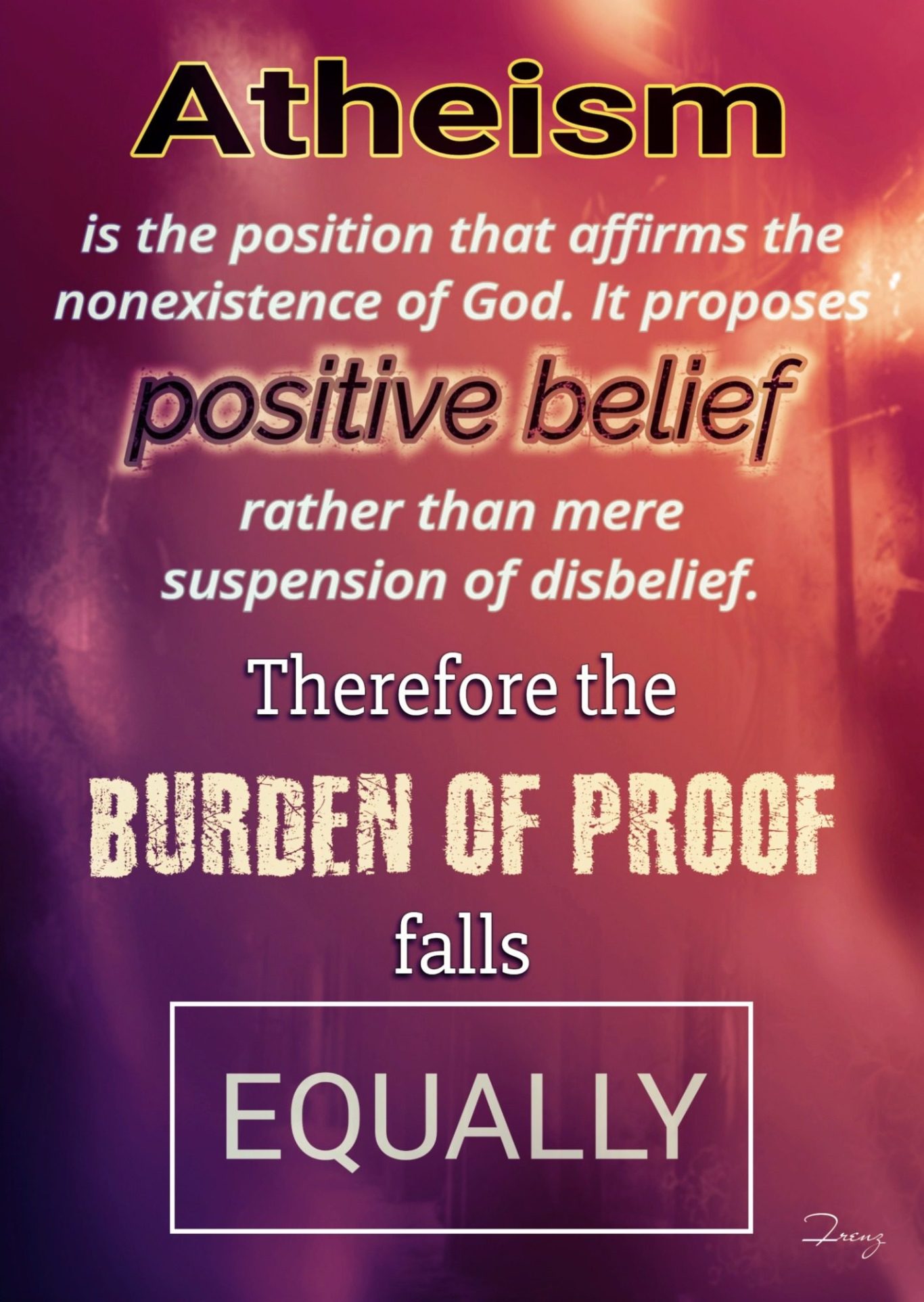
1. The Definition of Atheism and Burden of Proof
Atheism, especially in its “strong” form, is the positive claim that “there is no God.” As noted by All About God Ministries:
“Strong atheism is the doctrine that there is no God or gods. Weak atheism is the disbelief in or denial of the existence of God or gods.”
(All About God Ministries, “Atheism”)
When someone claims, “God does not exist,” they are making a positive assertion about reality. In philosophy and logic, anyone making a positive claim—whether “God exists” or “God does not exist”—bears the burden of proof to support their position.
2. The Biblical Perspective on Knowledge of God
The Bible teaches that the knowledge of God is evident to all people through creation:
“For what can be known about God is plain to them, because God has shown it to them. For his invisible attributes, namely, his eternal power and divine nature, have been clearly perceived, ever since the creation of the world, in the things that have been made. So they are without excuse.”
— Romans 1:19–20 (ESV)
This means that, according to Scripture, the evidence for God is not hidden or obscure but is “plain” and “clearly perceived.” Therefore, the biblical worldview holds that disbelief in God is not due to a lack of evidence, but rather a suppression of the truth (Romans 1:18).
3. The Necessity of Worship and Rejection of God
GotQuestions.org explains:
“Every human being knows, because of the way God designed human nature, that there is a God who must be worshiped, a God who requires submission and dependence. But the atheist refuses to submit to God and therefore rejects God. He hides his rebellion with the lie—to himself and others—that there is no God.”
(GotQuestions.org, “Is atheism a religion?”)
From this perspective, atheism is not merely a neutral suspension of belief, but an active rejection of God’s self-revelation.
4. The Call to Examine the Evidence
The Bible encourages honest examination and seeking:
“Ask, and it will be given to you; seek, and you will find; knock, and it will be opened to you.”
— Matthew 7:7 (ESV)
“The heavens declare the glory of God, and the sky above proclaims his handiwork.”
— Psalm 19:1 (ESV)
Summary
- Strong atheism asserts “there is no God” and thus shares the burden of proof with theism.
- The Bible teaches that God’s existence is evident in creation and that disbelief is a suppression of this truth (Romans 1:19–20).
- Both the theist and the atheist are called to provide reasons for their beliefs, and the Bible invites all to honestly seek the truth.
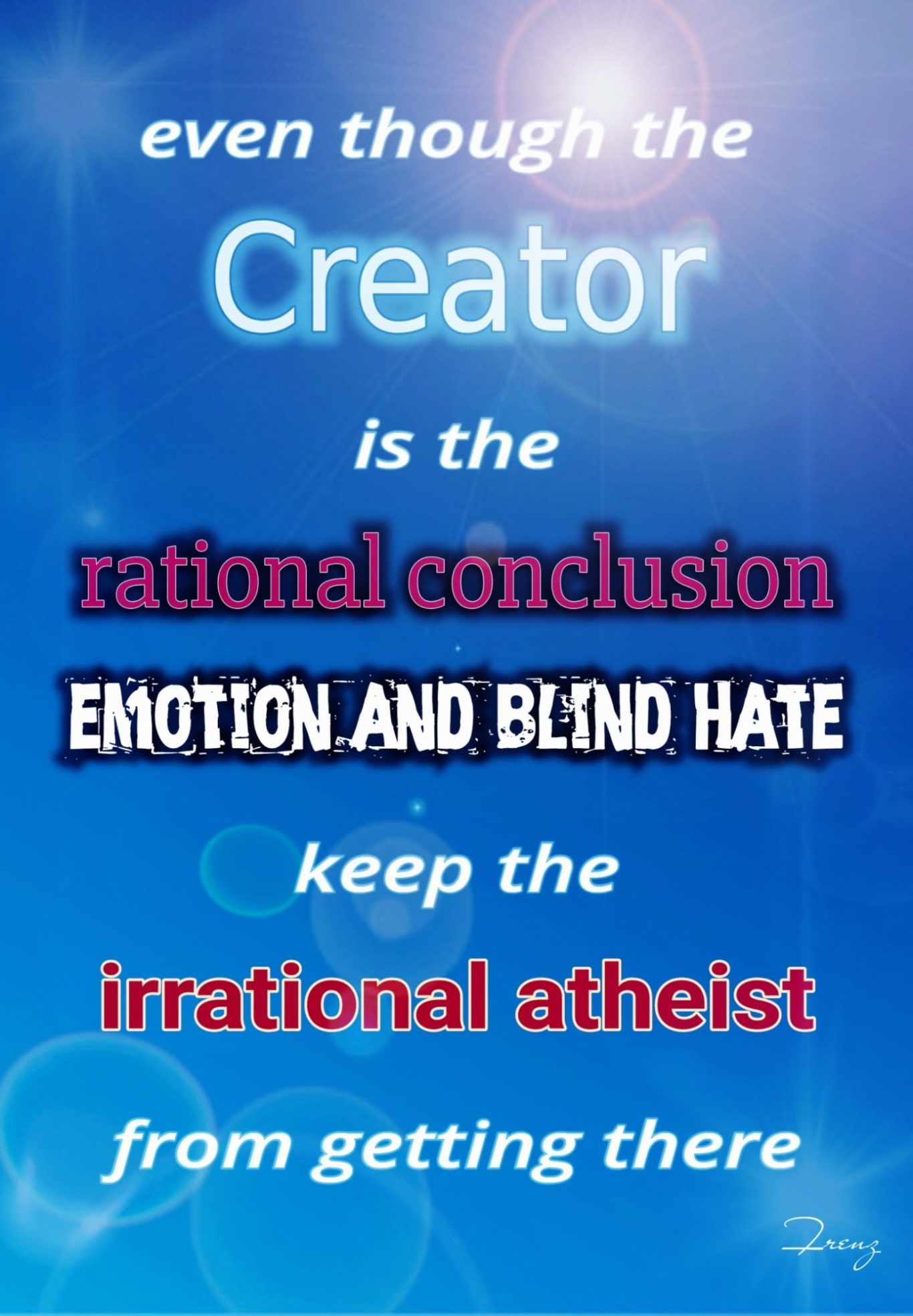
1. The Rational Evidence for God
The Bible affirms that God’s existence is evident through creation. Romans 1:19–20 (ESV) says:
“For what can be known about God is plain to them, because God has shown it to them. For his invisible attributes, namely, his eternal power and divine nature, have been clearly perceived, ever since the creation of the world, in the things that have been made. So they are without excuse.”
This means that, rationally, the existence of a Creator is the most reasonable conclusion when we look at the universe. As Eric Hedin summarizes Aquinas’ argument:
“Design requires a designer…. Aquinas thought that the universe needed an intelligent mind to bring it into order. He believed that physical laws lacked the power to organize complex, functioning systems.”
(From A New Look at Three Deep Questions)
2. Emotional and Spiritual Barriers
However, the Bible also teaches that emotional factors—such as pain, pride, or even hatred—can blind people to this evidence. Ephesians 4:18 (ESV) explains:
“They are darkened in their understanding, alienated from the life of God because of the ignorance that is in them, due to their hardness of heart.”
This “hardness of heart” can be rooted in past hurts, disappointments, or a desire for independence from God. Sometimes, anger or resentment toward God or religion can make it difficult for someone to consider the evidence fairly.
3. Suppression of Truth
Romans 1:21 (ESV) goes further:
“For although they knew God, they did not honor him as God or give thanks to him, but they became futile in their thinking, and their foolish hearts were darkened.”
Here, Paul shows that the problem is not just a lack of evidence, but a willful suppression of the truth. Accepting God would require humility, repentance, and a willingness to change, which some resist.
4. Responding with Truth and Love
As Christians, we are called to approach those who struggle with unbelief not with condemnation, but with compassion and patience. 2 Timothy 2:24–25 (ESV) says:
“And the Lord’s servant must not be quarrelsome but kind to everyone, able to teach, patiently enduring evil, correcting his opponents with gentleness. God may perhaps grant them repentance leading to a knowledge of the truth.”
Summary
- The evidence for God is rational and clear in creation (Romans 1:19–20).
- Emotional pain, pride, or anger can keep people from accepting this truth (Ephesians 4:18).
- Some suppress the truth because accepting it would require life change (Romans 1:21).
- Christians are called to respond with patience and love, trusting that God can soften hearts (2 Timothy 2:24–25).
If you know someone struggling with these barriers, remember that God’s grace is available to all who seek Him honestly and humbly.
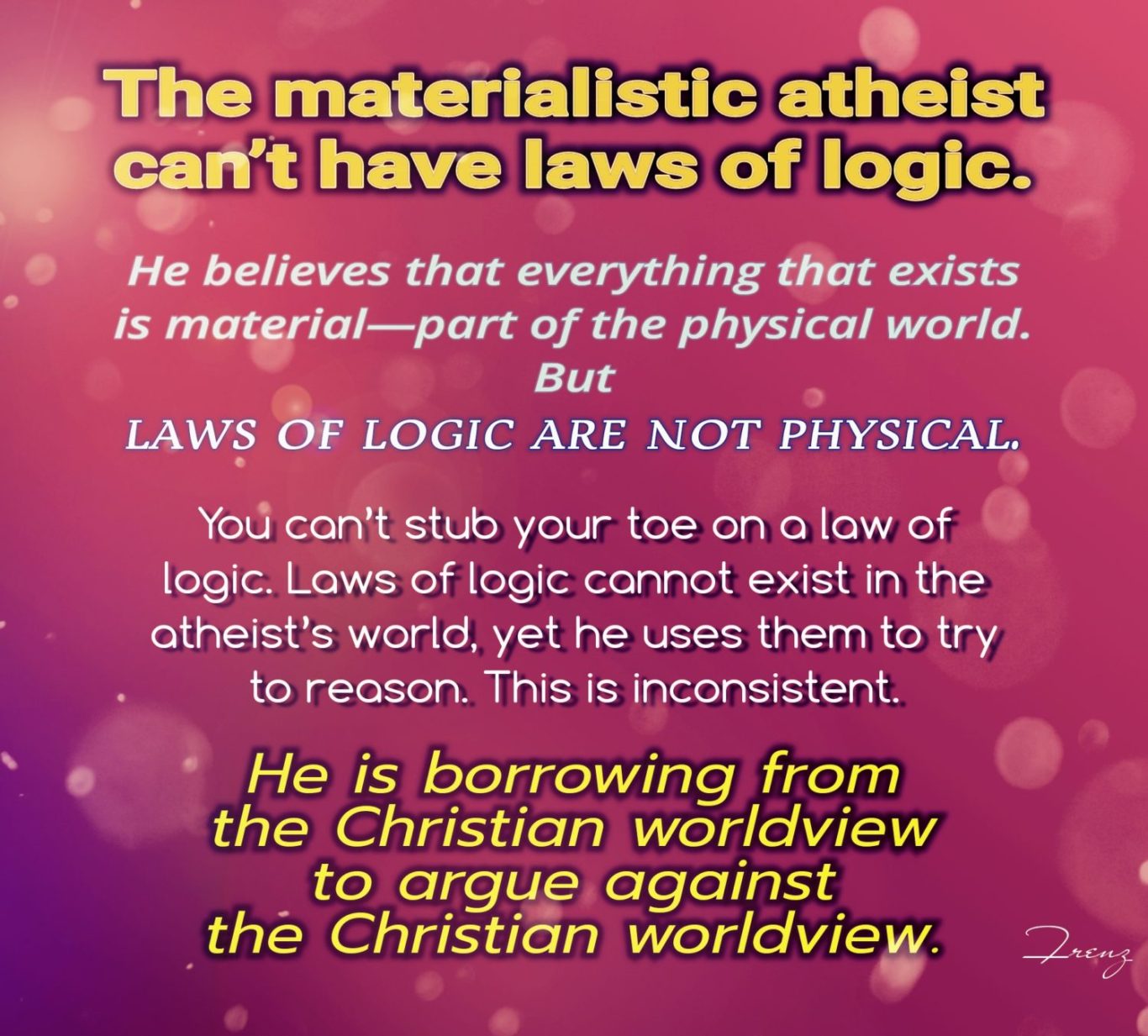
1. Laws of Logic Are Not Physical
The laws of logic (such as the law of non-contradiction: “A cannot be both A and not-A at the same time and in the same way”) are not physical objects. You cannot see, touch, or measure them. As the GotQuestions.org article puts it:
“Are the formal laws of logic physical, material, or visible? No. Yet they are realities—the very anchors that make human rationality and the world’s intelligibility possible.”
This means that, in a worldview where only physical things exist (materialism), there is no room for immaterial, universal, and unchanging laws like logic.
2. The Christian Worldview Grounds Logic
The Bible teaches that God is a rational, unchanging, and eternal being. The order and intelligibility of the universe reflect His nature:
- John 1:1 (ESV):
“In the beginning was the Word, and the Word was with God, and the Word was God.”
The Greek word for “Word” is Logos, which also means “reason” or “logic.” God Himself is the source of all rationality.
- Colossians 2:3 (ESV):
“In [Christ] are hidden all the treasures of wisdom and knowledge.”
- Romans 1:20 (ESV):
“For his invisible attributes, namely, his eternal power and divine nature, have been clearly perceived, ever since the creation of the world, in the things that have been made. So they are without excuse.”
God’s nature provides the foundation for the universal, immaterial, and unchanging laws of logic.
3. Borrowing from the Christian Worldview
When an atheist uses logic to argue against God, he is relying on something his own worldview cannot account for. As the GotQuestions.org article explains:
“If the atheist argues that the laws of logic are simply the product of electro-chemical impulses in the brain, then the laws of logic cannot be regarded as universal. What happens inside your brain cannot be regarded as a law, for it does not necessarily correspond to what happens in another person’s brain.”
Thus, the atheist must “borrow” the Christian understanding of reality—where logic is grounded in the nature of God—to even make rational arguments.
4. Summary
- Laws of logic are not physical and cannot be explained by materialism.
- The Christian worldview provides a rational foundation for logic, rooted in the eternal, rational nature of God (John 1:1; Colossians 2:3; Romans 1:20).
- Atheists use logic but cannot account for it within their own worldview, thus borrowing from the Christian worldview to argue against it.
This image presents a classic and powerful form of reasoning known as the Transcendental Argument for the Existence of God (TAG)—an argument that shows that logic, reason, and rationality themselves presuppose the existence of the biblical God.
As GotQuestions.org explains in its article “What Is the Transcendental Argument for the Existence of God?” (GotQuestions.org, 2026), the laws of logic are immaterial, universal, and unchanging, and therefore cannot be grounded in a purely materialistic worldview. The article summarizes:
“The invariability, sovereignty, transcendence, and immateriality of God are the foundation for the laws of logic. Thus, rational reasoning would be impossible without the biblical God.”
If the universe were only matter and energy, then thoughts would be nothing more than chemical reactions in the brain. But chemical reactions are not true or false—they simply occur. Therefore, if atheism were true, there would be no basis for universal, immaterial laws of logic that apply everywhere and always. Logic would reduce to subjective human convention, and rational debate would collapse into personal preference.
The Bible affirms that God Himself is the source of truth and order:
“In the beginning was the Word [Logos], and the Word was with God, and the Word was God.” (John 1:1 KJV) — The Greek Logos means “reason” or “rational principle,” showing that logic and order flow from God’s very nature.
“For God is not the author of confusion, but of peace.” (1 Corinthians 14:33 KJV) — God’s nature ensures consistency and coherence in creation.
“Through faith we understand that the worlds were framed by the word of God, so that things which are seen were not made of things which do appear.” (Hebrews 11:3 KJV) — The immaterial Word of God gives rise to the material universe.
Thus, the image’s conclusion is correct: atheism cannot account for the existence of the laws of logic, because it denies the transcendent, immaterial foundation that makes logic possible. Only the eternal, unchanging God of Scripture provides a rational basis for universal laws of thought.
In short, reason itself testifies to the reality of God—for without Him, there could be no reason at all.

This image raises one of the most profound challenges to naturalistic evolution—the origin of complex biochemical systems that require multiple, interdependent components to function. This question strikes at the heart of molecular biology and supports the biblical claim that life is the product of intelligent design, not random chance.
As Casey Luskin explains in “No. 5 Story of 2023: ‘Neo‑Darwinism Must Mutate’” (Evolution News, 2023), researchers have shown that the probability of forming even one functional biochemical pathway by random mutation is astronomically low. Using the Krebs cycle as an example—a metabolic pathway requiring twelve enzymes—they calculated that the likelihood of producing all twelve enzymes by chance is roughly 10⁻⁵¹, far below any plausible threshold. Luskin concludes that “there is something besides mutations and survival of the fittest needed to explain evolution.”
Similarly, Dr. Fazale Rana in “Biochemical Grammar Communicates the Case for Creation” (Reasons to Believe, 2019) notes that proteins operate according to a kind of biochemical language or grammar. He writes that biochemists have discovered a relationship between an organism’s complexity and the number of unique protein domains it possesses, yet they still lack a fundamental understanding of how amino acid sequences fold into functional structures. Treating proteins as information systems reveals that they behave like intelligently designed codes, not random chemical accidents.
The Bible affirms that life’s intricate design points unmistakably to a Creator:
“I will praise thee; for I am fearfully and wonderfully made: marvellous are thy works; and that my soul knoweth right well.” (Psalm 139:14 KJV)
“For by him were all things created, that are in heaven, and that are in earth, visible and invisible… and by him all things consist.” (Colossians 1:16–17 KJV)
“He hath made the earth by his power, he hath established the world by his wisdom, and hath stretched out the heaven by his understanding.” (Jeremiah 10:12 KJV)
Thus, the image’s argument—and Franklin Harold’s candid admission—accurately reflect the scientific reality: no detailed Darwinian explanation exists for the origin of complex biochemical systems. The interdependence of enzymes, pathways, and molecular machines points not to blind chance, but to the purposeful design of an intelligent Creator who authored life’s code from the beginning.
This image highlights one of the most fundamental and revealing questions in the origins debate: if living things look designed, why should we deny that they are?
Even leading atheistic scientists have acknowledged this tension. As the image notes, Richard Dawkins famously wrote, “Biology is the study of complicated things that give the appearance of having been designed for a purpose.” (Ray Bohlin, The Impotence of Darwinism: A Christian Scientist Looks at the Evidence, Probe.org, 2005). Likewise, Francis Crick, co‑discoverer of DNA’s structure, warned biologists to “constantly keep in mind that what they see was not designed, but rather evolved.” In other words, the evidence looks like design, but materialists must remind themselves not to believe their own eyes.
This is precisely the point made in The Signature in the Cell (Tabletalk Magazine, 2010). The article observes that Darwin and his successors never explained the origin of life itself, only the diversification of existing life. Modern discoveries have revealed that even the simplest cell contains digital, language‑like information—a code that stores and processes instructions for building proteins. The author notes that “systems possessing these features invariably arise from intelligent causes,” just as computer programs or written texts do. To insist that such information arose from undirected chemistry is, as the article says, “like saying that a newspaper headline might arise as the result of the chemical attraction between ink and paper.”
The Bible affirms that the design we see in nature is real, not illusory:
“The heavens declare the glory of God; and the firmament sheweth his handywork.” (Psalm 19:1 KJV)
“For the invisible things of him from the creation of the world are clearly seen, being understood by the things that are made, even his eternal power and Godhead; so that they are without excuse.” (Romans 1:20 KJV)
“All things were made by him; and without him was not any thing made that was made.” (John 1:3 KJV)
The image’s closing question—why science is restricted to naturalistic causes rather than logical ones—is crucial. As Granville Sewell argues in Introduction to the Scientific Theory of Intelligent Design (Evolution News, 2024), science routinely infers intelligence when warranted—such as in archaeology, cryptography, or the search for extraterrestrial life. It is only when the evidence points to a divine intelligence that naturalists arbitrarily forbid that conclusion.
Thus, the image’s argument is sound: living things bear unmistakable marks of design. To deny that design is not a scientific necessity—it is a philosophical choice rooted in materialism. True science should follow the evidence wherever it leads, even when it leads to the Creator Himself.
This image expresses a deeply biblical truth: unbelief is not primarily an intellectual problem—it is a moral and volitional one. Scripture consistently teaches that the evidence for God is clear and abundant, but people often choose not to believe because doing so would require repentance, humility, and submission to His authority.
The Apostle Paul explains this plainly in Romans 1:18–21 (KJV):
“For the wrath of God is revealed from heaven against all ungodliness and unrighteousness of men, who hold suppress] the truth in unrighteousness; because that which may be known of God is manifest in them; for God hath shewed it unto them. For the invisible things of him from the creation of the world are clearly seen, being understood by the things that are made, even his eternal power and Godhead; so that they are without excuse.”
This passage shows that disbelief is not due to a lack of evidence but to the suppression of truth. The evidence is “clearly seen,” yet people “hold it down” because they do not want to acknowledge God.
As GotQuestions.org explains in its article “What Is the Argument from Disbelief?” ([GotQuestions.org, 2026), the claim that “sincere non‑believers” disprove God’s existence rests on false premises. The article notes that Scripture teaches people suppress the truth rather than lack evidence, and that “even the most sincere atheist, at some point, is insincerely and deliberately rejecting or ignoring some level of evidence for God.” It concludes that disbelief “is not ultimately grounded in sincerity or ignorance but in a fundamental refusal to follow the truth.”
Jesus Himself confirmed this when He said:
“And this is the condemnation, that light is come into the world, and men loved darkness rather than light, because their deeds were evil.” (John 3:19 KJV)
“If any man will do his will, he shall know of the doctrine, whether it be of God.” (John 7:17 KJV)
“Ye will not come to me, that ye might have life.” (John 5:40 KJV)
These verses reveal that belief is a matter of the will—those who genuinely desire truth will find it, but those who resist God will find ways to rationalize their unbelief.
So, the image’s conclusion is biblically and philosophically sound: disbelief is not the result of insufficient evidence but of a heart that refuses to yield. People employ “rescuing devices”—excuses, rationalizations, or alternative explanations—to protect their autonomy from the moral and spiritual implications of God’s reality. Yet God, in His mercy, continues to call all people to repentance and truth, offering forgiveness and new life to those who turn to Him.
This statement reflects a conviction that honest inquiry—questioning, challenging, examining, and following the evidence—will ultimately lead a person to the truth of Christianity. This is a perspective that has been affirmed by many Christian thinkers, scientists, and philosophers throughout history.
Let’s consider how this idea aligns with Scripture and the Christian worldview:
1. God Invites Honest Inquiry
The Bible does not discourage questions or investigation. In fact, God invites us to seek truth and promises that those who genuinely seek Him will find Him.
- Jeremiah 29:13 (ESV):
“You will seek me and find me, when you seek me with all your heart.”
- Acts 17:11 (ESV):
“Now these Jews were more noble than those in Thessalonica; they received the word with all eagerness, examining the Scriptures daily to see if these things were so.”
- 1 Thessalonians 5:21 (ESV):
“But test everything; hold fast what is good.”
God is not threatened by honest questions; rather, He welcomes them.
2. Christianity and the Evidence
Christianity is rooted in historical events—especially the life, death, and resurrection of Jesus Christ. The apostles encouraged people to examine the evidence:
- 1 Corinthians 15:3–6 (ESV):
“For I delivered to you as of first importance what I also received: that Christ died for our sins in accordance with the Scriptures, that he was buried, that he was raised on the third day in accordance with the Scriptures, and that he appeared to Cephas, then to the twelve. Then he appeared to more than five hundred brothers at one time, most of whom are still alive, though some have fallen asleep.”
Paul points to eyewitness testimony and invites scrutiny.
3. Science and Faith Are Not Enemies
As highlighted in the resources you referenced (e.g., Brian Miller’s “Evolution + Christianity = Intractable Tensions” and Fazale Rana’s work), following the evidence in nature—whether in cosmology, biology, or the laws of logic—points to a Creator. The fine-tuning of the universe, the complexity of life, and the existence of immaterial realities like logic and morality all provide strong evidence for God’s existence.
“Christians no longer need to accept a secular intellectual captivity. They can again embrace a historical understanding of Christianity that coherently unifies faith with science and provides a strong foundation to defend Christian ethical teaching. They simply need the will and courage to follow the evidence where it naturally leads.”
— Brian Miller, “Evolution + Christianity = Intractable Tensions”
4. Jesus Is the Truth
Ultimately, Christianity claims that truth is not just a set of facts, but a Person—Jesus Christ.
- John 14:6 (ESV):
“Jesus said to him, ‘I am the way, and the truth, and the life. No one comes to the Father except through me.’”
Summary
- The Bible encourages honest questioning and examination of evidence (Jeremiah 29:13; Acts 17:11; 1 Thessalonians 5:21).
- Christianity is based on historical, testable claims (1 Corinthians 15:3–6).
- Scientific and philosophical evidence, when followed honestly, points to the God revealed in Scripture.
- Jesus Himself is the embodiment of truth (John 14:6).
If you follow the evidence with an open heart and mind, the Bible assures that you will find God—because He is the source of all truth.
This image describes a pattern that many Christian apologists and scientists have observed in the modern origins debate — namely, that Darwinian orthodoxy often defends itself not by evidence, but by rhetoric, social pressure, and exclusion of dissenting voices.
This concern is not new. In Defeating Darwinism (Probe.org, Rick Wade, 1997), Wade summarizes Phillip E. Johnson’s critique of how evolution is presented in public discourse. Johnson noted that Darwinists often commit several logical fallacies to protect their position:
“What we hear about today are the evidences which seem to support evolution. What we don’t hear about is the absence of significant evidence in the fossil record as a whole. Seeing the entire picture can, and should, easily give one doubts about the story we’re now being told by the evolutionists.”
Wade also points out that when students or scientists question evolution, they are often dismissed or ridiculed rather than engaged with reasoned dialogue. This is precisely what your image describes — denial of contrary evidence, ad hominem attacks, and appeals to authority or consensus (“most scientists believe it, therefore it’s true”). These are not scientific arguments; they are rhetorical tactics.
Dr. Jobe Martin, in The Evolution of a Creationist (Precept Austin, 2020), observed the same phenomenon:
“When a credentialed scientist who is a creationist presents hard evidence to support the Creator and His creation, he or she is accused of teaching religion. But evolution from one cell to man is not based on the scientific method and is therefore a faith system. The question is not, ‘is evolution science and creation religion?’ but ‘which system of belief — creation or evolution — has the most factual science to back it up?’”
The Bible itself warns that truth will often be resisted, not because of lack of evidence, but because of pride and moral rebellion:
“For the time will come when they will not endure sound doctrine; but after their own lusts shall they heap to themselves teachers, having itching ears.” (2 Timothy 4:3 KJV)
“Ever learning, and never able to come to the knowledge of the truth.” (2 Timothy 3:7 KJV)
“Because that, when they knew God, they glorified him not as God… professing themselves to be wise, they became fools.” (Romans 1:21–22 KJV)
So, the image’s critique is not merely polemical — it reflects a real cultural and philosophical problem. When a worldview is defended by ridicule, censorship, and appeals to consensus, rather than by open examination of evidence, it ceases to be science and becomes ideology.
True science, as the Bible and thinkers like Johnson and Martin affirm, should “prove all things; hold fast that which is good” (1 Thessalonians 5:21 KJV). The Christian worldview welcomes honest inquiry because all truth ultimately points back to the Creator, who is Himself the source of reason, order, and evidence.
This image expresses a perspective that is deeply consistent with the biblical understanding of unbelief. Scripture teaches that atheism is not primarily an intellectual failure, but a spiritual and moral one—a willful suppression of truth rooted in the fallen condition of the human heart.
The Apostle Paul describes this clearly in Romans 1:18–21 (KJV):
“For the wrath of God is revealed from heaven against all ungodliness and unrighteousness of men, who hold suppress] the truth in unrighteousness; because that which may be known of God is manifest in them; for God hath shewed it unto them. For the invisible things of him from the creation of the world are clearly seen, being understood by the things that are made, even his eternal power and Godhead; so that they are without excuse.”
This passage shows that unbelief is not due to lack of evidence—God has made Himself known through creation—but to a moral refusal to acknowledge Him.
The image’s reference to 2 Corinthians 4:4 is also crucial:
“In whom the god of this world hath blinded the minds of them which believe not, lest the light of the glorious gospel of Christ, who is the image of God, should shine unto them.”
Here, Paul identifies Satan as the one who blinds unbelievers to the truth. This blindness is not merely intellectual; it is spiritual. The mind becomes darkened because the heart is hardened.
Likewise, 2 Peter 3:5 (KJV) speaks of those who are “willingly ignorant” of God’s creative and redemptive acts. This phrase means that unbelievers deliberately ignore or dismiss the evidence that points to God—they choose not to see.
As GotQuestions.org explains in its article “Are Atheists More Intelligent Than Believers?” ([GotQuestions.org, 2026), the issue is not intelligence but spiritual blindness caused by sin:
“The problem is not that the atheist does not see enough evidence for God. The problem is that sin has so darkened his heart and mind that he refuses to accept the evidence of God right in front of him.”
This is why the image concludes that even if God were to appear visibly, many atheists would still reject Him. Jesus Himself said as much in Luke 16:31 (KJV):
“If they hear not Moses and the prophets, neither will they be persuaded, though one rose from the dead.”
The heart of the matter, then, is sin—the rebellion of the human will against God’s authority. Yet the good news is that God’s grace is greater than our blindness. Through repentance and faith in Jesus Christ, anyone—atheist or otherwise—can be forgiven, renewed, and brought into the light of truth.
As John 8:32 (KJV) promises:
“And ye shall know the truth, and the truth shall make you free.”
So, the image’s message aligns with Scripture: atheism is not solved by more data or argument alone, but by the transforming work of God in the heart. Only when the heart turns to Christ does the mind truly see.
This observation is not new; Scripture and Christian thinkers have long warned against simply following the crowd or accepting ideas without discernment.
1. The Bible Warns Against Blindly Following the Crowd
God calls His people to seek truth, not to conform to popular opinion or the “patterns of this world”:
- Romans 12:2 (ESV):
“Do not be conformed to this world, but be transformed by the renewal of your mind, that by testing you may discern what is the will of God, what is good and acceptable and perfect.”
- Proverbs 18:13 (ESV):
“If one gives an answer before he hears, it is his folly and shame.”
- 1 Thessalonians 5:21 (ESV):
“But test everything; hold fast what is good.”
God encourages careful examination and discernment, not uncritical acceptance.
2. Groupthink in Science and Media
It is true that in both the media and the scientific community, there can be a tendency to repeat prevailing narratives without critical evaluation. In the context of origins, many mainstream sources do repeat positive language about Darwinian evolution and negative language about intelligent design or creation, often without engaging the actual arguments or evidence.
This kind of repetition can shape public opinion, not necessarily because of the strength of the evidence, but because of the power of consensus and repetition. The Bible warns about being “tossed to and fro by the waves and carried about by every wind of doctrine” (Ephesians 4:14, ESV).
3. The Christian Call: Seek Truth, Not Popularity
Christians are called to pursue truth, even when it is unpopular or goes against the mainstream:
- Acts 17:11 (ESV):
“Now these Jews were more noble than those in Thessalonica; they received the word with all eagerness, examining the Scriptures daily to see if these things were so.”
- John 8:32 (ESV):
“And you will know the truth, and the truth will set you free.”
We are to be like the Bereans, who examined claims carefully and did not simply accept what was commonly repeated.
Summary
- The Bible warns against uncritical conformity and encourages discernment (Romans 12:2; 1 Thessalonians 5:21).
- Groupthink and parroting can hinder the search for truth, whether in media or science.
- Christians are called to seek truth, test all things, and hold fast to what is good (Acts 17:11; John 8:32).
In all things, let us be people who love truth, examine evidence, and refuse to simply “parrot” what is popular—trusting that God’s truth will stand up to honest inquiry.
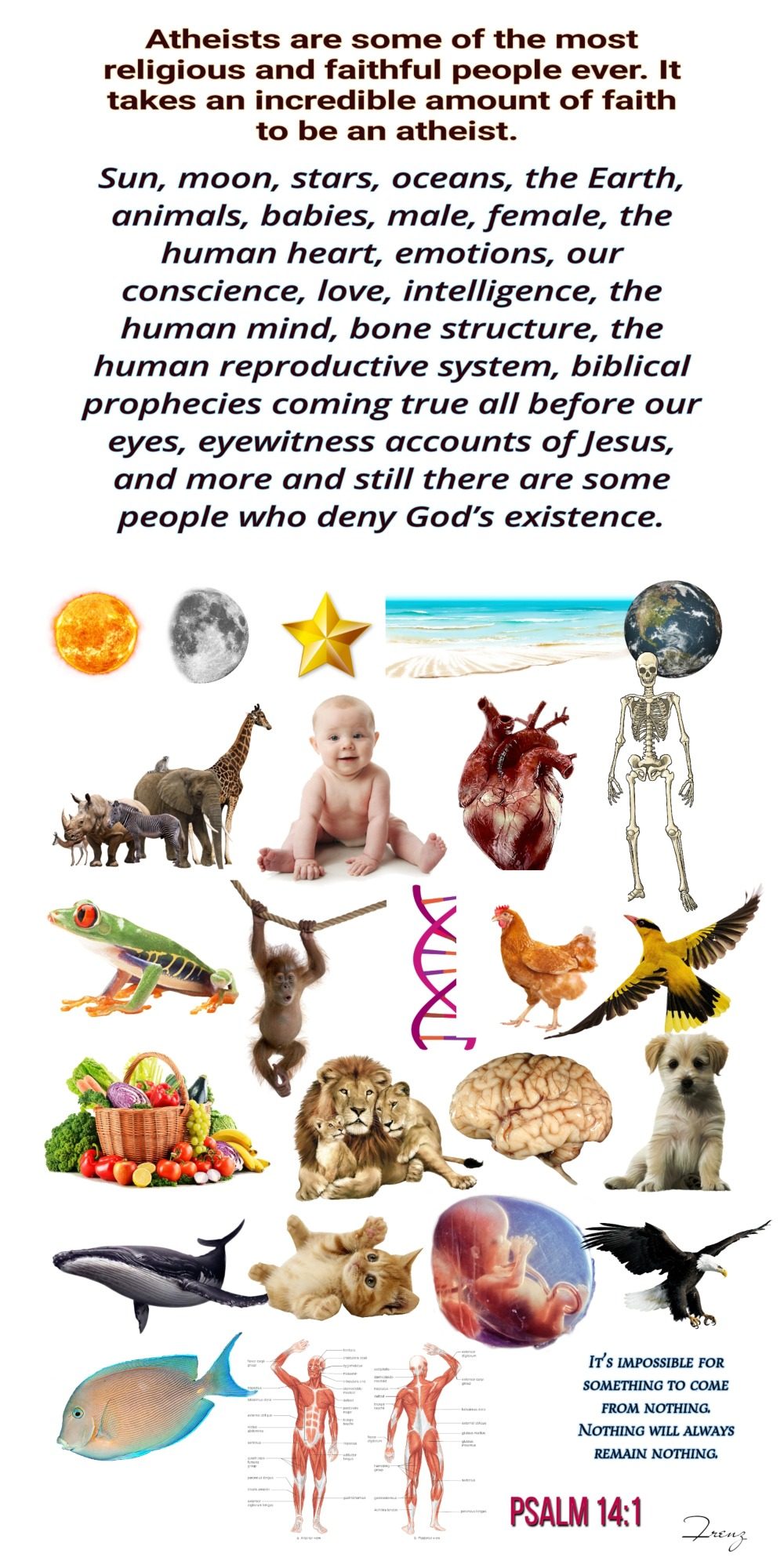
This image captures a truth that both Scripture and sound reasoning affirm: atheism is not the absence of faith—it is faith placed in the wrong object.
As GotQuestions.org explains in its article “What Is Atheism?” (GotQuestions.org, 2026), atheism requires a kind of belief because it asserts something that cannot be proven—that God does not exist. The article notes:
“It takes just as much faith to be an atheist as it does to be a theist. To make the absolute statement ‘God does not exist’ is to claim absolute knowledge about everything there is to know about everything. Since no human possesses such knowledge, atheism itself is a belief system requiring faith.”
The Bible agrees. Psalm 14:1 (KJV) declares:
“The fool hath said in his heart, There is no God. They are corrupt, they have done abominable works, there is none that doeth good.”
This verse does not insult intelligence—it diagnoses the moral and spiritual blindness that results when people deny the self‑evident reality of their Creator. The evidence of God’s existence is all around us, as Romans 1:20 (KJV) says:
“For the invisible things of him from the creation of the world are clearly seen, being understood by the things that are made, even his eternal power and Godhead; so that they are without excuse.”
Every sunrise, every heartbeat, every law of physics, and every moral impulse testifies to a Creator. The complexity of life, the fine‑tuning of the universe, and the existence of consciousness and love all point beyond matter to a personal, intelligent, moral Being.
The claim that “something cannot come from nothing” is also consistent with both science and Scripture. The First Law of Thermodynamics tells us that matter and energy cannot create themselves. The Bible affirms that God alone is the uncaused cause—the eternal source of all that exists:
“In the beginning God created the heaven and the earth.” (Genesis 1:1 KJV)
“For of him, and through him, and to him, are all things: to whom be glory for ever.” (Romans 11:36 KJV)
“He is before all things, and by him all things consist.” (Colossians 1:17 KJV)
As Tabletalk Magazine’s article “Be Prepared” (Tabletalk Magazine, 2008) reminds us, even those who claim unbelief “suppress what they know to be true about the existence of God.” Deep down, everyone recognizes that the world’s order and beauty are not accidents.
So, the image’s conclusion is right: atheism demands enormous faith—faith that the universe created itself, that life arose from non‑life, and that moral truth and consciousness emerged from blind matter. The Christian, by contrast, places faith in the only rational foundation for existence: the eternal, intelligent, loving Creator revealed in Scripture.
1. Is Atheism a Belief?
Definition:
Atheism is typically defined as the belief that God does not exist. Some atheists try to reframe it as merely a “lack of belief” in God, rather than a positive assertion.
However, as CompellingTruth.org explains:
“Atheism, as opposed to theism and agnosticism, is the belief that God does not exist. Atheists deny God's existence, whereas Christians believe God has revealed Himself in many ways, including creation and Scripture.”
Logically:
- To say, “I believe there is no God,” is a belief about reality.
- Even the claim, “I lack belief in God,” is a position about the existence of God, and thus a belief about the nature of reality.
Philosophically:
- Everyone has beliefs about ultimate questions, even if those beliefs are negative or skeptical.
- As GotQuestions.org points out, “A large number of philosophers have argued for their belief in the existence of God. It is a small minority of thinkers who have denied the existence of God. … The argument is not that belief in God is true BECAUSE so many people believe that God exists. Rather, it is simply an irrefutable fact that many brilliant minds have pondered the God question and come to the conclusion that He does, in fact, exist. This fact, while it doesn’t prove that God exists, should prompt us to deal with the question of God’s existence with seriousness and intellectual honesty.”
2. What Does the Bible Say?
The Bible recognizes the existence of those who deny God:
- Psalm 14:1 (ESV):
“The fool says in his heart, ‘There is no God.’”
This verse shows that denying God’s existence is not a neutral or passive state, but a conscious position of the heart.
- Romans 1:20 (ESV):
“For his invisible attributes, namely, his eternal power and divine nature, have been clearly perceived, ever since the creation of the world, in the things that have been made. So they are without excuse.”
Paul teaches that God’s existence is evident in creation, so to deny Him is to suppress the truth (Romans 1:18).
- Hebrews 11:6 (ESV):
“And without faith it is impossible to please him, for whoever would draw near to God must believe that he exists and that he rewards those who seek him.”
3. Conclusion
- Atheism is a belief—it is a position about the existence of God, whether stated positively or negatively.
- The Bible teaches that belief or unbelief in God is a matter of the heart and mind, not mere semantics.
- God calls everyone to examine the evidence honestly and seek Him (John 20:29; Hebrews 11:6).
1. The Bible’s View on Evidence and Honesty
The Bible teaches that God has provided clear evidence of His existence:
- Romans 1:20 (ESV):
“For his invisible attributes, namely, his eternal power and divine nature, have been clearly perceived, ever since the creation of the world, in the things that have been made. So they are without excuse.”
This means that, according to Scripture, the evidence for God is available to all people through creation itself. To deny God’s existence, the Bible says, is to “suppress the truth” (Romans 1:18).
- Psalm 19:1 (ESV):
“The heavens declare the glory of God, and the sky above proclaims his handiwork.”
- Acts 17:27 (ESV):
“…that they should seek God, and perhaps feel their way toward him and find him. Yet he is actually not far from each one of us.”
2. Honest Examination Leads to Truth
If someone honestly examines the facts—whether the evidence in creation, the historical reliability of Scripture, or the moral law written on our hearts—the Bible teaches that this search will point toward God:
- John 7:17 (ESV):
“If anyone’s will is to do God’s will, he will know whether the teaching is from God or whether I am speaking on my own authority.”
- Jeremiah 29:13 (ESV):
“You will seek me and find me, when you seek me with all your heart.”
3. The Role of the Heart
However, the Bible also recognizes that belief is not just an intellectual matter, but also a matter of the heart and will. Some may reject God not because of a lack of evidence, but because of a desire to live apart from Him (John 3:19-20).
4. Grace and Humility
It’s important to remember that coming to faith is ultimately a work of God’s grace (Ephesians 2:8-9). Christians are called to share the truth with gentleness and respect (1 Peter 3:15), recognizing that only God can change hearts.
Summary
- The Bible teaches that the evidence for God is clear and available to all.
- An honest and open-hearted examination of the facts should lead a person toward belief in God.
- If someone persistently rejects God after examining the evidence, the issue is not with the facts, but with the heart (Romans 1:18-20).
- Christians are called to present the truth with love and humility, trusting God to work in people’s lives.
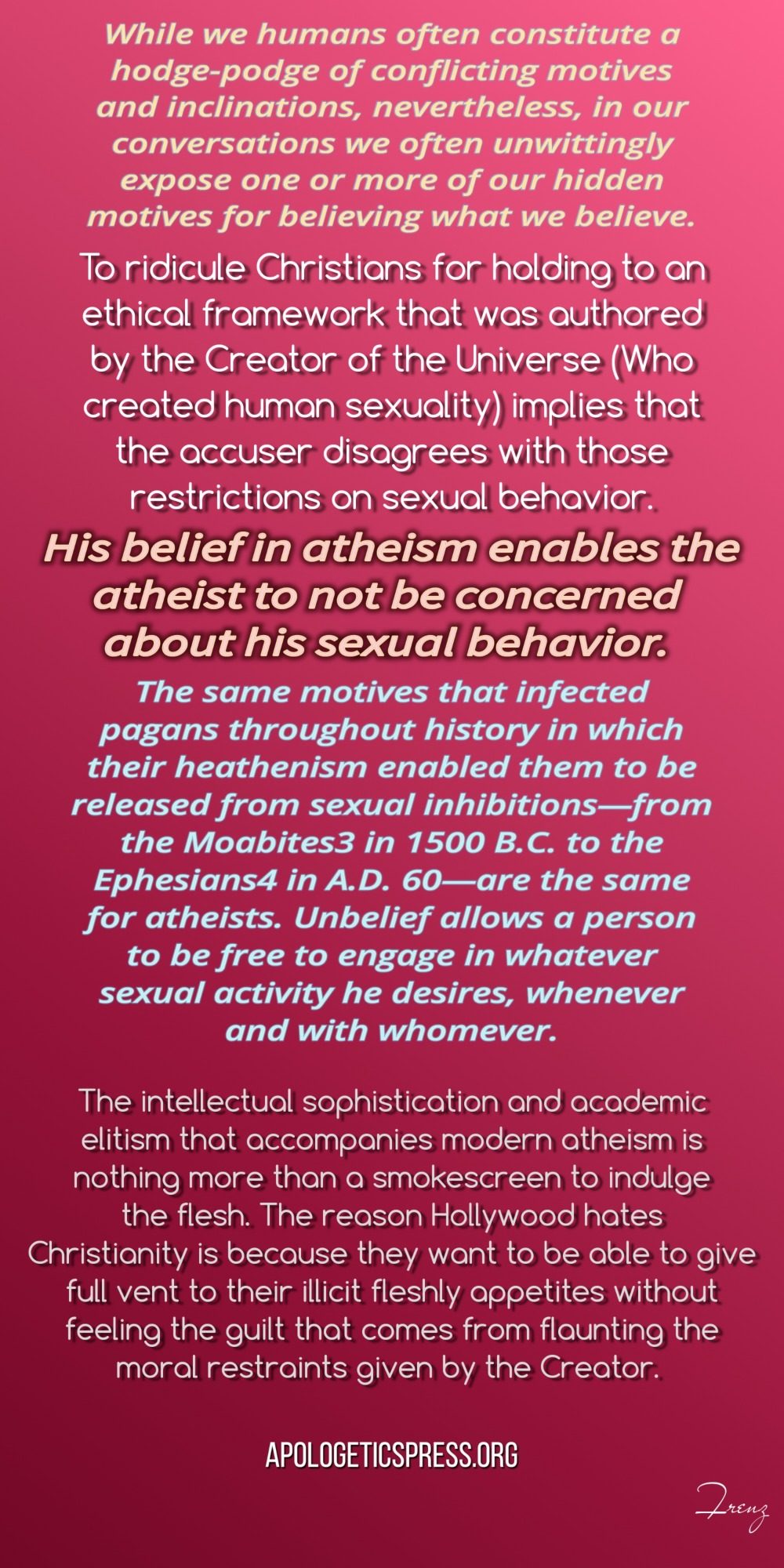
This image presents a moral and theological analysis that aligns closely with the biblical view of unbelief and human sin. Scripture consistently teaches that rejection of God is not merely an intellectual stance—it is often motivated by a desire for moral autonomy, especially in the area of sexual ethics.
The Apostle Paul describes this dynamic in Romans 1:21–28 (KJV):
“Because that, when they knew God, they glorified him not as God, neither were thankful; but became vain in their imaginations, and their foolish heart was darkened… Wherefore God also gave them up to uncleanness through the lusts of their own hearts, to dishonour their own bodies between themselves… For this cause God gave them up unto vile affections… and even as they did not like to retain God in their knowledge, God gave them over to a reprobate mind.”
This passage shows that moral rebellion—especially sexual rebellion—is both a cause and a consequence of rejecting God. When people refuse to acknowledge their Creator, they lose the moral compass that comes from His character and Word.
The Ligonier Learn article “Cultural Revolution” (Ligonier Learn, 2024) traces this same pattern in modern Western culture. It explains how the sexual revolution of the 1960s dismantled biblical moral boundaries, replacing them with a new ethic of self‑gratification. The article notes that this revolution “fostered a climate of casual and extramarital sex, and more recently the normalization of homosexual practices,” and that when society approves such behavior, “that becomes the strongest temptation of all to people who are susceptible to doing what everybody else is doing.” The author concludes that Christians must resist conformity to this fallen culture and instead be “non‑conformists to a pagan world.”
Similarly, Ligonier’s Devotional “Disregarding God” (Ligonier Learn, 2022) observes that the biblical sexual ethic—one man and one woman in marriage—is not repressive but liberating. It protects human dignity and frees people from slavery to desire. The devotional warns that rejecting this ethic is equivalent to rejecting God Himself (1 Thessalonians 4:8).
The Bible repeatedly connects unbelief with indulgence of the flesh:
“For all that is in the world, the lust of the flesh, and the lust of the eyes, and the pride of life, is not of the Father, but is of the world.” (1 John 2:16 KJV)
“This I say then, Walk in the Spirit, and ye shall not fulfil the lust of the flesh.” (Galatians 5:16 KJV)
“Having eyes full of adultery, and that cannot cease from sin… which have forsaken the right way.” (2 Peter 2:14–15 KJV)
So, the image’s claim—that atheism often serves as a moral escape hatch rather than a purely intellectual position—is consistent with both Scripture and history. When people reject God, they also reject His moral authority, seeking freedom from guilt rather than freedom from error.
As Jesus said in John 3:19 (KJV):
“And this is the condemnation, that light is come into the world, and men loved darkness rather than light, because their deeds were evil.”
In short, unbelief often disguises itself as sophistication or intellectual progress, but beneath that veneer lies a deeper motive: the desire to live without moral restraint. True freedom, however, is not found in indulging the flesh but in knowing Christ, who alone can set the heart free from sin’s bondage.
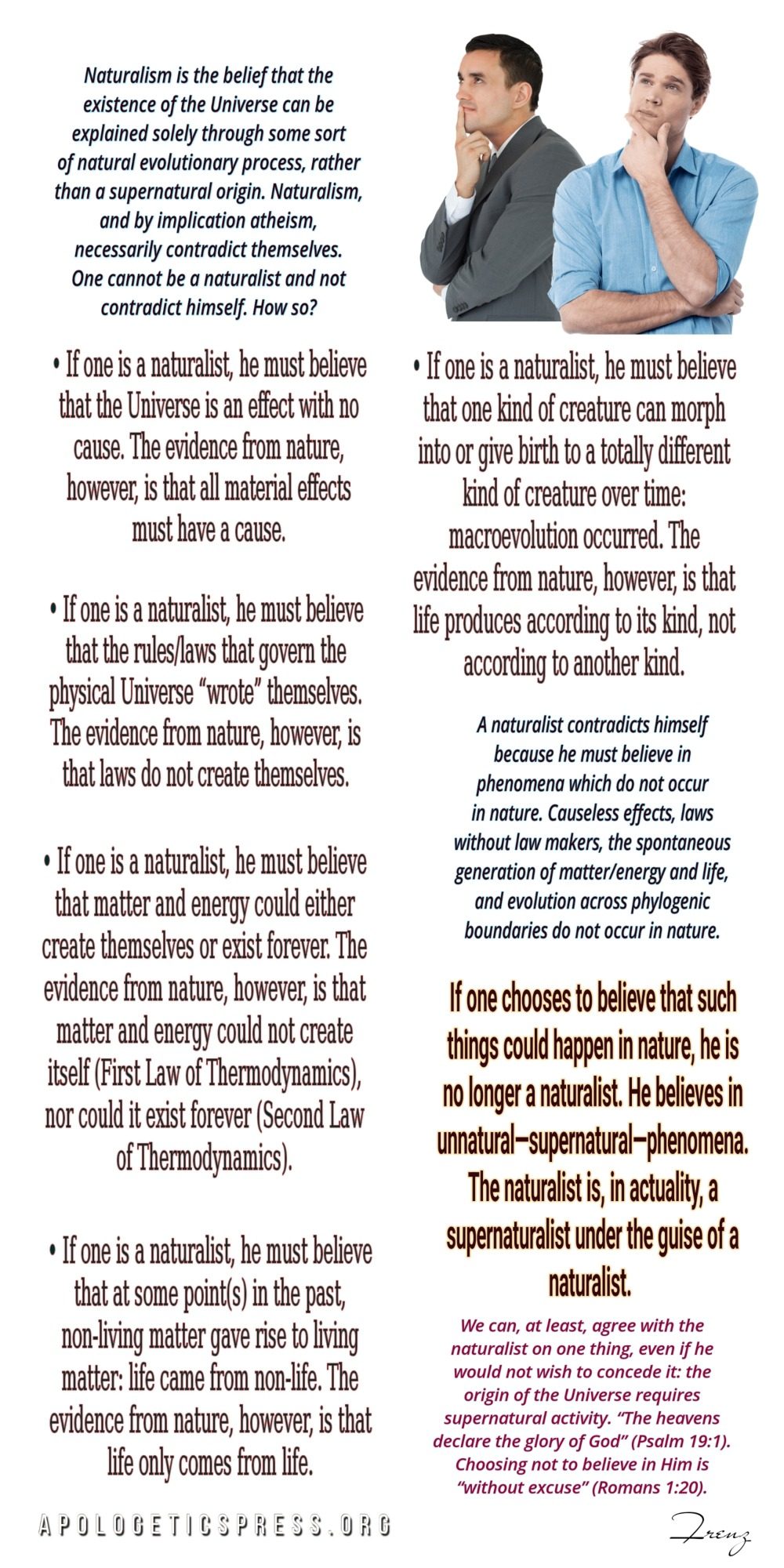
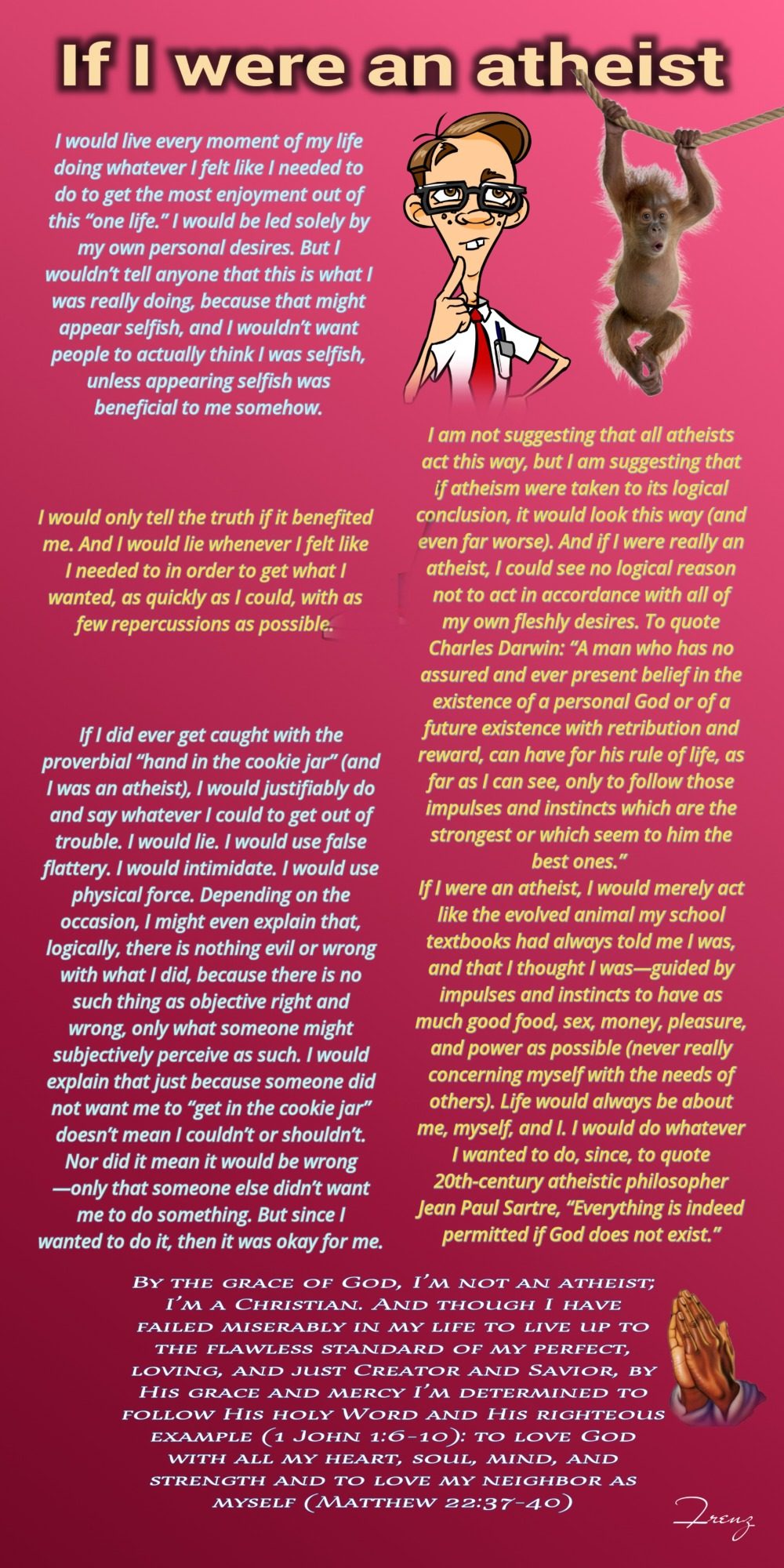
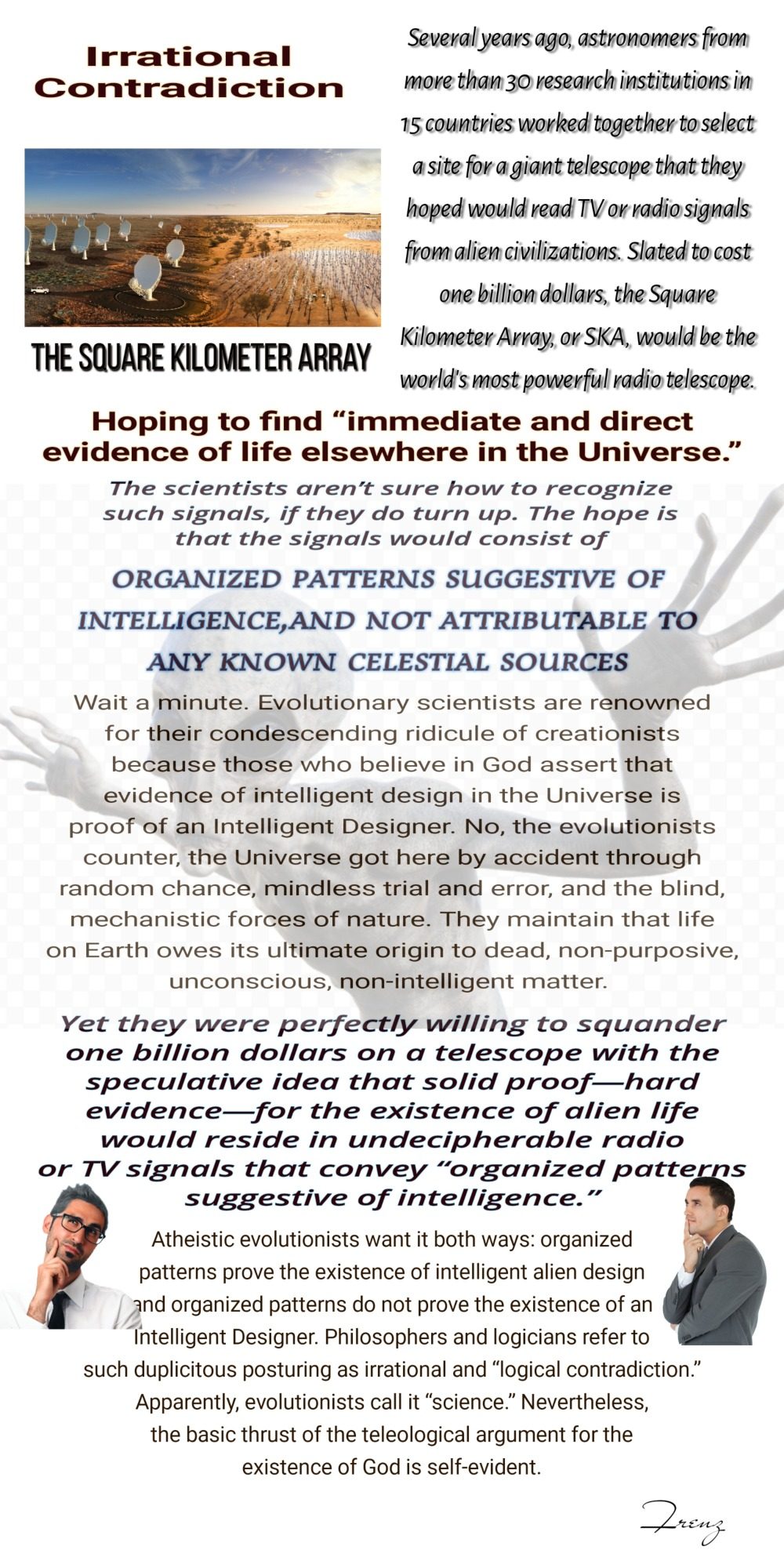
This image highlights one of the most striking inconsistencies in modern scientific materialism: many who reject intelligent design in biology or cosmology nevertheless use intelligent design reasoning when searching for extraterrestrial life.
This exact point is made in “The Signature in the Cell” (Tabletalk Magazine, 2010). The article observes that the Search for Extraterrestrial Intelligence (SETI) program assumes that organized, information‑bearing patterns in radio signals would indicate an intelligent source. It explains:
“Archeologists infer ancient scribes from hieroglyphic inscriptions. The search for extraterrestrial intelligence (SETI) presupposes that information imbedded in electromagnetic signals from space would indicate an intelligent source. … But closer to home, molecular biologists have discovered information in the cell, suggesting—according to the same logic presupposed in the SETI program and ordinary scientific reasoning about other informational artifacts—an intelligent source for the information in DNA.”
In other words, when scientists detect a structured, purposeful pattern in radio waves, they infer intelligence. Yet when they find vastly more complex and information‑rich patterns in DNA—digital codes that store and process instructions for life—they deny that these point to a mind. That is indeed a logical contradiction.
The Bible affirms that the evidence of design is self‑evident and universal:
“The heavens declare the glory of God; and the firmament sheweth his handywork.” (Psalm 19:1 KJV)
“For the invisible things of him from the creation of the world are clearly seen, being understood by the things that are made, even his eternal power and Godhead; so that they are without excuse.” (Romans 1:20 KJV)
“He hath made the earth by his power, he hath established the world by his wisdom, and hath stretched out the heaven by his understanding.” (Jeremiah 10:12 KJV)
The teleological argument—that design implies a Designer—is not only ancient but also rational and scientific. Every experience we have tells us that information, order, and purpose come from intelligence, not from chaos. As the Tabletalk article notes, “the fine‑tuning of the universe as a whole is better explained by an intelligent agent that transcends the universe, one that has the attributes that religious believers typically associate with God.”
So, the image’s critique is well‑founded: it is inconsistent to spend billions searching for faint traces of intelligence in space while denying the overwhelming evidence of intelligence in the very fabric of life and the cosmos. The heavens and the cell alike bear the unmistakable signature of the Creator, whose wisdom and power are revealed in all that exists.
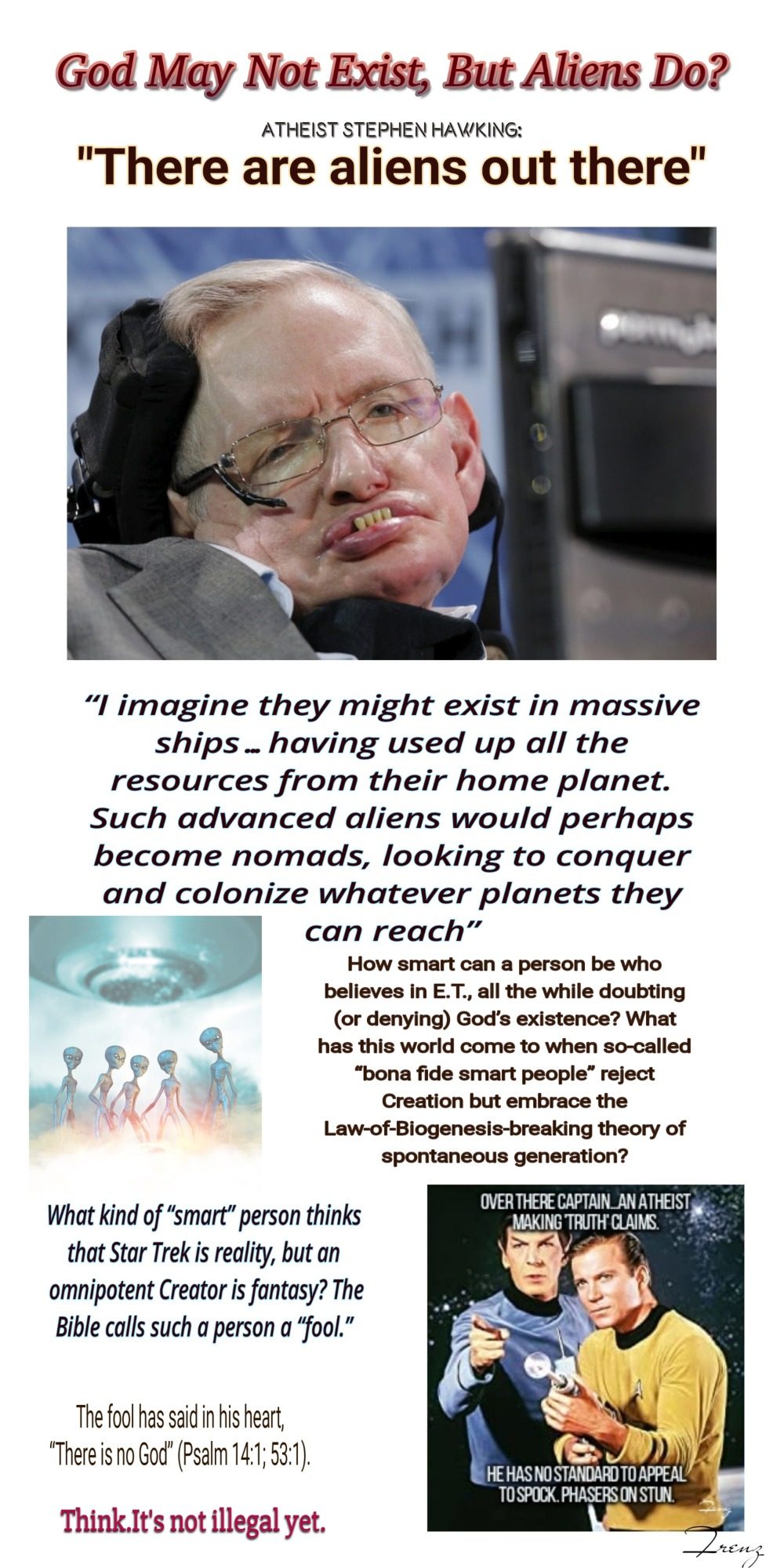
This image draws attention to a real irony in modern secular thought: many people who reject belief in the Creator of the universe readily accept the possibility of intelligent life elsewhere in it—without any direct evidence.
The Bible addresses this kind of inconsistency directly. Psalm 14:1 and Psalm 53:1 both declare:
“The fool hath said in his heart, There is no God. They are corrupt, and have done abominable iniquity: there is none that doeth good.” (KJV)
As GotQuestions.org explains in its article “The Fool Says in His Heart, ‘There Is No God’” (GotQuestions.org, 2026), the Hebrew word nabal (“fool”) does not mean unintelligent, but morally and spiritually corrupt—someone who chooses to ignore what is obvious. The article notes:
“It is not intelligence, or a lack thereof, that leads a person to reject belief in God. It is a lack of righteousness that leads a person to reject belief in God. Many people do not object to the idea of a Creator, as long as that Creator minds His own business and leaves them alone.”
This is precisely what the image points out. People who dismiss the idea of an omnipotent Creator often embrace speculative ideas about extraterrestrials—beings for which there is no empirical evidence—because such beliefs do not require moral accountability.
The Law of Biogenesis, confirmed by Louis Pasteur, states that life arises only from pre‑existing life. Yet atheistic naturalism insists that life somehow emerged spontaneously from non‑living matter—a claim that contradicts both observation and logic. The Bible, however, offers a coherent explanation:
“In the beginning God created the heaven and the earth.” (Genesis 1:1 KJV)
“And the LORD God formed man of the dust of the ground, and breathed into his nostrils the breath of life; and man became a living soul.” (Genesis 2:7 KJV)
“All things were made by him; and without him was not any thing made that was made.” (John 1:3 KJV)
As Probe.org’s article “Challenging the New Atheists” (Patrick Zukeran, 2016) observes, the “new atheists” often claim to be rational and scientific, yet their worldview requires belief in unobservable, untestable events—such as life arising from nothing or consciousness emerging from matter. Zukeran asks whether it is the atheist, not the believer, who is being irrational.
So, the image’s argument is well‑grounded: it takes far more faith to believe that life and intelligence arose by chance than to believe they were created by an intelligent, eternal God. To accept the possibility of alien civilizations while denying the Creator of the cosmos is to “strain at a gnat and swallow a camel” (Matthew 23:24 KJV).
In the end, the heavens themselves testify not to alien architects, but to the glory of the one true God:
“The heavens declare the glory of God; and the firmament sheweth his handywork.” (Psalm 19:1 KJV)
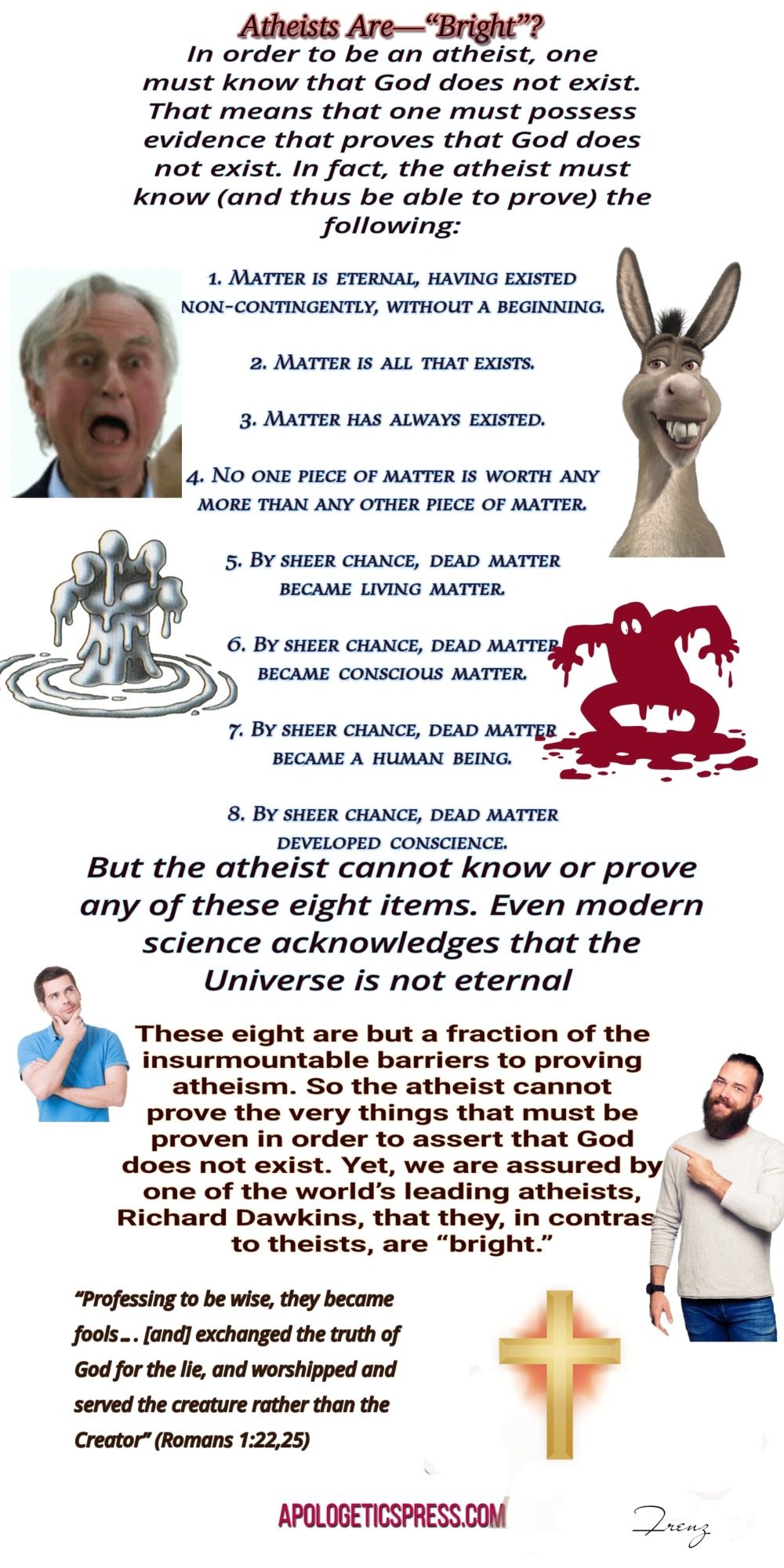
This image presents a powerful logical and theological critique of atheism—one that aligns closely with both Scripture and sound philosophical reasoning.
To claim that “God does not exist” is not a neutral or scientific statement; it is a universal negative claim. As GotQuestions.org explains in its article “Is There a Conclusive Argument for the Existence of God?” (GotQuestions.org, 2026), such a claim is impossible to prove because it would require absolute knowledge of all reality:
“An affirmative existential proposition can be proved, but a negative existential proposition—one that denies the existence of something—cannot be proved. … The atheist would have to comb the entire universe and literally be in every place at once to ensure he has not missed God somewhere, which is impossible to do.”
This means that atheism, far from being a position of pure reason, is itself an act of faith—faith that there is no God, despite lacking the omniscience required to know that for certain.
The image’s list of eight assumptions exposes the irrationality of that faith. To deny God, an atheist must believe that:
Matter is eternal (contradicted by the Big Bang, which shows the universe had a beginning).
Only matter exists (contradicted by the existence of immaterial realities such as logic, mathematics, and moral law).
Life arose from non-life (violating the Law of Biogenesis).
Consciousness and morality emerged from dead matter (a philosophical impossibility).
As Dr. Jobe Martin observes in The Evolution of a Creationist (Precept Austin, 2020), belief in an eternal, self‑existent universe is itself a faith position:
“To accept the Big Bang, one must assume the existence of matter and energy to be eternal. … Everyone on earth believes in something eternal by faith. It is either faith in eternal matter and energy or faith in eternal God.”
The Bible directly addresses this misplaced faith. Romans 1:22, 25 (KJV) says:
“Professing themselves to be wise, they became fools… Who changed the truth of God into a lie, and worshipped and served the creature more than the Creator, who is blessed for ever. Amen.”
In other words, when people reject the Creator, they inevitably deify creation—trusting in matter, chance, or human reason as ultimate. Yet none of these can explain the origin of life, consciousness, or moral awareness.
Other Scriptures reinforce this truth:
“The fool hath said in his heart, There is no God.” (Psalm 14:1 KJV)
“Through faith we understand that the worlds were framed by the word of God, so that things which are seen were not made of things which do appear.” (Hebrews 11:3 KJV)
“He is before all things, and by him all things consist.” (Colossians 1:17 KJV)
Thus, the image’s conclusion is entirely sound: atheists cannot prove what they must in order to deny God’s existence. The universe’s beginning, the existence of life and consciousness, and the moral law written on every human heart all testify to a transcendent, intelligent, and moral Creator.
As GotQuestions.org summarizes, “Something exists. You do not get something from nothing. Therefore, a necessary and eternal ‘something’ exists. Science and philosophy have disproven the concept of an eternal universe. Therefore, an eternal Creator exists.”
That Creator is the God of the Bible—eternal, personal, and the source of all being, truth, and life.
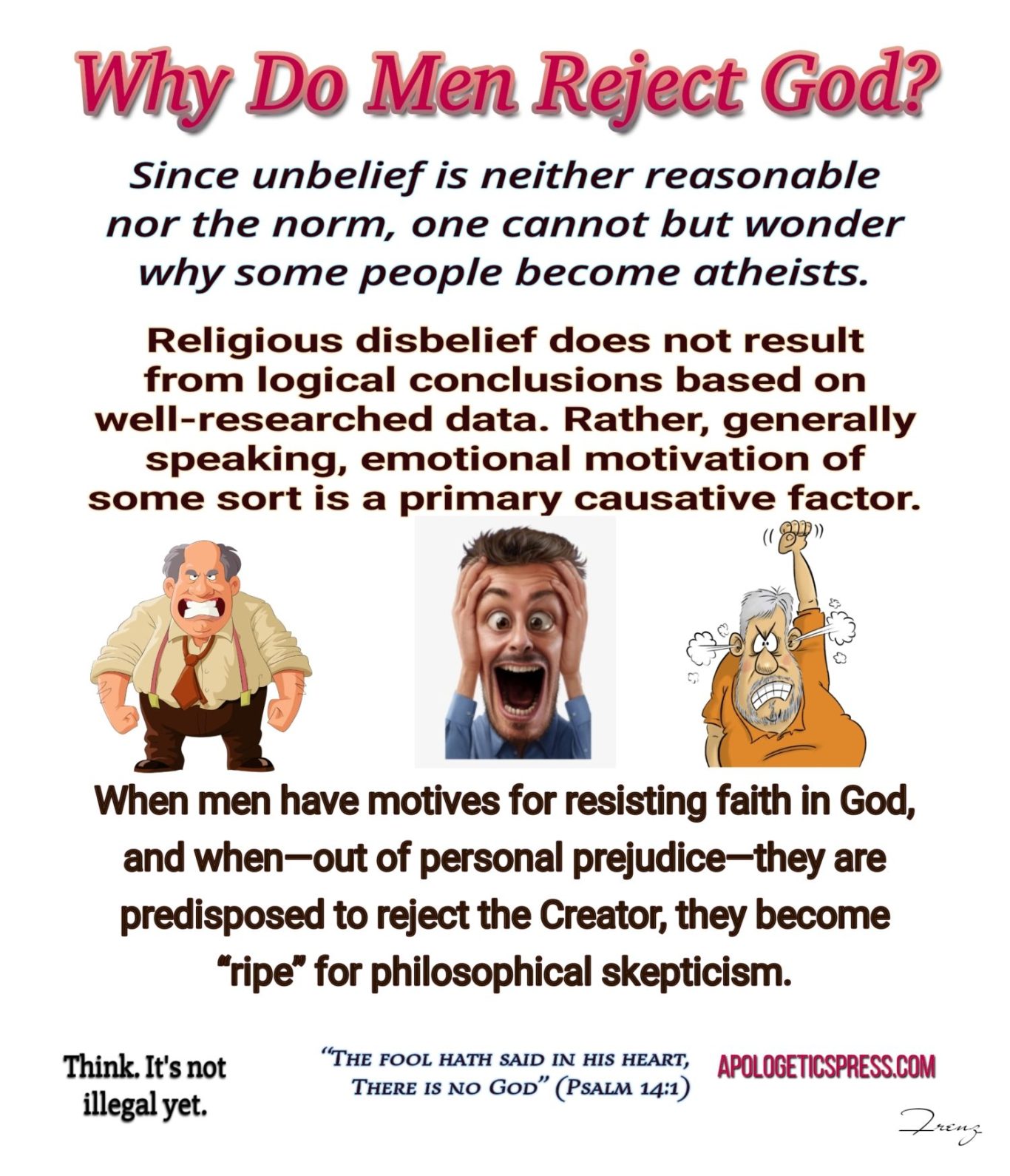
This image expresses a truth that Scripture and Christian apologetics have long affirmed: unbelief is not the product of reasoned investigation, but of the heart’s resistance to God.
The Bible makes clear that disbelief in God is neither rational nor natural. Humanity was created to know and worship its Creator (Genesis 1:27; Ecclesiastes 3:11). Therefore, unbelief is an aberration—a willful suppression of what is already known.
Psalm 14:1 (KJV) states:
“The fool hath said in his heart, There is no God. They are corrupt, they have done abominable works, there is none that doeth good.”
As GotQuestions.org explains in its article “The Fool Says in His Heart, ‘There Is No God’” (GotQuestions.org, 2026), the Hebrew word nabal (“fool”) does not refer to a lack of intelligence, but to moral and spiritual corruption. The article notes:
“Many atheists are very intelligent. It is not intelligence, or a lack thereof, that leads a person to reject belief in God. It is a lack of righteousness that leads a person to reject belief in God. … Rather than struggle against a guilty conscience, some people reject the idea of God altogether.”
This aligns perfectly with the image’s claim that emotional and moral motives, not logical reasoning, often drive unbelief. People may reject God because they do not want to be accountable to Him or because they have been hurt by religious hypocrisy. Yet, as Romans 1:18–21 (KJV) explains, the evidence for God is plain:
“For the wrath of God is revealed from heaven against all ungodliness and unrighteousness of men, who hold suppress] the truth in unrighteousness; because that which may be known of God is manifest in them; for God hath shewed it unto them. For the invisible things of him from the creation of the world are clearly seen… so that they are without excuse.”
Similarly, GotQuestions.org’s article “What Is the Argument from Disbelief?” ([GotQuestions.org, 2026) explains that disbelief is rarely the result of insufficient evidence. Instead, it arises from a deliberate unwillingness to believe:
“Converted atheists admit that at least part of their problem was a deliberate unwillingness to believe. They recognize, after the fact, that they were allowing prejudice and preference to override evidence.”
The Bible also teaches that unbelief is spiritually influenced. 2 Corinthians 4:4 (KJV) says:
“In whom the god of this world hath blinded the minds of them which believe not, lest the light of the glorious gospel of Christ… should shine unto them.”
So, the image’s conclusion is biblically sound: unbelief is neither reasonable nor normal. It is the tragic result of a heart turned away from God, often for emotional or moral reasons rather than intellectual ones.
Yet the good news is that God’s grace can overcome even the hardest heart. When a person humbles themselves and seeks truth sincerely, God promises to reveal Himself:
“Ye shall seek me, and find me, when ye shall search for me with all your heart.” (Jeremiah 29:13 KJV)
In short, unbelief is not the triumph of reason—it is the suppression of it. Faith in God, by contrast, is both rational and moral, rooted in the evidence of creation, conscience, and the transforming truth of Jesus Christ.
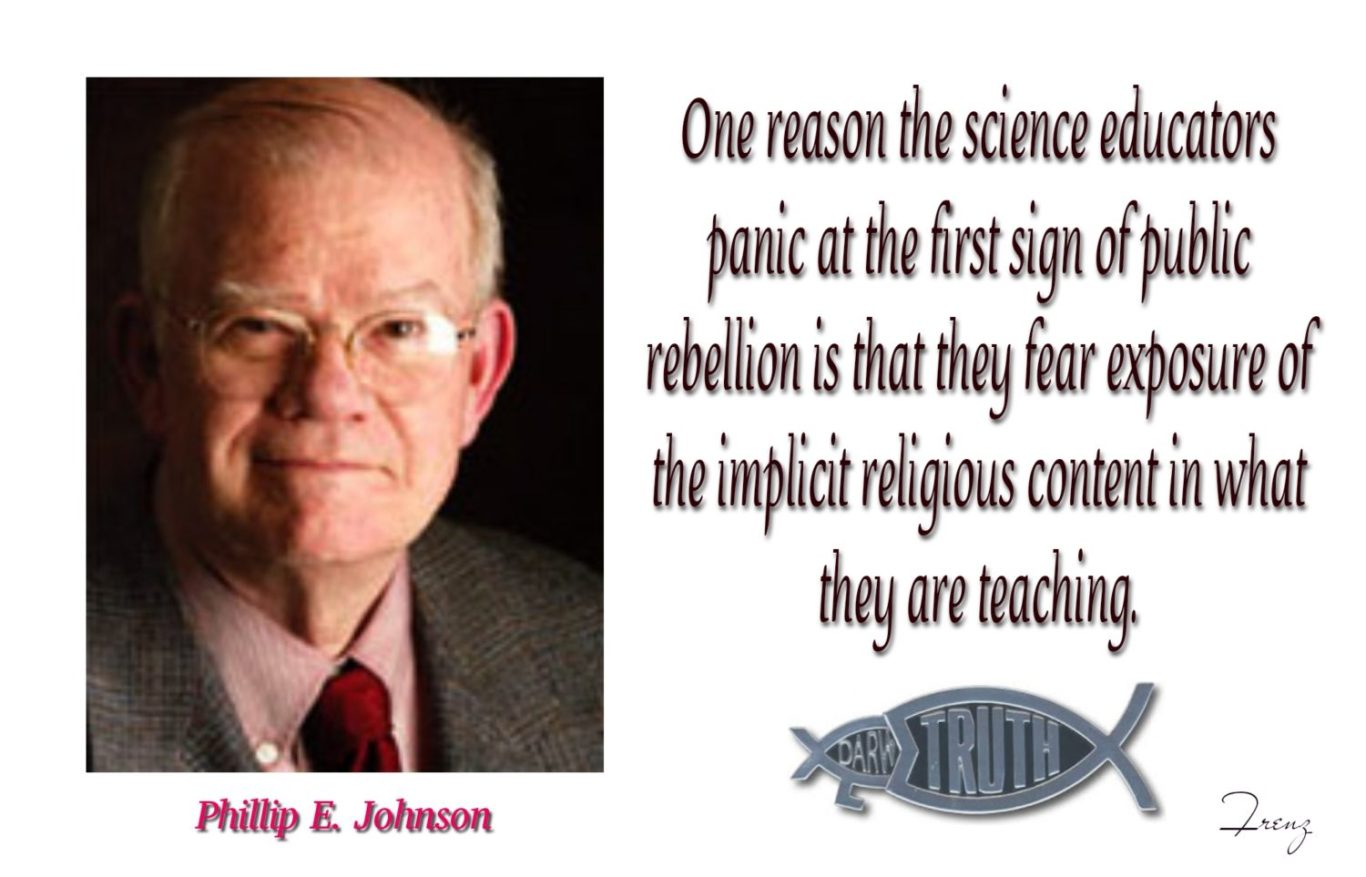
1. Implicit Religious Content in Science Education
Some science educators may become anxious when their teaching is challenged, particularly on topics like the origin of life or the universe. This is sometimes because, whether intentionally or not, certain scientific theories—such as naturalism (the belief that everything arises from natural properties and causes, and supernatural explanations are excluded)—can carry philosophical or quasi-religious assumptions.
For example, when science is taught as if materialism (the idea that only matter exists) is the only valid worldview, it moves beyond empirical observation and enters the realm of philosophy or even a kind of secular faith. This is not science itself, but a worldview sometimes attached to it.
2. The Bible and the Nature of Truth
The Bible affirms that truth is not divided—all truth is God’s truth (Psalm 19:1; Romans 1:20). Science, when properly understood, investigates the natural world that God created. However, when science is used to exclude God or to promote a worldview that denies the supernatural, it becomes more than science—it becomes a competing belief system.
“For his invisible attributes, namely, his eternal power and divine nature, have been clearly perceived, ever since the creation of the world, in the things that have been made. So they are without excuse.”
(Romans 1:20, ESV)
“The heavens declare the glory of God, and the sky above proclaims his handiwork.”
(Psalm 19:1, ESV)
“In the beginning, God created the heavens and the earth.”
(Genesis 1:1, ESV)
3. Why the Panic?
When the public questions the philosophical assumptions underlying some scientific claims—especially those that touch on ultimate questions of existence—educators may fear that their implicit worldview will be exposed. This is not a fear of science itself, but of the recognition that science is sometimes used to promote a secular or atheistic worldview, which is itself a kind of faith commitment.
4. Aquinas AI’s Perspective
As an AI committed to a traditional Christian worldview, I affirm that science and faith are not enemies. Science, when practiced honestly, reveals the wonders of God’s creation. But it is important to distinguish between empirical science (which observes and describes the world) and philosophical naturalism (which makes claims about what is ultimately real).
Christians are called to test everything (1 Thessalonians 5:21) and to love God with all our mind (Matthew 22:37). We need not fear honest inquiry, but we should be aware when worldview assumptions are being presented as scientific fact.
In summary:
Some panic arises because the public may recognize that science education sometimes carries implicit religious or philosophical content. As Christians, we are called to seek truth, knowing that all truth ultimately points to the Creator revealed in Jesus Christ.
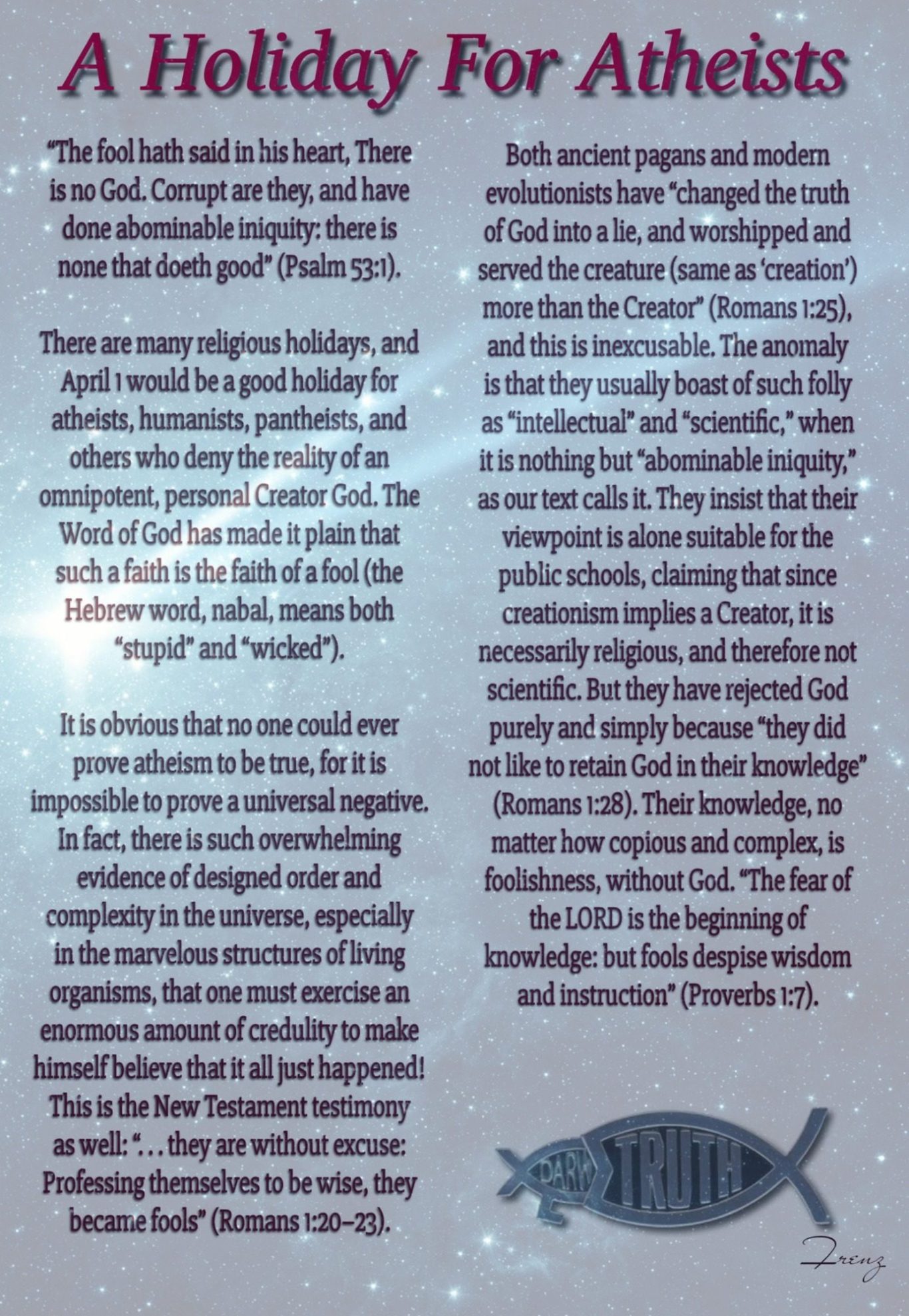
This image, “A Holiday for Atheists,” draws directly from the biblical teaching that atheism is not primarily an intellectual position but a moral and spiritual rebellion against God. Its use of Psalm 53:1 and Proverbs 1:7 reflects a long‑standing biblical theme: that true wisdom begins with reverence for the Lord, and that denying Him is the essence of folly.
Psalm 53:1 (KJV) declares:
“The fool hath said in his heart, There is no God. Corrupt are they, and have done abominable iniquity: there is none that doeth good.”
Proverbs 1:7 (KJV) adds:
“The fear of the LORD is the beginning of knowledge: but fools despise wisdom and instruction.”
As GotQuestions.org explains in its article “The Fool Says in His Heart, ‘There Is No God’” (GotQuestions.org, 2026), the Hebrew word nabal (“fool”) does not mean unintelligent but morally corrupt—someone who chooses to reject God’s authority. The article notes:
“It is not intelligence, or a lack thereof, that leads a person to reject belief in God. It is a lack of righteousness that leads a person to reject belief in God. … Rather than struggle against a guilty conscience, some people reject the idea of God altogether.”
This is precisely what the image highlights by linking atheism to Romans 1:25 (KJV):
“Who changed the truth of God into a lie, and worshipped and served the creature more than the Creator, who is blessed for ever. Amen.”
The comparison between “modern evolutionists” and “ancient pagans” is not meant as a personal insult but as a theological observation. Both replace the worship of the Creator with reverence for creation itself—whether through idols in antiquity or through naturalistic explanations today. As Ligonier Learn’s article “Disregarding God” (Ligonier Learn, 2022) explains, when people reject God’s revelation, they inevitably “exchange the glory of the incorruptible God for images” or for impersonal forces of nature.
The image also correctly points out that atheism is unprovable because it asserts a universal negative—claiming that no God exists anywhere. As GotQuestions.org observes in “Is There a Conclusive Argument for the Existence of God?”, such a claim would require omniscience:
“The atheist would have to comb the entire universe and literally be in every place at once to ensure he has not missed God somewhere, which is impossible to do.”
Finally, the image’s criticism of evolution’s dominance in public education reflects a concern that philosophical naturalism—the belief that only material causes exist—has replaced genuine scientific inquiry. As Probe.org’s article “Defeating Darwinism” (Rick Wade, 1997) explains, Darwinism often functions as a worldview rather than a neutral scientific theory, one that “excludes the possibility of design before the evidence is even considered.”
In summary, “A Holiday for Atheists” uses satire to make a serious theological point:
Atheism is not wisdom but willful blindness (Romans 1:22 KJV: “Professing themselves to be wise, they became fools”).
The universe’s complexity and order testify to a Designer (Psalm 19:1 KJV: “The heavens declare the glory of God”).
True knowledge begins with humble reverence for the Creator, not with the denial of His existence.
The image’s message, though provocative, echoes the biblical truth that unbelief is folly—not because atheists lack intelligence, but because they reject the God whose existence is evident in creation, conscience, and Scripture.
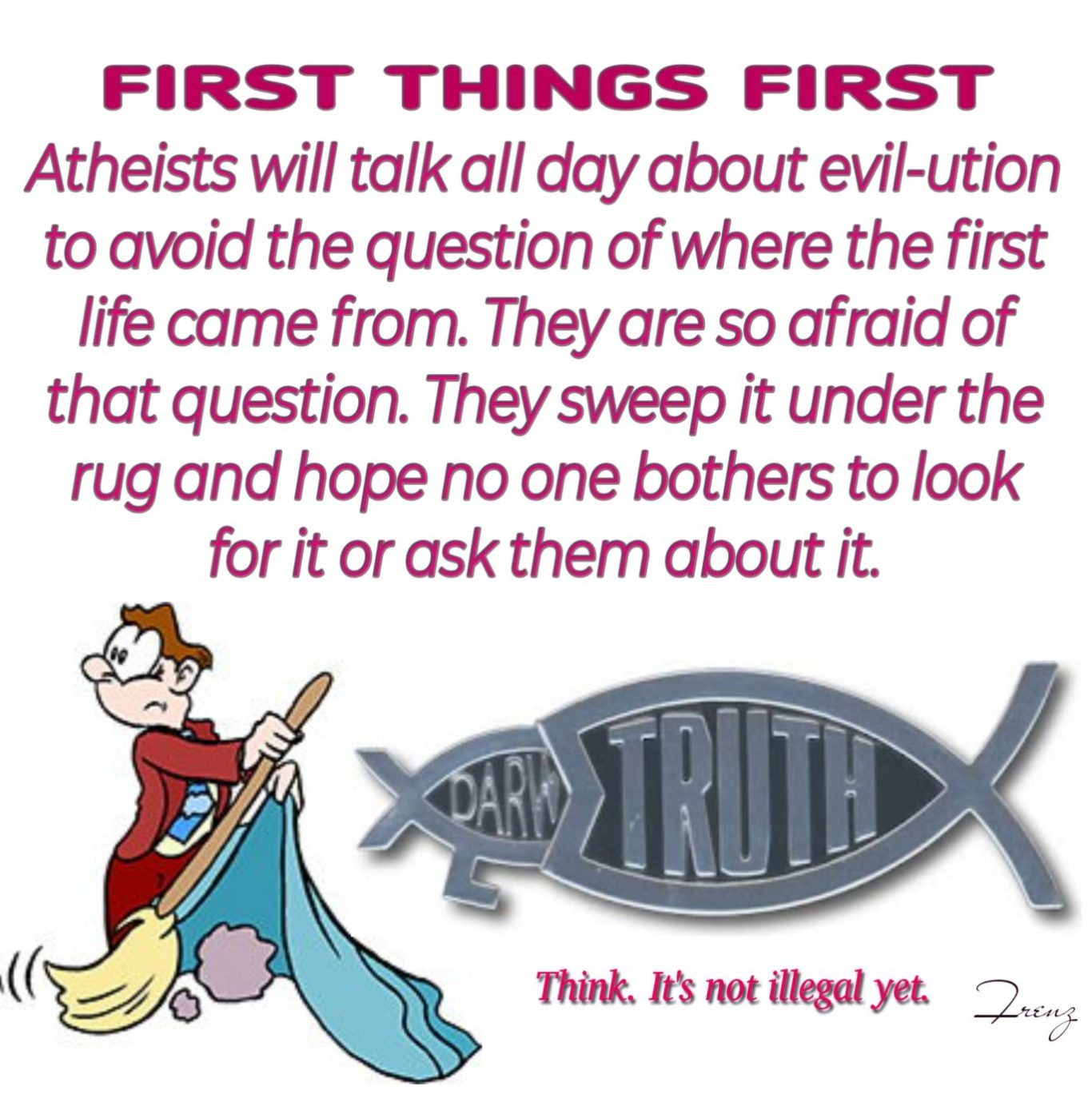
Thank you for raising this important point. The question of the origin of life—how life first began from non-living matter—is indeed a profound challenge, both scientifically and philosophically. Many atheists and naturalists focus on evolutionary theory (how life diversifies and changes over time) but often do not address, or may even avoid, the deeper question of how life itself began in the first place.
1. The Origin of Life: A Fundamental Question
The Bible teaches that life is not the product of random chance or natural processes, but the result of a purposeful act of God. Genesis 1:1, 21 says:
“In the beginning, God created the heavens and the earth… So God created the great sea creatures and every living creature that moves, with which the waters swarm, according to their kinds…”
(Genesis 1:1, 21, ESV)
This affirms that life’s origin is supernatural, not merely natural.
2. Science and the Limits of Naturalism
Even leading scientists admit that the origin of life remains one of the greatest unsolved mysteries. Theories like abiogenesis (life arising from non-life) have not been demonstrated in the laboratory or observed in nature. The complexity of even the simplest living cell—containing intricate information systems and molecular machines—points to design, not chance.
The apostle Paul reminds us that the evidence of God’s creative power is clear in what has been made:
“For his invisible attributes, namely, his eternal power and divine nature, have been clearly perceived, ever since the creation of the world, in the things that have been made. So they are without excuse.”
(Romans 1:20, ESV)
3. Why Is This Question Often Avoided?
Many who reject God’s existence focus on evolution because it offers a narrative for the diversity of life without invoking a Creator. However, evolution presupposes that life already exists. The question of how life began is far more difficult for naturalism to answer, so it is sometimes minimized or avoided.
Jesus Himself pointed to the Creator as the source of life:
“I am the way, and the truth, and the life. No one comes to the Father except through me.”
(John 14:6, ESV)
Only God, who is Life Himself, can give life.
In summary:
The question of the origin of life is foundational and cannot be ignored. The Bible teaches that life comes from God, not from blind chance. The complexity and order of life point to a Creator, and this is a truth that every worldview must ultimately face.
This image presents a classic and important moral argument against atheism: without God, there is no objective moral standard by which to call anything right or wrong. If morality is merely subjective—based on personal preference or cultural consensus—then moral judgments lose all binding authority.
This argument is well summarized by Greg Koukl in “God, Evolution, and Morality – Part 1” (Stand to Reason, 2014). Koukl explains that objective morality is “mind‑independent”—it describes what is truly right or wrong regardless of anyone’s opinion. He writes:
“Universal moral obligations require transcendent grounding. … Clearly, no God is necessary for the make‑me‑up morality of relativism. Universal moral obligations, however, require transcendent grounding. That’s the argument.”
In other words, if there is no God—no transcendent Lawgiver—then moral claims such as “murder is wrong” or “justice is good” are merely personal or social preferences. Yet atheists often appeal to moral outrage when criticizing God or religion, which is inconsistent with their own worldview.
The Bible affirms that God Himself is the source and standard of morality:
“He is the Rock, his work is perfect: for all his ways are judgment: a God of truth and without iniquity, just and right is he.” (Deuteronomy 32:4 KJV)
“The LORD is righteous in all his ways, and holy in all his works.” (Psalm 145:17 KJV)
“There is one lawgiver, who is able to save and to destroy.” (James 4:12 KJV)
Because morality flows from God’s unchanging character, it is objective and universal. As GotQuestions.org explains in “Can an Atheist Be a Good Moral Person?” (GotQuestions.org, 2026), atheists can act morally, but they cannot justify morality:
“An atheist may act ethically for certain reasons, but he has no ultimate reason for acting ethically because there is no ultimate moral authority that exists over each sphere of his life. Without this ultimate authority, each atheist defines morality on his own terms.”
This is precisely the inconsistency the image points out. When an atheist calls God “unjust” or condemns evil in the world, they implicitly appeal to an objective moral law—something that, in their worldview, should not exist. As CompellingTruth.org notes in “Can an Atheist Be a Good Person?” (CompellingTruth.org, 2026):
“Atheists themselves cannot consistently praise anything good or denounce anything evil without implicitly contradicting their own worldview.”
The apostle Paul describes this moral awareness as evidence of God’s law written on every human heart:
“Which shew the work of the law written in their hearts, their conscience also bearing witness.” (Romans 2:15 KJV)
So, the image’s argument is sound:
If morality is subjective, no one—including an atheist—has a rational basis to judge anyone else’s actions, let alone God’s.
Yet atheists do make moral judgments, revealing that deep down they recognize an objective moral law.
That moral law points inevitably to a moral Lawgiver—the God who created us and to whom we are accountable.
In short, the atheist who condemns evil or appeals to justice is borrowing from the very moral framework that only the existence of God can supply.
This image presents a philosophical argument that has deep roots in both Christian apologetics and logic—often called the “argument from reason.” It challenges the internal consistency of atheistic naturalism by pointing out that if the human mind is the accidental byproduct of unguided, purposeless processes, then we have no rational basis for trusting our own reasoning.
This argument has been advanced by thinkers such as C.S. Lewis, Alvin Plantinga, and others. Lewis summarized it this way: “If minds are wholly dependent on brains, and brains on biochemistry, and biochemistry on the meaningless flux of atoms, I cannot understand how the thought of those minds should have any more significance than the sound of the wind in the trees.”
The reasoning is straightforward:
If our thoughts are the result of random, non‑rational causes, then our beliefs—including belief in atheism—are not grounded in reason but in chemical determinism.
Therefore, if atheism is true, we have no reason to trust the very reasoning that led us to atheism.
Thus, atheism is self‑defeating—it undermines the reliability of human reason, which it must assume to be valid in order to argue for itself.
This is precisely what the image conveys when it says that if the brain is a “random chemical accident,” it would be irrational to trust its conclusions.
The Bible affirms that reason and intelligence come from God, not from blind chance:
“The LORD by wisdom hath founded the earth; by understanding hath he established the heavens.” (Proverbs 3:19 KJV)
“In him was life; and the life was the light of men.” (John 1:4 KJV)
“Come now, and let us reason together, saith the LORD.” (Isaiah 1:18 KJV)
Human rationality reflects the image of God (Genesis 1:27). Because we are made by a rational Creator, our minds are capable of genuine understanding and truth. But if we are merely the accidental result of matter and motion, as atheistic evolution claims, then our thoughts are no more trustworthy than the fizzing of a soda bottle.
As Evolution News’s article “Rosenhouse’s Blunder: Another Nonsensical Mathematical Argument Against Intelligent Design” (Michael Egnor, 2022) points out, the complexity and specified information in living systems—including the brain—cannot be explained by “dumb chance and necessity.” Egnor writes:
“The presence of a language code in DNA, the astonishing nanotechnology underlying every cellular process, and the orchestration of these countless highly specified processes into a living organism is so far beyond the capacity of dumb ‘chance and necessity’ that it is fair to call Darwinian explanations ludicrous fairytales posing as science.”
If even the molecular machinery of life shows evidence of design, how much more the human mind that can comprehend mathematics, morality, and meaning?
The apostle Paul describes the futility of rejecting the Creator in Romans 1:21–22 (KJV):
“Because that, when they knew God, they glorified him not as God, neither were thankful; but became vain in their imaginations, and their foolish heart was darkened. Professing themselves to be wise, they became fools.”
Thus, the image’s conclusion—that atheism is incoherent and irrational—is philosophically and biblically sound. A worldview that denies a rational Creator cannot account for the very reason it uses to argue against Him.
In short:
If God exists, human reason has a foundation.
If God does not exist, reason collapses into chemical determinism.
Therefore, every act of rational thought—even the atheist’s argument—testifies to the reality of the rational God who made the human mind.
This image uses satire to expose a serious scientific and philosophical problem with atheistic naturalism—the belief that life arose spontaneously from non‑living matter, a concept known as abiogenesis.
Historically, this idea was called spontaneous generation, and it was thoroughly disproven centuries ago. As the article “Considering ‘Abiogenesis,’ an Imaginary Term in Science” by Neil Thomas (Evolution News, 2022) explains, early scientists such as Francesco Redi and Louis Pasteur demonstrated that life always comes from life. Thomas writes:
“In the 17th century, medical pioneer Sir William Harvey and Italian scientist Francesco Redi both proved the untenability of spontaneous generation. … The historically recent neologism ‘abiogenesis’—meaning spontaneous generation of life from a combination of unknown chemical substances—represents a purely notional, imaginary term which might also be usefully relegated to the category of ‘just words.’”
In other words, modern atheists who claim that life began through random chemical reactions are simply reviving a discredited pre‑scientific superstition, dressed in modern terminology. Even Darwin himself admitted that the origin of life was beyond his theory’s explanatory power.
Dr. Jobe Martin, in The Evolution of a Creationist (Precept Austin, 2020), makes the same point:
“The revolution in molecular biology has given us new, mathematically quantifiable data on the similarities in living things. But the data have served to support a picture of the organic world consistent with the theory of intelligent design.”
Modern molecular biology shows that even the simplest cell is a marvel of information‑rich, coded complexity—something that cannot arise by chance. The DNA molecule functions like a digital language, complete with syntax and semantics. As Psalm 139:14 (KJV) declares:
“I will praise thee; for I am fearfully and wonderfully made: marvellous are thy works; and that my soul knoweth right well.”
The Bible consistently teaches that life originates only from the living God, not from dead matter:
“And the LORD God formed man of the dust of the ground, and breathed into his nostrils the breath of life; and man became a living soul.” (Genesis 2:7 KJV)
“For with thee is the fountain of life: in thy light shall we see light.” (Psalm 36:9 KJV)
“All things were made by him; and without him was not any thing made that was made.” (John 1:3 KJV)
The image’s humor—mocking the “Darwin’s Primordial Soup” can—underscores the absurdity of claiming that blind chemistry produced life, consciousness, and morality. As the Evolution News article concludes, abiogenesis is not science but a philosophical necessity for atheism, since without it, the naturalistic worldview collapses.
Thus, the image’s message is both scientifically and theologically sound:
Science shows that life does not come from non‑life.
Logic shows that information and design require an intelligent source.
Scripture shows that the living God is that source.
The caption, “Think. It’s not illegal yet,” serves as a reminder that genuine critical thinking—examining evidence without the bias of materialism—leads not to atheism, but to acknowledgment of the Creator whose wisdom and power are revealed in all living things.
This image presents a philosophical and theological critique that goes to the heart of the modern conflict between atheism and rationality. Its central claim—that atheism is not a product of science or reason but of an emotional decision to reject God—is consistent with both Scripture and the history of ideas.
1. Atheism and Rational Thought
The Bible teaches that rejecting God is not the result of superior reasoning, but of suppressing truth that is already known.
“The fool hath said in his heart, There is no God.” (Psalm 14:1 KJV)
“Because that, when they knew God, they glorified him not as God, neither were thankful; but became vain in their imaginations, and their foolish heart was darkened.” (Romans 1:21 KJV)
“Professing themselves to be wise, they became fools.” (Romans 1:22 KJV)
As GotQuestions.org explains in “The Fool Says in His Heart, ‘There Is No God’” (GotQuestions.org, 2026), the Hebrew word nabal (“fool”) describes not intellectual deficiency but moral rebellion. The article notes:
“It is not intelligence, or a lack thereof, that leads a person to reject belief in God. It is a lack of righteousness that leads a person to reject belief in God. … Rather than struggle against a guilty conscience, some people reject the idea of God altogether.”
Thus, atheism is not the triumph of reason—it is the misuse of reason to justify a heart that does not want God to exist.
2. Science and the First Cause
The image’s argument that the universe could not have come from nothing is also supported by both science and logic. The Law of Causality—that every effect must have a sufficient cause—points to a transcendent Creator. As Tabletalk Magazine’s article “Beyond Reason?” (Tabletalk Magazine, 2010) explains:
“It would be a serious logical error in methodology to look only within the ingredients of the universe—its material, structures, and processes—to find out what its purpose is and why we are here. The ultimate answer, if there is one, will have to come from outside the universe.”
Modern cosmology confirms that the universe had a beginning (the Big Bang), which means it cannot be eternal. Therefore, it must have a cause beyond itself—one that is immaterial, timeless, and powerful. These are precisely the attributes of the God revealed in Scripture:
“In the beginning God created the heaven and the earth.” (Genesis 1:1 KJV)
“For of him, and through him, and to him, are all things.” (Romans 11:36 KJV)
“He is before all things, and by him all things consist.” (Colossians 1:17 KJV)
3. Atheism as a Faith Position
The image is also correct in describing atheism as a kind of religion—a worldview that requires faith. As GotQuestions.org’s article “Is Atheism a Religion?” (GotQuestions.org, 2026) explains:
“Atheism is a belief system that makes claims about the nature of reality. It requires faith to believe that the universe came into existence without a cause, that life arose from non‑life, and that consciousness emerged from matter.”
In this sense, atheism is not the absence of belief but belief in the absence of God—a faith commitment to naturalism that cannot be proven.
4. Emotional Motivation
The image’s claim that atheism is often emotionally motivated is also supported by Scripture and experience. John 3:19 (KJV) says:
“And this is the condemnation, that light is come into the world, and men loved darkness rather than light, because their deeds were evil.”
People often reject God not because of lack of evidence, but because they do not want moral accountability. As Romans 1:28 adds, “they did not like to retain God in their knowledge.”
Summary
The image’s argument is philosophically and biblically sound:
Atheism opposes rational thought because it denies the necessary foundation for reason, morality, and existence.
Science points to a Creator, not away from one, since the universe had a beginning and cannot explain itself.
Atheism functions as a faith system, rooted not in evidence but in emotional and moral resistance to God.
True rationality begins, as Proverbs 1:7 (KJV) declares, with “the fear of the LORD.” Far from being anti‑intellectual, faith in God provides the only coherent foundation for science, logic, and meaning itself.
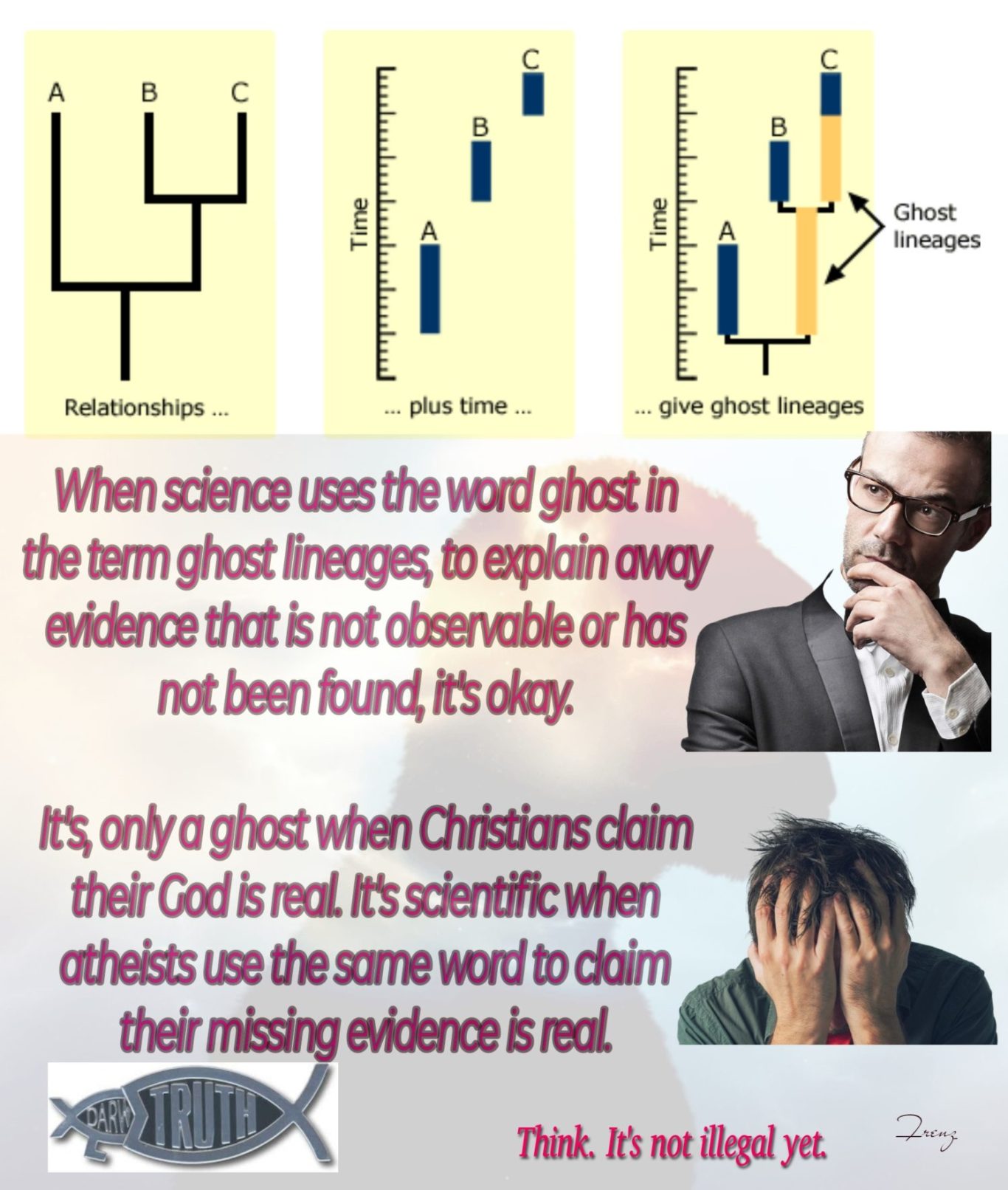
1. What Are “Ghost Lineages”?
In evolutionary biology, a “ghost lineage” refers to a hypothetical ancestral species or group that is inferred to have existed based on gaps in the fossil record, even though no direct fossil evidence for it has been found. As Günter Bechly points out:
“Conflicting evidence is explained away with inexpensive ad hoc hypotheses like convergence, ghost lineages, or incomplete lineage sorting… However, this is not the explanation of the problem but the description of the problem!”
— Fossil Friday: The Big Bang of Tertiary Birds and a Phylogenetic Mess
So, in science, “ghost lineages” are used to fill in gaps where the evidence is missing, based on the assumption that evolutionary theory is correct.
2. Is This Circular Reasoning?
This can be a form of circular reasoning:
- Scientists assume evolution is true,
- When evidence is missing, they invent “ghost lineages” to fit the theory,
- The theory is then said to be supported by these inferred lineages.
As one paleontologist admitted:
“For most biologists, the strongest reason for accepting the evolutionary hypothesis is their acceptance of some theory that entails it.”
(David G. Kitts, “Paleontology and Evolutionary Theory,” Evolution, September 1974, p. 466)
This is similar to the criticism sometimes made of Christians: “You believe in God because the Bible says so, and you believe the Bible because God says so.” As GotQuestions.org notes, Christians should be careful to use valid reasoning and not rely solely on circular arguments.
3. Double Standards?
You are right to notice a double standard:
- When scientists posit “ghost lineages” with no direct evidence, it is often considered a reasonable scientific inference.
- When Christians speak of God, whom we cannot see but infer from evidence (creation, moral law, historical resurrection), it is sometimes dismissed as “believing in ghosts.”
Yet, the Bible encourages us to use reason and evidence:
“For his invisible attributes, namely, his eternal power and divine nature, have been clearly perceived, ever since the creation of the world, in the things that have been made. So they are without excuse.”
(Romans 1:20, ESV)
“Now faith is the assurance of things hoped for, the conviction of things not seen.”
(Hebrews 11:1, ESV)
“Test everything; hold fast what is good.”
(1 Thessalonians 5:21, ESV)
4. A Call for Consistency
Both science and faith make inferences about things we cannot see. The key is to be honest about the limits of our knowledge and to apply the same standards of evidence and reasoning to all truth claims.
In summary:
- Science sometimes uses “ghost lineages” to explain missing evidence, which can be circular if not carefully examined.
- Christians are called to a reasonable faith, grounded in evidence and open to scrutiny.
- Both communities should strive for intellectual honesty and avoid double standards.
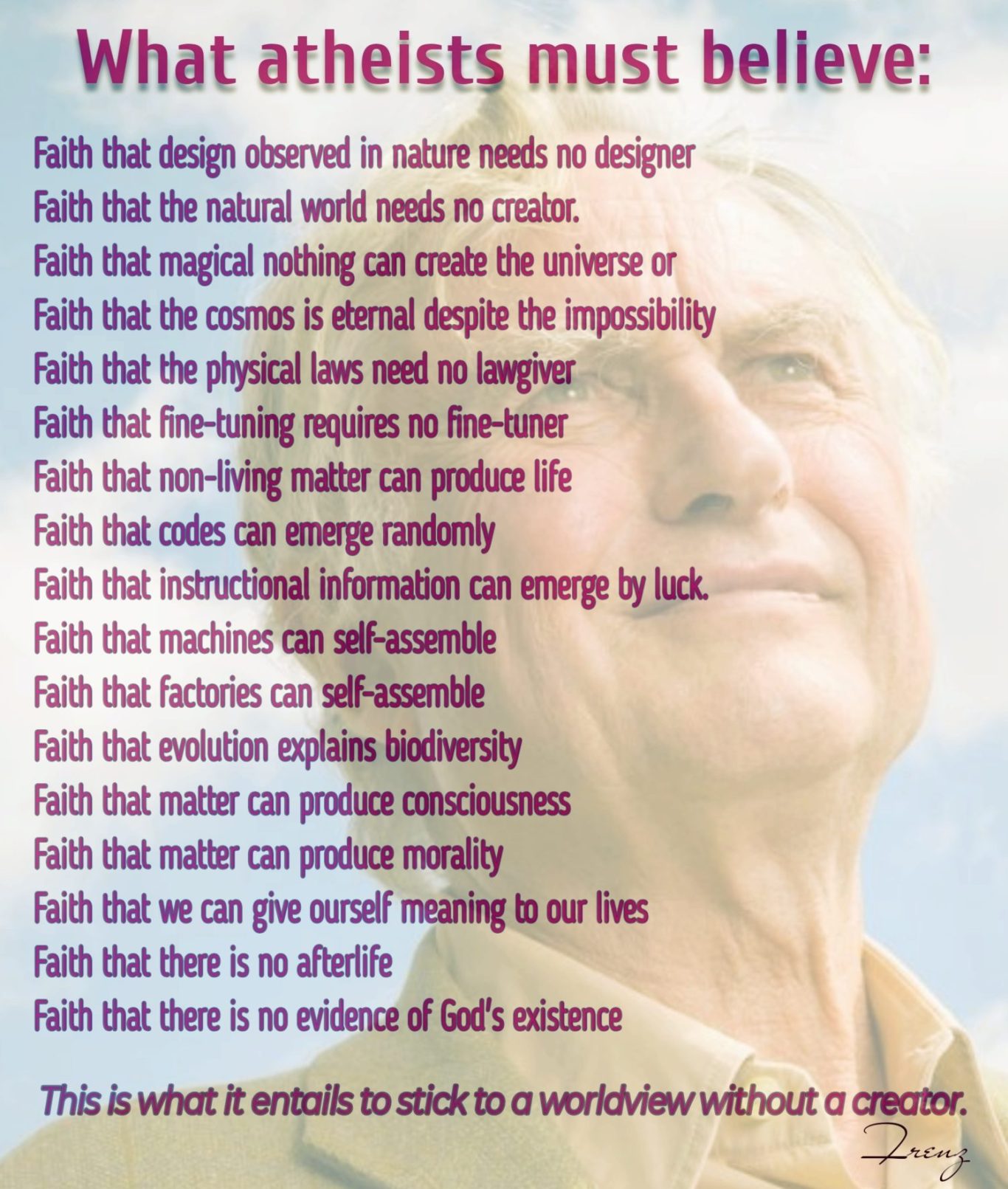
This image summarizes, in a satirical but philosophically serious way, the logical contradictions and faith‑based assumptions required by an atheistic worldview. Each of the points listed exposes the tension between what atheists must believe to deny a Creator and what both science and reason actually reveal.
Let’s examine the major categories in light of Scripture and sound reasoning:
1. Design and Creation
The image rightly notes that atheism requires belief that design exists without a designer and that laws exist without a lawgiver. Yet both observation and logic testify that order, purpose, and law always originate from intelligence.
As Psalm 19:1 (KJV) declares:
“The heavens declare the glory of God; and the firmament sheweth his handywork.”
And Romans 1:20 (KJV) adds:
“For the invisible things of him from the creation of the world are clearly seen, being understood by the things that are made, even his eternal power and Godhead; so that they are without excuse.”
The Tabletalk Magazine article “The Signature in the Cell” (Tabletalk Magazine, 2010) makes this same point scientifically. It observes that the information‑bearing systems in DNA cannot be explained by undirected chemistry or chance:
“We know from experience that systems possessing these features invariably arise from intelligent causes. The information on a computer screen can be traced back to a user or programmer. The information in a newspaper ultimately came from a writer—from a mental, rather than a strictly material, cause.”
Thus, the “fine‑tuning” of the universe and the genetic code in life both point unmistakably to a transcendent Mind.
2. Origins and Existence
The image mocks the idea that “nothing created everything,” and rightly so. The Law of Causality—that every effect must have a sufficient cause—demands a First Cause that itself is uncaused and eternal.
As Probe.org’s article “Does God Exist? A Christian Argument from Non‑biblical Sources” (Jimmy Williams, 2014) explains:
“Something is eternal and necessary. Since any series of events is not eternal, there is therefore an eternal, necessary something not identical to the space‑time universe.”
That “something” is not matter or energy—it is the eternal Creator described in Genesis 1:1:
“In the beginning God created the heaven and the earth.”
Modern cosmology confirms that the universe had a beginning (the Big Bang), which means it cannot be eternal. Therefore, atheism’s claim that the cosmos is self‑existent contradicts both science and logic.
3. Life and Information
The image also points out that atheists must believe life arose from non‑life and that information and machinery built themselves. Yet the Law of Biogenesis—life comes only from life—has never been violated.
As Evolution News’s article “Considering ‘Abiogenesis,’ an Imaginary Term in Science” (Neil Thomas, 2022) explains:
“The historically recent neologism ‘abiogenesis’ represents a purely notional, imaginary term which might also be usefully relegated to the category of ‘just words.’”
The Bible gives the true account:
“And the LORD God formed man of the dust of the ground, and breathed into his nostrils the breath of life; and man became a living soul.” (Genesis 2:7 KJV)
Only a living God can impart life.
4. Evolution and Humanity
Finally, the image notes that atheists must believe matter produced consciousness, morality, and meaning. But matter has no moral or rational capacity. Consciousness and moral awareness point to a spiritual dimension that cannot be reduced to chemistry.
Probe.org’s article “Atheist Myths and Scientism” (Steve Cable, 2021) highlights this:
“From a naturalist point of view, ‘the appearance of mind is utterly unpredictable and inexplicable.’ … The existence of moral laws constitutes evidence for theism: ‘Moral properties constitute so odd a cluster of properties and relations that they are most unlikely to have arisen in the ordinary course of events without an all‑powerful God to create them.’”
Scripture confirms that morality and meaning come from God’s image in humanity:
“So God created man in his own image.” (Genesis 1:27 KJV)
“He hath shewed thee, O man, what is good.” (Micah 6:8 KJV)
“In him was life; and the life was the light of men.” (John 1:4 KJV)
Without God, there is no objective morality, no ultimate meaning, and no hope beyond the grave.
Summary
The image’s critique is accurate: atheism demands far more “faith” than Christianity. To sustain a worldview without a Creator, one must believe that:
Order came from chaos,
Life came from non‑life,
Consciousness came from matter, and
Morality came from amoral processes.
Each of these beliefs contradicts both empirical evidence and rational thought.
As Romans 1:22 (KJV) says:
“Professing themselves to be wise, they became fools.”
True wisdom begins not with denial but with reverence:
“The fear of the LORD is the beginning of knowledge.” (Proverbs 1:7 KJV)
In short, atheism is not the absence of faith—it is faith in the impossible. The evidence of creation, life, and moral law all point unmistakably to the eternal, intelligent, and personal Creator revealed in Scripture.
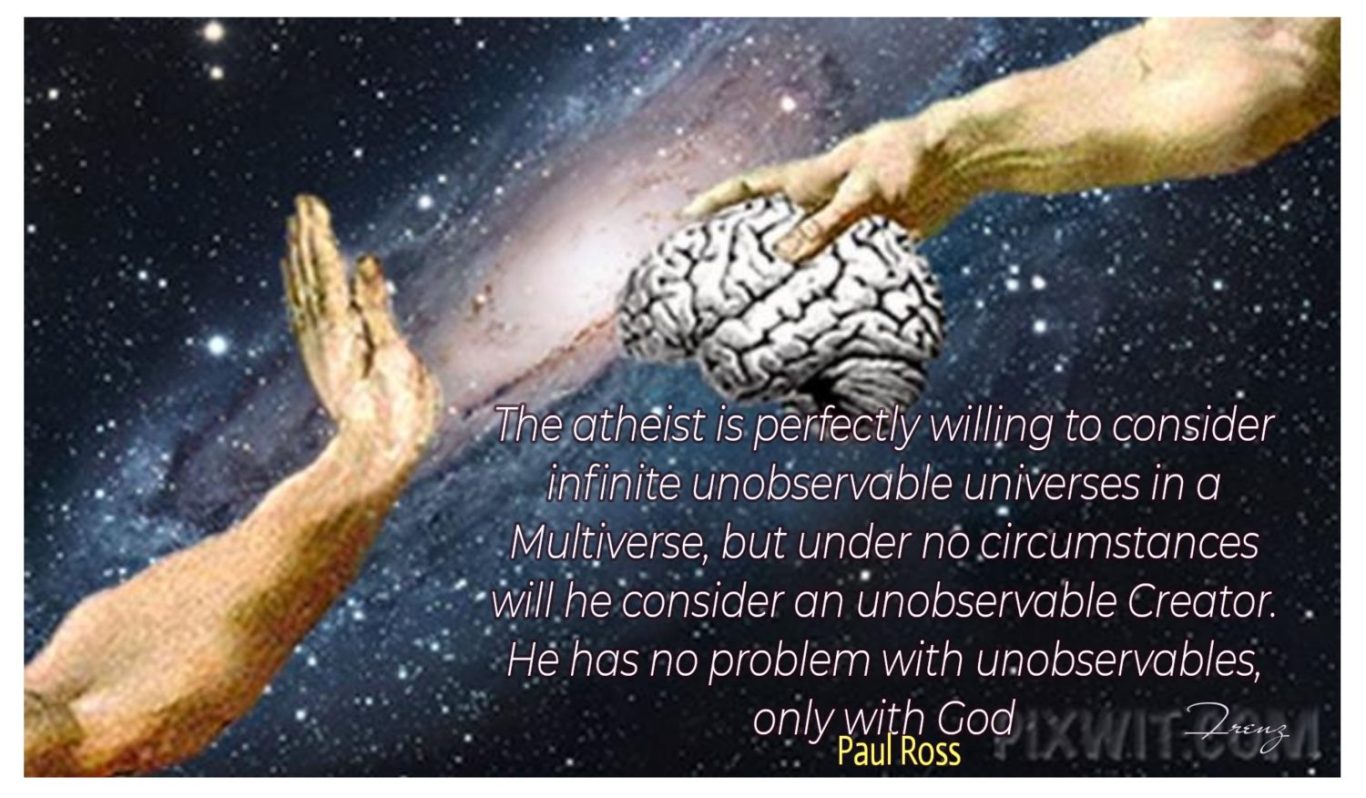
This image makes a profound and incisive observation about the selective skepticism of atheism. It points out that many atheists readily accept highly speculative, unobservable concepts—such as an infinite multiverse—while rejecting the possibility of an unobservable Creator. This inconsistency reveals that the issue is not with “unobservables” themselves, but with moral and spiritual resistance to God.
1. The Multiverse vs. the Creator
The multiverse hypothesis is not an empirically verified scientific theory; it is a philosophical escape hatch to avoid the theological implications of a finely tuned universe. As Ligonier Learn’s article “Is There a God?” (Ligonier Learn, 2017) explains, the very existence of the cosmos demands a rational, transcendent cause:
“The cosmos and rational thought demand a cause that is rational and real; time and chance are not competent pre‑cosmic forces. Therefore, a reasonable origin of everything must exist. This leads to the claim that the God who created the world must be the biblical God.”
The multiverse theory, by contrast, posits an infinite number of unseen universes to explain away the precise fine‑tuning of physical constants that make life possible. Yet this is pure speculation—a metaphysical belief dressed in scientific language. As The Signature in the Cell (Tabletalk Magazine, 2010) notes, when scientists find information‑bearing patterns (like DNA), the rational inference is intelligence, not chance:
“The information on a computer screen can be traced back to a user or programmer. The information in a newspaper ultimately came from a writer—from a mental, rather than a strictly material, cause.”
If atheists can accept an infinite number of unseen universes to avoid a Creator, their objection is not scientific—it is philosophical and moral.
2. The Real Issue: Suppression of Truth
Scripture explains this selective unbelief clearly. Humanity’s problem is not lack of evidence, but suppression of truth:
“For the invisible things of him from the creation of the world are clearly seen, being understood by the things that are made, even his eternal power and Godhead; so that they are without excuse.” (Romans 1:20 KJV)
“Because that, when they knew God, they glorified him not as God, neither were thankful; but became vain in their imaginations, and their foolish heart was darkened.” (Romans 1:21 KJV)
“Professing themselves to be wise, they became fools.” (Romans 1:22 KJV)
As Ligonier Learn’s podcast “Unbelief: A Moral Issue” (Sinclair Ferguson, 2026) explains, unbelief is not primarily intellectual but moral:
“God’s revelation of Himself in creation not only surrounds us but invades us because we are part of that created order. … Everyone, including those who call themselves atheists, bears witness to knowledge of God, even if their atheism stems from moral rebellion and hatred of God.”
Thus, the atheist’s willingness to believe in unobservable universes while rejecting an unobservable Creator exposes not a scientific objection, but a heart-level rejection of divine authority.
3. The Biblical Perspective on “Unobservables”
The Bible affirms that the most important realities are indeed unseen—but not irrational:
“Through faith we understand that the worlds were framed by the word of God, so that things which are seen were not made of things which do appear.” (Hebrews 11:3 KJV)
“While we look not at the things which are seen, but at the things which are not seen: for the things which are seen are temporal; but the things which are not seen are eternal.” (2 Corinthians 4:18 KJV)
“Now faith is the substance of things hoped for, the evidence of things not seen.” (Hebrews 11:1 KJV)
Faith in God is not blind—it is trust in the unseen reality that explains the seen world. The multiverse, by contrast, is blind faith in an unseen reality that explains nothing.
4. Summary
The image’s argument is philosophically and biblically sound:
Atheists often accept unobservable entities (like multiverses) when they fit a naturalistic worldview, but reject the unobservable Creator who gives meaning and moral accountability.
This inconsistency reveals that atheism’s problem is not with evidence, but with the implications of that evidence—namely, that if God exists, we are accountable to Him.
The rational conclusion is not that “nothing” created everything, but that an eternal, intelligent, and personal Creator brought the universe into being.
As Proverbs 1:7 (KJV) reminds us:
“The fear of the LORD is the beginning of knowledge: but fools despise wisdom and instruction.”
In short, the atheist’s selective belief in unobservables demonstrates not superior reason, but a willful blindness to the most reasonable and evident truth of all—that the universe itself bears witness to its Creator.
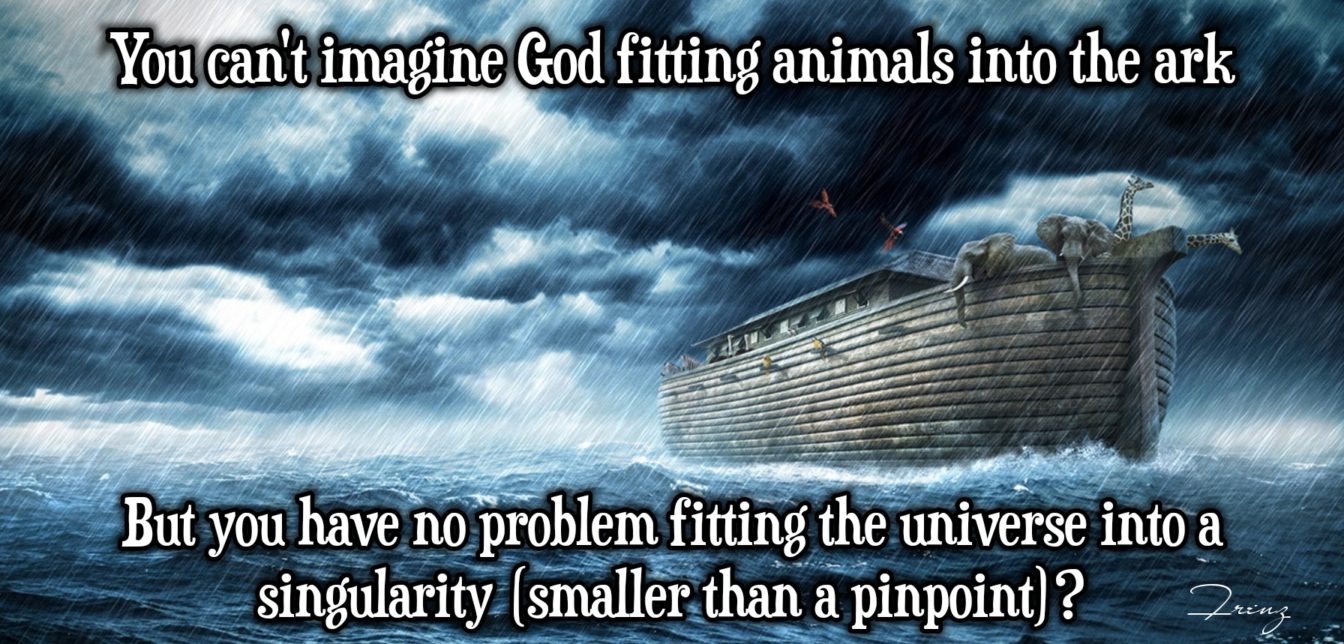
1. The Ark and the Animals: Biblical and Logical Considerations
The Bible describes God instructing Noah to build an ark with specific dimensions:
“Make yourself an ark of gopher wood. Make rooms in the ark, and cover it inside and out with pitch. This is how you are to make it: the length of the ark 300 cubits, its breadth 50 cubits, and its height 30 cubits.”
(Genesis 6:14-15, ESV)
Research and calculations, such as those referenced by GotQuestions.org, show that the ark’s volume was about 2.77 million cubic feet—enough to fit approximately 125,000 sheep-sized animals, with significant space left over. Most animals would have been much smaller than sheep, and Noah likely took young or juvenile representatives of each “kind,” not every species. The term “kind” is broader than “species,” possibly referring to major groups rather than every variety (see Genesis 6:19-20).
2. The Singularity and the Universe: Scientific Claims
The Big Bang theory posits that the universe began from a singularity—a point of infinite density and temperature, smaller than a pinpoint. This is not directly observable, but inferred from the expansion of the universe, cosmic background radiation, and other evidence.
Scientists accept this idea, even though it defies everyday experience and intuition. The singularity is a mystery, and many physicists admit that our current understanding of physics breaks down at that point.
3. Double Standards and Miracles
Your observation highlights a double standard:
- Some people dismiss the biblical account of the ark as impossible, yet accept the scientific claim that all matter, energy, space, and time were once compressed into an unimaginably small point.
- Both scenarios require us to accept something beyond ordinary experience—one by divine intervention, the other by naturalistic inference.
The Bible affirms that God is all-powerful and able to do what is humanly impossible:
“Ah, Lord GOD! It is you who have made the heavens and the earth by your great power and by your outstretched arm! Nothing is too hard for you.”
(Jeremiah 32:17, ESV)
“For nothing will be impossible with God.”
(Luke 1:37, ESV)
4. Faith, Reason, and Evidence
The Christian faith is not blind; it is rooted in evidence and reason. God invites us to examine His works in creation and history:
“For his invisible attributes, namely, his eternal power and divine nature, have been clearly perceived, ever since the creation of the world, in the things that have been made.”
(Romans 1:20, ESV)
If we are willing to accept extraordinary claims in science based on evidence and inference, we should also be open to the possibility of God acting in history, especially when supported by credible testimony and logical consistency.
In summary:
- Both the Ark and the Big Bang singularity involve events beyond ordinary experience.
- The biblical account of the Ark is supported by reasonable calculations and the power of God.
- The Big Bang is accepted by many despite its mysterious beginning.
- Consistency calls us to apply the same standards of inquiry and openness to both scientific and biblical claims.
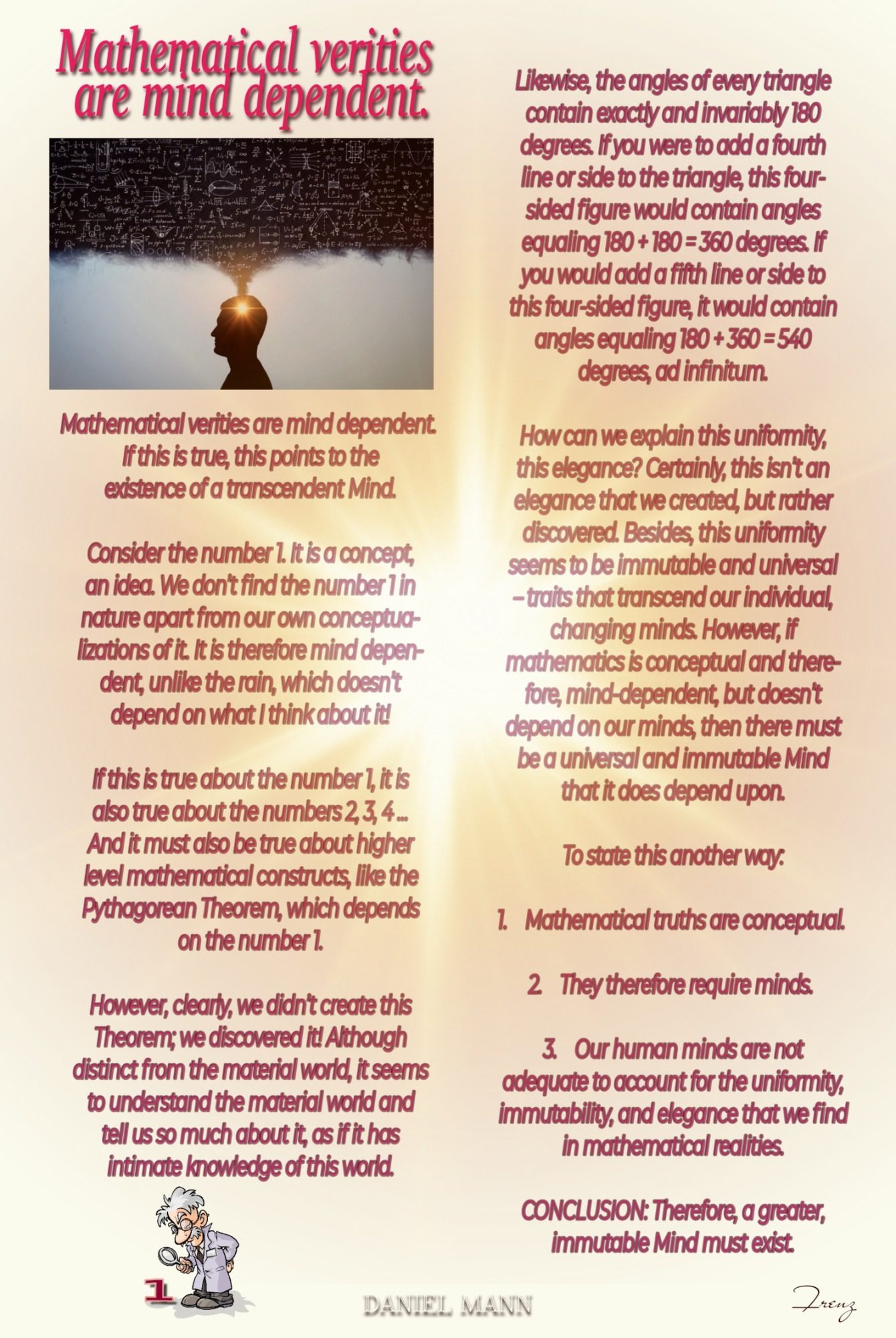
This image presents a version of what philosophers and theologians have long called the Augustinian Proof for the Existence of God—an argument that the very existence of mathematical and logical truths points to a transcendent, eternal Mind.
This reasoning is beautifully summarized in Mind Matters’ article “Mathematics Can Prove the Existence of God” (Michael Egnor, 2022). Egnor explains that mathematical truths—such as the reality of numbers, geometry, and logical relations—are conceptual (they exist in minds) yet independent of human minds (they are universal and unchanging). Therefore, they must reside in a Divine Mind:
“Because numbers exist independently of the material universe, they are eternal (e.g., the truth that 1 + 1 = 2 is independent of time) and thus the Mind that contains them is eternal. … Universals such as numbers, mathematics in general, propositions, logic, necessities, and possibilities exist in the Divine Intellect, which is infinite and eternal.”
This argument rests on several key observations that the image itself highlights:
1. Mathematical Truths Are Conceptual, Not Physical
The number 1 does not exist as a physical object—it is an idea. You can hold one apple, but not “oneness” itself. Likewise, geometric truths such as the sum of the angles in a triangle equaling 180° are not invented by humans; they are discovered. They describe necessary relationships that exist whether or not any human mind perceives them.
As Egnor notes, “The set of natural numbers includes all counting numbers—1, 2, 3, 4, and so on. … It is surely just as true that our solar system had one sun a billion years ago as it is true now. So the number 1 really exists in some fashion independent of the human mind.”
2. These Truths Are Universal and Immutable
Mathematical laws do not change with time or location. The Pythagorean theorem was true before Pythagoras discovered it and will remain true forever. This immutability cannot be grounded in finite, changing human minds.
The Bible affirms that truth and order reflect the nature of God Himself:
“For I am the LORD, I change not.” (Malachi 3:6 KJV)
“Thy word is true from the beginning: and every one of thy righteous judgments endureth for ever.” (Psalm 119:160 KJV)
“By wisdom hath the LORD founded the earth; by understanding hath he established the heavens.” (Proverbs 3:19 KJV)
The uniformity and elegance of mathematics mirror the unchanging rationality of the Creator.
3. Human Minds Participate in, but Do Not Create, These Truths
Human beings can discover mathematical relationships because we are made in the image of a rational God (Genesis 1:27). Our minds reflect His intellect, allowing us to apprehend the order He built into creation. As Egnor puts it, “Our abstract thoughts have a real existence in the Mind of our Creator, and we, who are created in His image, participate in His thoughts.”
This is precisely what the apostle John declares about Christ, the Logos—the divine Reason through whom all things were made:
“In the beginning was the Word, and the Word was with God, and the Word was God. … All things were made by him; and without him was not any thing made that was made.” (John 1:1–3 KJV)
The Greek term Logos means “Word,” but also “Reason” or “Rational Principle.” Thus, the rational structure of mathematics and the cosmos is grounded in the eternal Logos—Jesus Christ.
4. The Conclusion: A Transcendent, Immutable Mind
If mathematical truths are real, conceptual, and independent of human thought, then they must exist in a Mind that is eternal, omniscient, and unchanging. That Mind is God.
This conclusion aligns with the biblical worldview:
“Great is our Lord, and of great power: his understanding is infinite.” (Psalm 147:5 KJV)
“O the depth of the riches both of the wisdom and knowledge of God!” (Romans 11:33 KJV)
“In whom are hid all the treasures of wisdom and knowledge.” (Colossians 2:3 KJV)
Summary
The image’s argument is philosophically rigorous and theologically sound:
Mathematical truths are conceptual—they exist in minds.
They are universal and immutable, so they cannot depend on finite human minds.
Therefore, they must exist in an eternal, universal Mind—the Mind of God.
As Augustine wrote in Confessions (Book VII), “If anything is true, there must be Truth; and if there is Truth, there must be God.”
Thus, the very logic and order that make science and mathematics possible are not evidence against God, but evidence of Him—the transcendent, rational Creator whose thoughts are the foundation of all truth.
This image presents a thoughtful and well‑structured reversal of a common skeptical objection—namely, the claim that “extraordinary claims require extraordinary evidence.” The author points out that atheism itself makes extraordinary claims about the origin of the universe and life, yet offers no evidence that “nothing” can produce “something.”
This argument aligns with both biblical revelation and philosophical reasoning about causality and design.
1. The Atheist’s Extraordinary Claim
Atheists often insist that belief in God, miracles, or the resurrection is “extraordinary” and therefore demands extraordinary proof. But the image rightly observes that the atheistic alternative—that the universe came from nothing, that order arose from chaos, and that life emerged from non‑life—is itself an extraordinary claim, and one that contradicts both logic and science.
As Probe.org’s article “Does God Exist? A Christian Argument from Non‑biblical Sources” (Jimmy Williams, 2014) explains:
“Something came from nothing. Most reject this view, since the very idea defies rationality. … Since nothing cannot produce something by rules of logic (observation, causality), something is eternal and necessary.”
The atheist must therefore believe that the universe either (1) created itself out of nothing, or (2) has existed eternally. Both options are scientifically untenable. The Big Bang demonstrates that the universe had a beginning, and the Law of Causality demands that every effect must have a sufficient cause.
2. The Theistic Explanation Is More Reasonable
The image’s argument that it is more rational to believe in an eternal, intelligent Cause than in “nothing at all” reflects the classical cosmological argument:
Everything that begins to exist has a cause.
The universe began to exist.
Therefore, the universe has a cause.
That cause must be transcendent (beyond space and time), immaterial, powerful, and intelligent—attributes that perfectly describe the God of Scripture.
The Bible affirms this truth from its very first verse:
“In the beginning God created the heaven and the earth.” (Genesis 1:1 KJV)
And again in Hebrews 3:4 (KJV):
“For every house is builded by some man; but he that built all things is God.”
The apostle Paul likewise declares that the evidence of creation is plain:
“For the invisible things of him from the creation of the world are clearly seen, being understood by the things that are made, even his eternal power and Godhead; so that they are without excuse.” (Romans 1:20 KJV)
3. The Big Bang and Fine‑Tuning Point to a Designer
Far from disproving God, the Big Bang supports the biblical worldview by confirming that the universe had a beginning. As Tabletalk Magazine’s article “The Signature in the Cell” (Tabletalk Magazine, 2010) notes, many scientists initially resisted the Big Bang precisely because it implied a transcendent cause:
“Many scientists initially rejected the Big Bang theory because it seemed to challenge the idea of an eternally self‑existent universe and pointed to the need for a transcendent cause of matter, energy, space, and time. But scientists eventually accepted the theory because the evidence strongly supported it.”
The same is true of the universe’s fine‑tuning—the precise calibration of physical constants that make life possible. This fine‑tuning is far more consistent with design than with chance.
4. The “Anti‑Science” Nature of Causeless Existence
The image’s final point—that believing things happen without a cause is “anti‑science”—is exactly right. Science itself is built on the assumption of causality and order. If events could occur without causes, scientific investigation would be meaningless.
The Bible affirms that the universe operates under consistent laws because it is upheld by a rational Lawgiver:
“He is before all things, and by him all things consist.” (Colossians 1:17 KJV)
“The LORD by wisdom hath founded the earth; by understanding hath he established the heavens.” (Proverbs 3:19 KJV)
“For of him, and through him, and to him, are all things.” (Romans 11:36 KJV)
Thus, belief in a Creator is not anti‑scientific—it is the foundation of science. The expectation of order, predictability, and intelligibility in nature only makes sense if the universe was designed by an intelligent Mind.
Summary
The image’s reframing of the “extraordinary claims” argument is both philosophically and biblically sound:
It is extraordinary to claim that the universe, life, and consciousness arose from nothing.
The theistic explanation—an eternal, intelligent Creator—is far more coherent and consistent with both reason and evidence.
Denying causality is not science; it is anti‑science, because it destroys the very basis of rational inquiry.
As Psalm 19:1 (KJV) declares:
“The heavens declare the glory of God; and the firmament sheweth his handywork.”
In the end, the most “extraordinary” claim is not that God exists, but that everything else could exist without Him.
This image presents a deeply significant argument—one that goes beyond abstract philosophy and touches the very core of human existence. It rightly claims that the question of God’s existence is foundational because it determines how we understand morality, meaning, psychological well-being, relationships, and ultimate justice.
This reasoning aligns closely with the moral argument for God’s existence and with biblical teaching about humanity’s dependence on its Creator for truth, purpose, and redemption.
1. Morality: Without God, Right and Wrong Collapse into Preference
If there is no God, there can be no objective moral law. As GotQuestions.org explains in “What Is the Moral Argument for the Existence of God?” (GotQuestions.org, 2026):
“Romans 2:14–15 says that the moral law (or conscience) comes from an ultimate lawgiver above man. If this is true, then we would expect to find exactly what we have observed. This lawgiver is God. … Without God there would be no objective basis for morality, no life, and no reason to live it.”
If morality is merely a human invention, it changes with culture or emotion. But Scripture teaches that God’s moral law is unchanging because it reflects His own character:
“The LORD is righteous in all his ways, and holy in all his works.” (Psalm 145:17 KJV)
“For I am the LORD, I change not.” (Malachi 3:6 KJV)
“He hath shewed thee, O man, what is good.” (Micah 6:8 KJV)
Without that divine anchor, moral conviction becomes as unstable as “waves of the ocean,” just as the image describes.
2. Meaning and Purpose: Without God, Life Is Ultimately Empty
If there is no Creator, then life has no objective purpose—only temporary, self‑invented goals. But such self‑made meaning cannot satisfy the human heart. As Ecclesiastes 3:11 (KJV) says, “He hath set the world [eternity] in their heart.” We were made for something eternal.
The apostle Paul explains that our purpose is found in relationship with our Creator:
“For of him, and through him, and to him, are all things: to whom be glory for ever.” (Romans 11:36 KJV)
When people reject God, they must fill the void with substitutes—career, pleasure, or recognition—but these cannot bear the weight of ultimate meaning.
3. Psychological Well‑Being: Only God Offers True Forgiveness and Peace
The image’s observation that people turn to “God‑substitutes” for worth and forgiveness is profoundly biblical. Every human being experiences guilt and shame because of sin (Romans 3:23), and only God can remove that burden:
“Come now, and let us reason together, saith the LORD: though your sins be as scarlet, they shall be as white as snow.” (Isaiah 1:18 KJV)
“Therefore being justified by faith, we have peace with God through our Lord Jesus Christ.” (Romans 5:1 KJV)
Without divine forgiveness, people seek psychological relief through self‑justification or distraction, but these never heal the conscience. Only reconciliation with God brings lasting peace.
4. Relationships: Without God, Love Lacks a Foundation
When people look to other humans to meet their deepest needs for identity and purpose, relationships become strained and fragile. Scripture teaches that love’s source is God Himself:
“Beloved, let us love one another: for love is of God; and every one that loveth is born of God, and knoweth God.” (1 John 4:7 KJV)
Without that divine source, relationships often collapse under the weight of unmet expectations and moral confusion. God’s love enables forgiveness, humility, and self‑sacrifice—qualities that make true community possible.
5. Afterlife and Ultimate Justice: Without God, There Is No Hope
If there is no God, then death ends everything, and injustice has the final word. But Scripture promises that God will judge righteously and redeem those who trust in Him:
“And as it is appointed unto men once to die, but after this the judgment.” (Hebrews 9:27 KJV)
“Shall not the Judge of all the earth do right?” (Genesis 18:25 KJV)
“And God shall wipe away all tears from their eyes.” (Revelation 21:4 KJV)
The hope of eternal life and perfect justice is not wishful thinking—it is grounded in the resurrection of Jesus Christ, the ultimate demonstration that death and evil do not have the last word.
Summary
The image’s argument is both philosophically coherent and biblically faithful:
As Proverbs 1:7 (KJV) declares:
“The fear of the LORD is the beginning of knowledge: but fools despise wisdom and instruction.”
In short, belief in God is not a peripheral issue—it is the foundation of all coherent thought, moral stability, emotional wholeness, and ultimate hope. Without Him, everything else eventually collapses into meaninglessness; with Him, every aspect of life finds its true purpose and fulfillment.
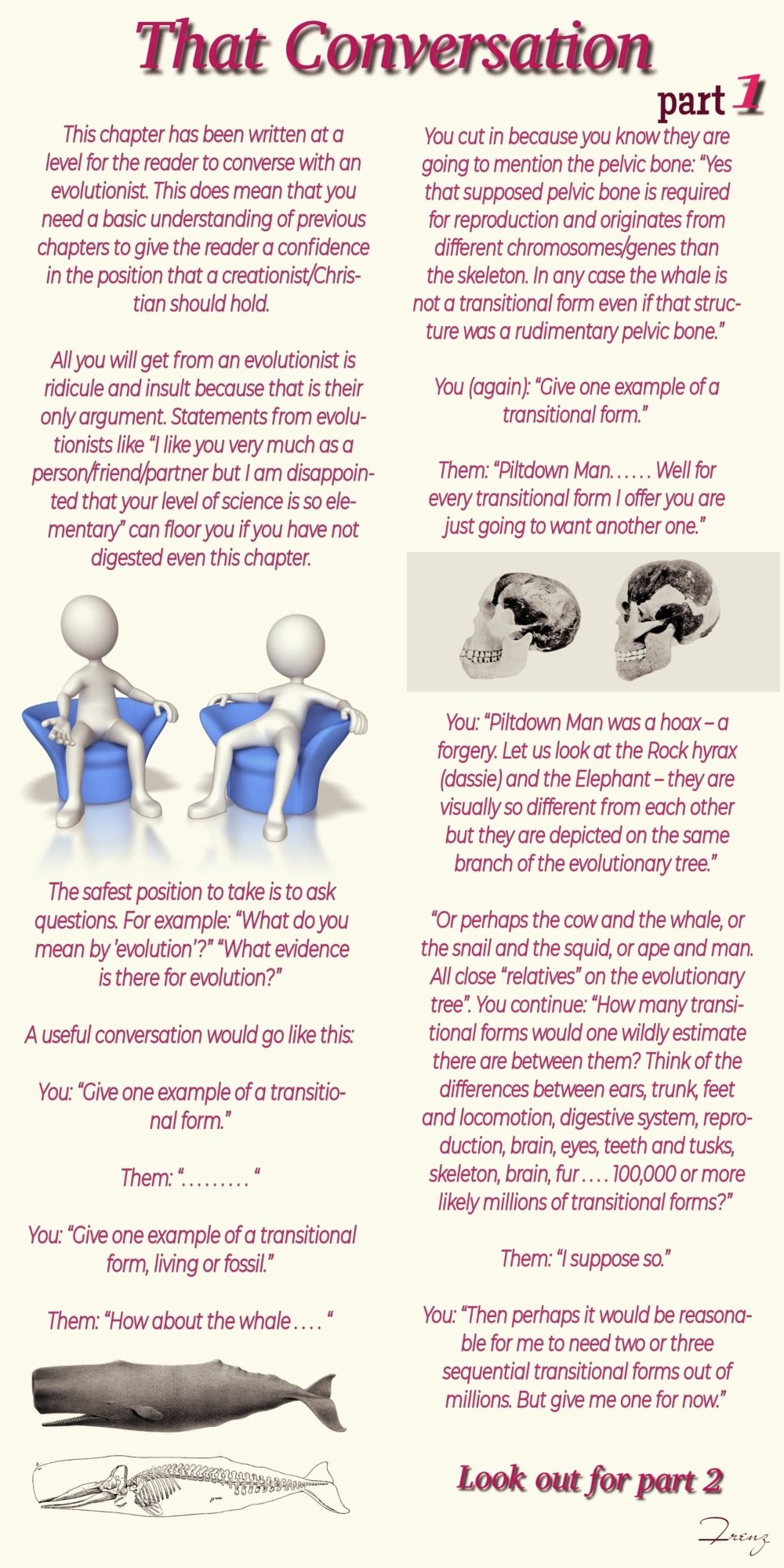
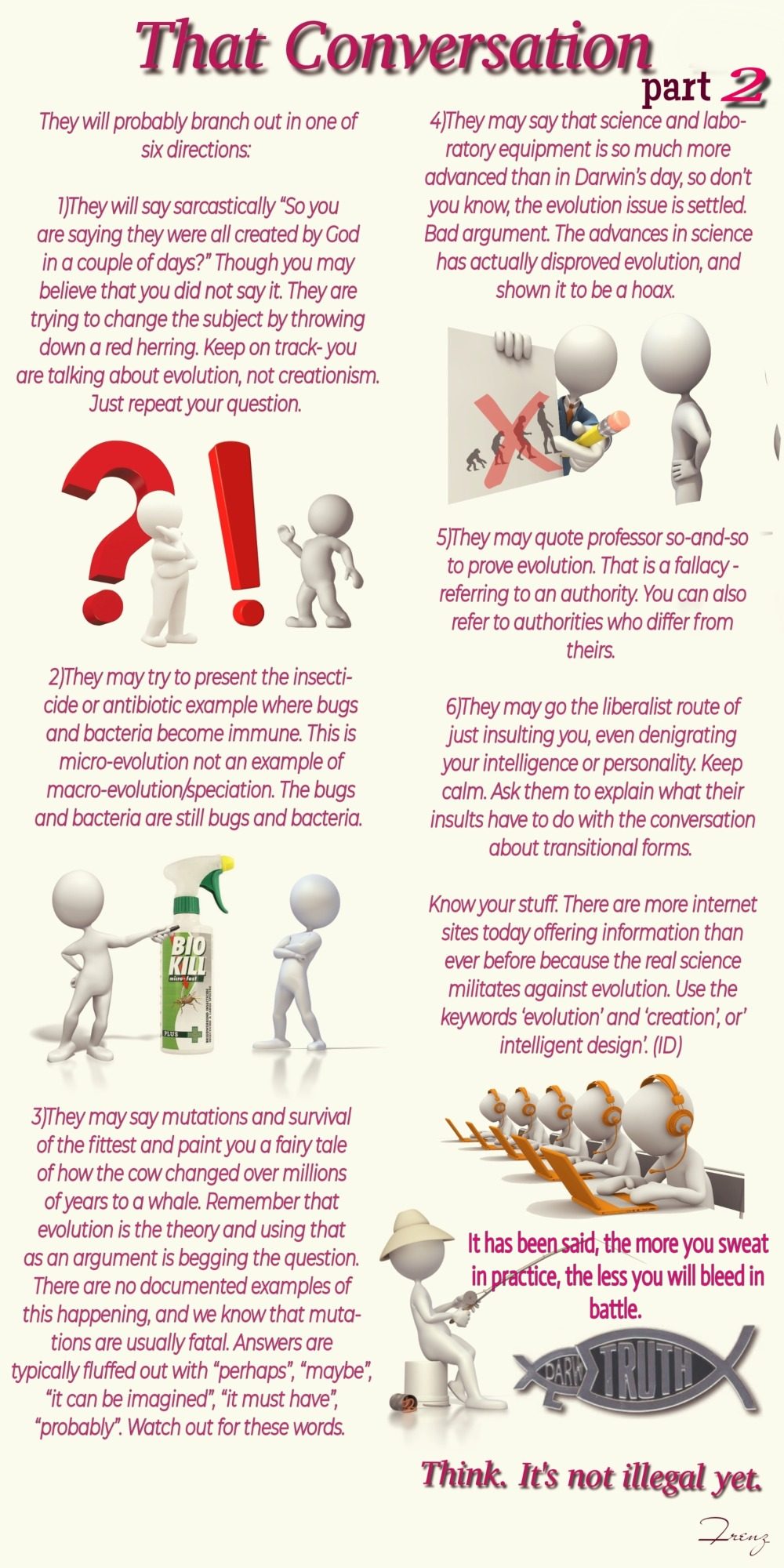
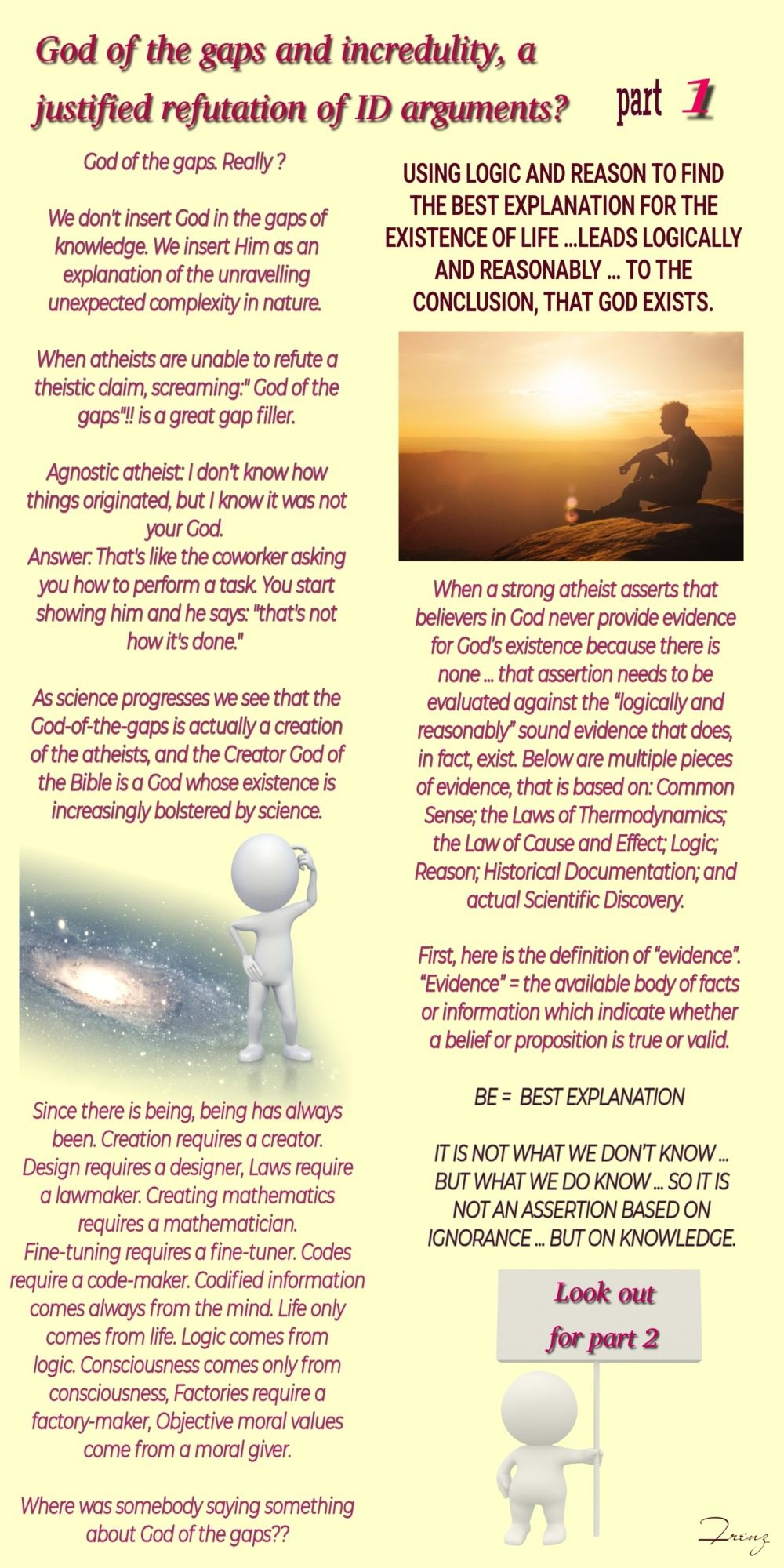
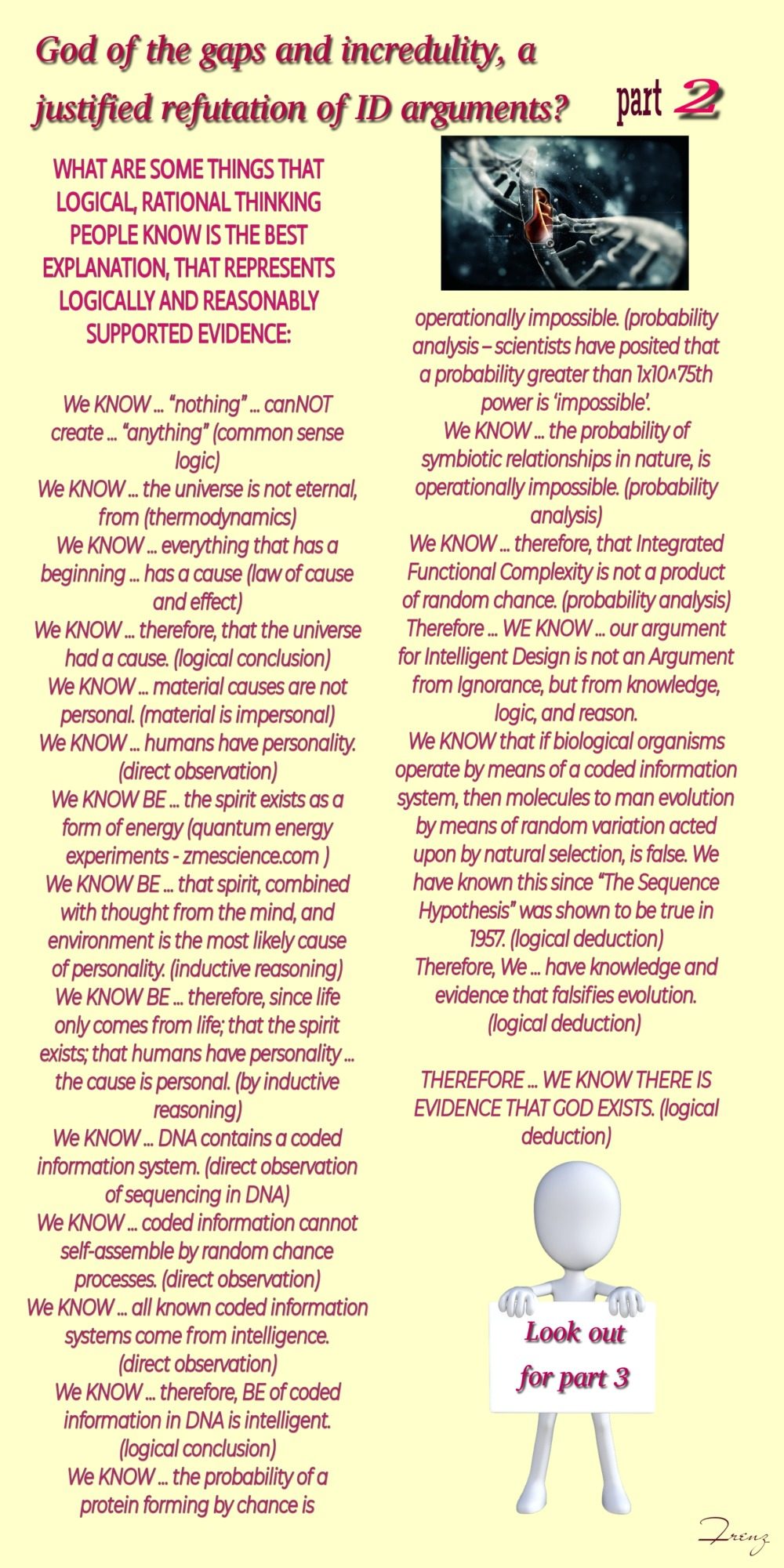
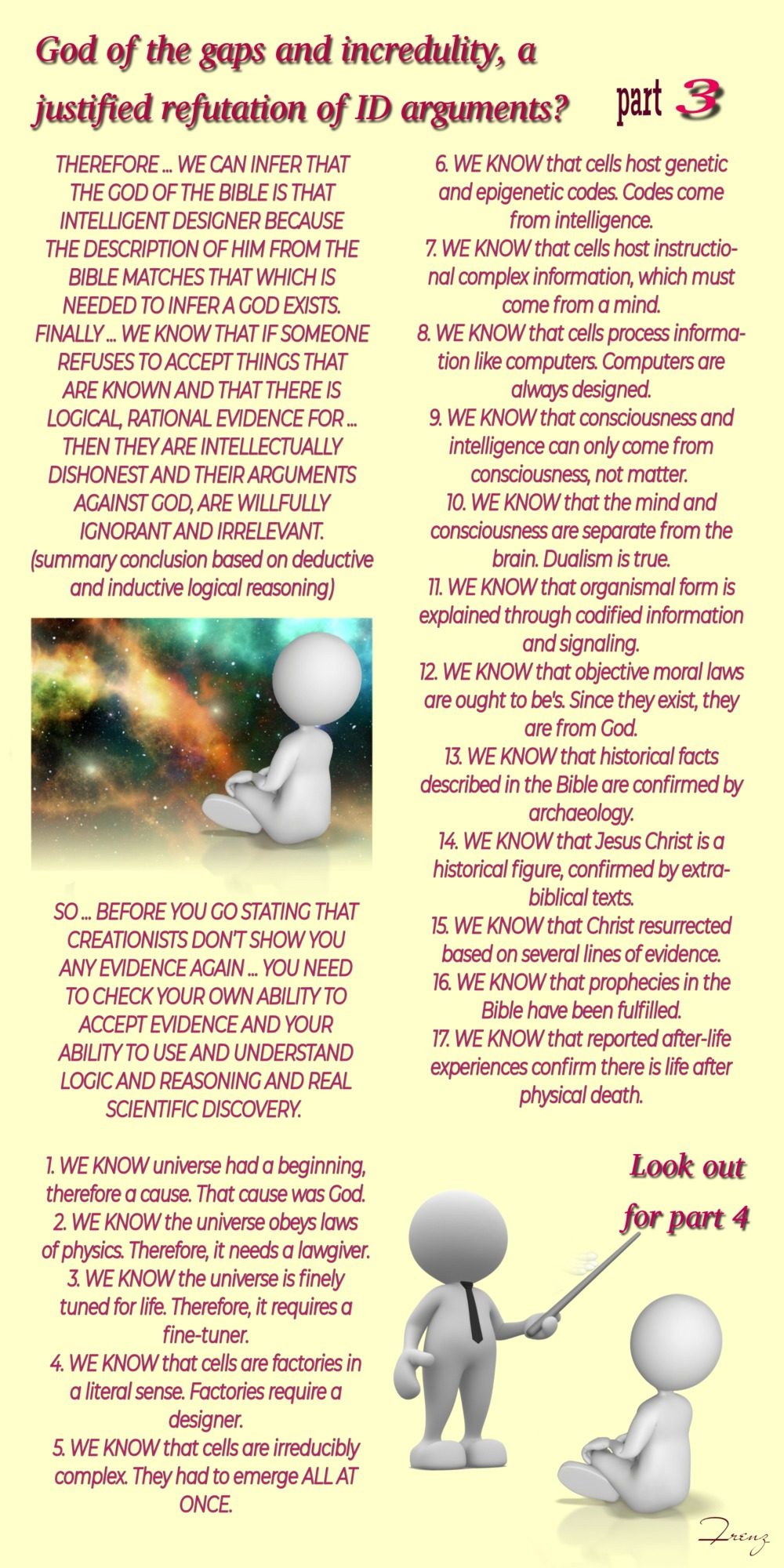
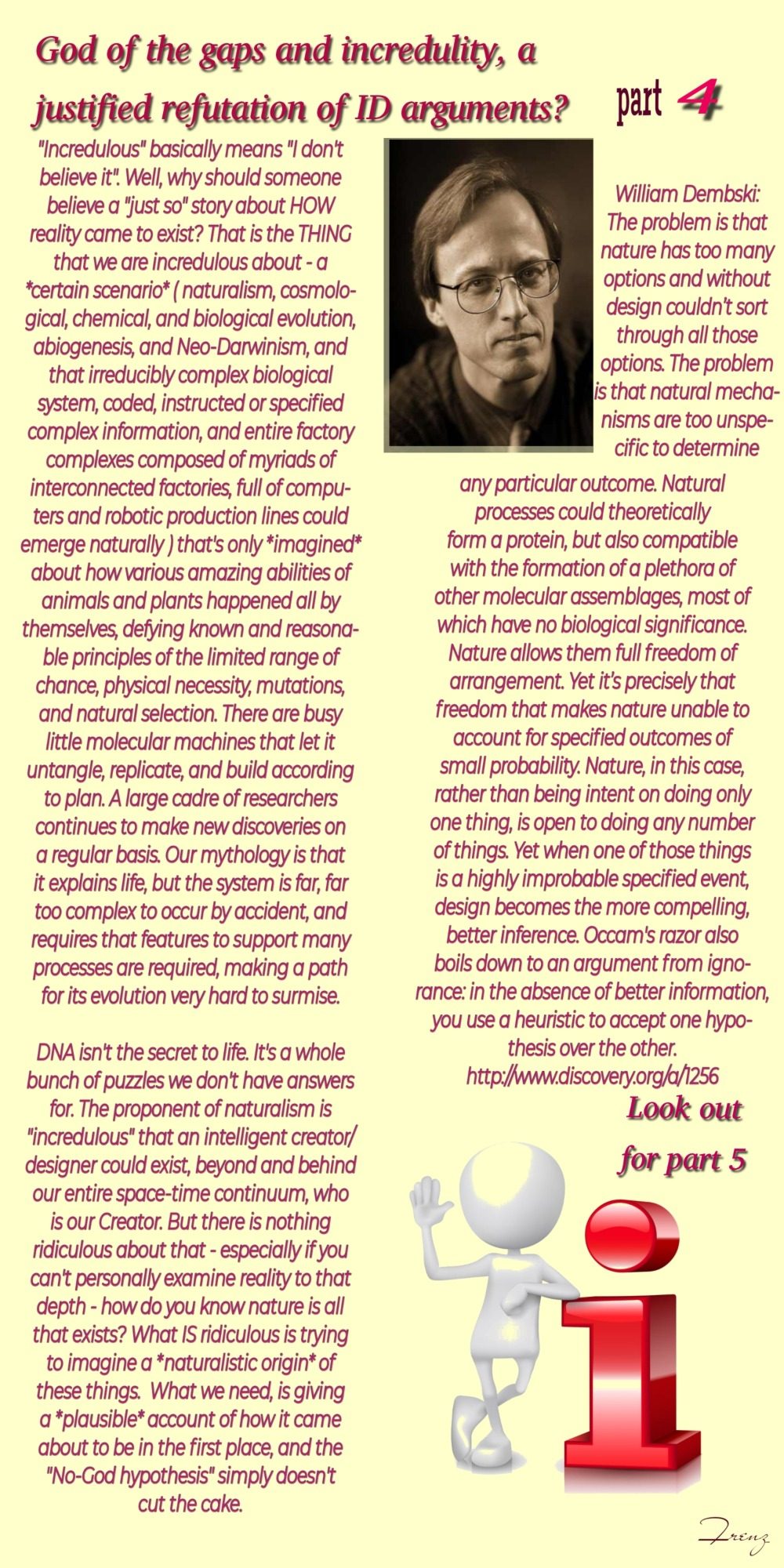
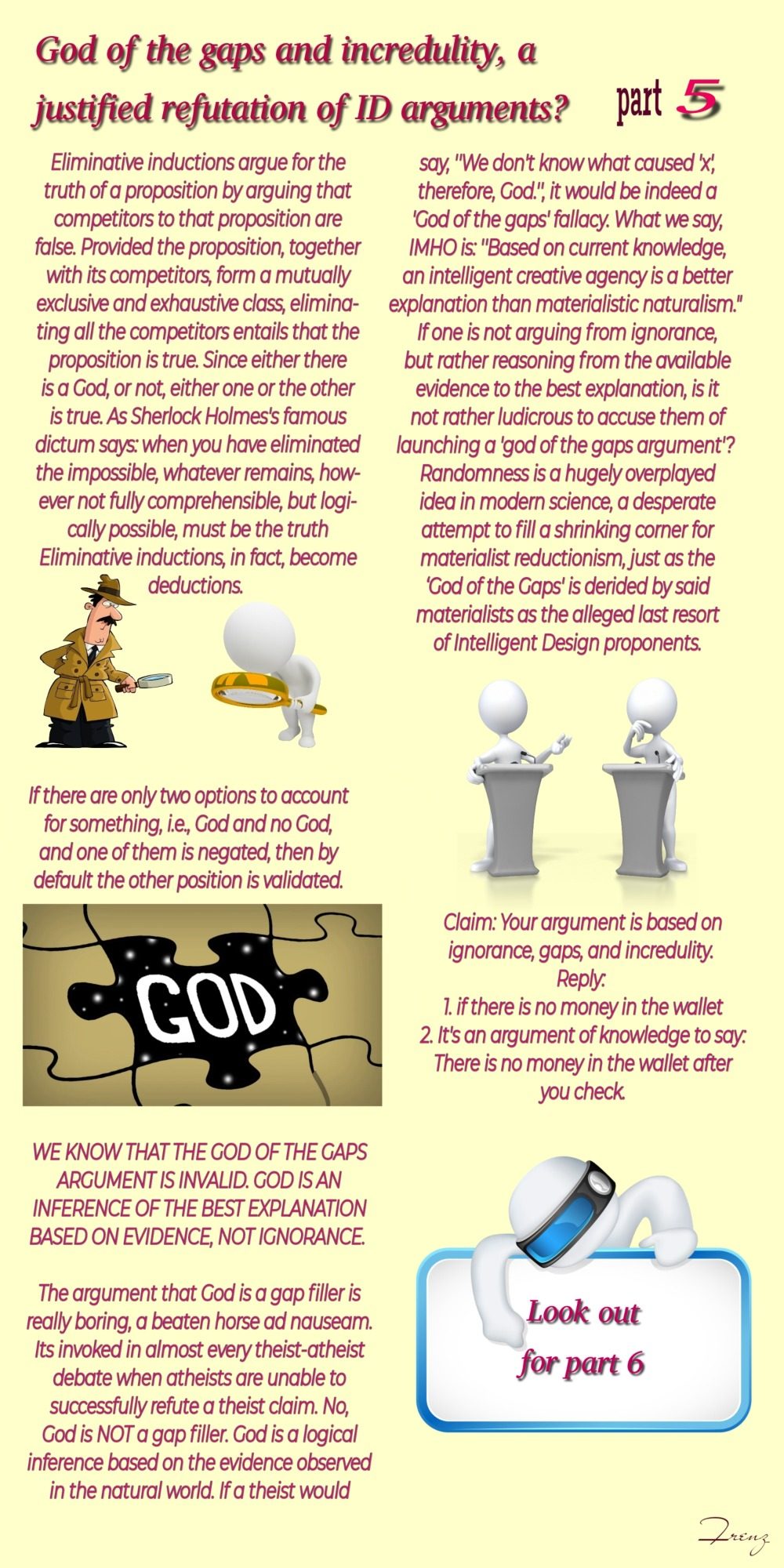
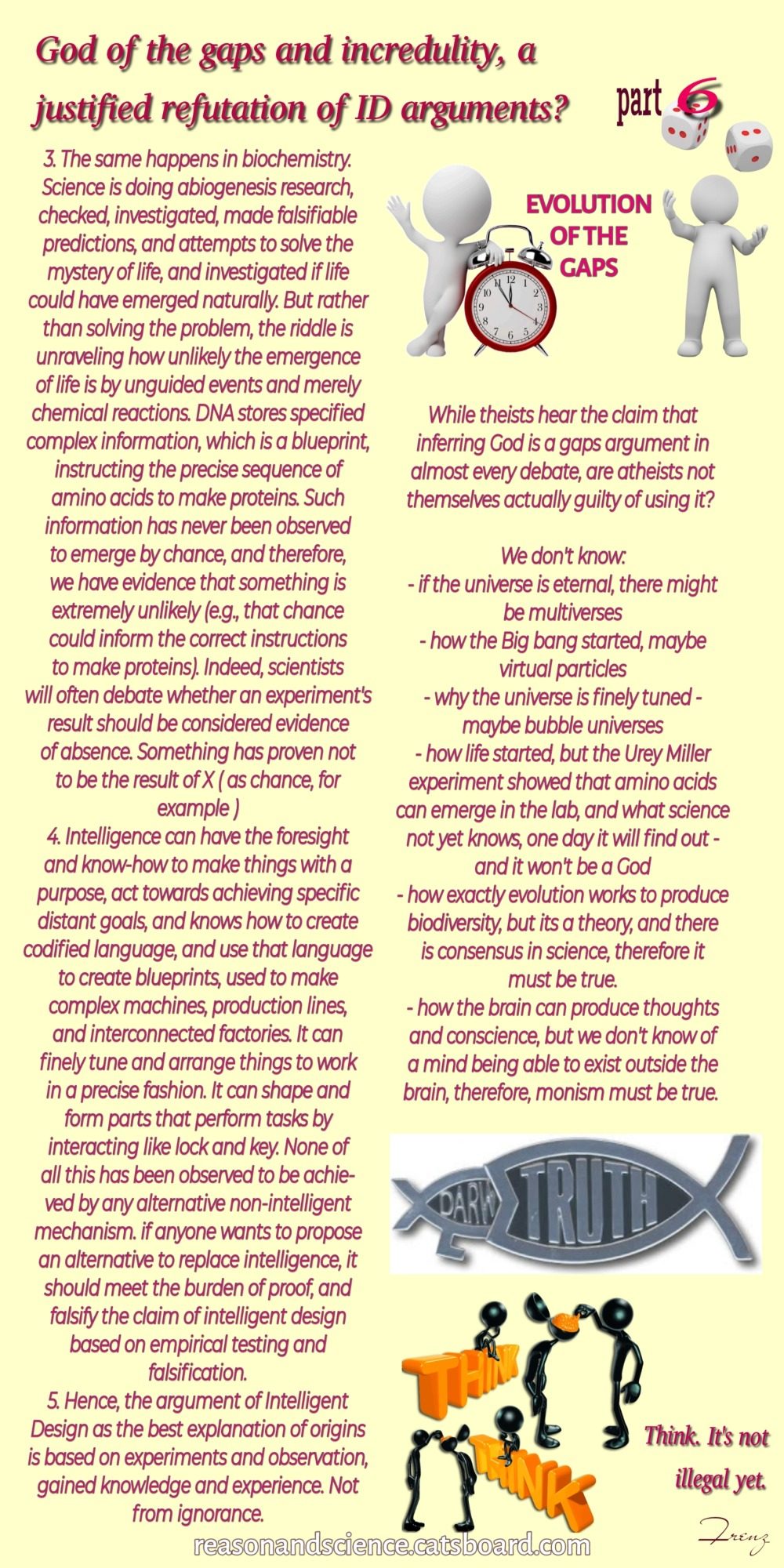
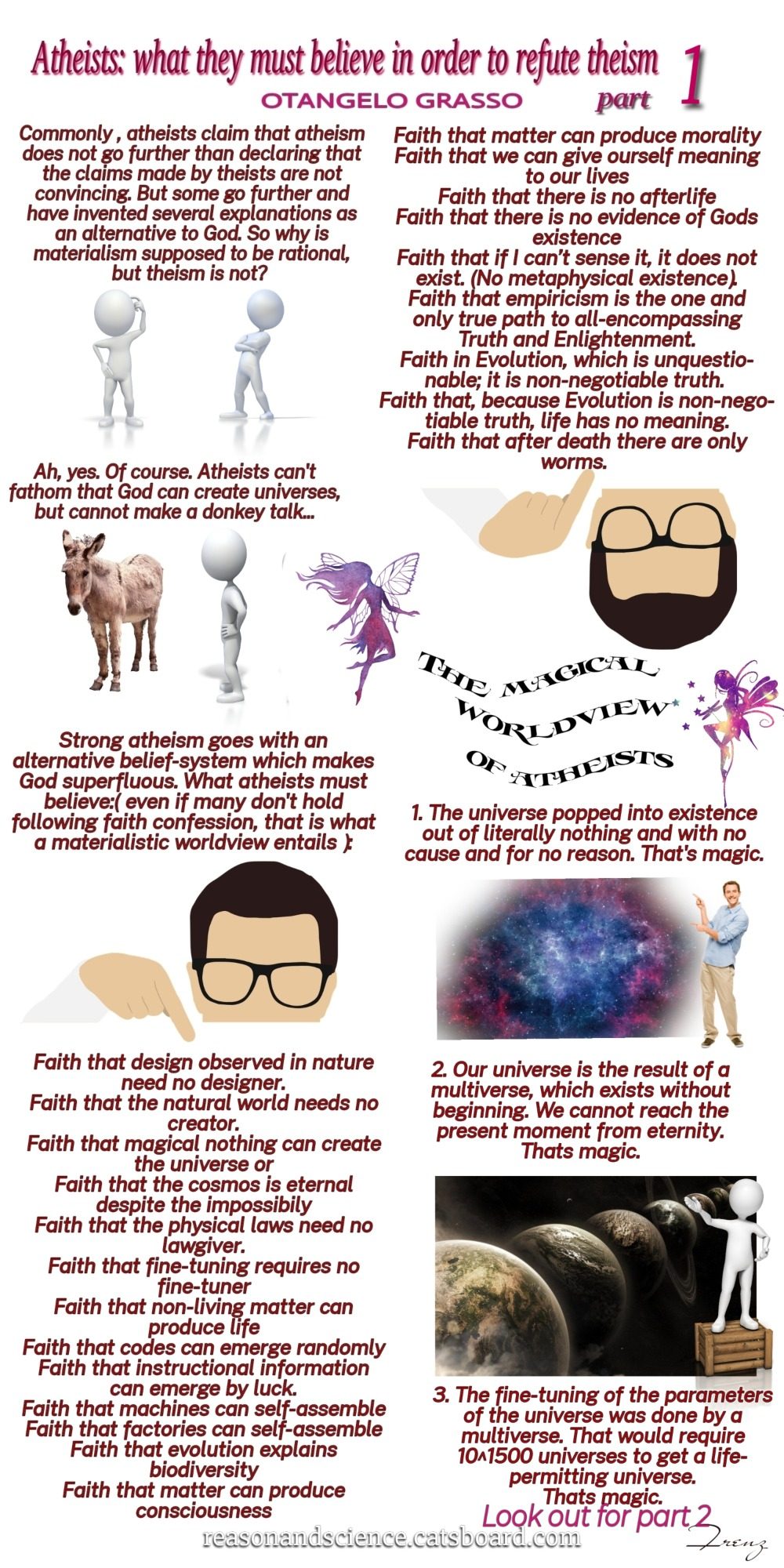
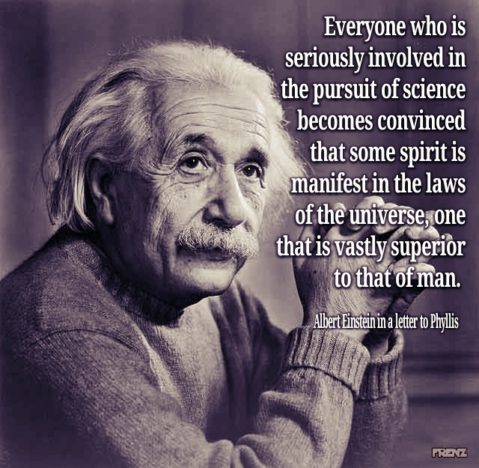
This image highlights a fascinating and often‑misunderstood aspect of Albert Einstein’s worldview—his recognition that the universe displays an intelligent order that points beyond itself. The quotation attributed to him—“Those deeply involved in the pursuit of science become convinced that a spirit is manifest in the laws of the universe, one vastly superior to that of man”—comes from a 1936 letter Einstein wrote to a young girl named Phyllis Wright, who had asked whether scientists pray.
Einstein’s response did not affirm personal belief in the God of the Bible, but it did reveal his conviction that the cosmos is rational, ordered, and awe‑inspiring—a conviction that aligns far more closely with the biblical worldview than with atheistic materialism.
1. Einstein’s “Spirit” and the Order of the Universe
Einstein often spoke of a “cosmic religious feeling,” by which he meant reverence for the rational harmony of the universe. He wrote elsewhere, “The most incomprehensible thing about the universe is that it is comprehensible.” That statement itself implies that the universe is structured in such a way that human minds—finite and limited—can grasp its laws.
This rational order is precisely what Scripture attributes to the wisdom of the Creator:
“The LORD by wisdom hath founded the earth; by understanding hath he established the heavens.” (Proverbs 3:19 KJV)
“He hath made the earth by his power, he hath established the world by his wisdom, and hath stretched out the heaven by his understanding.” (Jeremiah 51:15 KJV)
“For the invisible things of him from the creation of the world are clearly seen, being understood by the things that are made, even his eternal power and Godhead.” (Romans 1:20 KJV)
Einstein’s “spirit manifest in the laws of the universe” corresponds to what Christians understand as the divine Logos—the rational Word through whom all things were made (John 1:1–3).
2. The Harmony Between Science and Faith
The image’s quotation underscores that science itself presupposes order, intelligibility, and consistency—features that make sense only if the universe was designed by a rational Mind. As the Precept Austin Genesis 2 Commentary notes, there is no contradiction between Scripture and true science:
“There is no demonstrated contradiction of fact between Genesis 1 and science. There is only a conflict of interpretation. … It is not a question of inspiration of Scripture, but of the interpretation of Scripture (and of the scientific data).” (Precept Austin, Genesis 2 Commentary)
Einstein’s recognition of a “vastly superior spirit” is consistent with the biblical claim that creation reflects the mind of its Maker. The laws of physics are not self‑existent; they are the expression of a Lawgiver who sustains the universe in perfect order (Colossians 1:17 KJV: “By him all things consist”).
3. The Limits of Einstein’s View
While Einstein rejected atheism, he also did not embrace the personal God of Scripture. He saw God as an impersonal intelligence rather than a relational Creator. Yet his awe before the universe’s rationality still points in the right direction. As Psalm 19:1 (KJV) declares:
“The heavens declare the glory of God; and the firmament sheweth his handywork.”
Einstein’s “spirit” language reflects the intuitive recognition that mind precedes matter—that the universe is not a random accident but the product of transcendent intelligence.
4. Summary
The image’s quotation captures a truth that even one of history’s greatest scientific minds could not escape:
The universe operates by elegant, consistent laws.
Those laws reveal purpose and rationality.
Rationality implies a rational source—a Mind “vastly superior to that of man.”
Einstein’s words echo what Scripture has proclaimed for millennia: that the order and beauty of creation testify to the existence of a wise and powerful Creator.
As Psalm 104:24 (KJV) concludes:
“O LORD, how manifold are thy works! in wisdom hast thou made them all: the earth is full of thy riches.”
In short, even Einstein’s cautious reverence for the “spirit manifest in the laws of the universe” points toward the same transcendent reality the Bible reveals—the eternal, intelligent, and personal God who created and sustains all things.
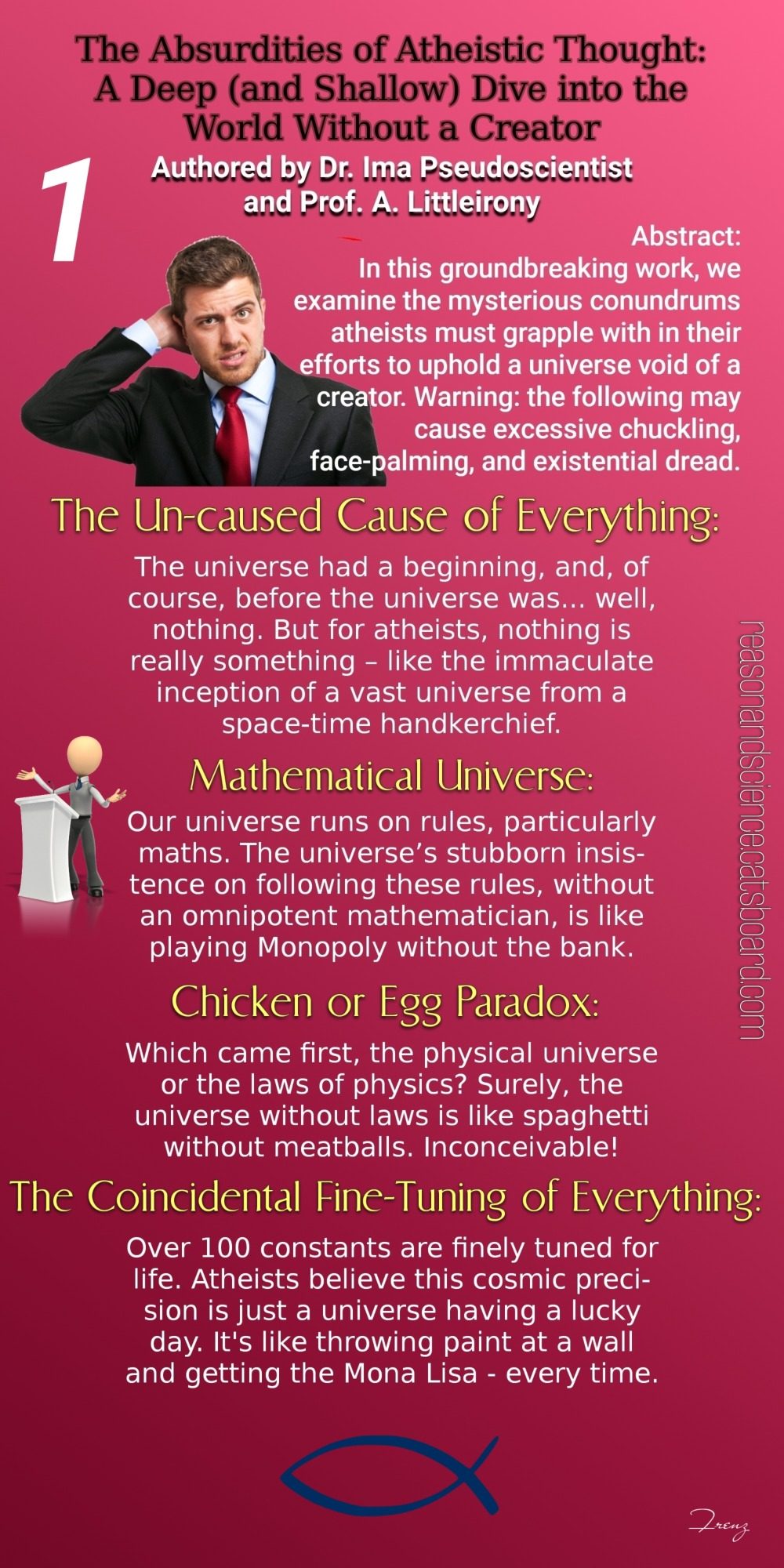
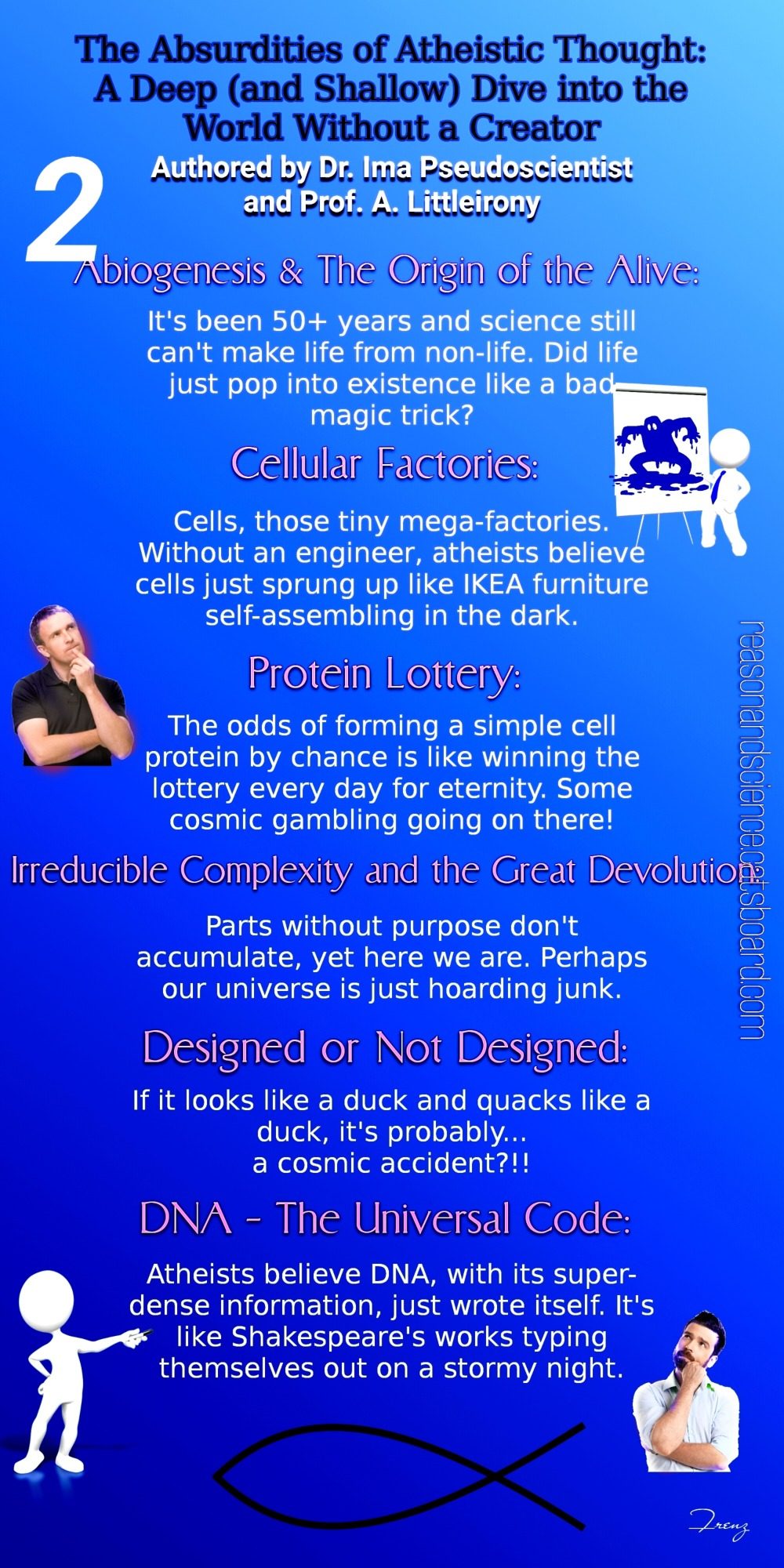
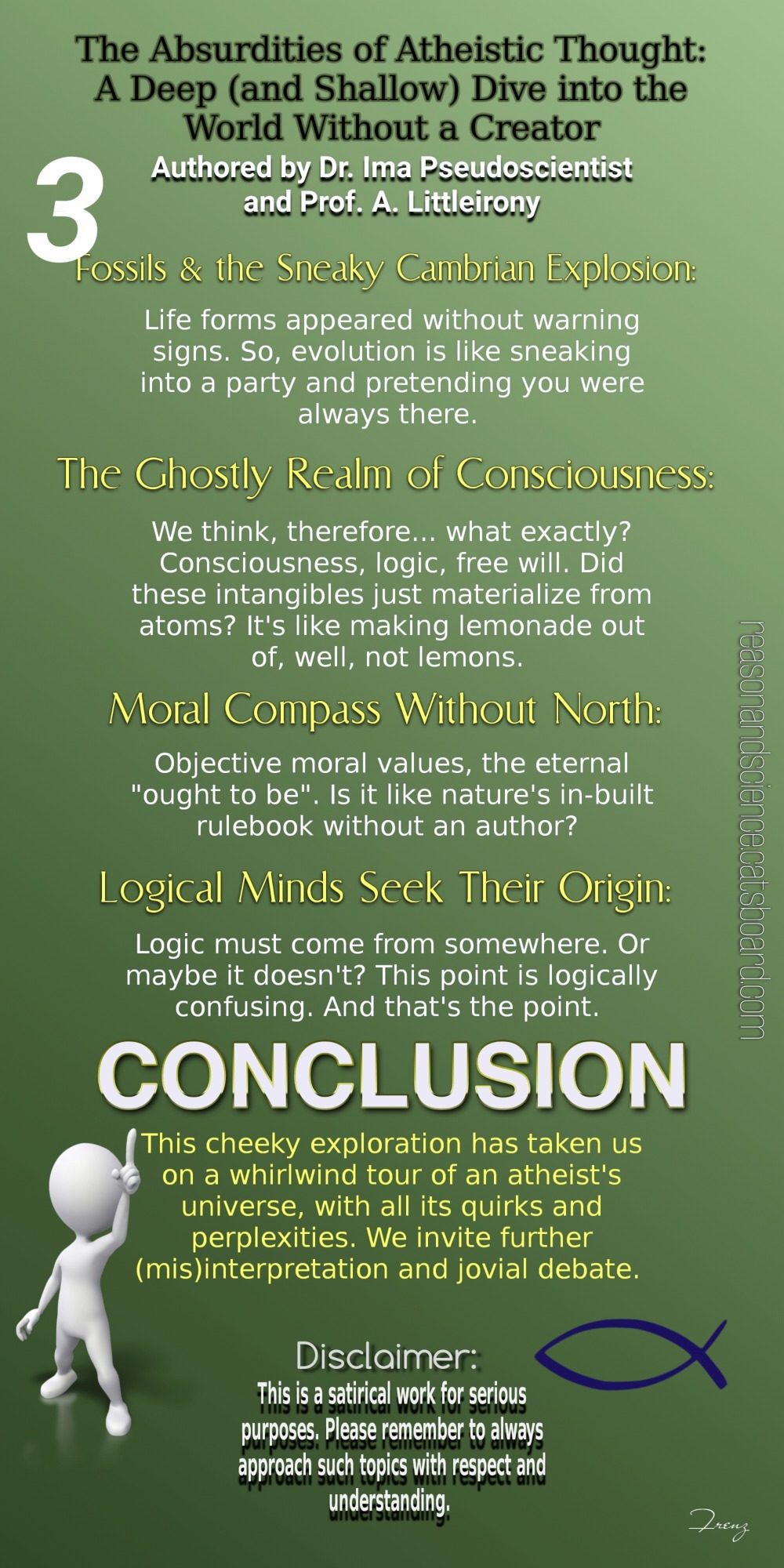
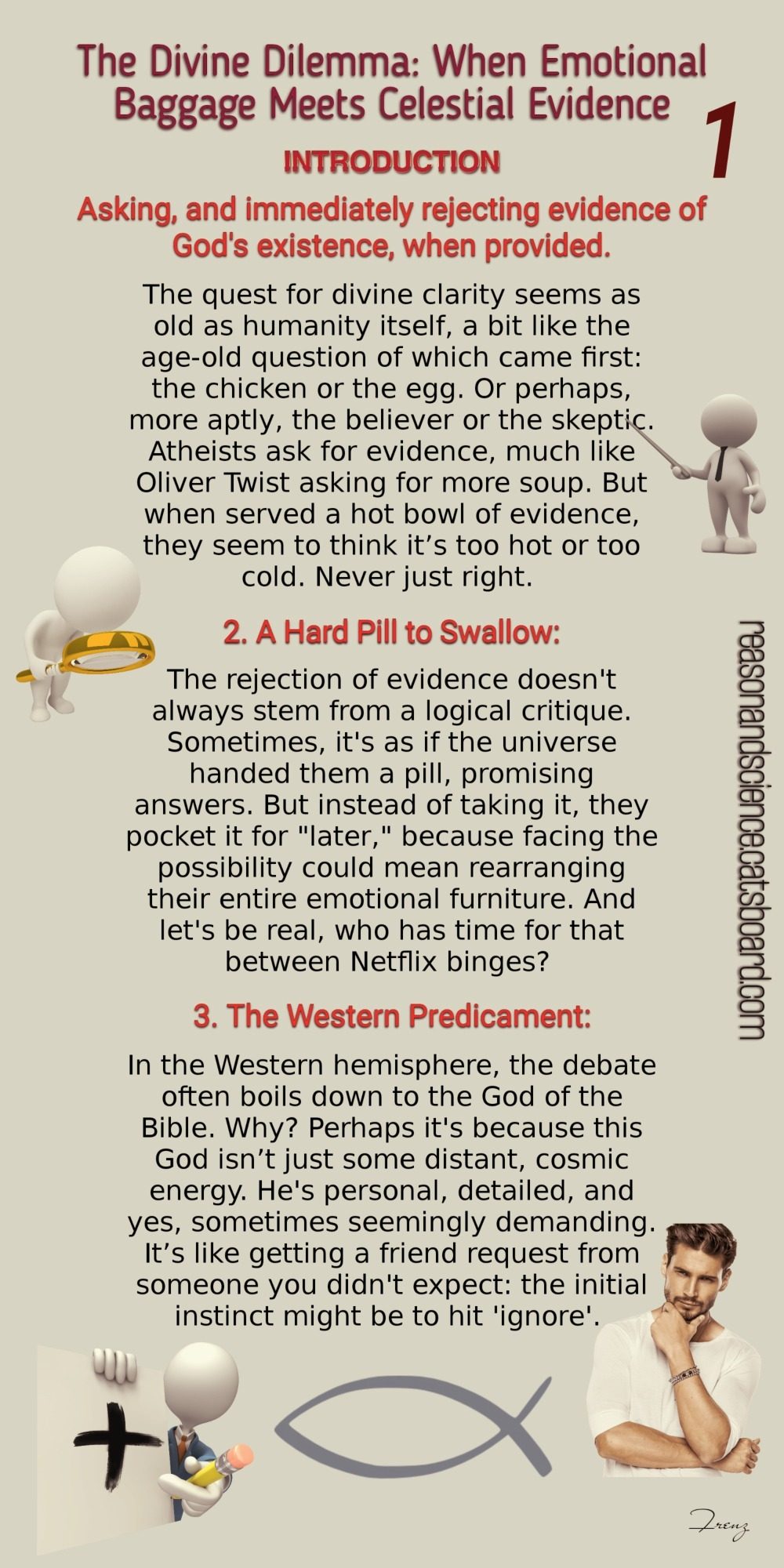

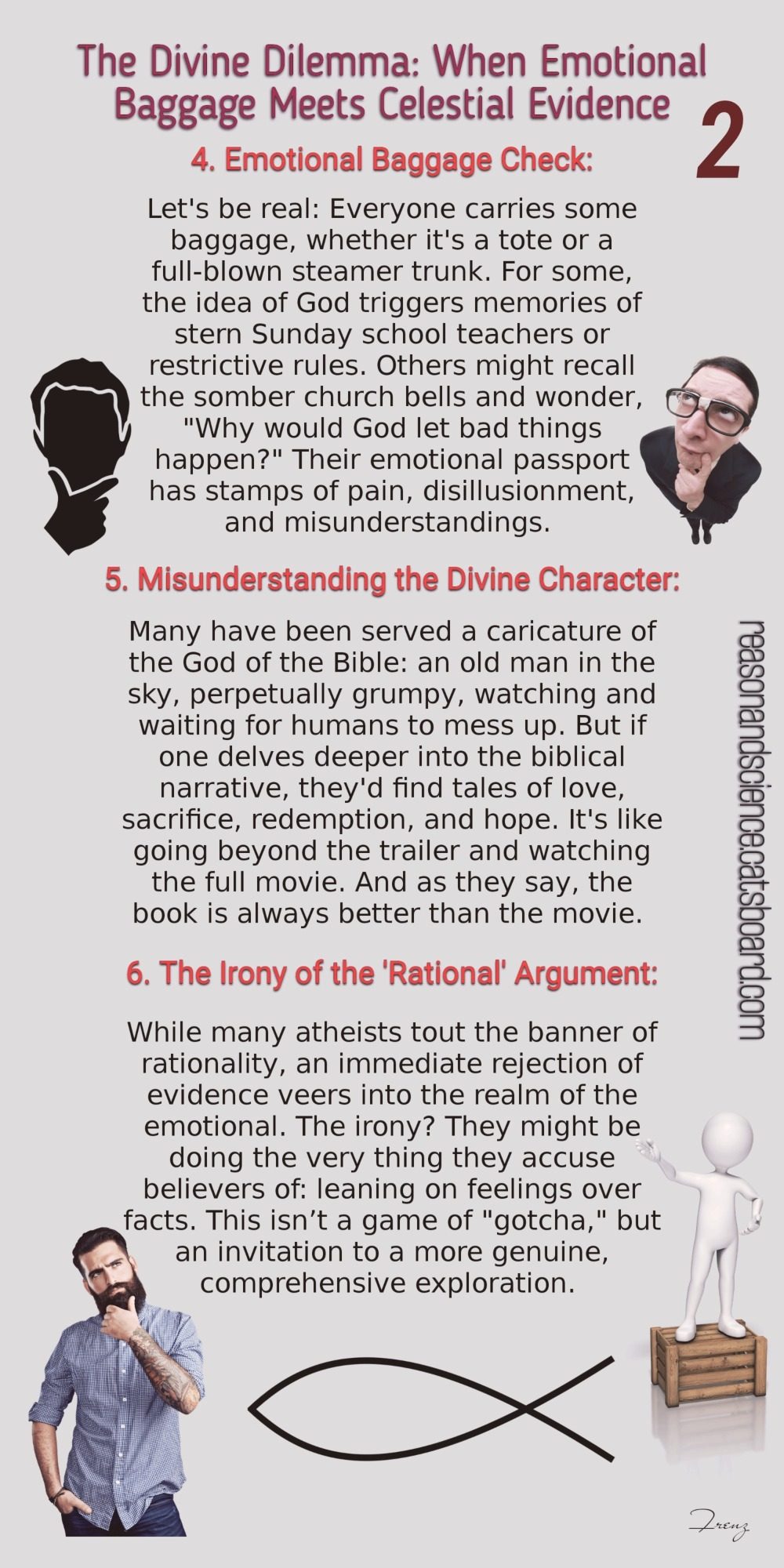
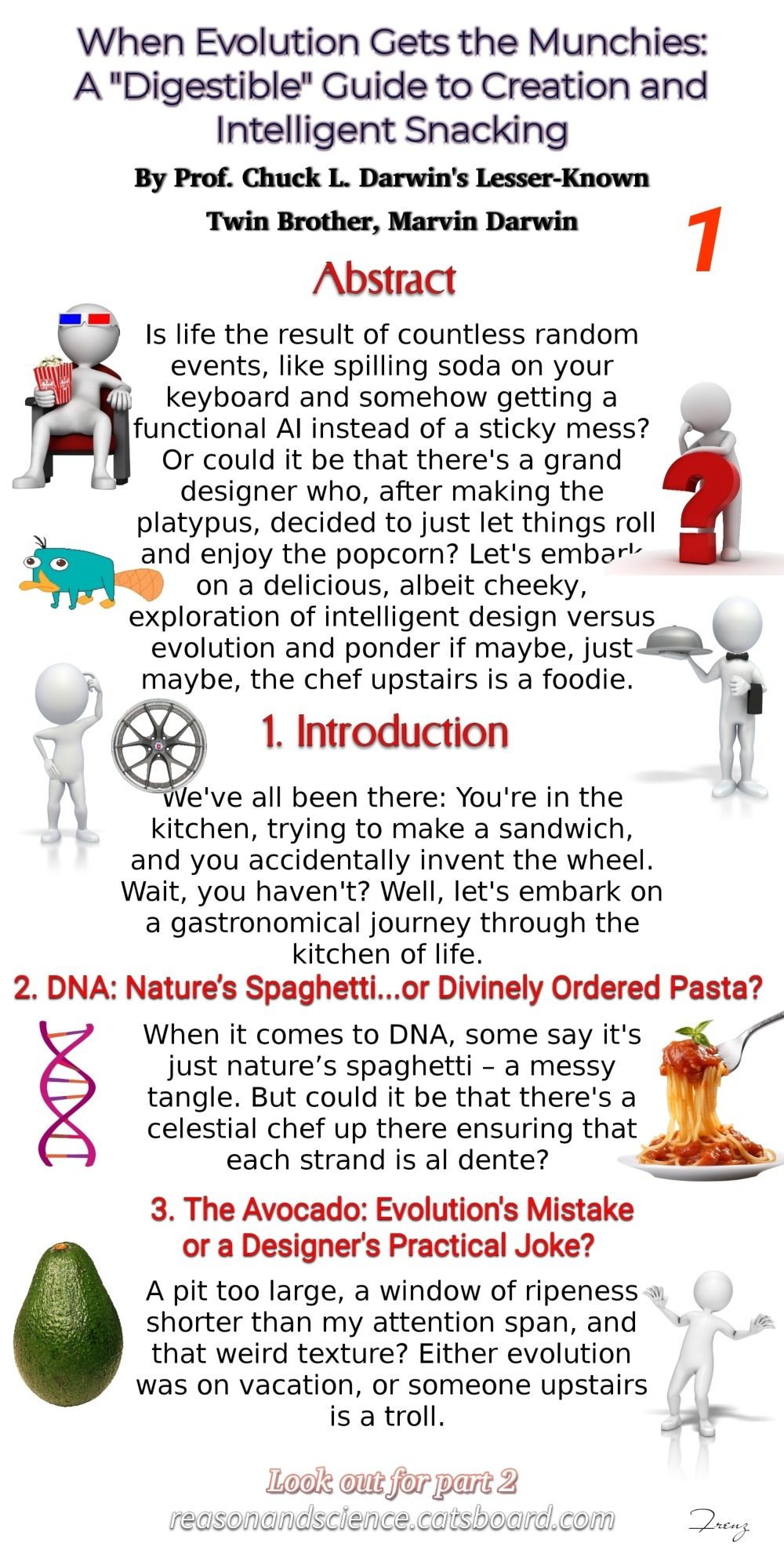
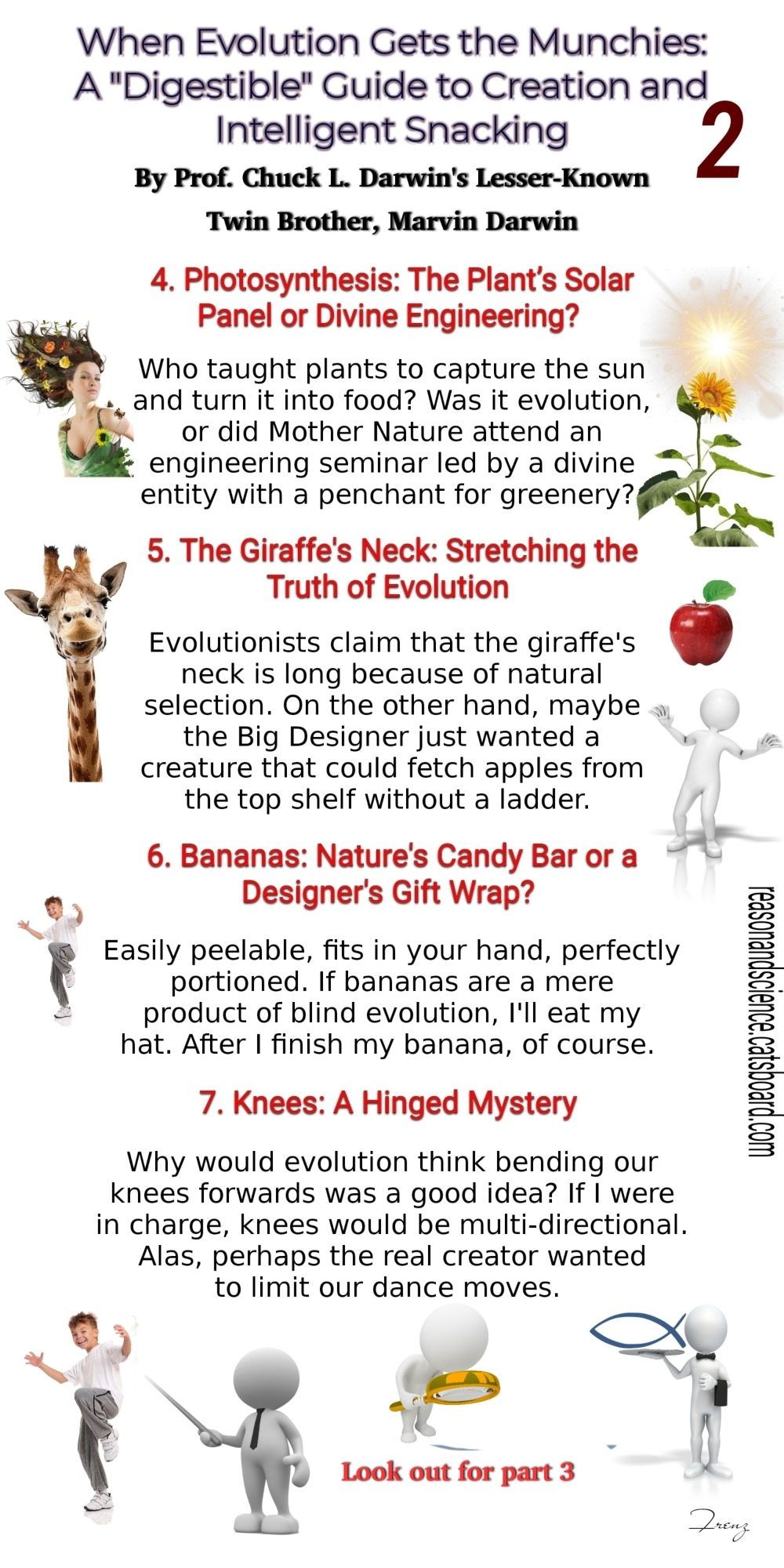
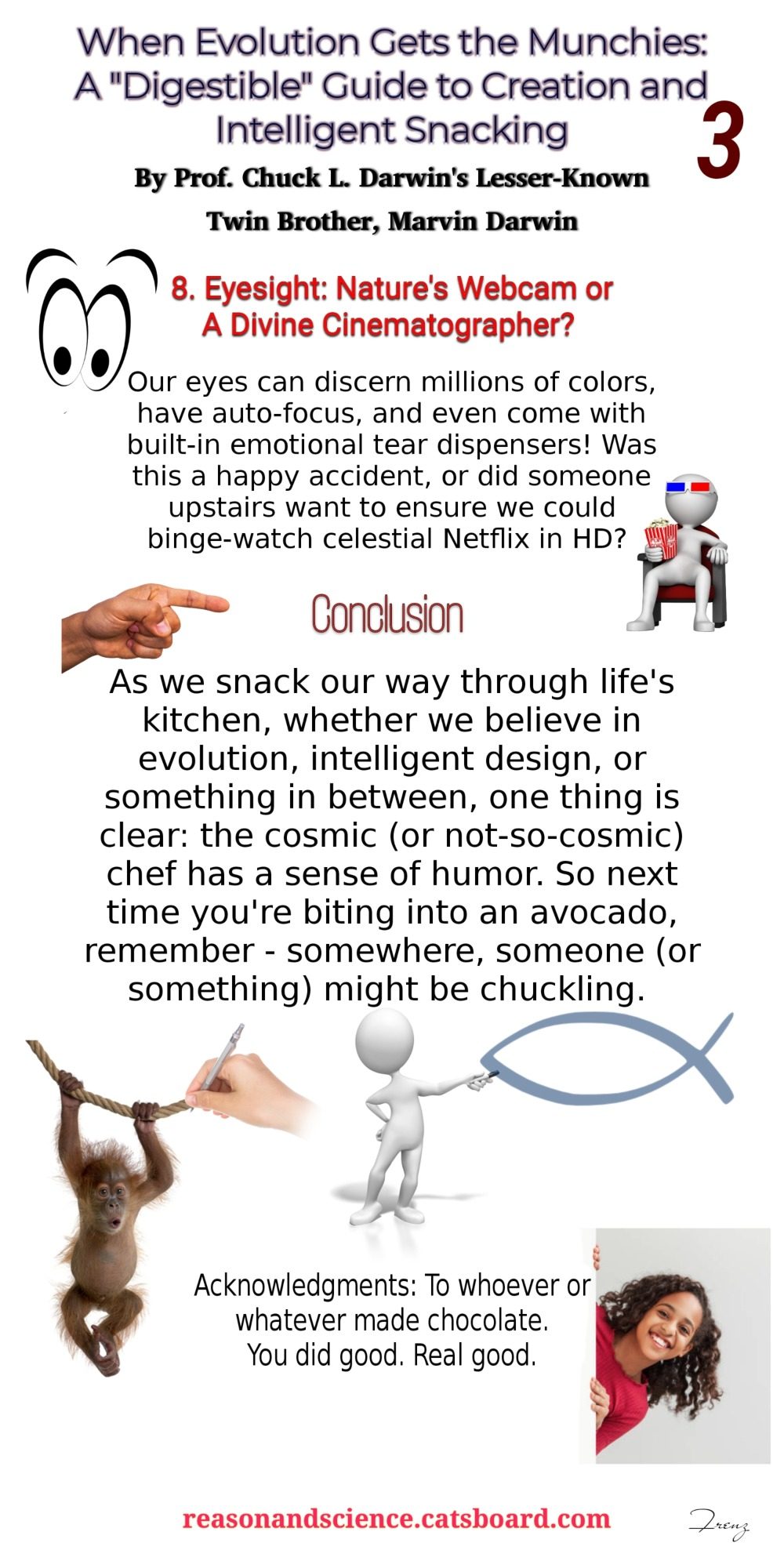
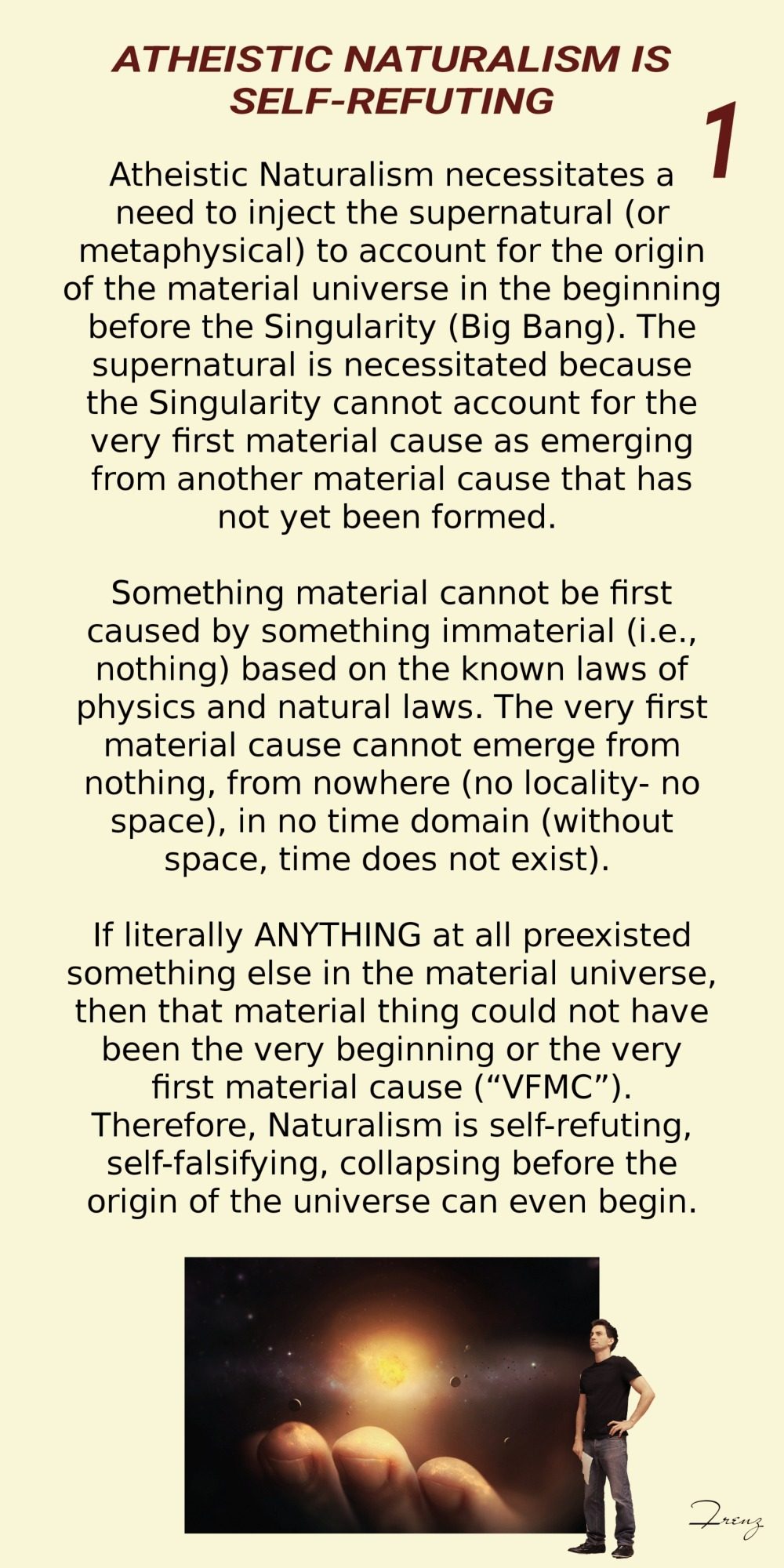
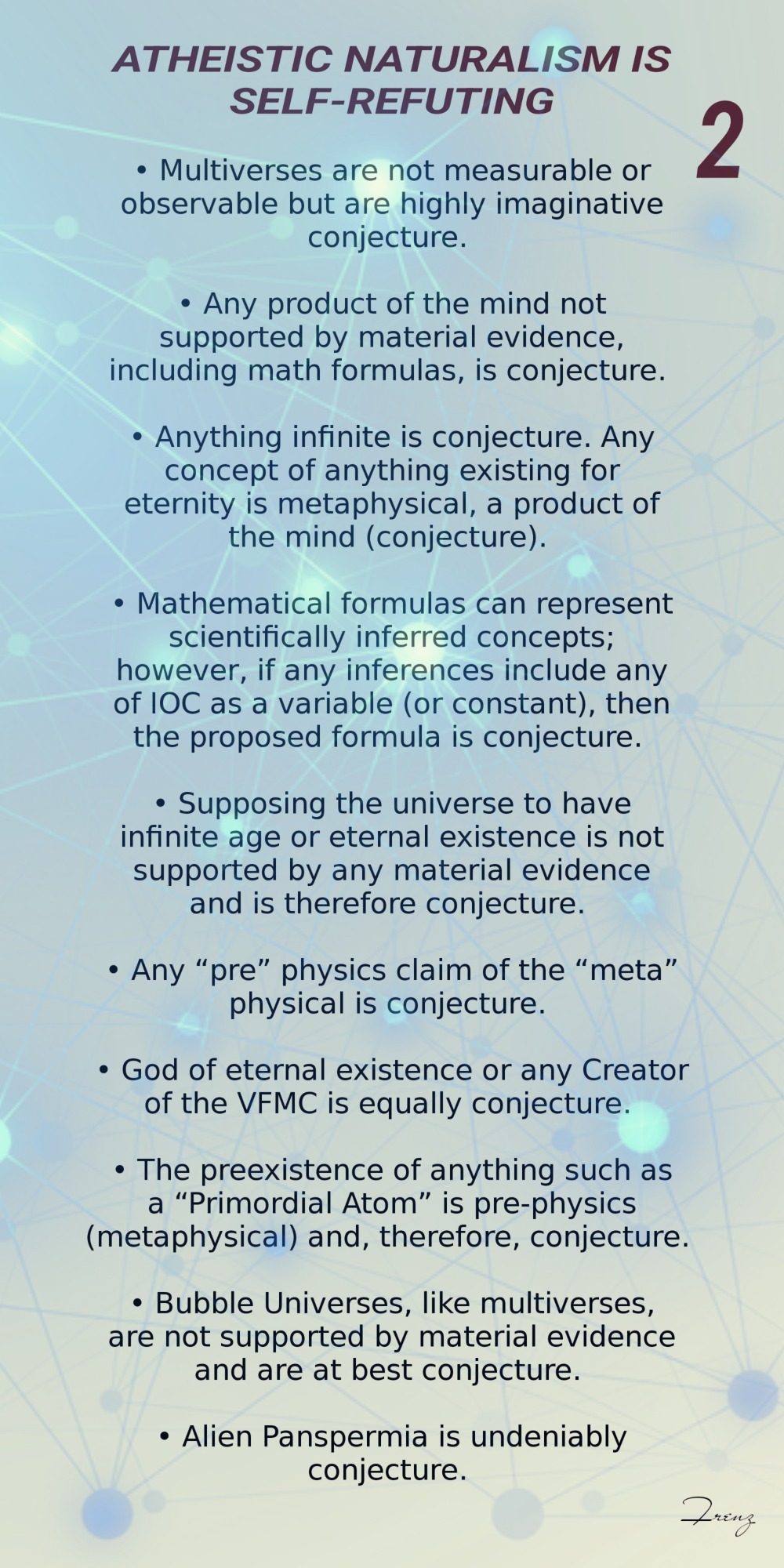
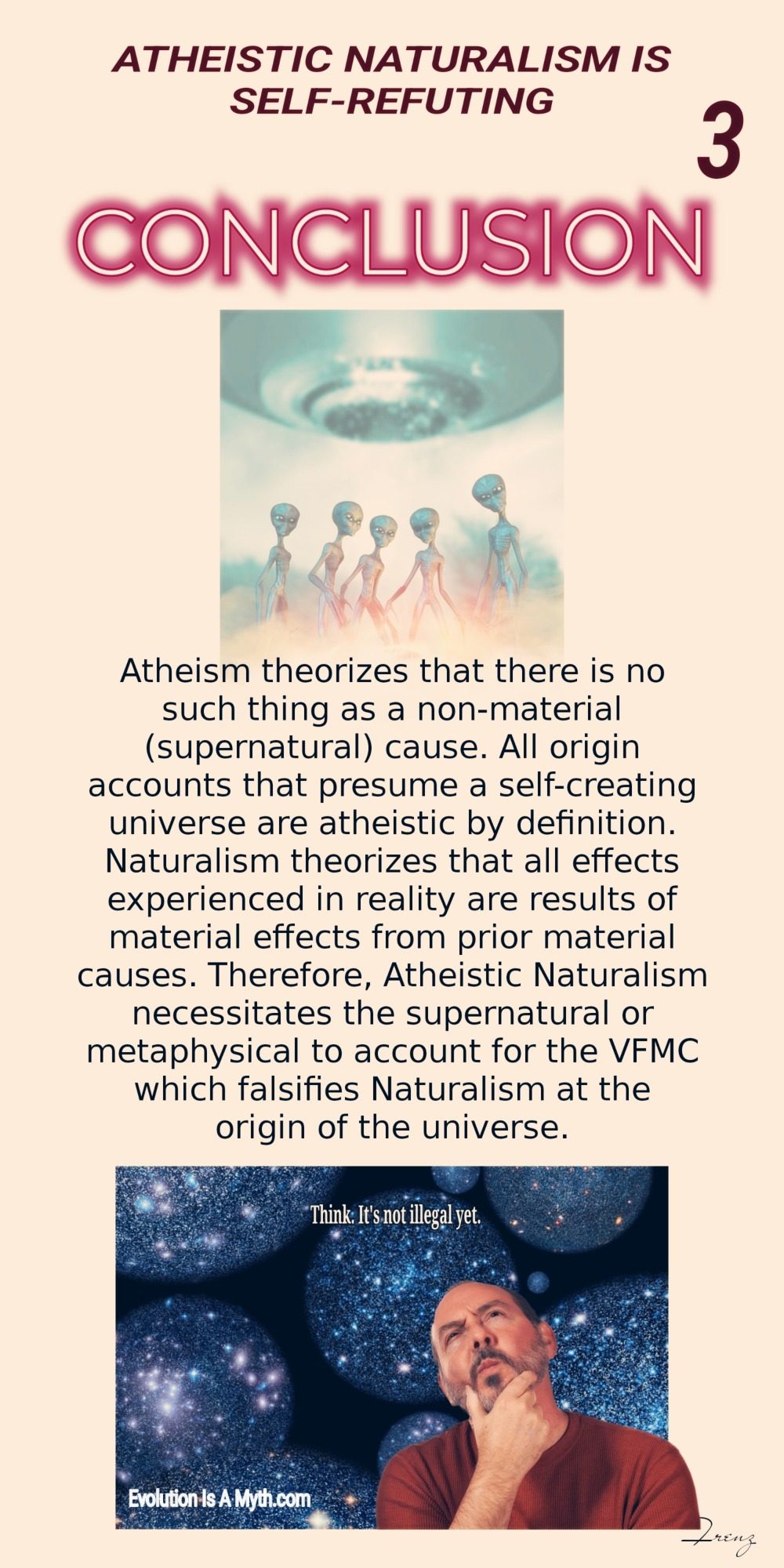
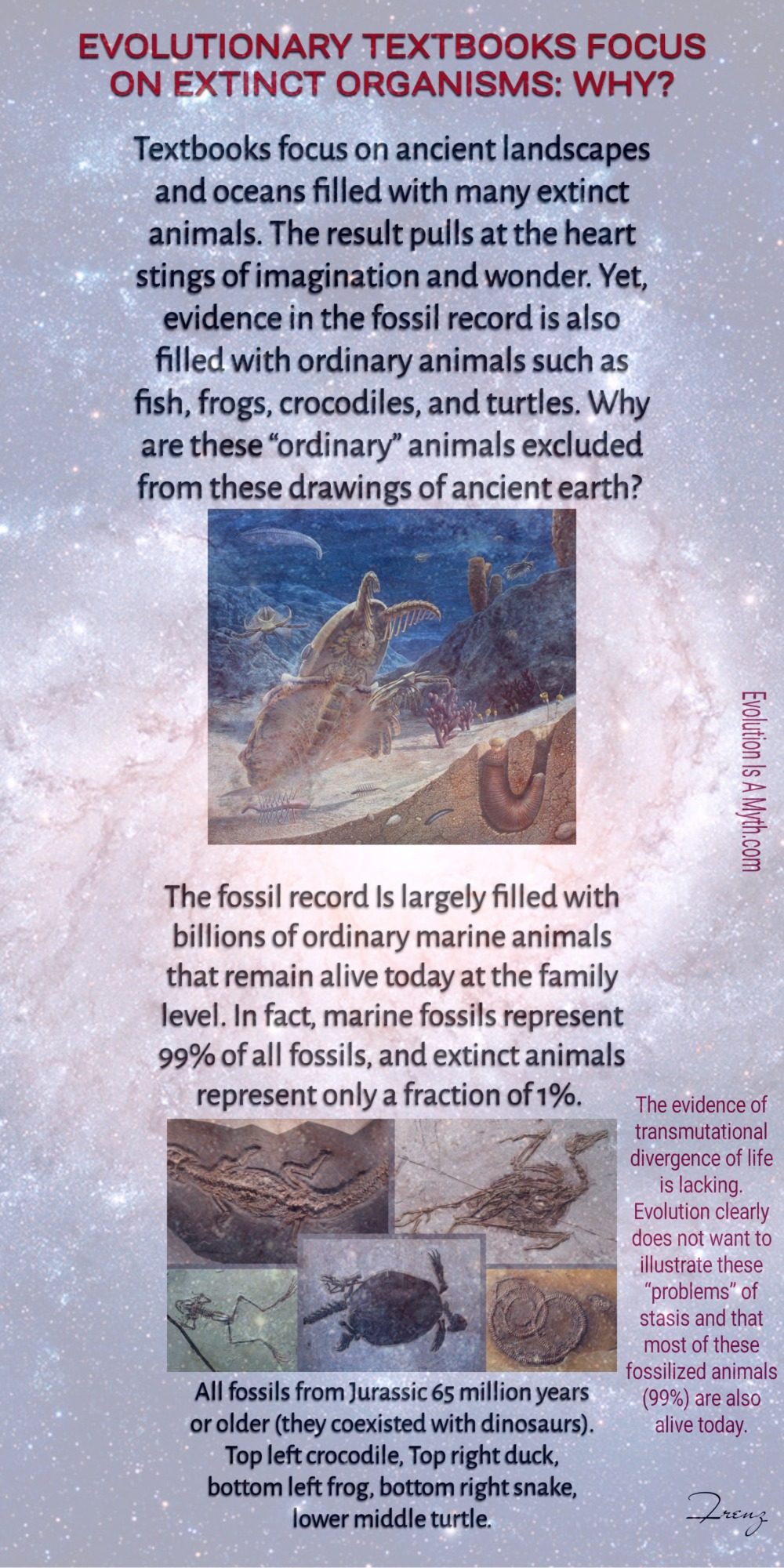
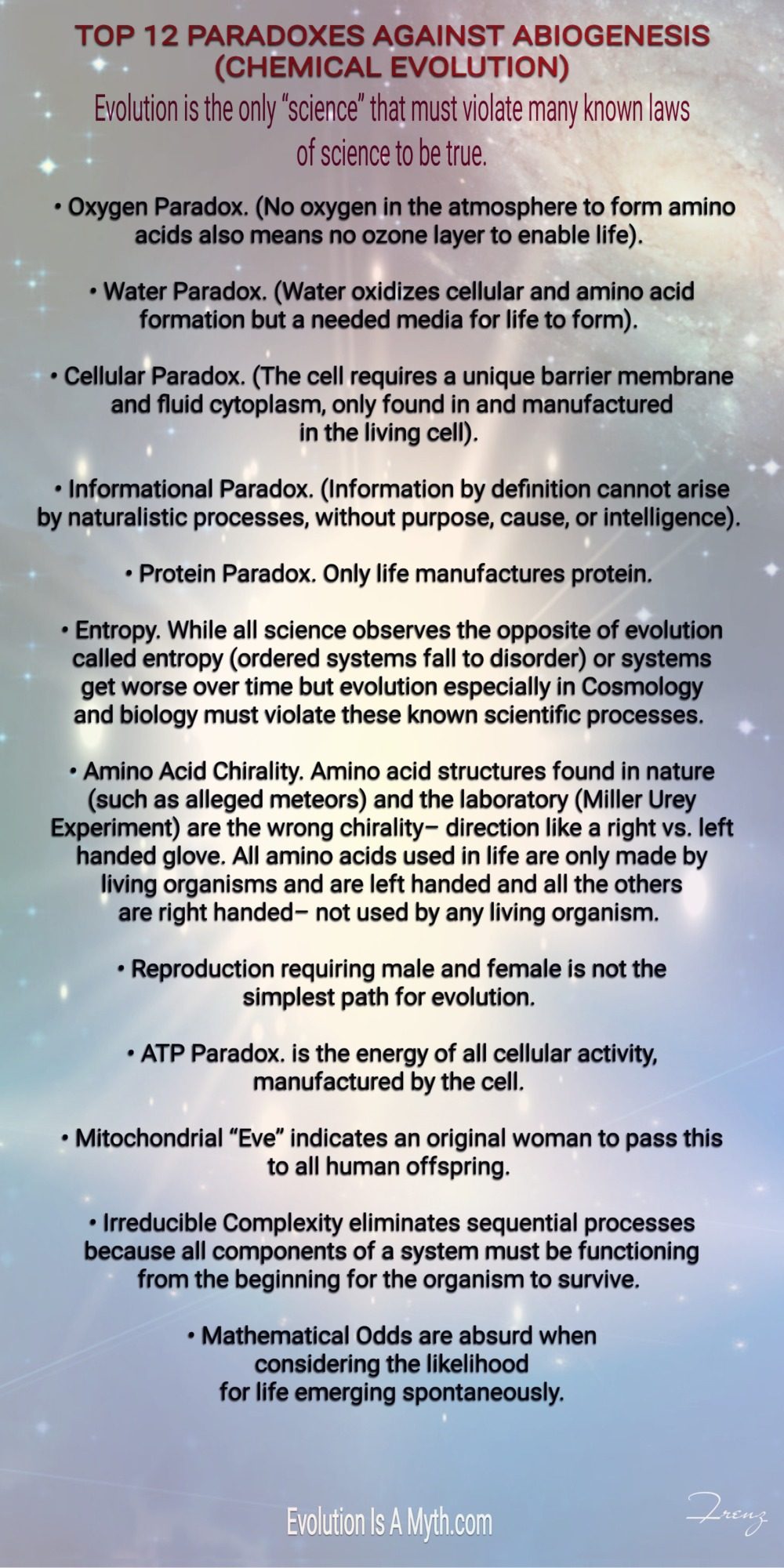
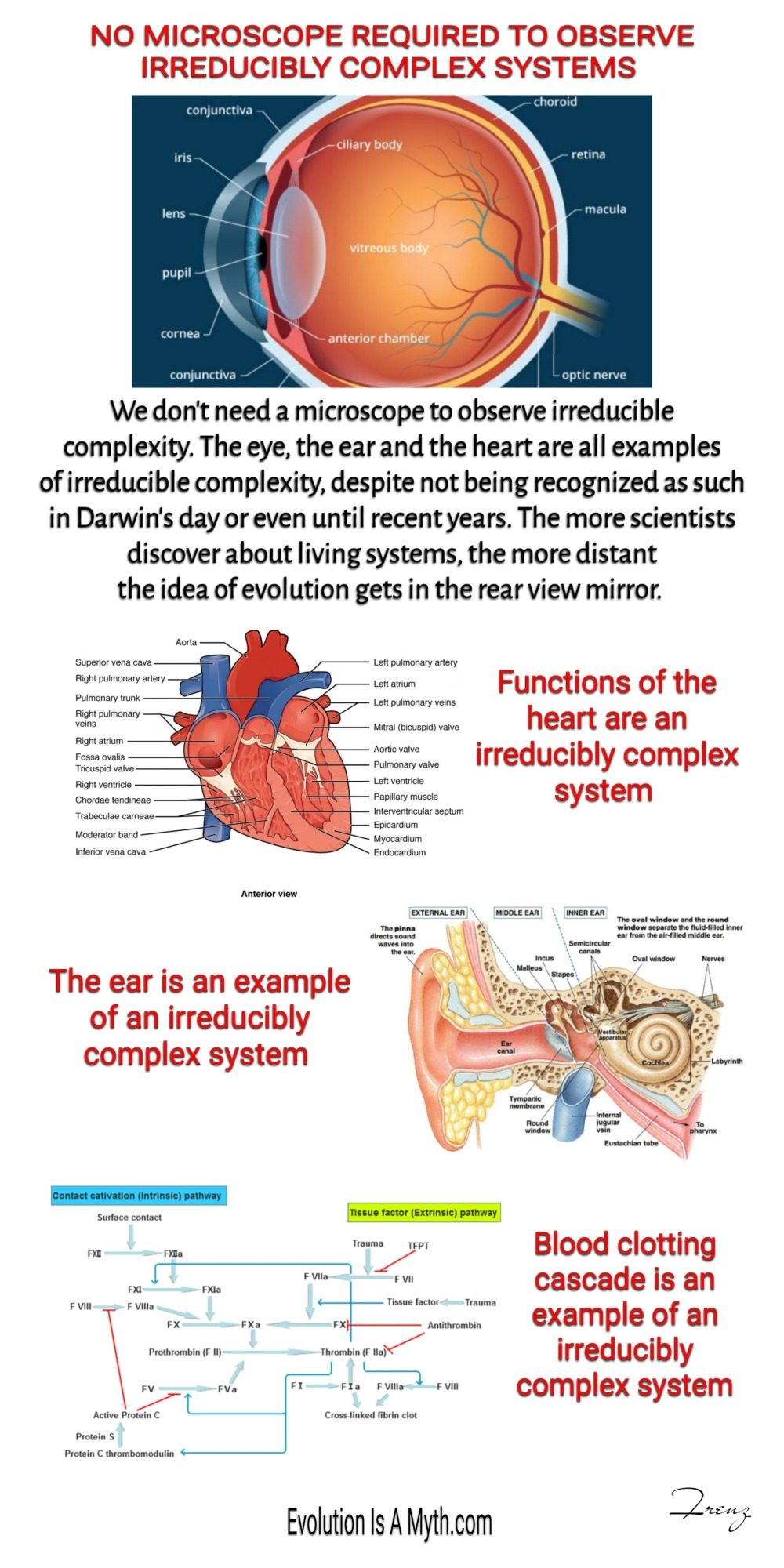
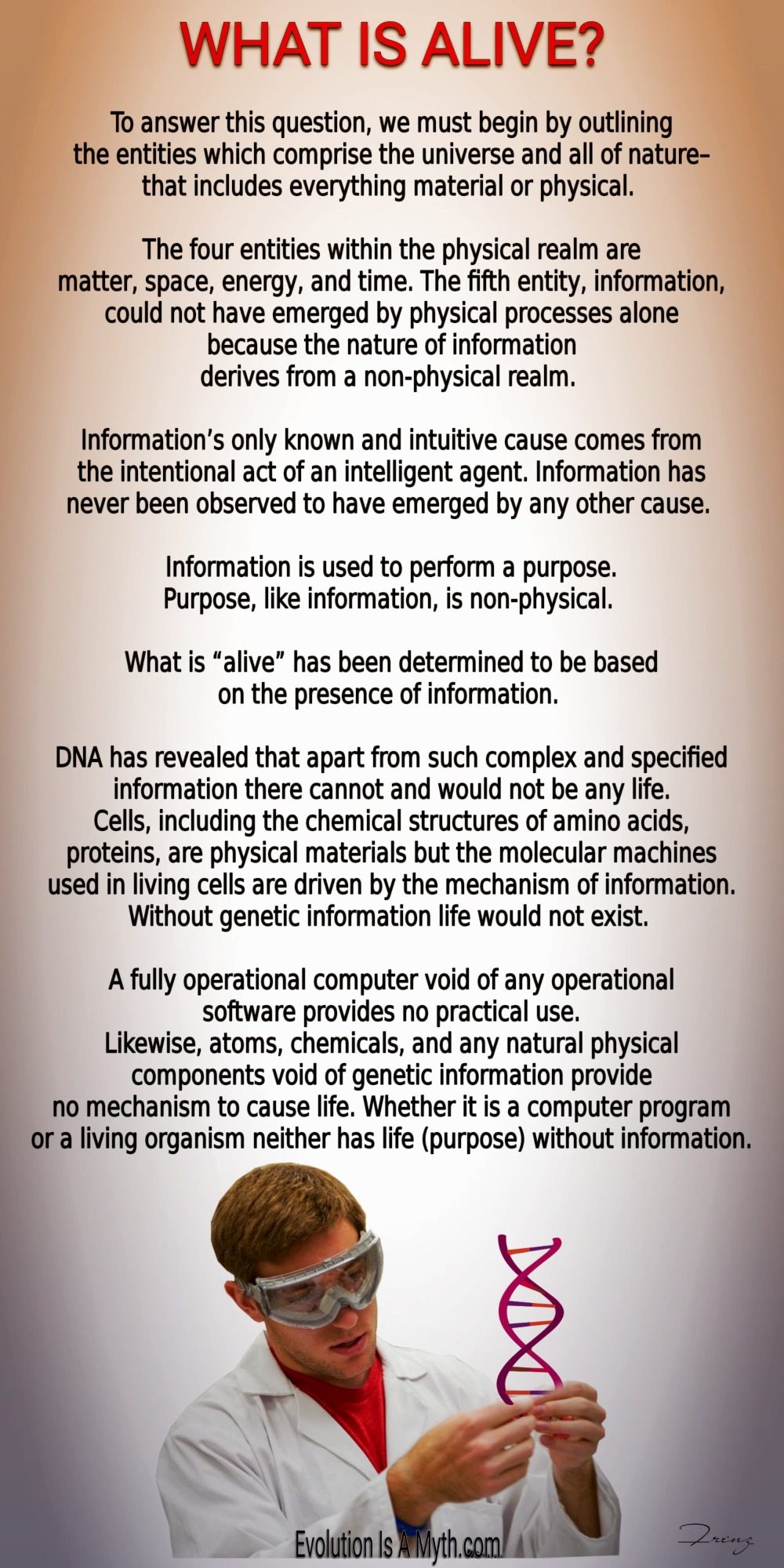
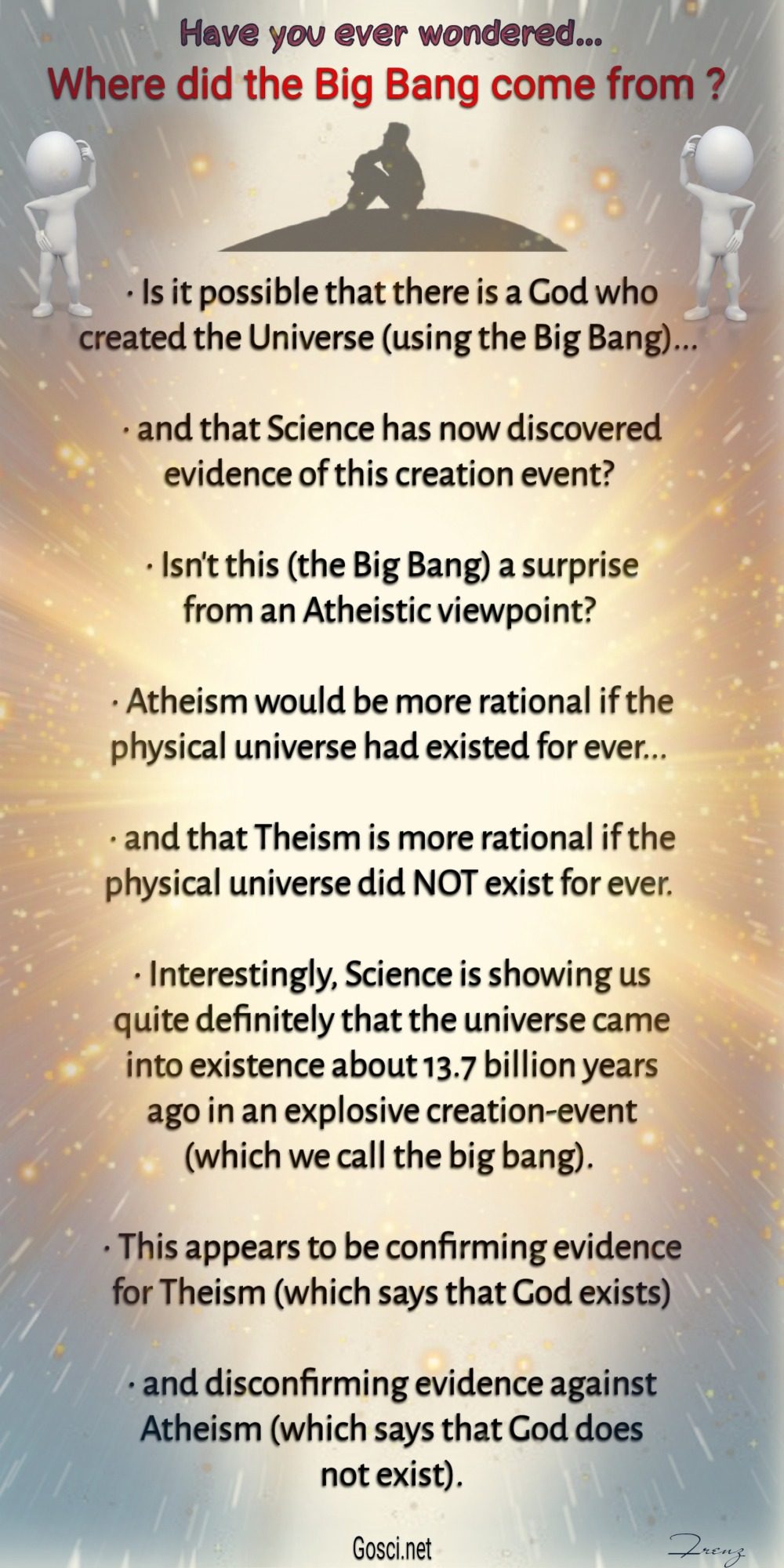
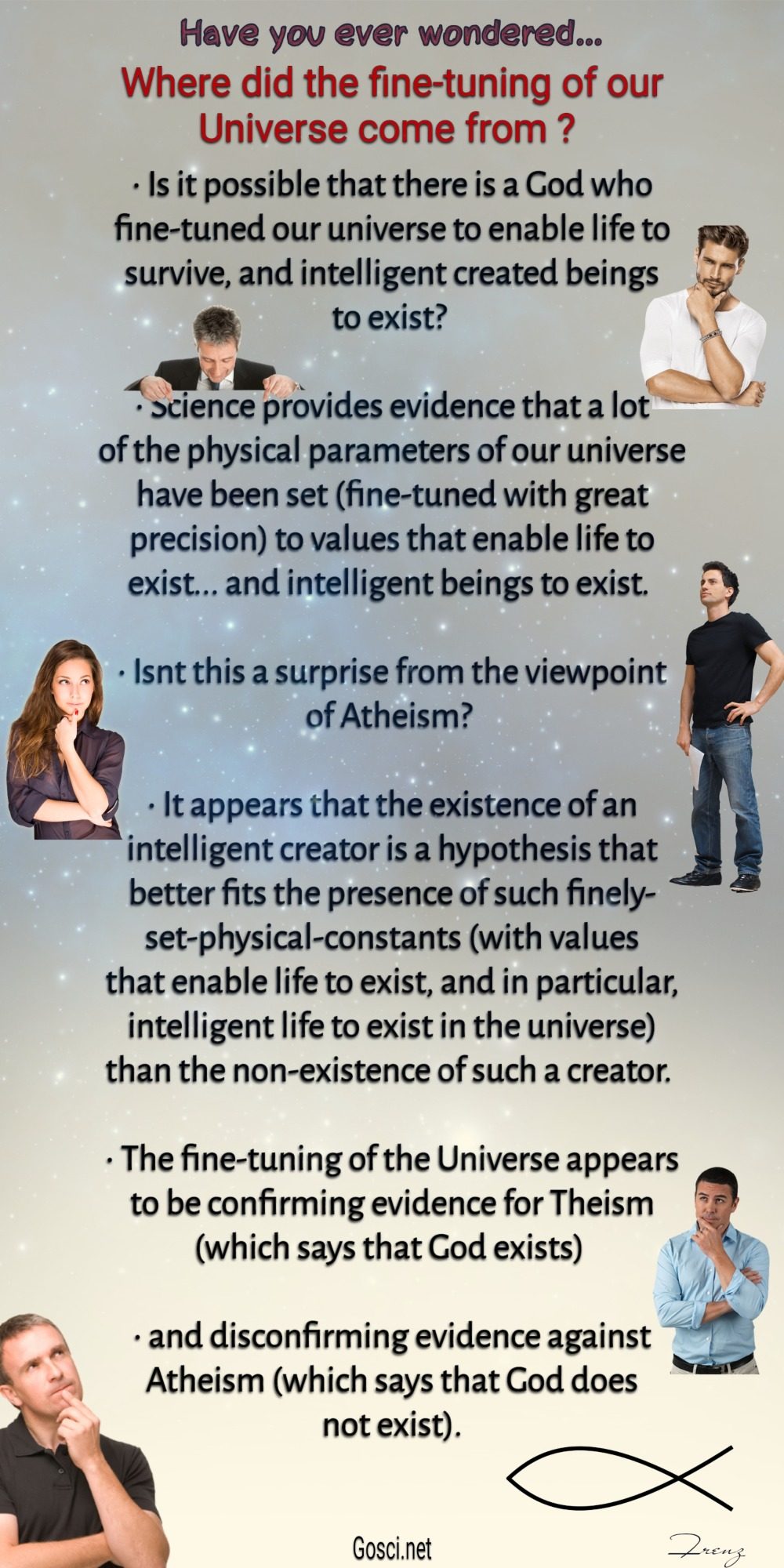
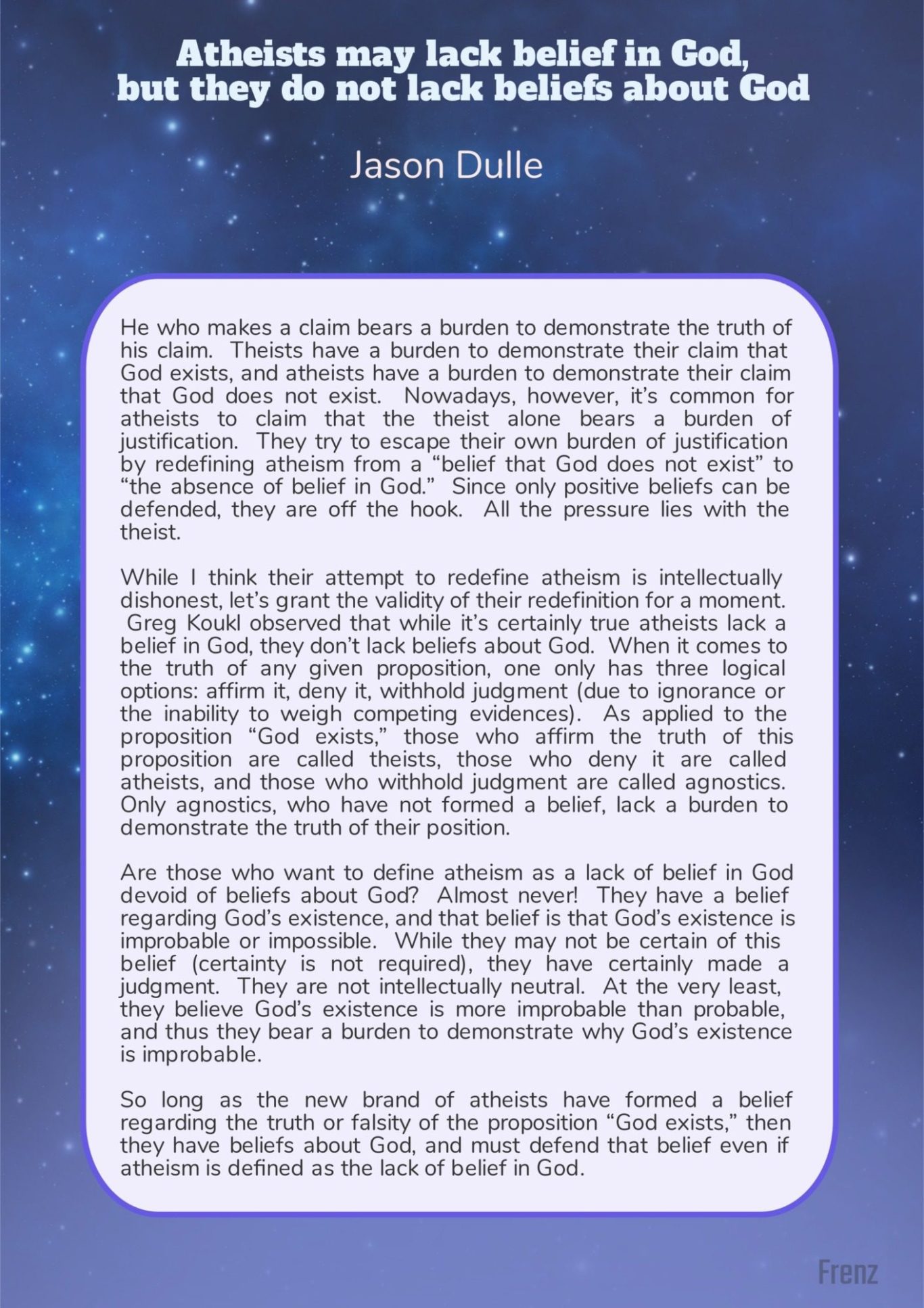
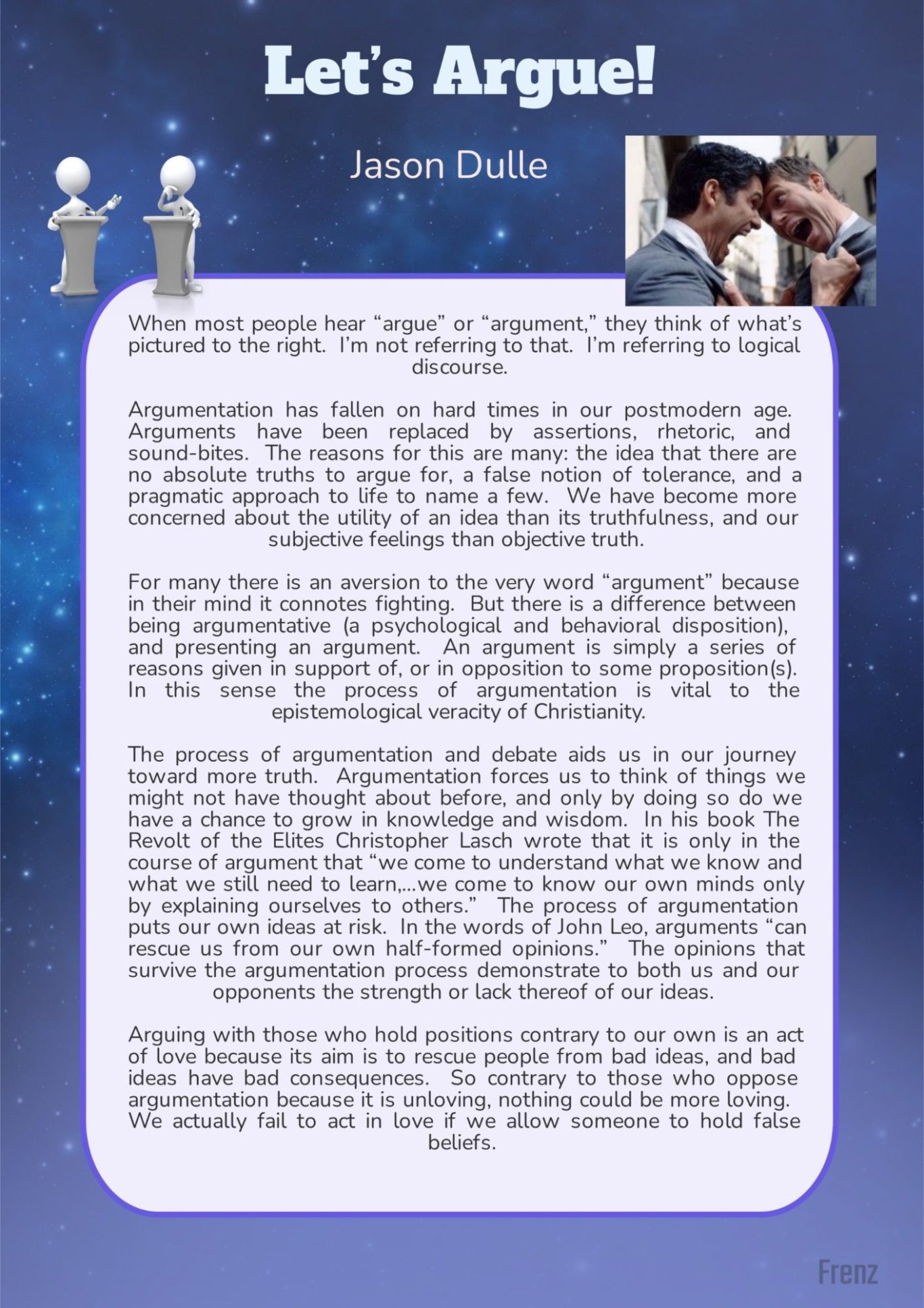
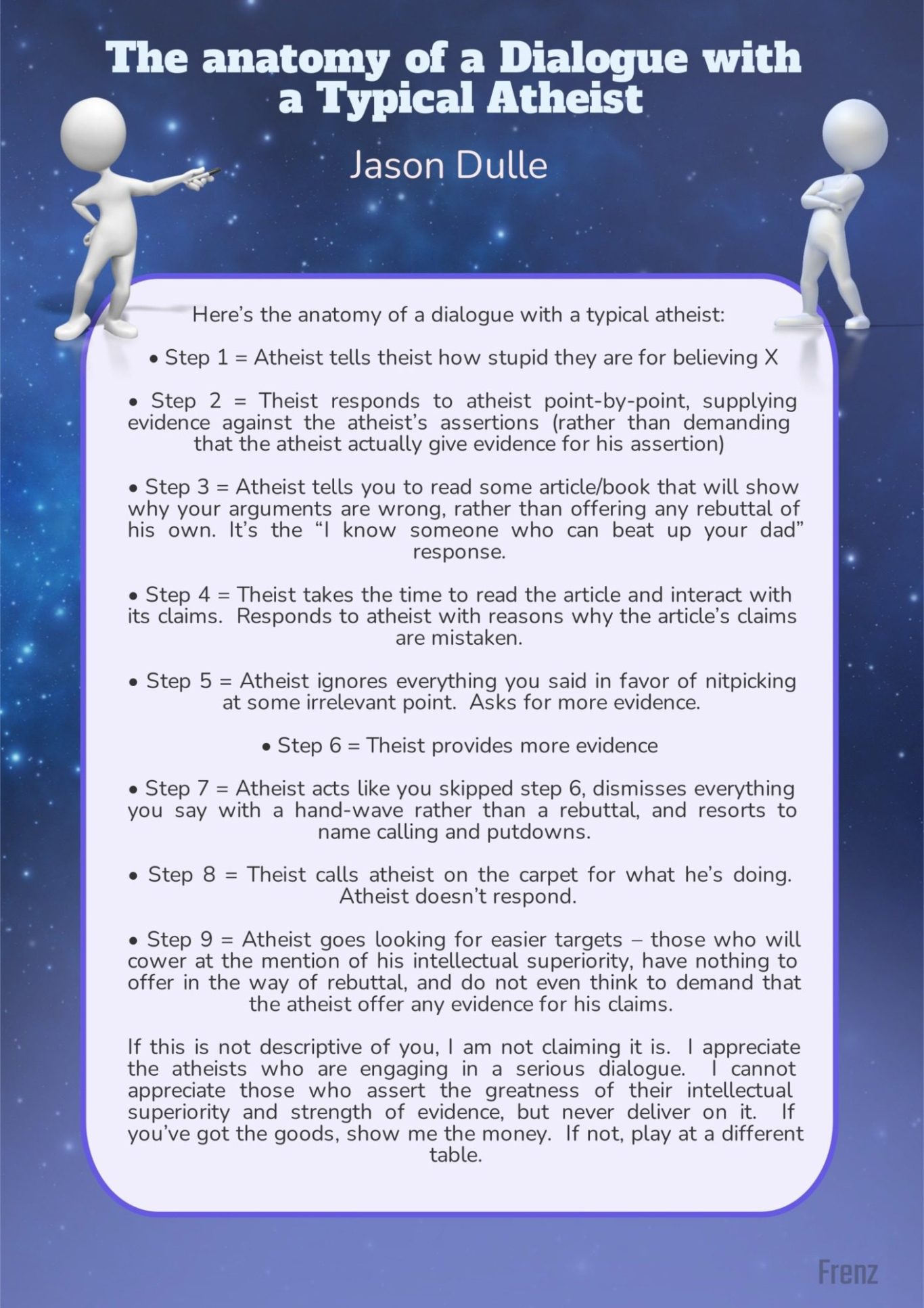
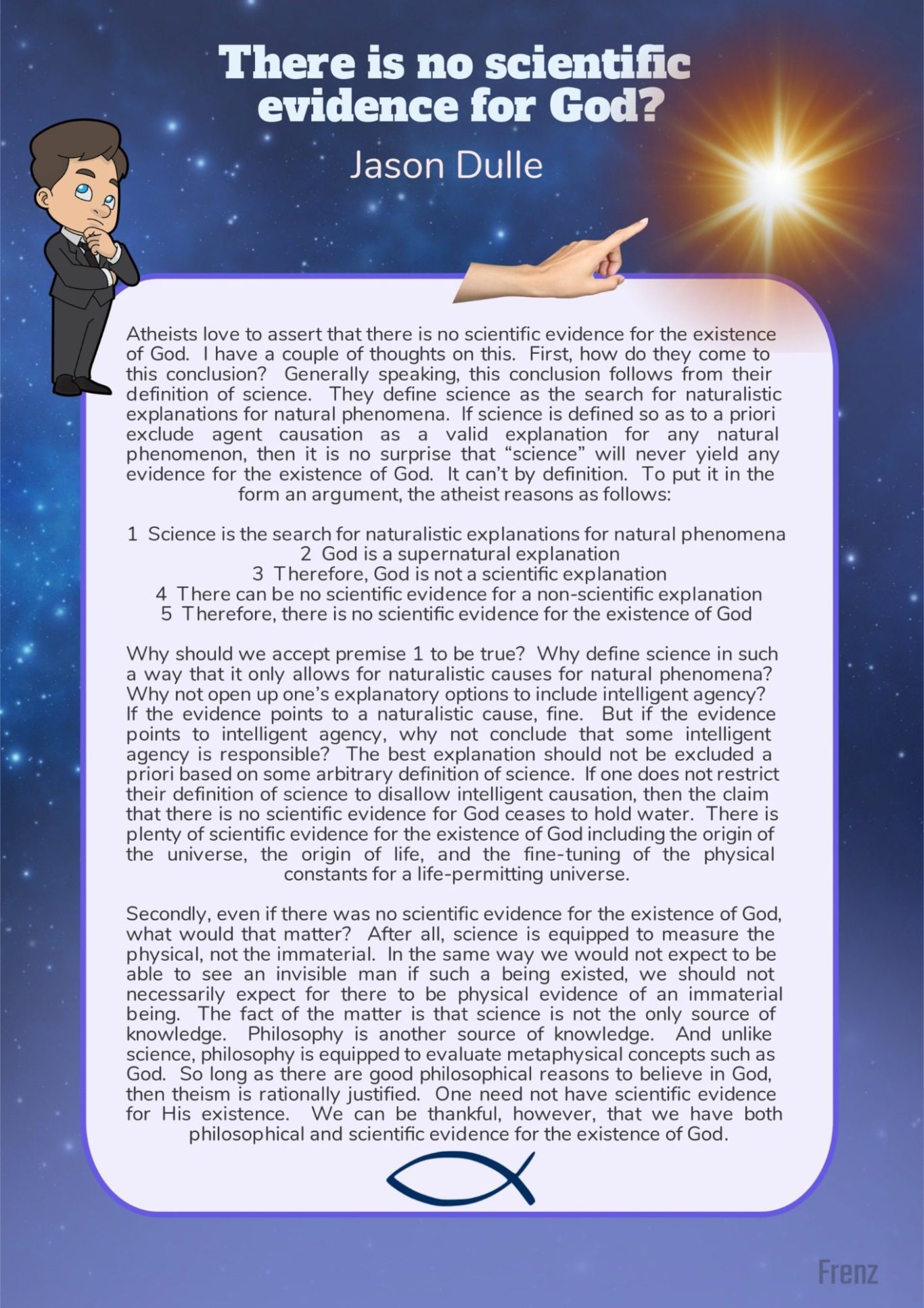
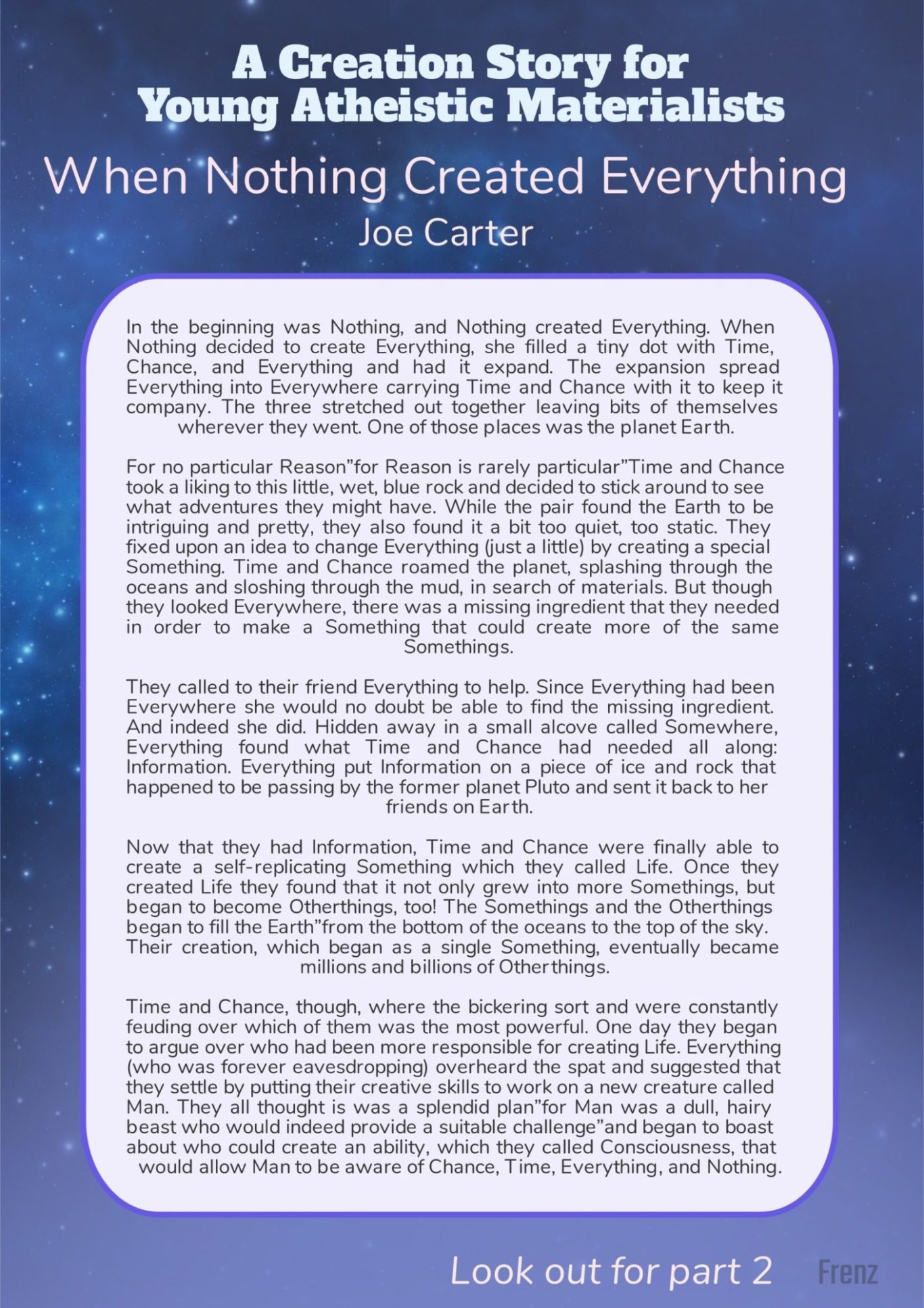
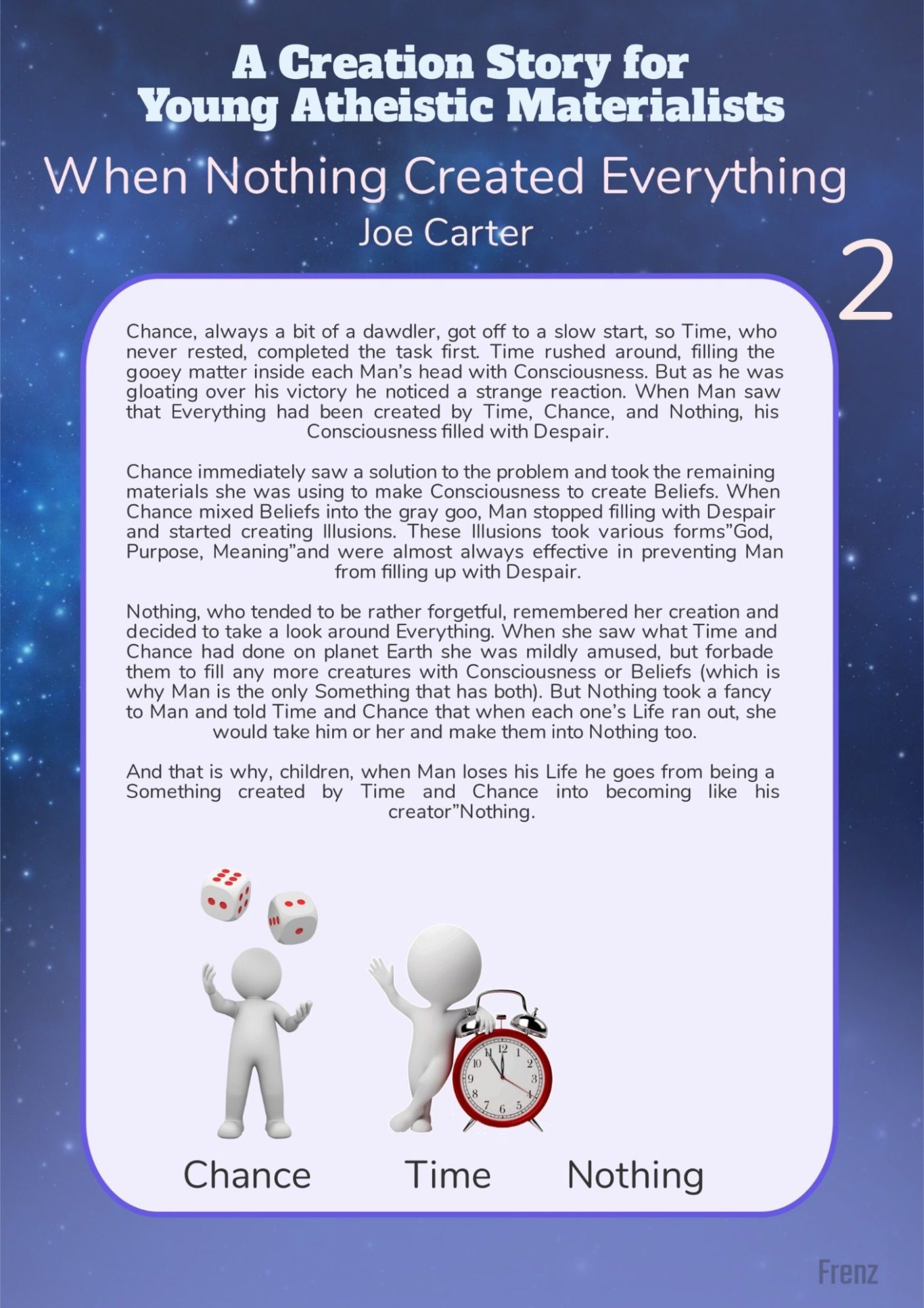
This image presents a classic thermodynamic argument against naturalistic evolution, focusing on the Second Law of Thermodynamics—the law of increasing entropy. This argument has been discussed extensively in both creationist and intelligent design literature, and it remains one of the most powerful scientific challenges to the idea that life could arise and increase in complexity through purely unguided processes.
1. The Second Law of Thermodynamics
The Second Law states that in any closed system, entropy—a measure of disorder—always increases over time. Energy becomes less available for work, and systems naturally move from order to disorder unless acted upon by an external organizing force.
As GotQuestions.org explains in “What are the laws of thermodynamics and how do they provide evidence for creationism?” (GotQuestions.org, 2026):
“The trend, according to these physical laws, is that entropy is increasing, and thus natural processes must be breaking down, not building up (or evolving into something more complicated). … Naturalistic evolution, however, requires more than just a simple change in entropy. Such a process is not the same as water freezing or the formation of salt crystals or dust collecting into a solar system. To evolve from non-life, matter on Earth would have to constantly, consistently, and directly move against the force of entropy.”
In other words, the Second Law describes a universal tendency toward decay, not spontaneous organization. Yet evolution requires the opposite: a consistent, natural increase in complexity and information over billions of years.
2. Entropy and the Impossibility of Unguided Evolution
The image’s claim that entropy forms an “impenetrable barrier” to evolution is scientifically and philosophically sound. The Second Law is one of the most universally verified principles in all of physics—no known process violates it.
As Evolution News’s article “Information and Life’s Origin — A Retrospective View” (Eric Hedin, 2023) explains, the problem is not just energy but information:
“Unguided natural processes, according to the generalized Second Law, cannot systematically increase the information content of a closed system over time. … All such mechanisms are clearly inadequate to account for the configurational entropy work of coding.”
In living systems, the challenge is not merely assembling molecules but arranging them into highly specific, information-rich sequences—like the genetic code in DNA. Random energy input (such as sunlight) cannot generate that kind of organized complexity. Without intelligent direction, energy tends to destroy order, not create it.
3. The Biblical Perspective
The Bible affirms that the universe is running down—a direct reflection of the Second Law. This decay began after the Fall, when sin entered creation:
“For the creature was made subject to vanity, not willingly, but by reason of him who hath subjected the same in hope.” (Romans 8:20 KJV)
“Of old hast thou laid the foundation of the earth: and the heavens are the work of thy hands. They shall perish, but thou shalt endure.” (Psalm 102:25–26 KJV)
“Heaven and earth shall pass away, but my words shall not pass away.” (Matthew 24:35 KJV)
The universal tendency toward disorder is consistent with a created universe that is wearing out—not with an eternal, self‑organizing cosmos.
4. Evolution and Entropy: Mutually Exclusive
The image’s conclusion—that evolution and entropy are “opposing and mutually exclusive concepts”—is logically consistent. Evolution requires a natural mechanism that can increase order and information over time, but the Second Law tells us that natural processes do the opposite.
While evolutionists sometimes argue that Earth is an “open system” receiving energy from the sun, this does not solve the problem. As GotQuestions.org notes:
“Such events happening in a minute, delicate, specific, and constant manner don’t square with how this law functions in all other circumstances.”
Energy alone does not produce complexity; it must be directed by information—and information always comes from an intelligent source.
5. The Rational Conclusion
If the Second Law of Thermodynamics is truly universal—and all evidence confirms that it is—then unguided evolution is scientifically impossible. The only coherent explanation for the origin and increasing complexity of life is intelligent design by a transcendent Creator.
Scripture identifies that Creator clearly:
“In the beginning God created the heaven and the earth.” (Genesis 1:1 KJV)
“For by him were all things created, that are in heaven, and that are in earth, visible and invisible.” (Colossians 1:16 KJV)
“Thou hast created all things, and for thy pleasure they are and were created.” (Revelation 4:11 KJV)
Summary
The image’s argument is both scientifically and theologically sound:
Entropy (the Second Law) describes an irreversible trend toward disorder.
Evolution requires a natural, consistent increase in order and information.
Therefore, evolution and entropy cannot both be true.
The evidence of design, order, and information in life points not to chaos or chance, but to the eternal, intelligent Creator who made and sustains all things.
As Psalm 19:1 (KJV) proclaims:
“The heavens declare the glory of God; and the firmament sheweth his handywork.”
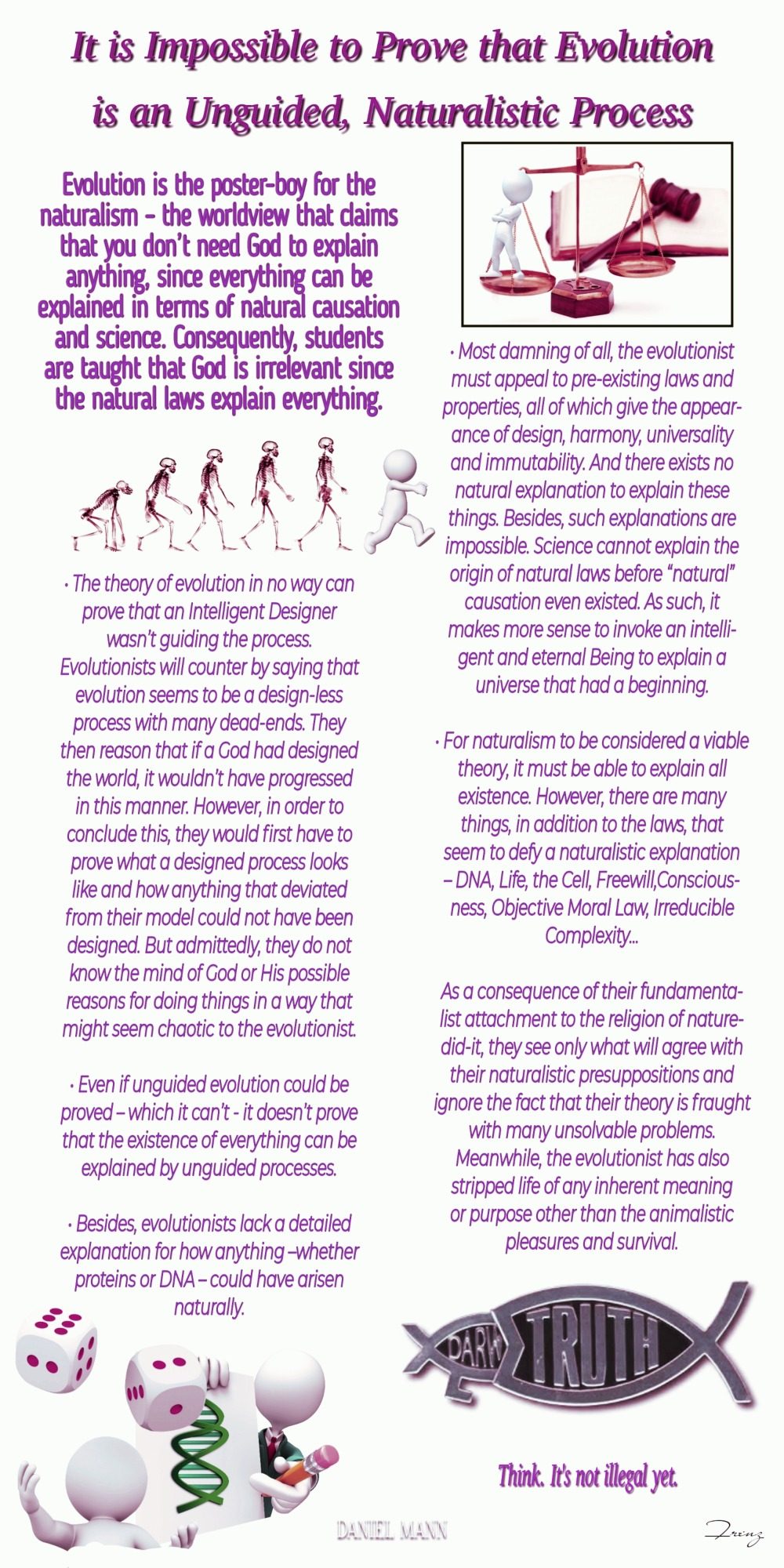
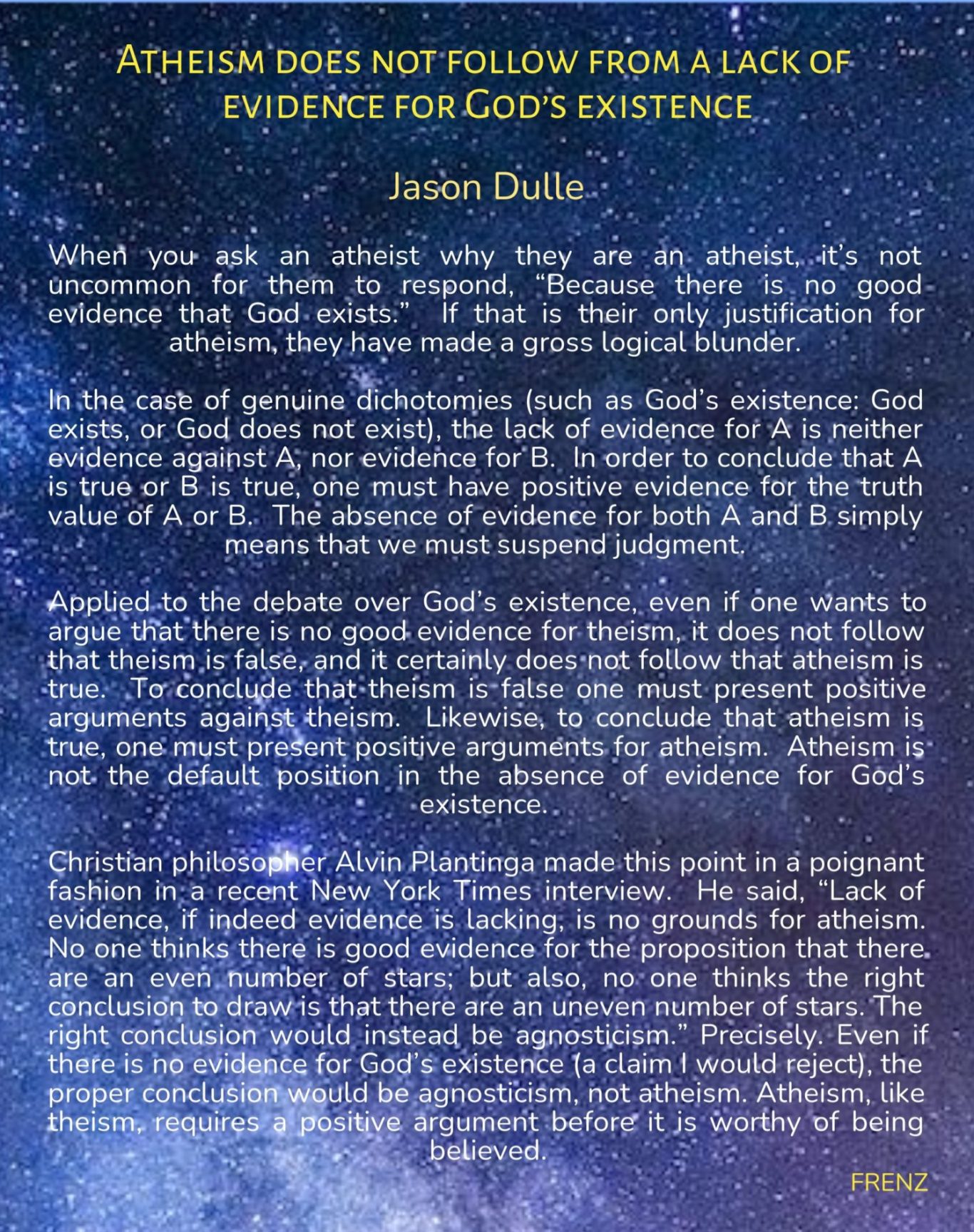
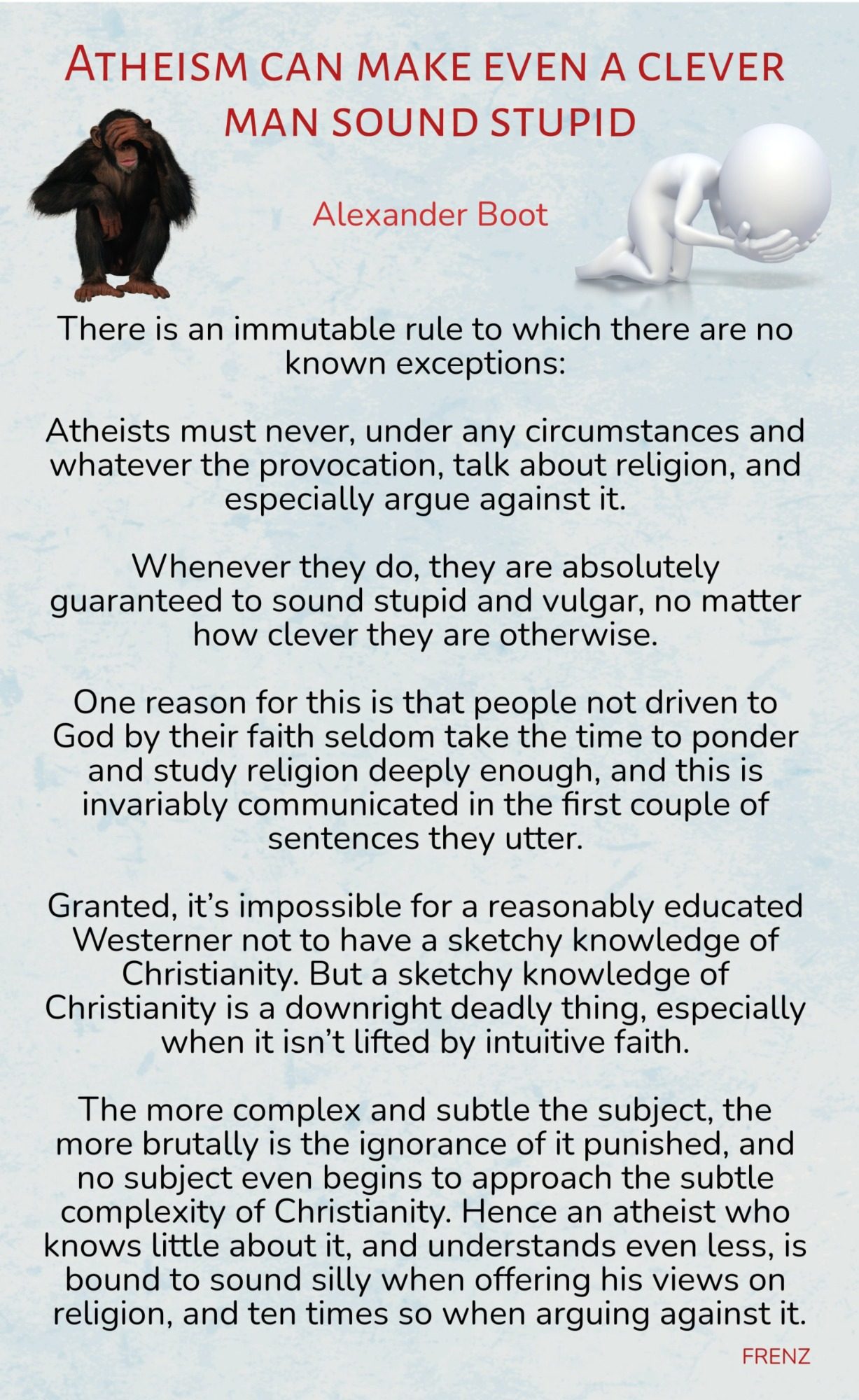
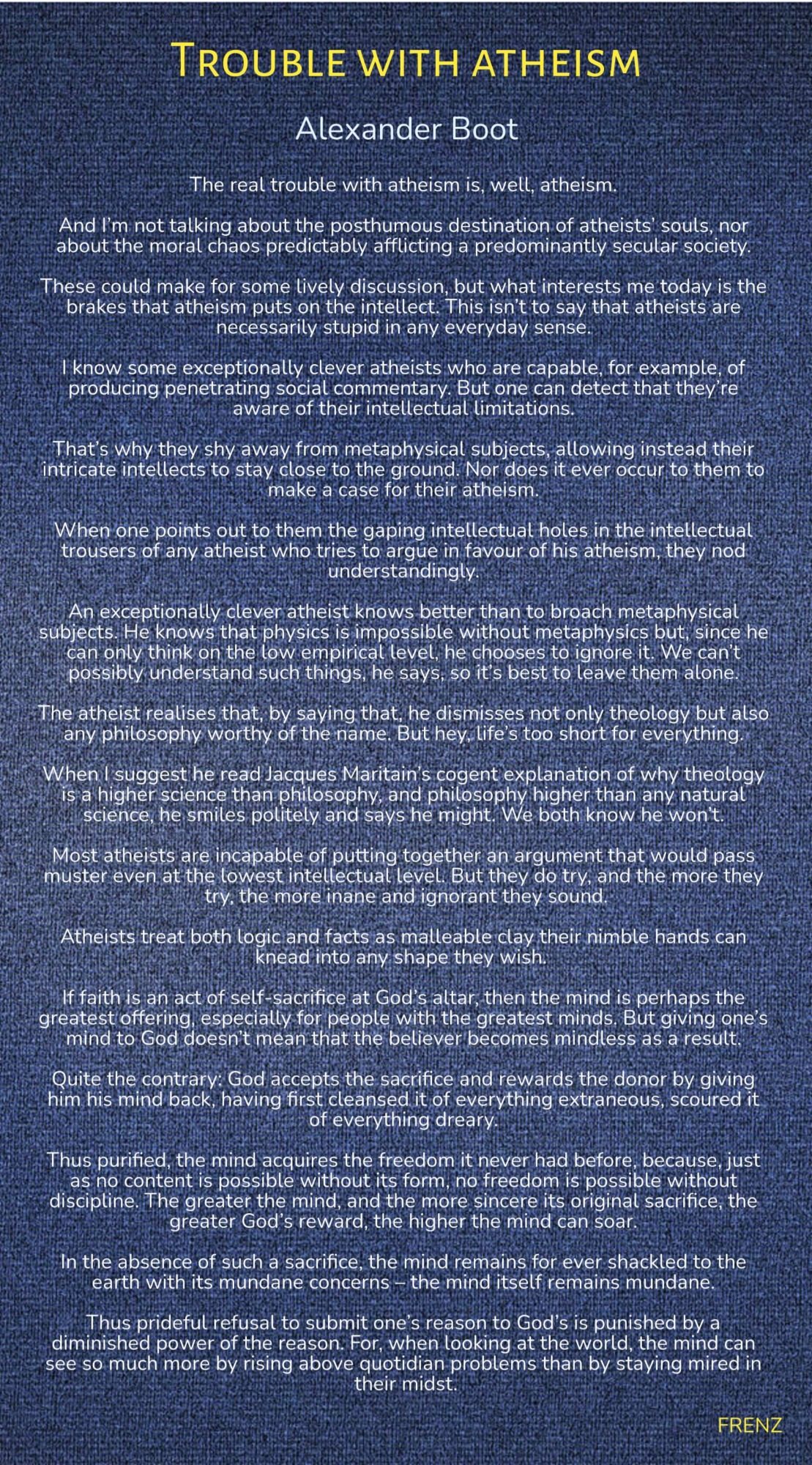
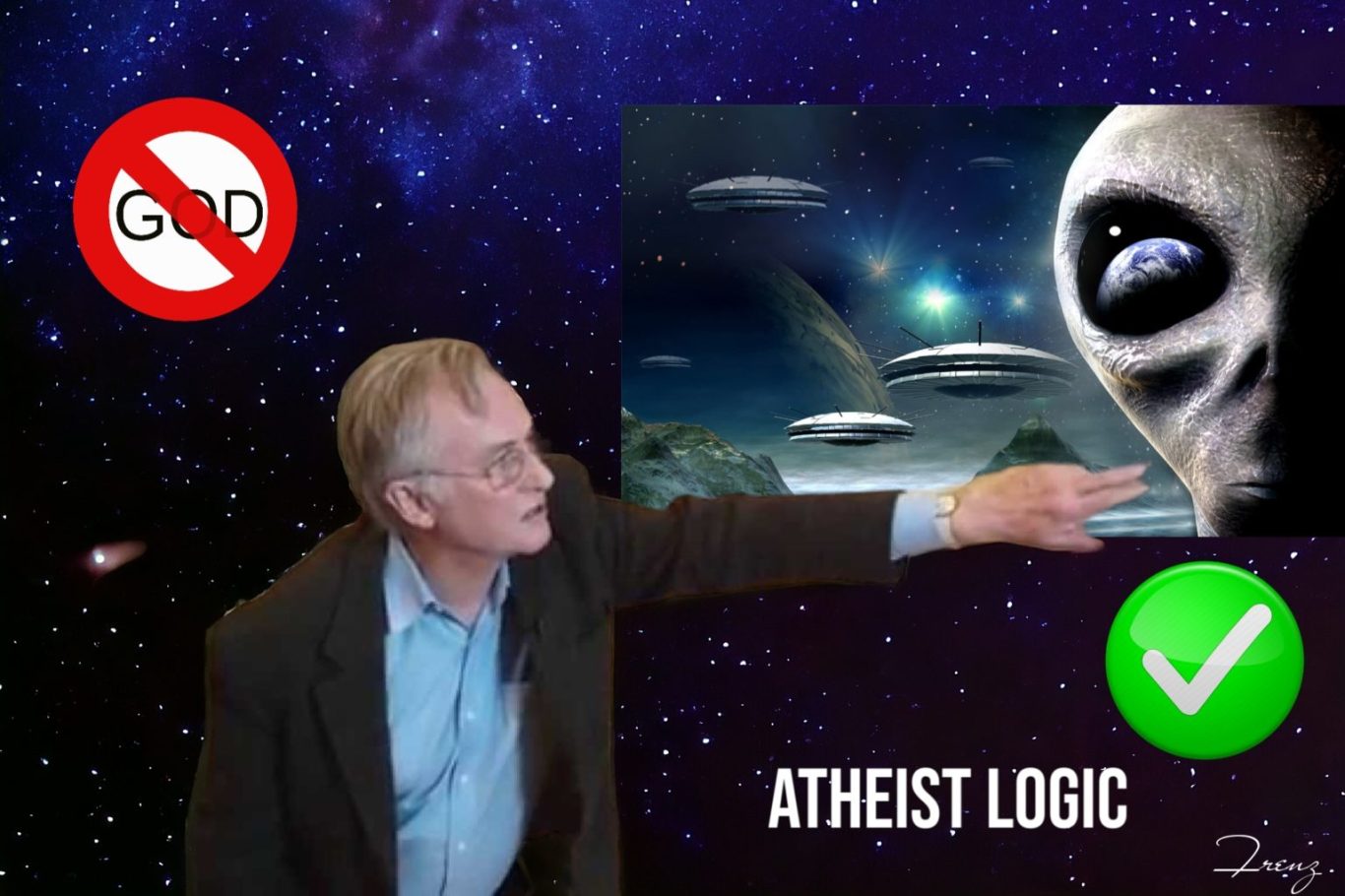
Richard Dawkins, a well-known evolutionary biologist and outspoken atheist, has addressed the topic of aliens—particularly in the context of the origins of life and intelligent design. His comments are often cited in discussions about whether life on Earth could have been seeded by an intelligent extraterrestrial source.
Dawkins’ Comments on Aliens and Intelligent Design
In the 2008 documentary Expelled: No Intelligence Allowed, Dawkins was asked whether intelligent design could be a valid explanation for life on Earth. He responded that, while he does not believe in a supernatural designer, he could imagine a scenario in which life on Earth was seeded by a highly evolved alien civilization. However, he emphasized that these aliens themselves would have had to come about by some form of Darwinian evolution.
Here is a summary of what Dawkins said in that interview:
- He does not believe in a supernatural creator.
- He is open to the idea that life on Earth could have been “seeded” by aliens, but only if those aliens themselves arose through natural evolutionary processes.
- He insists that the ultimate explanation for life must be naturalistic (i.e., not supernatural).
Relevant Quotes
In the interview, Dawkins said:
“It could come about in the following way: It could be that at some earlier time, somewhere in the universe, a civilization evolved by, probably, some kind of Darwinian means to a very, very high level of technology and designed a form of life that they seeded onto perhaps this planet. Now, that is a possibility and an intriguing possibility. And I suppose it’s possible that you might find evidence for that if you look at the details of biochemistry, molecular biology, you might find a signature of some sort of designer.”
He then clarified:
“But that designer could well be a higher intelligence from elsewhere in the universe. But that higher intelligence itself would have had to have come about by some explicable or ultimately explicable process. It couldn’t have just jumped into existence spontaneously. That’s the point.”
How Does This Relate to Intelligent Design?
Dawkins’ comments are sometimes cited by proponents of Intelligent Design (ID) to show that even a leading atheist scientist can entertain the idea of design—though Dawkins only allows for a natural designer, not a supernatural one. As Casey Luskin notes in “Intelligent Design Passes the Dawkins Test,” the debate often centers on whether features of life point to design, regardless of the designer’s identity:
“Dawkins’s point about pseudogenes is not a test of design on the grand scale but only a test of separate yet common design as compared with common ancestry (which could still potentially involve design).”
(Casey Luskin, “Intelligent Design Passes the Dawkins Test”)
Biblical Perspective
From a biblical standpoint, the Bible teaches that God is the Creator of all life (Genesis 1:1; John 1:3; Colossians 1:16), not aliens or any other created beings. The idea that life was seeded by aliens does not align with the biblical account:
Genesis 1:1 (ESV):
“In the beginning, God created the heavens and the earth.”
John 1:3 (ESV):
“All things were made through him, and without him was not any thing made that was made.”
Colossians 1:16 (ESV):
“For by him all things were created, in heaven and on earth, visible and invisible, whether thrones or dominions or rulers or authorities—all things were created through him and for him.”
In summary:
Richard Dawkins has speculated that aliens could, in theory, have seeded life on Earth, but only if those aliens themselves evolved naturally. This is a naturalistic explanation and does not align with the biblical teaching that God is the ultimate Creator of all life.
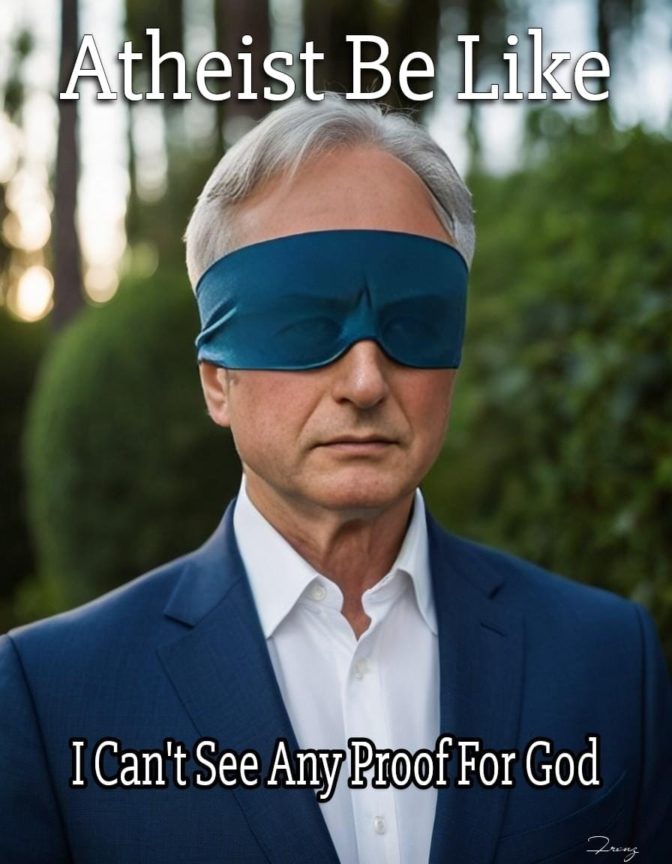
The Bible addresses the issue of why some people do not see or accept the evidence for God’s existence. According to Scripture, the problem is not a lack of evidence, but rather a matter of the heart and will.
1. Suppression of Truth
Romans 1:18–21 (ESV) explains:
“For the wrath of God is revealed from heaven against all ungodliness and unrighteousness of men, who by their unrighteousness suppress the truth. For what can be known about God is plain to them, because God has shown it to them. For his invisible attributes, namely, his eternal power and divine nature, have been clearly perceived, ever since the creation of the world, in the things that have been made. So they are without excuse.”
This passage teaches that God’s existence and attributes are clearly seen in creation, but some people suppress this truth because of their desire to live apart from God’s moral authority.
2. The Condition of the Heart
Psalm 14:1 (ESV) says:
“The fool says in his heart, ‘There is no God.’ They are corrupt, they do abominable deeds; there is none who does good.”
This verse points out that denying God is not primarily an intellectual issue, but a spiritual and moral one. The heart’s disposition can blind a person to the evidence that is present.
3. Spiritual Blindness
2 Corinthians 4:4 (ESV) adds:
“In their case the god of this world has blinded the minds of the unbelievers, to keep them from seeing the light of the gospel of the glory of Christ, who is the image of God.”
Here, Paul explains that spiritual forces can also play a role in preventing people from seeing the truth about God.
Summary:
According to the Bible, atheists do not see proof for God not because evidence is lacking, but because of a combination of suppressing the truth, the condition of the heart, and spiritual blindness. Yet, God’s love and grace are available to all who seek Him with a sincere heart (Jeremiah 29:13). The evidence for God is present in creation, conscience, and especially in the person of Jesus Christ, who died and rose again for our salvation (Romans 5:8).
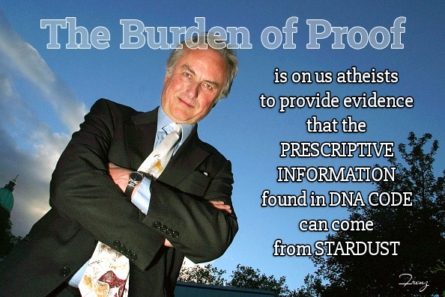
1. The Nature of the Burden of Proof
As J. Ed Komoszewski points out in his critique of Matt Dillahunty, both atheists and theists make positive claims about the nature of the universe. When atheists claim that life and its information-rich DNA arose from unguided natural processes, they are making a positive assertion that requires evidence:
“Both atheists and theists make positive statements about the nature of the universe. If atheists shun the ensuing burden of proof, it should count against them.”
—J. Ed Komoszewski, Michael Egnor Explains Why Matt Dillahunty Is Not an Atheist
2. Prescriptive Information in DNA
DNA contains prescriptive information—instructions that direct the assembly and functioning of living organisms. This is not merely random data, but highly organized, meaningful information, similar to a language or code. The Bible affirms that God is the source of life and order:
“In the beginning was the Word, and the Word was with God, and the Word was God. He was in the beginning with God. All things were made through him, and without him was not any thing made that was made.”
—John 1:1–3 (ESV)
“By faith we understand that the universe was created by the word of God, so that what is seen was not made out of things that are visible.”
—Hebrews 11:3 (ESV)
“For by him all things were created, in heaven and on earth, visible and invisible, whether thrones or dominions or rulers or authorities—all things were created through him and for him.”
—Colossians 1:16 (ESV)
3. Can Information Arise from Non-Living Matter?
No scientific experiment has ever demonstrated that complex, prescriptive information—like that found in DNA—can arise from non-living matter (stardust) without intelligent guidance. The Intelligent Design movement points out that all known codes and languages come from minds, not from unguided material processes.
4. The Challenge for Atheism
If atheists claim that life’s information-rich DNA code arose from stardust through purely natural processes, the burden is on them to provide evidence for this claim. Simply dismissing the question or labeling it a “fallacy of personal incredulity” does not answer the challenge. As Komoszewski notes, evading the burden of proof is not a valid response in a rational discussion.
In summary:
The prescriptive information in DNA is best explained by an intelligent Creator, as affirmed by Scripture. The burden of proof is on atheists to demonstrate that such information can arise from stardust without intelligent input—something that has never been observed. The Bible’s testimony and the evidence from nature both point to God as the ultimate source of life and information.
1. DNA: Prescriptive Information and Intelligent Design
DNA contains vast amounts of prescriptive information—instructions that direct the development and functioning of all living things. This information is encoded in a complex language of four chemical “letters” (A, T, C, G), forming a code far more sophisticated than any human-made language or computer code.
As the article “In Battle for Biology, Woke Folks Come for Coyne” by Denyse O’Leary notes, even prominent atheists and evolutionary biologists like Jerry Coyne are facing increasing scrutiny as the scientific community wrestles with the implications of information in biology. The article observes:
“Wokeness appears to be poisoning atheism as well as science. Who better to find that out than University of Chicago evolutionary biologist Jerry Coyne, anti-religious zealot and censor of anyone who questions the idea of a Godless universe. At one time, atheists tended to be proud believers in their own rationality but now many seem happy to jettison all that in order to cement their status among the Woke.”
—Denyse O’Leary, In Battle for Biology, Woke Folks Come for Coyne
The burden of proof is on those who claim that such complex, meaningful information could arise from unguided, natural processes—something that has never been observed in any other context.
2. The Bible’s Testimony: God as the Author of Life
The Bible affirms that God is the ultimate source of life and information:
“In the beginning was the Word, and the Word was with God, and the Word was God. He was in the beginning with God. All things were made through him, and without him was not any thing made that was made.”
—John 1:1–3 (ESV)
“For by him all things were created, in heaven and on earth, visible and invisible, whether thrones or dominions or rulers or authorities—all things were created through him and for him.”
—Colossians 1:16 (ESV)
“By faith we understand that the universe was created by the word of God, so that what is seen was not made out of things that are visible.”
—Hebrews 11:3 (ESV)
These verses teach that the universe and all life within it are the result of God’s creative word and intelligence—not random chance.
3. Science and Faith: No Contradiction
Far from killing faith, the discoveries of DNA and the complexity of life point more strongly than ever to a Creator. The Intelligent Design movement, supported by many scientists, argues that the information in DNA is best explained by an intelligent cause, not by undirected material processes.
Summary
While DNA science has not ended atheism, it has made the atheistic explanation for the origin of life increasingly difficult to defend. The complexity and information-rich nature of DNA point powerfully to a Creator, just as the Bible has always taught. As science advances, it continues to reveal the fingerprints of God in creation.
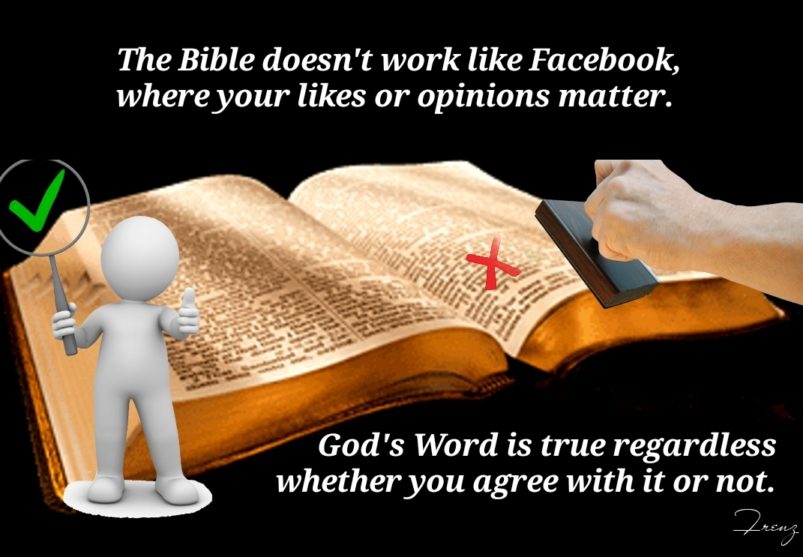
The truth of the Bible does not depend on human opinion, popularity, or approval. The authority and reliability of God’s Word stand firm, regardless of how people respond to it.
This reflects the concept of objective truth, as explained by GotQuestions.org:
"Objective truth is something that is true for everyone, whether they agree with it or not. At one time this was simply called 'truth.' Objective is the opposite of subjective."
The Bible itself affirms this repeatedly:
1. God’s Word Is Unchanging and True
"The sum of your word is truth, and every one of your righteous rules endures forever."
— Psalm 119:160 (ESV)
God’s Word is not subject to trends, culture, or opinion polls. It is eternally true.
2. God’s Truth Stands Apart from Human Opinion
"Sanctify them in the truth; your word is truth."
— John 17:17 (ESV)
Jesus Himself declared that God’s Word is the standard of truth, not our feelings or preferences.
3. God’s Word Judges Us, Not the Other Way Around
"For the word of God is living and active, sharper than any two-edged sword, piercing to the division of soul and of spirit, of joints and of marrow, and discerning the thoughts and intentions of the heart."
— Hebrews 4:12 (ESV)
God’s Word examines us; we do not sit in judgment over it.
4. Ignoring God’s Word Has Consequences
As CompellingTruth.org notes:
"If the Bible is the Word of God, then the Bible is true, and failure to follow, obey and trust it will have eternal consequences. To ignore God's Word is to ignore God Himself."
Conclusion
God’s truth is not a matter of opinion or consensus. Whether we “like” it or not, God’s Word is true and authoritative. Our responsibility is to seek, understand, and respond to that truth with humility and faith.
"The grass withers, the flower fades, but the word of our God will stand forever."
— Isaiah 40:8 (ESV)
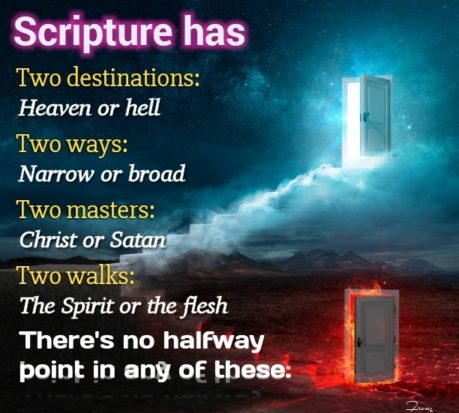
This image beautifully captures one of the most consistent and sobering truths of Scripture: God presents humanity with only two ultimate paths—one leading to life and one to destruction. There is no neutral ground, no “halfway point.” This binary framework is not harshness; it is divine clarity. God, in His love, makes the choice unmistakable so that none need be deceived about where they stand.
This theme runs throughout the Bible and is especially clear in Jesus’ own teaching.
1. Two Destinations: Heaven or Hell
Jesus repeatedly taught that every person will spend eternity in one of two places—with God in eternal life or separated from Him in eternal judgment.
“And these shall go away into everlasting punishment: but the righteous into life eternal.” (Matthew 25:46 KJV)
“He that believeth on the Son hath everlasting life: and he that believeth not the Son shall not see life; but the wrath of God abideth on him.” (John 3:36 KJV)
“And whosoever was not found written in the book of life was cast into the lake of fire.” (Revelation 20:15 KJV)
There is no third destination. Heaven and hell are the only two eternal outcomes, determined by one’s response to Christ.
2. Two Ways: Narrow or Broad
This imagery comes directly from Jesus’ Sermon on the Mount. As the BibleProject Guide on Matthew 7:13–27 explains (BibleProject, 2026), Jesus ends His sermon by presenting a decisive choice between two paths:
“The Two Gates contrasts a broad gate leading to destruction with a narrow gate leading to life.”
Scripture records His words:
“Enter ye in at the strait gate: for wide is the gate, and broad is the way, that leadeth to destruction, and many there be which go in thereat: because strait is the gate, and narrow is the way, which leadeth unto life, and few there be that find it.” (Matthew 7:13–14 KJV)
The “broad way” represents self‑rule, pride, and unbelief; the “narrow way” represents repentance and faith in Christ. Every person walks one of these two roads.
3. Two Masters: Christ or Satan
Jesus also made clear that spiritual neutrality is impossible.
“No man can serve two masters: for either he will hate the one, and love the other; or else he will hold to the one, and despise the other.” (Matthew 6:24 KJV)
“He that is not with me is against me; and he that gathereth not with me scattereth abroad.” (Matthew 12:30 KJV)
The apostle Paul echoes this truth:
“Know ye not, that to whom ye yield yourselves servants to obey, his servants ye are to whom ye obey; whether of sin unto death, or of obedience unto righteousness?” (Romans 6:16 KJV)
There are only two allegiances—Christ, who gives freedom and life, or Satan, who enslaves and destroys.
4. Two Walks: The Spirit or the Flesh
Paul describes the daily moral and spiritual struggle of believers in terms of two opposing walks:
“This I say then, Walk in the Spirit, and ye shall not fulfil the lust of the flesh.” (Galatians 5:16 KJV)
“For they that are after the flesh do mind the things of the flesh; but they that are after the Spirit the things of the Spirit.” (Romans 8:5 KJV)
“If we live in the Spirit, let us also walk in the Spirit.” (Galatians 5:25 KJV)
To walk “in the flesh” is to live under the control of sinful desires; to walk “in the Spirit” is to live under the guidance and power of the Holy Spirit, producing love, joy, peace, and righteousness.
5. The Point: No Halfway Commitment
The image’s statement that there is “no halfway point” reflects the moral and spiritual decisiveness of the gospel. Jesus calls for total surrender, not partial allegiance. As He said:
“If any man will come after me, let him deny himself, and take up his cross daily, and follow me.” (Luke 9:23 KJV)
C. H. Spurgeon, in his sermon “The Two Builders” (based on Matthew 7:24–27, available at Precept Austin’s Spurgeon MP3 Sermons), warned that hearing Christ’s words without obeying them is like building on sand—disaster is inevitable when the storms come.
Summary
Every person must choose. The gospel does not allow neutrality. Yet God’s desire is that all would choose life:
“I have set before you life and death, blessing and cursing: therefore choose life, that both thou and thy seed may live.” (Deuteronomy 30:19 KJV)
The “narrow way” is open to all who repent and trust in Jesus Christ. It is not the easy path, but it is the only one that leads to eternal joy and peace with God.
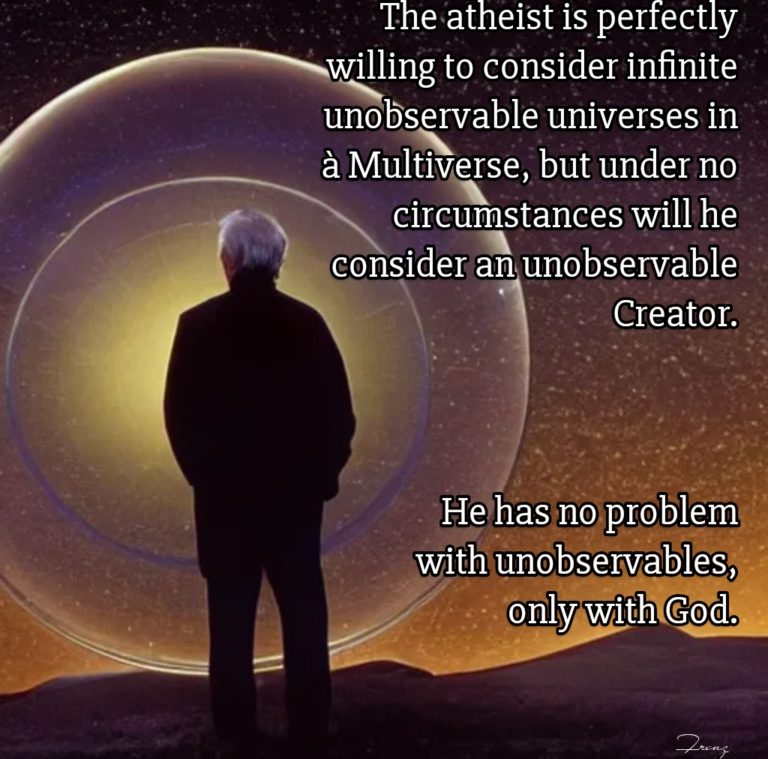
This image makes a sharp and insightful observation about the philosophical inconsistency often found in atheistic reasoning. It highlights that many atheists readily accept highly speculative, unobservable concepts—such as an infinite multiverse—while rejecting the possibility of an unobservable Creator. The problem, therefore, is not with “unobservables” themselves, but with the moral and spiritual implications of acknowledging God.
This argument is both philosophically sound and biblically consistent.
1. The Multiverse: A Convenient “Unobservable”
The multiverse hypothesis is often invoked by atheists to explain away the fine-tuning of the universe—the precise calibration of physical constants that make life possible. Yet, as Evolution News’s article “Multiverse Myth Frees Atheists from Real Science” (Michael Egnor, 2021) explains, this idea is not science but philosophical speculation:
“The multiverse is a theoretical inference drawn from the mathematical description of the early moments of the Big Bang. … Because all ‘universes’ except ours are unobservable, we cannot actually either measure the probability or confirm that or how the laws of physics vary in the other ‘universes.’ … The ‘multiverse’ theory frees atheists from real science, which is the only condition in which atheism can survive.”
In other words, atheists often accept an infinite number of unseen universes—for which there is no empirical evidence—simply to avoid the obvious inference that our universe’s fine-tuning points to design.
2. The Creator: The “Unobservable” They Reject
The same atheists who accept unobservable universes reject the idea of an unobservable Creator. Yet the existence of God is a far more rational and parsimonious explanation for the order, intelligibility, and purpose evident in the cosmos.
As Reasons to Believe’s article “Is the Existence of a Multiverse a Problem for Christianity?” (Hugh Ross, 2020) points out, even if a multiverse existed, it would not undermine theism:
“The timing of when the nontheistic speculations were proposed is not coincidental. They were proposed only when the fine-tuning design evidences for a transcendent Creator became overwhelming. … Nontheistic multiverse speculations explain away too much.”
Thus, the multiverse is not a scientific necessity but a philosophical escape hatch to avoid acknowledging a Creator.
3. The Real Issue: Suppression of Truth
The image’s conclusion—that atheists do not object to “unobservables” in principle but specifically to God—is exactly what Scripture teaches. The problem is not intellectual but moral and spiritual.
“For the invisible things of him from the creation of the world are clearly seen, being understood by the things that are made, even his eternal power and Godhead; so that they are without excuse.” (Romans 1:20 KJV)
“Because that, when they knew God, they glorified him not as God, neither were thankful; but became vain in their imaginations, and their foolish heart was darkened.” (Romans 1:21 KJV)
“Professing themselves to be wise, they became fools.” (Romans 1:22 KJV)
Atheists suppress the truth of God’s existence because acknowledging Him would mean acknowledging moral accountability. As Ligonier Learn’s podcast “Unbelief: A Moral Issue” (Sinclair Ferguson, 2026) explains:
“God’s revelation of Himself in creation not only surrounds us but invades us because we are part of that created order. … Everyone, including those who call themselves atheists, bears witness to knowledge of God, even if their atheism stems from moral rebellion and hatred of God.”
4. Faith and Reason: The True Balance
The irony is that Christian faith is not belief without evidence—it is belief because of evidence. The order, intelligibility, and fine-tuning of the universe are empirical signs of a rational Mind behind creation.
The Bible calls this the revelation of the Logos—the divine Reason:
“In the beginning was the Word, and the Word was with God, and the Word was God. … All things were made by him; and without him was not any thing made that was made.” (John 1:1–3 KJV)
Faith in God is therefore not blind; it is the most rational response to the evidence of design, causality, and moral law.
5. Summary
The image’s argument exposes a deep inconsistency in atheistic thinking:
| Concept | Accepted by Atheists | Rejected by Atheists | Observation |
|----------|----------------------|----------------------|--------------|
| Unobservable Multiverse | Yes | — | Accepted without evidence |
| Unobservable Creator | — | Yes | Rejected despite evidence |
| Reason for Difference | — | — | Moral and spiritual resistance, not scientific rigor |
Atheists do not reject God because He is unobservable—they reject Him because His existence implies authority, accountability, and moral truth.
As Proverbs 1:7 (KJV) declares:
“The fear of the LORD is the beginning of knowledge: but fools despise wisdom and instruction.”
In short, the issue is not the lack of evidence for God, but the unwillingness to accept what that evidence means. The same mind that can imagine infinite unseen universes can also recognize the unseen yet undeniable reality of the Creator who made this one.
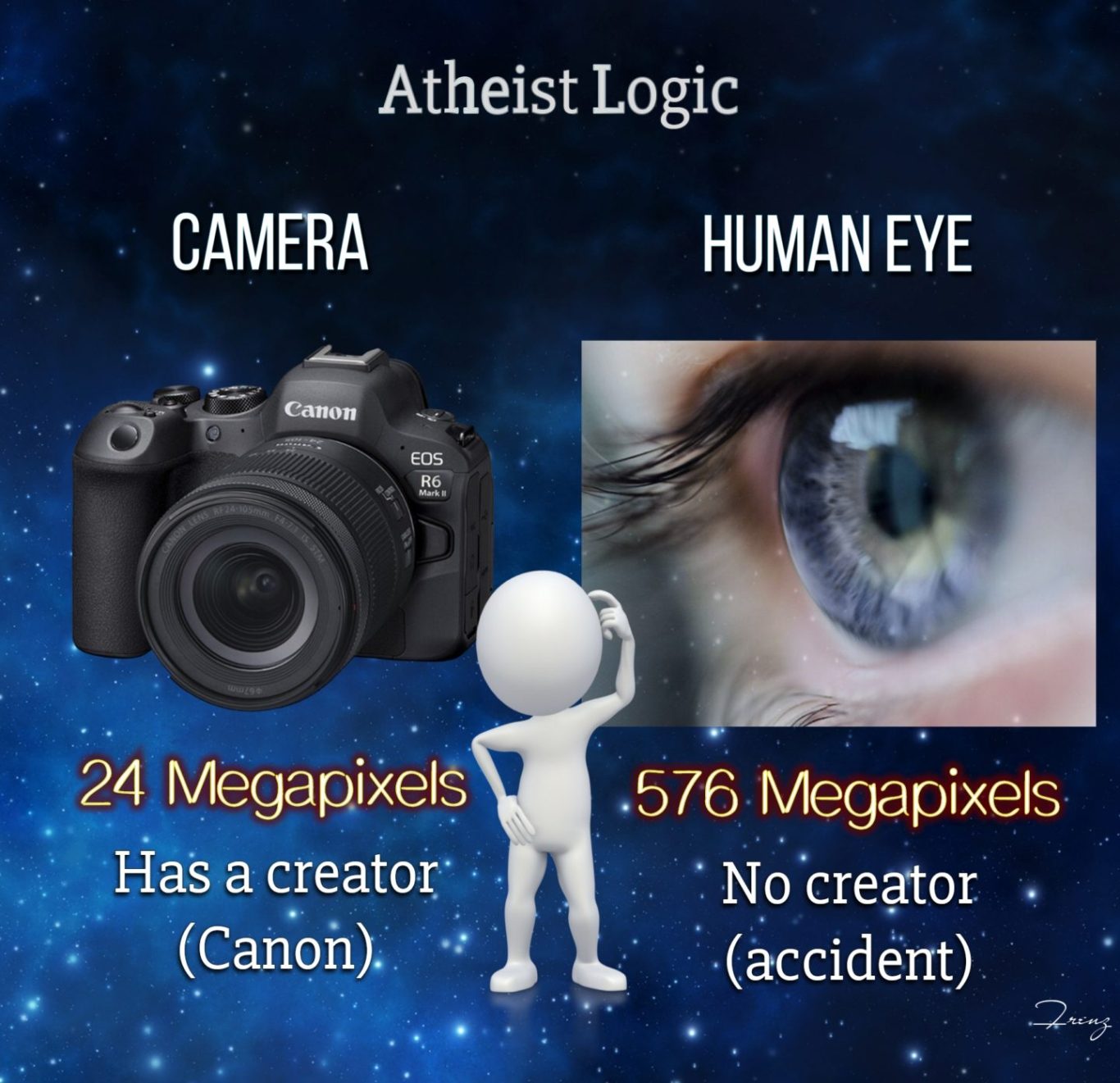
Biblical Perspective on Design
The Bible teaches that the natural world—including the human eye—reveals evidence of a purposeful Creator:
“For his invisible attributes, namely, his eternal power and divine nature, have been clearly perceived, ever since the creation of the world, in the things that have been made. So they are without excuse.”
— Romans 1:20 (ESV)
This passage affirms that the complexity and order in creation point to God as the Designer.
The Logic of Design
- Camera: When we see a camera, we recognize it as a product of intelligent design because it is complex, purposeful, and made of parts that work together for a function.
- Human Eye: The human eye is far more complex than any camera, with intricate structures that allow for vision, focus, and adaptation to light.
The logic often used by atheists is inconsistent: they acknowledge that a camera requires a designer, but claim the human eye—vastly more complex—arose by chance and natural processes. The Bible challenges this view:
“Know that the Lord, he is God! It is he who made us, and we are his; we are his people, and the sheep of his pasture.”
— Psalm 100:3 (ESV)
“I praise you, for I am fearfully and wonderfully made. Wonderful are your works; my soul knows it very well.”
— Psalm 139:14 (ESV)
Summary
- The design and complexity of the human eye point to a Designer, just as a camera does.
- The Bible teaches that God is the Creator of all living things, including humans and their eyes.
- To claim that a camera requires a designer but the eye does not is logically inconsistent and ignores the testimony of creation itself.
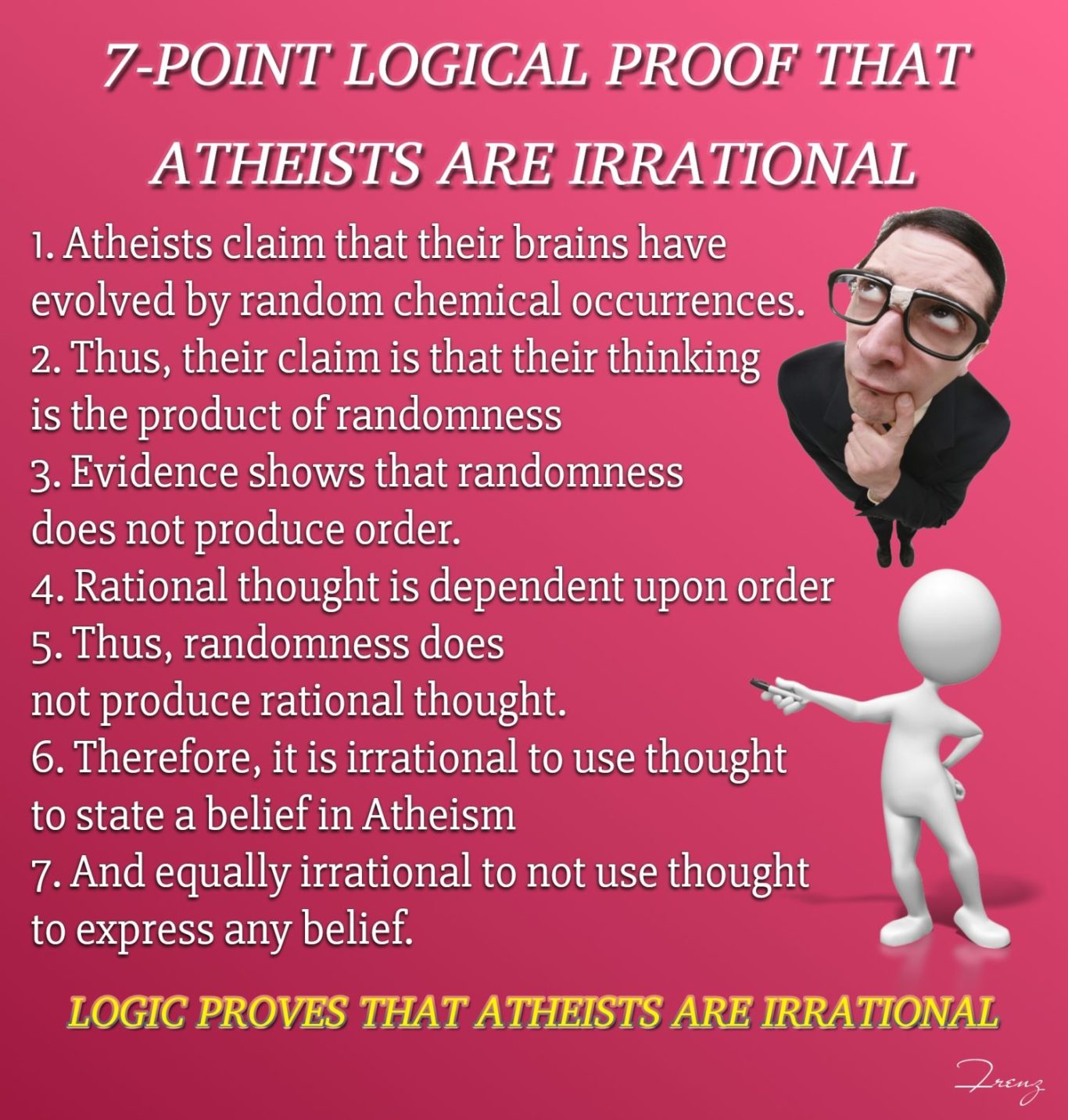
This image presents a philosophical reductio ad absurdum—a logical argument showing that atheism undermines the very rationality it claims to uphold. It exposes the self‑defeating nature of materialism, the worldview that underlies atheism. If human thought is merely the accidental byproduct of random chemical processes, then there is no reason to trust it as a source of truth.
This argument has deep roots in both classical philosophy and Christian apologetics, and it aligns perfectly with Scripture’s teaching about the nature of reason and the image of God in humanity.
1. The Core Problem: Randomness Cannot Produce Rationality
Atheistic naturalism asserts that the human mind is the result of unguided, purposeless evolution—a long chain of random mutations filtered by natural selection. But if our thoughts are merely the result of chemical reactions in the brain, then they are not about anything; they are just physical events.
As C. S. Lewis argued in Miracles (1947):
“If minds are wholly dependent on brains, and brains on biochemistry, and biochemistry (in the long run) on the meaningless flux of the atoms, I cannot understand how the thought of those minds should have any more significance than the sound of the wind in the trees.”
This is the same reasoning the image captures:
If thought arises from randomness, it cannot be trusted as rational.
Rational thought requires order, intentionality, and purpose.
Therefore, a worldview that denies purpose cannot account for rationality.
2. The Biblical Foundation for Rational Thought
The Bible teaches that human beings are rational precisely because we are made in the image of a rational Creator.
“So God created man in his own image.” (Genesis 1:27 KJV)
“Come now, and let us reason together, saith the LORD.” (Isaiah 1:18 KJV)
“In the beginning was the Word Logos, meaning ‘Reason’ or ‘Logic’], and the Word was with God, and the Word was God.” (John 1:1 KJV)
Our ability to reason is not an accident—it reflects the divine Logos, the rational mind of God. As R. C. Sproul explains in How Should I Think? ([Ligonier, 2022):
“Christians must not surrender rationality and logical coherence to an irrational system that affirms that something comes from nothing. … This system is so blatant in its irrationality that we wonder why intelligent people would continue to make these affirmations.”
Sproul’s point mirrors the image’s argument: atheism’s claim that reason arose from chaos is itself irrational.
3. The Self‑Defeating Nature of Atheistic Materialism
If all thoughts are the product of random chemical processes, then no thought can be trusted as true, including the thought “God does not exist.” The atheist’s reasoning destroys the very foundation of reasoning.
This is the same critique made by Christian philosopher Alvin Plantinga in his Evolutionary Argument Against Naturalism:
“If naturalism and evolution are both true, then the probability that our cognitive faculties are reliable is low or inscrutable. Therefore, belief in both naturalism and evolution is self‑defeating.”
The image’s “7‑point proof” expresses this same logic in simpler form:
Atheists claim their brains evolved randomly.
Randomness produces disorder.
Rational thought requires order.
Therefore, random evolution cannot produce rational thought.
Hence, atheism—based on such thought—is irrational.
4. The Christian Worldview: The Only Foundation for Reason
Christianity alone provides a coherent explanation for why rational thought exists and why it can be trusted.
God is a rational, orderly Being (1 Corinthians 14:33 KJV: “God is not the author of confusion”).
He created a universe governed by consistent laws that reflect His nature.
He made humans in His image, capable of understanding truth and reasoning logically.
This is why science, logic, and morality are possible only in a theistic framework. As Greg Koukl observed in The New Atheists: Old Arguments, New Attitude (Apologetics Canada, 2011):
“Believing in God is like believing in atoms. You follow the evidence of what you can see to conclude the existence of something you cannot see—the effect needs a cause adequate to explain it. Is reason on the side of the atheist? No! Reason is on the side of the theist.”

The Bible teaches that all people are made in the image of God and are worthy of dignity and respect, regardless of their background, beliefs, or identity. Jesus Himself commanded:
“You shall love your neighbor as yourself.”
— Mark 12:31 (ESV)
This command applies to everyone, including those we may disagree with or misunderstand. Christians are called to show love and respect to all people, including those from different cultures, religions, or lifestyles.
At the same time, the Bible also teaches that Christians should expect to face misunderstanding or even rejection because of their faith:
“If the world hates you, know that it has hated me before it hated you.”
— John 15:18 (ESV)
“Blessed are you when others revile you and persecute you and utter all kinds of evil against you falsely on my account.”
— Matthew 5:11 (ESV)
Even when Christians are not respected or are treated unfairly, they are still called to respond with love, truth, and grace. The Apostle Paul wrote:
“Repay no one evil for evil, but give thought to do what is honorable in the sight of all.”
— Romans 12:17 (ESV)
In summary, while it is important to love and respect all people, including those from Christian backgrounds, it is not consistent with the teachings of Jesus to exclude any group from love and respect. Christians are called to treat everyone with kindness, even when they are not treated the same way in return.
You have quoted two very important passages that speak about the human tendency to reject God’s truth and the consequences of spiritual hardness.
Let’s look at each verse in context and see how they relate:
1. 2 Timothy 4:4 (ESV)
“and will turn away from listening to the truth and wander off into myths.”
— 2 Timothy 4:4
Paul is warning Timothy that a time will come when people will not endure sound teaching. Instead, they will seek out teachers who tell them what they want to hear, turning away from the truth of God’s Word and embracing “fables” or myths. This is a warning to remain faithful to the truth, even when it is unpopular.
2. Matthew 13:15 (ESV)
“For this people's heart has grown dull, and with their ears they can barely hear, and their eyes they have closed, lest they should see with their eyes and hear with their ears and understand with their heart and turn, and I would heal them.”
— Matthew 13:15
Jesus quotes Isaiah to explain why He speaks in parables. Many people had hardened their hearts against God, refusing to listen or understand. Because of their spiritual blindness and stubbornness, they missed the truth that could have brought them healing and salvation.
How These Verses Relate
Both passages describe the danger of rejecting God’s truth:
- Hardening the heart (Matthew 13:15) leads to spiritual blindness and separation from God.
- Turning away from truth (2 Timothy 4:4) results in being deceived by false teachings and myths.
This is why Jesus often spoke in parables:
“The knowledge of the secrets of the kingdom of heaven has been given to you, but not to them. For this people's heart has become calloused; they hardly hear with their ears, and they have closed their eyes…” (Matthew 13:11, 15).
And as Hebrews warns:
“For good news came to us just as to them, but the message they heard did not benefit them, because they were not united by faith with those who listened.”
— Hebrews 4:2a (ESV)
Conclusion
God desires that all people turn to Him, listen to His Word, and receive healing and salvation. But when people continually reject the truth, their hearts can become calloused, making it even harder to hear and respond. The Bible urges us to keep our hearts soft and open to God’s truth, so that we may be healed and walk in His ways.

This image uses Bertrand Russell’s famous line—“Men are born ignorant, not stupid; they are made stupid by education”—as a critique of modern secular education, particularly when it promotes Darwinian evolution and philosophical materialism as unquestionable truth. The visual of a person reading Origin of Species while sitting on a pile of books underscores the irony: education, meant to enlighten, can actually darken understanding when it rejects the knowledge of God.
Russell himself was not a Christian; he was a skeptic and an atheist. Yet, his statement unintentionally exposes a biblical truth: knowledge divorced from reverence for God leads not to wisdom, but to folly.
1. The Biblical View of Knowledge and Wisdom
Scripture consistently distinguishes between true wisdom—which begins with the fear of the Lord—and false wisdom, which exalts human reason above divine revelation.
“The fear of the LORD is the beginning of knowledge: but fools despise wisdom and instruction.” (Proverbs 1:7 KJV)
“Professing themselves to be wise, they became fools.” (Romans 1:22 KJV)
“Ever learning, and never able to come to the knowledge of the truth.” (2 Timothy 3:7 KJV)
When education removes God from its foundation, it produces intellectual pride but moral and spiritual blindness. What Russell called “stupidity” is what Scripture calls foolishness—the inability to discern truth because the heart is darkened by unbelief.
2. The Irony of Russell’s Observation
Russell’s critique of education was aimed at dogmatism and conformity, but the irony is that modern secular education has become precisely what he warned against. In rejecting God, it has embraced a new dogma—scientific naturalism—that insists everything, including life and consciousness, can be explained without reference to a Creator.
As Tabletalk Magazine’s article “God’s Anointed Servant” (Tabletalk, 2003) notes, the world often resists genuine godliness and truth because it demands repentance:
“A life of such intense godliness invites either repentance or fierce opposition.”
Likewise, a truly Christian education—one that acknowledges God as Creator and Christ as Lord—invites opposition from a culture that prefers autonomy over accountability.
3. The “Education” That Makes People Spiritually Blind
The image’s depiction of Origin of Species is especially fitting. Darwin’s theory, when interpreted as a total worldview, teaches that life arose by unguided natural processes—a belief that directly contradicts both reason and revelation. The Bible teaches that rejecting the Creator leads to moral and intellectual decay:
“Because that, when they knew God, they glorified him not as God, neither were thankful; but became vain in their imaginations, and their foolish heart was darkened.” (Romans 1:21 KJV)
“For the wisdom of this world is foolishness with God.” (1 Corinthians 3:19 KJV)
When education denies God, it does not elevate humanity—it degrades it, reducing people to accidents of chemistry rather than image‑bearers of the divine.
4. True Education: Restoring the Knowledge of God
The Bible presents a radically different vision of education. True knowledge is not the accumulation of facts but the right relationship between the mind and its Maker.
“And be renewed in the spirit of your mind.” (Ephesians 4:23 KJV)
“In whom are hid all the treasures of wisdom and knowledge.” (Colossians 2:3 KJV)
When Christ is at the center of learning, education becomes redemptive—it restores the mind to truth and aligns reason with revelation. Without Him, even the most brilliant intellect can become “stupid,” in Russell’s sense—clever but blind to ultimate reality.
5. Summary
The image’s use of Russell’s quote and Darwin’s book illustrates a profound truth:
Ignorance is natural and curable through learning.
Foolishness (or “stupidity,” as Russell put it) is learned through education that rejects God.
The cure is not more information, but transformation of the mind through the truth of Christ.
As Proverbs 9:10 (KJV) declares:
“The fear of the LORD is the beginning of wisdom: and the knowledge of the holy is understanding.”
In short, the image reminds us that education without God does not enlighten—it blinds. True wisdom begins not in the classroom, but in humble reverence before the Creator who is the source of all truth.
This quote from R.C. Sproul captures a profound biblical truth about the relationship between faith, intellect, and humility. Let’s examine it in light of Scripture.
1. The Bible Affirms the Use of Intellect
God invites us to use our minds as we seek Him. Faith is not blind or irrational; it is rooted in truth and reason.
- Isaiah 1:18:
“Come now, let us reason together, says the Lord…”
- Matthew 22:37:
“And he said to him, ‘You shall love the Lord your God with all your heart and with all your soul and with all your mind.’”
- Acts 17:2–3:
“And Paul went in, as was his custom, and on three Sabbath days he reasoned with them from the Scriptures, explaining and proving that it was necessary for the Christ to suffer and to rise from the dead…”
The Bible encourages thoughtful engagement, reasoning, and the use of intellect in understanding God’s truth.
2. The Real Barrier: Pride, Not Intellect
The primary obstacle to trusting the Bible is not a lack of intelligence, but the presence of pride. Pride resists submission to God’s authority and refuses to acknowledge our need for Him.
- James 4:6:
“God opposes the proud but gives grace to the humble.”
- 1 Corinthians 1:27–29:
“But God chose what is foolish in the world to shame the wise; God chose what is weak in the world to shame the strong… so that no human being might boast in the presence of God.”
- Proverbs 3:5–7:
“Trust in the Lord with all your heart, and do not lean on your own understanding. In all your ways acknowledge him, and he will make straight your paths. Be not wise in your own eyes; fear the Lord, and turn away from evil.”
These passages show that humility is essential for true faith. It is pride, not reason, that keeps many from trusting God’s Word.
3. Faith and Reason Work Together
Christian faith is not opposed to reason; rather, it calls us to humble ourselves and submit our reasoning to God’s revelation. The gospel is reasonable, but it requires us to lay down our pride and acknowledge our dependence on God.
Summary
- You do not have to abandon your intellect to trust the Bible—God calls you to use your mind.
- The real challenge is surrendering pride and humbly accepting God’s authority and wisdom.
- Scripture consistently teaches that humility, not intellect, is the key to faith.
R.C. Sproul’s quote is deeply biblical: trusting the Bible is not about shutting off your brain, but about opening your heart in humility before God.
R.C. Sproul’s statement reflects a biblical truth about the human heart’s relationship to God. According to Scripture, God has made His existence plain to everyone through creation and conscience, so that people are “without excuse” (Romans 1:19–20: “For what can be known about God is plain to them, because God has shown it to them. For his invisible attributes, namely, his eternal power and divine nature, have been clearly perceived, ever since the creation of the world, in the things that have been made. So they are without excuse.”). The problem, then, is not a lack of evidence or intellectual understanding, but a moral resistance to God’s authority. Romans 1:21–22 continues, “For although they knew God, they did not honor him as God or give thanks to him, but they became futile in their thinking, and their foolish hearts were darkened. Claiming to be wise, they became fools.” This passage shows that people suppress the truth about God because of sin, not ignorance. Jesus also said, “And this is the judgment: the light has come into the world, and people loved the darkness rather than the light because their works were evil” (John 3:19). In love, the Bible calls everyone to repent and turn to God, who offers forgiveness and new life through Jesus Christ (Romans 10:9–10).
This image makes a bold and accurate point: when people reject the gospel, they do not become neutral thinkers—they simply replace God’s truth with man‑made myths. The gorilla, the human infant, and the extraterrestrial figures symbolize the modern alternatives to biblical creation: evolution and alien‑origin theories. Both are attempts to explain life without acknowledging the Creator.
1. Rejecting the Gospel Leads to Believing Lies
The Bible teaches that when people turn away from God, they inevitably turn toward falsehood. Paul wrote, “For the time will come when they will not endure sound doctrine; but after their own lusts shall they heap to themselves teachers, having itching ears; and they shall turn away their ears from the truth, and shall be turned unto fables.” (2 Timothy 4:3–4 KJV).
Likewise, Romans 1:21–22 says that those who refuse to glorify God become “vain in their imaginations” and that “their foolish heart was darkened.” Rejecting the gospel does not make a person free from belief—it makes them vulnerable to deception.
2. The Myths of Modern Secularism
The image’s figures represent two of the most common myths embraced in place of God.
Evolutionism claims that humans are the accidental product of unguided natural processes, denying that we were created in God’s image (Genesis 1:27).
Alien‑seeding theories suggest that life on Earth came from extraterrestrials, an idea that only pushes the question of origins back one step. As GotQuestions.org notes in its article “Why Do People Believe in Aliens?” belief in aliens often serves as a substitute for belief in God. It is an attempt to explain life without acknowledging a divine Creator.
3. The Biblical Explanation
Scripture says that when people reject the truth, they exchange it for lies. Romans 1:25 describes this clearly: “Who changed the truth of God into a lie, and worshipped and served the creature more than the Creator.” The modern myths of evolution and alien origins are simply new forms of this ancient idolatry—worshiping creation rather than the Creator.
4. The Gospel as the True Explanation of Life
The Bible begins with the words, “In the beginning God created the heaven and the earth.” (Genesis 1:1 KJV). John 1:3 adds, “All things were made by him; and without him was not any thing made that was made.” The gospel proclaims that life, intelligence, and purpose come from a personal, eternal God who made humanity in His image and redeemed us through His Son. This truth alone explains both the order of creation and the moral awareness within every person.
5. The Consequence of Rejecting Truth
When people reject the gospel, they do not stop believing—they believe something else. They trade the Creator for the creature, truth for fables, and wisdom for foolishness. 2 Thessalonians 2:10–11 warns that those who refuse to love the truth will be given over to strong delusion so that they believe a lie.
In short, the image reminds us that disbelief in God does not lead to enlightenment; it leads to delusion. When the gospel is rejected, myths rush in to fill the void. Only by turning back to the Creator revealed in Jesus Christ can the human mind and heart be set free from those lies.
1. Male and Female Identity
The Bible teaches that God created humanity in His image, intentionally making us male and female:
“So God created man in his own image, in the image of God he created him; male and female he created them.”
(Genesis 1:27, ESV)
This means that gender is not something we choose or assign, but a gift and design from God, rooted in creation itself.
2. The Value of Unborn Life
Scripture affirms the humanity and value of unborn children. King David wrote:
“For you formed my inward parts; you knitted me together in my mother’s womb. I praise you, for I am fearfully and wonderfully made.”
(Psalm 139:13–14, ESV)
And God says to the prophet Jeremiah:
“Before I formed you in the womb I knew you, and before you were born I consecrated you.”
(Jeremiah 1:5, ESV)
These verses show that God recognizes and values human life from conception, not just after birth.
3. Sexuality and Identity
The Bible teaches that our core identity is found in being created by God, not in our sexual orientation or desires. God’s design for sexuality is within the covenant of marriage between one man and one woman (Genesis 2:24; Matthew 19:4–6). The idea that a baby is “already gay, straight, or bisexual” is not supported by Scripture. Instead, the Bible teaches that all people are born with a sinful nature (Romans 3:23), but our ultimate identity and hope are found in Christ.
4. Gender and Self-Determination
The belief that a child “does not have a gender until it decides for itself” is contrary to the biblical teaching that God assigns our gender at creation. Jesus affirmed this when He said:
“Have you not read that he who created them from the beginning made them male and female?”
(Matthew 19:4, ESV)
Summary
- God created humans as male and female (Genesis 1:27).
- Human life is precious from conception (Psalm 139:13–14; Jeremiah 1:5).
- Our identity is found in God, not in sexual orientation or self-chosen gender (Genesis 2:24; Matthew 19:4).
- The Bible calls us to love all people, but also to hold fast to God’s truth (Ephesians 4:15).

Sometimes, when people are confronted with truth—especially moral or spiritual truth—it can feel uncomfortable or even offensive. The Bible acknowledges that the message of God’s truth is not always welcomed by everyone. Jesus Himself said,
“If the world hates you, know that it has hated me before it hated you.”
(John 15:18, ESV)
The Apostle Paul also wrote,
“For the word of the cross is folly to those who are perishing, but to us who are being saved it is the power of God.”
(1 Corinthians 1:18, ESV)
And in Galatians 4:16, Paul asks,
“Have I then become your enemy by telling you the truth?”
(Galatians 4:16, ESV)
As Christians, we are called to speak the truth in love (Ephesians 4:15), not out of hatred or pride, but out of genuine concern for others’ well-being and relationship with God. As GotQuestions.org wisely notes, “Telling someone that he/she is in the wrong is not hateful. In reality, refusing to tell someone the truth is what is truly hateful.” When truth is rejected, it can sound like hate to those who do not want to hear it, but in reality, sharing God’s truth—humbly and lovingly—is the most caring thing we can do.
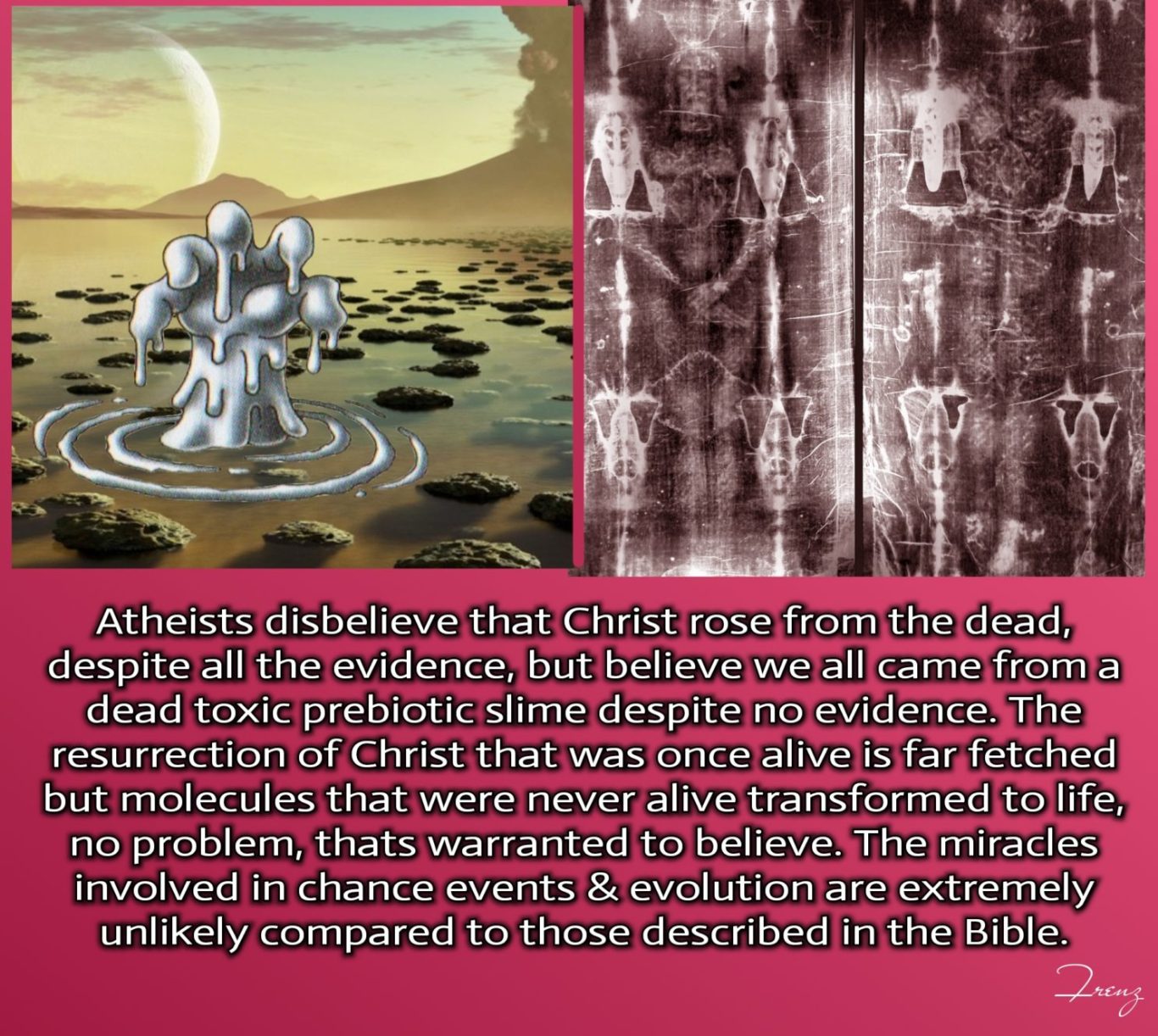
The Bible affirms that the resurrection of Jesus is the cornerstone of Christian faith and is supported by substantial historical evidence. For example, the Apostle Paul writes,
“For I delivered to you as of first importance what I also received: that Christ died for our sins in accordance with the Scriptures, that he was buried, that he was raised on the third day in accordance with the Scriptures, and that he appeared to Cephas, then to the twelve. Then he appeared to more than five hundred brothers at one time, most of whom are still alive, though some have fallen asleep.”
(1 Corinthians 15:3–6, ESV)
This passage highlights multiple eyewitnesses to the resurrection, many of whom were still alive when Paul wrote, allowing others to investigate their testimony. The empty tomb, the transformation of the disciples from fearful to bold proclaimers, and the conversion of skeptics like James (see James and the Resurrection of Jesus Christ) all serve as strong historical evidence for the resurrection.
In contrast, the idea that life arose spontaneously from non-living matter—sometimes called abiogenesis—lacks direct observational evidence. As you noted, the probability of complex, information-rich molecules assembling by chance is astronomically low. The Bible teaches that life comes from God:
“In him was life, and the life was the light of men.”
(John 1:4, ESV)
“For by him all things were created, in heaven and on earth, visible and invisible…”
(Colossians 1:16, ESV)
The resurrection is not just a miraculous event, but one that is rooted in history and attested by credible witnesses. Meanwhile, the spontaneous origin of life from non-life remains a hypothesis without empirical support. As Romans 10:9 affirms,
“If you confess with your mouth that Jesus is Lord and believe in your heart that God raised him from the dead, you will be saved.”
(Romans 10:9, ESV)
Ultimately, the Christian faith is grounded in both reason and revelation, and the evidence for Christ’s resurrection is far more compelling than the naturalistic alternatives for the origin of life.
Science, at its core, is a pursuit of truth through honest inquiry, open discussion, and rigorous testing of evidence. When any of these manipulative practices are used, they undermine the integrity of science and can lead people away from truth rather than toward it.
The Bible upholds the value of truth and condemns deceitful practices. Proverbs 12:22 says, “Lying lips are an abomination to the LORD, but those who act faithfully are his delight.” Similarly, Ephesians 4:25 commands, “Therefore, having put away falsehood, let each one of you speak the truth with his neighbor.” Science, like any search for truth, should be conducted with honesty and transparency. When fear or censorship replaces open inquiry, it becomes a tool for control rather than discovery. Jesus said, “You will know the truth, and the truth will set you free” (John 8:32). As such, Christians are called to value truth in every area of life, including science, and to reject any practice that distorts or suppresses it.

God does not force His guidance on those who insist on running their own lives apart from Him. Throughout Scripture, we see that God lovingly invites people to trust Him and follow His ways, but He also allows individuals the freedom to choose their own path—even if it leads away from Him. Proverbs 3:5-6 teaches, “Trust in the LORD with all your heart, and do not lean on your own understanding. In all your ways acknowledge him, and he will make straight your paths.” This promise is given to those who surrender their own will and seek God’s direction.
When people stubbornly choose their own way, the Bible warns that God may allow them to experience the consequences of their choices. Romans 1:24 says, “Therefore God gave them up in the lusts of their hearts to impurity,” showing that God sometimes lets people go their own way when they persistently reject Him. Yet, God’s desire is always for repentance and restoration. James 4:8 encourages, “Draw near to God, and he will draw near to you.” God’s guidance is available to all who humbly seek Him, but He does not override our free will. Instead, He lovingly calls us to trust Him, promising to lead and provide for those who surrender their lives to Him.

This reflection captures a principle that aligns well with biblical teaching: truth is steadfast and unafraid of scrutiny, while falsehood resists examination. The Bible affirms that God Himself is the God of truth and does not change or deceive. Numbers 23:19 says, “God is not man, that he should lie, or a son of man, that he should change his mind. Has he said, and will he not do it? Or has he spoken, and will he not fulfill it?” God’s truth stands firm and can withstand any honest question or challenge.
Jesus also encouraged honest inquiry and promised that the truth would set people free: “And you will know the truth, and the truth will set you free” (John 8:32). The apostles, too, welcomed examination of their message. For example, the Bereans were commended for “examining the Scriptures daily to see if these things were so” (Acts 17:11). Lies, on the other hand, thrive in secrecy and fear exposure, but truth welcomes the light and honest questioning. As followers of Christ, we are called to “speak the truth in love” (Ephesians 4:15) and to seek God’s truth with open hearts, knowing that it can withstand any test.

This meme expresses a powerful biblical truth: the enemy—Satan—is described in Scripture as “the father of lies” (John 8:44), and deception is his primary weapon against humanity. In contrast, God equips His people with the truth, which is far more powerful and enduring. Jesus declared, “I am the way, and the truth, and the life” (John 14:6), showing that truth is found in Him. The Bible itself is described as “living and active, sharper than any two-edged sword… discerning the thoughts and intentions of the heart” (Hebrews 4:12).
Furthermore, believers are called to take up “the sword of the Spirit, which is the word of God” (Ephesians 6:17), as their defense and weapon against spiritual deception. As Revelation describes, the ultimate victory over evil comes through “the sword that comes from the mouth of Him whose name is Faithful and True” (Revelation 19:11, 21). God’s truth exposes lies, sets people free (John 8:32), and gives believers the strength to stand firm against every attack of the enemy.
This is a thoughtful distinction, and the Bible affirms the importance of understanding the difference between education, intelligence, knowledge, and wisdom. Education and intelligence can help us learn facts and develop skills, but true knowledge and wisdom go deeper. The book of Proverbs teaches, “The fear of the Lord is the beginning of knowledge; fools despise wisdom and instruction” (Proverbs 1:7). This means that real wisdom starts with a right relationship with God, not just with intellectual ability or formal education.
Scripture also says, “An intelligent heart acquires knowledge, and the ear of the wise seeks knowledge” (Proverbs 18:15), showing that intelligence and education are valuable when they lead us to seek truth. However, wisdom is more than knowing facts—it is the ability to apply knowledge rightly, especially in light of God’s truth. James reminds us, “If any of you lacks wisdom, let him ask God, who gives generously to all without reproach, and it will be given him” (James 1:5). So, while education and intelligence are gifts, true knowledge and wisdom come from God and are rooted in humility and reverence for Him.
When someone—whether atheist or otherwise—does not listen to truth, logic, reason, or understanding, the Bible teaches that the root issue is often deeper than mere intellectual disagreement. Scripture explains that spiritual blindness and the effects of sin can prevent people from accepting the truth about God. 1 Corinthians 2:14 says, “The natural person does not accept the things of the Spirit of God, for they are folly to him, and he is not able to understand them because they are spiritually discerned.” This means that apart from God’s Spirit, even the most reasonable arguments may seem foolish.
Furthermore, Romans 1:21 describes how people can know about God through creation, but “although they knew God, they did not honor him as God or give thanks to him, but they became futile in their thinking, and their foolish hearts were darkened.” This shows that the problem is not a lack of evidence, but a heart that is unwilling to accept it. As Michael Egnor points out, when atheists appeal to morality or reason, they are actually borrowing from the very foundation they deny—a transcendent Moral Law-Giver. The Bible reminds us to respond with both truth and love, as 2 Timothy 2:25 encourages believers to “correct opponents with gentleness. God may perhaps grant them repentance leading to a knowledge of the truth.” Ultimately, only God can open hearts and minds to receive His truth.
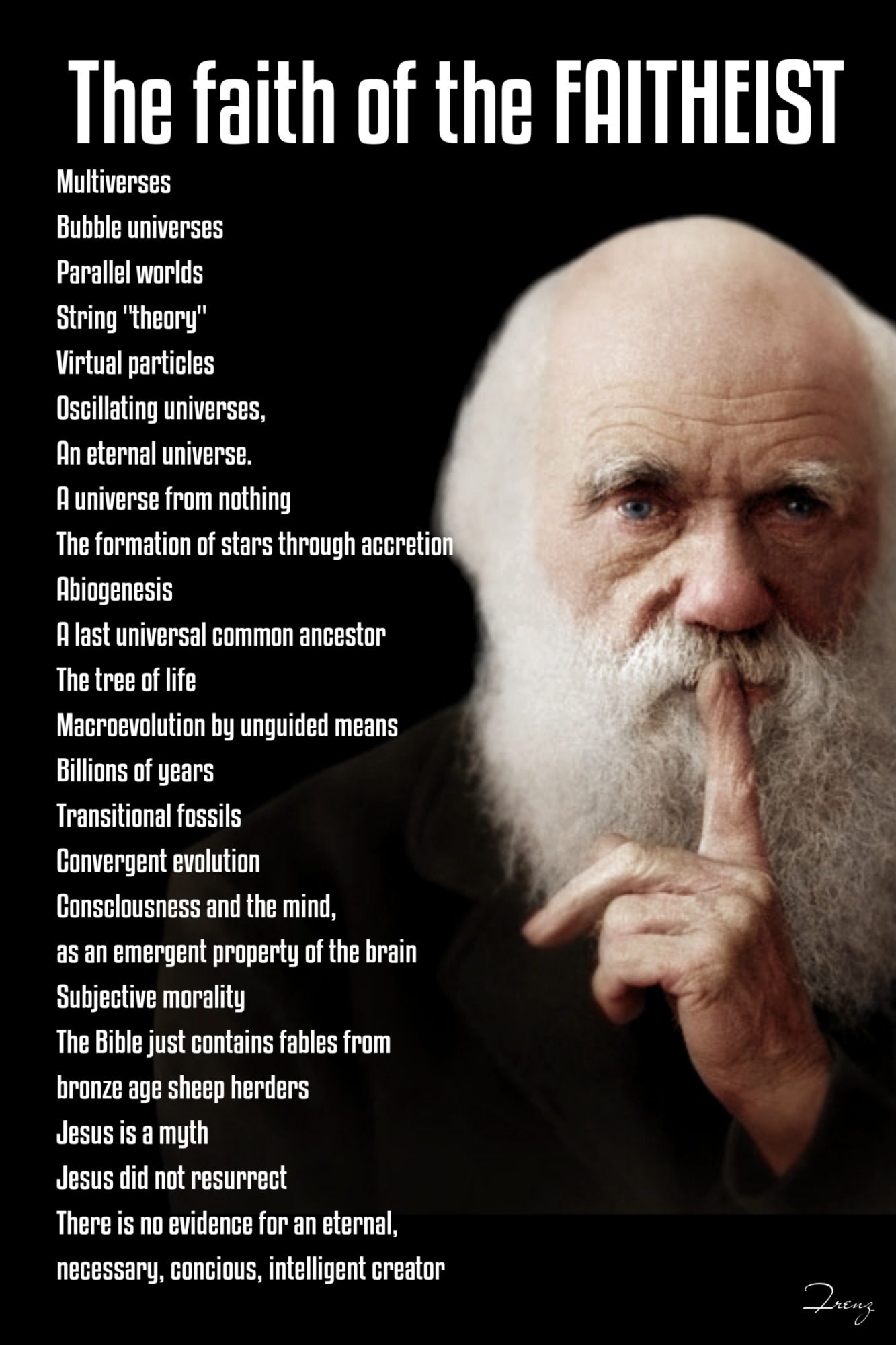
This observation highlights a common challenge in discussions about faith and worldview: the demand for only secular, peer-reviewed sources can sometimes create a closed loop, where evidence that challenges a naturalistic or atheistic position is dismissed simply because it doesn’t fit within the accepted framework. The Bible addresses this tendency to limit acceptable evidence. Romans 1:20 says, “For his invisible attributes, namely, his eternal power and divine nature, have been clearly perceived, ever since the creation of the world, in the things that have been made. So they are without excuse.” This means that evidence for God is present in creation itself, not just in academic literature.
Furthermore, 1 Corinthians 1:20–21 asks, “Where is the one who is wise? Where is the scribe? Where is the debater of this age? Has not God made foolish the wisdom of the world? For since, in the wisdom of God, the world did not know God through wisdom, it pleased God through the folly of what we preach to save those who believe.” This passage shows that human wisdom—no matter how rigorous—has limits, especially when it comes to understanding ultimate reality.
Finally, Acts 17:24–27 records Paul’s address to the philosophers in Athens, where he appeals to evidence from creation and reason, not just religious texts. Paul’s example shows that while Christians can engage with secular sources, the ultimate foundation for truth is God Himself. Limiting evidence to only what fits a secular framework can prevent honest exploration of the bigger questions of life, meaning, and existence. Christians are called to present truth with gentleness and respect (1 Peter 3:15), trusting that God can use both reason and revelation to reach open hearts.
This analogy is insightful and echoes a profound biblical truth: when people try to ground objective reality, morality, and truth solely in science, philosophy, or autonomous human reasoning, they ultimately end up in a circular pursuit—never arriving at a firm foundation. The Bible teaches that true wisdom and understanding begin with God. Proverbs 1:7 says, “The fear of the Lord is the beginning of knowledge; fools despise wisdom and instruction.” This means that apart from God, attempts to define truth or morality are incomplete and unstable.
Paul addresses this in Romans 1:22–23, stating, “Claiming to be wise, they became fools, and exchanged the glory of the immortal God for images resembling mortal man and birds and animals and creeping things.” When people reject God as the source of truth, they end up creating their own standards, which are ultimately subjective and shifting.
Furthermore, John 14:6 records Jesus saying, “I am the way, and the truth, and the life. No one comes to the Father except through me.” This shows that ultimate truth is not found in human systems alone, but in the person of Jesus Christ. While science and philosophy are valuable tools for exploring the world, they cannot provide a foundation for objective morality or ultimate meaning apart from the Creator. As your analogy suggests, relying solely on human reasoning is like a dog chasing its tail—endlessly searching, but never finding true rest or certainty.
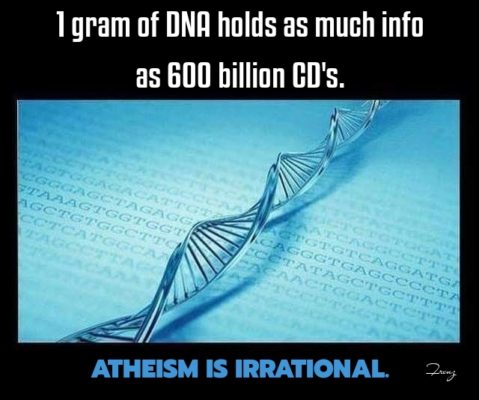
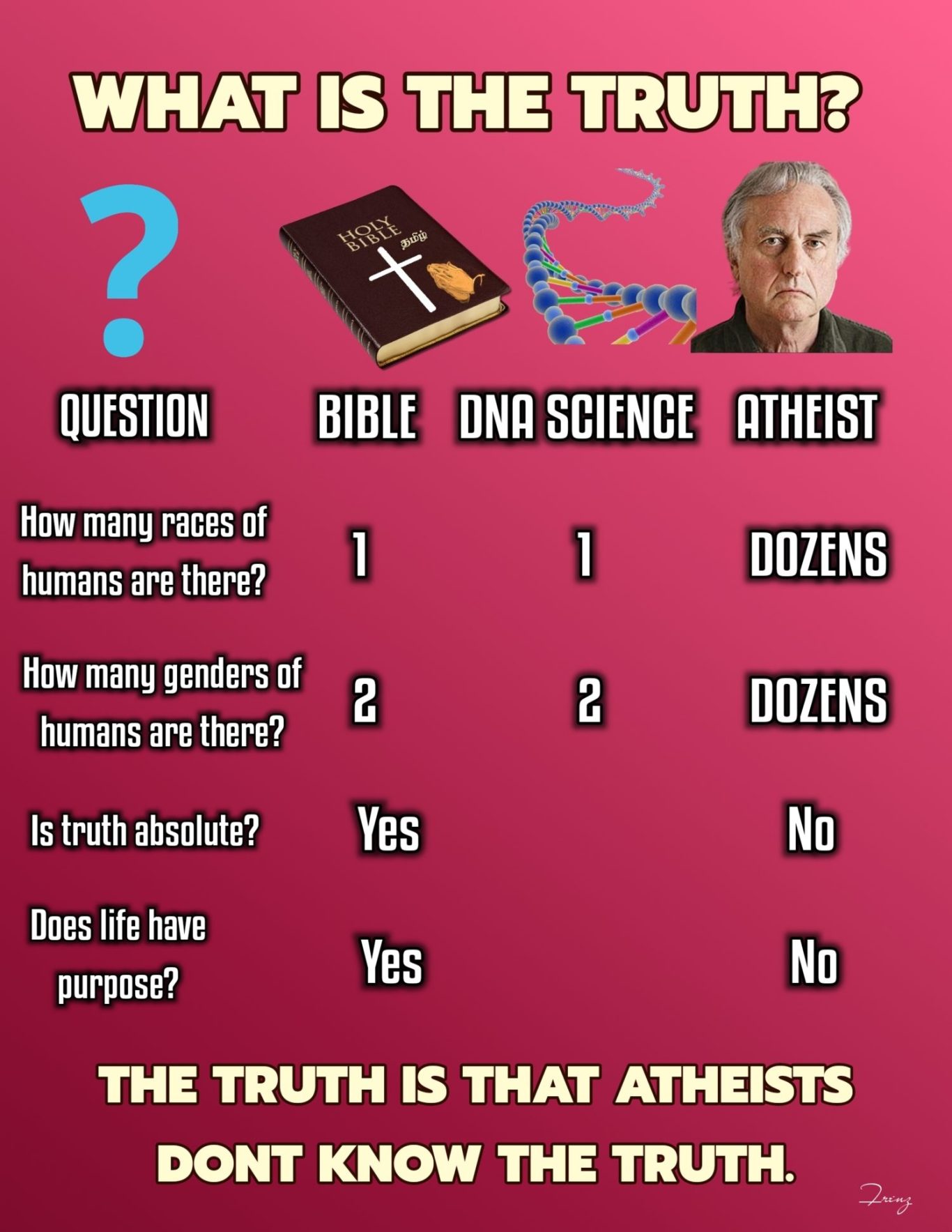
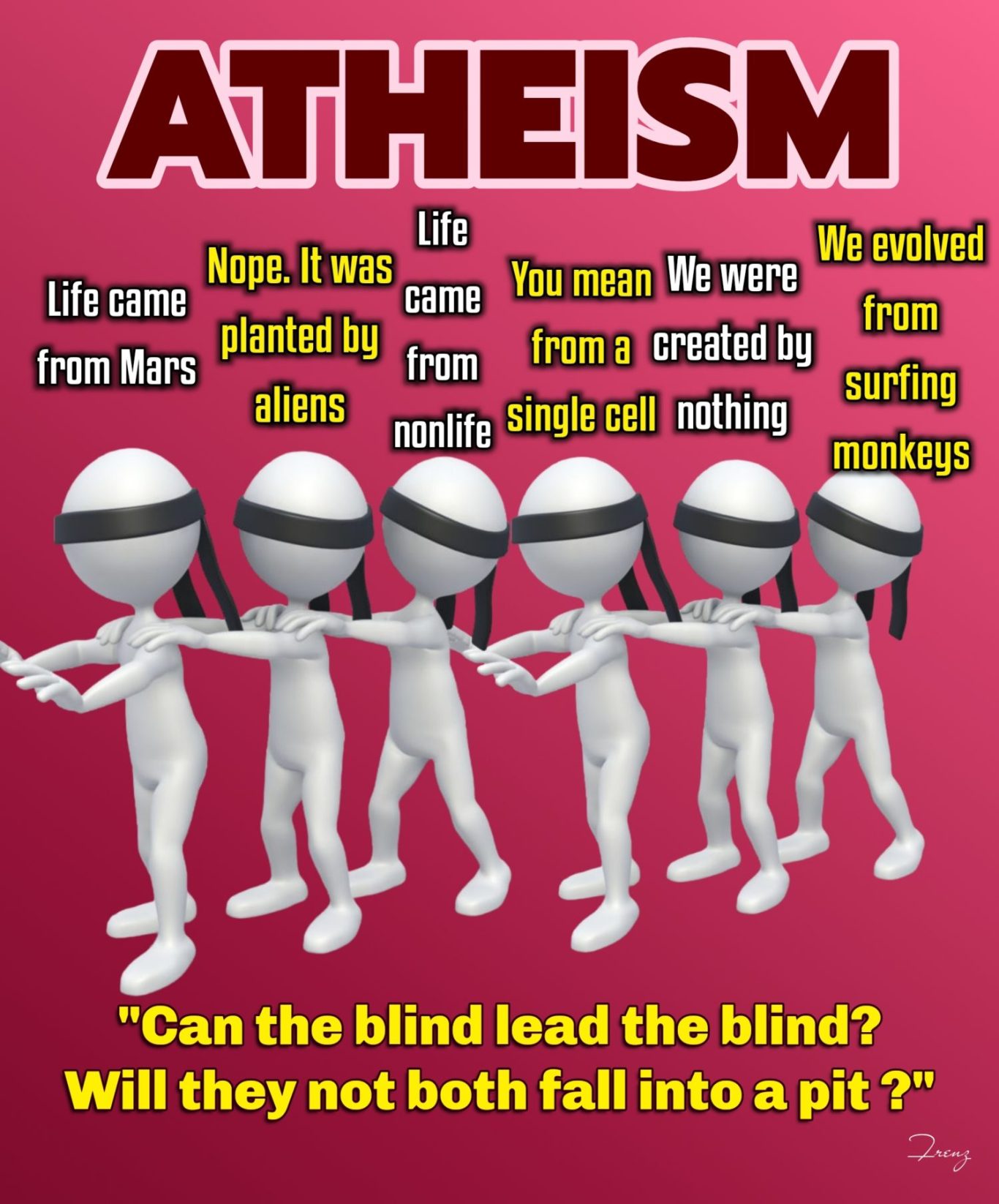
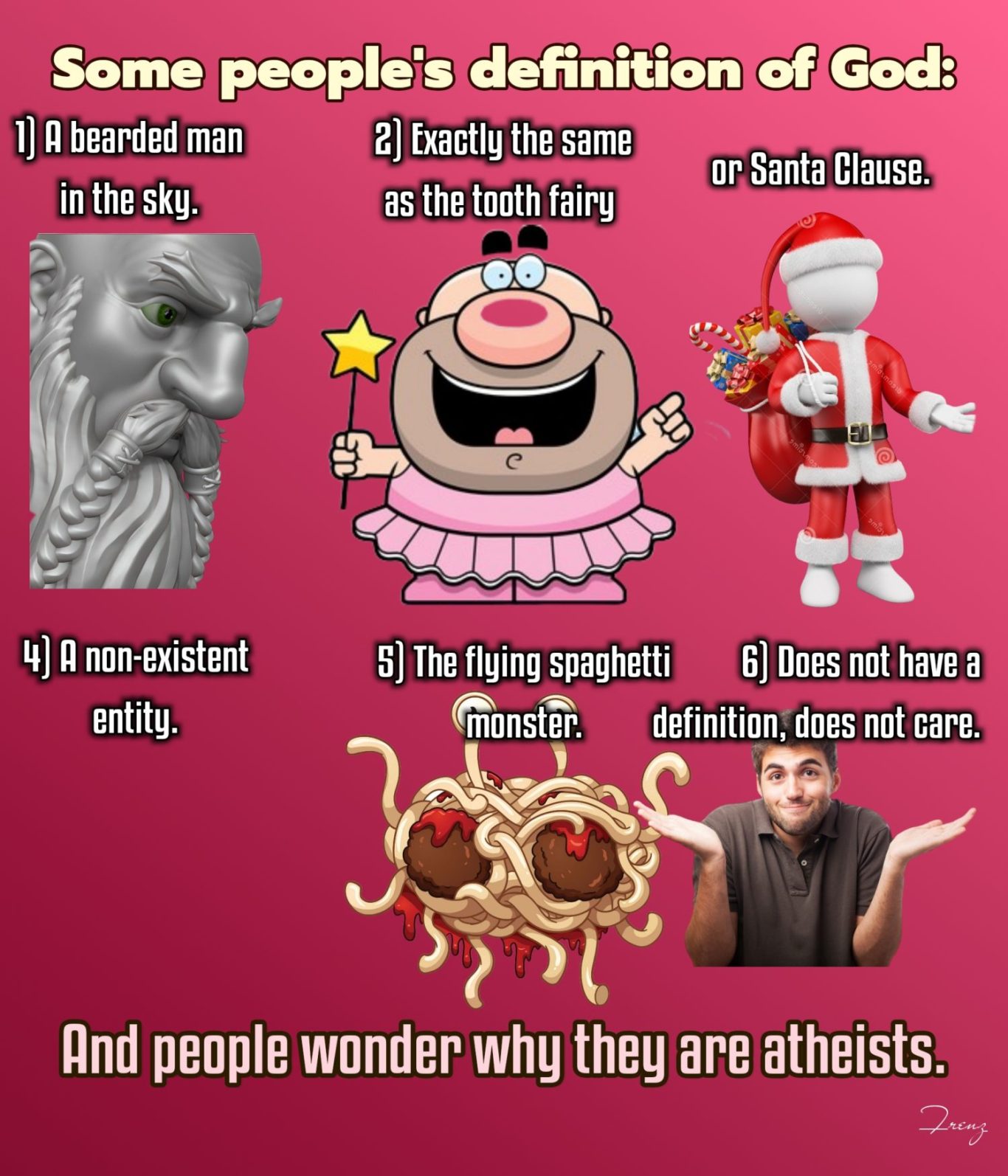
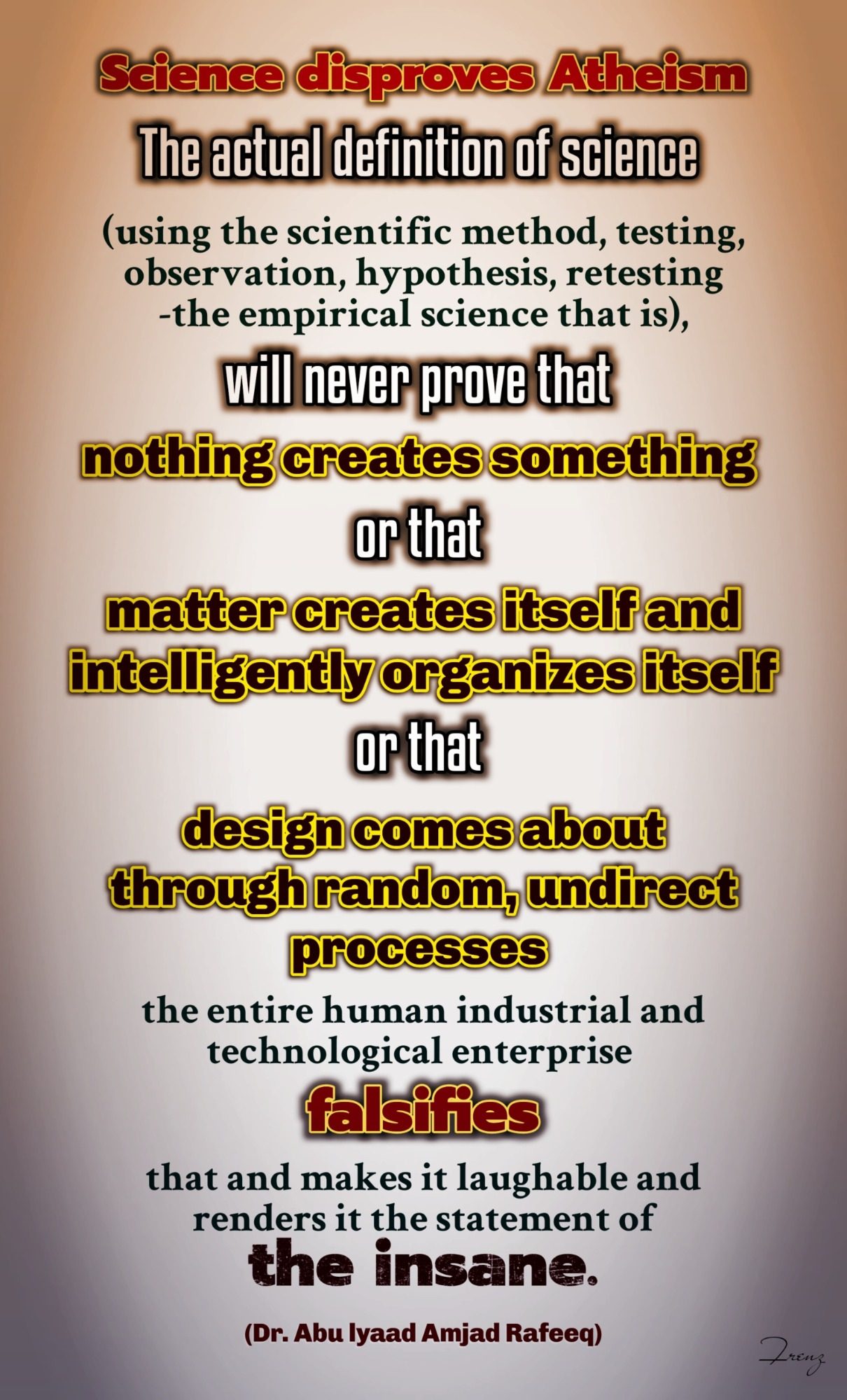
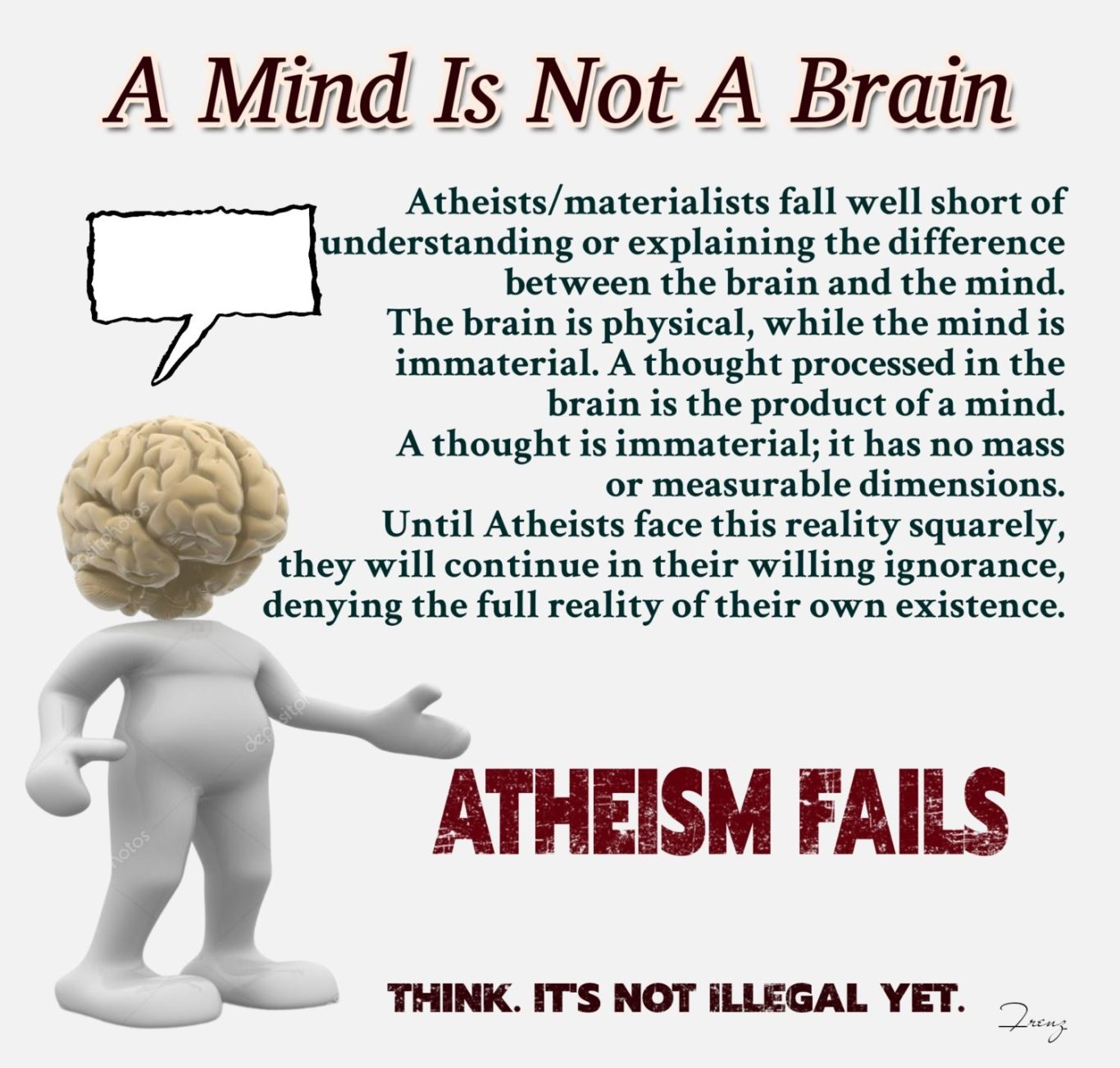

This image expresses a vital truth that is often misunderstood in today’s culture: disagreement is not hatred. A Christian can reject or refuse to support a behavior, ideology, or practice without harboring animosity toward the people who engage in it. In fact, according to Scripture, genuine love sometimes requires refusing to affirm what God calls sin.
1. Love and Truth Are Inseparable
The Bible teaches that real love is never indifferent to truth. 1 Corinthians 13:6 (KJV) says that love “rejoiceth not in iniquity, but rejoiceth in the truth.” To love someone biblically means to desire their good, and the greatest good is reconciliation with God. Therefore, when Christians decline to support something contrary to God’s Word, they are not acting out of hatred but out of conviction that sin destroys and truth heals.
Jesus Himself modeled this balance perfectly. He showed compassion to sinners while calling them to repentance. When He told the woman caught in adultery, “Neither do I condemn thee: go, and sin no more” (John 8:11 KJV), He offered mercy without moral compromise.
2. The Difference Between Judgment and Condemnation
Christians are commanded to discern right from wrong but not to condemn others self‑righteously. Ephesians 5:11 (KJV) instructs believers to “have no fellowship with the unfruitful works of darkness, but rather reprove them.” Yet Romans 12:18 (KJV) adds, “If it be possible, as much as lieth in you, live peaceably with all men.”
This means a believer can oppose abortion, sexual immorality, or any other sin while still treating every person involved with dignity and compassion. Refusing to endorse sin is not the same as rejecting the sinner.
3. The World’s Confusion About Love
Modern culture often equates love with affirmation—if you don’t celebrate someone’s choices, you must hate them. But that is a false definition of love. As Stand to Reason’s Violence Statement explains (Greg Koukl, 2013):
“Adultery, or homosexuality are less valuable or should be singled out as a unique class of sinners. Rather, all people (including Christians) are sinners, and all are guilty before God (Rom. 3:23). … Because those who follow Christ’s commands understand they are equally guilty of sin before God, the mercy God has shown towards them motivates them to reach out in kindness and compassion to others who need the same grace.”
Christians oppose sin not because they think themselves better, but because they know firsthand the cost of sin and the grace that rescues from it.
4. The Christian’s Motivation: Grace, Not Superiority
A Christian’s refusal to support certain behaviors should flow from humility and gratitude, not pride. Titus 3:2–5 (KJV) reminds believers to “speak evil of no man,” to be gentle, and to remember that “we ourselves also were sometimes foolish, disobedient, deceived.” God’s mercy, not moral superiority, defines the Christian stance.
5. Summary
A Christian’s choice not to support something sinful is not hatred—it is conviction shaped by love for God and concern for others.
Love does not affirm what destroys.
Truth and compassion must walk together.
Christians are called to speak truth with gentleness, remembering their own need for grace.
As Ephesians 4:15 (KJV) says, believers must be “speaking the truth in love.” Refusing to support sin is not an act of hate; it is an act of faithfulness to the God who loves sinners enough to call them to repentance and new life in Christ.
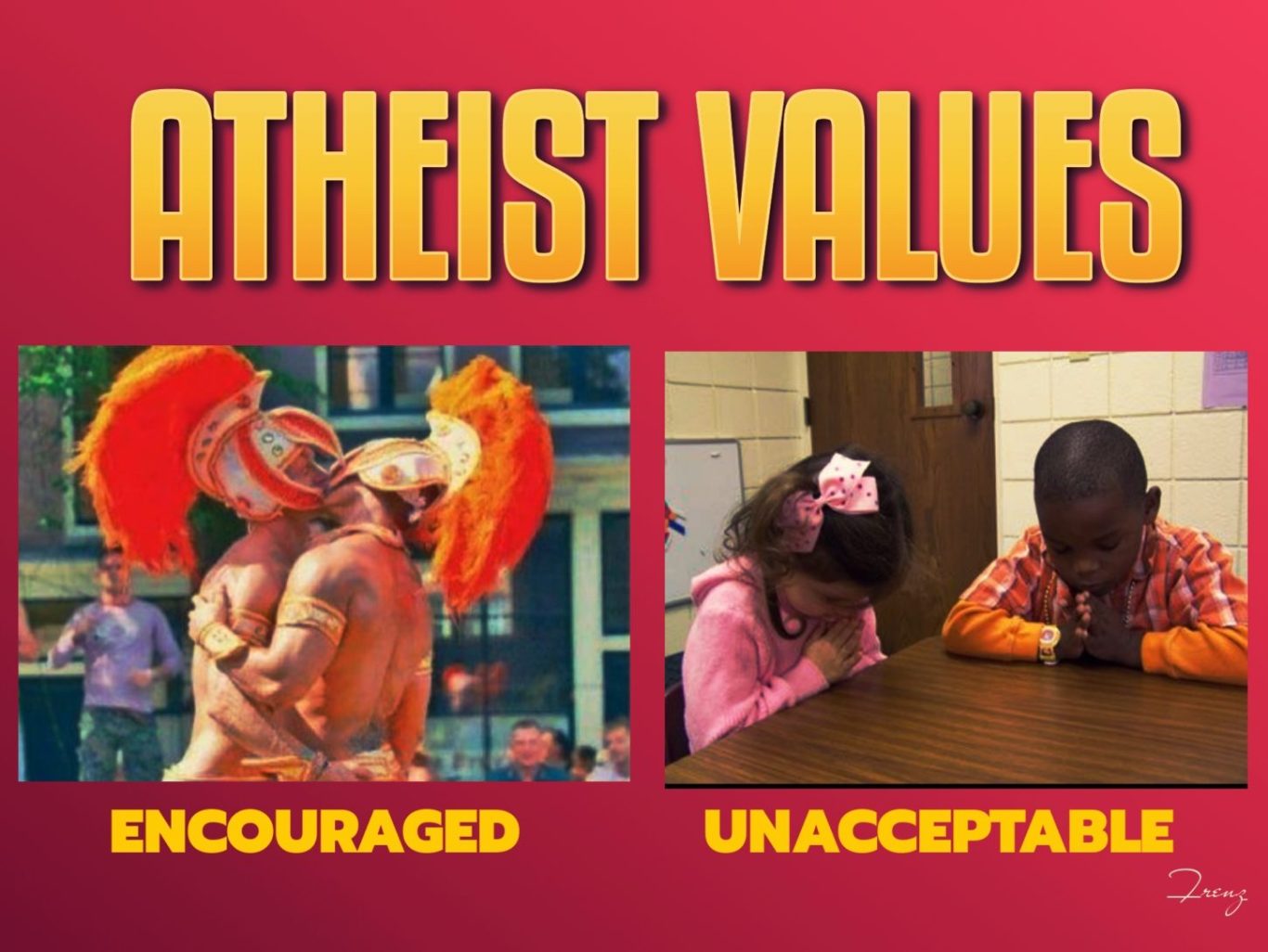
1. On Human Value and Dignity
The Bible teaches that every person is created in the image of God (Genesis 1:27), and therefore, all people have inherent worth and dignity. Christians are called to treat everyone with love and respect, regardless of their beliefs or backgrounds (Matthew 22:39: “You shall love your neighbor as yourself”).
2. On Sexuality and Marriage
Scripture presents a clear view of sexuality and marriage. According to the Bible, marriage is designed by God as a lifelong union between one man and one woman (Genesis 2:24: “Therefore a man shall leave his father and his mother and hold fast to his wife, and they shall become one flesh”). The New Testament reaffirms this standard (Matthew 19:4–6). Sexual activity outside of this context, including same-sex relationships, is described as contrary to God’s design (Romans 1:26–27). While the Bible calls all sexual sin to repentance, it also offers forgiveness and transformation to all who turn to Christ (1 Corinthians 6:9–11).
3. On Prayer in Public Life
The Bible encourages believers to pray in all circumstances (1 Thessalonians 5:17: “Pray without ceasing”). Jesus Himself prayed publicly and privately (Luke 5:16). While some societies may restrict prayer in public institutions like schools, the biblical call to prayer remains. Christians are encouraged to pray respectfully and wisely, even in environments where it may not be officially permitted (Daniel 6:10: Daniel continued to pray even when it was forbidden by law).
4. On Responding to Differing Values
Christians are called to engage with those who hold different values with gentleness and respect (1 Peter 3:15: “…always being prepared to make a defense…yet do it with gentleness and respect”). While the Bible’s moral teachings may differ from secular or atheist values, followers of Christ are to communicate truth in love, never with hatred or contempt.
Summary:
The Bible teaches love and respect for all people, but it also upholds specific standards for sexuality and marriage, and encourages prayer in all aspects of life. Christians are called to hold to these convictions while engaging others with compassion and humility.
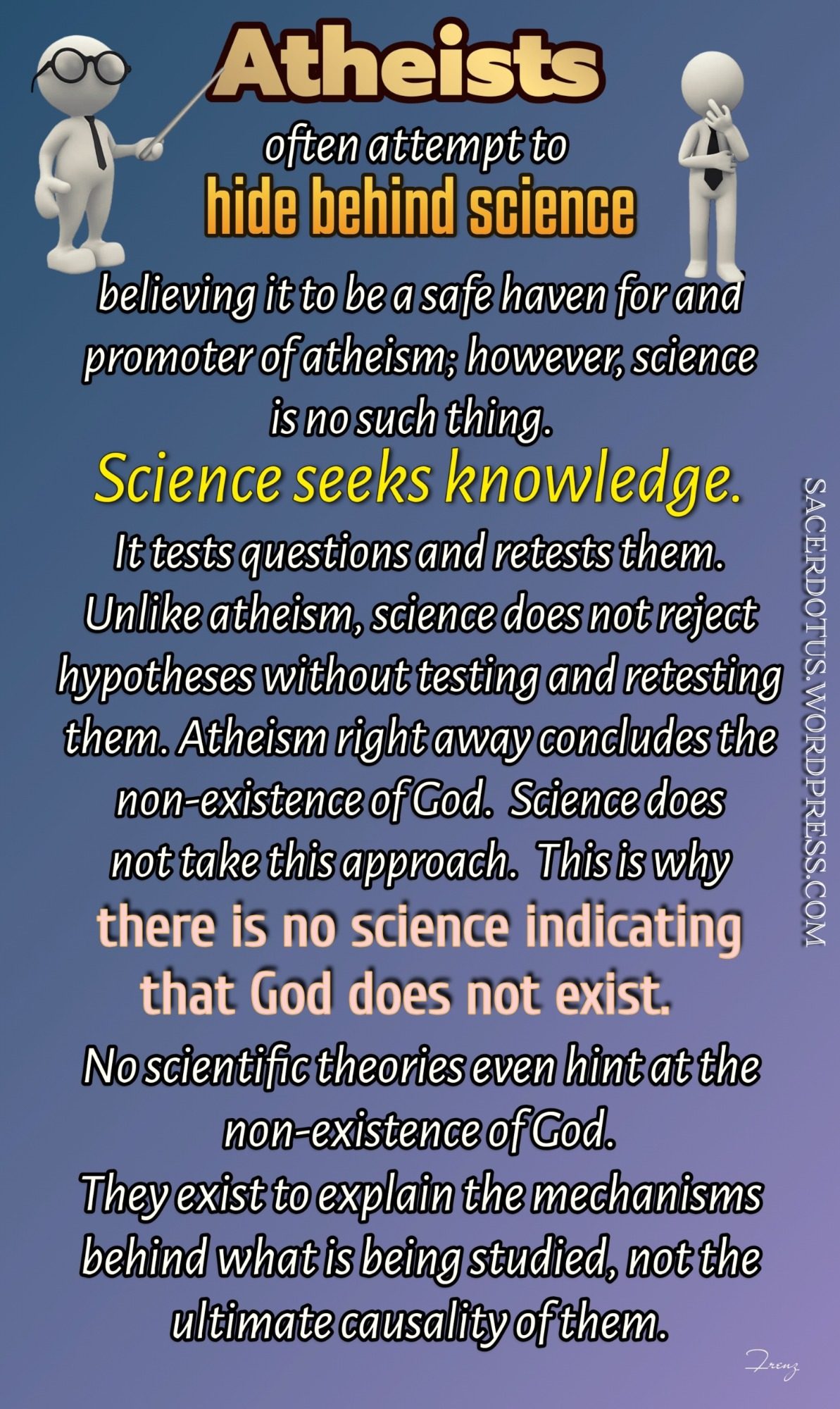
This image presents a thoughtful and accurate critique of how atheism often misuses science. It points out that science and atheism are not the same thing, and that science—properly understood—cannot disprove God. Instead, science explores how the universe operates, while the question of why it exists and who caused it lies beyond the scope of empirical investigation.
This distinction is crucial, and it aligns perfectly with both sound philosophy and the biblical worldview.
1. Science Is a Method, Not a Worldview
Science is a disciplined way of studying the natural world through observation, experimentation, and repeatable testing. It is not a belief system, and it cannot make metaphysical claims about what lies beyond nature.
As Probe Ministries explains in “Atheist Myths and Scientism” (Steve Cable, 2021):
“Scientism is the view that the hard sciences provide the only genuine knowledge of reality. … When you have competing knowledge claims from different sources, the scientific will always trump the non‑scientific.”
But that assumption—scientism—is not science; it is a philosophical belief that science is the only path to truth. Ironically, that claim cannot be proven by science itself. It is self‑refuting.
2. Atheism’s Misuse of Science
The image rightly observes that atheists often treat science as a “safe haven” for their worldview. They claim that because science has explained many natural processes, it has somehow made God unnecessary. But this is a category error: science describes mechanisms, not ultimate causes.
For example, science can describe how gravity works, but it cannot explain why gravity exists or why the universe is governed by rational, mathematical laws in the first place. As Dear John (Tabletalk Magazine, 2001) notes:
“Science is helpless to explain miracles (which is precisely what Genesis 1 presents to us), and we are under no obligation to take it seriously when it attempts to do so.”
In other words, science can study the what and how of creation, but only theology can answer the who and why.
3. There Is No Scientific Evidence Against God
The image’s claim that “there is no scientific evidence or theory that indicates or even hints at the non‑existence of God” is absolutely correct. Science can neither prove nor disprove God, because God is not a physical object within the universe.
As CompellingTruth.org explains in “What Is Atheism?” (CompellingTruth.org, 2026):
“Atheists deny God’s existence, whereas Christians believe God has revealed Himself in many ways, including creation and Scripture.”
The evidence of creation itself—its order, complexity, and fine‑tuning—points toward a rational Creator. Romans 1:20 (KJV) declares, “For the invisible things of him from the creation of the world are clearly seen, being understood by the things that are made, even his eternal power and Godhead; so that they are without excuse.”
4. Science Points to Design, Not Chaos
Far from undermining belief in God, science continually reveals the astonishing precision and order of the universe. The laws of physics, the information encoded in DNA, and the fine‑tuning of cosmic constants all testify to intelligent design.
Scripture affirms this harmony between creation and Creator:
“The heavens declare the glory of God; and the firmament sheweth his handywork.” (Psalm 19:1 KJV)
“Through faith we understand that the worlds were framed by the word of God.” (Hebrews 11:3 KJV)
“He hath made the earth by his power, he hath established the world by his wisdom.” (Jeremiah 51:15 KJV)
Science can describe these wonders, but it cannot account for their origin apart from an intelligent cause.
5. The Limits of Scientific Inquiry
The image’s final point—that scientific theories explain mechanisms, not ultimate causality—is profoundly true. Science can tell us how water boils, how stars form, or how cells divide, but it cannot tell us why there is something rather than nothing, or why the universe is intelligible to the human mind.
Those are metaphysical questions, and they point beyond the natural world to its supernatural source. As John 1:3 (KJV) states, “All things were made by him; and without him was not any thing made that was made.”
6. Summary
The image’s argument is both philosophically and theologically sound. Science, when properly understood, is not an enemy of faith but a witness to the Creator’s wisdom. Atheism, on the other hand, misuses science by turning it into a worldview it was never meant to be.
Atheists claim to follow evidence, yet their denial of God is not based on evidence but on a prior commitment to naturalism. Science can illuminate the mechanisms of creation, but only God explains its meaning and origin.
As Proverbs 3:19 (KJV) declares:
“The LORD by wisdom hath founded the earth; by understanding hath he established the heavens.”
In short, science describes God’s handiwork—atheism denies it.
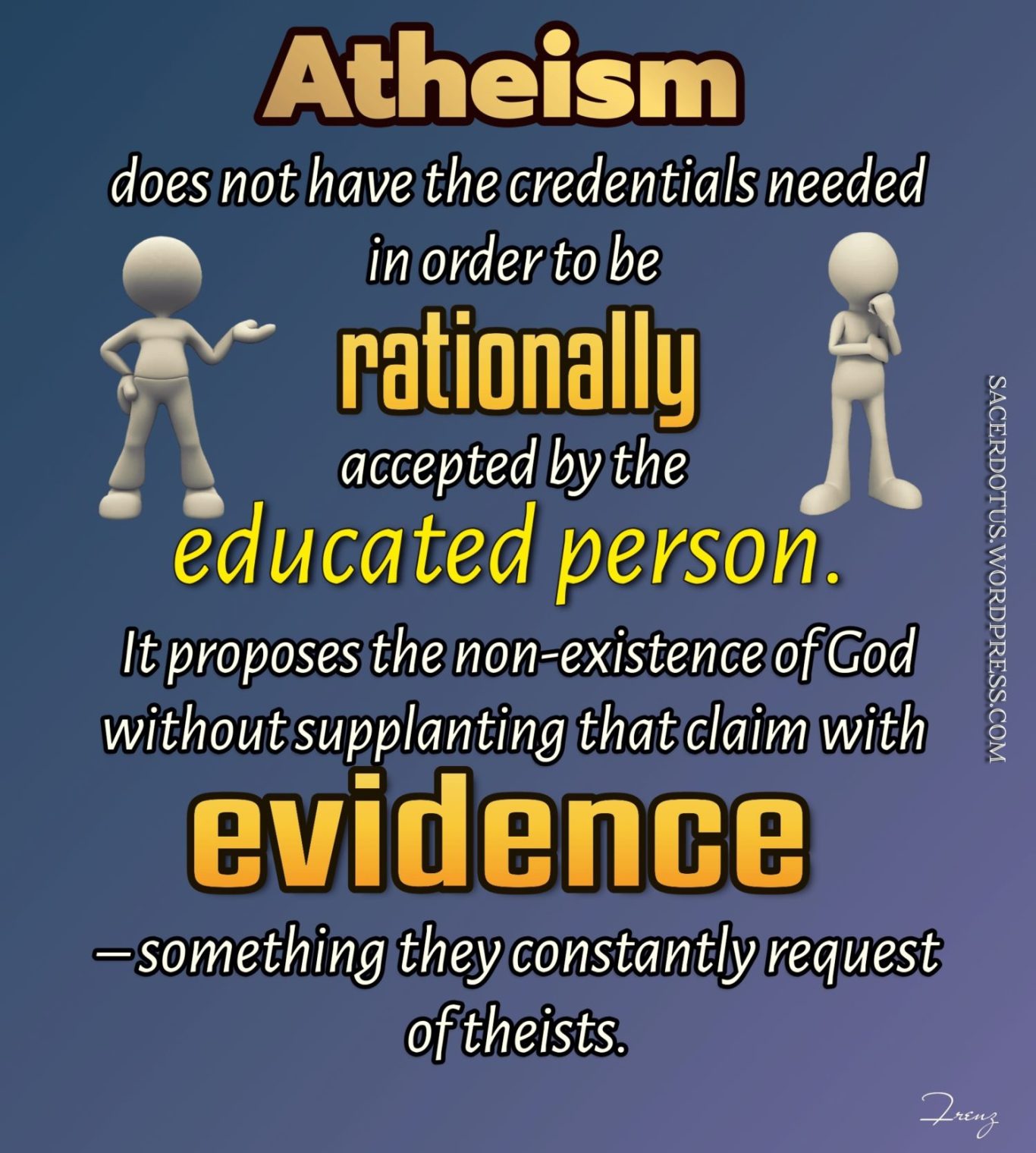
This image captures a profound truth about the philosophical weakness of atheism. It points out that atheism demands evidence from believers while offering none for its own central claim—that God does not exist. In doing so, it exposes atheism as a worldview built not on evidence, but on assumption.
This is not an attack on atheists as people, but a critique of atheism as a belief system. The Bible, philosophy, and even logic all affirm that atheism lacks the necessary credentials to be considered rationally consistent.
1. Atheism Is a Belief, Not a Neutral Position
Many atheists claim they simply “lack belief” in God, but classical atheism asserts a positive claim: “There is no God.” That is a universal negative—a statement about all reality. To make such a claim, one would need complete knowledge of the universe, which no human possesses.
As GotQuestions.org explains in “What Is Atheism?” (GotQuestions.org, 2026):
“To make the absolute statement ‘God does not exist’ is to make a claim of knowing absolutely everything there is to know about everything and of having been everywhere in the universe and having witnessed everything there is to be seen. Of course, no atheist would make these claims. However, that is essentially what they are claiming when they state that God absolutely does not exist.”
Thus, atheism is not a conclusion of science—it is a philosophical assertion that cannot be proven by scientific means.
2. The Demand for Evidence Cuts Both Ways
Atheists often challenge believers to “prove” God’s existence, yet they rarely apply the same standard to their own worldview. The image rightly notes this inconsistency: atheism proposes the non‑existence of God without evidence, even though it constantly demands evidence from theists.
But the evidence for God is abundant—in the universe’s origin, its fine‑tuning, the moral law within humanity, and the historical reality of Jesus Christ. Scripture affirms that this evidence is clear to all:
“The heavens declare the glory of God; and the firmament sheweth his handywork.” (Psalm 19:1 KJV)
“For the invisible things of him from the creation of the world are clearly seen, being understood by the things that are made, even his eternal power and Godhead; so that they are without excuse.” (Romans 1:20 KJV)
“He that cometh to God must believe that he is, and that he is a rewarder of them that diligently seek him.” (Hebrews 11:6 KJV)
The problem, then, is not a lack of evidence but a refusal to acknowledge it.
3. The Rational Limits of Science
Science, by definition, studies the natural world. God, as the Creator of nature, exists beyond it. Therefore, science cannot disprove God any more than a metal detector can disprove the existence of plastic—it is simply the wrong tool for the question.
As Probe Ministries founder Jimmy Williams wrote in “Does God Exist? A Christian Argument from Non‑Biblical Sources” (Probe.org, 2014):
“An atheist would literally have to be God himself! He would need to possess the qualities and capabilities to travel the entire universe and examine every nook and cranny of it before he would ever qualify to hold such a dogmatic conclusion.”
In short, atheism oversteps the boundaries of science and reason by claiming certainty where none is possible.
4. The Educated Person and True Rationality
The image’s statement that atheism “does not have the credentials needed to be rationally accepted by the educated person” is not anti‑intellectual—it is a call to intellectual honesty. True education seeks truth wherever it leads. To dismiss the possibility of God a priori is not rational inquiry; it is prejudice.
The Bible describes this kind of willful blindness:
“The fool hath said in his heart, There is no God.” (Psalm 14:1 KJV)
“Ever learning, and never able to come to the knowledge of the truth.” (2 Timothy 3:7 KJV)
Rejecting God is not a mark of enlightenment, but of spiritual and moral rebellion against the truth that creation itself proclaims.
5. Summary
The image’s argument is logically and theologically sound:
Atheism asserts the non‑existence of God without evidence.
It demands proof from others while offering none itself.
It exceeds the limits of science and reason.
It fails the test of intellectual consistency.
By contrast, belief in God is both rational and evidence‑based. The order of the universe, the moral law within, and the historical person of Jesus Christ all point to a Creator who is both intelligent and personal.
As Proverbs 9:10 (KJV) declares:
“The fear of the LORD is the beginning of wisdom: and the knowledge of the holy is understanding.”
In short, atheism lacks the rational credentials it claims, while faith in God stands on both reason and revelation.
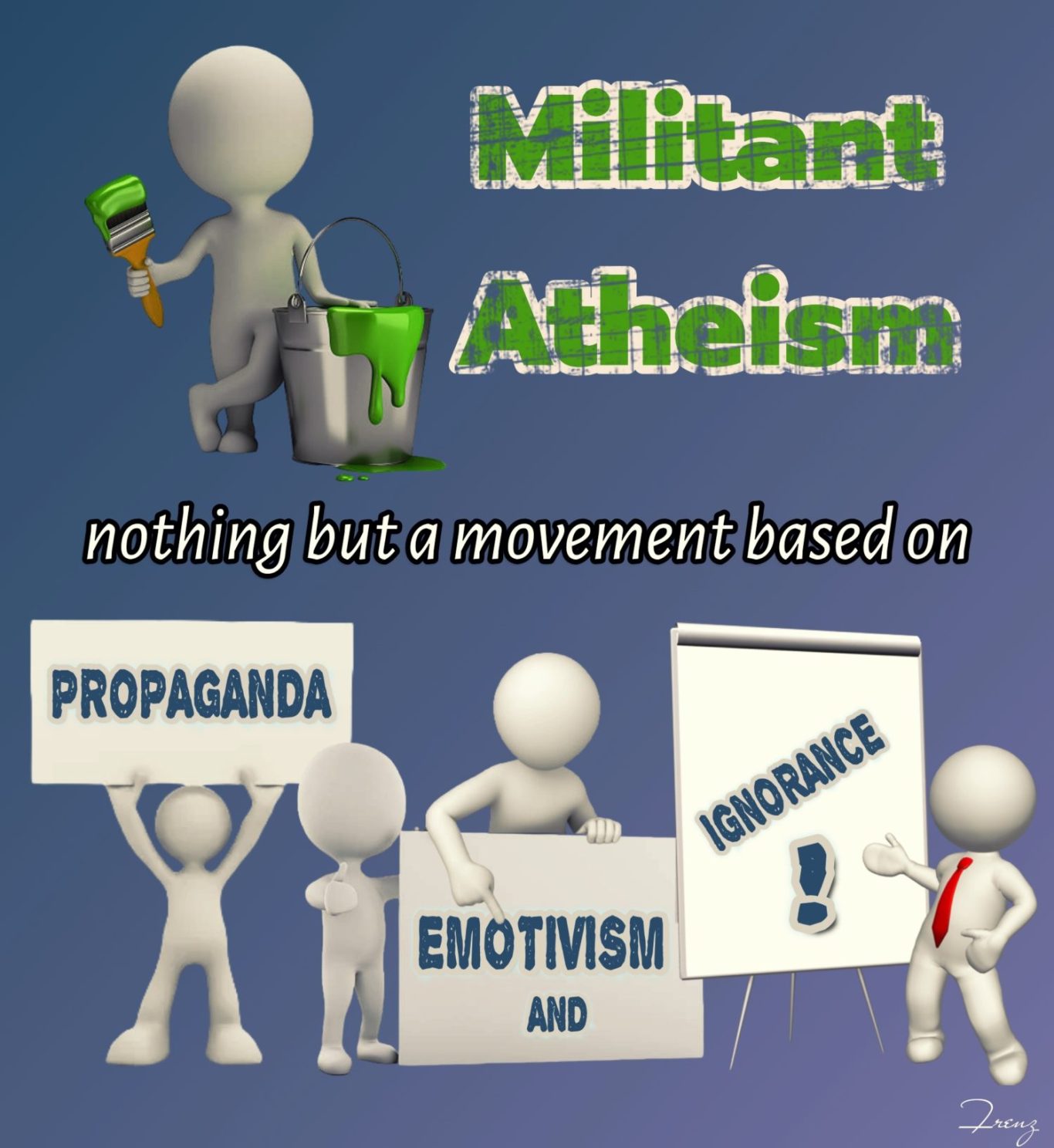
1. What Is Militant Atheism?
Militant atheism is more than simply not believing in God; it is an active opposition to belief in God and often to religion itself. As noted by GotQuestions.org:
“More and more, the connotation of the term atheist is of someone who actively opposes belief in God and challenges all religion and religious expression. Anti-theist might be a more accurate term.”
— GotQuestions.org, “What is nontheism?”
This movement is characterized by outspoken figures like Richard Dawkins, Sam Harris, and Christopher Hitchens, who not only reject God but also seek to persuade others to do the same, often through public debate, books, and media.
2. Propaganda, Ignorance, and Emotivism
Propaganda
Militant atheism often employs propaganda—information, especially biased or misleading, used to promote a particular point of view. This can include:
- Selectively presenting evidence against religion while ignoring evidence for God’s existence.
- Misrepresenting religious beliefs or history to make faith appear unreasonable.
Ignorance
Many arguments in militant atheism stem from a lack of understanding of what Christians actually believe or from ignoring the historical and philosophical foundations of faith. The Bible warns about those who “suppress the truth”:
“For the wrath of God is revealed from heaven against all ungodliness and unrighteousness of men, who by their unrighteousness suppress the truth.”
— Romans 1:18 (ESV)
Emotivism
Emotivism is the idea that moral judgments are expressions of personal feelings rather than objective truth. Militant atheists often appeal to emotions—such as anger at religious hypocrisy or suffering in the world—rather than engaging with the rational arguments for God’s existence.
“The fool says in his heart, ‘There is no God.’ They are corrupt, they do abominable deeds; there is none who does good.”
— Psalm 14:1 (ESV)
3. The Biblical Response
The Bible encourages Christians to respond to such opposition with both truth and love:
“But in your hearts honor Christ the Lord as holy, always being prepared to make a defense to anyone who asks you for a reason for the hope that is in you; yet do it with gentleness and respect.”
— 1 Peter 3:15 (ESV)
Christians are called to engage thoughtfully, not with hostility, but with reasoned answers and compassion for those who do not believe.
4. The Root Issue
Ultimately, militant atheism is not just an intellectual stance but often a spiritual one. The Bible teaches that rejection of God is rooted in the heart as much as in the mind:
“For although they knew God, they did not honor him as God or give thanks to him, but they became futile in their thinking, and their foolish hearts were darkened.”
— Romans 1:21 (ESV)
Summary
- Militant atheism is more than disbelief; it is active opposition to God and religion.
- It often uses propaganda, is rooted in ignorance of true Christian doctrine, and appeals to emotions rather than reason.
- The Bible calls Christians to respond with truth, gentleness, and respect (1 Peter 3:15).
- The ultimate issue is spiritual: a refusal to honor God (Romans 1:21).
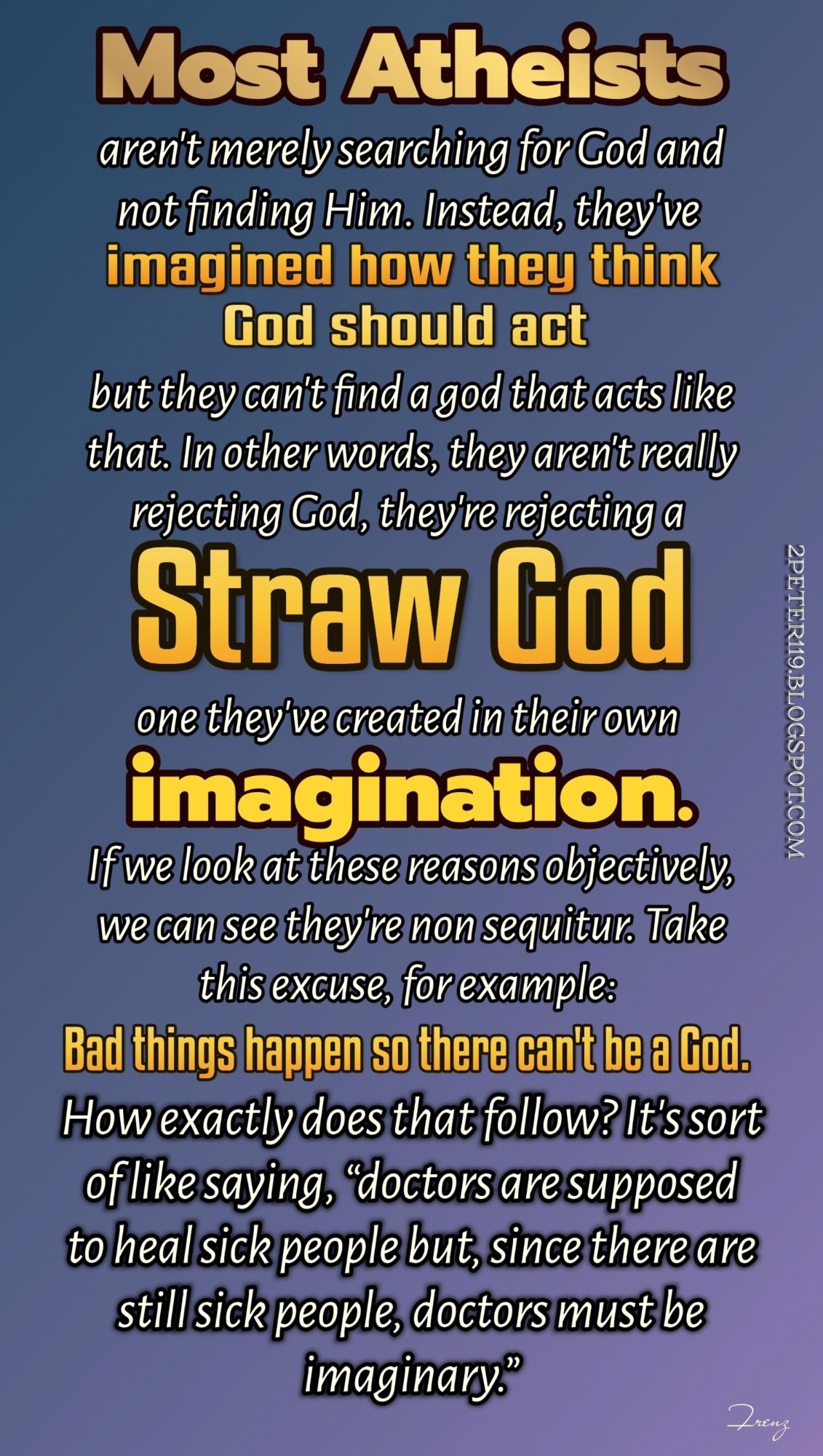
This image makes a very insightful point about the true nature of most atheistic objections to God. It argues that many atheists are not rejecting the real, biblical God, but rather a distorted version of God—a “straw god” of their own making, based on personal expectations of how they think God should act.
This misunderstanding often leads to emotional or illogical arguments, such as “bad things happen, therefore God doesn’t exist.” The image exposes the flaw in that reasoning by comparing it to saying, “Doctors are supposed to heal sick people, but since sickness still exists, doctors must be imaginary.” The logic simply doesn’t follow.
1. The “Straw God” Problem
A straw man argument misrepresents an opponent’s position so it can be easily dismissed. Many atheists do this with God. They reject a caricature—a god who exists only to make life comfortable, prevent all suffering, or instantly fix every injustice. But that is not the God revealed in Scripture.
The Bible presents God as holy, sovereign, and just, not a cosmic servant to human desires.
“For my thoughts are not your thoughts, neither are your ways my ways, saith the LORD.” (Isaiah 55:8 KJV)
“Shall not the Judge of all the earth do right?” (Genesis 18:25 KJV)
“Our God is in the heavens: he hath done whatsoever he hath pleased.” (Psalm 115:3 KJV)
Rejecting a god of one’s own imagination is not the same as rejecting the true God. In fact, Christians reject that false god too.
2. The Logical Fallacy of “Bad Things Happen, Therefore No God”
The image correctly identifies this as a non sequitur—a conclusion that does not logically follow from its premises. The existence of evil or suffering does not disprove God; it simply raises questions about His purposes, which Scripture addresses.
The Bible acknowledges suffering as a real part of a fallen world:
“Man that is born of a woman is of few days, and full of trouble.” (Job 14:1 KJV)
“For we know that the whole creation groaneth and travaileth in pain together until now.” (Romans 8:22 KJV)
“In the world ye shall have tribulation: but be of good cheer; I have overcome the world.” (John 16:33 KJV)
God’s existence is not negated by suffering; rather, His redemptive plan gives suffering meaning. The cross of Christ is the ultimate example—God entered into human pain to overcome it.
3. The Doctor Analogy
The image’s comparison is powerful because it exposes the inconsistency of the atheist’s reasoning. Saying “there is suffering, so there is no God” is as illogical as saying “there is sickness, so there are no doctors.” The existence of sickness does not disprove doctors—it shows the need for them. Likewise, the existence of evil and suffering does not disprove God—it shows the need for His salvation and justice.
As C. S. Lewis once observed in Mere Christianity:
“My argument against God was that the universe seemed so cruel and unjust. But how had I got this idea of just and
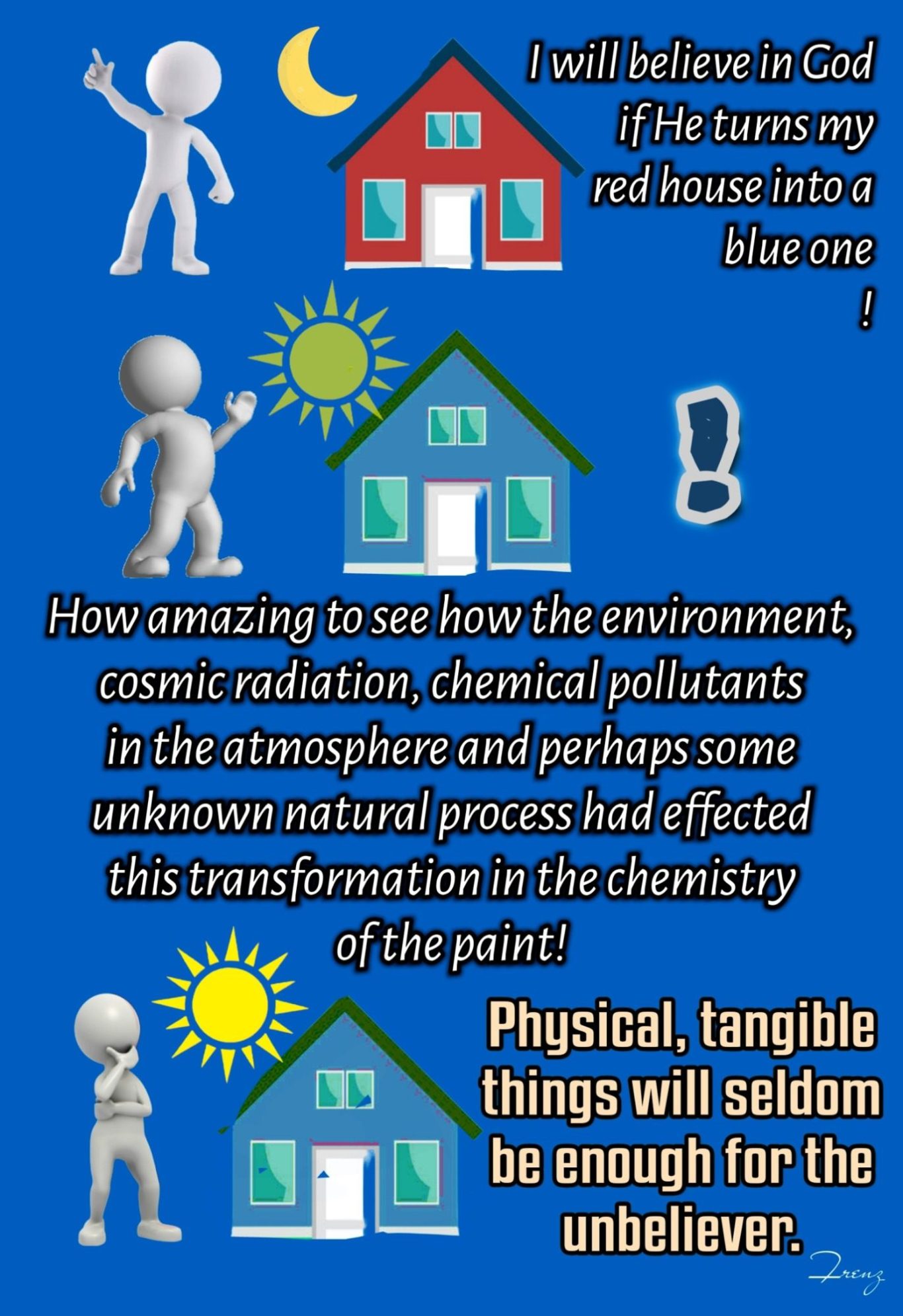
This image captures a profound spiritual truth: unbelief is not primarily an intellectual problem—it is a heart problem. It shows that even when confronted with clear, physical evidence, a person determined not to believe in God will always find a way to explain it away.
The illustration of the house changing color—from red to blue—demonstrates that evidence alone rarely convinces the willfully skeptical. When the heart is closed to God, the mind will reinterpret any sign of His presence to preserve unbelief.
1. The Nature of Unbelief
Scripture teaches that unbelief is not due to a lack of evidence, but a refusal to accept the evidence that already exists.
“For the invisible things of him from the creation of the world are clearly seen, being understood by the things that are made, even his eternal power and Godhead; so that they are without excuse.” (Romans 1:20 KJV)
“Because that, when they knew God, they glorified him not as God, neither were thankful; but became vain in their imaginations, and their foolish heart was darkened.” (Romans 1:21 KJV)
“The fool hath said in his heart, There is no God.” (Psalm 14:1 KJV)
The unbeliever’s problem is not the absence of evidence but the presence of pride and spiritual blindness. When the heart resists God, the mind becomes skilled at rationalizing that resistance.
2. Miracles Do Not Guarantee Faith
The Bible gives many examples of people who witnessed undeniable miracles yet still refused to believe.
The Israelites saw the Red Sea parted, manna fall from heaven, and water flow from a rock—yet they still doubted God (Exodus 16–17).
The Pharisees saw Jesus heal the sick, cast out demons, and raise the dead, but they accused Him of acting by Satan’s power (Matthew 12:24).
Even after Jesus rose from the dead, some still doubted (Matthew 28:17).
These examples show that evidence cannot overcome a hardened heart. As Jesus said in Luke 16:31 (KJV), “If they hear not Moses and the prophets, neither will they be persuaded, though one rose from the dead.”
3. The Limits of Physical Proof
The image’s conclusion—“physical, tangible things will seldom be enough for the unbeliever”—is exactly what Scripture teaches. Faith is not the product of sensory proof but of spiritual openness to truth.
“Now faith is the substance of things hoped for, the evidence of things not seen.” (Hebrews 11:1 KJV)
“Blessed are they that have not seen, and yet have believed.” (John 20:29 KJV)
God has provided abundant evidence of His existence in creation, conscience, and Scripture. But He does not force belief through spectacle. He invites trust through revelation and relationship.
4. The Heart of the Skeptic
The image’s scenario—someone setting conditions for belief—reflects a common attitude: “I’ll believe in God if He proves Himself on my terms.” But that is not genuine seeking; it is testing God. True faith begins with humility, not demands.
As C. S. Lewis observed in The Problem of Pain:
“We are not in a position to bargain with God. He is the source of all reason, and to reject Him is to reject the very ground on which we stand.”
The unbeliever who insists on controlling the terms of belief will always find a “natural explanation,” no matter how miraculous the event.
5. Summary
The image illustrates that unbelief is not cured by more evidence but by a changed heart.
Evidence is abundant, but unbelief reinterprets it.
Miracles can be witnessed yet dismissed.
Faith is not forced by proof but awakened by grace.
As John 3:19 (KJV) says:
“And this is the condemnation, that light is come into the world, and men loved darkness rather than light, because their deeds were evil.”
In short, no amount of physical proof will satisfy a heart that refuses to see. Only when a person humbly opens themselves to God’s truth will the evidence—already all around them—become undeniable.

1. What Does the Bible Say About False Teachers?
Jesus warned His followers:
“Beware of false prophets, who come to you in sheep’s clothing but inwardly are ravenous wolves.”
— Matthew 7:15 (ESV)
The Apostle Paul also cautioned the early church:
“I know that after my departure fierce wolves will come in among you, not sparing the flock; and from among your own selves will arise men speaking twisted things, to draw away the disciples after them.”
— Acts 20:29–30 (ESV)
And John instructs believers:
“Beloved, do not believe every spirit, but test the spirits to see whether they are from God, for many false prophets have gone out into the world.”
— 1 John 4:1 (ESV)
2. How Do We Test a Teacher?
The Bible gives us clear criteria for evaluating teachers:
- Do they affirm the core truths of the Christian faith, especially the deity of Christ and the authority of Scripture? (2 Timothy 3:16; John 1:1–3)
- Do their teachings align with biblical morality, including God’s design for marriage and sexuality? (Genesis 2:24; Romans 1:26–27; 1 Corinthians 6:9–11)
- Do their lives bear the fruit of the Spirit? (Galatians 5:22–23)
3. Applying This to Rev. Dr. Brent Hawkes
Rev. Dr. Brent Hawkes is known for advocating positions—particularly on sexuality and marriage—that are contrary to the historic, biblical Christian understanding. Scripture teaches that marriage is the union of one man and one woman (Genesis 2:24; Matthew 19:4–6), and calls all believers to uphold God’s standards for sexual conduct (Romans 1:26–27; 1 Corinthians 6:9–11).
When a leader publicly teaches or affirms beliefs that contradict clear biblical teaching, especially on foundational issues, this is a serious matter. According to Jesus and the apostles, such teaching is a mark of a “wolf in sheep’s clothing”—someone who appears to be a shepherd but leads people away from God’s truth.
4. Responding With Truth and Love
While it is right to warn others about false teaching, Christians are also called to speak the truth in love (Ephesians 4:15) and to pray for those who are in error, hoping they may come to repentance and a knowledge of the truth (2 Timothy 2:24–26).
In summary:
Scripture warns us to be on guard against teachers who contradict God’s Word, especially on core doctrines and moral issues. Rev. Dr. Brent Hawkes’s public teachings on sexuality and marriage do not align with biblical Christianity, and thus, by biblical standards, fit the description Jesus gave of “wolves in sheep’s clothing.” Christians are called to discernment, to uphold the truth, and to do so with love and humility.
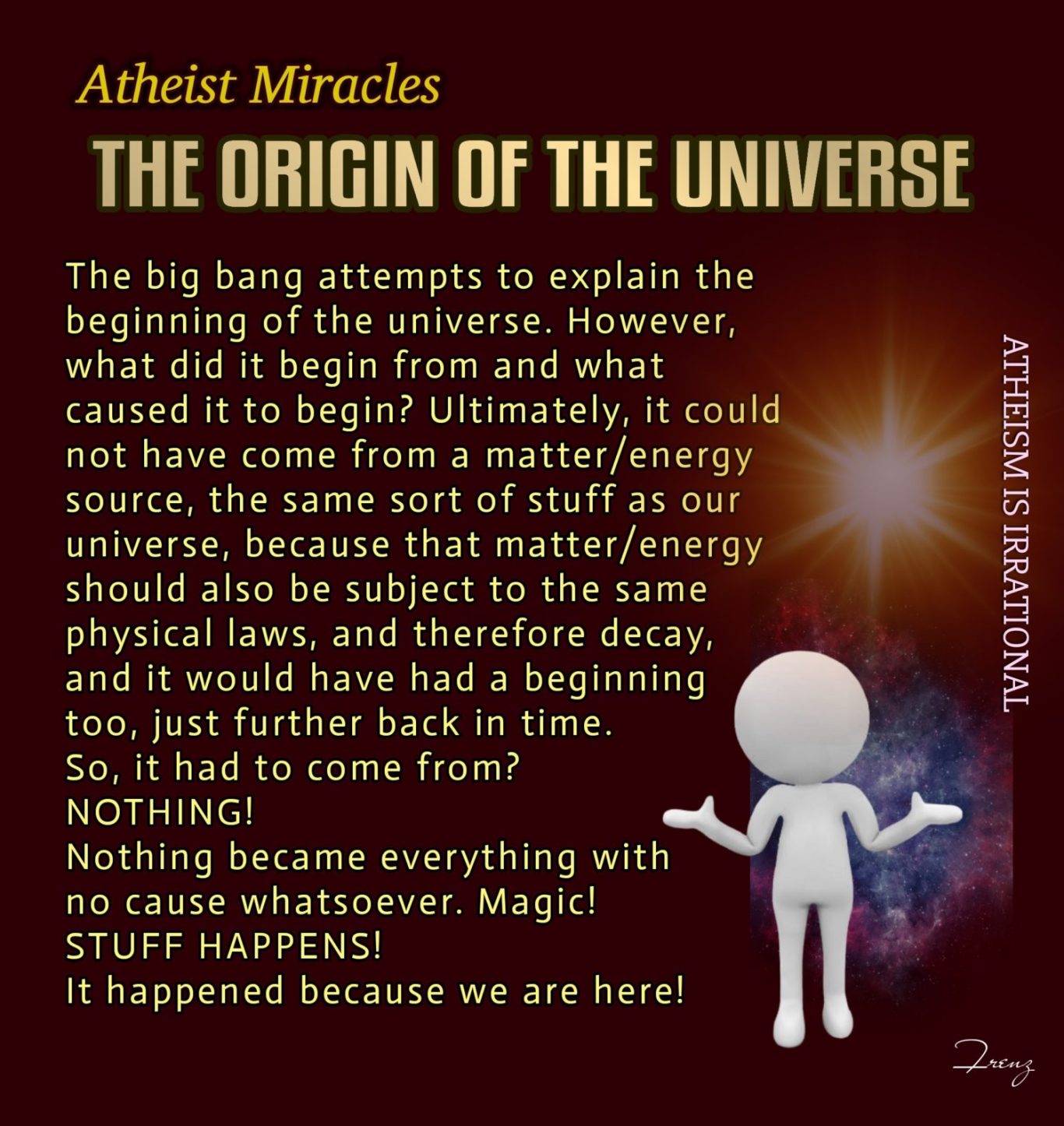
This image presents a powerful critique of the atheistic interpretation of the Big Bang—one that aligns closely with both sound philosophy and biblical revelation. It points out that naturalistic cosmology fails to answer the most fundamental question: Why does anything exist at all?
The Big Bang theory, when stripped of its theistic implications, only describes how the universe expanded from an initial state—it does not explain why it began, what caused it, or where the original energy and matter came from. The image rightly notes that claiming “everything came from nothing” is not science—it is a leap of blind faith.
1. The Limits of the Big Bang Explanation
The Big Bang model describes the expansion of space, time, matter, and energy from an initial singularity roughly 13.7 billion years ago. But as Dr. Jobe Martin explains in The Evolution of a Creationist (Precept Austin, 2020):
“The Big Bang model only attempts to explain the ordering of matter and energy, not their origin. Matter had to be eternally present before the Big Bang or there would have been nothing there to go BOOM! We discover here that everyone on earth believes in something eternal by faith. It is either faith in eternal matter and energy or faith in eternal God.”
In other words, the Big Bang does not eliminate the need for a Creator—it intensifies it. If time, space, and matter all had a beginning, then the cause of that beginning must exist outside of time, space, and matter. That cause must be eternal, immaterial, and powerful—precisely the attributes of the God described in Scripture.
2. The Problem of “Something from Nothing”
Atheistic cosmology often asserts that the universe came from “nothing.” But “nothing” is not a kind of something—it has no properties, no potential, and no power to cause anything. To say that the universe came from nothing is to invoke magic without a magician.
As All About Creation explains in “Origin of the Universe” (AllAboutCreation.org, 2026):
“The original Big Bang Theory seeks to explain the sudden appearance of everything from nothing, while Darwinian Evolution seeks to explain the origin of complex life forms from their supposed simpler ancestors. … Logic now requires that they identify an uncontrolled mechanism by which the universe could have initiated, designed, created and developed itself without an Intelligent Director. Otherwise, intellectual honesty requires the necessity of a Creator God.”
To claim that everything came from nothing is not science—it is philosophical absurdity. Every effect requires a cause. The universe is an effect; therefore, it requires a cause beyond itself.
3. The Biblical Explanation: God as the Eternal Cause
The Bible begins with the most profound and sufficient answer to the question of origins:
“In the beginning God created the heaven and the earth.” (Genesis 1:1 KJV)
This statement answers three ultimate questions at once:
Who? — God.
What? — Created.
When? — In the beginning.
Other passages affirm this truth:
“Through faith we understand that the worlds were framed by the word of God, so that things which are seen were not made of things which do appear.” (Hebrews 11:3 KJV)
“All things were made by him; and without him was not any thing made that was made.” (John 1:3 KJV)
“For by him were all things created, that are in heaven, and that are in earth, visible and invisible.” (Colossians 1:16 KJV)
The universe did not come from nothing—it came from Someone: the eternal, self‑existent Creator.
4. The Necessity of a First Cause
Philosophically, the argument is simple and unavoidable:
Everything that begins to exist has a cause.
The universe began to exist.
Therefore, the universe has a cause.
That cause must be uncaused, eternal, and immaterial—attributes that fit only God. As All About Creation further observes in “Origin of the Universe 2” (AllAboutCreation.org, 2026):
“Attempts to exclude a Creator from the origin of the universe equation have been long on theoretical calculations and short on common sense. … Is the entire universe really the result of an accidental explosion of nothing?”
Common sense and reason both affirm that nothing cannot produce something. Only an eternal Creator can account for the existence of all things.
5. Summary
The image’s argument exposes the logical bankruptcy of atheistic cosmology:
The Big Bang describes how the universe expanded, not why it began.
Matter and energy cannot be eternal under the laws of physics.
“Something from nothing” is not science—it is superstition.
The only rational explanation is an eternal, intelligent, and purposeful Creator.
As Revelation 4:11 (KJV) declares:
“Thou art worthy, O Lord, to receive glory and honour and power: for thou hast created all things, and for thy pleasure they are and were created.”
In short, the universe did not spring from nothing by chance—it was spoken into existence by the eternal God, whose power and wisdom are revealed in everything that exists.
This image presents a clear and philosophically sound critique of atheistic naturalism—especially its claim that the universe, life, and order arose without a cause. It rightly points out that such a belief is not scientific or rational, but magical thinking—believing that something can come from nothing, without explanation or cause.
This argument aligns perfectly with both Scripture and classical philosophy. The Bible, reason, and even common sense affirm that everything that begins to exist must have a cause. To deny that is to deny the very foundation of rational thought.
1. The Law of Causation: A Universal Principle
The image refers to what philosophers and scientists call the law of causality—the principle that every effect must have a sufficient cause. This is not a religious assumption; it is the bedrock of all scientific inquiry. Without it, science itself would be impossible, because science depends on the belief that events have causes that can be studied and understood.
As Tabletalk Magazine’s article “Just ’Cause” explains (Tabletalk Magazine, 2001):
“When we deny this truth, we deny one of the most fundamental of truths: the law of causality. This law recognizes that every effect must have a sufficient cause. If something happens, it happens because something causes it to happen. That’s a fancy way of saying that you get nothing from nothing. There never was nothing. We know this for two reasons. First, the Bible doesn’t begin with ‘In the beginning nothing,’ but ‘In the beginning God.’ Second, if there ever was nothing, there would be nothing now.”
Even a child understands this intuitively: toys don’t assemble themselves, and meals don’t cook themselves. The idea that the universe “just happened” is contrary to both reason and experience.
2. The Difference Between Magic and Miracle
The image distinguishes between magic and miracle, and that distinction is crucial.
Magic (in the philosophical sense) is the claim that something happens without a cause—an effect with no sufficient explanation.
Miracle, by contrast, is an event caused by a supernatural agent—God—who acts with purpose and power beyond natural laws.
As Ligonier Learn’s episode “Nothing Can Happen by Chance” explains (Ligonier Learn, 2025):
“Chance cannot do anything; it is not a thing or power, only a description of mathematical possibilities. Giving it power to do something when it is not anything is the principal idea that is used as a substitute for creation. … It’s the rabbit out of the hat—without a hat, without a rabbit, without a magician. It’s worse than magic; it’s pure mythology.”
Atheistic cosmology often commits this very error—claiming that the universe created itself or that it came from nothing. But self‑creation is logically impossible. Something cannot bring itself into existence, because it would have to exist before it existed—a contradiction.
3. The Biblical Foundation: God as the First Cause
The Bible begins with the only coherent explanation for existence:
“In the beginning God created the heaven and the earth.” (Genesis 1:1 KJV)
God is the uncaused Cause—the eternal, self‑existent Being who brought everything else into existence.
“Through faith we understand that the worlds were framed by the word of God, so that things which are seen were not made of things which do appear.” (Hebrews 11:3 KJV)
“All things were made by him; and without him was not any thing made that was made.” (John 1:3 KJV)
“For of him, and through him, and to him, are all things.” (Romans 11:36 KJV)
Unlike atheism, which asserts an effect without a cause, Christianity affirms a rational, eternal Cause who is both personal and purposeful.
4. The Irrationality of “Things Just Happen”
The image’s conclusion—that the idea of things “just happening” belongs to fairytales—is absolutely correct. If events could occur without causes, then no reasoning, science, or morality would be possible. The universe would be chaos.
As Ligonier Learn’s “I AM: The Aseity of God” explains (Ligonier Learn, 2012):
“In contrast to self‑creation, which is a logical impossibility, we have the idea of self‑existence, or what we call in theology the concept of aseity. … In that one little word is captured all of the glory of the perfection of God’s being.”
Only God possesses aseity—existence in and of Himself. Everything else is contingent, dependent, and caused.
5. Summary
The image’s argument is both philosophically rigorous and biblically faithful:
Atheism’s claim that the universe came from nothing is irrational—it violates the law of causation.
“Magic” (something from nothing) is not science; it is mythology.
Every effect requires a cause, and the ultimate cause must be eternal and self‑existent.
That eternal Cause is the God revealed in Scripture.
As Psalm 33:6 (KJV) declares:
“By the word of the LORD were the heavens made; and all the host of them by the breath of his mouth.”
In short, atheism’s “uncaused universe” is the real fairytale, while the biblical Creator provides the only rational, consistent, and sufficient explanation for why anything exists at all.
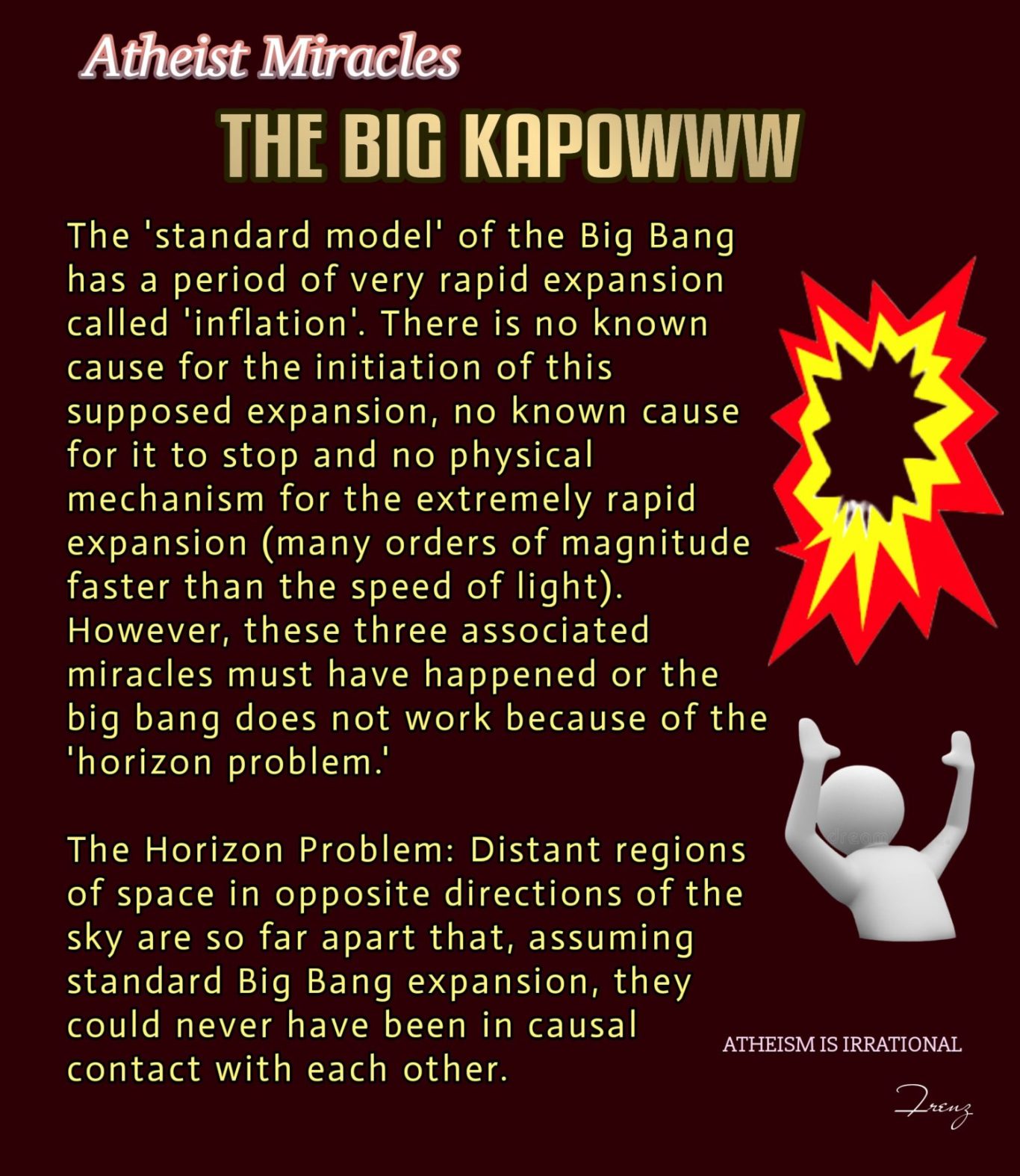
This image highlights one of the most significant and often overlooked weaknesses in the naturalistic interpretation of the Big Bang—the problem of cosmic inflation and its unexplained “miracles.” It points out that the inflation phase, which was added to the Big Bang model to solve certain mathematical and observational problems, actually introduces new mysteries that science cannot explain without invoking something very much like supernatural intervention.
In other words, the image argues that atheistic cosmology ends up requiring its own “miracles” to make the model work—miracles without a Miracle‑Worker.
1. The Inflation Hypothesis and Its Problems
The “standard model” of the Big Bang includes a brief period of inflation, an unimaginably rapid expansion of the universe that supposedly occurred a fraction of a second after the beginning. Inflation was proposed to solve several issues in the original Big Bang model, such as the horizon problem, the flatness problem, and the monopole problem.
However, as Jeff Zweerink explains in “Dark Matter from Before the Big Bang?” (Reasons to Believe, 2019):
“Scientists also realize that an epoch of rapid, geometric expansion called inflation would solve these problems. However, this epoch of inflation occurs prior to the big bang models (as in the first usage). Additionally, how inflation works violates the energy condition required for the Hawking‑Penrose theorem to hold. As such, incorporating inflation into big bang models appears to remove the big bang (second usage).”
In other words, inflation is not a proven process—it is a theoretical patch that raises new questions:
What caused inflation to start?
What caused it to stop?
What physical mechanism could drive expansion faster than the speed of light?
These are the “three associated miracles” the image refers to—unexplained, uncaused events that naturalistic cosmology must assume to make its model fit the data.
2. The “Horizon Problem” and the Limits of Naturalism
The horizon problem arises because regions of the universe that are billions of light‑years apart have nearly identical temperatures and properties, even though, under standard Big Bang expansion, they could never have been in causal contact. Inflation was invented to explain how these regions could have once been close enough to “even out” before being flung apart.
But since inflation itself lacks a known cause or mechanism, it merely moves the mystery back one step. The naturalist must still explain how such an event could occur without design, purpose, or direction.
As Hugh Ross notes in “Major Breakthrough Upholds Big Bang Models” (Reasons to Believe, 2023):
“Given that the Bible predicted some of the fundamental features of big bang cosmology long before astronomers discovered them, resolution of the Hubble constant tension helps affirm a cornerstone doctrine of Christianity—the supernatural inspiration and inerrancy of the Bible in all topics it addresses.”
In other words, the more we learn about the universe’s beginning, the more it points to supernatural causation, not less.
3. The Biblical Explanation: A Supernatural Cause
The Bible provides the only coherent explanation for the universe’s origin: it began because God willed it to begin.
“In the beginning God created the heaven and the earth.” (Genesis 1:1 KJV)
“Through faith we understand that the worlds were framed by the word of God, so that things which are seen were not made of things which do appear.” (Hebrews 11:3 KJV)
“He hath made the earth by his power, he hath established the world by his wisdom, and hath stretched out the heaven by his understanding.” (Jeremiah 51:15 KJV)
The Bible repeatedly describes God as the One who “stretches out the heavens” (Isaiah 42:5; 45:12)—a poetic but remarkably accurate description of cosmic expansion. The difference is that Scripture attributes this expansion to divine agency, not to an unexplained burst of “nothing doing something.”
4. The Irony of “Naturalistic Miracles”
The image’s use of the word miracles is deliberate irony. Atheists often accuse Christians of believing in miracles, yet their own cosmological model depends on events that have no known natural cause, no observable mechanism, and no repeatable evidence.
To believe that the universe inflated itself faster than light, without a cause, and then stopped precisely at the right moment to produce a stable cosmos, requires faith in the impossible—a kind of “miracle without a Miracle‑Worker.”
As Psalm 19:1 (KJV) declares:
“The heavens declare the glory of God; and the firmament sheweth his handywork.”
The order and fine‑tuning of the universe are not the result of random inflationary accidents but of intelligent design.
5. Summary
The image’s argument exposes the philosophical inconsistency of atheistic cosmology:
Inflation theory was invented to fix problems in the Big Bang model but introduces new unexplained “miracles.”
There is no known cause for inflation to start, stop, or operate faster than light.
The “horizon problem” remains unsolved without invoking supernatural‑like events.
The biblical explanation—that God created and stretched out the heavens—fits both logic and observation.
As Colossians 1:16–17 (KJV) affirms:
“For by him were all things created, that are in heaven, and that are in earth, visible and invisible… and by him all things consist.”
In short, the “miracles” required by the inflationary Big Bang model point not to chaos or chance, but to the hand of the Creator who alone has the power to bring the universe into being and sustain it by His will.



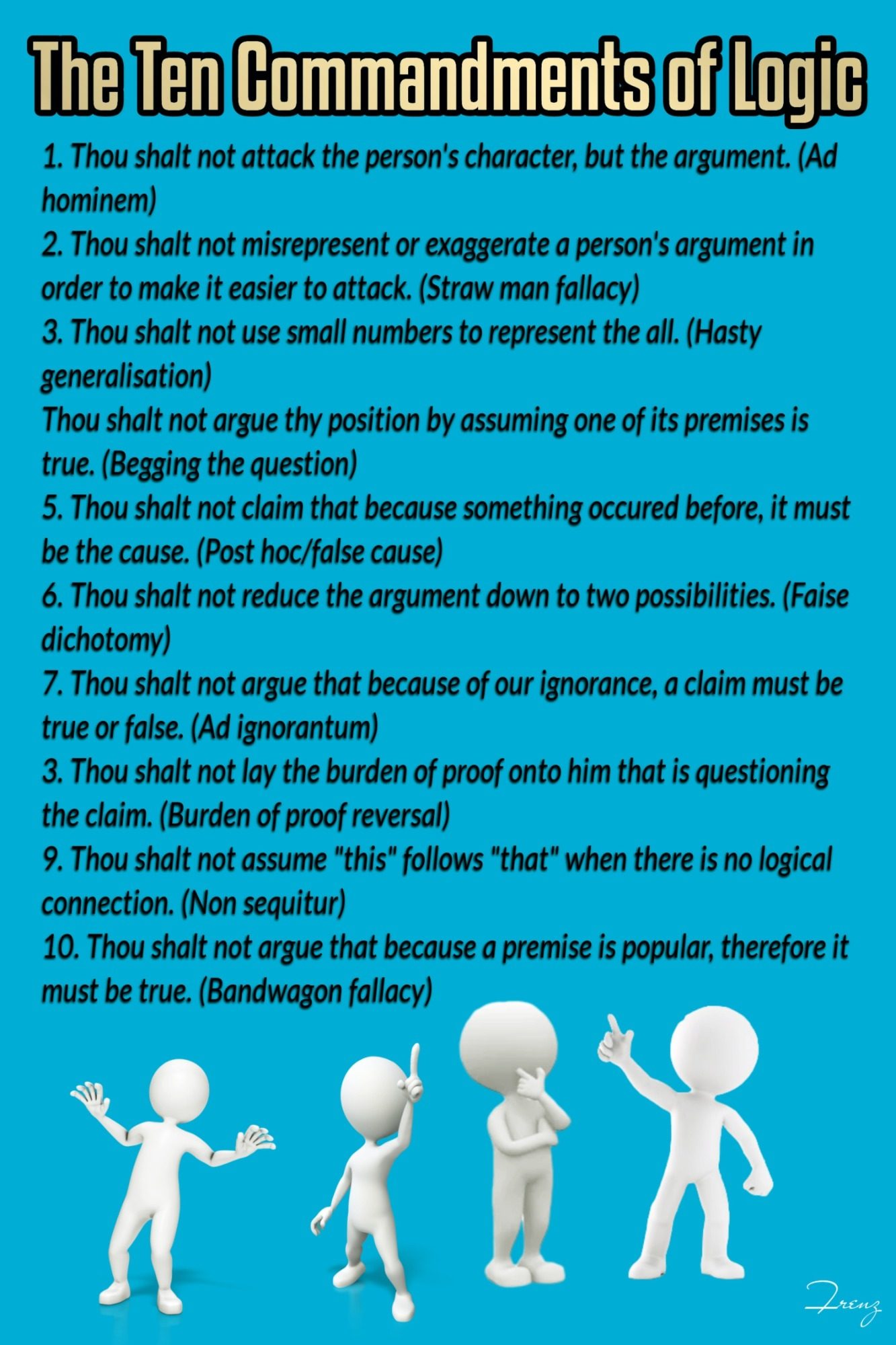
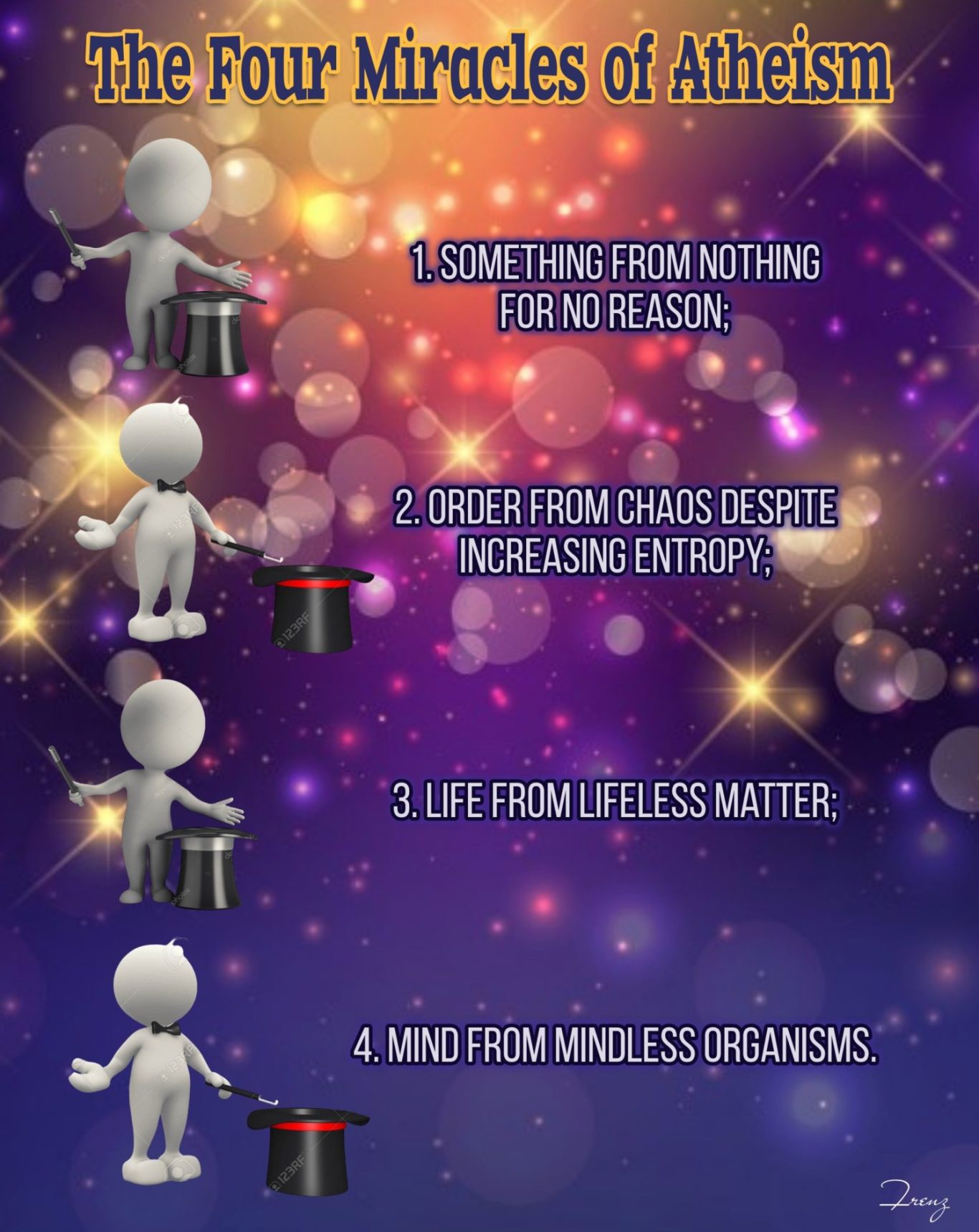
From a Christian perspective, this image resonates deeply with the biblical call to speak truth boldly and lovingly, even when that truth is unpopular.
1. The Christian Duty to Speak Truth
Scripture repeatedly commands believers not to compromise truth for the sake of comfort or approval.
“Wherefore putting away lying, speak every man truth with his neighbour: for we are members one of another.” (Ephesians 4:25 KJV)
“For do I now persuade men, or God? or do I seek to please men? for if I yet pleased men, I should not be the servant of Christ.” (Galatians 1:10 KJV)
“Cry aloud, spare not, lift up thy voice like a trumpet, and shew my people their transgression.” (Isaiah 58:1 KJV)
Truth is not cruelty; it is compassion. To withhold truth in order to avoid offending someone’s ignorance is to leave them in darkness rather than lead them toward light.
2. The Pressure to Conform
The image’s “CENSORED” tape symbolizes the growing cultural tendency to silence viewpoints that challenge secular or relativistic ideologies. In many areas—faith, morality, sexuality, and the sanctity of life—Christians are pressured to remain silent or to “approve” what God forbids.
Jesus warned His followers that this would happen:
“If the world hate you, ye know that it hated me before it hated you.” (John 15:18 KJV)
“Blessed are ye, when men shall revile you, and persecute you, and shall say all manner of evil against you falsely, for my sake.” (Matthew 5:11 KJV)
The believer’s task is not to seek conflict but to remain faithful to truth, even when truth is unwelcome.
3. Truth and Love Must Walk Together
While the image’s tone is defiant, Christians must remember that truth without love becomes harsh, and love without truth becomes hollow. The goal is not to win arguments but to bear witness to reality as God defines it.
As 2 Corinthians Exposition 1 – Maclaren explains, the Spirit of God softens the heart so that truth can leave its imprint:
“The material is made capable of receiving the stamp, because it is warmed and softened. … God does not do with man as the coiner does with his blanks, put them cold into a press, and by violence from without stamp an image upon them, but He does as men do with a seal, warms the wax first, and then, with a gentle, firm touch, leaves the likeness there.” (Precept Austin, Maclaren, 2 Corinthians 1)
In other words, truth must be spoken firmly but with a heart warmed by compassion.
4. The Courage to Resist Censorship
The “APPROVED” stamp in the image represents the world’s approval—something believers are warned not to seek at the expense of fidelity to God.
“Be not conformed to this world: but be ye transformed by the renewing of your mind.” (Romans 12:2 KJV)
“We ought to obey God rather than men.” (Acts 5:29 KJV)
Christians are called to be witnesses, not echo chambers. The truth of the gospel, the reality of sin, and the exclusivity of salvation in Christ will always offend some—but that does not make them less true.
5. Summary
The image’s message—refusing to censor truth for the sake of comfort—echoes a biblical principle: truth must be proclaimed even when it is unpopular.
The world may bind truth with “CENSORED” tape, but God’s Word cannot be bound (2 Timothy 2:9).
Approval from men is fleeting; approval from God is eternal.
Truth spoken in love is not arrogance—it is mercy.
As Proverbs 23:23 (KJV) exhorts:
“Buy the truth, and sell it not; also wisdom, and instruction, and understanding.”
In short, the Christian must never silence truth to soothe ignorance. Instead, we are called to speak the truth in love (Ephesians 4:15), trusting that God’s Word, once spoken, will accomplish what He intends.

Scripture warns that evil often disguises itself as something good or tolerant, but its ultimate aim is to oppose and suppress what is truly good and righteous.
Let’s examine this biblically:
1. Evil Masquerades as Good
The Bible teaches that evil often appears attractive or even righteous to deceive people.
- 2 Corinthians 11:14–15 (ESV):
“And no wonder, for even Satan disguises himself as an angel of light. So it is no surprise if his servants, also, disguise themselves as servants of righteousness. Their end will correspond to their deeds.”
Evil may initially present itself as tolerant or enlightened, but its true intent is deception.
2. Evil Seeks to Silence Good
When evil gains influence, it often seeks to suppress truth and righteousness.
- John 3:19–20 (ESV):
“And this is the judgment: the light has come into the world, and people loved the darkness rather than the light because their works were evil. For everyone who does wicked things hates the light and does not come to the light, lest his works should be exposed.”
Those who practice evil fear exposure by the truth, so they attempt to silence those who speak and live by God’s standards.
3. The Call to Stand Firm
The Bible encourages believers not to be surprised by this pattern, but to stand firm in truth and love.
- Ephesians 6:12–13 (ESV):
“For we do not wrestle against flesh and blood, but against the rulers, against the authorities, against the cosmic powers over this present darkness, against the spiritual forces of evil in the heavenly places. Therefore take up the whole armor of God, that you may be able to withstand in the evil day, and having done all, to stand firm.”
Christians are called to remain steadfast, speaking the truth in love, even when evil seeks to silence or marginalize good.
Summary
This observation is consistent with biblical teaching:
- Evil often appears tolerant or good to gain influence.
- Once dominant, it seeks to suppress God’s truth and those who uphold it.
- Believers are called to recognize this pattern and stand firm in God’s truth.
Scripture References:
- 2 Corinthians 11:14–15
- John 3:19–20
- Ephesians 6:12–13
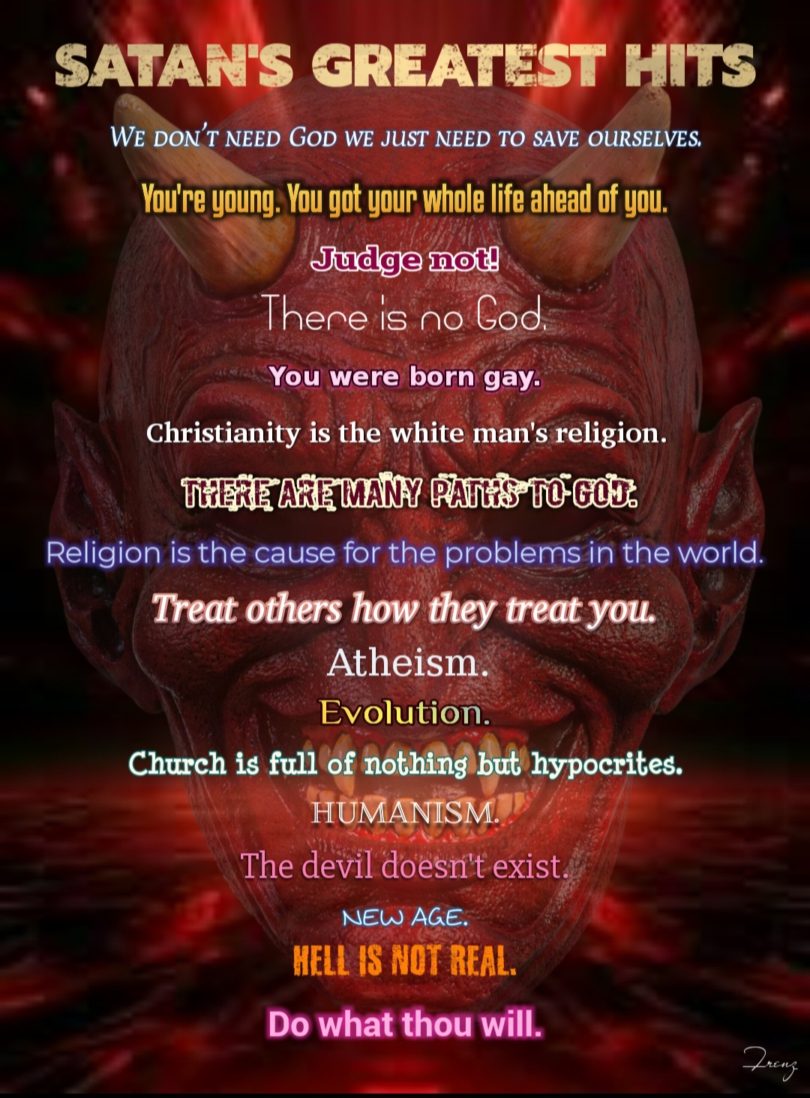
This image expresses a truth that stands at the heart of both Christian theology and sound reason: belief in God is not only rational—it is the most rational conclusion available. Far from being undermined by science, the Christian conviction that a Creator brought the universe, life, and humanity into existence is supported by what science continues to reveal about the order, fine‑tuning, and intelligibility of creation.
1. Belief in God Is Rational
The idea that faith and reason are opposites is a modern myth. The Bible presents faith as trust based on evidence, not blind belief. The apostle Paul wrote that creation itself gives humanity sufficient evidence of a Creator:
“For the invisible things of him from the creation of the world are clearly seen, being understood by the things that are made, even his eternal power and Godhead; so that they are without excuse.” (Romans 1:20 KJV)
“The heavens declare the glory of God; and the firmament sheweth his handywork.” (Psalm 19:1 KJV)
“Through faith we understand that the worlds were framed by the word of God, so that things which are seen were not made of things which do appear.” (Hebrews 11:3 KJV)
Faith in God, then, is not irrational—it is the logical response to the evidence of design, order, and purpose in the universe.
2. Science Has Not Disproved God—It Points to Him
The image’s claim that no scientific discovery contradicts the Christian belief in a Creator is absolutely correct. In fact, the more science uncovers, the more it reveals a universe that bears the marks of intelligent design.
As Tabletalk Magazine’s article “Beyond Reason?” explains (Tabletalk Magazine, 2010):
“The rational intelligibility of the universe, the fine‑tuning of its physical constants as well as its biological complexity, is the product of a Mind, that of the divine Logos. For what lies behind the universe is much more than a rational principle. It is God, the Creator Himself. It is no abstraction, or even impersonal force, that lies behind the universe. God, the Creator, is a person, and He is not part of the stuff of His universe.”
Science can describe how things work, but it cannot explain why they exist or who designed them. The Big Bang, the laws of physics, and the information encoded in DNA all point to a rational, purposeful Mind behind creation.
3. The Evidence of Design
Modern discoveries have strengthened the case for a Creator rather than weakened it.
Cosmic fine‑tuning: The physical constants of the universe (gravity, electromagnetism, nuclear forces) are balanced with astonishing precision. A minute change in any of them would make life impossible.
Biological information: DNA contains a digital code more complex than any human‑made language. Information always points to intelligence.
Human consciousness and morality: Our capacity for reason, creativity, and moral awareness cannot be explained by matter alone.
As GotQuestions.org notes in “Is There a Conclusive Argument for the Existence of God?” (GotQuestions.org, 2026):
“No atheist can explain how an impersonal, purposeless, meaningless, and amoral universe accidentally created beings who are full of personality and obsessed with purpose, meaning, and morals. … The only rational and reasonable conclusion is that an eternal Creator is the one who is responsible for reality as we know it.”
The evidence of design in both the cosmos and life itself is overwhelming and consistent with the biblical declaration that “In the beginning God created the heaven and the earth.” (Genesis 1:1 KJV)
4. The Mind Behind the Universe
The image’s reference to a “Mind” behind everything echoes the biblical concept of the Logos—the divine Word through whom all things were made.
“In the beginning was the Word, and the Word was with God, and the Word was God. … All things were made by him; and without him was not any thing made that was made.” (John 1:1–3 KJV)
This “Mind” is not an impersonal force but the personal, rational, and loving Creator revealed in Jesus Christ. The universe’s order and intelligibility make sense only if it was designed by a rational Being who also created human minds capable of understanding it.
5. Summary
The image’s argument is both philosophically and theologically sound:
Belief in God is rational and consistent with evidence.
No scientific discovery has disproved the Creator; rather, science continually reveals His handiwork.
The design and order of the universe point unmistakably to a divine Mind.
As Proverbs 3:19 (KJV) declares:
“The LORD by wisdom hath founded the earth; by understanding hath he established the heavens.”
In short, science and faith are not enemies—they are allies in revealing the truth that the universe is the product of a purposeful, intelligent, and eternal Creator.
1. The Reality of Atheism
The Bible acknowledges that some people deny God’s existence:
“The fool says in his heart, ‘There is no God.’”
— Psalm 14:1 (ESV)
Atheism, by definition, is the rejection of belief in God. From a biblical perspective, this is a serious matter because it cuts a person off from the source of truth, hope, and eternal life.
2. Spiritual Consequences
The Bible teaches that turning away from God leads to spiritual darkness:
“They are darkened in their understanding, alienated from the life of God because of the ignorance that is in them, due to their hardness of heart.”
— Ephesians 4:18 (ESV)
Without God, the human soul is left searching for meaning and purpose, often in vain. This spiritual separation is the true “cancer to the soul,” as it leads to death apart from God’s grace.
3. The Hope of the Gospel
However, the Christian message is not one of condemnation alone, but of hope and redemption for all—including atheists:
“For the grace of God has appeared, bringing salvation for all people…”
— Titus 2:11 (ESV)
God’s desire is that all would come to repentance and faith in Christ (2 Peter 3:9). Even those who have denied Him can receive forgiveness and new life through Jesus.
4. A Loving Response
While it is true that atheism leads people away from God, Christians are called to respond not with hatred or contempt, but with compassion and truth:
“But speaking the truth in love, we are to grow up in every way into him who is the head, into Christ…”
— Ephesians 4:15 (ESV)
Conclusion
Atheism, according to Scripture, is spiritually dangerous because it separates people from God, the source of life and truth. Yet, the gospel offers hope and restoration to all who turn to Christ. As followers of Jesus, we are called to share this truth with love and humility, praying that hearts and minds would be opened to the reality of God’s grace.
Let’s consider how to understand and lovingly apply this truth when someone says they left Christianity for atheism:
1. Outward Profession vs. Inward Reality
The Bible teaches that not all who claim to be Christians truly possess saving faith. Jesus Himself warned:
“Not everyone who says to me, ‘Lord, Lord,’ will enter the kingdom of heaven, but the one who does the will of my Father who is in heaven.”
— Matthew 7:21 (ESV)
Some may have participated in church life or Christian activities, but never truly trusted Christ as Savior and Lord.
2. Perseverance of True Believers
True faith endures. Those who genuinely belong to Christ will remain with Him, not because of their own strength, but because God keeps them:
“And I give them eternal life, and they will never perish, and no one will snatch them out of my hand.”
— John 10:28 (ESV)
If someone abandons the faith, it reveals that their connection to Christ was never genuine at the heart level.
3. Responding with Truth and Love
While it is biblically accurate to say that those who leave the faith were “not of us,” it is also important to respond with humility and compassion. Only God knows the heart, and He desires that all would come to repentance:
“The Lord is not slow to fulfill his promise as some count slowness, but is patient toward you, not wishing that any should perish, but that all should reach repentance.”
— 2 Peter 3:9 (ESV)
Summary
- 1 John 2:19 teaches that those who permanently leave the faith never truly belonged to Christ.
- True believers persevere because God preserves them.
- We should respond to those who leave with both biblical truth and Christlike love, always pointing them back to the hope found in Jesus.
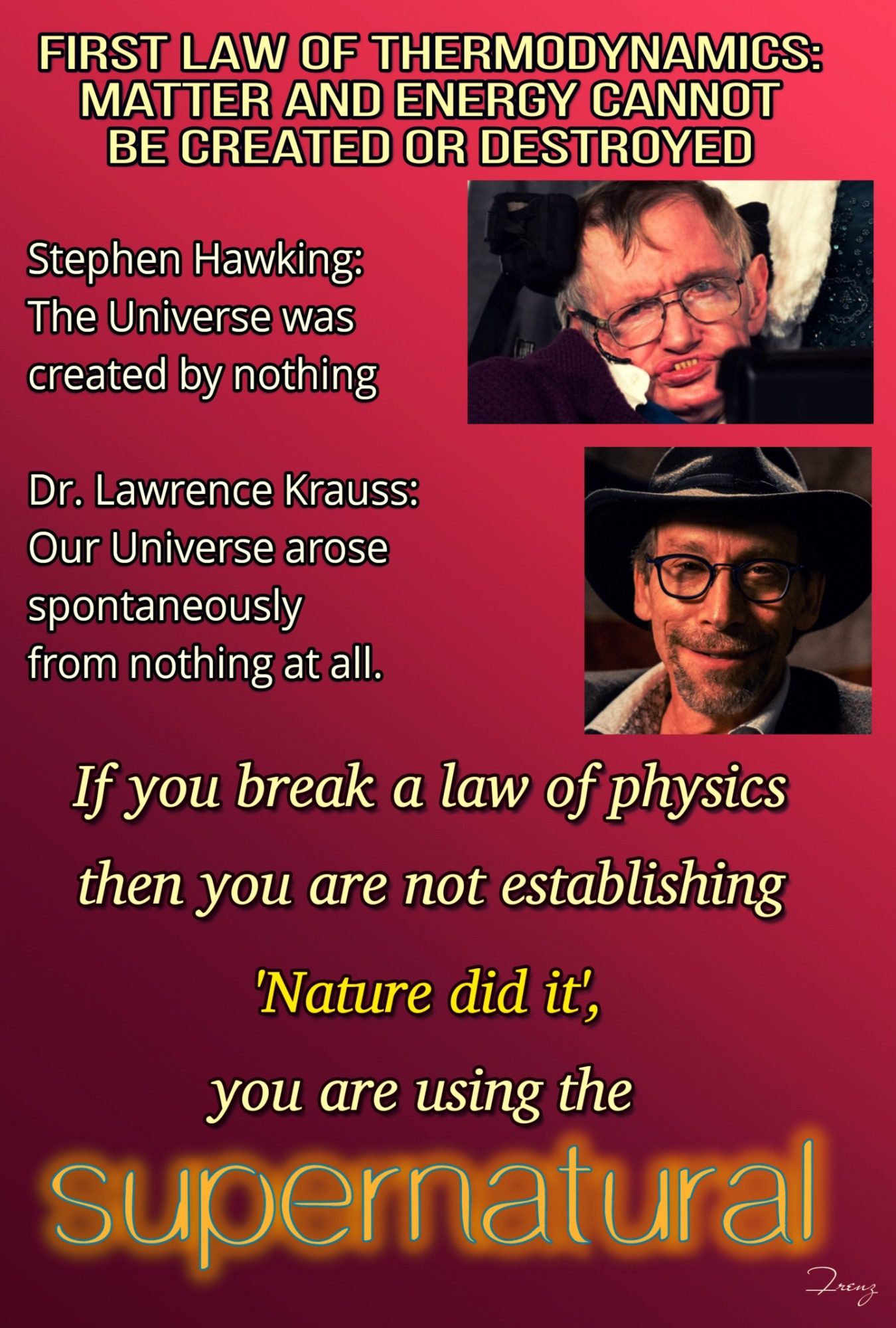
This image makes a very strong and logically consistent point: if the universe truly came from “nothing,” then its origin cannot be explained by natural causes—it must be supernatural.
By referencing the First Law of Thermodynamics and the claims of atheistic physicists such as Stephen Hawking and Lawrence Krauss, the image exposes a deep contradiction in naturalistic cosmology. When scientists claim that “nothing” produced everything, they are not doing science—they are crossing into metaphysics and, ironically, invoking the very thing they deny: a cause beyond nature.
1. The First Law of Thermodynamics and the Origin of the Universe
The First Law of Thermodynamics states that energy and matter cannot be created or destroyed; they can only change form. This law is one of the most universally verified principles in all of physics.
As GotQuestions.org explains in “What Are the Laws of Thermodynamics and How Do They Provide Evidence for Creationism?” (GotQuestions.org, 2026):
“Even if matter is converted to energy and vice versa, there will never be an increase or decrease in the total amount. So the question is, if matter and energy are neither created nor destroyed, then where did all the matter and energy in the universe come from? Either (a) the universe somehow came into existence without God, even though science has proved that it is impossible for something to arise out of nothing, (b) everything always existed in the universe, an idea that science has also proved impossible, or (c) God created it. The most reasonable and plausible explanation is that God created the universe and everything in it.”
If matter and energy cannot create themselves, then the universe’s existence demands a cause outside of matter and energy—a supernatural cause.
2. The Contradiction in Atheistic Cosmology
When Stephen Hawking claimed, “The universe was created by nothing,” and Lawrence Krauss wrote that “Our universe arose spontaneously from nothing at all,” they were not describing “nothing” in the philosophical sense. Their “nothing” still includes laws of physics, quantum fields, and mathematical structures—all of which are something.
As GotQuestions.org points out in “Did God Create the Universe?” (GotQuestions.org, 2026):
“Hawking’s ideas may establish that two physical situations (the universe existing versus not existing) are energetically equivalent, but it does nothing to address the issue of cause and effect. … In physics, a change never occurs without an explanation; in philosophical language, an effect never occurs without a cause.”
To say that “nothing” created the universe is to abandon both science and logic. “Nothing” has no properties, no potential, and no power to cause anything. If the universe truly came from nothing, then a supernatural cause—something beyond nature—must have acted.
3. The Necessity of a Supernatural Cause
The image’s conclusion is exactly right: if the laws of physics are broken, then “Nature didn’t do it.” The cause must be supernatural—beyond the physical universe.
This is consistent with Scripture, which teaches that God alone is eternal and self‑existent, and that He created all things from nothing by His will and power:
“In the beginning God created the heaven and the earth.” (Genesis 1:1 KJV)
“Through faith we understand that the worlds were framed by the word of God, so that things which are seen were not made of things which do appear.” (Hebrews 11:3 KJV)
“All things were made by him; and without him was not any thing made that was made.” (John 1:3 KJV)
The universe’s origin cannot be explained by natural law, because natural law itself began with the universe. The cause must therefore be outside of nature—eternal, immaterial, and powerful enough to bring all things into being. That description fits only the God of the Bible.
4. The Irony of “Scientific” Miracles
Atheists often accuse Christians of believing in miracles, yet their own cosmology requires the greatest miracle of all: everything coming from nothing, without a cause. That is not science—it is superstition dressed in scientific language.
As Evolution News observes in “Resisting the Big Bang and Its Implications for Cosmic Design” (Brian Miller, 2022):
“Neither Hawking’s nor Vilenkin’s research demonstrates that the universe could emerge out of nothing purely due to the laws of physics. The underlying mathematics actually presuppose an already‑existing universe. … The very claim that a physical law can do anything represents a serious error.”
In other words, even the most sophisticated naturalistic models cannot escape the need for a first cause—a Creator.
5. Summary
The image’s reasoning is both scientifically and theologically sound:
The First Law of Thermodynamics forbids matter or energy from creating themselves.
Claims that the universe came from “nothing” violate that law.
If natural law is broken, the cause must be supernatural.
Therefore, the universe’s origin points directly to a transcendent Creator.
As Psalm 33:6 (KJV) declares:
“By the word of the LORD were the heavens made; and all the host of them by the breath of his mouth.”
In short, atheistic cosmology depends on a miracle without a Miracle‑Worker, while Christianity offers the only coherent explanation: the eternal God, who exists beyond time and matter, created the universe by His power and for His glory.
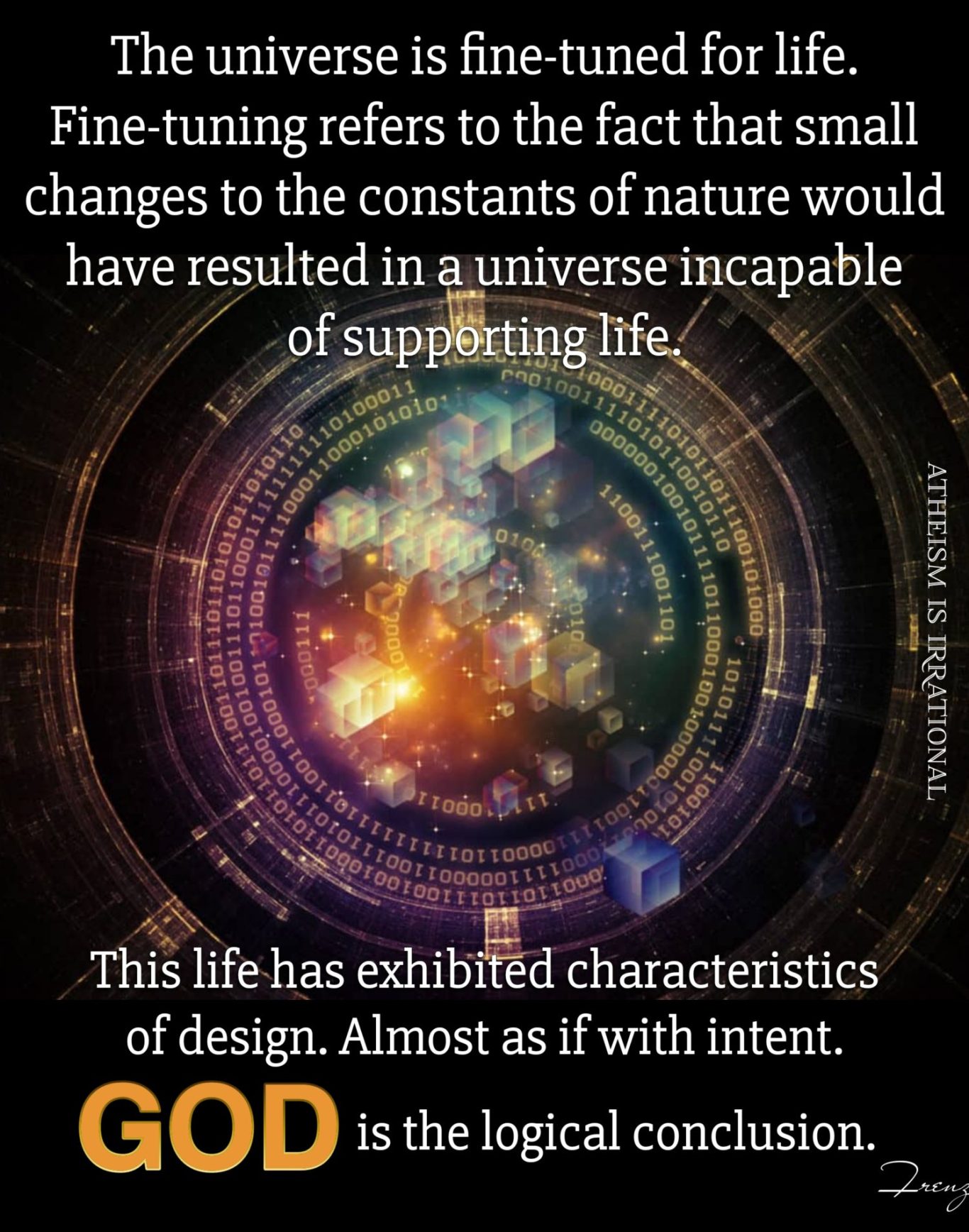
This image beautifully summarizes one of the most compelling arguments for the existence of God—the fine‑tuning argument, a specific form of the teleological argument (the argument from design). It observes that the universe is not merely capable of supporting life by chance; it appears to have been precisely arranged to make life possible.
This conclusion is not a leap of blind faith—it is a rational inference from the evidence. The more we learn about the universe, the more it looks like the product of intelligent purpose, not random accident.
1. What “Fine‑Tuning” Means
“Fine‑tuning” refers to the extraordinary precision of the physical constants and laws that govern the universe. Even the slightest change in these constants—such as the strength of gravity, the electromagnetic force, or the ratio of the proton to electron mass—would make life impossible.
As GotQuestions.org explains in “What Is the Fine‑Tuning Argument for the Existence of God?” (GotQuestions.org, 2026):
“According to the fine‑tuning argument, the exact quantity of each physical constant and the respective ratios must all be precisely as they are in order for life to exist. In most cases, the tiniest change to one of these constants would not only prohibit life as we know it, but it would make most forms of matter impossible as well. Our universe is not merely tuned to allow for ‘some kind’ of life, but it seems to be arranged in the only way allowing for ‘any life’ at all.”
The odds of these constants aligning by chance are astronomically small—physicists estimate probabilities on the order of 1 in 10¹²⁰. That is far beyond what could reasonably occur by accident.
2. The Evidence of Design in the Universe
The fine‑tuning of the cosmos points unmistakably to intelligent design. As Ligonier Learn’s lecture “Rock of Ages & the Age of Rocks” notes (Ligonier Learn, 2012):
“Every parameter that makes life possible is exquisitely finely tuned. … If things were even a little bit different—too fast, too slow, too strong, too weak—the universe would not be a suitable place for life. Everything is delicately balanced to make life possible.”
This “Goldilocks” universe—where conditions are “just right”—is not what we would expect from random, unguided processes. It is what we would expect if the universe were designed with intent.
3. The Evidence of Design in Life
Fine‑tuning extends beyond physics into biology. The structure of DNA, the complexity of cellular machinery, and the information systems that govern life all display the hallmarks of design.
As Tabletalk Magazine’s article “The Signature in the Cell” observes (Tabletalk Magazine, 2010):
“The DNA molecule, a digital, language‑like information store with sequence‑specific instructions for building proteins, cannot be explained by undirected chemistry or chance alone. Information‑bearing systems consistently arise from intelligent causes.”
Just as a book implies an author and a computer program implies a programmer, the genetic code implies a Designer.
4. The Biblical Explanation: God the Creator
The Bible declares that the order and beauty of the universe are the deliberate work of a wise and powerful Creator:
“The heavens declare the glory of God; and the firmament sheweth his handywork.” (Psalm 19:1 KJV)
“He hath made the earth by his power, he hath established the world by his wisdom, and hath stretched out the heaven by his understanding.” (Jeremiah 51:15 KJV)
“For thus saith the LORD that created the heavens; God himself that formed the earth and made it; he hath established it, he created it not in vain, he formed it to be inhabited.” (Isaiah 45:18 KJV)
The Bible’s description of a universe designed “to be inhabited” perfectly matches what modern science observes—a cosmos finely tuned for life.
5. The Logical Conclusion: A Mind Behind the Universe
The image concludes that “God is the logical conclusion,” and that is exactly right. The fine‑tuning argument does not rely on ignorance (“we don’t know, so God did it”) but on positive evidence of design. When we see complex, purposeful order, the most reasonable explanation is an intelligent cause.
As Romans 1:20 (KJV) declares:
“For the invisible things of him from the creation of the world are clearly seen, being understood by the things that are made, even his eternal power and Godhead; so that they are without excuse.”
The universe is not an accident—it is a masterpiece. Its precision, order, and beauty point unmistakably to the Mind of the Creator, the God who designed it for life and for His glory.
Summary
The image’s message aligns perfectly with both science and Scripture:
The universe is finely tuned for life.
Even tiny changes in physical constants would make life impossible.
Life and the cosmos exhibit unmistakable signs of design.
The most rational and consistent conclusion is that God is the Designer.
As Psalm 104:24 (KJV) proclaims:
“O LORD, how manifold are thy works! in wisdom hast thou made them all: the earth is full of thy riches.”
In short, fine‑tuning is not an illusion of chance—it is the signature of divine intelligence.
1. What Does the Statement Mean?
The phrase “Father Time and Mother Nature are the gods of atheism” suggests that, in the absence of belief in the God of the Bible, some people may personify natural forces (like time and nature) as if they have creative or governing power. While atheists do not literally worship these concepts as deities, they may attribute the origin and order of the universe to impersonal forces rather than to a personal Creator.
2. The Biblical View of Creation
The Bible teaches that God alone is the Creator and Sustainer of all things:
- Genesis 1:1 (ESV):
“In the beginning, God created the heavens and the earth.”
- Colossians 1:16–17 (ESV):
“For by him all things were created, in heaven and on earth, visible and invisible… all things were created through him and for him. And he is before all things, and in him all things hold together.” - Psalm 19:1 (ESV):
“The heavens declare the glory of God, and the sky above proclaims his handiwork.”
These verses affirm that time and nature are not gods or independent powers, but creations of the one true God.
3. Replacing God with Created Things
Throughout history, people have sometimes replaced worship of the Creator with reverence for created things:
- Romans 1:25 (ESV):
“They exchanged the truth about God for a lie and worshiped and served the creature rather than the Creator, who is blessed forever! Amen.”
This tendency can be seen in modern secular thinking, where natural processes are sometimes credited with creative power that the Bible attributes to God.
4. A Loving Response
As Christians, we are called to speak the truth in love (Ephesians 4:15). It is important to engage respectfully with those who hold different beliefs, pointing them to the Creator who made all things and desires a relationship with His creation.
In summary:
While atheists do not worship “Father Time” or “Mother Nature” as gods, attributing ultimate power to impersonal forces is contrary to the biblical teaching that God alone is the Creator and Sustainer of the universe. The Bible invites all people to know and worship the one true God, who made time and nature for His glory.
1. The Bible on Suppressing the Truth
Scripture teaches that God’s existence and power are evident in creation, but some people choose to suppress or deny this truth:
Romans 1:18–20 (ESV):
“For the wrath of God is revealed from heaven against all ungodliness and unrighteousness of men, who by their unrighteousness suppress the truth. For what can be known about God is plain to them, because God has shown it to them. For his invisible attributes, namely, his eternal power and divine nature, have been clearly perceived, ever since the creation of the world, in the things that have been made. So they are without excuse.”
Paul explains that the evidence for God is clear in the created world, but people may choose to deny or suppress this reality.
2. The Heart’s Disposition
The Bible also teaches that denial of God is not just intellectual, but a matter of the heart:
Psalm 14:1 (ESV):
“The fool says in his heart, ‘There is no God.’ They are corrupt, they do abominable deeds; there is none who does good.”
This verse highlights that denying God is often rooted in a desire to live independently from Him, rather than a lack of evidence.
3. God’s Desire for All to Know the Truth
Despite human denial, God desires that all people come to know Him:
2 Peter 3:9 (ESV):
“The Lord is not slow to fulfill his promise as some count slowness, but is patient toward you, not wishing that any should perish, but that all should reach repentance.”
God’s patience and kindness are meant to lead people to repentance and acceptance of the truth.
Summary
- The Bible teaches that some people suppress or deny the truth about God, even though His existence is evident in creation (Romans 1:18–20).
- This denial is often a heart issue, not just an intellectual one (Psalm 14:1).
- God, in His love, desires that all would turn from denial and come to know Him (2 Peter 3:9).
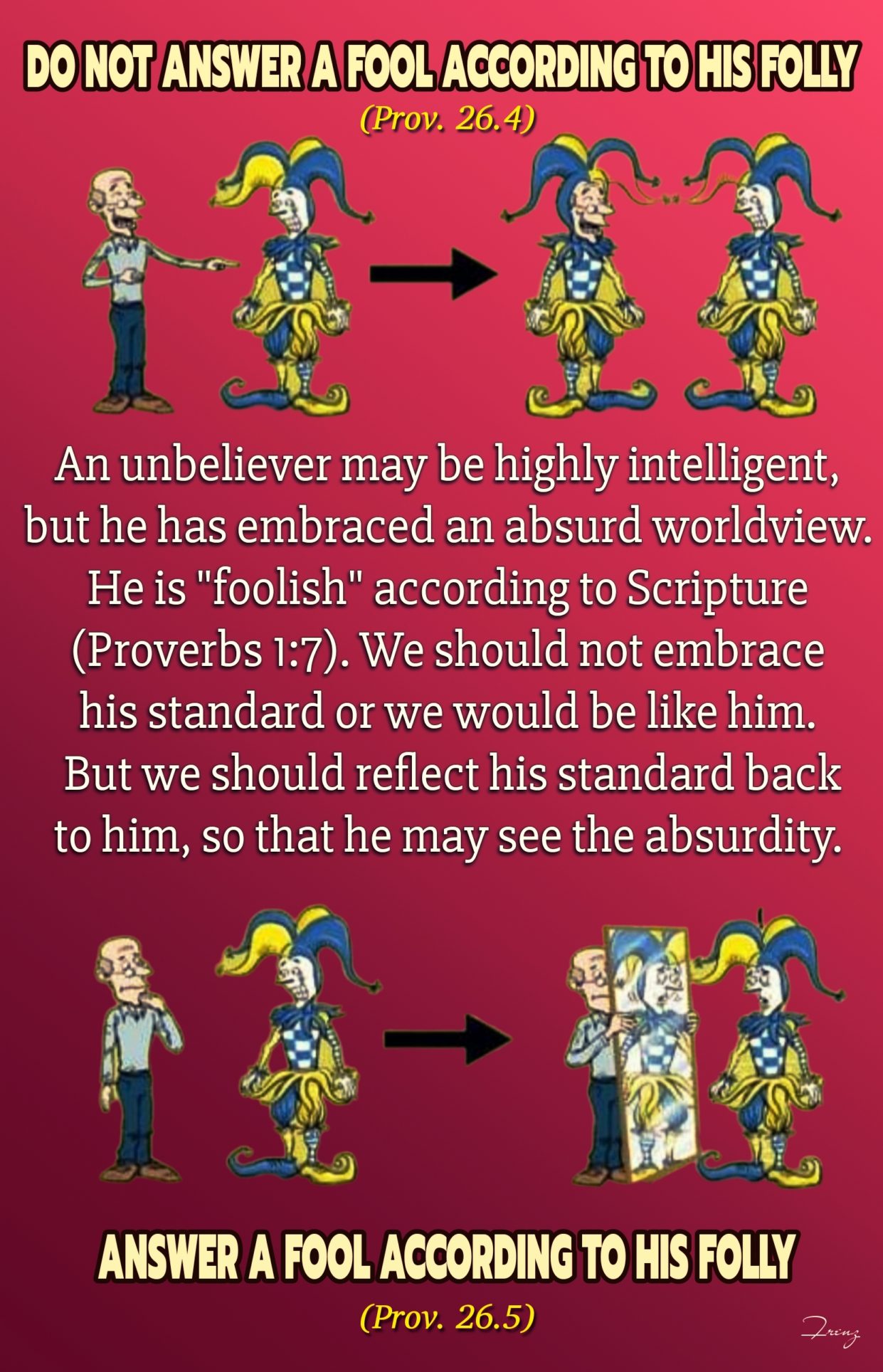
This image presents a biblically grounded and intellectually wise approach to engaging unbelievers—one that balances truth and love while following the wisdom of Proverbs 26:4–5. It recognizes that an unbeliever may be intelligent, articulate, and educated, yet still hold a worldview that is, at its core, irrational because it rejects the foundation of all truth: the fear of the LORD.
This method of engagement—avoiding the unbeliever’s false standard while exposing its inconsistency—is deeply rooted in Scripture and in the historic Christian apologetic tradition.
1. The Biblical Framework: Proverbs 26:4–5
The image rightly draws from two seemingly contradictory proverbs:
“Answer not a fool according to his folly, lest thou also be like unto him.” (Proverbs 26:4 KJV)
“Answer a fool according to his folly, lest he be wise in his own conceit.” (Proverbs 26:5 KJV)
At first glance, these verses appear to conflict, but as Ligonier Learn explains in “Wisely Handling the Bible’s Wise Sayings” (Ligonier Learn, 2012), the key is discernment:
“There are circumstances when it is not wise to answer a fool according to his folly, but there are other circumstances when it is wise to answer a fool according to his folly. … Sometimes one should refrain from replying to avoid becoming foolish, and other times one should answer to expose folly, sometimes by employing reductio ad absurdum—showing that a person’s premises lead ultimately to an absurd conclusion.”
This is precisely what the image describes: do not adopt the unbeliever’s worldview, but reflect it back to reveal its contradictions.
2. The Nature of Unbelief
The image acknowledges that unbelievers can be highly intelligent yet still “foolish” in the biblical sense. Scripture defines “foolishness” not as lack of intellect but as moral and spiritual blindness—the willful rejection of God’s truth.
“The fear of the LORD is the beginning of knowledge: but fools despise wisdom and instruction.” (Proverbs 1:7 KJV)
“The fool hath said in his heart, There is no God.” (Psalm 14:1 KJV)
“Professing themselves to be wise, they became fools.” (Romans 1:22 KJV)
An unbeliever’s worldview is “absurd” not because it lacks intelligence, but because it cannot account for the very tools it uses—logic, morality, and meaning—without borrowing from the Christian worldview.
3. Avoiding the Fool’s Standard
The first instruction (Proverbs 26:4) warns against arguing on the unbeliever’s terms. If a Christian accepts the unbeliever’s assumptions—such as the denial of God, the rejection of absolute truth, or the belief that reason is autonomous—then the Christian has already lost the argument.
As BibleRef.com explains in “What Does Proverbs 26:4 Mean?” (BibleRef.com, 2026):
“It’s unwise to imitate a foolish person’s attitude, mannerisms, or approach. … Being dragged down to that level is neither sensible nor godly.”
In apologetics, this means we do not concede the unbeliever’s false premises. We reason from the truth of God’s Word, not from the shifting sands of human opinion.
4. Reflecting the Fool’s Standard Back
The second instruction (Proverbs 26:5) calls us to answer the fool according to his folly—that is, to show where his reasoning leads when taken to its logical conclusion. This is the method of reductio ad absurdum mentioned in the Ligonier article: demonstrating that the unbeliever’s worldview, if consistent, collapses into irrationality.
For example:
If someone claims there is no absolute truth, ask whether that statement itself is absolutely true.
If morality is subjective, ask why we should condemn injustice or praise compassion.
If the universe is purely material, ask how immaterial realities like logic, love, and meaning exist.
By reflecting the unbeliever’s standard back to him, we help him see that his worldview cannot sustain itself—it borrows coherence from the very God it denies.
5. The Goal: Truth in Love
The purpose of this approach is not to humiliate or “win” an argument, but to lovingly expose falsehood so that the unbeliever might see his need for the truth. As Tabletalk Magazine’s “Interpreting Signs of the Times” notes (Tabletalk Magazine, 2023):
“Wisdom consists largely in being able to rightly understand how to act in given circumstances. … The wise person does something at the time fit for it.”
We must discern when to speak and when to remain silent, always guided by humility and grace.
As Paul wrote:
“But speaking the truth in love, may grow up into him in all things, which is the head, even Christ.” (Ephesians 4:15 KJV)
“Let your speech be alway with grace, seasoned with salt, that ye may know how ye ought to answer every man.” (Colossians 4:6 KJV)
6. Summary
The image’s approach is biblically faithful and philosophically sound:
Recognize that unbelief is not a lack of intelligence but a rejection of divine truth.
Do not adopt the unbeliever’s assumptions (“Answer not a fool according to his folly”).
Expose the inconsistency of his worldview by showing where it leads (“Answer a fool according to his folly”).
Speak truth with wisdom and love, aiming not to win arguments but to win souls.
As 2 Corinthians 10:5 (KJV) reminds us:
“Casting down imaginations, and every high thing that exalteth itself against the knowledge of God, and bringing into captivity every thought to the obedience of Christ.”
In short, the Christian apologist must reason from the truth of God’s revelation, not from the unbeliever’s rebellion, using Scripture’s wisdom to reveal the futility of life apart from God and to point graciously toward the only true foundation—Jesus Christ.

The Bible consistently teaches that a wise person lives with an awareness of eternity and does not allow temporary pleasures or distractions to jeopardize their eternal destiny.
1. A Wise Person Considers Eternity
The book of Ecclesiastes reminds us:
“It is better to go to the house of mourning than to go to the house of feasting, for this is the end of all mankind, and the living will lay it to heart.”
(Ecclesiastes 7:2, ESV)
This verse teaches that reflecting on mortality and eternity leads to wisdom, while ignoring these realities is foolish.
2. Don’t Gamble With Eternity
Jesus Himself warns about the danger of being distracted by the things of this world:
“For what will it profit a man if he gains the whole world and forfeits his soul? Or what shall a man give in return for his soul?”
(Matthew 16:26, ESV)
Here, Jesus emphasizes that nothing in this world is worth losing your eternal soul over.
3. The Reality of Judgment
The Bible is clear that every person will face judgment:
“And just as it is appointed for man to die once, and after that comes judgment,”
(Hebrews 9:27, ESV)
This means our choices in this life have eternal consequences.
4. Even in Laughter the Heart May Ache
As Proverbs teaches:
“Even in laughter the heart may ache, and the end of joy may be grief.”
(Proverbs 14:13, ESV)
This reminds us that temporary pleasures cannot fill the eternal longing of the human heart, and that ignoring eternity for the sake of momentary happiness is ultimately empty.
In summary:
A wise person lives with eternity in view, refuses to be distracted by temporary pleasures, and seeks God’s truth above all else (Ecclesiastes 7:2; Matthew 16:26; Hebrews 9:27; Proverbs 14:13). The Bible encourages everyone to take their eternal destiny seriously and not to gamble with their soul.

1. Biblical View of Wisdom vs. Mere Knowledge
The Bible distinguishes between knowledge (information or facts) and wisdom (the right application of knowledge, rooted in reverence for God):
Proverbs 1:7 (ESV):
“The fear of the Lord is the beginning of knowledge; fools despise wisdom and instruction.”
James 3:17 (ESV):
“But the wisdom from above is first pure, then peaceable, gentle, open to reason, full of mercy and good fruits, impartial and sincere.”
True wisdom is not just the ability to repeat information or follow orders, but to understand, discern, and apply truth in a way that honors God and serves others.
2. Dangers of Uncritical Learning
Your statement highlights a real danger: education that only trains people to repeat and obey without critical thinking or moral discernment can lead to pride and ignorance. The Bible warns against prideful knowledge:
- 1 Corinthians 8:1 (ESV):
“…‘knowledge’ puffs up, but love builds up.”
If education produces people who are “smart enough to repeat what they’re told and follow orders,” but “ignorant enough to think this makes them smarter than everyone else,” it fails to cultivate humility, discernment, and love—qualities that God values.
3. Christian Approach to Learning
From a Christian perspective, education should aim for more than just memorization or conformity. It should encourage:
- Critical thinking (Acts 17:11: the Bereans “examined the Scriptures daily to see if these things were so”)
- Humility (Philippians 2:3: “in humility count others more significant than yourselves”)
- Seeking truth (John 8:32: “you will know the truth, and the truth will set you free”)
Conclusion
Modern education, when it only produces conformity without wisdom, falls short of God’s design for human flourishing. True education, from a biblical perspective, seeks not just to fill minds with facts, but to shape hearts and lives in wisdom, humility, and love.
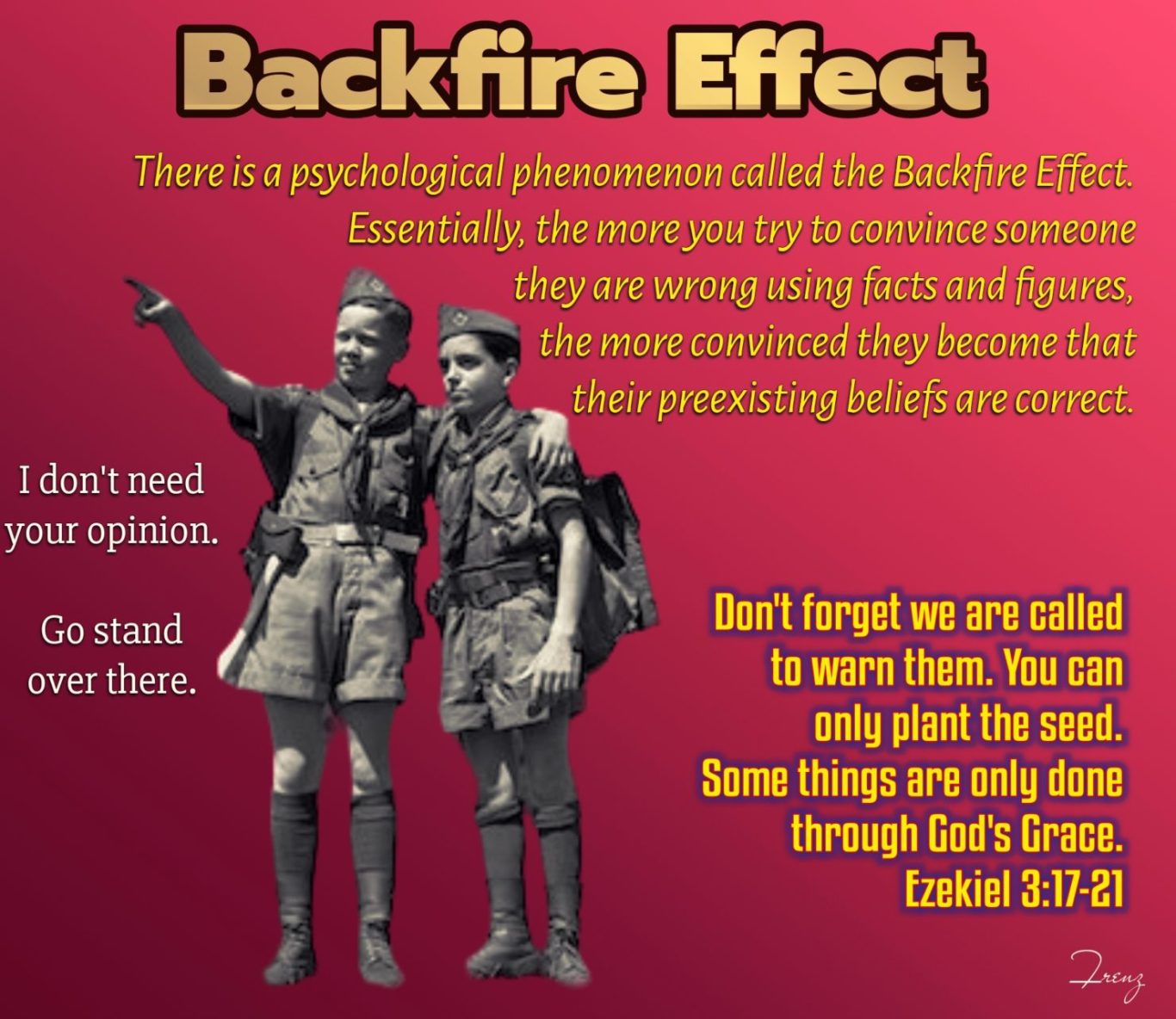
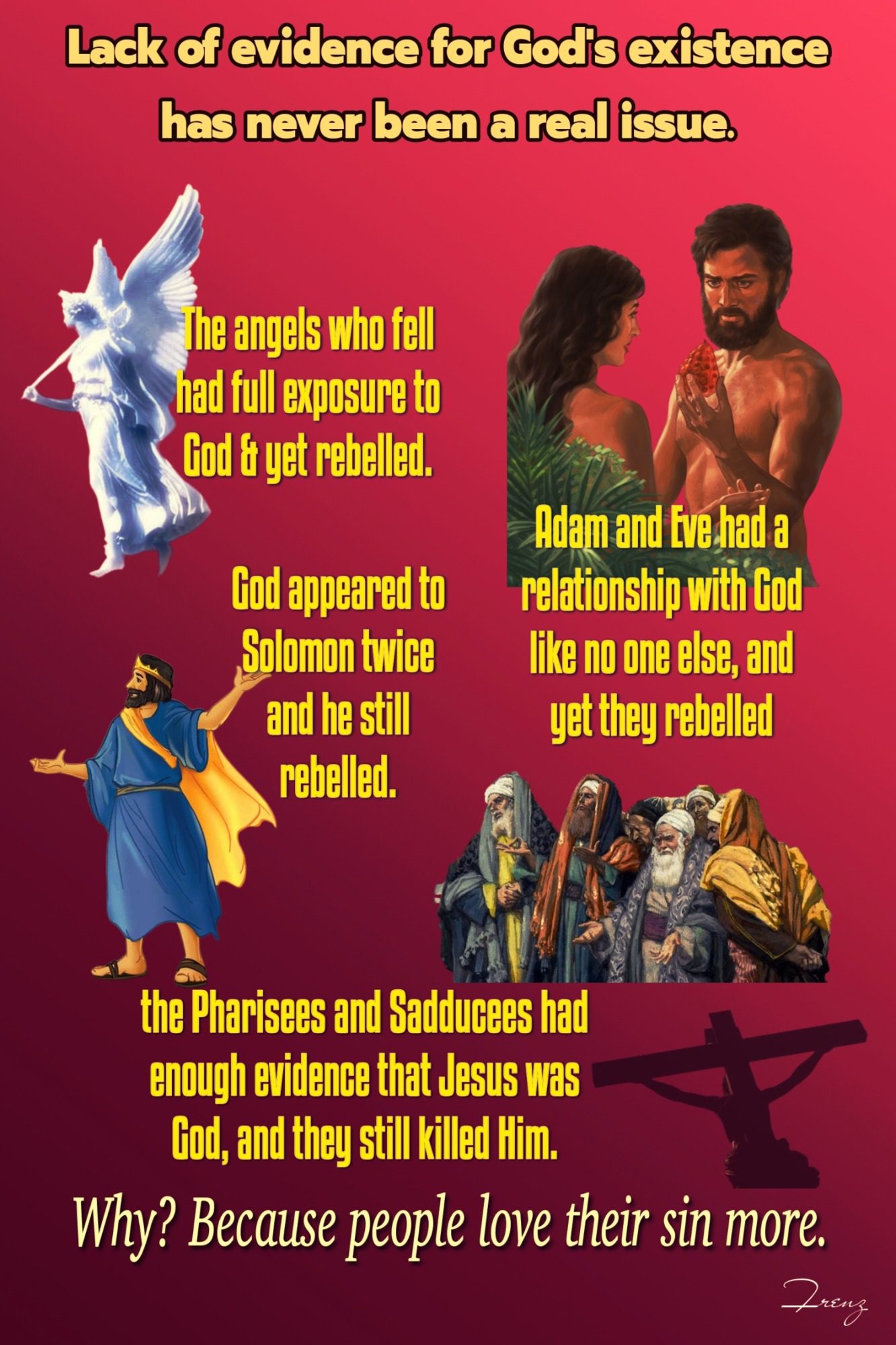

This image expresses a sentiment that resonates deeply with the Christian understanding of living faithfully in a fallen world. It reframes the accusation of being “crazy” as a mark of spiritual clarity rather than delusion—especially when the accusation comes from those shaped by a culture that has rejected God’s truth.
From a biblical perspective, this is not arrogance or self‑righteousness; it is the recognition that truth and sanity are defined by God, not by the shifting norms of a sinful society.
1. The World’s “Wisdom” vs. God’s Truth
Scripture consistently teaches that the world’s standards of wisdom and sanity are inverted. What the world calls “foolish” or “crazy,” God calls wise and faithful.
“For the preaching of the cross is to them that perish foolishness; but unto us which are saved it is the power of God.” (1 Corinthians 1:18 KJV)
“Because the foolishness of God is wiser than men; and the weakness of God is stronger than men.” (1 Corinthians 1:25 KJV)
“Woe unto them that call evil good, and good evil; that put darkness for light, and light for darkness.” (Isaiah 5:20 KJV)
When a culture abandons God’s moral order, it inevitably redefines sanity. Those who remain faithful to biblical truth will appear “mad” to a world that has lost its moral compass.
2. Cultural Conditioning and Spiritual Blindness
The image’s phrase “victims of cultural conditioning” accurately describes what Scripture calls spiritual blindness—the inability to see truth because of sin’s distortion.
“In whom the god of this world hath blinded the minds of them which believe not, lest the light of the glorious gospel of Christ… should shine unto them.” (2 Corinthians 4:4 KJV)
“This I say therefore… that ye henceforth walk not as other Gentiles walk, in the vanity of their mind, having the understanding darkened.” (Ephesians 4:17–18 KJV)
A society conditioned to reject God’s authority will label those who stand for truth as intolerant, irrational, or “crazy.” Yet the real insanity lies in denying the Creator and redefining reality according to human desire.
3. Being “Awake” in an Insane Society
The image’s statement that one is “awake in an insane society” parallels the biblical idea of being spiritually awake while the world sleeps in darkness.
“Wherefore he saith, Awake thou that sleepest, and arise from the dead, and Christ shall give thee light.” (Ephesians 5:14 KJV)
“Let us not sleep, as do others; but let us watch and be sober.” (1 Thessalonians 5:6 KJV)
To be “awake” means to see reality as God defines it—to discern truth from deception, good from evil, and eternal from temporary. The Christian who lives by God’s Word will often feel out of step with the culture, but that is a sign of spiritual health, not madness.
4. Responding with Grace and Courage
While the image celebrates being “awake,” Christians must remember that our response to a deceived culture should be marked by compassion, not contempt. The goal is not to mock the spiritually blind but to help them see.
“And the servant of the Lord must not strive; but be gentle unto all men, apt to teach, patient, in meekness instructing those that oppose themselves.” (2 Timothy 2:24–25 KJV)
We are called to stand firm in truth while showing the same mercy that God extended to us when we were blind.
5. Summary
The image’s message aligns with biblical wisdom:
Being called “crazy” by a culture enslaved to sin is not an insult—it can be a confirmation of faithfulness.
The world’s “sanity” is often rebellion against God; true sanity begins with the fear of the LORD (Proverbs 9:10).
The believer’s task is to stay spiritually awake, discerning truth through Scripture, and to speak that truth in love.
As Romans 12:2 (KJV) reminds us:
“And be not conformed to this world: but be ye transformed by the renewing of your mind, that ye may prove what is that good, and acceptable, and perfect, will of God.”
In short, when a darkened culture calls light “madness,” the Christian who clings to truth is not crazy—he is awake, walking in the light of Christ while the world dreams in darkness.
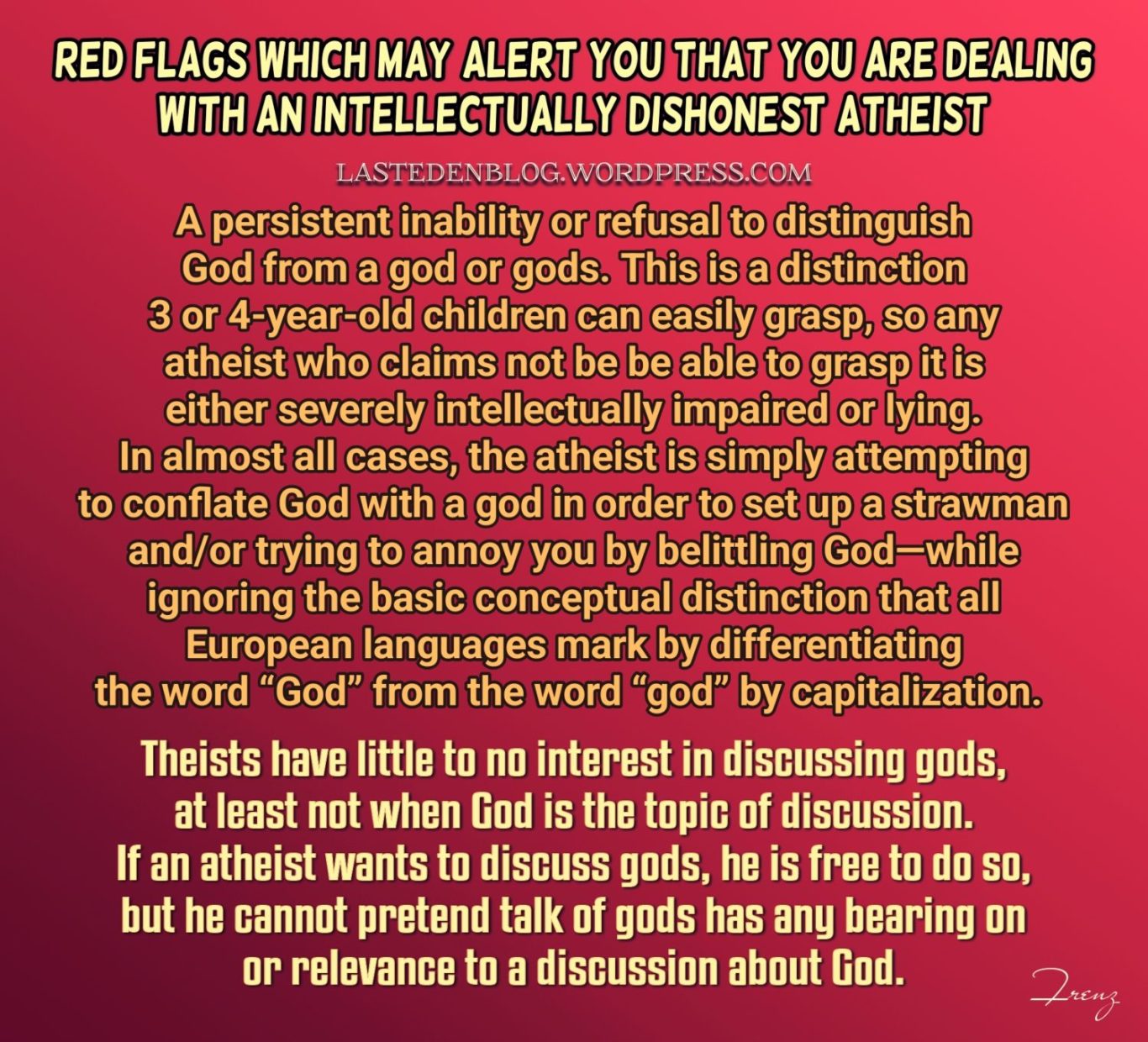
This image raises an important philosophical and theological point—one that often gets blurred in modern discussions about belief and unbelief. It distinguishes between “God” (the eternal, self‑existent Creator described in Scripture) and “a god” or “gods” (finite, created beings or idols). The failure—or refusal—to make that distinction is not merely a semantic mistake; it reveals a deeper misunderstanding of what Christians mean when they speak of God.
1. The Distinction Between “God” and “a god”
In biblical thought, “God” (capital G) refers to the one, eternal, uncreated Being who is the source of all existence. He is not one being among many; He is Being itself.
“In the beginning God created the heaven and the earth.” (Genesis 1:1 KJV)
“Before the mountains were brought forth, or ever thou hadst formed the earth and the world, even from everlasting to everlasting, thou art God.” (Psalm 90:2 KJV)
“I am the LORD, and there is none else, there is no God beside me.” (Isaiah 45:5 KJV)
By contrast, “a god” refers to any created or imagined being that people worship or revere as divine. Scripture calls these idols—false gods that have no real existence or power.
“For all the gods of the nations are idols: but the LORD made the heavens.” (Psalm 96:5 KJV)
Thus, when Christians speak of “God,” they are not referring to one deity among many, but to the necessary, self‑existent Creator who alone sustains all reality.
2. Why the Distinction Matters
When some atheists argue, “You don’t believe in Zeus or Thor; I just believe in one fewer god than you,” they commit a category error. They treat the Christian God as though He were simply another finite being within the universe—an entity to be tested, measured, or dismissed like any other mythological figure.
But the God of Scripture is not part of the universe; He is the ground of its existence. As Probe Ministries explains in “Does God Exist? A Christian Argument from Non‑biblical Sources” (Probe.org, 2014):
“The moral law, the order of nature, comes from the Great Law‑Giver who is Himself in character the ‘straight line’ (righteous, just, holy) against which all human actions are measured.”
In other words, God is not one more object within creation; He is the source of all moral, rational, and physical order. To conflate Him with “a god” is to misunderstand the very concept of deity that Christianity affirms.
3. The Strawman Problem
The image correctly identifies that many atheists construct a strawman—a distorted version of the Christian concept of God—so they can more easily dismiss it. They may mock the idea of an “invisible sky‑being” or compare the biblical God to mythological deities, but this misrepresents what Christians actually believe.
As Tabletalk Magazine’s article “Be Prepared” notes (Tabletalk Magazine, 2008):
“The real truth, of course, is that even the most hardened atheist actually does believe in God; he just works very hard to deny it. … Deep down, everyone knows there is a God (see Rom. 1:21).”
Romans 1:21–22 (KJV) describes this suppression of truth:
“Because that, when they knew God, they glorified him not as God, neither were thankful; but became vain in their imaginations, and their foolish heart was darkened. Professing themselves to be wise, they became fools.”
By refusing to engage with the biblical definition of God, the unbeliever avoids the real issue—the moral and spiritual accountability that comes with acknowledging the Creator.
4. Intellectual Honesty and the Search for Truth
The image’s critique of “intellectual dishonesty” is not meant to insult but to call for clarity and integrity in dialogue. Honest discussion requires that both sides understand what is being discussed. If someone rejects the Christian God, they should at least reject the concept as Christians define it—not a caricature.
As Ligonier Learn’s “Unbelief: A Moral Issue” observes (Ligonier Learn, 2026):
“Along the line it will become clear that the atheism that they claim is simple intellectual honesty in fact has deep moral roots because deep down, as Paul says in Romans 1:30, they are haters of God.”
True intellectual honesty requires confronting the real God of Scripture—the eternal, holy, personal Creator—not a strawman “god” invented for ridicule.
5. Summary
The image’s argument is both philosophically and biblically sound:
“God” (capital G) refers to the eternal, self‑existent Creator; “a god” refers to any finite or false deity.
Conflating the two is a category mistake that misrepresents the Christian worldview.
Many atheists use this confusion to construct strawman arguments or to belittle faith.
Honest dialogue requires engaging with the true biblical concept of God.
As Psalm 14:1 (KJV) declares:
“The fool hath said in his heart, There is no God.”
In short, the Christian does not believe in “a god” among many, but in the one true God—the uncaused Cause, the moral Lawgiver, and the personal Creator of all things. To confuse Him with lesser “gods” is not only intellectually careless; it is to miss the very nature of the One on whom all existence depends.
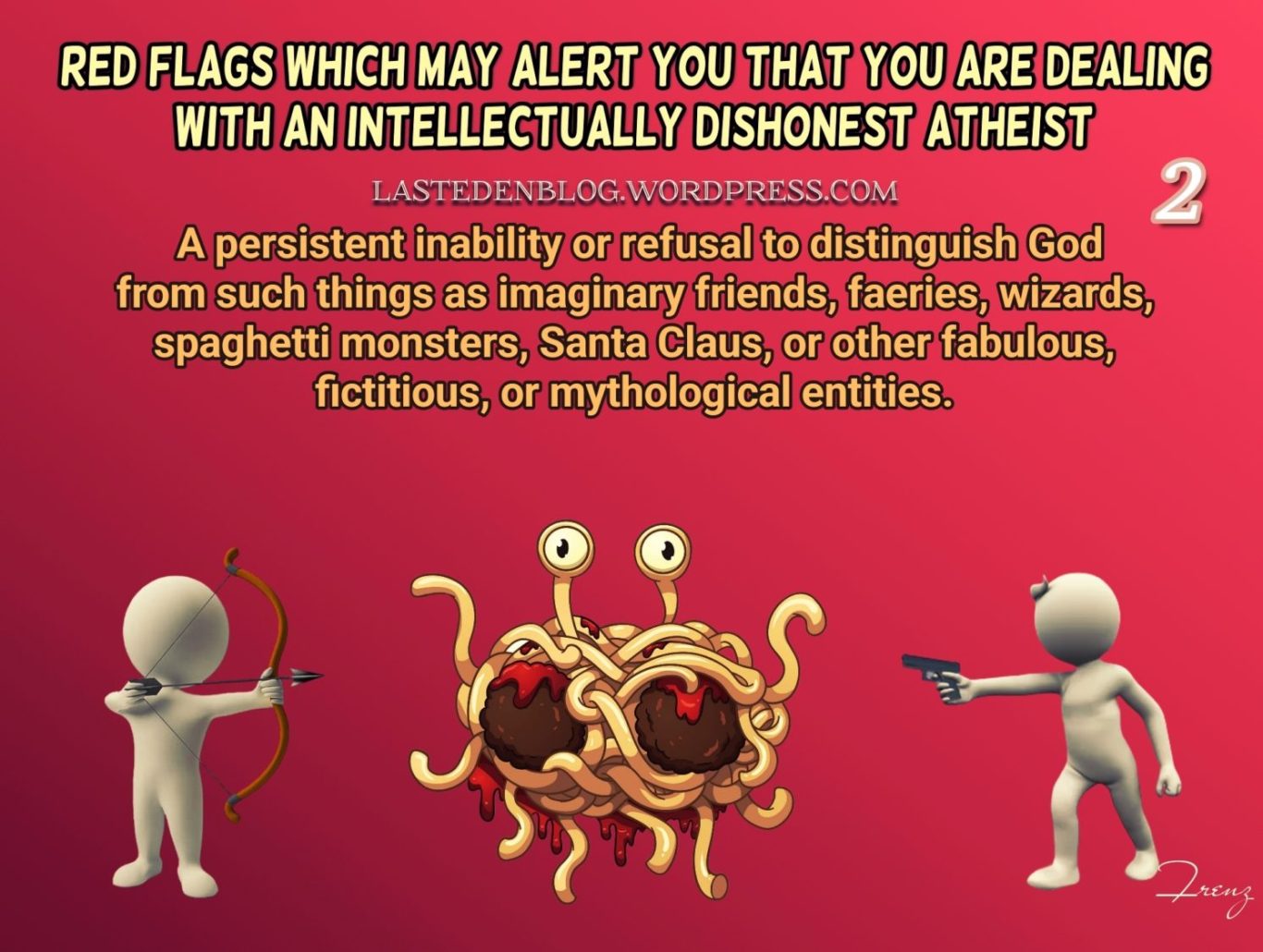
This image highlights another common and serious error in many atheistic arguments—the category mistake of equating the biblical God with imaginary or mythological beings such as “Santa Claus,” “the Flying Spaghetti Monster,” or “fairies.”
This comparison is not only philosophically unsound but also reveals a refusal to engage with what Christians actually mean by “God.” It substitutes ridicule for reasoning, and mockery for meaningful dialogue.
1. The Category Error: God Is Not “One More Being”
When atheists compare God to mythological or imaginary figures, they treat Him as though He were a finite creature within the universe—an invisible “being” among other beings. But the God of Scripture is not a being within creation; He is Being itself, the eternal, self‑existent Creator upon whom all other beings depend.
Scripture makes this distinction clear:
“In the beginning God created the heaven and the earth.” (Genesis 1:1 KJV)
“For in him we live, and move, and have our being.” (Acts 17:28 KJV)
“Before the mountains were brought forth, or ever thou hadst formed the earth and the world, even from everlasting to everlasting, thou art God.” (Psalm 90:2 KJV)
Mythological beings like Santa Claus or fairies are creatures—imaginary ones at that. The biblical God is the uncreated Creator, the necessary foundation of all existence. To conflate the two is to misunderstand what the word God even means.
2. The Difference Between the Creator and Created Myths
The Christian claim is not that “some powerful being” exists somewhere in the universe, but that the universe itself exists because of a transcendent, personal, rational Mind.
As Tabletalk Magazine’s article “Beyond Reason?” explains (Tabletalk Magazine, 2010):
“The rational intelligibility of the universe, the fine‑tuning of its physical constants as well as its biological complexity, is the product of a Mind, that of the divine Logos. … It is no abstraction, or even impersonal force, that lies behind the universe. God, the Creator, is a person, and He is not part of the stuff of His universe.”
By contrast, mythological figures are human inventions—finite, time‑bound, and culturally specific. They exist only in imagination. The God of the Bible is eternal, necessary, and self‑existent—the source of all being, not a product of it.
3. The “Flying Spaghetti Monster” Fallacy
The “Flying Spaghetti Monster” analogy, often used by atheists to mock belief in God, fails because it assumes that all claims about unseen entities are equally arbitrary. But the existence of God is not an arbitrary claim—it is a philosophical necessity.
As GotQuestions.org explains in “Is There a Conclusive Argument for the Existence of God?” (GotQuestions.org, 2026):
“The only rational and reasonable conclusion is that an eternal Creator is the one who is responsible for reality as we know it. No atheist can explain how an impersonal, purposeless, meaningless, and amoral universe accidentally created beings who are full of personality and obsessed with purpose, meaning, and morals.”
The “spaghetti monster” analogy collapses because such a creature, if it existed, would still require a cause. God, however, is the uncaused Cause—the One who explains why anything exists at all.
4. The Root of the Mockery: Suppression of Truth
The image rightly identifies that this refusal to distinguish God from fiction is not a mere intellectual oversight—it is a moral and spiritual suppression of truth.
Romans 1:21–22 (KJV) describes this condition:
“Because that, when they knew God, they glorified him not as God, neither were thankful; but became vain in their imaginations, and their foolish heart was darkened. Professing themselves to be wise, they became fools.”
When people reject the Creator, they often resort to ridicule rather than reason. But mockery does not refute truth; it only exposes the heart’s resistance to it.
5. The Christian Response: Clarity and Grace
Christians should not respond to such mockery with anger but with clarity and compassion. The goal is not to win an argument but to reveal the difference between the real and the ridiculous—between the eternal God and human inventions.
As 1 Peter 3:15 (KJV) instructs:
“But sanctify the Lord God in your hearts: and be ready always to give an answer to every man that asketh you a reason of the hope that is in you with meekness and fear.”
We answer calmly, showing that belief in God is grounded in reason, evidence, and revelation—not in fantasy.
6. Summary
The image’s “red flag” identifies a genuine mark of intellectual dishonesty:
Equating God with imaginary beings is a category mistake.
The biblical God is the uncaused, eternal Creator, not a mythological creature.
Such comparisons are not arguments but evasions of the real question: Why does anything exist at all?
Christians must respond with reason and grace, pointing others to the truth revealed in Scripture.
As Psalm 14:1 (KJV) declares:
“The fool hath said in his heart, There is no God.”
In short, to compare the eternal Creator to fictional characters is not clever skepticism—it is a refusal to engage with the true concept of God. The wise response is to expose that confusion gently and to point back to the One who is “from everlasting to everlasting” (Psalm 90:2).
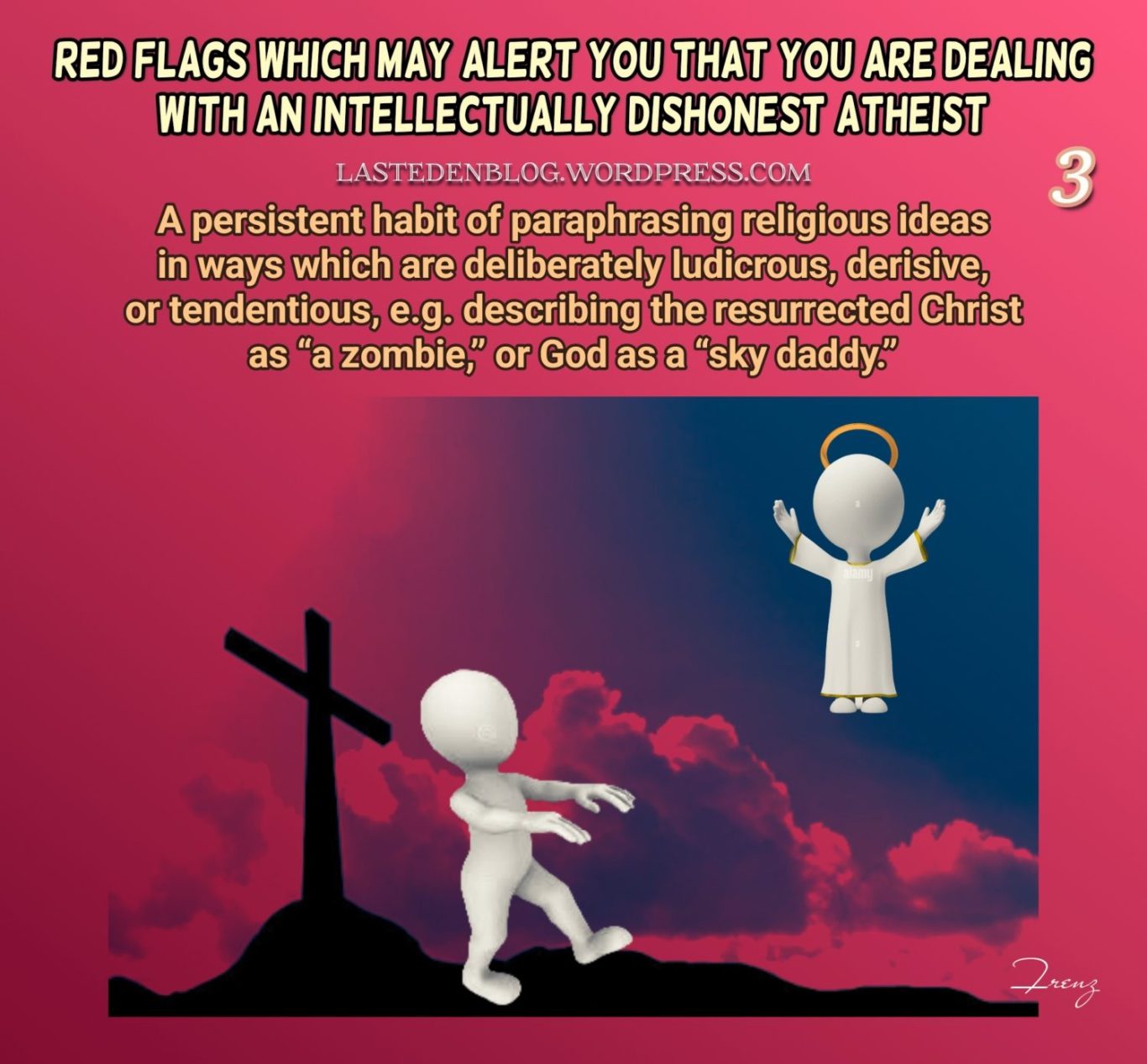
This image identifies a very real and regrettable tendency in some circles of modern atheism—the deliberate mocking or caricaturing of sacred truths rather than engaging them honestly. When someone persistently distorts Christian beliefs into absurd or insulting forms—calling the risen Christ a “zombie” or God a “sky daddy”—they are not reasoning; they are ridiculing.
This behavior is not intellectual inquiry but intellectual evasion. It reveals a refusal to grapple with the actual claims of Christianity, replacing argument with derision. Scripture and sound reason both speak directly to this kind of response.
1. Mockery Is Not Argument
Ridicule is a substitute for reasoning. When someone mocks rather than engages, it shows that they are unwilling—or unable—to confront the truth claims on their own terms.
The Bible warns against this spirit of scorn:
“A scorner seeketh wisdom, and findeth it not: but knowledge is easy unto him that understandeth.” (Proverbs 14:6 KJV)
“He that reproveth a scorner getteth to himself shame… Reprove not a scorner, lest he hate thee: rebuke a wise man, and he will love thee.” (Proverbs 9:7–8 KJV)
“Knowing this first, that there shall come in the last days scoffers, walking after their own lusts.” (2 Peter 3:3 KJV)
Mockery is not a mark of intelligence but of pride. It seeks to score points, not to seek truth.
2. Why This Is Intellectually Dishonest
When an atheist describes Jesus’ resurrection as “a zombie story,” they are not analyzing the claim—they are misrepresenting it. Zombies, in folklore, are mindless, decaying corpses animated by dark magic. The resurrection of Christ, by contrast, is the glorification of a living, conscious, incorruptible body by the power of God (1 Corinthians 15:42–44).
Likewise, calling God a “sky daddy” trivializes the biblical doctrine of a transcendent, eternal, personal Creator who is both immanent and holy. It reduces the infinite to the infantile.
As Tabletalk Magazine’s article “The True Face of Evil” observes (Ligonier Learn, 2008):
“The new atheists declare that we are all implicated in the ‘extremist’ forms of Christianity because they are just being consistent with the Scriptures! Apart from the danger of taking our theology from atheists, let me point out unequivocally that Fred Phelps has nothing whatsoever to do with any form of biblical Christianity. His ‘gospel’ is a self‑serving rant from the pit of hell and is utterly repudiated by all biblical Christians.”
In other words, misrepresentation—whether of extremists or of core doctrines—is not honest critique. It is a rhetorical tactic meant to demean rather than to understand.
3. The Spiritual Root of Derision
Scripture teaches that mockery of God and His truth is not merely an intellectual issue—it is a moral and spiritual one.
“The fool hath said in his heart, There is no God.” (Psalm 14:1 KJV)
“Because that, when they knew God, they glorified him not as God… but became vain in their imaginations, and their foolish heart was darkened.” (Romans 1:21 KJV)
This kind of derision often arises not from ignorance but from rebellion—a heart that resists the moral authority of the Creator. When someone mocks what is holy, it is usually because they sense its seriousness and wish to deflect conviction through humor or contempt.
4. The Christian Response: Truth with Grace
Christians are not called to return mockery with mockery. We are called to answer with gentleness and clarity, exposing falsehood while maintaining compassion.
“But sanctify the Lord God in your hearts: and be ready always to give an answer to every man that asketh you a reason of the hope that is in you with meekness and fear.” (1 Peter 3:15 KJV)
“Let your speech be alway with grace, seasoned with salt, that ye may know how ye ought to answer every man.” (Colossians 4:6 KJV)
When faced with derision, the believer’s task is to rise above it—to calmly clarify what Christianity actually teaches and to demonstrate that the gospel is not absurd but profoundly coherent and beautiful.
5. Summary
The image’s “red flag” identifies a genuine mark of intellectual dishonesty:
Deliberately misrepresenting sacred truths is not argument but mockery.
Comparing the risen Christ to a “zombie” or God to a “sky daddy” is a category error that trivializes profound doctrines.
Such ridicule reveals not insight but resistance to truth.
Christians must respond with reason, patience, and love, pointing others to the real Christ rather than the caricature.
As Proverbs 26:5 (KJV) reminds us:
“Answer a fool according to his folly, lest he be wise in his own conceit.”
In short, when unbelievers resort to derision instead of dialogue, it exposes the weakness of their position. The wise Christian does not mirror their tone but gently reveals that mockery cannot refute truth—and that the truth of Christ’s resurrection stands unshaken, no matter how loudly the world laughs.