Articles about the Shroud of Turin
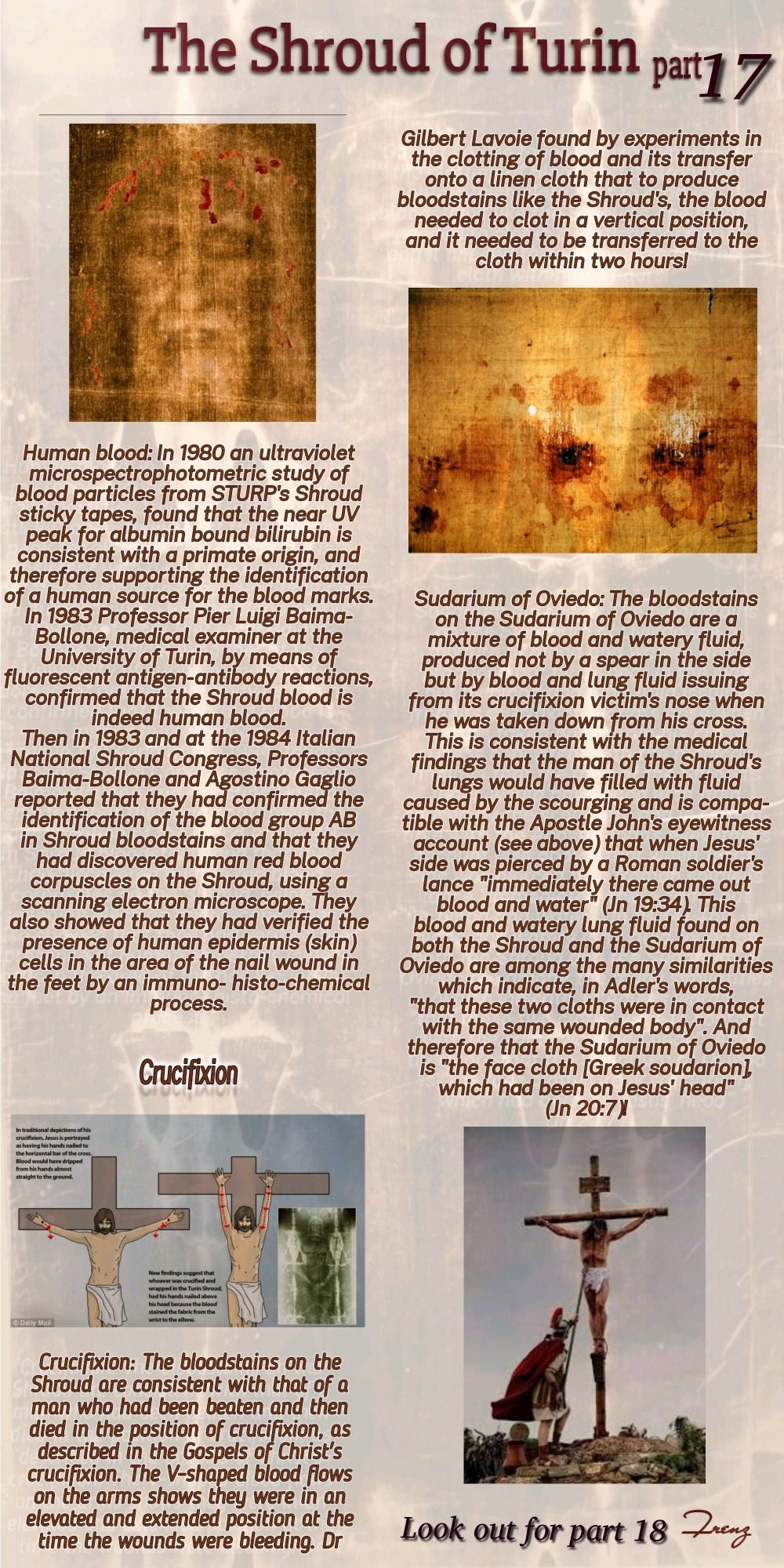
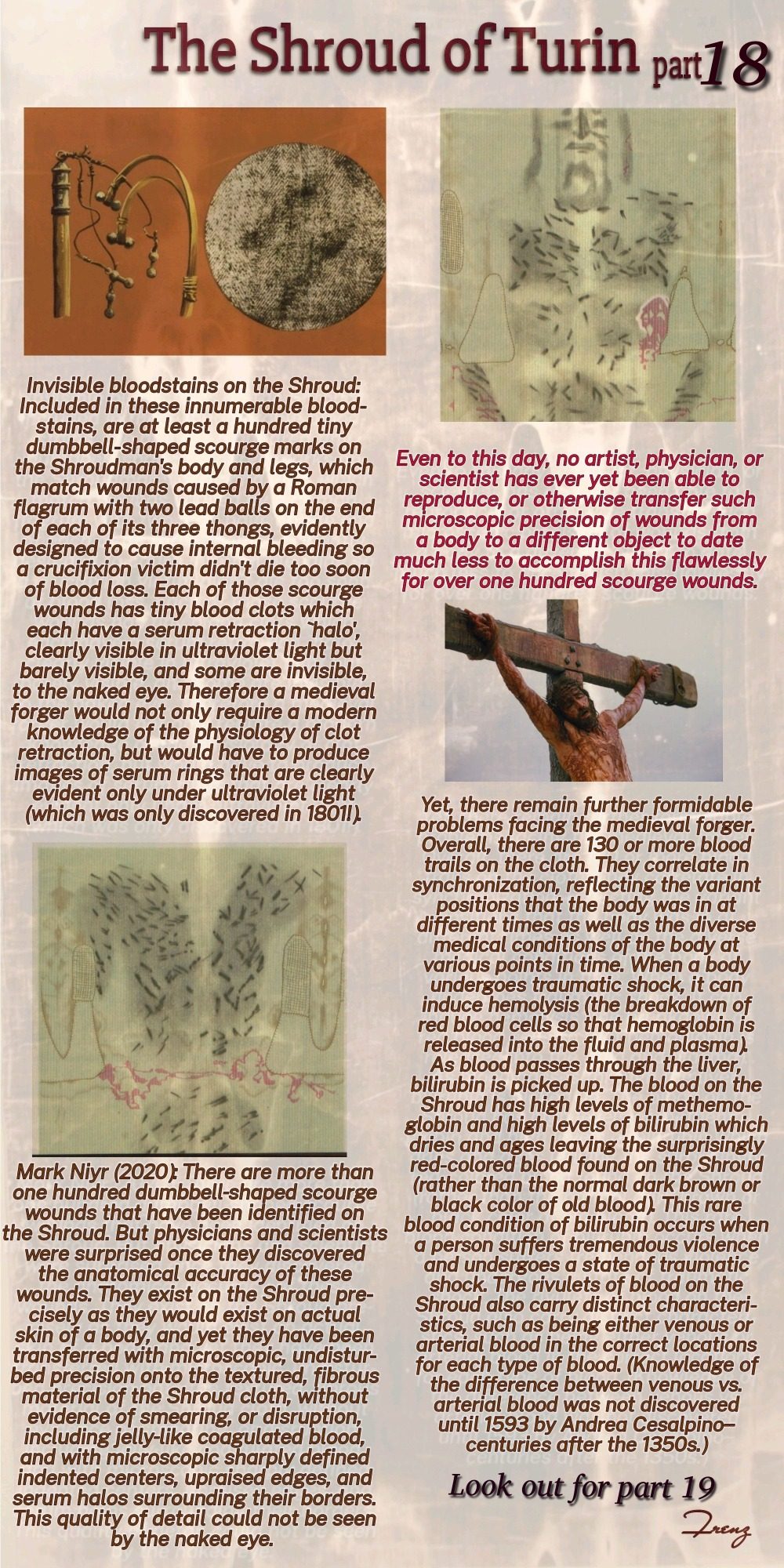
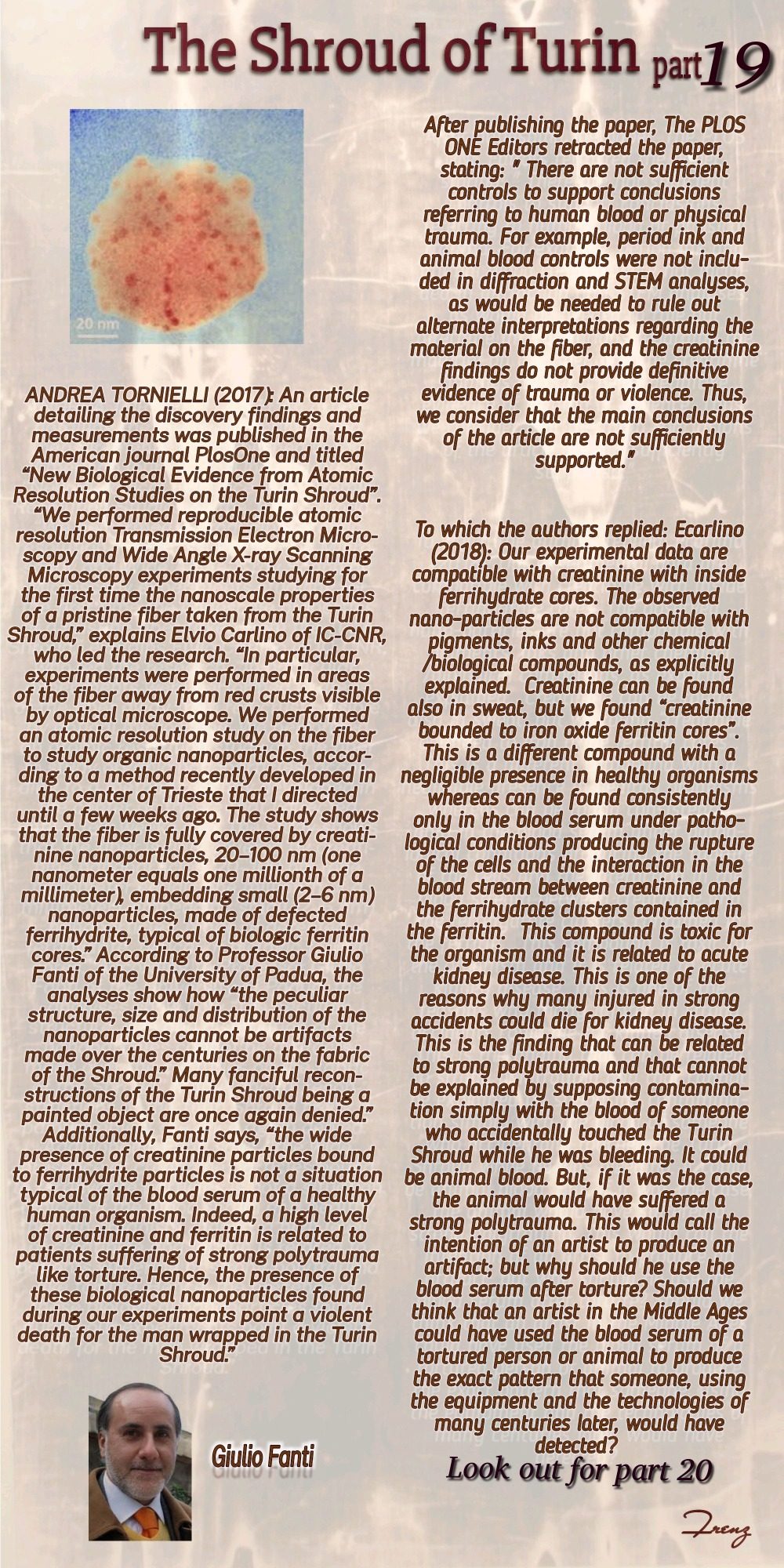
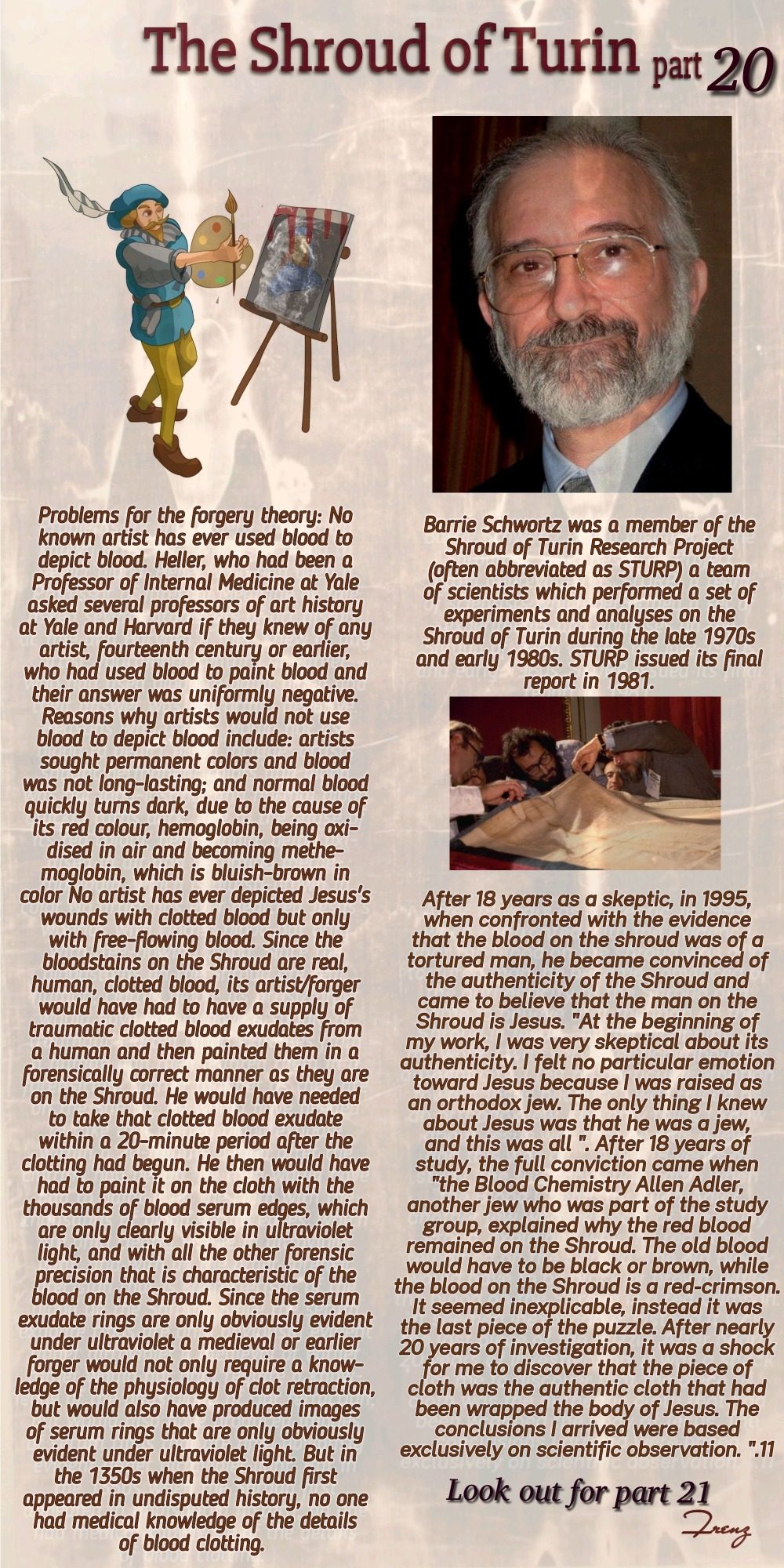

PDF DOWNLOADS - Shroud Related Published Literary Works
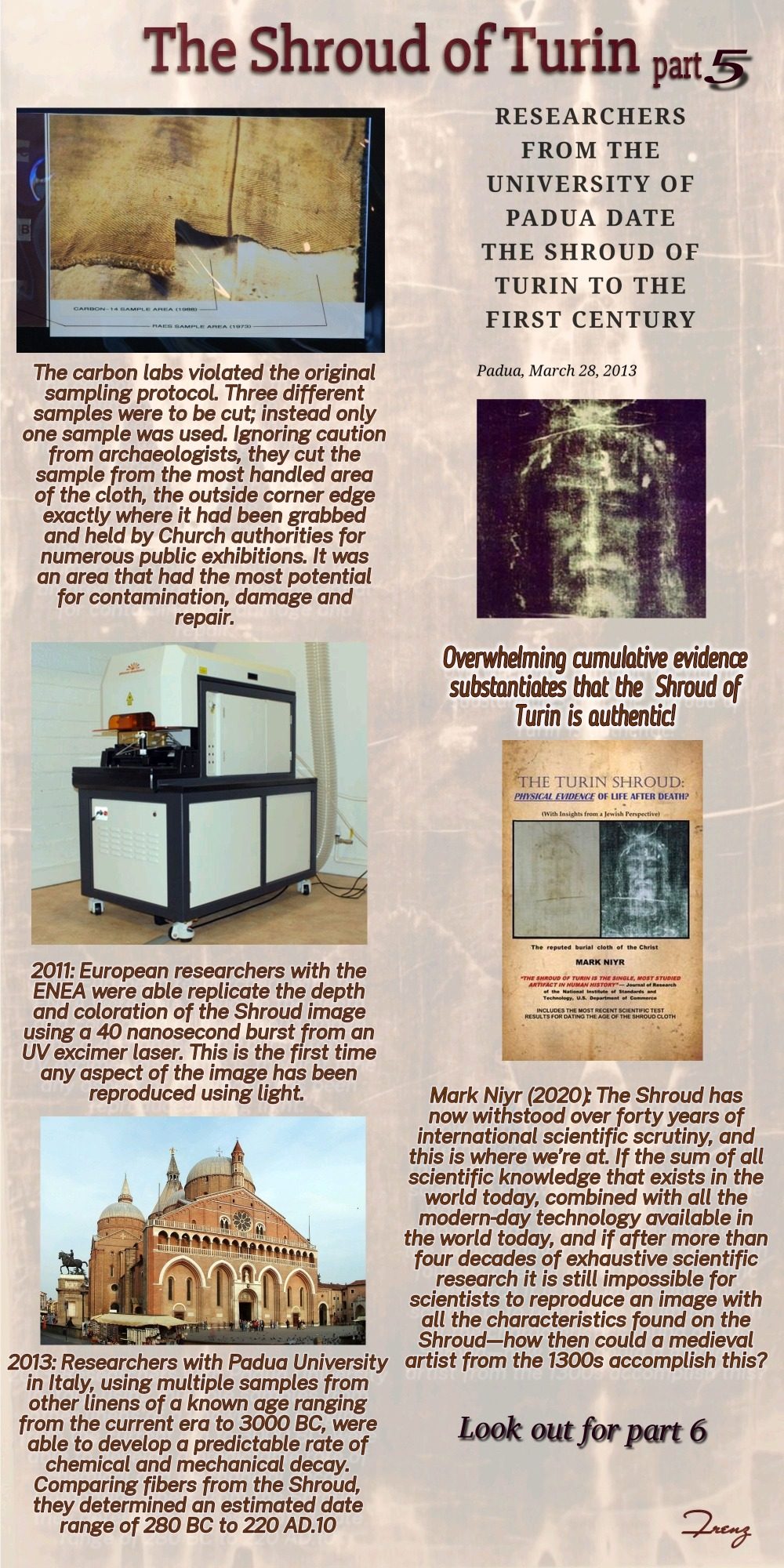
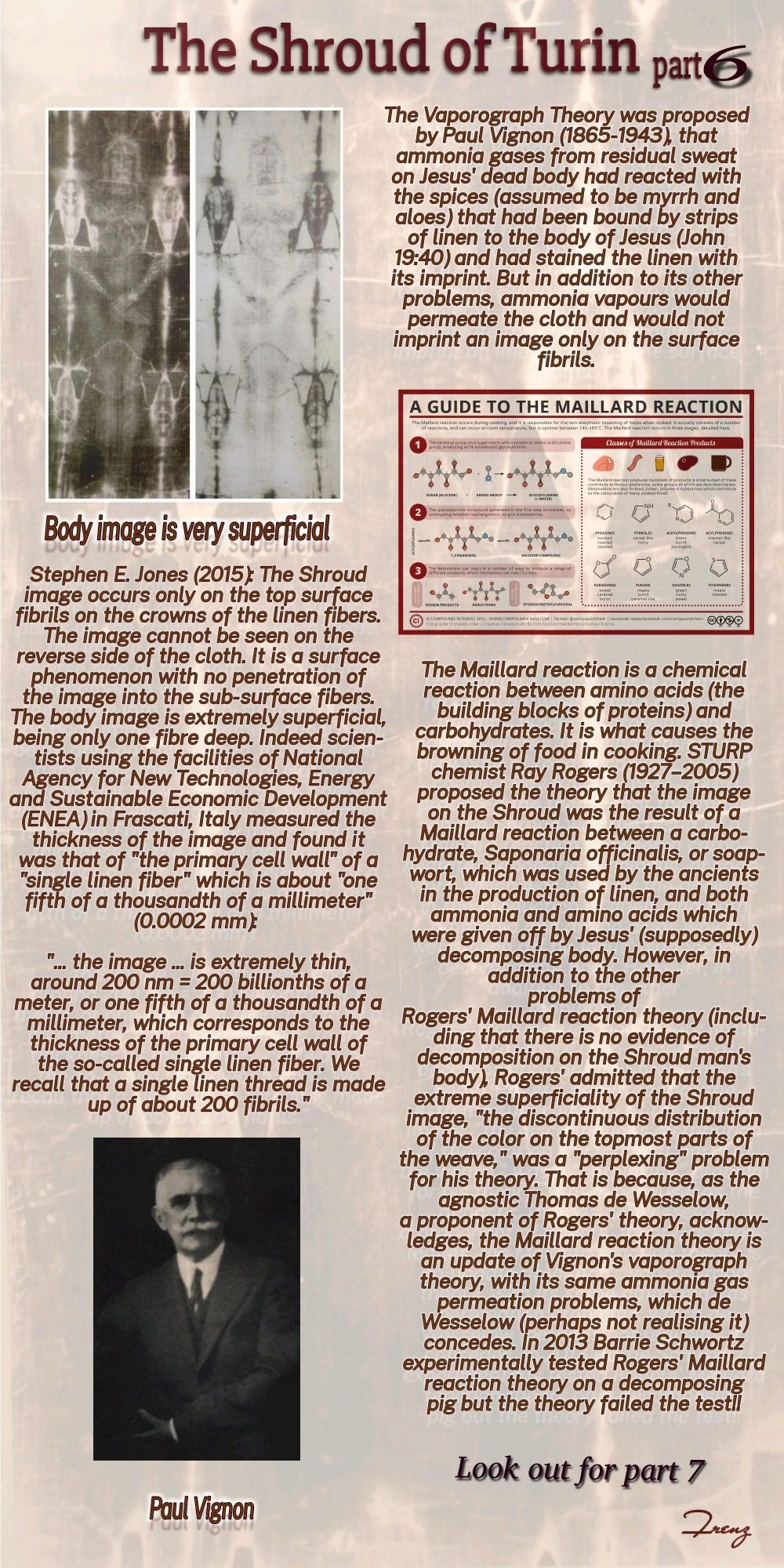
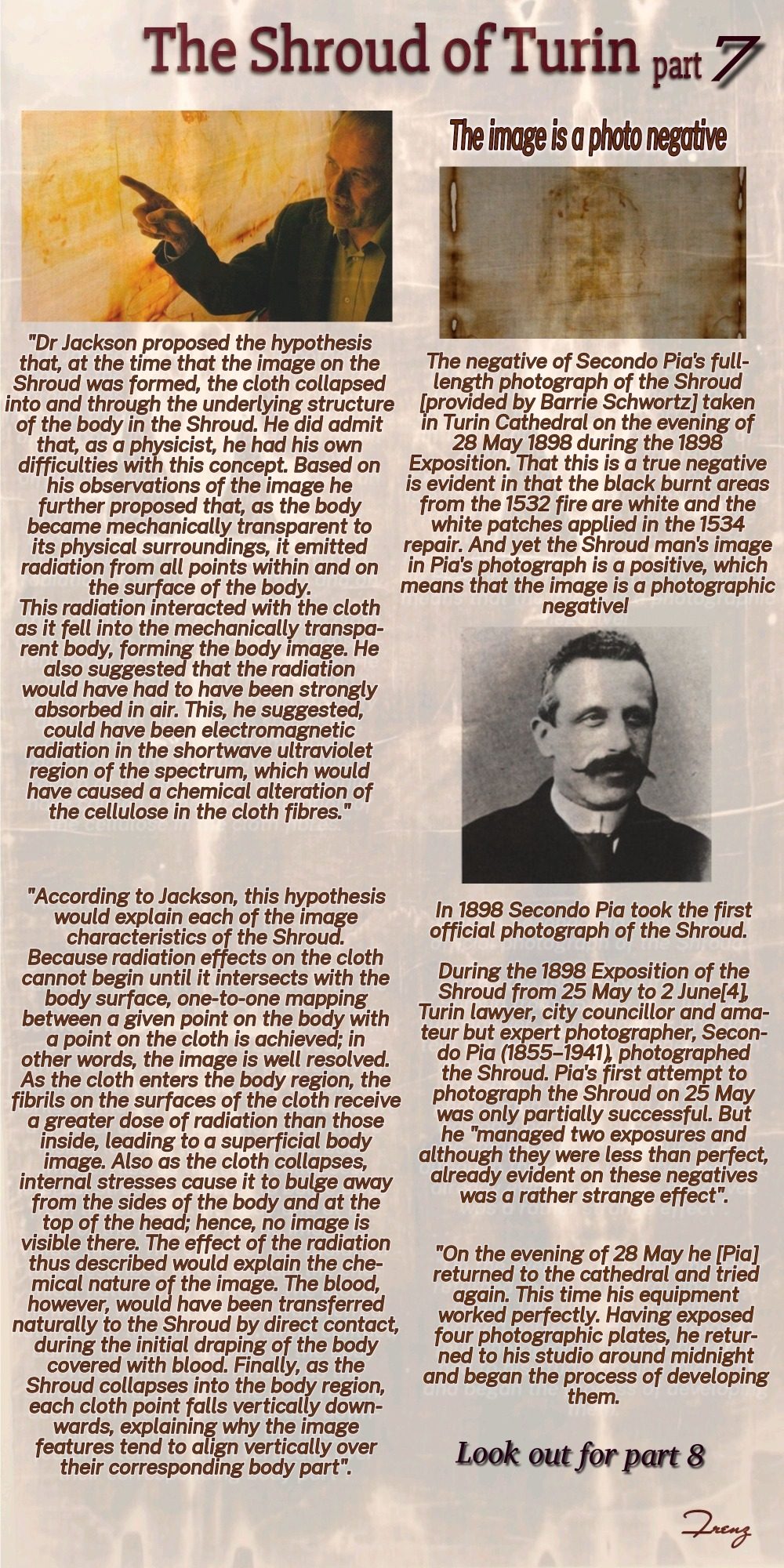
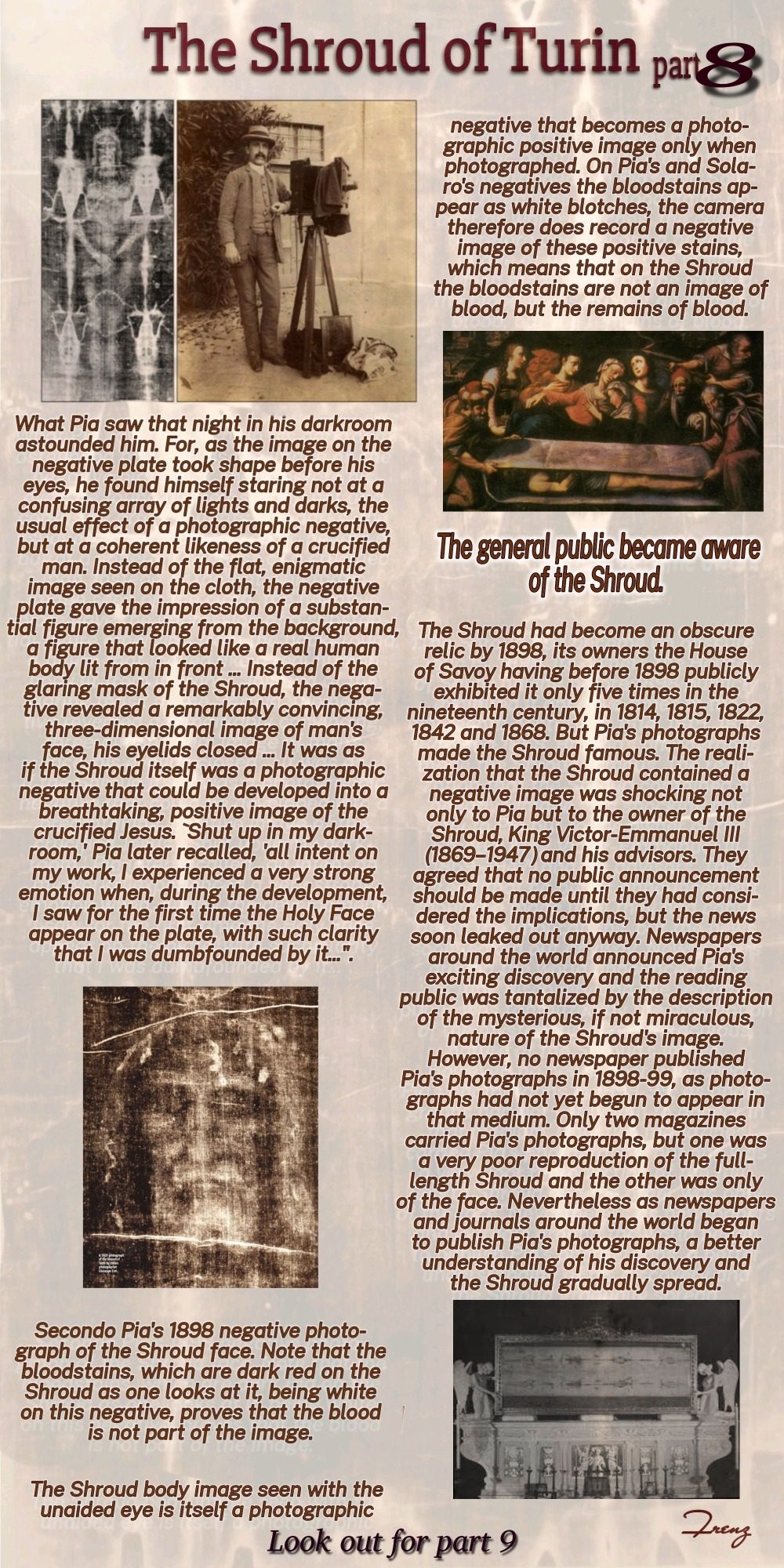
A DETAILED CRITICAL REVIEW OF THE CHEMICAL STUDIES ON THE TURIN SHROUD: FACTS AND INTERPRETATIONS (PDF)
full review on the chemical and physical analysis of the Shroud of Turin. It digs deep into the pigments and possible paint layers, especially focusing on the presence of vermilion (mercury sulfide) and red ochre, and whether these could be part of actual bloodstains or just incidental artifacts.
• Vermilion detected but in uncertain amounts; could indicate paint use or contamination.
• Analysis methods have tricky overlaps (like Hg and S peaks), making quantification complicated.
• Different blood samples show varying presence of Hg, with only some samples indicating cinnabar.
DOWNLOAD
A Features Model of the Shroud of Turin (PDF)
This study looks at the Shroud of Turin by treating it like a system, organizing the many features and observations into a clear, structured model. The aim is to classify the different properties of the Shroud to spot inconsistencies, missing info, or overlaps, and to help incorporate future discoveries.
• The Shroud carries an image of a man laid out with marks resembling wounds.
• Existing theories can’t fully explain how the image formed.
• The paper uses systems engineering methods to map out all known features.
DOWNLOAD
A Pardes Reading of Hebrews (docx)
Here’s the gist:
• It emphasizes Jesus as the ultimate revelation and context for everything
• Shows how Jesus is clearly superior to angels throughout
• Explores the theological and mystical dimensions bridging scripture and faith
DOWNLOAD
A Physical Hypothesis on the Origin of the Body Image Embedded into the Turin Shroud (PDF)
This work explores the origin of the body image on the Turin Shroud using experiments with excimer lasers on linen. The researchers:
• Used laser light at 308 nm and 193 nm on raw and treated linen fabrics.
• Observed permanent coloration as a threshold effect depending on laser intensity.
• Found that the shorter the laser wavelength, the narrower the effective range.
• Saw latent coloration appear after a year in samples initially showing no visible effect.
• Suggest that an intense short burst of UV radiation might explain the shroud’s image formation.
DOWNLOAD
A Ray of Light on the Shroud of Turin (PDF)
This write-up explores the Shroud of Turin, a linen cloth that shows the fronts and backs of a crucified man, thought by many to be Jesus. Even after many studies—from chemical and physical tests to DNA investigations—no one has been able to recreate the detailed faint images or fully explain how they formed.
• The Shroud's image resists replication despite modern science
• Research spans from 1978 multidisciplinary studies to 1988 radiocarbon dating
• Experiments include linen irradiation but no conclusive theory on image origin yet
DOWNLOAD
A reappraisal of late thirteenth century responses (Doc)
This paper takes a fresh look at how people in the late 1200s reacted to the Shroud of Lirey-Chambery-Turin, a cloth said to bear the image of Christ. It digs into questions about whether the Shroud was seen as a supreme relic, a symbol of the Eucharist, or simply a powerful religious icon, especially in the context of medieval beliefs and skepticism.
• It explores how the Shroud baffled people before modern photography revealed its details.
• It asks how medieval forgers might have created something so detailed.
• It investigates what the Shroud meant to those living in the 13th century, centuries before modern science.
DOWNLOAD
A study of the front and back body enveloping based on 3D information (PDF)
This work looks at how the front and back images on the Turin Shroud relate to the 3D shape of the human body beneath, based on how light and dark the image areas are.
• They cleaned up the photos to remove things like water stains and blood marks.
• Used body measurements and motion analysis to fill in missing bits (like the arms).
• Studied distances between the sheet and body points to figure out if the shroud wrapped around the body or just lay on top.
• Found evidence that the sheet was laid flat on the body, not wrapped tightly like bandages.
DOWNLOAD
NUCLEAR MEDICINE AND ITS RELEVANCE TO THE SHROUD OF TURIN(PDF)
This paper explores the idea that the mysterious image on the Shroud of Turin might be linked to some kind of energy emitted from a corpse’s body, studied through the lens of nuclear medicine.
• The Shroud wraps a real human body and isn’t a medieval forgery
• The image shows detailed skeletal and soft tissue features, possibly caused by body radiation
• Researchers have tested different theories like latent images and diffusion but found them unsatisfying
• A radiation-based theory seems most promising to explain the unique qualities of the Shroud’s image
DOWNLOAD
Updating Recent Studies on the Shroud of Turin- Alan D. Adler (PDF)
This write-up digs into recent updates around the Shroud of Turin, known as the linen cloth believed to have been Jesus Christ’s burial shroud. Even though carbon dating pins it to the 14th century, its origins still spark debate. Key highlights include:
• The Shroud carries detailed body images and blood marks matching biblical wounds.
• It suffered fire damage in the 1500s, with repairs and water stains visible.
• A 1978 research group (STURP) concluded it’s not a painting and that blood on it comes from actual wounds.
• The body image is thought to be a chemical oxidation of the linen fabric itself.
DOWNLOAD
Adrian Willaert’s Hymn for the Holy Shroud (PDF)
Quite a deep look into the connections between the Shroud of Turin and its place in music history, especially focusing on the Renaissance era.
• The Shroud of Turin is a relic wrapped around debates about its authenticity with input from many scientific fields.
• This cloth has inspired various artworks, but music related to it, especially polyphonic music, is rare before the 18th century.
• The paper explores how composers might have subtly referenced the Shroud in their sacred music, linking devotional themes to this relic.
DOWNLOAD
Aldo- The Turin Shroud: from the photo to the three-dimensional(PDF)
This write-up explores the Turin Shroud and the journey from its first photographs to understanding the three-dimensional quality of its image.
• The 1898 photo by Secondo Pia revealed the shroud’s image in negative for the first time
• Giuseppe Enrie’s 1931 photos improved image clarity using advanced techniques of that era
• Personal accounts highlight the care taken in preserving and photographing the shroud over the years
DOWNLOAD
Aldo- PHOTOGRAPHIC AND COMPUTER STUDIES CONCERNING
THE BURN AND WATER STAINS VISIBLE ON THE SHROUD
AND THEIR HISTORICAL CONSEQUENCES (PDF)
This work digs into the Shroud's burn and water stains, especially focusing on how it was folded during and before the 1532 Chambéry fire.
• They re-examined old photos to map out burn holes hidden by patches from 1534.
• Challenged older ideas about the Shroud’s folding method.
• Used image processing to reconstruct the damage and folding system more precisely
DOWNLOAD
Aldo- FURTHER STUDIES ON THE SCORCHES AND THE WATERMARKS (PDF)
This report takes a close look at the damage on the Holy Shroud, especially the burns and watermarks caused by events like the 1532 Chambery fire. The authors used old and detailed photos to carefully map the damage and understand how the cloth was folded and affected by the fire. They even explored the size of the reliquary that held the Shroud based on how it was folded. Plus, they take a look at how the fire likely developed.
DOWNLOAD
ROLE OF CAPILLARITY IN THE IMAGE FORMATION PROCESS (PDF)
This paper dives into how capillarity and wetting phenomena play a role in the process of image formation, using the Shroud as a key example. It covers everything from molecular adsorption to how oil reserves remain trapped underground due to these forces. The author also connects these concepts to historical descriptions and scientific observations.
DOWNLOAD
Analysis ofFree Will and How God would have Man treat Man (or perhaps to be more “politically correct” How God would have Humanity treat Humanity)(PDF)
This paper takes a close look at how, according to the Bible, people are meant to treat one another, focusing beyond the typical commandments. It digs into stories like the Tower of Babel to explore the idea of free will and divine intentions for human relationships.
• It highlights the Ten Commandments related to respecting others.
• It examines the Tower of Babel story to understand communication and unity.
• It considers how God’s actions influence human behavior and morality.
DOWNLOAD
Are There Veiled References to the Shroud of Turin In the New Testament? (PDF)
This study explores several biblical passages, connecting them to the Shroud of Turin as a veiled reference. It discusses how the light seen on the mountain of Transfiguration and the light in the Resurrection tomb relate to the image on the Shroud. The paper also considers the “many convincing proofs” Jesus presented after His Passion, suggesting the Shroud’s miraculous image served as one of these proofs, especially for His disciples’ belief in the Resurrection.
DOWNLOAD
The Shroud of Turin for Journalists- Where Have All the Skeptics Gone? (PDF)
This article walks through the history and recent developments around the Shroud of Turin, especially focusing on the scientific debates about its age.
• Initial carbon 14 dating in 1988 suggested it was medieval
• Skeptics challenged the science but were mostly dismissed
• A 2005 peer-reviewed study found flaws in the carbon dating, suggesting the cloth could be much older, possibly around 2000 years
DOWNLOAD
Science & the Shroud (PDF)
This piece explores the debate around the Shroud of Turin, focusing on surprising new findings from microbiologists who suggest the shroud could be much older than previously thought. The usual carbon dating results might be skewed due to centuries of bacteria and fungi on the cloth.
• The Shroud's recorded history starts in 1357 in France.
• Earlier carbon dating placed it between 1260-1390.
• New microbial research hints contaminants may have affected those dates.
DOWNLOAD
New Historical Evidence Explaining the “Invisible Patch” in the 1988 C-14 Sample Area of the Turin Shroud (PDF)
Paper about the Turin Shroud’s 1988 Carbon-14 testing and this hidden patch theory from the 16th century.
It dives into the idea that a subtle repair, almost invisible, could have messed with the radiocarbon dating results, challenging the official story. The authors argue against claims that such a fix couldn’t exist, even referencing expert opinions and restoration details.
DOWNLOAD
Russell A. Breault- IT’S THE MESSAGE THAT MATTERS.
This write-up dives into the Shroud of Turin and the layers of controversy surrounding it—especially how it's viewed within and outside the church.
• The Shroud’s rare public displays stir curiosity and debate.
• Its significance and acceptance differ between Protestant and Catholic viewpoints.
• Historical relic collecting and the aftermath of events like the Fourth Crusade shaped how relics, including the Shroud, are treated.
DOWNLOAD
Dating and Formation of the Shroud by Peter Carr March 1999 (PDF)
This paper by Peter Carr takes a close look at the Shroud of Turin, focusing on its dating and formation.
• The author, a physicist with a strong background in research and technical judgment, shares his journey from skepticism to serious interest in the Shroud.
• He emphasizes careful consideration of evidence from both scientific and historical sources.
• The Carbon Dating Tests of 1988, which caused much debate, are a key feature discussed.
DOWNLOAD
Coloring linens with excimer lasers to simulate the body image of the Turin Shroud (PDF)
Paper on using excimer lasers to color linens in a way that mimics the body image on the Turin Shroud. It talks about how they used ultraviolet laser light to create permanent color changes on linen fabric, only within very specific laser settings. Plus, they found that some images actually appeared long after the initial laser treatment, like a delayed effect. The study draws connections to how a burst of UV radiation might explain how the Shroud's mysterious image was formed.
• Laser coloration happens only within narrow laser irradiation parameters
• Evidence of latent images developing on linen months after treatment
• Potential link between directional UV radiation and the Shroud's image formation
DOWNLOAD
Contributions from History of Art to cultural tourism: The Holy Chalice (Santo Cáliz) of Valencia as the axis of the
tourist story that sustains the Holy Grail Route in the 21st century (PDF)
This piece explores how the history of art connects with cultural tourism, focusing on the Holy Chalice of Valencia and its role in promoting the Holy Grail Route in our time. It shares some deep research around the authenticity of the chalice and how it anchors a meaningful travel experience tied to peace and knowledge.
DOWNLOAD
BODY IMAGE FORMATION HYPOTHESES BASED ON CORONA DISCHARGE (PDF)
This study throws some light on how the image on the Turin Shroud might have formed through something called corona discharge, which deals with electrical plasma effects. The authors suggest this idea fits the image’s traits better than a previous theory about a simple burst of light. They also discuss experiments comparing plasma effects to the shroud’s image features at different scales, finding no major differences in chemical and physical properties.
DOWNLOAD
An Enchilada Comes to Mind: Dallas Shroud of Turin Conference 2005 (PDF)
This write-up covers a pretty intense conference where scholars from across the globe gathered to discuss the authenticity of the Shroud of Turin. There was a serious mix of science, faith, and a bit of Texas-style confrontation, with armed guards controlling the vibe and some heated debates over how the ɓ has been treated by its custodians in Turin.
• The event highlighted a growing dispute between scientists and the Shroud's custodians.
• Many attendees leaned towards the Shroud possibly being authentic, though it wasn’t confirmed.
• The discussion touched on how the shroud connects, or doesn’t, to the resurrection story.
DOWNLOAD
Geography of the Sindonology (PDF)
This write-up takes you through the history and spread of knowledge about the Shroud of Turin, highlighting how understanding and devotion have evolved globally over the years.
• It explains how copies of the Shroud are scattered mainly across Europe and America, with none in many other continents.
• It discusses the limited centers and literature available on the Shroud before the 1960s.
• The language barriers and publication limitations that slowed international scientific exchange are also covered.
DOWNLOAD
THE ATLANTA INTERNATIONAL CENTER FOR CONTINUING STUDY OF THE SHROUD OF TURIN, INC. ATLANTA, GEORGIA (PDF)
This study breaks down how the Gospel of John uses the stories of Lazarus and Jesus to quietly highlight the importance of both the Shroud of Turin and the Oviedo Cloth. It points out clever ways the text communicates to early Christians who understood the real significance, while keeping outsiders in the dark to protect these relics.
• John’s narrative subtly confirms the survival of these burial cloths.
• It uses coded language and storytelling tricks to deliver hidden messages.
• The study connects ancient burial customs with Christian liturgical practices.
DOWNLOAD
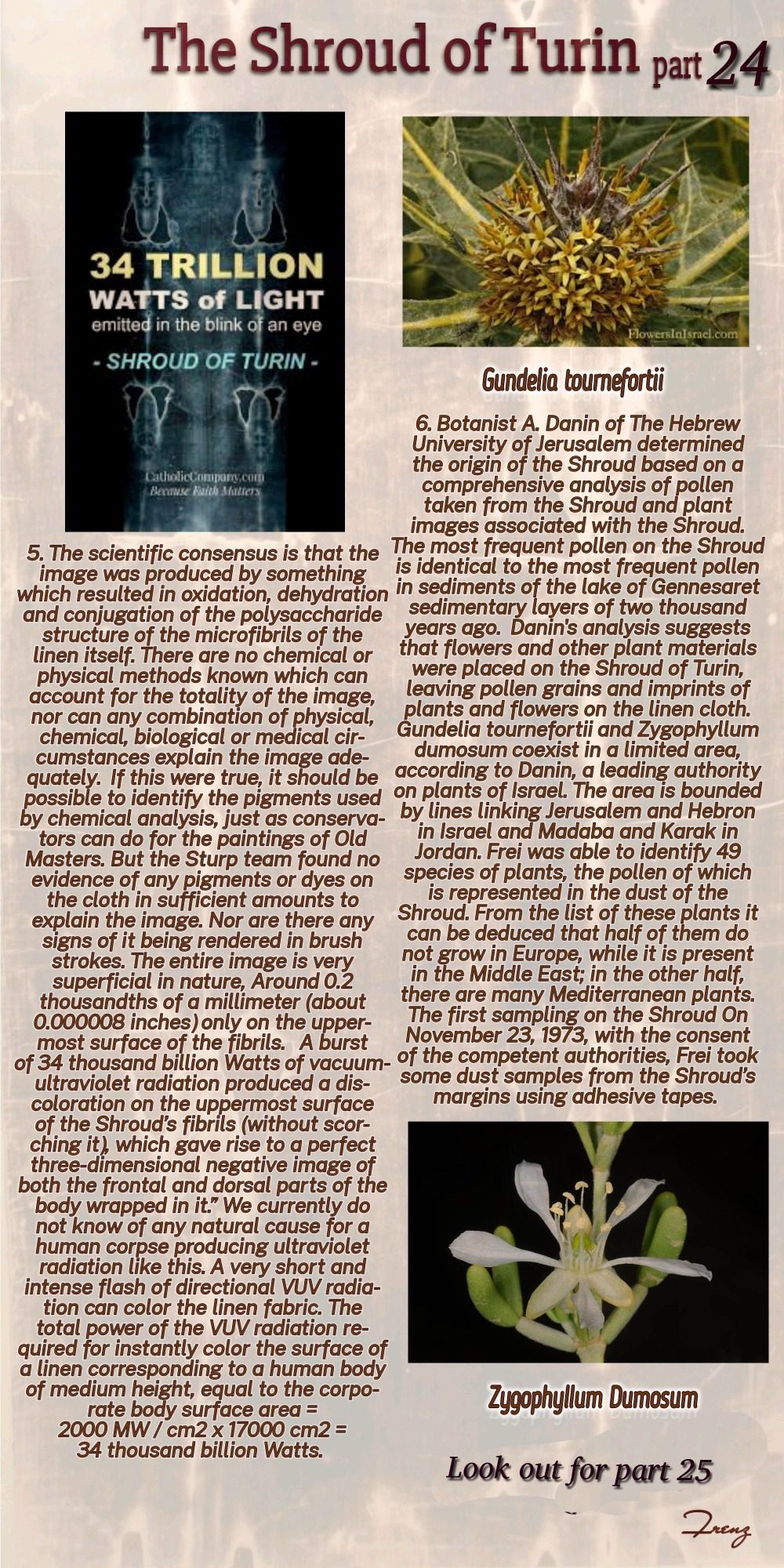
FLORISTIC INDICATORS FOR THE ORIGIN OF THE SHROUD OF TURIN (PDF)
This report looks at tiny plant bits and pollen on the Shroud of Turin to figure out where it might have come from.
• Pollen found on it matches plants from the Middle East.
• Plant images on the cloth were spotted and compared to local flora.
• Some dating methods showing a medieval origin might have sampling issues.
DOWNLOAD
EVIDENCES FOR TESTING HYPOTHESES ABOUT THE BODY IMAGE FORMATION OF THE TURIN SHROUD (PDF)
This paper talks about the research and evidence around how the image on the Turin Shroud might have formed. Lots of experts from different fields share their insights on possible explanations for the body image on the cloth.
• Scientific testing and measurements related to the image formation
• Collaboration among engineers, chemists, biologists, and other specialists
• Discussions held at an international conference with a focus on the Shroud’s physical and chemical featureS.
DOWNLOAD
Comments On Shroud Research (PDF)
This paper shares some personal reflections and updates on Shroud of Turin research from Donald J. Lynn, who’s been around the block for a while and now watches the field with a keen, friendly eye. Some highlights:
• Digital image processing has opened new doors in Shroud investigations.
• The cause of the Shroud’s body images is better understood, but how the image got transported remains a mystery.
• Recent radiographic work by Gus Accetta shows promising similarities to the Shroud’s images.
• Historical tracing of the Shroud is ongoing with efforts to decode ancient references.
DOWNLOAD
THE ATLANTA INTERNATIONAL CENTER FOR CONTINUING STUDY OF THE SHROUD OF TURIN, INC. ATLANTA, GEORGIA (PDF)
This report digs into the healing powers linked to the Shroud of Turin, drawing from legends and various ancient texts to show how its influence appears across different stories and traditions.
• The healing role tied to St. Jude and the Abgar Legend is a key thread.
• The transformation of the woman with the issue of blood into the figure Veronica connects Eastern and Western traditions.
• Stories of rulers healed through images related to the Shroud pop up from Persia to Edessa.
DOWNLOAD
EVIDENCE FOR INVISIBLE REWEAVE ON THE SHROUD (PDF)
This work dives into the debate over the 1988 carbon dating of the Shroud, exploring the idea that the tested sample might have come from an area that was invisibly repaired, which could explain the medieval dating result rather than a first-century age.
• Experts noticed different fibers in the sample that don't match the original fabric
• There are historical hints that multiple repairs, including invisible mending, were done on the Shroud
• If the dating was done on repaired areas, the results wouldn't accurately reflect the Shroud's true age
DOWNLOAD
EVIDENCES FOR TESTING HYPOTHESES ABOUT THE BODY IMAGE FORMATION OF THE TURIN SHROUD (PDF)
This paper digs into the evidence for different ideas about how the body image on the Turin Shroud might have been formed, featuring contributions from a bunch of experts across multiple disciplines.
DOWNLOAD
Experimental results using corona discharge to attempt to reproduce the Turin Shroud Image (PDF)
This study takes a close look at trying to recreate the image on the Turin Shroud using corona discharge, a type of high-voltage electrical process.
• They used a half-scale mannequin wrapped in linen and connected to a 300-kV DC power source.
• The corona discharge created an image on the cloth with specific distortions.
• They analyzed how the electric field and cloth positioning affected the image's properties compared to the original shroud.
DOWNLOAD
A probabilistic model to quantify the results of the research on the Turin Shroud (PDF)
This write-up digs into a probabilistic approach to make sense of all the back-and-forth about the Turin Shroud’s origin. The authors set up three options: the cloth is authentic, it’s a fake, or it’s something else, and then assign probabilities to each based on various research findings. They also factor in how reliable each piece of info is and how important it is overall.
DOWNLOAD
Results of a probabilistic model applied to the research carried out on the Turin Shroud (PDF)
This report takes a close look at the Shroud of Turin, examining the images, inscriptions, and historical details tied to it.
• The writings on the face side link it to Jesus, with inscriptions mentioning Nazareth and Jesus Christ
• Coins dating to around 30 A.D. found on the shroud support the timing during Pontius Pilate’s reign
• Analysis of the facial features and wounds suggests a Roman crucifixion consistent with the 1st century
DOWNLOAD
Study of a vision system for the colorimetric mapping of the Turin Shroud (PDF)
This project takes a close look at building vision systems for detailed colorimetric mapping of the Turin Shroud. It talks about the setup needed and tackles how to handle challenges like lighting, temperature, and distortion when capturing color data. Plus, it gives a concrete example of reducing color issues when imaging the face on the Shroud.
DOWNLOAD
A FEASIBILITY ANALYSIS OF STUDIES ON LINEN FROM THE SHROUD OF TURIN USING NUCLEAR MAGNETIC RESONANCE (PDF)
Study about using nuclear magnetic resonance to study linen from the Shroud of Turin.
• Looks into different NMR techniques like Magic Angle Spinning and Cross-Polarisation for detecting hydrogen and carbon atoms.
• Talks about possible future methods, like checking nitrogen atoms and comparing with radioactivity scans.
• Also touches on the ongoing questions about the Shroud's age and how the image might have formed, including doubts about past carbon dating.
DOWNLOAD
Feasibility Study for Neutron Beam Investigation of the Turin Shroud (PDF)
Study on using neutron beam techniques to explore the Turin Shroud.
This research looks at how these techniques can non-destructively reveal new details about the fabric's properties and condition. It also discusses how information gained could impact both scientific knowledge and preservation efforts. The study shares some early results from tests on linen fibers, both new and aged, suggesting valuable insights ahead.
DOWNLOAD
A Systematic Approach for Understanding the Image Formation on the Turin Shroud (PDF)
This paper breaks down how the image on the Turin Shroud might have formed by creating a detailed framework of ideas and connections. It builds a model using a tech diagram language to organize all the concepts related to the image formation and points out where research still has questions.
DOWNLOAD
Forensic aspects and blood chemistry of the Turin Shroud Man (PDF)
This study takes a close look at the Turin Shroud, which features faint images and bloodstains of a man who appears to have died by crucifixion. Forensic analysis suggests the bloodstains are real human blood, with patterns and flow matching what you'd expect from crucifixion wounds. The researchers align these findings with historical accounts and add new experiments to support the idea that the shroud once wrapped the body of Jesus.
• The shroud image is a true representation of a human who was crucified.
• Bloodstain patterns correspond with wounds from Roman crucifixion.
• Forensic evidence matches descriptions from gospel accounts.
DOWNLOAD
Four Veiled References to the Shroud of Turin in the New Testament (PDF)
Here's the gist:
• It digs into how God’s testimony about Jesus as His Son is even stronger than human testimony and continues to be powerful today.
• The “spirit, water, and blood” together form a lasting witness, with the Shroud’s image playing a key role in this ongoing testimony.
• This idea ties into Jewish law about multiple witnesses, highlighting the credibility of this divine testimony.
DOWNLOAD
FREE ELECTRON MODEL OF IMAGE FORMATION ON SHROUD OF TURIN (PDF)
This article takes a close look at the free electron model to explain how images form on the Shroud of Turin. It breaks down how tension in the cloth, air gaps around hair and face, and electron currents come together to create the detailed image we see, including things like the face, hair, and even the beard.
• Tight cloth around the neck created tension that helped form a clear face image
• Hair puffing caused by electrons made air gaps that affected the image’s brightness and detail
• The beard’s image pattern suggests it was partially pulled out from under a jaw band, creating a distinctive notch
DOWNLOAD
Imaging Spectroscopy, A New Non-Destructive Method for Materials Analysis (PDF)
This presentation introduces imaging spectroscopy, a fresh, non-destructive technique for analyzing materials, developed at Cedars-Sinai's Laser Research Lab. The talk highlights medical uses and explores how this method could reveal new insights into the Shroud of Turin without harming it. The collaboration between Dr. Grundfest and digital imaging expert Barrie Schwortz brings a fascinating blend of science and imaging know-how.
DOWNLOAD
RECENT HISTORICAL INVESTIGATIONS ON THE SUDARIUM OF OVIEDO (PDF)
This write-up digs into the history and research around the Sudarium of Oviedo, a cloth tied closely to the story of the Shroud of Turin.
• The Investigation Team from the Centro Español de Sindonología has been focused on this cloth for over a decade.
• They’ve confirmed the cloth’s ancient use, showing human blood of type AB and signs of real wear without fakery.
• The research spans history, chemistry, forensics, and archaeology, aiming to connect details about the cloth to the historical Jesus.
DOWNLOAD
The "Inscriptions" on the Shroud (PDF)
This write-up dives into claims about hidden writings on the Shroud of Turin. Some folks used image tweaking to spot letters not visible to the naked eye, mixing Latin, Greek, and Hebrew around the face area. These letters supposedly rest inside two U-shaped outlines said to be marks from wooden props that held the head — though the idea has its skeptics, given no historical backing for such props and oddities in the letter groupings.
DOWNLOAD
Gary Habermas- Historical Epistemology, Jesus’ Resurrection, and the Shroud of Turin ( PDF)
This write-up looks at how historical investigation and philosophy can shed light on the Shroud of Turin and its possible connection to Jesus' resurrection. It also touches on the criteria that help historians decide when an event truly happened.
• It brings together philosophy of history and historical methods to evaluate the Shroud.
• It reviews literary evidence for Jesus' resurrection through a historical lens.
• It compares archaeological and literary data to see how they might align.
DOWNLOAD
“He Saw and Believed!”
Is the Shroud of Turin in the Background of John’s Resurrection Narrative?
(John 20:1-10)(PDF)
This work examines the opening story in the Gospel of John about Jesus' Resurrection, focusing on the details around the burial linens left in the empty tomb. The author looks closely at John's reaction of "seeing and believing" and suggests that the passage might be hinting at the Shroud of Turin being Jesus’ actual burial cloth. It explores historical and scientific points supporting the Shroud's authenticity alongside the biblical narrative.
DOWNLOAD
COMPARATIVE STUDY OF THE SUDARIUM OF OVIEDO AND THE SHROUD OF TURIN (PDF)
This study compares the Sudarium of Oviedo, a cloth kept in northern Spain, with the Shroud of Turin to see if they were used on the same person. It follows up on earlier investigations and digs into new scientific findings from the last decade. The research draws from medical, historical, and forensic angles to explore links between these two famous relics.
DOWNLOAD
Hermeneutic ofthe Holy Shroud ofTurin (PDF)
This writing takes a look at the Holy Shroud of Turin through a philosophical lens inspired by Gadamer. It suggests the Shroud isn't just a relic but carries a kind of truth and meaning similar to art, blending the sacred and mysterious in a way that deeply impacts how people see and experience it.
• Discusses Gadamer’s idea about art as an ontological event, not just copies.
• Considers the Shroud’s role as a religious symbol and a source of powerful imagery.
• Highlights the Shroud’s unique way of being shown (“ostended”) to viewers, fulfilling spiritual and curious expectations.
DOWNLOAD
Holistic Solution to the Mysteries of the Shroud of Turin Robert A. Rucker ( PDF)
This paper offers a full explanation for the mysteries surrounding the Shroud of Turin, including its image, carbon dating results, and blood characteristics. It proposes that a sudden burst of intense radiation from within the body wrapped in the cloth caused these effects—radiation that included charged particles and neutrons. This burst could account for the image formation, the unexpected carbon dating results, and even the blood’s appearance and placement on the fabric. The paper also suggests ways to test this theory, such as measuring carbon dates across the cloth and looking for specific isotopes.
DOWNLOAD
How the Image Was Formed on the Shroud Robert A. Rucker, July 31, 2020 (PDF)
Write-up on how the image on the Shroud of Turin might have been formed.
• It suggests a super quick burst of radiation from the body itself created the image.
• This radiation caused tiny changes to the fibers in the cloth, which later showed up as the image.
• The theory ties together how the image, blood marks, and carbon dating all fit into one explanation.
DOWNLOAD
FLORAL IMAGES AND POLLEN GRAINS ON THE SHROUD OF TURIN: AN INTERVIEW WITH DR. ALAN WHANGER AND DR. AVINOAM DANIN (PDF)
This chat is about the Shroud of Turin and the surprising discovery of floral images and pollen grains on it.
• Bunches of flowers and plants were placed on the cloth, leaving behind pollen and imprints.
• Experts like Dr. Alan Whanger and Dr. Avinoam Danin identified at least 28 types of plants from Israel.
• This evidence points straight to the Shroud’s origins in the Holy Land, likely around springtime near Jerusalem.
DOWNLOAD
Image Formation by Protons (PDF)
This report explores how proton radiation might have created the unique frontal and dorsal images on the Shroud of Turin, believed to be the burial cloth of Christ. It discusses how the image fibers lie on the top threads of the linen, with darker areas showing denser image fibers, and how experiments with high-energy protons on linen matched predictions about energy loss and image formation.
• The image fibers are uniform in color and intensity, with darker areas formed by more fibers
• Calculations predict proton energy loss through air and linen corresponding with image formation
• Experiments confirmed the predicted patterns and observed striations on threads similar to those on the Shroud
DOWNLOAD
Influence of ultraviolet radiation on the color of blood stains embedded in the archaeological textile known as the Shroud of Turin (PDF)
This paper looks into the unique reddish color of blood stains on the Shroud of Turin, a linen cloth with images linked to a crucified man. The researchers tested two ideas about why the blood stains look the way they do: how UV light affects high-bilirubin blood over a long time, and whether carboxyhemoglobin is present. They used color analysis and spectral reflectance to figure this out.
DOWNLOAD
PDF DOWNLOADS - Shroud of Turin related
DESIGN IN THE SHROUD OF TURIN (PDF)
This book is an introduction to a discussion about the Shroud of Turin. The author acknowledges the ongoing debate about the Shroud, including the carbon dating tests from 1988 that suggested a medieval origin. However, the author suggests there's evidence to the contrary and hints at a new theory based on design that can be developed. This design argument, similar to arguments found in natural theology, is novel to the author's knowledge. This theory centers on the idea that the Shroud is connected to a man, crucified, and that it’s not an art object. Importantly, the author will not be assuming the man to be Jesus.
Urfa, Turkey: A proposal for an archaeological survey of the town that (arguably) was the Shroud’s home for nearly a thousand years
by Ian Wilson (PDF)
This paper by Ian Wilson proposes an archaeological survey of Urfa, Turkey (formerly Edessa), as a potential location for the Turin Shroud's whereabouts for approximately 900 years before its emergence in Lirey, France in the 1350s.
Information Content on the Shroud of Turin (PDF)
This study digs into how the image on the Shroud of Turin actually carries detailed information about the crucified man it wrapped. It looks at the ways information might have traveled from the body to the cloth and settles on radiation as the most plausible method.
• The image is a high-resolution imprint of a crucified man, unique among burial cloths.
• Scientific tests suggest the image wasn't made by an artist or forger.
• Radiation from the body's interior is proposed as the way the image formed on the Shroud.
DOWNLOAD
Was the Shroud of Turin Invisibly Rewoven with Foreign
Material at the Radiocarbon Site to Match the Rest of the Cloth? (PDF)
This document, authored by Mark Antonacci, explores the "Invisible Repair or Reweave Hypothesis" concerning the Shroud of Turin. This hypothesis suggests that a 16th-century repair or reweave was made at the radiocarbon dating site on the Shroud, which is undetectable to the naked eye. The document highlights Raymond Rogers' research from 2001-2005, based on the examination of thread segments from the Raes sample and radiocarbon material, which supports the hypothesis.
DOWNLOAD
Is the Image on the Shroud of Turin
“The Sign of Jonah” Jesus Promised? (PDF)
This book by Larry Stalley explores the connection between the image on the Shroud of Turin and the "sign of Jonah" referenced by Jesus in the Gospels. The author argues that the Shroud, bearing a miraculous image, serves as a divine witness, a gracious gift for believers and a supreme apologetic for the Church.
DOWNLOAD
Is the Shroud of Turin Foreshadowed In the Transfiguration Story?
(Matthew 17.1-9) (PDF)
This PDF examines the Transfiguration story (Matthew 17:1-9) to argue that it foreshadows the Shroud of Turin. The author proposes that the story highlights Jesus' divine nature and suggests the Shroud's image was a powerful early Church witness. The study aims to analyze the Transfiguration's significance, potentially revealing hidden references to the Shroud.
DOWNLOAD
Is the Shroud of Turin the first recorded photograph? ( PDF)
This article by Nicholas Peter Legh Allen explores the characteristics of the Shroud of Turin, a linen cloth believed by some to be the burial cloth of Jesus Christ. Allen argues that the image on the Shroud was produced by a technique that was only invented in the late 18th century, namely negative photography.ĥ
DOWNLOAD
Is the Shroud of Turin the Actual Burial Cloth of Jesus?
This paper by Larry Stalley explores the authenticity of the Shroud of Turin, a cloth bearing the faint image of a crucified man. It begins by noting that many people, particularly Protestants, are unfamiliar with the Shroud, and those who are often dismiss it as a fake due to a 1988 radiocarbon dating experiment that placed the cloth in the medieval period. However, the paper argues that forensic science and historical research over the past forty years have provided compelling evidence to the contrary. The paper aims to present this evidence and explain why the Shroud is most likely the actual burial cloth of Jesus, offering visual and physical evidence of life after death. The paper highlights the controversy surrounding the Shroud's image and how it was formed, as well as whether the Shroud wrapped Jesus’s body.
DOWNLOAD
A New Radiocarbon Hypothesis John P. Jackson, Ph.D.
Turin Shroud Center of Colorado May 5, 2008 ( PDF)
This document presents a new hypothesis to explain the discrepancy between the historical/archaeological evidence suggesting the Shroud of Turin is older and the radiocarbon dating of 1988 which dated it to a medieval period.
DOWNLOAD
3-D PROCESSING TO EVIDENCE CHARACTERISTICS REPRESENTED IN MANOPPELLO VEIL (PDF)
This paper explores the characteristics of the Face on the Manoppello Veil using 3-D image processing. The authors aim to compare the Veil's image with that of the Turin Shroud and highlight differences between the front and reverse sides of the Veil.
The introduction provides background on the Holy Face, which is believed by many to be an "Acheropita" (not made by human hands) image of Jesus. This image, found on the Veil of Manoppello, is a relic in Italy. The Face on the veil is visible on both sides of the veil, and the yarn is highly transparent. It then describes the history of the veil and the conflicting opinions surrounding its creation. Some consider it a work of art, while others propose a more supernatural origin. The authors highlight the ongoing debate regarding the image's formation and nature, and the various microscopic and spectroscopic studies that have been conducted.
DOWNLOAD
Seeing Inscriptions on the Shroud of Turin: The Role of Psychological Influences in the Perception of Writing (PDF)
This research article, "Seeing Inscriptions on the Shroud of Turin: The Role of Psychological Influences in the Perception of Writing," explores the psychological factors that influence the perception of writing, specifically in the context of the Shroud of Turin. The authors, Timothy R. Jordan and colleagues, investigate how religious context affects the identification of perceived words on an image of woven fabric, mirroring the material of the Shroud.
DOWNLOAD
The Turin Shroud Was Not Flattened Before the Images Formed and no Major Image Distortions Necessarily Occur from a Real Body (PDF)
This paper, "The Turin Shroud Was Not Flattened Before the Images Formed and no Major Image Distortions Necessarily Occur from a Real Body," by Mario Latendresse, examines the conditions under which the image on the Shroud of Turin may have formed. It addresses the question of whether the Shroud was flattened before the image formed and if major distortions are necessarily expected when the Shroud is draped over a body.
DOWNLOAD
Evidence that the Shroud Was not
Completely Flat During Image Formation (PDF)
This document examines the debate around the authenticity of the Shroud of Turin, focusing on whether the top half of the Shroud was forcefully flattened before the images formed, and if this would necessarily cause major distortions when the Shroud is displayed flat.
DOWNLOAD
EVIDENCE FOR THE SKEWING OF THE C-14 DATING OF THE SHROUD OF TURIN DUE TO REPAIRS (PDF)
This paper, "Evidence for the Skewing of the C-14 Dating of the Shroud of Turin Due to Repairs," by Marino and Benford, presents a critical analysis of the 1988 carbon-14 dating of the Shroud of Turin. The authors argue that the dating, which placed the shroud's origin in the medieval period, is flawed due to the presence of a patch of material from the 16th century that was incorporated into the sample.
DOWNLOAD
Computerized anthropometric analysis of the Man of the Turin Shroud (PDF)
This document presents a study of the Man of the Shroud, focusing on the measurement of his height using various methods and analyzing the challenges in obtaining accurate measurements.
DOWNLOAD
THE CATHAR CRUCIFIX: NEW EVIDENCE OF THE SHROUD’S MISSING HISTORY (PDF)
This book, "The Cathar Crucifix: New Evidence of the Shroud's Missing History" by Jack Markwardt, explores the historical evolution of the crucifix and its connection to the Shroud of Turin. The author proposes that the changes in how Christ was depicted on the cross reflect an increasing awareness of the sindonic image of the Shroud and trace its path from East to West.
DOWNLOAD
ANTIOCH AND THE SHROUD (PDF)
This book explores the history of the Shroud of Turin, questioning its early origins and tracing its potential journey from Jerusalem to Edessa, then to Constantinople. It delves into the "Mandylion theory" and the Abgar legend, examining their validity, highlighting doubts from scholars like J.B. Segal, and suggesting an alternative route of its path, with the focus on the ancient city of Antioch, due to its historical significance. It also provides a background on Antioch during the time of Christ, its importance as a Roman city, and the presence of the early Church, as well as the disciples of Jesus.
DOWNLOAD
Optically Terminated Image Pixels
Observed on Frei 1978 Samples (PDF)
This document, written by Kevin E. Moran, discusses the unique characteristics of the image found on the Shroud of Turin, specifically focusing on observations made from samples taken by Max Frei in 1978. The abstract describes photomicrographs taken in 1992 of the arm area of the shroud, which revealed individual image fibers with sharp boundaries and a darkening of about 30% compared to the non-imaged fibers. The author suggests that a high-energy particle striking the fiber caused the image.
DOWNLOAD
THE SHROUD OF TURIN: BRIDGE BETWEEN HEAVEN AND EARTH? (PDF)
This article discusses the ongoing debate surrounding the Shroud of Turin, a cloth many believe to be the burial shroud of Jesus, while others consider it a medieval forgery. It explores the history of the Shroud, noting its significance in both religious and scientific circles.
DOWNLOAD
X-File on the Shroud (PDF)
This text is an interview between Linda Moulton Howe and Dr. Thaddeus Trenn, a Shroud researcher. They discuss the possibility that the image on the Shroud of Turin was formed through a process of dematerialization.
DOWNLOAD
Editorial - On 'Correct Seeing' the Shroud (PDF)
This editorial discusses the complexities of interpreting the Shroud of Turin, highlighting different perspectives on its nature. It begins by noting that the Shroud's image can be interpreted differently, with some viewing it as a painting and others seeing Greek/Roman inscriptions, flowers, or a photograph-like image of a crucified body. The author recounts a personal anecdote from art school to emphasize the importance of "correct seeing" in accurately representing reality, which is relevant to interpreting the Shroud. The editorial mentions how the ongoing debate in newsletters addresses inscriptions, flowers, and instruments of the Passion.
DOWNLOAD
Coin inscriptions, Passion Objects and Flowers - Are They Really There?
(PDF)
This article is a second installment of a series by the editor, following up on his previous critique of the claims about seeing various objects on the Shroud of Turin, specifically focusing on "faces in clouds" type of interpretations.
DOWNLOAD
‘The Turin Shroud – past, present and future’, Turin, 2-5 March, 2000 – probably the best-ever Shroud Symposium (PDF)
This article summarizes a symposium held in Turin from March 2-5, 2000, focusing on the Turin Shroud, a linen cloth believed by some to bear the image of Jesus Christ. The symposium, described as possibly the best ever on the subject, brought together various specialists.
DOWNLOAD
Towards reconstructing the Shroud Body a History (PDF)
This text is a summary of the life and work of several artists who have attempted to sculpt or reconstruct the image of the Shroud of Turin.
DOWNLOAD
Could carbon dating be erroneous if the Shroud was kept in a metallic container for a significant period between AD 30-2000? (PDF)
This text discusses the scientific investigation and historical preservation of the Shroud of Turin. Initially, it details the 1988 carbon dating tests that concluded the Shroud originated from 1290-1360 AD, leading most scientists to believe it was a medieval artifact. However, the author highlights the flaws in this conclusion, like evidence suggesting the Shroud's origins may be much earlier, and the fact that there are other historical details that do not fit the carbon dating.
DOWNLOAD
The Veronica of Rome First Known Photographs! (PDF)
This article discusses the first known photographs of the Veronica of Rome, a relic believed to be the cloth used by a woman to wipe Jesus's face, leaving his image imprinted on it. It details the historical context of the Veronica, its importance in religious pilgrimage, and the long-standing difficulty in obtaining photographic evidence due to Vatican restrictions.
DOWNLOAD
Is The Shroud of Turin a Medieval Photograph? A Critical Examination of the Theory (PDF)
This paper by Barrie M. Schwortz critically examines the "proto-photography" theory, a hypothesis proposed by Professor Nicholas Allen. The core argument of the proto-photography theory is that a medieval photographer could have used raw materials to create a photographic image on the Shroud of Turin, effectively inventing photography centuries before its documented creation. Allen himself has successfully created a faint photographic image on linen using medieval materials.
DOWNLOAD
Othon de La Roche and the Shroud An hypothesis between History and Historiography (PDF)
This paper proposes a theory about the missing period of the Holy Shroud's history, specifically from its disappearance in Constantinople in 1204 during the Fourth Crusade to its reappearance in Lirey, France, in the 14th century. The central argument is that the Shroud was taken to Athens by Othon de La Roche, who became Lord of Athens after the crusade.
DOWNLOAD
Politics of the Shroud C-14 Dating By Joseph Marino (PDF)
This text details the political and scientific controversies surrounding the attempts to radiocarbon date the Shroud of Turin, a linen cloth believed by some to bear the image of Jesus Christ.
DOWNLOAD
The Shroud of Turin and the Resurrection Problem- an Anglican/Episcopal perspective (PDF)
This text, "The Shroud of Turin and the Resurrection Problem: An Anglican/Episcopal perspective," by Daniel R. Porter explores the ongoing debate surrounding the Shroud of Turin and its implications for understanding the Resurrection of Jesus, particularly within the Anglican/Episcopal tradition.
DOWNLOAD
Possible Post-Biblical and Pre-1350s References in History to the Shroud of Jesus – an English-language Bibliography
Joseph G. Marino - Updated September 29, 2021 (PDF)
This is an English-language bibliography by Joseph G. Marino, updated September 29, 2021, that explores the potential historical references to the Shroud of Jesus prior to the 1350s, the time when the Shroud of Turin became known. The author addresses the claim that there are no references to the Shroud before this period, arguing that there are numerous references, although not all may be definitively linked to the Turin Shroud.
DOWNLOAD
Origins of a 14th Century Turin Shroud Image (PDF)
This paper, authored by Joseph S. Accetta, investigates the origins of the Turin Shroud, a large linen cloth bearing faint sepia-toned images of a crucified man. The author posits the Shroud's origin as the 14th century, aligning with its radiocarbon dating and historical context.
DOWNLOAD
RADIOCARBON DATING OF THE TURIN SHROUD: NEW EVIDENCE FROM RAW DATA (PDF)
This paper, "Radiocarbon Dating of the Turin Shroud: New Evidence from Raw Data," analyzes the radiocarbon dating of the Turin Shroud (TS), a linen cloth some believe to be the burial cloth of Jesus.
In 1988, three laboratories conducted radiocarbon analysis, with results published in Nature in 1989, suggesting a medieval origin (AD 1260-1390 with 95% confidence). However, the original raw data was not released. In 2017, after a legal request, the raw data from the British Museum became accessible.
This paper re-evaluates the 1988 dating by conducting a robust statistical analysis of the raw data. The authors aim to compare these results with those from the initial study, using statistical tests to determine if the measurements from different labs can be combined to provide a consistent calendar range. Based on their analysis, the authors question the 95% confidence level originally attributed to the medieval dating, implying that the initial analysis may need reconsideration. The paper highlights that the initial conclusion of the cloth's medieval origin is being questioned by other studies, which also point to a disproof of this claim.
DOWNLOAD
WHAT DOES THE SHROUD OF TURIN MEAN? (PDF)
This text explores the meaning and significance of the Shroud of Turin, the purported burial cloth of Jesus Christ. The author, Robert Perry, states that his primary focus is not on proving the shroud's authenticity, but on interpreting its meaning.
DOWNLOAD
Studies on the radiocarbon sample from the Shroud of Turin- Raymond N. Rogers (PDF)
This paper, authored by Raymond N. Rogers, discusses the radiocarbon dating of the Shroud of Turin and the author's subsequent analysis that calls into question the validity of that dating.
DOWNLOAD
SCIENTIFIC METHOD APPLIED TO THE SHROUD OF TURIN -A REVIEW (PDF)
This document is a review of the application of scientific methodology to the study of the Shroud of Turin. It summarizes the author's belief that three key statements can be supported by scientific observation: 1) The radiocarbon dating from 1988 was flawed and produced an inaccurate date for the cloth. 2) Hypotheses invoking radiation to explain the image and its date should be discarded. 3) The image's characteristics can be explained by known chemical reactions, negating the need for miracles.
DOWNLOAD
FREQUENTLY ASKED QUESTIONS (FAQs) By Raymond N. Rogers (PDF)
DOWNLOAD
THE SUDARIUM OF OVIEDO: A STUDY OF FIBER STRUCTURES (PDF)
This document is a scientific study, "The Sudarium of Oviedo: A Study of Fiber Structures," conducted by Raymond N. Rogers. It investigates the fiber composition of the Sudarium of Oviedo, a cloth believed to be associated with the crucifixion of Jesus, using petrographic (polarizing) microscopy. The research compares the fibers of the Sudarium to those of the Shroud of Turin and examines their age and origins.
DOWNLOAD
Role of Radiation in Image Formation on the Shroud of Turin (PDF)
This document is a scientific analysis of the Shroud of Turin, a burial cloth believed by some to have been used to wrap Jesus Christ. The author, Robert Rucker, proposes a novel hypothesis about how the image on the shroud was formed.
DOWNLOAD
GREEK EPITAPHIOI AND OTHER EVIDENCE FOR THE SHROUD IN CONSTANTINOPLE UP TO 1204 (PDF)
This article, by Daniel Scavone, explores evidence supporting the presence of the Turin Shroud (TS) in Constantinople, specifically up to the year 1204. The author begins by acknowledging the difficulty in tracing the TS's history and highlights the crucial link between the Shroud and the Mandylion documented in Edessa. Two key documents are considered: the Gregory Sermon, suggesting a full-length image on the Mandylion, and the Pray Codex (1192-5), which depicts elements associated with the TS, such as folded hands without thumbs and a four-burn-hole pattern.
DOWNLOAD
Photogrammetric Responses From The Shroud of Turin (PDF)
This document, written by Peter M. Schumacher in 1999, discusses the unique photographic properties of the Shroud of Turin. The abstract highlights that simple photographic studies of the Shroud produce results unlike those of any other known artifact. Specifically, the Shroud image appears clearer in the photographic negative than in the positive, and when processed through a VP-8 Image Analyzer, it produces a three-dimensional response. The key point is that these unique results are inherent to the Shroud's image and are not due to alteration or special photographic techniques.
DOWNLOAD
The Shroud's Second Image (PDF)
This article from Christianity Today discusses new evidence that reopens the debate about the Shroud of Turin, a relic believed by some to be the burial cloth of Jesus. The shroud was widely dismissed as a medieval forgery after radiocarbon tests in 1988 dated it to the 13th or 14th century.
However, recent findings challenge this assessment. Researchers from the University of Padua discovered a faint, reverse image on the back of the cloth that mirrors the face and hands of the image on the front, and it's like the front image, is only on the outermost fibers. This discovery, published in a peer-reviewed journal, is seen by some as a step in the right direction. The article also references the views of various experts.
DOWNLOAD
Shroud like coloration of linen, conservation measures and perception of patterns onto the Shroud of Turin (PDF)
This paper presents the research conducted by Paolo Di Lazzaro and Daniele Murra at the ENEA Research Centre of Frascati on the Shroud of Turin (TS). They aim to replicate the image's unique characteristics and provide conservation measures.
DOWNLOAD
Answering the Savoy/Leonardo DaVinci Hypothesis (PDF)
This document, written by Richard B. Sorensen, addresses the "Savoy/Leonardo Da Vinci Hypothesis" concerning the Shroud of Turin. This hypothesis suggests that the image on the Shroud is a fake created by Leonardo Da Vinci or another medieval artist. Sorensen argues that this hypothesis and its alternatives are not reasonable explanations for the Shroud's images and should be dismissed.
DOWNLOAD
The Shroud of Turin Fact Sheet ( PDF)
This document is a fact sheet about the Shroud of Turin, drawing a connection between it and a cloth known as the Edessa Cloth.
DOWNLOAD
THE HOLY SHROUD OF TURIN: BIBLICAL EVIDENCES FOR THE NON-UNWRAPPING HYPOTHESIS (PDF)
This article explores the "non-unwrapping" hypothesis regarding the Shroud of Turin. The abstract presents the core argument: that the image on the shroud was created by radiation from the body of Jesus Christ at the time of his resurrection, causing the body to disappear from within the cloth without disturbing its folds. This theory is supported by the lack of visible signs of manipulation on the shroud, a point often contested by critics.
The article's author, Félix Ferrà, delves into this hypothesis, particularly its connection to biblical accounts. It explains that proponents of the shroud's authenticity suggest the image's clarity (lack of blurring) is due to the miraculous nature of the resurrection. This hypothesis is linked to how the empty tomb is described in the Gospels.
The provided text supports this non-unwrapping idea by referencing two Gospel passages. Luke 24:11-12 describes Peter's reaction after finding the tomb empty and only the linen cloths. John 20:1-8 describes Mary Magdalene's discovery of the empty tomb and Peter and the other disciple's subsequent investigation, noting the linen cloths were lying there and the separate cloth that had covered Jesus's head was in a different place, neatly wrapped. These descriptions are interpreted as evidence that Jesus's body vanished without disturbing the shroud's structure, supporting the non-unwrapping hypothesis.
DOWNLOAD
Summary of Scientific Research on the Shroud of Turin (PDF)
DOWNLOAD
The Crucified Christ Seen by the Galatians (PDF)
This paper by Larry Stalley explores the possibility that Galatians 3:1, a verse in the New Testament, refers to the Shroud of Turin. The author argues that the verse, which has often been interpreted metaphorically, could instead be a literal reference to the image of the crucified Jesus on the burial cloth.
DOWNLOAD
THE “RESTORATION” OF THE TURIN SHROUD: A CONSERVATION AND SCIENTIFIC DISASTER (PDF)
This text discusses the "restoration" of the Shroud of Turin in 2002 and its implications. The book opens by describing the 2002 intervention as a "radical intervention" aimed at removing carbon dust and charred material. The removal of patches from 1534, vacuuming, and other measures were taken to improve its appearance. However, it's noted that this aggressive operation contrasts with modern conservation practices and resulted in the loss of potentially important scientific data, as well as opportunities for advanced testing. The author suggests that the long-term impact of this intervention is feared to be substantial.
DOWNLOAD
The seam and missing corners of the Turin Shroud as characteristics of John Mark’s temple garment (PDF)
This article by A.A.M. van der Hoeven identifies the garment left by the young man who fled naked (Mark 14:51-52) with the burial shroud of Jesus (John 19-20), suggesting the young man was the secret disciple John Mark, co-author of the Gospel of John. The author proposes Joseph of Arimathea acquired this garment to give Jesus a burial as per Jewish custom.
DOWNLOAD
The Shroud of Turin in Light of First-Century CE Jewish Burial Practices According to Non-Jewish Sources – a Bibliography
Updated August 5, 2021 (PDF)
This article, "The Shroud of Turin in Light of First-Century CE Jewish Burial Practices According to Non-Jewish Sources – a Bibliography," by Joseph G. Marino, serves as a follow-up to a previous article discussing the compatibility of the Turin Shroud with First Century Jerusalem burials from a Jewish perspective. The author, inspired by feedback on his previous article, decided to create a series of bibliographic entries. This article focuses specifically on non-Jewish sources that provide context for evaluating the Shroud's authenticity in light of Jewish burial customs during the time of Jesus. The entries included cover a range of sources, including peer-reviewed journals and books, some directly addressing the Shroud and others which do not.
The article introduces relevant locations and objects to compare with burial practices: "Garden Tomb" as a potential site of Jesus's burial and resurrection (controversial, with dates disputed), "Cave of Letters," a location where fragments of papyri were found, Jason's Tomb, and "Abba Cave," a tomb with an ossuary.
The author also explains that he originally intended to divide the non-Jewish entries into two articles based on publication dates but combined them due to a low number of entries for the earlier period. He has chosen to designate "The Shroud of Turin" in the title to distinguish this work from the companion article concerning the Jewish sources.
DOWNLOAD
The Shroud of Turin Served as a Tabernacle During the High-Priestly Ministry of Jesus! (PDF)
This book, "The Shroud of Turin Served as a Tabernacle During the High-Priestly Ministry of Jesus!" by Larry Stalley, explores the significance of the Shroud of Turin in early Christian belief.
DOWNLOAD
The Sudarium of Oviedo in Relation to the Shroud of Turin (PDF)
English-language bibliography focused on the Sudarium of Oviedo and its relationship to the Shroud of Turin.
DOWNLOAD
LOOKING AT THE TURIN SHROUD AS A TEXTILE (PDF)
This article from Textile Horizons, December 1981, examines the Turin Shroud as a textile artifact and delves into the controversies surrounding its origins and authenticity.
DOWNLOAD
Understanding the 1988 Carbon Dating of the Shroud (PDF)
This paper critiques the 1988 carbon dating of the Shroud of Turin, which dated it to 1260-1390 AD, arguing that this conclusion should be rejected. The abstract highlights several problems with the dating:
* Statistical Discrepancies: → Two of the three laboratories involved in the dating produced statistically different results.
* Dating Variation: → The carbon dates varied based on the location of the samples on the cloth.
* Low Probability: → The probability of the date variation observed was only 1.4%, which is below the generally accepted standard of 5.0%.
DOWNLOAD
Excerpt from
Radiological Aspects of the Shroud of Turin (PDF)
This excerpt from a paper discusses the radiological aspects of studying the Shroud of Turin. The authors are focusing on two main areas of investigation: the 1978 radiographs and the side strip of the Shroud.
DOWNLOAD
What is the Catholic Church’s Official Position on the
Shroud of Turin? Pronouncements from The Vatican and Turin
Joseph G. Marino UPDATED September 8, 2021 (PDF)
This document is an article discussing the Catholic Church's official stance on the Shroud of Turin, a linen cloth believed by some to bear the image of Jesus Christ. The author, Joseph G. Marino, provides an introduction and then lists various pronouncements related to the shroud, specifically from the Vatican (Popes) and the archbishops of Turin.
DOWNLOAD